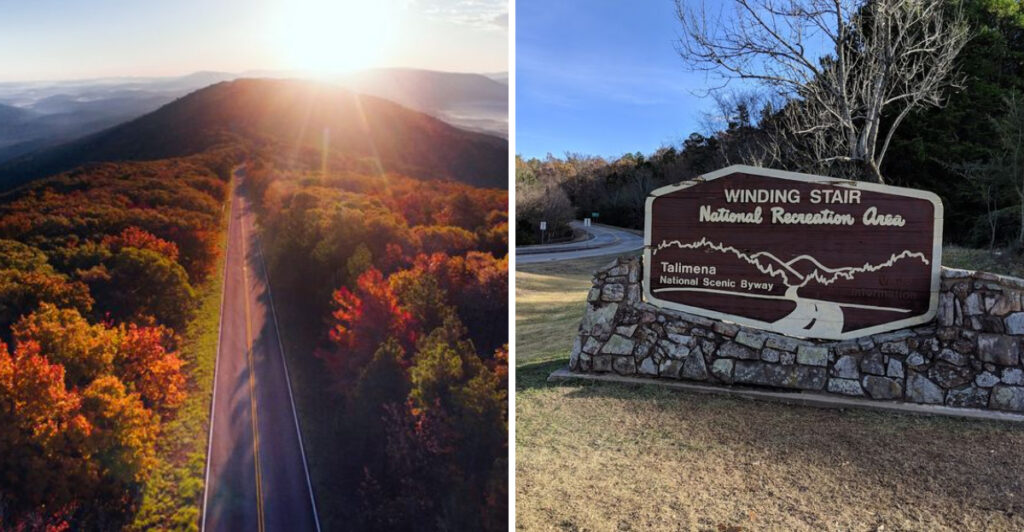
There is a road in southeastern Oklahoma that feels like it was designed specifically to make you forget every deadline, every notification, and every to-do list you have ever written. It runs along the spine of the Ouachita Mountains, offering sweeping ridgeline views, dense pine forests, and overlooks that stop you mid-sentence.
The kind of scenery here does not just look good in photos; it genuinely earns those gasps. I drove every mile of it, stopped at nearly every pullout, and came back with a full memory card and a serious urge to tell everyone I know about this road.
Where the Road Begins: Location and Route Overview
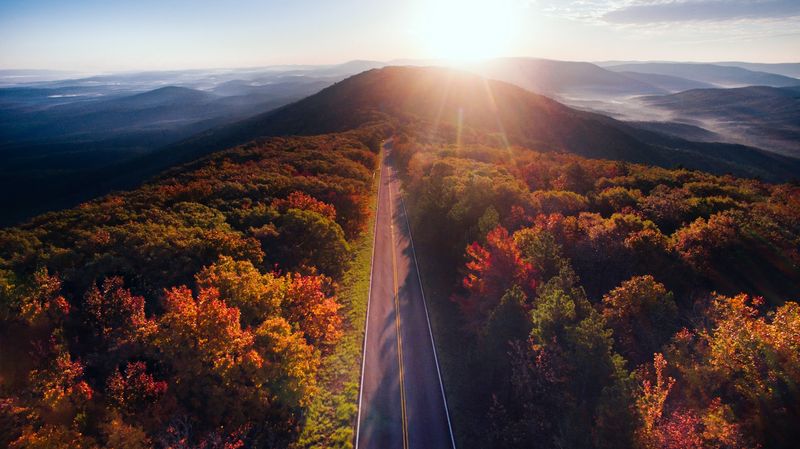
The Talimena National Scenic Byway runs for 54 miles along the crests of the Ouachita Mountains, connecting Talihina, Oklahoma, to Mena, Arkansas. The Oklahoma starting point sits at OK-1 Scenic, Talihina, OK 74571, right at the base of Rich Mountain and Winding Stair Mountain.
This is not a highway built for speed. Every curve is intentional, every elevation change deliberate, and every overlook placed where the view earns a full stop.
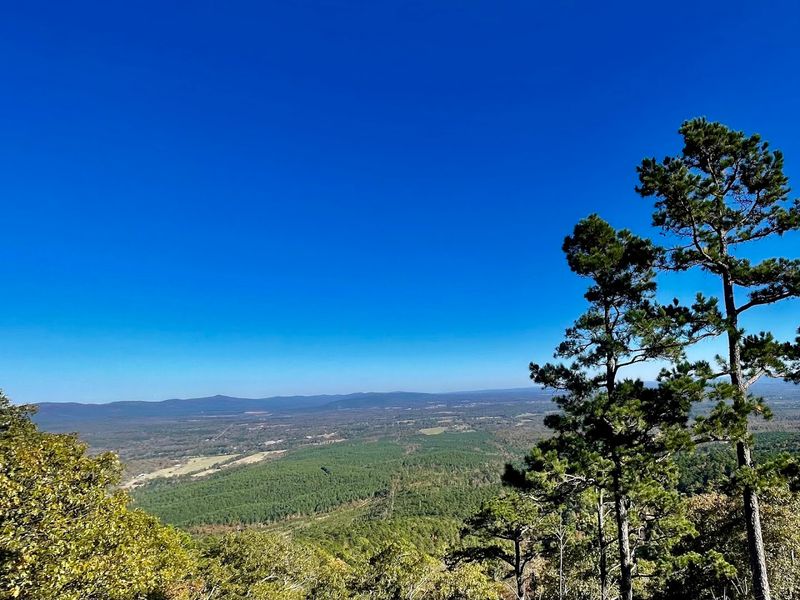
The road climbs steadily from Talihina and quickly rewards you with ridgeline panoramas that stretch across what feels like half the state.
The byway crosses two national forests: the Ouachita National Forest on the Oklahoma side and continuing into Arkansas. Both sides offer their own character, but the Oklahoma stretch has a raw, unhurried quality that feels especially personal.
The road is well-maintained and accessible by car, truck, or motorcycle, and most of the drive can be completed in two to three hours if you resist the urge to linger at every single overlook, which is genuinely difficult.
The Mountain Setting That Makes Every Mile Count
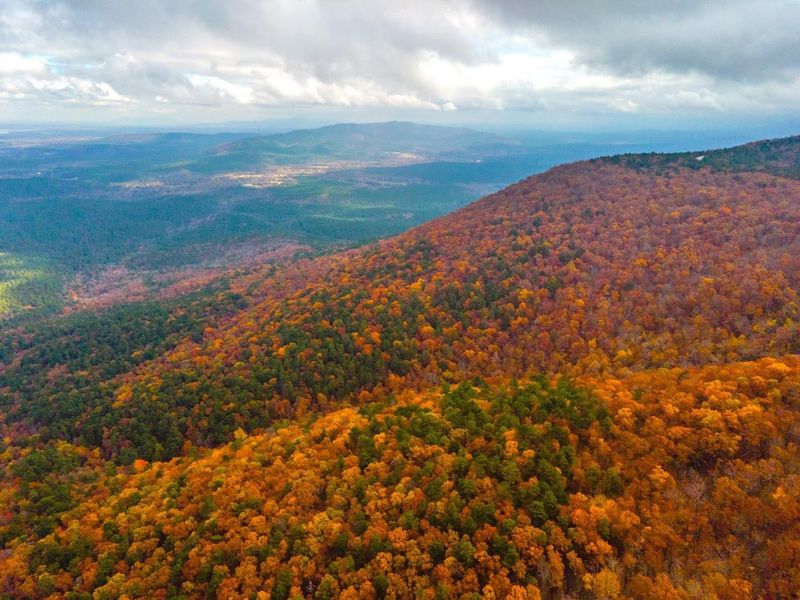
The Ouachita Mountains are older than most people expect. These ridges were formed hundreds of millions of years ago, and the result is a landscape of long, parallel ridges covered in hardwood and pine that roll toward the horizon in shades of blue and green.
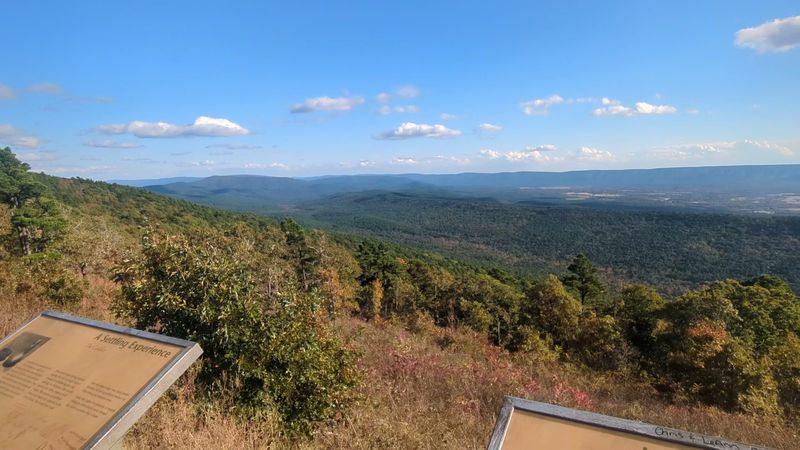
From the highest points on the byway, you can see ridge after ridge stacking up in the distance, each one a slightly softer shade than the last. The effect is genuinely striking, and it explains why so many visitors describe the views as reminding them of the Blue Ridge Parkway in Virginia.
Rich Mountain, which the byway crosses, reaches an elevation of about 2,681 feet, making it the highest point in Oklahoma. That height gives the road its drama.
Up top, the wind picks up noticeably, the air carries a pine-fresh coolness even in summer, and the sense of being above everything else is hard to shake. Bring a light jacket regardless of the season, because the temperature at the summit can drop faster than the forecast suggests.
Fall Foliage: The Season That Draws the Biggest Crowds
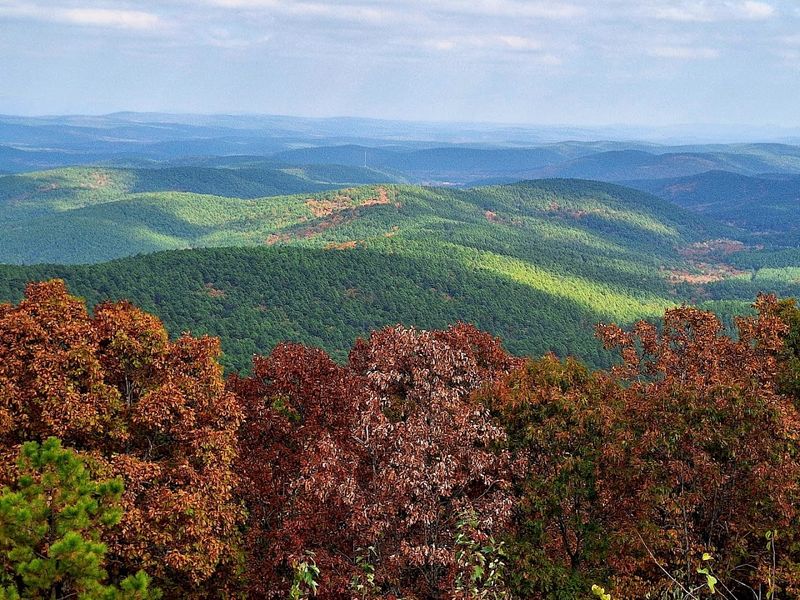
Ask anyone who has driven the Talimena Byway more than once, and they will almost certainly tell you that fall is the season that changes everything. The hardwood trees along the ridgeline turn in shades of deep red, burnt orange, and golden yellow that genuinely compete with any fall foliage destination in the country.
Peak color typically arrives in late October through the second week of November, though the exact timing shifts slightly each year depending on rainfall and temperature. Arriving a week too early means more green than gold, and arriving a week too late means bare branches.
Checking local foliage reports before you go is absolutely worth the two minutes it takes.
Weekends during peak season draw real crowds, and parking at the most popular overlooks can get competitive by midday. An early start, around sunrise, gives you the best light, the quietest roads, and the most satisfying photos.
The colors at that hour, when low light catches the hillside, produce the kind of scene that makes people plan return trips before they have even driven home.
Scenic Overlooks Worth Every Slow-Down
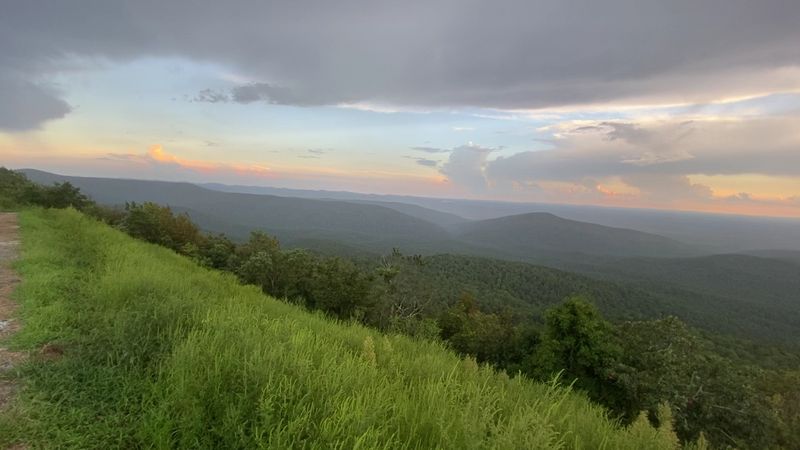
The byway is lined with designated overlooks and pull-offs, and each one frames the landscape a little differently. Some face east and catch the morning light perfectly, while others open to the west and turn spectacular around late afternoon when the sun drops toward the tree line.
Cedar Lake Overlook, Horsethief Spring, and the panoramic stops near the Oklahoma-Arkansas border are among the most rewarding. At several of these spots, you can see four or five parallel ridgelines at once, each one slightly hazier than the one before it, creating a layered effect that photographs beautifully but honestly looks even better in person.
Pulling over and actually getting out of the car makes a real difference here. The wind at the higher overlooks carries the smell of pine and cedar, and the quiet is the kind that feels intentional rather than empty.
A pair of binoculars is worth tossing in the back seat, because on clear days the distant ridges reveal details that reward a closer look. Take your time at these spots; rushing past them is the one mistake most first-time visitors admit to making.
Hiking Trails Along the Byway
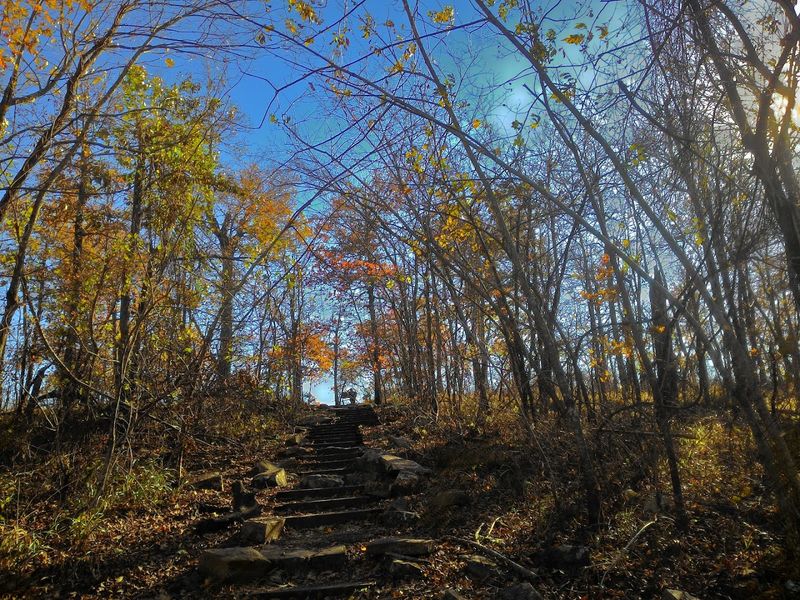
The byway is not just a drive-through experience. Several trailheads branch off from the road and lead into the Ouachita National Forest, offering everything from short nature walks to more demanding ridge hikes.
The Ouachita National Recreation Trail runs roughly parallel to the byway for much of its length, and sections of it are accessible directly from roadside parking areas. Trail conditions vary by season, so checking with the Ouachita National Forest ranger station before heading out is a smart move, especially after periods of heavy rain when some paths can get slick.
Short interpretive trails near several overlooks are well-marked and easy enough for families with kids who want to stretch their legs without committing to a full hike. Longer segments of the Ouachita Trail reward hikers with deeper forest quiet, occasional wildlife sightings, and views that the road itself cannot quite replicate because the tree canopy parts in unexpected places.
Sturdy shoes, a water bottle, and a basic trail map make the difference between a pleasant detour and an uncomfortable one. The forest here earns the exploration.
Motorcycles and the Road’s Natural Appeal for Riders
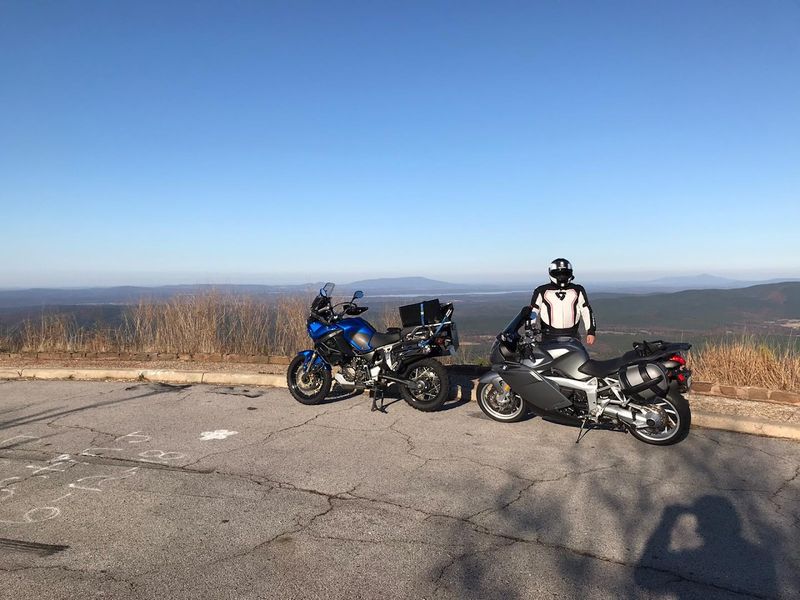
The Talimena Byway has built a loyal following among motorcycle riders, and it is easy to understand why. The road offers a satisfying rhythm of curves, elevation changes, and open ridgeline stretches that make for genuinely enjoyable riding rather than just point-to-point travel.
On weekends, especially in fall, the byway sees a healthy number of motorcycles, and riders tend to treat it with the kind of focused attention the curves deserve. The road surface is generally smooth, though a few sections can carry loose gravel near the edges after storms, so staying aware of conditions is worthwhile.
One practical note that experienced riders pass along consistently: there is no fuel available on the mountain itself. Fill your tank before heading up from Talihina on the Oklahoma side, or from Mena on the Arkansas end, because running low on a remote ridgeline is an avoidable problem.
The twisty descents and open ridge runs make this road a genuine favorite for riders across the region, and the overlooks double as natural rest stops where comparing routes and sharing road tips happens organically.
Wildlife and Natural Features Along the Route
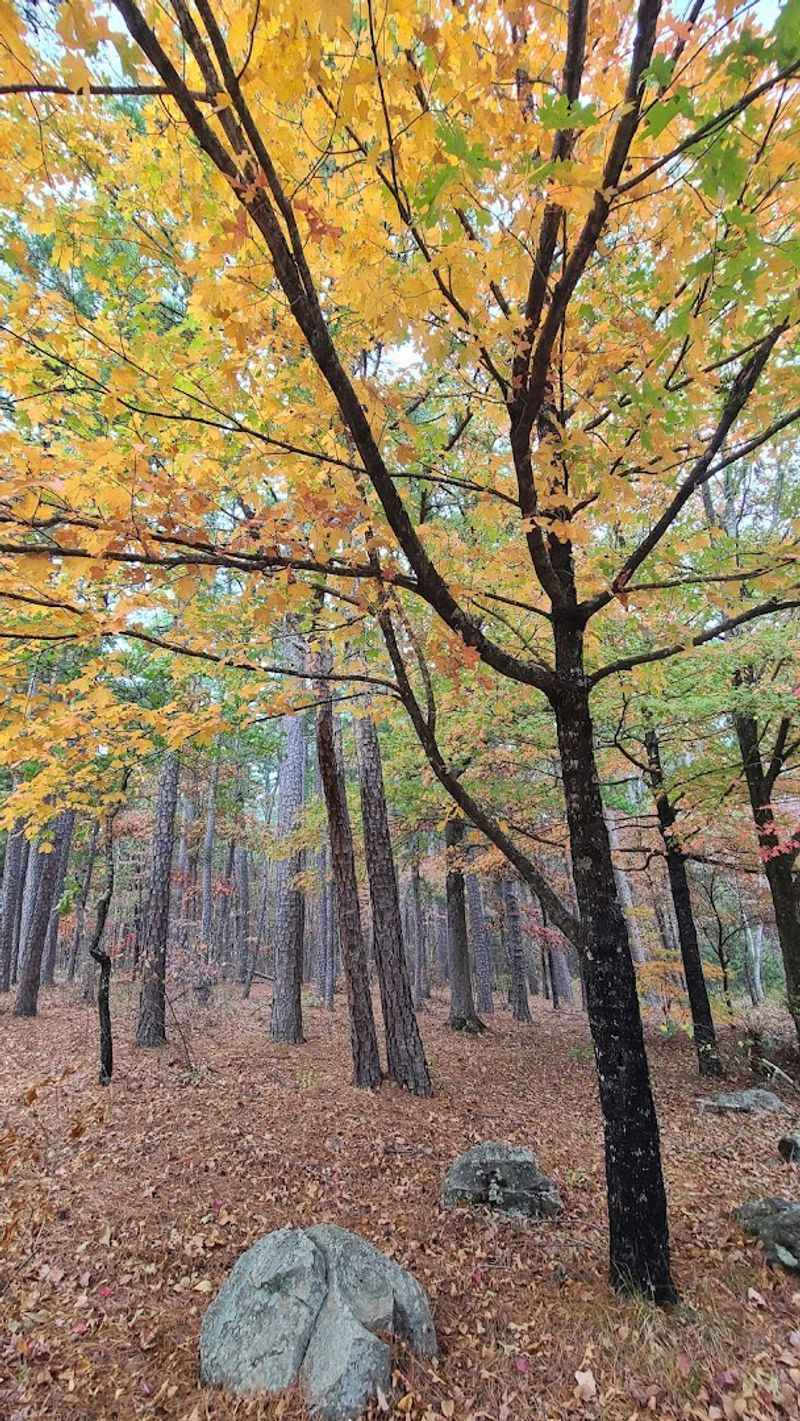
The Ouachita National Forest that surrounds the byway supports a wide range of wildlife, and patient observers are rewarded regularly. White-tailed deer are common near the road, particularly in the early morning and at dusk, and wild turkey sightings are frequent enough that stopping for one is practically a byway tradition.
The forest itself is a mix of shortleaf pine, oak, hickory, and dogwood, and the seasonal changes in this mix are part of what makes the byway visually interesting throughout the year. Spring brings a flush of wildflowers along the roadsides, summer delivers deep green canopy coverage, and winter strips the hardwoods back to reveal the ridge structure and distant views that foliage usually hides.
Birdwatchers find the byway particularly rewarding during spring and fall migration, when the ridgeline acts as a natural corridor for songbirds, raptors, and warblers moving through the region. Pulling over and sitting quietly for ten minutes at any overlook during these periods can produce a surprising number of species.
The natural world along this road does not need much prompting to put on a show.
Photography Tips for Getting the Best Shots
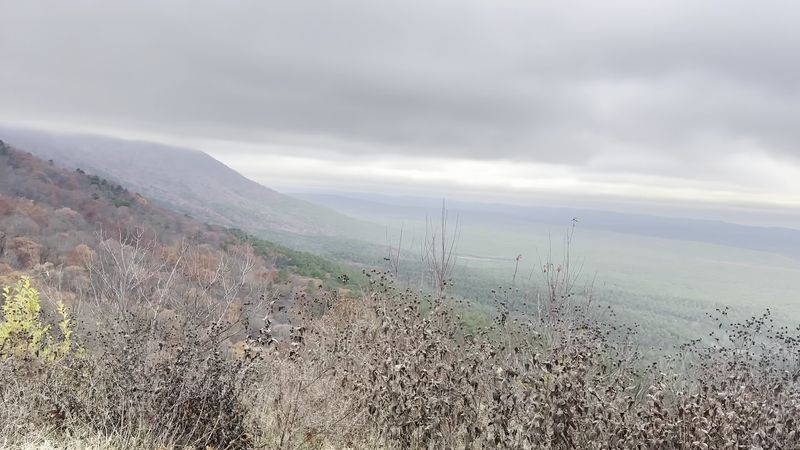
The byway offers so many photogenic moments that having a plan before you arrive saves both time and frustration. Sunrise and sunset are the two windows when the light does the most dramatic work, turning the ridgelines from flat green to glowing amber and deep purple in a matter of minutes.
The overlooks that face west are best for sunset shots, while the eastward-facing stops near the Talihina end of the drive catch the softest morning light. Overcast days are not a loss here; diffused cloud light reduces harsh shadows and brings out the saturated greens and reds of the forest canopy in a way that direct sun sometimes flattens.
A wide-angle lens captures the full sweep of the ridgeline panoramas, while a longer focal length compresses the layers of distant hills into a stacked effect that reads beautifully in prints. For fall color shots specifically, arriving mid-week rather than on a weekend means fewer cars in your frame and more freedom to position yourself at the overlooks without waiting.
The byway rewards photographers who slow down and let the landscape come to them rather than rushing from stop to stop.
Best Times to Visit Throughout the Year
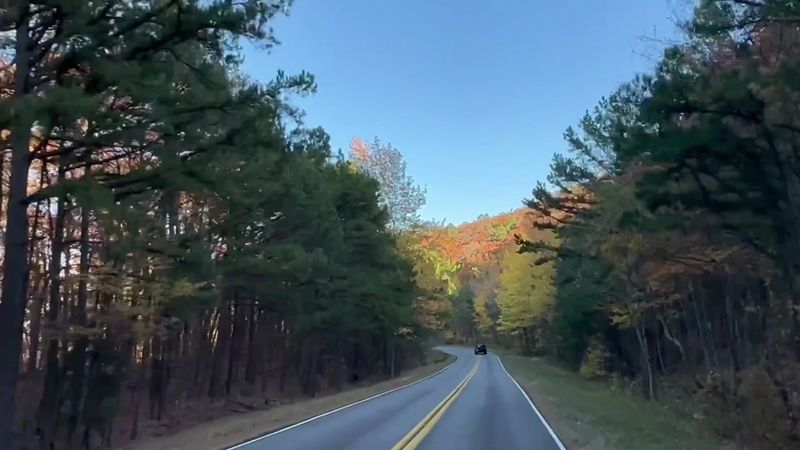
Fall gets most of the attention, and rightfully so, but the byway delivers a different and equally valid experience in every season. Spring is genuinely underrated here, with dogwood and redbud blooming along the lower slopes in March and April, and the forest recovering its green in a shade that feels almost electric after winter.
Summer brings full canopy coverage, cooler temperatures at elevation compared to the surrounding lowlands, and long daylight hours that make late afternoon drives especially pleasant. The road is quieter in summer than in fall, which means more room at the overlooks and a more relaxed pace overall.
Winter strips the hardwoods bare and reveals the skeletal structure of the ridgelines in a way that is stark and beautiful in its own right. Clear winter days produce some of the longest visibility from the overlooks, since there is no foliage to interrupt the sightlines.
The road can be icy in cold weather, so checking conditions before a winter visit is essential. Each season on this road has its own personality, and none of them disappoints a visitor who arrives with the right expectations.
Practical Tips for Planning Your Drive
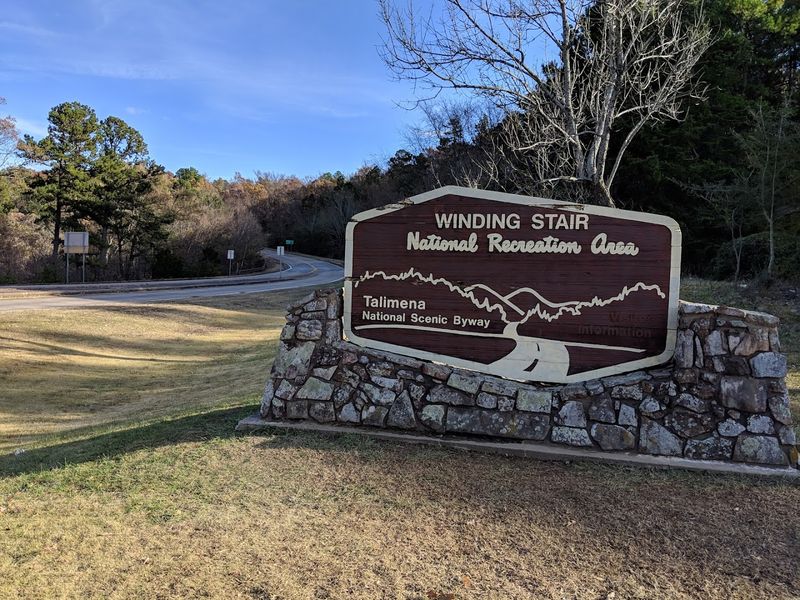
A little preparation goes a long way on the Talimena Byway, especially for first-time visitors. The road has no gas stations, no food vendors, and limited restroom facilities along most of its length, though the Mena, Arkansas, end has a small visitor center with bathrooms and an information kiosk.
Pack snacks, water, and a full tank of gas before you start. A light jacket or layer is worth bringing regardless of the season, since the ridge elevation can drop the temperature noticeably compared to the valley towns below.
Cell service is spotty along much of the route, so downloading an offline map before you leave is a practical move rather than an optional one.
Plan for at least two hours of driving time if you want to stop at the major overlooks, and longer if you intend to do any hiking or spend real time at the viewpoints. Weekends during fall peak season bring heavier traffic, so patience at the busier overlooks is part of the experience.
Arriving with a flexible schedule and a willingness to follow whatever view catches your eye first tends to produce the most satisfying visits on this road.
The Connection to Oklahoma’s Natural Heritage
The Talimena Byway was designated a National Scenic Byway in 1998, a recognition that placed it among the country’s most significant roads for natural, scenic, and recreational value. That designation reflects something that locals in southeastern Oklahoma have known for generations: this stretch of the Ouachita Mountains is genuinely special.
The byway passes through land that has been part of the Ouachita National Forest since 1907, making it one of the oldest national forests in the southern United States. The forest was established specifically to protect the watershed and timber resources of the region, and that protective history is part of why the landscape looks the way it does today.
For Oklahoma specifically, the byway represents a side of the state that often surprises visitors who arrive expecting flat plains and open skies. The mountain terrain, dense forests, and dramatic elevation changes along this road offer a completely different portrait of what Oklahoma holds.
Roads like this one remind you that a state is always more varied and more interesting than any single image of it, and the Talimena Byway makes that point more convincingly than almost anything else in the region.
Why This Drive Deserves a Spot on Your Road Trip List
Some roads are just roads. They get you from one place to another efficiently and without much fuss.
The Talimena Byway is not that kind of road. Every mile of it asks you to slow down, look around, and actually pay attention to where you are, which is something that more roads should do but very few manage.
The combination of accessible driving, world-class scenery, hiking access, and seasonal variety makes this byway one of those rare destinations that works for almost any type of visitor. Families, solo travelers, photographers, hikers, and motorcycle riders all find something here that feels made specifically for them.
Road trips through Oklahoma often skip the southeastern corner of the state in favor of more well-known routes, and that oversight consistently surprises people who finally make the drive. The Talimena Byway sits quietly in the Ouachita Mountains, not asking for much attention, and then delivering far more than expected to everyone who shows up.
That combination of modesty and genuine reward is exactly what makes a road worth driving twice, and this one absolutely earns a return visit before you have even reached the end of it.
Share this story