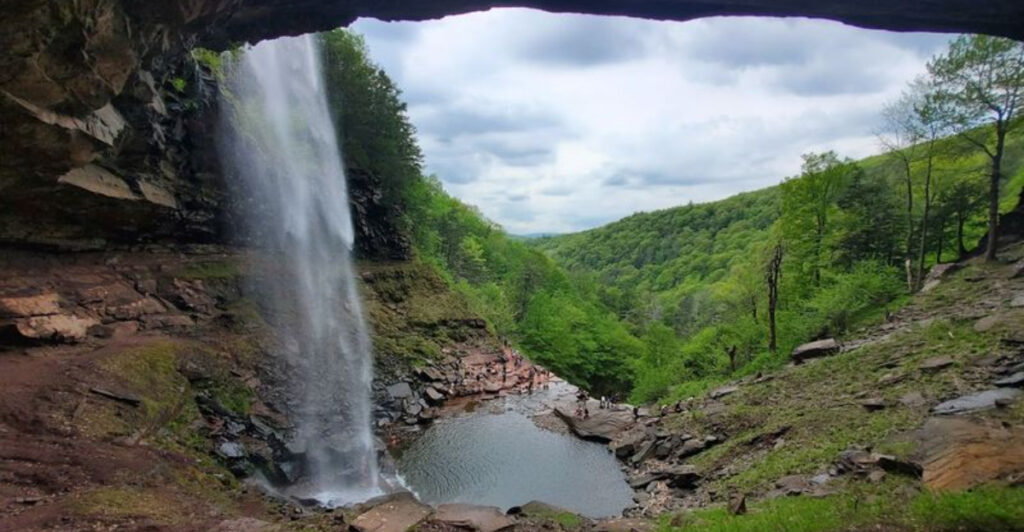
There is a waterfall tucked into the Catskill Mountains of New York that stops people in their tracks every single time. At 260 feet tall, it holds the title of the tallest waterfall in New York State, and it delivers on every bit of that reputation.
The trail to reach it is short enough for beginners but rewarding enough to keep experienced hikers coming back year after year. Fall colors, frozen winter cascades, spring snowmelt rushes, and summer swimming pools make this a destination that works across every season.
The hike itself clocks in at just about 1.4 miles round trip from the upper access point, which means you get an extraordinary payoff without an extraordinary effort. Whether this is your first time hearing about it or your fifth visit, this trail never gets old.
The Trail Layout and What To Expect
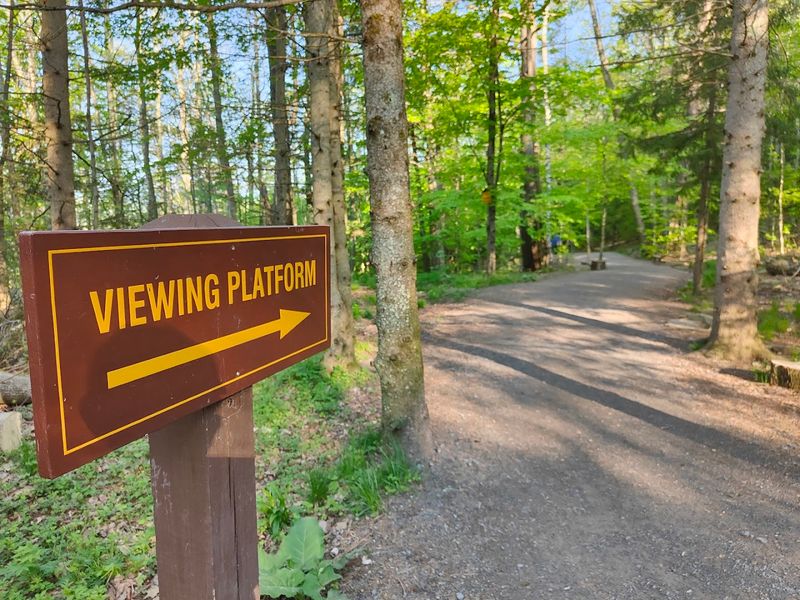
The upper access trail off Laurel House Road is the most popular starting point, and for good reason. From the main parking area, the observation deck is only about 0.3 miles in, making it one of the most accessible viewpoints of any major waterfall in New York.
From there, the trail continues down toward the lower falls, adding roughly another 0.7 miles of hiking with a notable descent.
The path features rock steps and stone stairs, particularly on the steeper sections near the lower falls. The total round trip from the upper lot runs approximately 1.4 miles, though hikers who park at the secondary Schutt Road lot will add about 0.4 miles to that distance.
Trail markers are clear, and the path stays well-traveled enough that getting lost is not a real concern.
The terrain mixes flat walking with stone steps and some narrow sections near the top of the falls, so wearing proper footwear makes a real difference out here.
The Observation Deck View That Earns Its Own Highlight
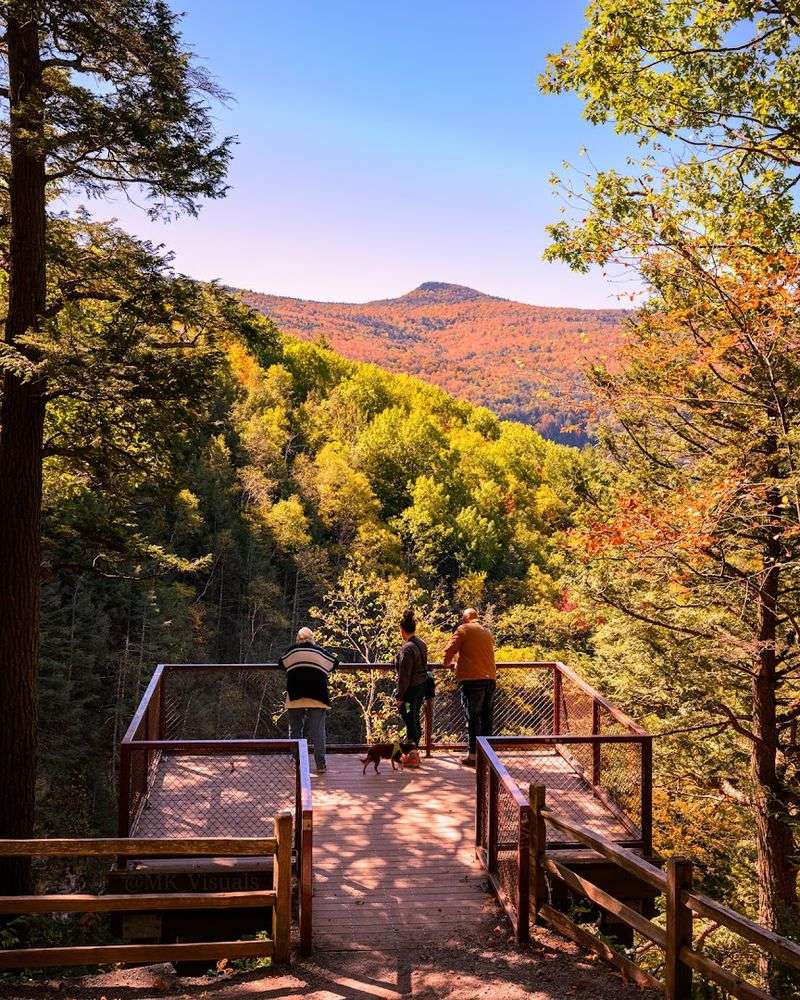
About 0.3 miles from the upper parking area, a wooden observation deck gives hikers one of the most open and rewarding views on the entire trail. From this platform, you get a wide-angle perspective of the surrounding Catskill peaks along with a clear sightline to the falls themselves.
It is the kind of view that makes people stop mid-sentence and just stare.
The deck is accessible enough for most fitness levels, including families with young children. It does not require the steep descent that the lower falls section demands, so hikers who want the scenic payoff without the extra challenge often stop right here.
On clear days, the mountain backdrop stretches far beyond the falls, giving the whole scene a depth that photographs only partially capture. Many hikers treat the deck as a rest point before pressing on to the top of the falls or the lower gorge.
Either way, this stop is non-negotiable on the route.
Standing at the Top of the Falls
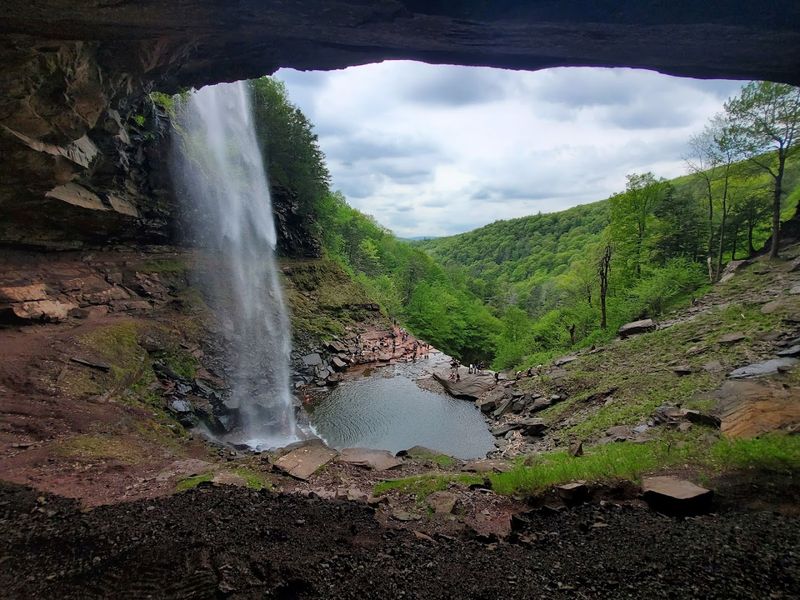
Just past the observation deck, the trail leads to the top of the upper falls, and this is where the hike takes on a completely different character. At the crest, the creek flows over the edge in a wide sheet before dropping into the gorge below.
The trail here becomes narrower, and the footing requires more attention, especially after rain or during colder months when moisture freezes on the rocks.
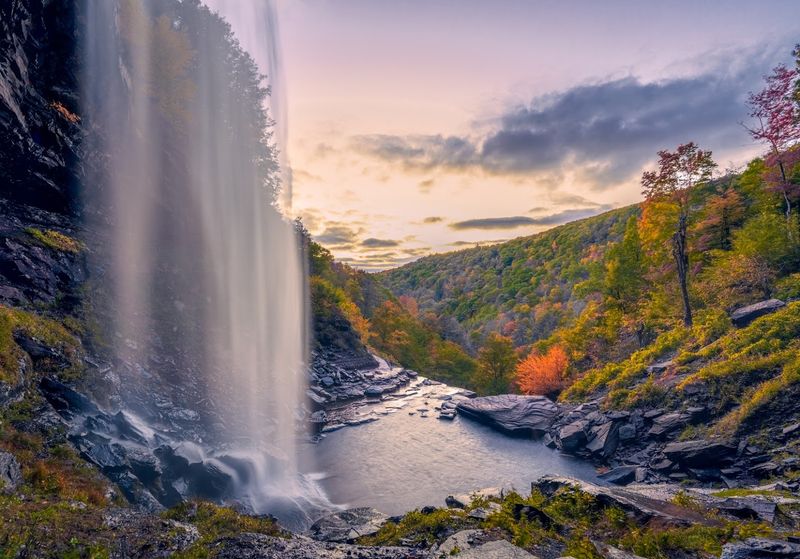
Going behind the upper falls is possible and highly recommended by those who have done it. The rock overhang creates a natural alcove that puts you directly behind the cascade, and the perspective from that position is unlike anything else on the trail.
It requires some careful footwork, but the reward is well worth the extra caution.
The top of the falls is also a natural rest point where hikers tend to linger, take photos, and decide whether to continue down to the lower section. Most people who make it this far choose to keep going.
The Lower Falls and the Gorge Below
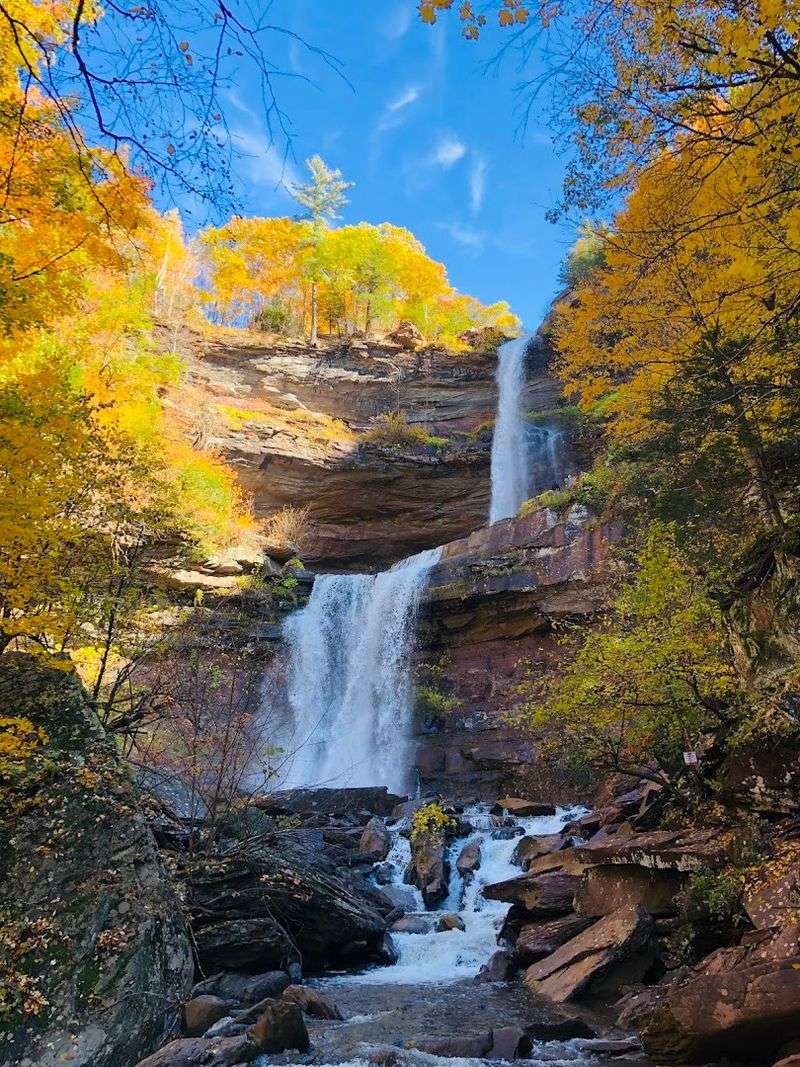
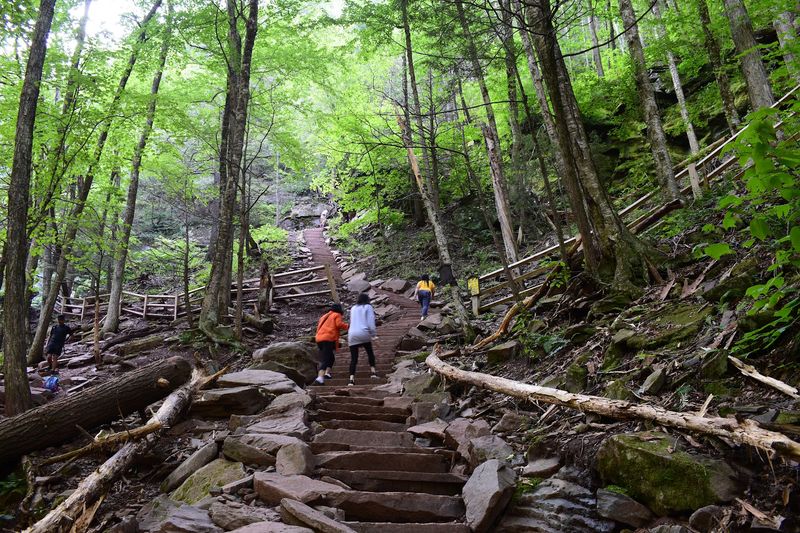
The lower section of the trail involves more than 180 stairs descending into the gorge, and that number is not an exaggeration. The steps are well-constructed and modified for safety, but the descent is real, and so is the climb back up.
Anyone with knee concerns should factor that in before committing to this portion of the hike.
At the bottom, two distinct viewpoints reward the effort. The first gives a clear look at the lower tier of the falls, while continuing a bit further down the path opens up a complete view of both tiers stacked on top of each other.
That full-frame view of 260 feet of falling water is the image most people associate with Kaaterskill Falls.
During summer months, the pools at the base attract swimmers who cool off in the clear water collected from the cascade above. The gorge walls rise steeply on both sides, creating a natural amphitheater around the base of the falls that makes the whole scene feel enclosed and dramatic.
How the Falls Change With Every Season
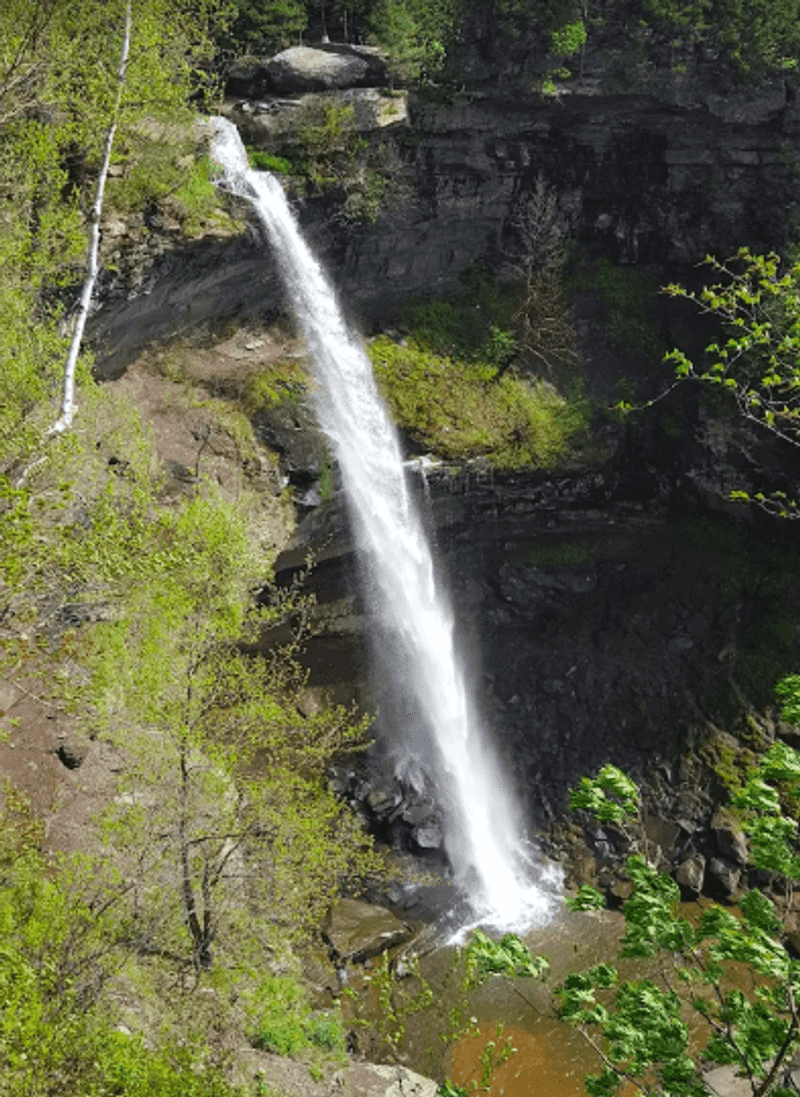
Few waterfalls in the Northeast put on as many different shows throughout the year as this one does. Spring brings the heaviest flow, when snowmelt from the surrounding mountains pushes the creek to its fullest and the falls roar with their maximum power.
That is the season most people consider the peak for sheer water volume.
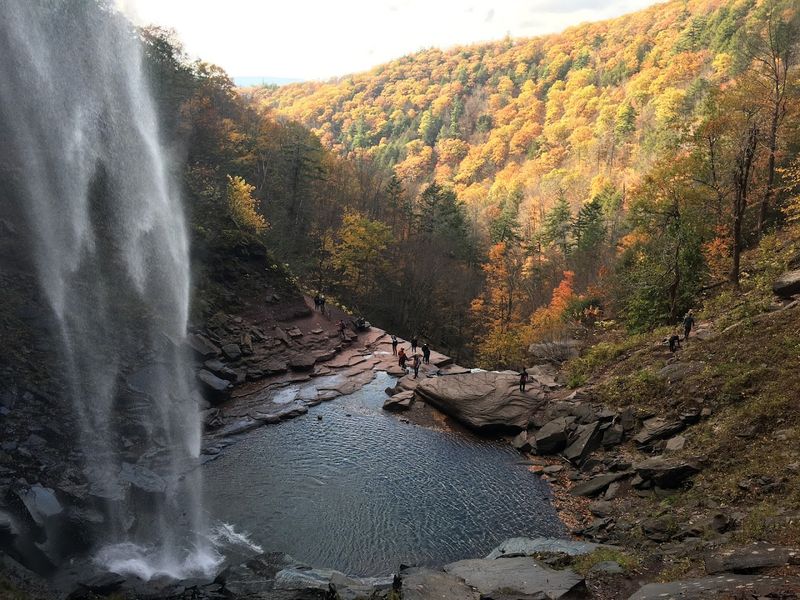
Summer dials the flow back somewhat, but the pools at the base fill with clear water and the surrounding forest is fully green. Fall draws crowds chasing the color change in the Catskill hardwoods, and the combination of orange and red foliage framing the white cascade is a classic image of the region.
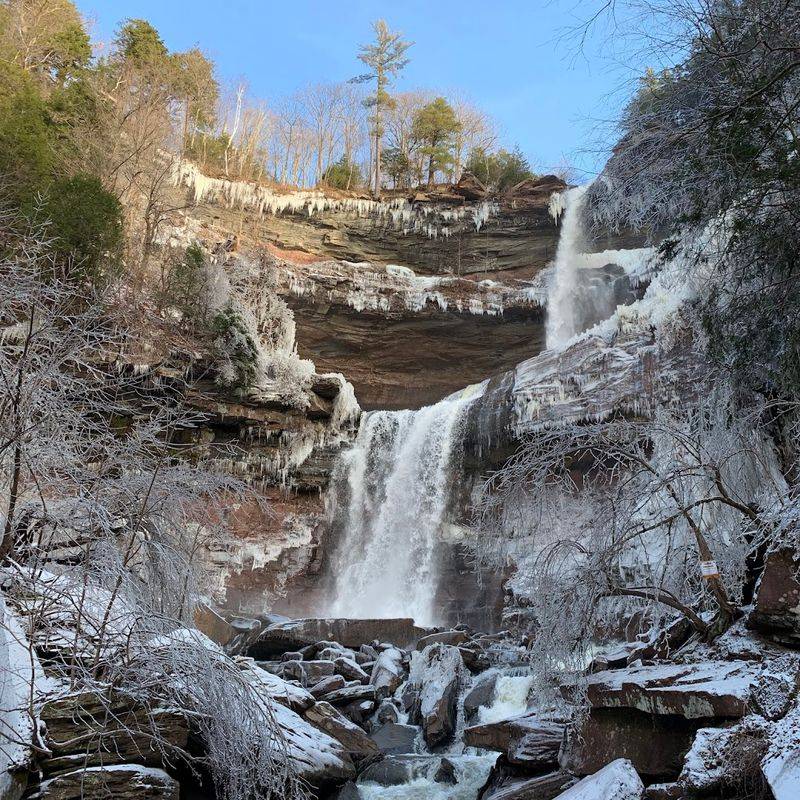
Winter transforms the falls into something almost unrecognizable. Ice formations build up along the cliffs, icicles hang from rock ledges, and portions of the cascade itself can freeze solid.
Hiking in winter requires microspikes or crampons because the trail becomes icy, but those who come prepared are treated to a frozen landscape that looks like nothing else in New York State.
The History Behind This Famous Waterfall
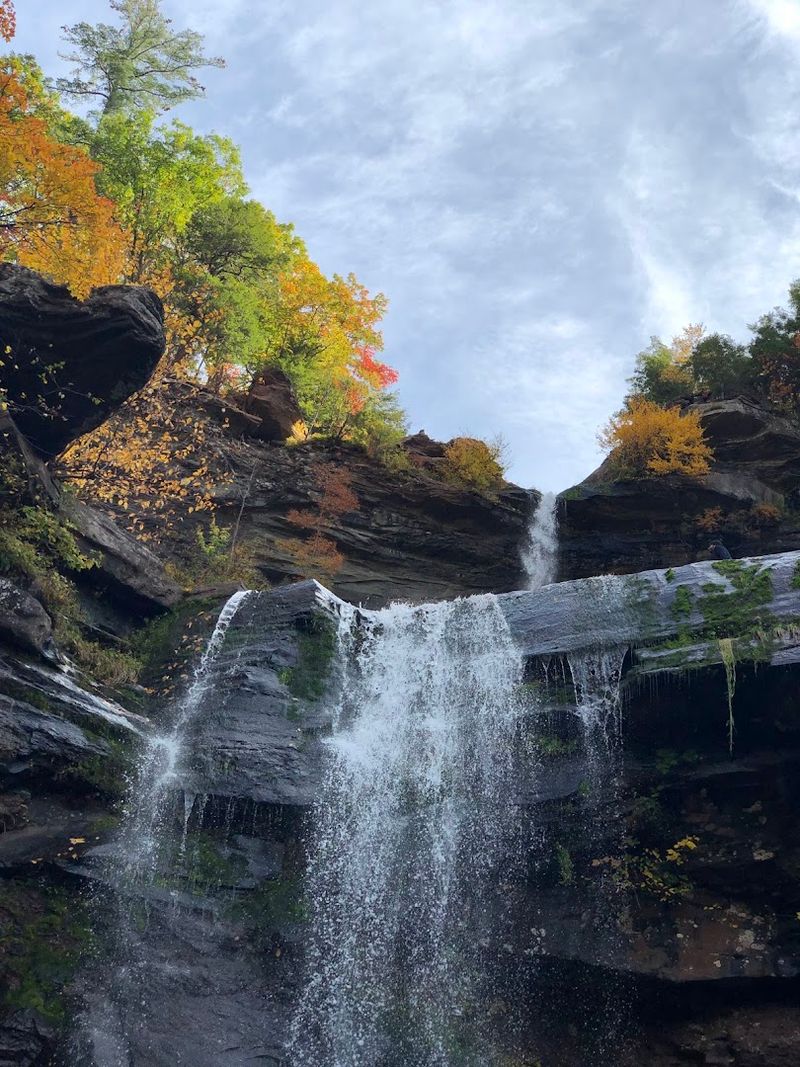
Kaaterskill Falls has been drawing people to the Catskills for well over two centuries. In the 1800s, the falls became one of the most painted natural subjects in American art history, largely through the work of the Hudson River School painters who made the Catskill region their canvas.
Thomas Cole and Asher B. Durand both depicted the falls, and their paintings helped establish the Catskills as a destination for nature appreciation at a time when that concept was still relatively new in American culture.
The nearby Catskill Mountain House, a famous resort hotel that once stood on the escarpment above, sent guests down to view the falls as part of their stay. The hotel is long gone, but the falls remain exactly as dramatic as they were when those early visitors made the trek.
That long history gives Kaaterskill Falls a cultural weight that goes beyond its physical height. It is not just a waterfall; it is a landmark that helped shape how Americans first learned to value and seek out natural landscapes.
Who Can Handle This Hike
The upper trail to the observation deck is genuinely accessible for most people, including young children and older adults who are reasonably mobile. The 0.3-mile walk to the deck involves minimal elevation change and is well-marked throughout.
Many families with kids as young as five or six complete this section without difficulty.
The full trail to the lower falls is a different conversation. The 180-plus stairs going down into the gorge, and then back up, require a solid baseline of fitness and steady knees.
It is rated moderate to challenging depending on the source, and that rating feels accurate once you are standing at the bottom looking back up at the staircase.
One seven-year-old was reportedly scampering back up the stairs faster than the adults on the trail, so age alone is not the determining factor. Overall fitness, footwear, and trail conditions on the day of the visit matter far more than any single demographic category.
The trail rewards preparation over experience.
Best Times To Visit and Crowd Patterns
Timing a visit to Kaaterskill Falls can make the difference between a peaceful morning hike and a slow shuffle through crowds. The falls are popular year-round, but summer weekends and holiday weekends bring the heaviest foot traffic.
Fourth of July weekend in particular draws large numbers, and the parking situation becomes genuinely difficult by mid-morning.
Arriving before 8 in the morning on any weekend gives you the best chance at free parking and a quieter trail. Sunday mornings tend to be slightly less crowded than Saturdays, though both days fill up quickly during peak season.
Weekday visits are notably calmer across all seasons.
Fall is the most visually dramatic season for the surrounding foliage, but it is also one of the busiest periods. Spring offers the strongest water flow with smaller crowds than summer.
Winter is the least visited season, largely due to icy conditions, but those willing to gear up properly often have the falls nearly to themselves, which is a rare and worthwhile experience.
Safety Tips Worth Taking Seriously
Kaaterskill Falls is a natural environment, and that means the trail carries real risks that demand respect. The rocks near the top of the falls and along the creek bed get slippery when wet, and the edges near the upper tier drop steeply into the gorge below.
Staying on the marked trail and away from exposed edges is not just a suggestion; it is the kind of decision that keeps a fun day from turning into an emergency.
In winter, microspikes or crampons are essential. The trail becomes coated in ice and packed snow, and standard hiking boots do not provide enough grip on the steeper sections.
Several hikers have noted that the trail is still worth doing in winter, but only with the right gear.
The narrow section near the top of the falls requires single-file walking and careful footing. Going slowly and keeping an eye on where each foot lands is the right approach.
The falls will still be there even if the pace slows down considerably.
Why People Keep Coming Back
A waterfall that holds the record for tallest in New York State would be worth visiting once on that fact alone. But Kaaterskill Falls keeps drawing people back because it genuinely looks and feels different depending on when you show up.
The changing water levels, the shifting seasons, and the varying light conditions mean no two visits are quite the same.
The hike itself is short enough to feel approachable but varied enough to feel like a real outdoor experience. The combination of a forested trail, stone stairs, a dramatic gorge, an observation deck with mountain views, and a tiered waterfall packs a lot of natural variety into 1.4 miles.
The falls sit close enough to New York City to make a same-day round trip realistic, yet they feel genuinely removed from urban life once you are on the trail. That balance of accessibility and authenticity is hard to find, and it explains why Kaaterskill Falls has been drawing people to the Catskills for generations and shows no sign of stopping.
Where Exactly You Are Headed
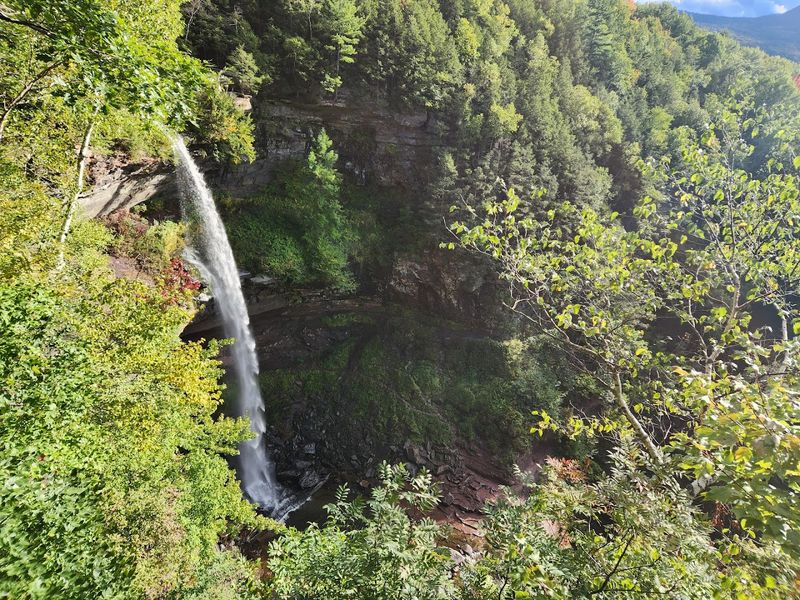
Kaaterskill Falls sits along Spruce Creek in Hunter, NY 12436, within Greene County in the Catskill Mountains of New York State. The upper access trailhead, which most hikers recommend, begins off Laurel House Road and puts you on a well-maintained path toward one of the most iconic natural landmarks in the entire Northeast.
The falls drop in two dramatic tiers, with the upper tier measuring about 175 feet and the lower tier adding another 85 feet. Combined, that makes 260 feet of cascading water cutting through a deep gorge carved over thousands of years.
The area sits roughly two and a half to three hours from New York City, making it a very practical day trip for anyone in the metro area. Greene County is known for outdoor recreation, and Kaaterskill Falls stands as its most celebrated natural feature.
Getting here is straightforward, and the payoff begins the moment you step out of the car.
Share this story