There is a stretch of the Oregon Coast where the forest meets the ocean in a way that genuinely stops you in your tracks. Towering Sitka spruce trees dripping with moss give way to dramatic cliffs, and below those cliffs, quiet beaches stretch out with almost no one on them.
I had heard about this park from a friend who called it the most beautiful place she had ever seen with her own eyes, and after my visit, I completely understood why. This is the kind of place that makes you slow down, breathe in the salt air, and feel genuinely grateful to be outside.
After a period of closure for trail repairs, the park is back open and better than ever, so I am going to walk you through everything you need to know before you go.
Where Exactly You Are Going and How to Get There
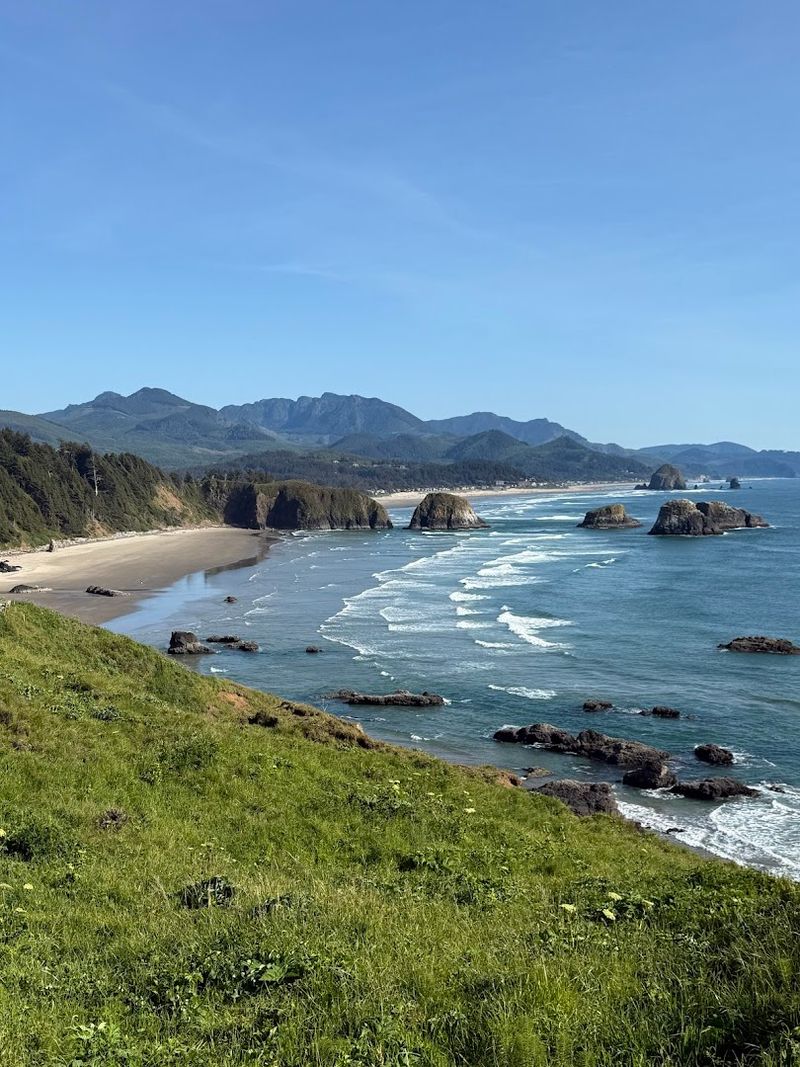
The full name is Ecola State Park, and it sits just north of Cannon Beach, Oregon 97110, right along the northern Oregon Coast. The park’s address puts you on a narrow, winding road that climbs up through old-growth forest before opening up to some of the most dramatic coastal views you will find anywhere in the Pacific Northwest.
Getting there is straightforward from Cannon Beach. You follow the signs north out of town, and within a few minutes, the road narrows and the trees close in around you.
The pavement is well-maintained for most of the route, with only a short unpaved stretch near the end.
Trailers are not recommended on this road because the curves are tight and the drop-offs are real. The park phone number is +1 503-812-0650 if you need to check conditions before heading out.
Coming from Portland, the drive takes roughly two hours, and every mile of the coastal approach is worth it.
Plan to arrive early on weekends, because this park draws serious crowds from across Oregon and beyond.
The Forest Trail That Earned the Park Its Reputation
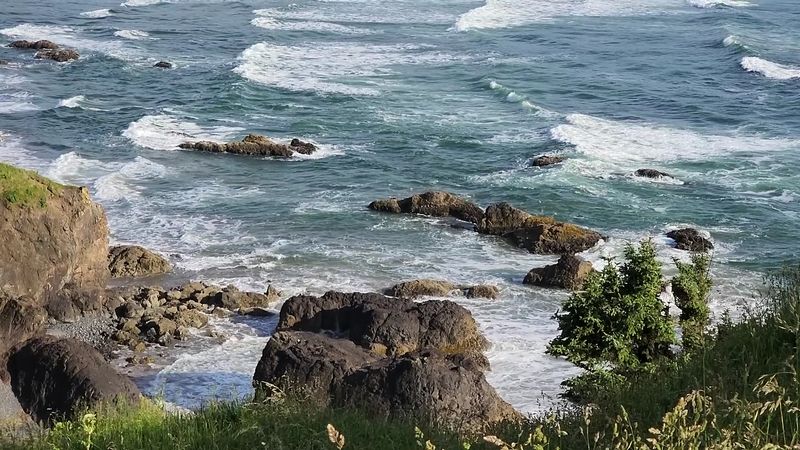
The trail through the forest is the heart of the Ecola experience, and it is the main reason the park reopening made so many people genuinely excited. The path runs roughly seven miles along the headland, weaving through a dense canopy of Sitka spruce, western hemlock, and red alder trees that are so thickly covered in moss they look almost prehistoric.
Ferns carpet the forest floor on both sides of the trail, and the light that filters through the canopy has a soft, green quality that makes every photo look professionally edited. The trail has real elevation changes, so sturdy shoes with good grip are not optional here.
Pack water and snacks because the incline will work your legs in ways a flat beach walk never would.
Along the way, the trees occasionally part to reveal jaw-dropping ocean views that appear without warning, which makes the hike feel like a series of pleasant surprises. The two-mile stretch from the main viewpoint parking lot down to Indian Beach is the most popular segment, and for good reason.
That final descent to the shore is a reward that feels genuinely earned.
Indian Beach and the Peaceful Shore at Trail’s End
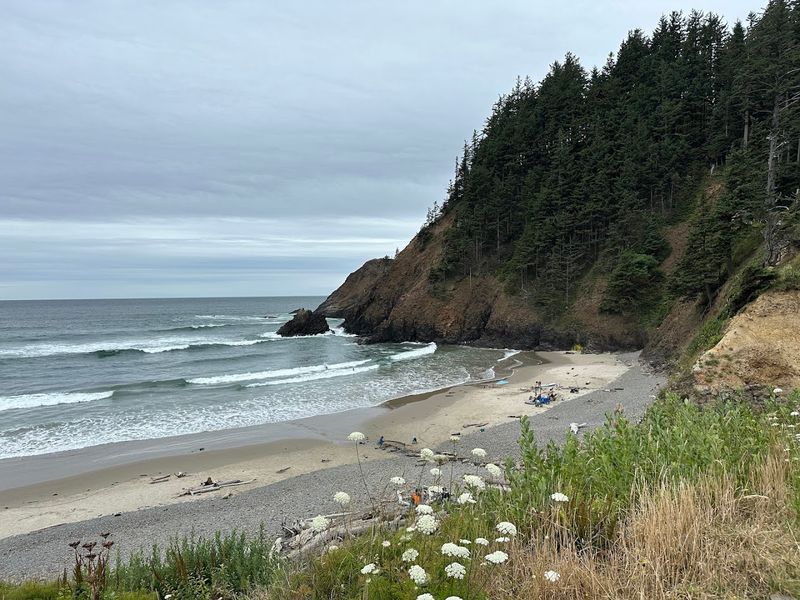
At the end of the forest trail, Indian Beach appears like a scene from a nature documentary. The beach is sheltered by rocky headlands on both sides, which gives it a calm, tucked-away feeling that the more famous stretches of Cannon Beach simply do not have.
The waves here are gentler, and the whole place has a quiet energy that is genuinely hard to find on the Oregon Coast during summer.
Tide pooling at Indian Beach is outstanding. On my visit, I spotted crabs, sea anemones, small fish darting between rocks, and even a few starfish clinging to the lower boulders.
The rocky shoreline invites slow exploration, and you could easily spend an hour just moving from one pool to the next.
Keep in mind that this is not a loop trail, so you will need to either retrace your steps through the forest or have someone pick you up at the Indian Beach parking lot. Most people choose to walk back, and honestly, the return trip through the trees feels just as rewarding the second time through.
The shore here has a stillness that stays with you long after you leave.
The Views That Make Every Visitor Stop and Stare
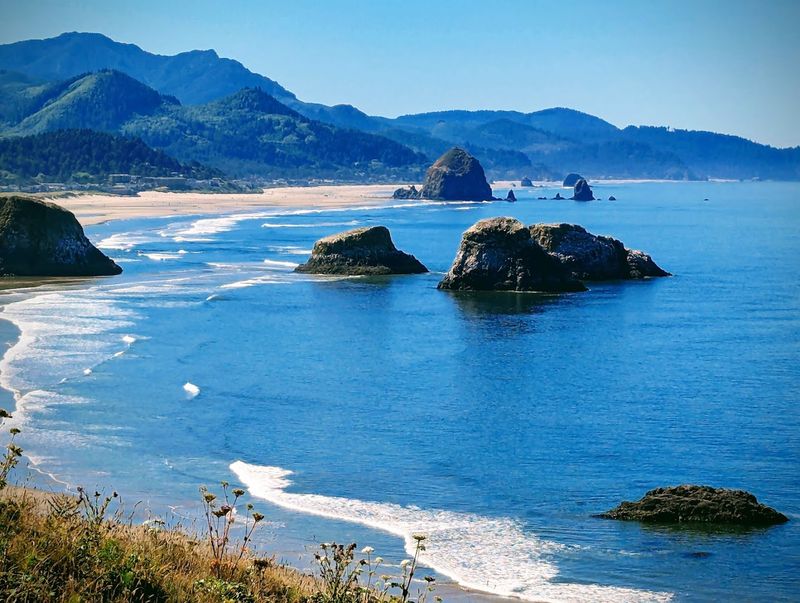
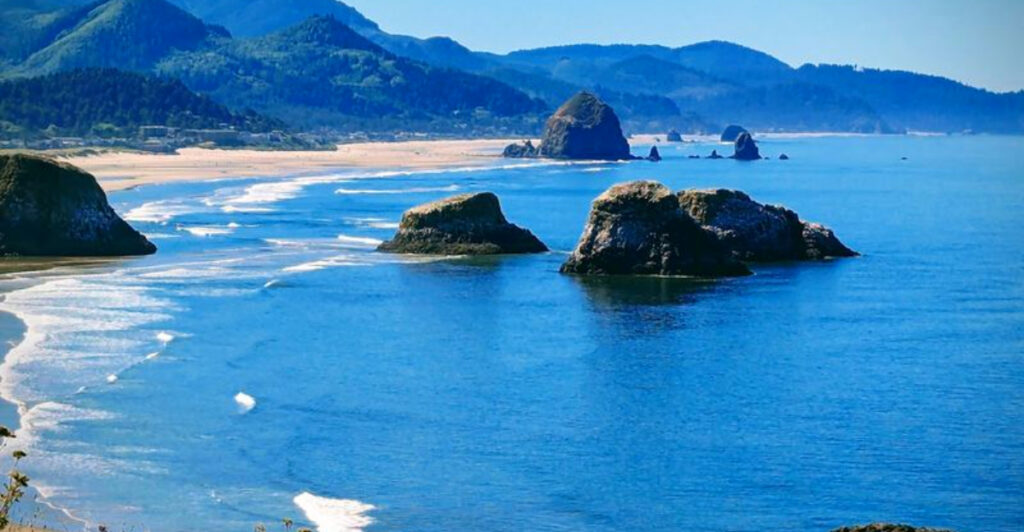
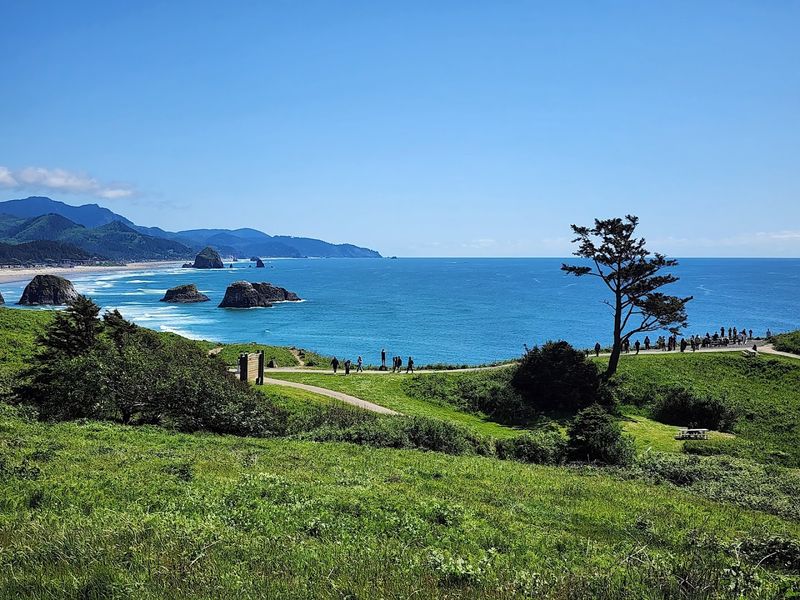
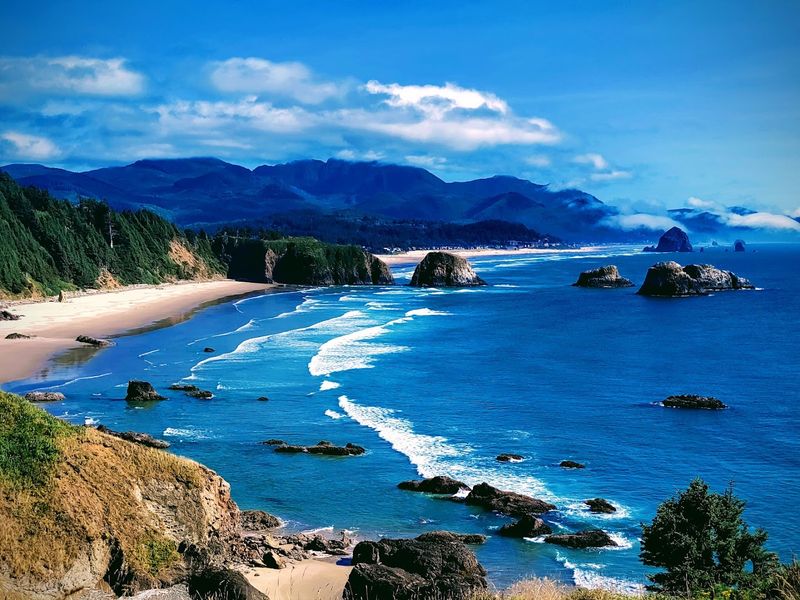
From the main viewpoint at Ecola State Park, the scenery spreads out in a way that feels almost unfair. You can see Haystack Rock rising out of the water near Cannon Beach, the jagged sea stacks the locals call the Needles, and on a clear day, the faint outline of Tillamook Rock Lighthouse sitting alone on its island about a mile offshore.
The lighthouse is a fascinating sight even from a distance. Built in 1881, Tillamook Rock Lighthouse operated for over 75 years before being decommissioned, and it now stands as one of the most recognizable landmarks on the Oregon Coast.
You cannot reach it from the park, but seeing it perched on that isolated rock gives you a real sense of how wild this coastline truly is.
The viewpoint itself requires very little effort to reach. A short walk from the parking area brings you to the overlook, which means even visitors with limited mobility can take in the full panorama.
The 360-degree spread of ocean, forest, and cliff is the kind of view that makes you want to stay for hours, and many people do exactly that.
Bring a jacket because the wind off the Pacific has its own opinions about how long you should linger.
Hollywood History Hidden in the Headlands
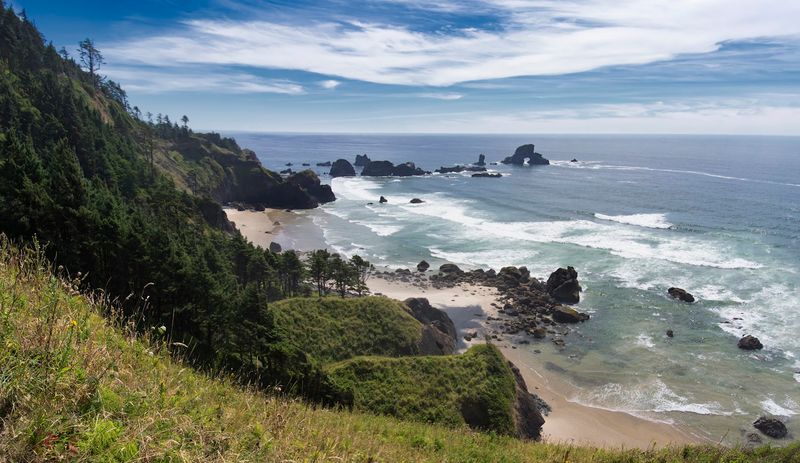
Not every state park can claim a role in a beloved 1980s adventure film, but Ecola State Park pulls it off with zero effort. The headland overlook here served as a filming location for The Goonies, the 1985 classic that has kept its fan base loyal for decades.
Standing at the viewpoint, you can see exactly why the filmmakers chose this spot.
The dramatic sweep of ocean, cliff, and sky creates a natural backdrop that no studio set could replicate. Fans of the film make a point of stopping here to recreate the iconic view, and the park welcomes that kind of enthusiasm.
Scenes from the Twilight film series were also shot in this area, adding another layer of pop culture history to the park’s identity.
What I find charming about all of this is that the Hollywood connections feel like a bonus rather than the main attraction. The park is spectacular enough that it would draw visitors without any film credentials at all.
Still, there is something fun about standing on a headland in Oregon and thinking about the movies that were made right where you are standing.
That kind of layered history makes a visit feel richer and more memorable than a simple nature walk.
Parking, Permits, and Practical Details You Need to Know
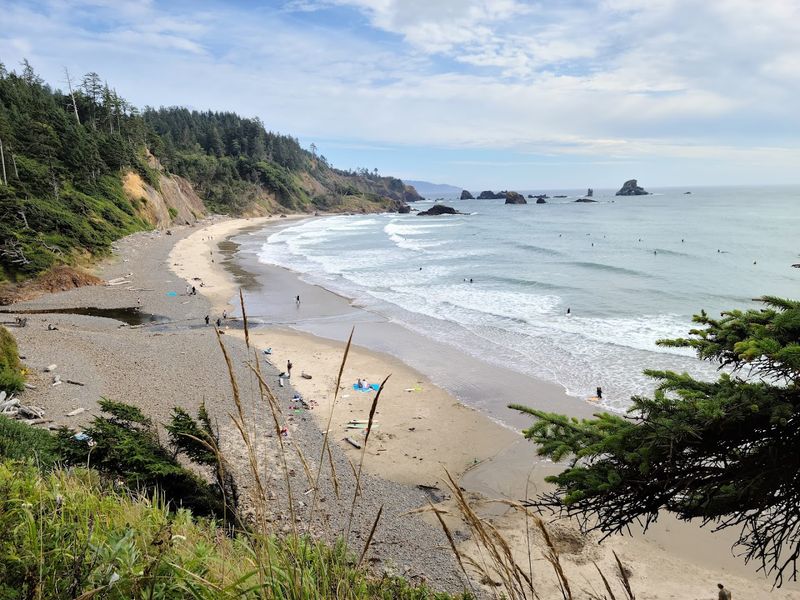
A visit to Ecola State Park requires a parking permit, which you can purchase at the self-service kiosk near the entrance. The day-use fee is typically around $12, though prices can vary slightly by season, so it is worth checking the official Oregon State Parks website before you go.
The park does not take reservations for day use, which means first come, first parked.
There are two main parking areas inside the park. The first lot is near the main viewpoint and fills up fastest, especially on summer weekends.
The second lot is at Indian Beach and tends to have more availability, partly because visitors heading there often walk down from the first lot rather than driving the full road.
Restrooms are available near both parking areas, which is genuinely appreciated after a long hike. The park is open year-round, though the trail conditions and road access can change in winter.
Weekday visits are noticeably less crowded, and a Tuesday or Wednesday morning in summer will give you a much more relaxed experience than a Saturday afternoon.
Coming from a state like Oklahoma, where coastal parks are not part of daily life, the whole setup here feels refreshingly well-organized and visitor-friendly.
The Drive In That Is Worth the Trip on Its Own
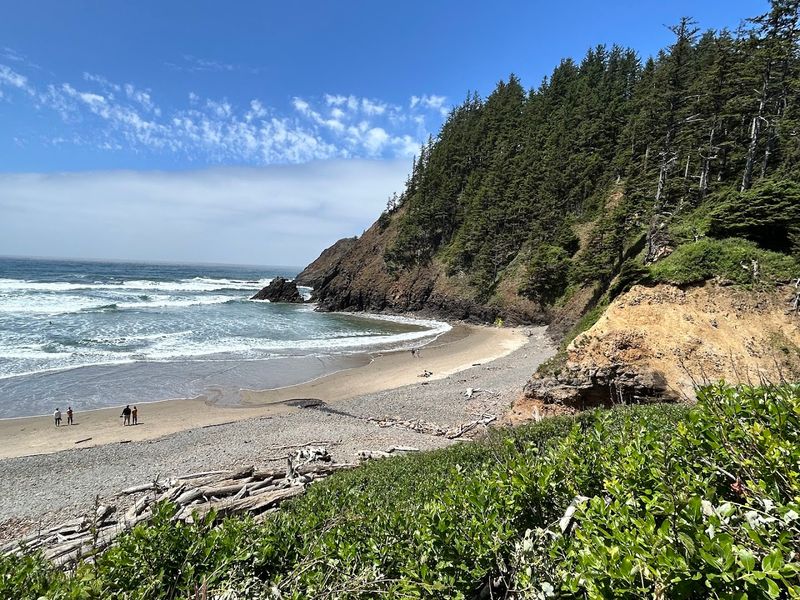
Before you even reach the viewpoint or the trailhead, the drive into Ecola State Park delivers something special. The road climbs away from Cannon Beach through a forest so dense and green that it feels like the trees are leaning in to say hello.
Moss hangs from the branches, ferns press up against the road’s edge, and the light dims to a soft, filtered glow that makes the whole thing feel a little surreal.
The road is paved for most of its length, with only a short rough section near the end. It is narrow, with tight curves that require careful attention, and the posted speed limits are there for a reason.
Taking your time on this road is not just safer, it is also the only sensible approach given how beautiful it is.
Visitors from flat, landlocked states like Oklahoma often say this drive alone justifies the trip. The contrast between the quiet forest road and the sudden explosion of ocean views at the top is genuinely dramatic.
By the time you park and step out of the car, you have already experienced something that most people only see in travel magazines. The drive is not just a means to an end here.
It is part of the whole experience.
Wildlife, Wildflowers, and What Lives in the Park
Ecola State Park is home to a surprisingly rich variety of wildlife, and paying attention to your surroundings on the trail pays off in a real way. Steller sea lions and harbor seals haul out on the rocks below the headlands, and with a pair of binoculars, you can watch them from the viewpoint without disturbing them at all.
Shorebirds work the tide line at Indian Beach throughout the day, and the tide pools host their own small ecosystem of crabs, anemones, urchins, and the occasional octopus tucked under a ledge. The forest trail itself is alive with birdsong, and the old-growth trees provide habitat for species that need large, undisturbed woodland areas to thrive.
Wildflowers appear along the trail edges in spring and early summer, adding color to the already vivid green of the ferns and mosses. Dogs are allowed in the park on leash, and plenty of visitors bring their pets along for the hike.
The rule about keeping dogs leashed is enforced here because the wildlife on the rocks and in the tide pools is sensitive to disturbance.
Respecting that rule is a small thing that makes a big difference for the creatures that call this headland home.
Best Times to Visit and What Each Season Offers
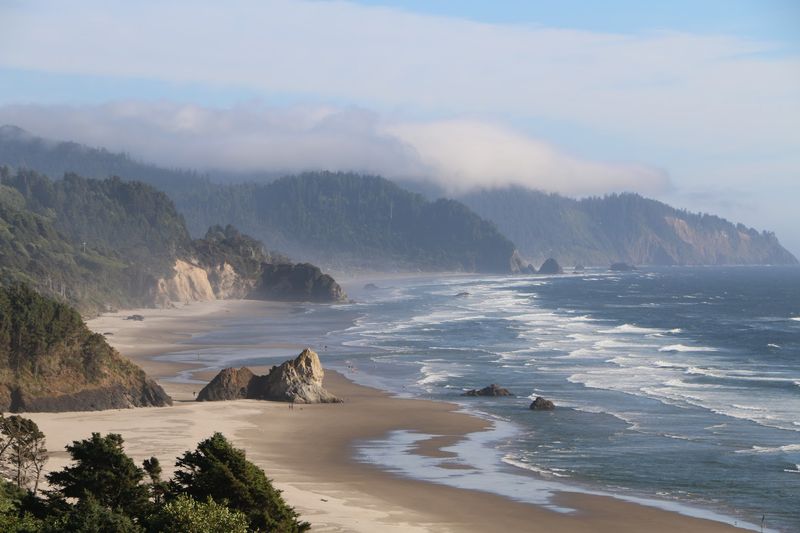
Summer is the most popular time to visit Ecola State Park, and the long daylight hours make it easy to fit in a full hike and still have time to explore Cannon Beach afterward. That said, summer also brings the biggest crowds, and weekend parking can feel competitive.
A Tuesday morning in July offers a very different experience than a Saturday afternoon in August.
Spring is genuinely underrated here. The wildflowers are out, the forest is at its most vivid green after the winter rains, and the crowds have not yet arrived in full force.
Fog is common on the Oregon Coast in spring and early summer, and rather than being a disappointment, it adds a moody atmosphere to the headland views that clear-day visitors sometimes miss entirely.
Fall brings cooler temperatures, dramatic storm light, and noticeably thinner crowds. Winter visits are for the adventurous, with powerful surf visible from the headland and the forest trail almost entirely to yourself.
Visitors making the trip from far away, including those traveling from Oklahoma or other inland states, often find that a shoulder-season visit gives them a more personal and memorable experience than peak summer.
Every season here has something worth showing up for.
Why This Park Stays With You Long After You Leave
Some places are beautiful in a way that is easy to forget once you are back in your normal routine. Ecola State Park is not one of those places.
The combination of old-growth forest, dramatic coastal cliffs, isolated beaches, and sweeping ocean views creates an experience that sits in your memory with unusual clarity.
Part of what makes it stick is the variety packed into a relatively small area. You can stand in a cathedral-like forest, walk out to a cliff edge with 180-degree ocean views, and then descend to a quiet beach with active tide pools, all within a few hours.
That kind of sensory range is rare and genuinely satisfying.
Visitors who grew up in landlocked states like Oklahoma often describe their first visit to Ecola as a turning point in how they think about the American coast. The park does not need gimmicks or attractions to hold your attention.
It earns that attention through sheer natural quality, and it keeps earning it every time you look up from the trail. The park’s rating of 4.8 stars across thousands of reviews is not a surprise to anyone who has spent an afternoon here.
It simply delivers on every promise the Oregon Coast makes.
Share this story