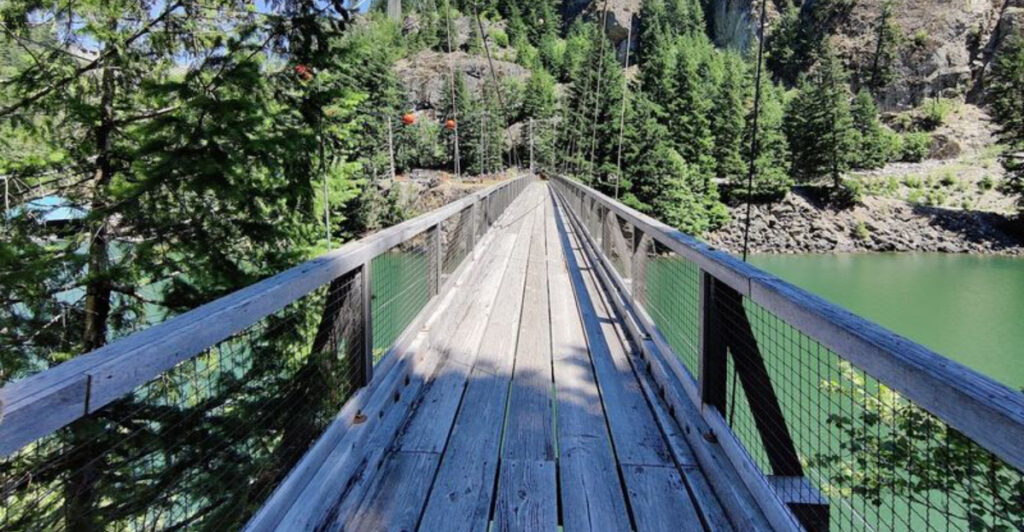
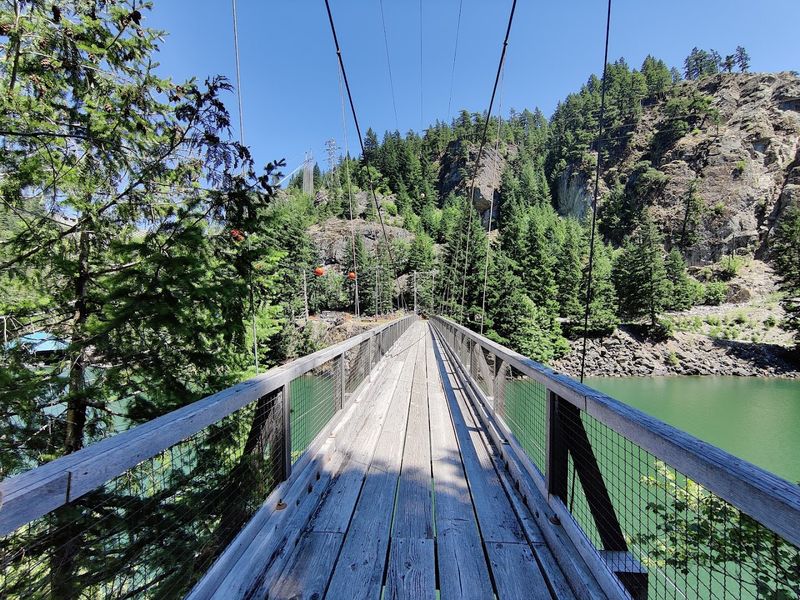
There is a suspension bridge in Washington State that stops you in your tracks the moment you set foot on it. The wooden planks sway just enough to remind you that you are crossing into something truly wild, and on the other side waits a cathedral of ancient cedar trees so tall they block out most of the sky.
North Cascades National Park, tucked into the northern corner of Washington along the Canadian border, holds this kind of magic around nearly every bend. I visited on a crisp autumn morning, and by the time I crossed that bridge, I already knew this place was going to be unlike anything I had seen before, even compared to the parks I had explored across states as far away as Oklahoma.
Where the Bridge Meets the Wild: Location and First Impressions
The address that gets you closest to this experience is North Cascades National Park, Washington, reachable via State Route 20, also known as the North Cascades Highway. The park’s main visitor center sits in Newhalem, a tiny community that serves as a natural starting point for first-time visitors.
The Trail of the Cedars in Newhalem is where you will find the suspension bridge that gives this whole adventure its name. It is a short loop trail, but do not let the modest distance fool you.
The moment you step onto that swaying bridge and look down at the rushing Skagit River below, you feel something shift inside you.
Rangers at the visitor center are genuinely helpful and will point you toward the right trails for your experience level. The park’s phone number is 360-854-7200, and the official website at nps.gov/noca has current trail and road conditions.
Coming from a flat state like Oklahoma, the sheer vertical drama of this landscape hits differently and stays with you long after you leave.
Ancient Cedars and the Trail That Honors Them
The Trail of the Cedars is one of the most underrated short walks in the entire national park system. Tucked right into the community of Newhalem, most visitors drive straight past it without a second glance, which honestly means more quiet forest for those who do stop.
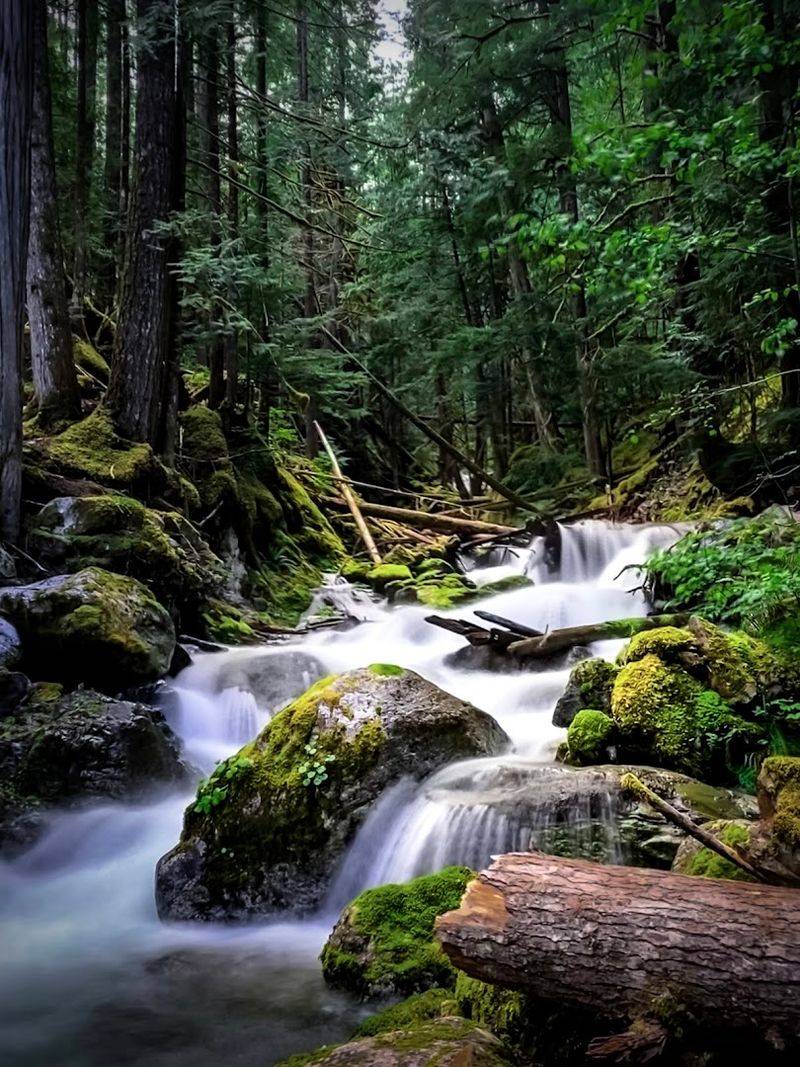
The trail winds through a grove of old-growth western red cedars, some of which have been standing for hundreds of years. Their trunks are enormous, often draped in soft green moss, and the light that filters through the canopy has a quality that feels almost sacred.
The ground is carpeted with ferns and fallen needles, and the air smells clean and slightly sweet.
Interpretive signs along the path explain the cultural and ecological importance of cedar to the Indigenous peoples of the Pacific Northwest, which adds real depth to what could otherwise just be a pleasant stroll. The whole loop takes about 20 to 30 minutes at a relaxed pace.
Even visitors who have explored national parks from Oklahoma to Oregon tend to call this one quietly unforgettable, and that reaction is completely earned.
The Turquoise Water That Does Not Look Real
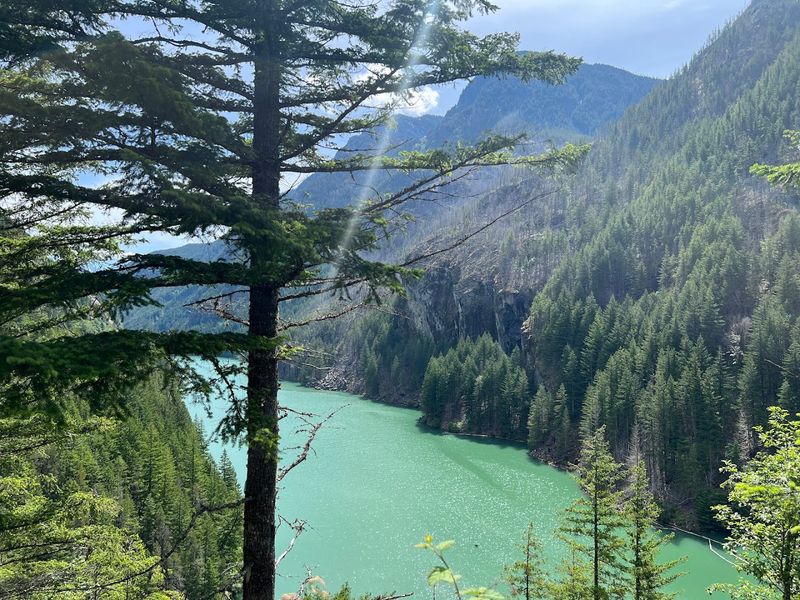
Diablo Lake is the kind of place that makes people stop mid-sentence and just stare. The water is a brilliant, almost unnatural shade of turquoise, and no, your eyes are not playing tricks on you.
The color comes from glacial flour, which is the fine rock dust ground down by glaciers and suspended in the water, scattering light in a way that produces that electric blue-green hue.
The Diablo Lake Overlook along State Route 20 gives you a jaw-dropping aerial view of the lake framed by jagged peaks. Many visitors spend a long time at this pullout, and it is easy to understand why.
If you want to get even closer, paddling on the lake by kayak or canoe is a genuinely special experience.
There are no rentals inside the park, but outfitters near the entrance can set you up. No launch permit or fee is required for non-motorized vessels, which is a refreshing surprise.
The calm surface of the water reflects the surrounding mountains like a mirror, and on a clear day, the whole scene looks almost too perfect to be real.
Cascade Pass and the Hike That Tests Your Limits
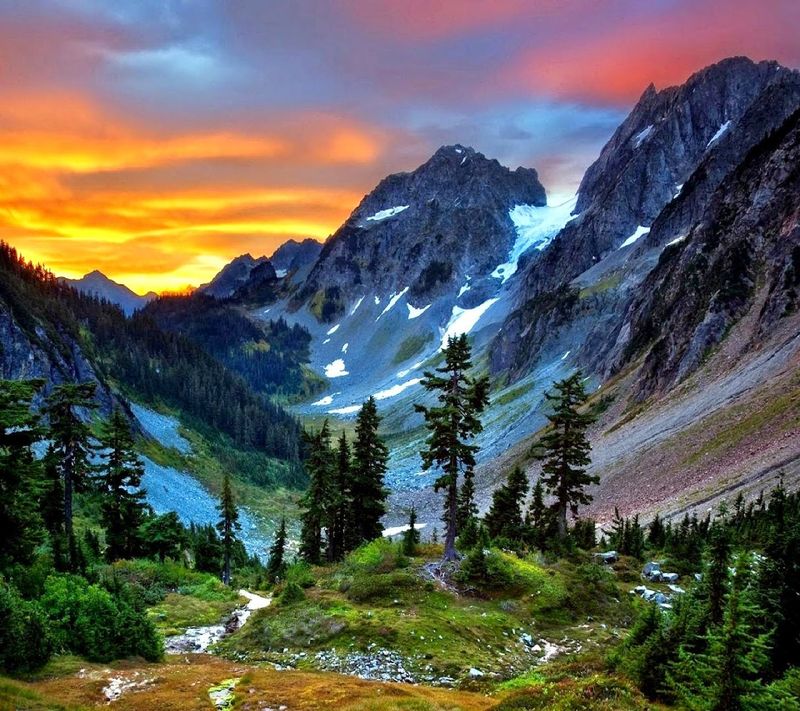
Cascade Pass is the hike that serious trail lovers talk about when they mention North Cascades. The trailhead sits at the end of Cascade River Road, a bumpy stretch that requires patience but rewards it generously.
The hike itself is about 7.4 miles round trip with significant elevation gain, and it earns every step.
From the pass, you can see layer upon layer of jagged mountain ridges stretching toward the horizon, with glaciers clinging to the upper slopes. On a clear day, the panorama is so wide and so detailed that it is hard to know where to look first.
Extending the hike up the Sahale Arm adds even more elevation and leads to Sahale Glacier Camp, one of the most dramatic backcountry spots in the state.
Early season hikers should check conditions carefully, as snow lingers well into summer and microspikes or trekking poles may be necessary. The road to the trailhead can be rough, so a vehicle with decent clearance helps.
Visitors who have hiked all over the country, from the plains of Oklahoma to the peaks of Colorado, often rank this trail among their very best experiences.
Washington Pass Overlook and the Story of a Road
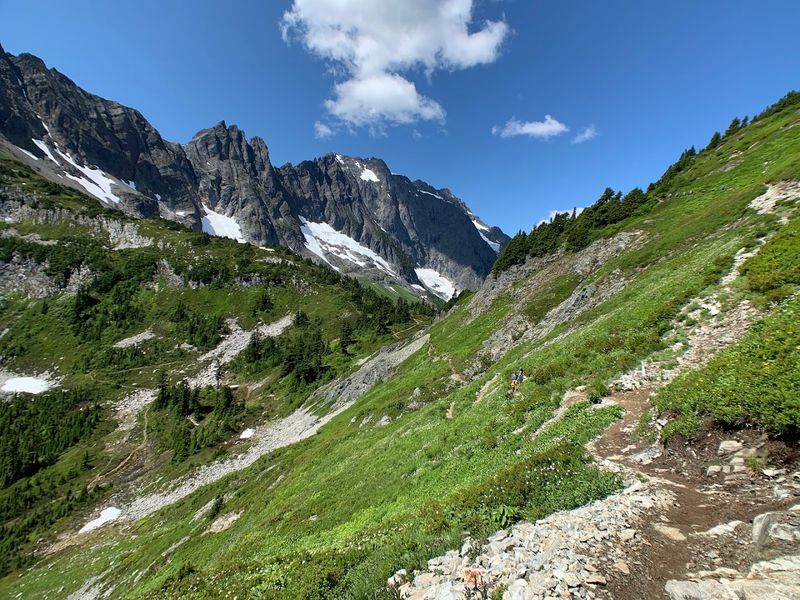
Washington Pass Overlook deserves its own chapter in any honest account of North Cascades. The short walk from the parking area to the viewpoint takes only a few minutes, but the payoff is one of the most dramatic mountain views in the Pacific Northwest.
Liberty Bell Mountain dominates the scene, its sheer granite walls rising sharply against the sky.
Photographers take note: afternoon to late afternoon light hits this overlook at its absolute best, painting the rock faces in warm golden tones. The contrast between the jagged peaks and the deep valley below is genuinely striking, and the composition practically arranges itself for you.
The North Cascades Scenic Highway, known as State Route 20, was completed in 1972 after decades of effort, and the park itself was not designated until 1984. That relatively recent history means the infrastructure is modest and the crowds are thin, which is a rare combination for a landscape this spectacular.
The overlook has a paved path and informational signs, making it accessible for most visitors. It is one of those spots where you stand quietly for a while, and the mountains do all the talking.
Rainy Lake and the Maple Pass Loop
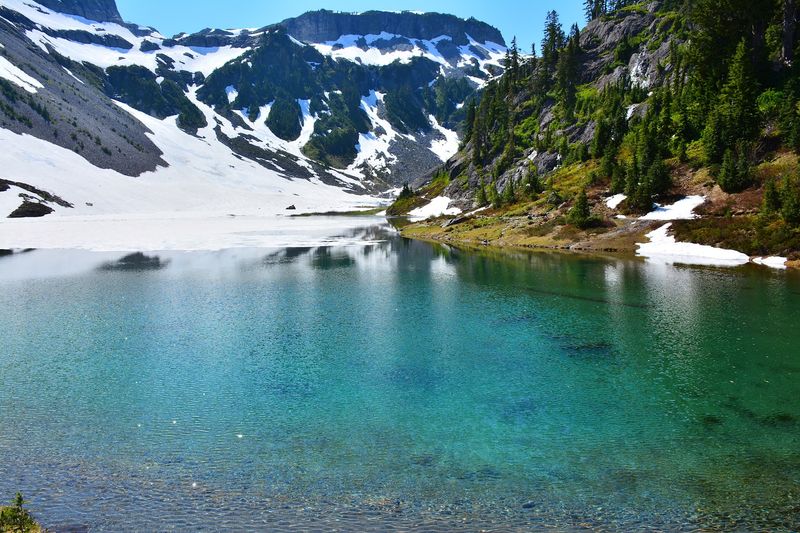
Not every trail in North Cascades has to be a grueling test of endurance. The hike to Rainy Lake is a paved, fully accessible path of about two miles round trip, and it delivers an alpine lake view that rivals anything else in the park.
The lake sits in a rocky cirque with a small waterfall feeding into it, and the reflection on calm days is picture-perfect.
Rainy Lake is part of the broader Maple Pass Loop, which is one of the most celebrated fall hikes in Washington State. The full loop covers about seven miles and passes through meadows that turn vivid shades of orange, red, and gold in late September and early October.
The color display draws visitors from across the country every autumn.
The trailhead is at Rainy Pass along State Route 20, and parking fills early on fall weekends, so an early start is a smart move. Maple Pass itself offers sweeping views of multiple lakes and ridgelines that feel almost too grand for a single glance.
The combination of easy access and spectacular scenery makes this area a favorite for families and seasoned hikers alike, and it consistently ranks as a highlight of the entire park.
Goodell Creek Campground and Sleeping Under the Stars
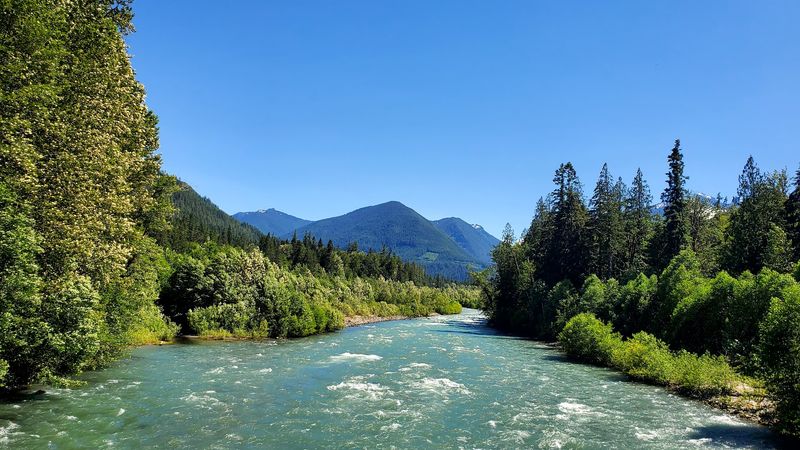
Spending a night or two inside the park changes everything about how you experience North Cascades. Goodell Creek Campground, situated near Newhalem along the Skagit River, is one of the most accessible camping options and one of the most atmospheric.
The sound of the river running nearby is a constant companion through the night.
The campground is open year-round and offers basic amenities including restrooms and fire rings. It is a popular base camp for hikers who want to tackle multiple trails over several days without driving long distances each morning.
Waking up with mist hanging in the trees and the smell of the forest all around you is a genuinely restorative experience.
Campers who have stayed at sites from Oklahoma to the Olympic Peninsula often point to this spot as one of the most peaceful they have found. The proximity to the visitor center and the Trail of the Cedars makes it especially convenient for first-time visitors who want to ease into the park’s offerings.
Reservations are recommended during peak summer months, as the campground fills quickly once word spreads about how good it actually is.
Wildlife Encounters Along the Trails
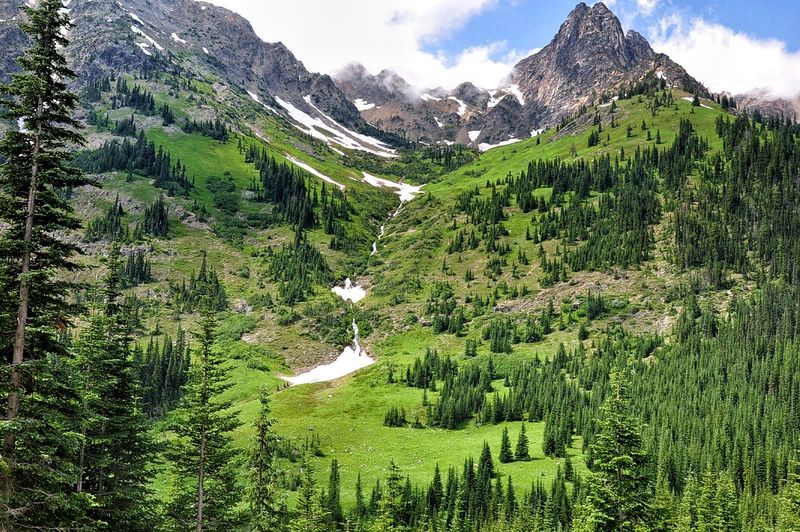
North Cascades is home to an impressive range of wildlife, and the relatively low visitor numbers mean animals here are less habituated to human presence than in more popular parks. That makes sightings feel genuinely wild rather than like a zoo visit.
Black bears, black-tailed deer, mountain goats, and marmots are among the animals you might encounter depending on the season and trail.
Bald eagles are commonly spotted along the Skagit River corridor, particularly in winter when salmon runs attract them in large numbers. The park also supports populations of gray wolves and wolverines, though these are rarely seen and that rarity only adds to their mystique.
The key to wildlife watching here is patience and quiet movement. Staying on marked trails protects both the animals and the fragile plant communities they depend on.
Early morning hours before other hikers arrive tend to produce the best sightings. Rangers can advise on recent activity and which areas have had frequent encounters.
For visitors who spend most of their outdoor time in flatter regions like Oklahoma, the mountain wildlife here offers a completely different and thrilling dimension to any hike.
Ross Lake and the Boat Trip Worth Planning
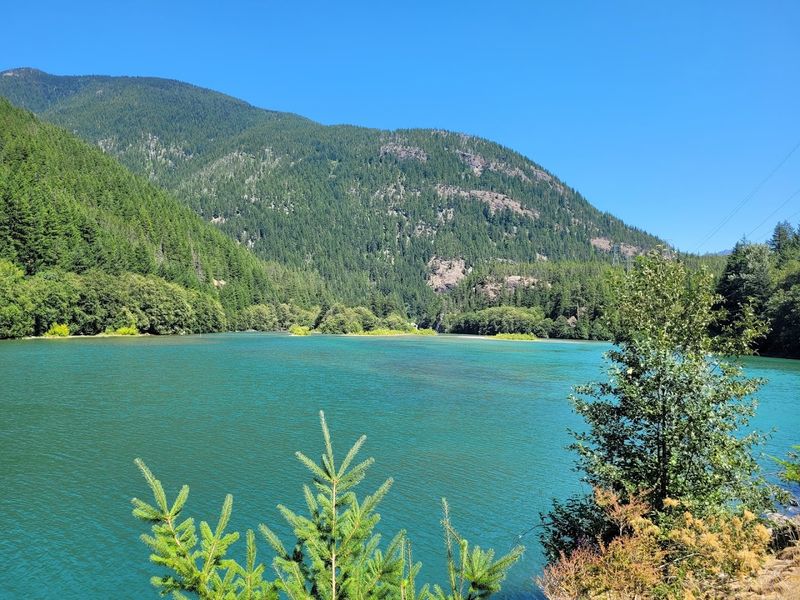
Ross Lake is one of those places that rewards the visitors who make the extra effort to reach it. The lake stretches for miles behind Ross Dam, winding north almost to the Canadian border, and the views from both the water and the surrounding trails are extraordinary.
The dam itself is an impressive piece of engineering worth seeing up close.
The Ross Dam Trail is a steep descent from the highway down to the dam and lakeshore, and what goes down must come back up, so plan your energy accordingly. The trail can also connect to longer routes for those who want a more extended adventure.
A boat trip on the lake is one of the most recommended ways to take in the full scale of the landscape.
Ross Lake Resort, accessible only by boat or trail, offers a unique floating cabin experience that feels completely removed from the modern world. Advance reservations are essential as availability is extremely limited.
The combination of the lake’s deep blue color, the dense forested slopes rising sharply on both sides, and the total absence of road noise creates an atmosphere of complete wilderness immersion that is hard to replicate anywhere else in the lower 48 states.
Planning Your Visit: Practical Tips for First-Timers
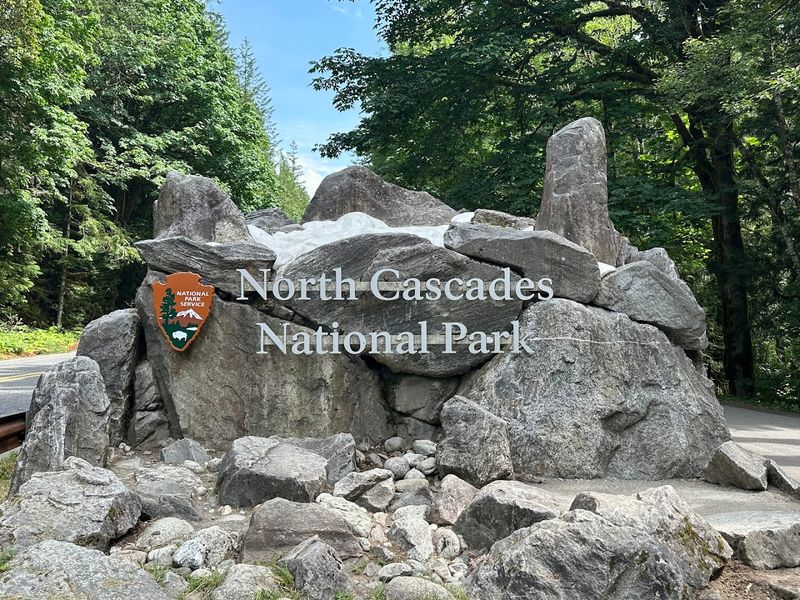
North Cascades National Park is open year-round, but State Route 20 through the park closes in winter due to snow, typically from November through April. The prime visiting window runs from late June through October, with the fall foliage season in late September and early October being especially spectacular.
There are no food vendors inside the park, so packing your own meals and plenty of water is essential for any day trip or hike. The nearest towns for supplies are Marblemount to the west and Winthrop to the east, both of which have grocery stores and small restaurants.
The town of Concrete, closer to the western entrance, also makes a pleasant stop for a break between activities.
Cell service is extremely limited throughout the park, so downloading offline maps before arrival is a practical necessity rather than just a suggestion. The park does not charge an entrance fee, which is a genuine rarity among major national parks and makes it even more accessible.
Visitors traveling from distant states like Oklahoma will find the long drive absolutely worth it once they are standing in the middle of that ancient cedar forest with a suspension bridge at their backs.
Share this story