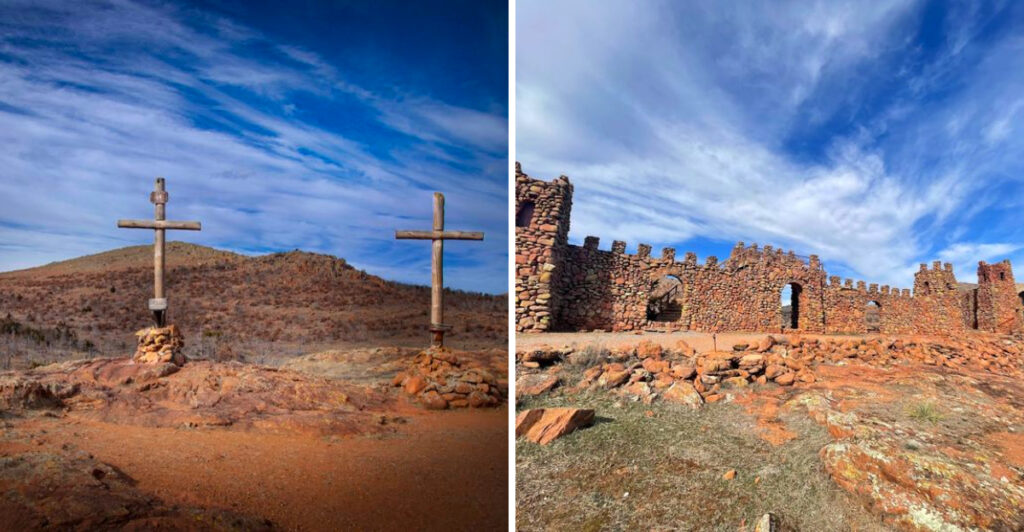
Tucked away in the rugged terrain of southwest Oklahoma, there is a place so unexpected that most people who stumble upon it genuinely cannot believe what they are seeing. Ancient stone buildings rise from the rocky landscape, a giant statue of Christ stands watch over the hills, and bison roam freely just a few feet from the path.
This is not a movie set, and it is not a dream. The Holy City of the Wichitas has been quietly drawing visitors, pilgrims, and curious road-trippers for nearly a century, and it rewards everyone who makes the trip with something they will not soon forget.
Where Exactly This Sacred Place Calls Home
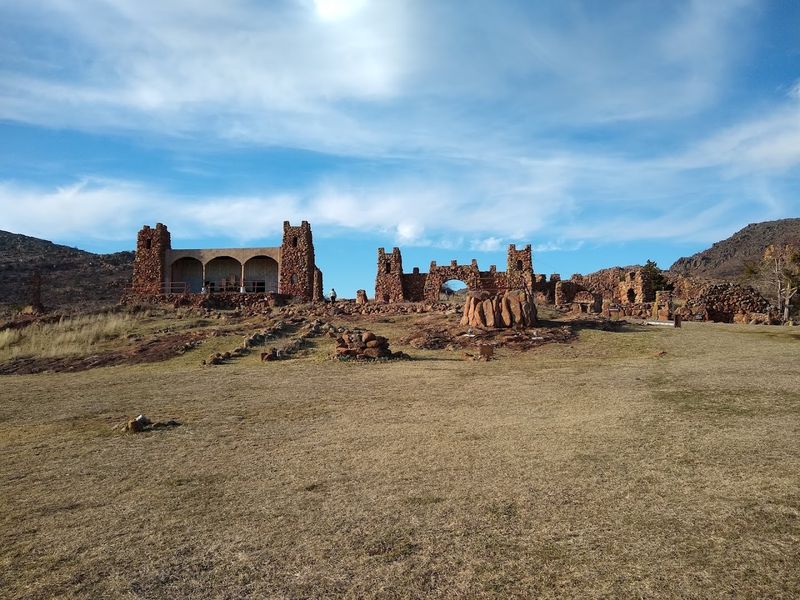
The Holy City of the Wichitas sits at 262 Holy City Rd, Lawton, OK 73507, deep inside the Wichita Mountains Wildlife Refuge in southwestern Oklahoma. Getting there is half the adventure, because the winding road through the refuge gradually reveals granite boulders, open prairie, and roaming wildlife before the stone structures ever come into view.
The site is managed as a non-profit organization and is open Monday through Saturday from 8 AM to 5 PM, with Sunday hours running from 1 to 5 PM. The phone number on file is +1 580-429-3361, and the official website is theholycityofthewichitas.org for anyone who wants to plan ahead.
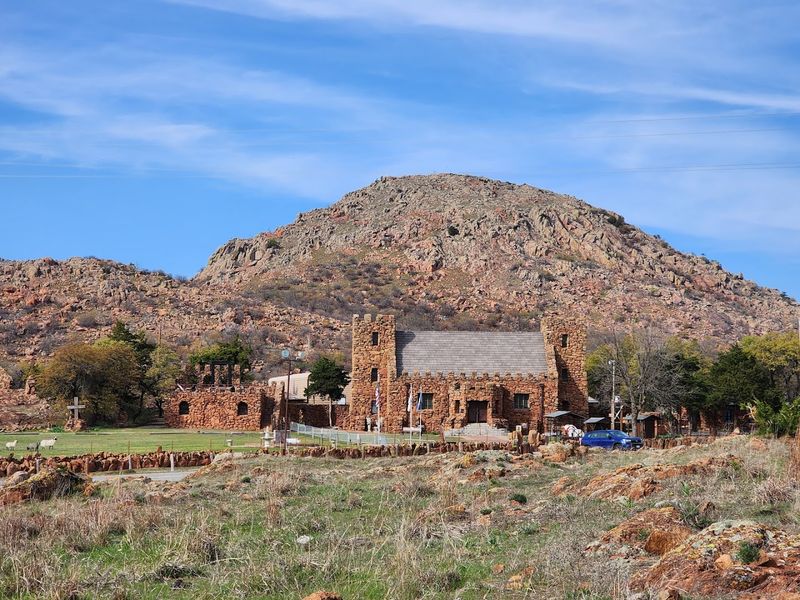
The address alone does not prepare you for what you find there. The buildings are built directly into the natural landscape, using the granite outcroppings as foundations, which makes the whole site feel like it grew out of the earth rather than being placed on top of it.
First-time visitors frequently describe rounding a corner on the road and having their breath genuinely taken away by the sudden appearance of the structures.
A Century of Faith Built in Stone
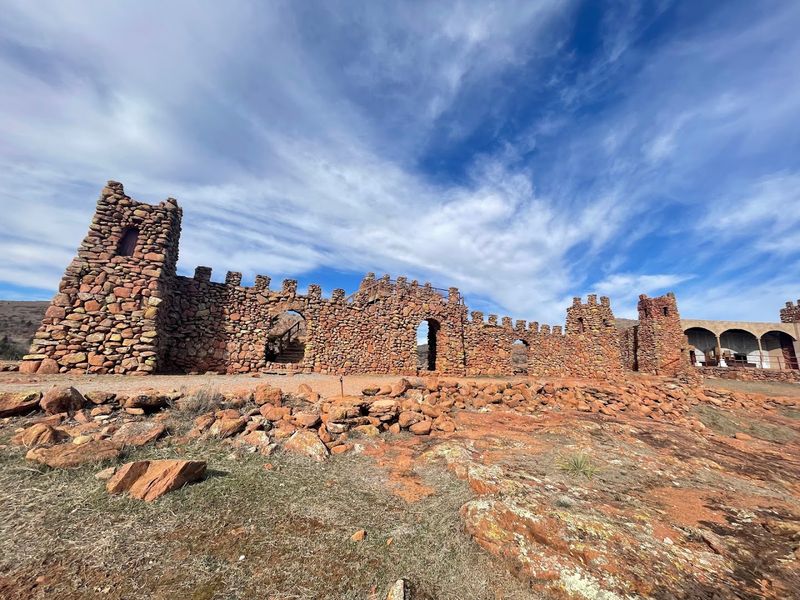
The story behind this place stretches back to the early 1920s, when a Methodist minister named Reverend Anthony Mark Wallock had a vision of recreating the ancient city of Jerusalem in the Oklahoma wilderness. What started as a bold and somewhat unusual dream became a massive community effort that involved thousands of volunteers over many decades.
Construction on the site began in 1926, using the natural granite boulders of the Wichita Mountains as both building material and backdrop. The structures were designed to represent key locations from the life of Jesus, including the Garden of Gethsemane, the Upper Room, and the streets of Jerusalem itself.
The Easter pageant, which dramatizes the final days of Christ’s life, has been performed here continuously since 1926, making it one of the longest-running outdoor religious dramas in the United States. The 100th season of the pageant was celebrated recently, drawing enormous crowds from across the country.
That kind of unbroken tradition, spanning a full century through wars, economic hardship, and everything in between, says something powerful about the dedication of the community behind it.
The Landscape That Makes Everything Feel Real
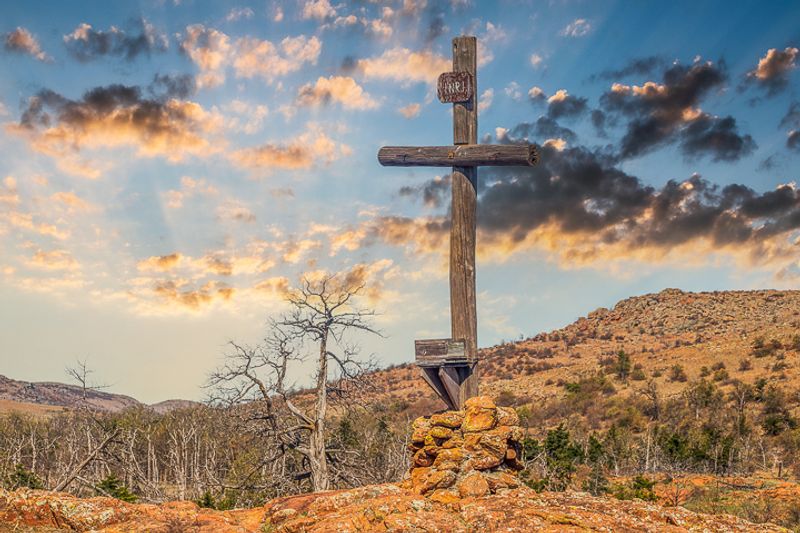
There are plenty of religious recreations and biblical theme parks scattered around the United States, but very few of them have the natural setting that this one does. The Wichita Mountains are among the oldest mountain ranges in North America, with some of the granite formations estimated to be around 500 million years old.
Those ancient rocks give the site a weight and texture that no constructed backdrop could ever replicate. The boulders are massive, weathered, and covered in patches of lichen, and they frame the stone buildings in a way that genuinely evokes something ancient and far away.
The light in this part of Oklahoma also does something special to the landscape. Early morning visits reward you with soft golden tones washing across the granite, while late afternoon turns everything amber and warm.
Visitors who arrive on quiet weekday mornings often describe the atmosphere as almost eerie in the best possible sense, where the silence and the scale of the surroundings make the whole experience feel deeply personal. The natural world here is not just a backdrop; it is a full participant in the experience.
The Structures That Recreate Jerusalem
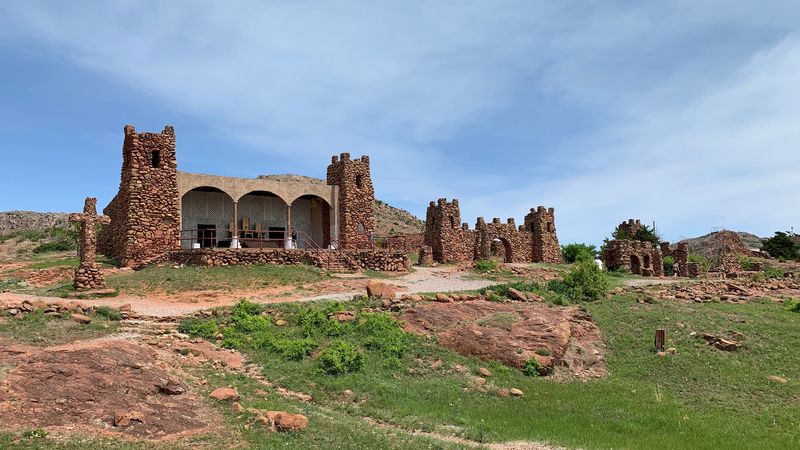
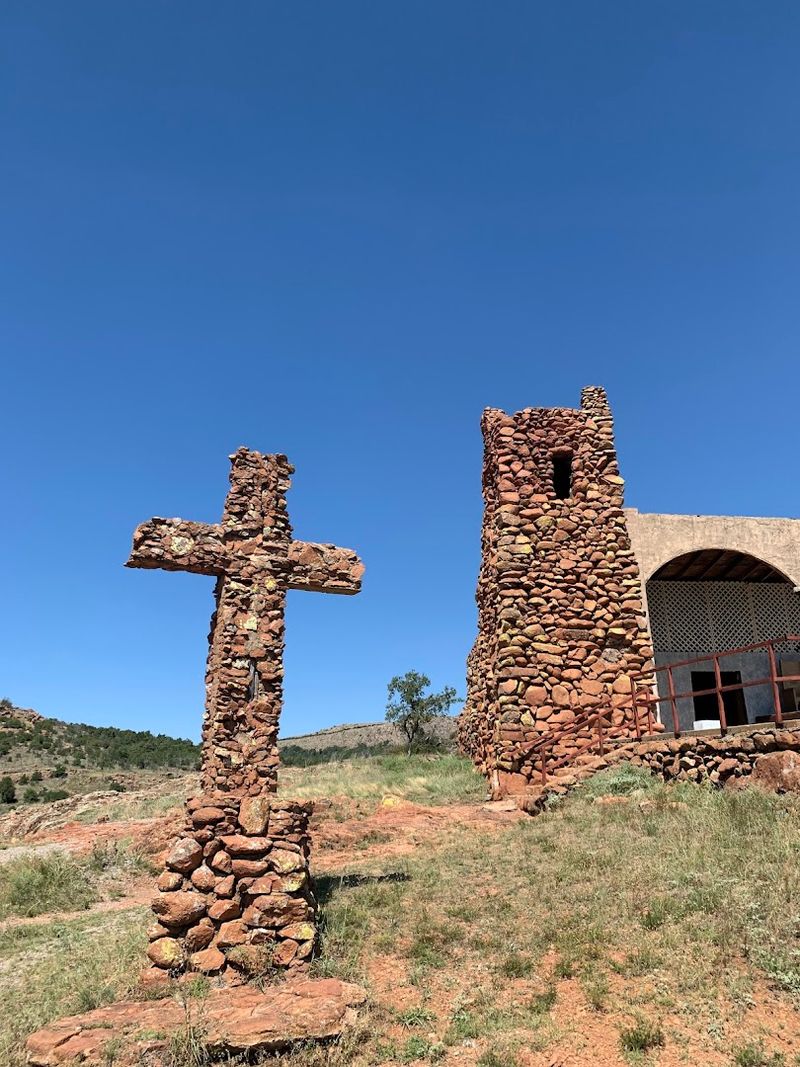
Every building on the grounds was constructed by hand using locally sourced granite, and the craftsmanship involved is genuinely impressive. The structures represent specific locations tied to the biblical narrative, and the attention to architectural detail makes it clear that the builders took the project seriously as both a spiritual mission and a construction challenge.
The replica of the Upper Room, where the Last Supper took place, is one of the most visited structures on the grounds. The chapel is open to visitors and offers a quiet, contemplative space that feels entirely different from the open air outside its walls.
Other notable structures include replicas of the city gates, Pilate’s Hall, and various buildings that line the narrow stone pathways meant to evoke the streets of ancient Jerusalem. The way the buildings follow the natural contours of the land gives the whole complex a sense of organic growth that planned architecture rarely achieves.
Bison and elk have been spotted wandering through the area completely unbothered by visitors, which adds an almost surreal layer to the experience of walking through a stone recreation of a Middle Eastern city in the middle of Oklahoma.
The Easter Pageant That Draws Thousands
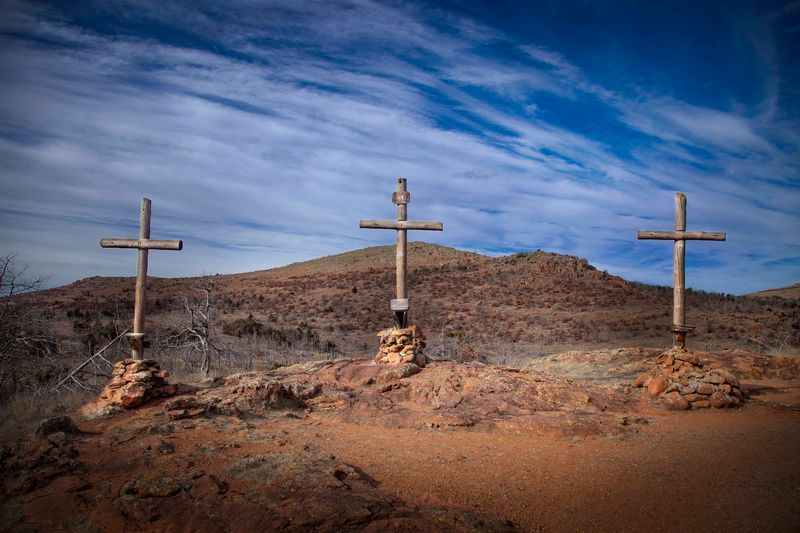
The Easter pageant is the crown event of everything that happens at this site, and calling it a passion play barely does it justice. The production involves hundreds of local volunteers who take on roles ranging from Roman soldiers to the disciples, and the entire outdoor landscape of the Holy City serves as the stage.
The pageant runs over several nights around Easter weekend each year, and it regularly draws audiences numbering in the tens of thousands. People travel from neighboring states just to attend, and many families have made it an annual tradition spanning multiple generations.
What makes the performance so striking is the setting itself. There are no elaborate theatrical sets to build because the stone buildings, the hillsides, and the natural rock formations all serve as the backdrop.
The lighting against the ancient granite at night creates an atmosphere that no indoor theater could replicate. For the 100th season, the pageant drew particularly large crowds eager to mark the milestone, and the energy of that gathering reportedly carried something electric that longtime attendees described as unlike any previous year.
Tickets for the pageant typically sell quickly, so planning ahead is strongly recommended.
Wildlife That Shares the Sacred Grounds
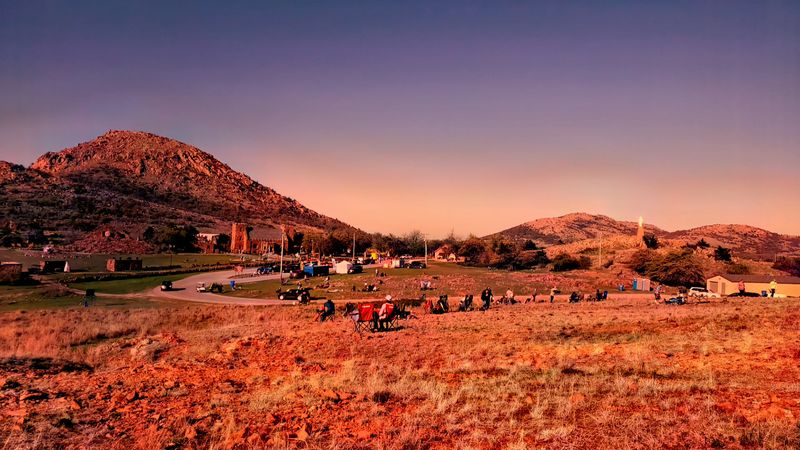
One of the most genuinely surprising things about a visit here is the wildlife. The Holy City sits inside the Wichita Mountains Wildlife Refuge, which is home to free-roaming herds of American bison, elk, white-tailed deer, and longhorn cattle.
These animals do not stay politely at a distance.
Bison have been spotted walking through the stone pathways between buildings, and elk graze on the hillsides just beyond the chapel walls. The animals are wild and should be treated with appropriate respect and distance, but their presence adds a dimension to the visit that is completely unique to this location.
There is something genuinely humbling about standing near a structure meant to evoke ancient Jerusalem while a 1,500-pound bison grazes ten feet away, completely unbothered by your presence. Visitors are also warned about bees in the area, particularly around the flowering plants that grow among the stone structures during warmer months.
The combination of sacred architecture, ancient mountains, and roaming wildlife creates a sensory experience that is hard to describe accurately without having stood there yourself. The refuge and the holy city feel like they were always meant to share this particular stretch of Oklahoma ground.
The Statue of Christ That Commands the Hilltop
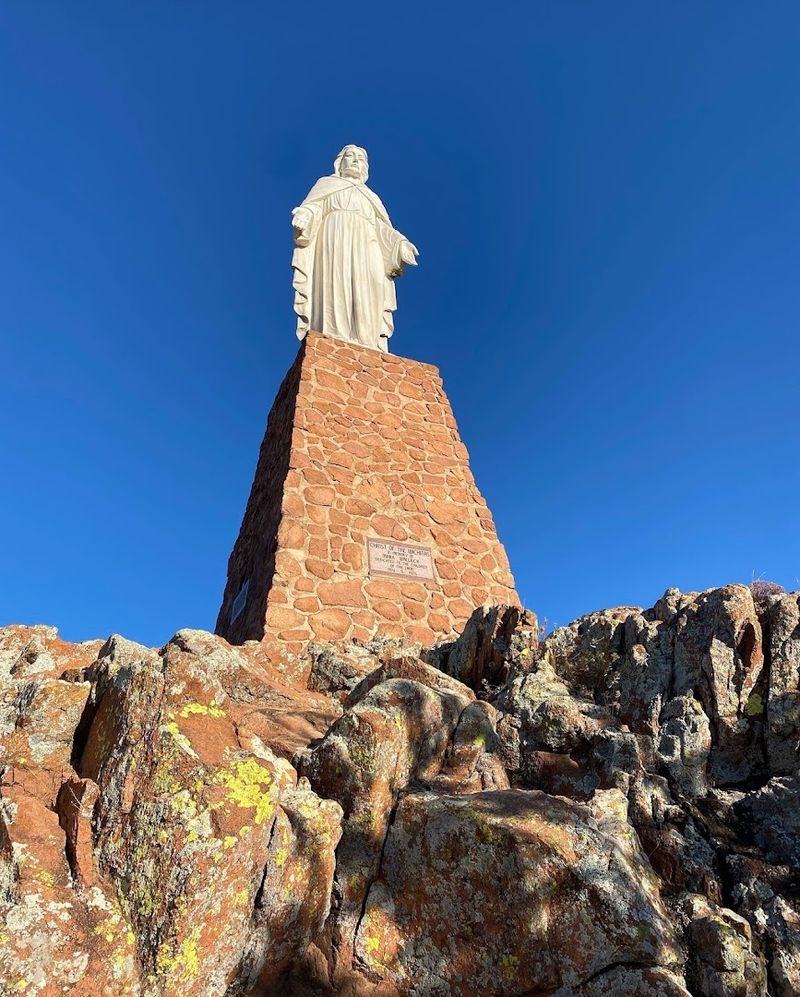
Rising above the rest of the complex, the statue of Christ is one of the most visually striking features of the entire site. The figure stands on a prominent granite outcropping, arms outstretched, visible from a significant distance as you approach along the refuge road.
The scale of the statue is designed to feel monumental against the open Oklahoma sky, and it succeeds. On clear days, the contrast between the stone figure and the wide blue sky above the mountains creates a composition that visitors photograph from dozens of angles without ever quite capturing the full effect.
The statue has become something of a landmark in its own right, recognizable to anyone who has spent time in this corner of southwest Oklahoma. It appears in countless photographs taken by visitors from around the country, and it has a way of anchoring the entire complex visually, giving the site a focal point that draws the eye no matter where you are standing on the grounds.
Arriving at dusk when the last light catches the stone is a particularly memorable experience, and those who time their visits accordingly tend to linger much longer than they originally planned.
The Gift Shop and Visitor Experience
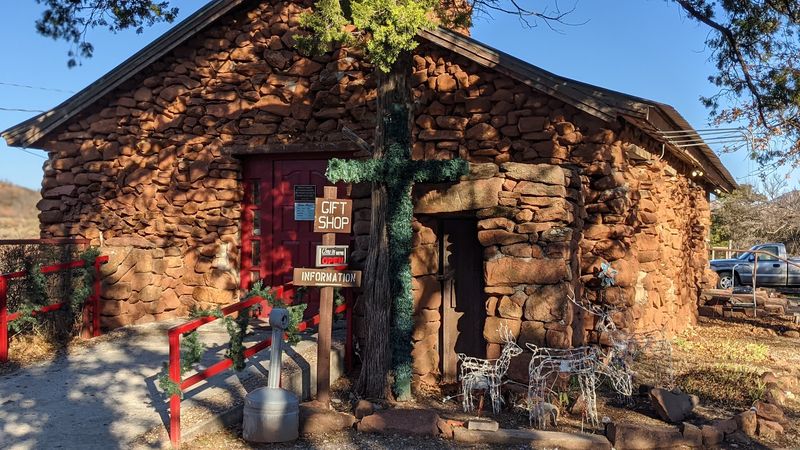
The gift shop on the grounds is a modest but charming stop that carries religious keepsakes, local souvenirs, and a selection of snacks and drinks. The staff there have a well-earned reputation for being genuinely warm and knowledgeable, happy to share the history of the site and point visitors toward the best spots to explore.
The shop is not a large or flashy operation, and that honestly suits the character of the place perfectly. What it lacks in size it makes up for in personality, and most visitors find something worth taking home as a reminder of the visit.
Admission to walk the grounds is free, which makes the Holy City one of the more accessible and generous attractions in this part of Oklahoma. The gift shop offers a way to support the non-profit organization that maintains the site, and purchasing something there is a small but meaningful way to help keep the place running for future visitors.
Given that the entire operation depends on donations and community support, picking up a small souvenir feels less like a tourist transaction and more like contributing to something that genuinely matters to a lot of people across a very wide region.
Best Times to Visit and What to Expect
Spring is the most popular time to visit, largely because of the Easter pageant, but the site rewards visitors in every season. Summer mornings before the heat builds offer peaceful walks through the stone streets with long golden light and relatively few crowds.
Fall brings a change in the surrounding vegetation that softens the landscape beautifully.
Winter visits have their own appeal. A light snow on the granite buildings and the surrounding mountains creates a genuinely striking scene, though some areas of the complex may be less accessible during icy conditions.
The site opens at 8 AM most days, and arriving early on a weekday almost guarantees a quiet, solitary experience that feels entirely different from a busy weekend afternoon.
Comfortable walking shoes are essential because the paths follow natural terrain and can be uneven in places. Bringing water is a smart move, especially in summer, and keeping an eye out for wildlife at all times is just part of the deal when visiting a location inside an active wildlife refuge.
The combination of free admission, stunning natural scenery, and a century of history makes this one of the most rewarding stops in all of southwest Oklahoma for visitors who enjoy the unexpected.
Why This Place Stays With You Long After You Leave
There are destinations that check boxes and destinations that change the way you think about a place. The Holy City of the Wichitas firmly belongs in the second category.
The combination of sincere faith, genuine craftsmanship, wild nature, and deep community history creates something that is difficult to categorize and even harder to forget.
The site carries a 4.7-star rating across more than 2,300 reviews, which speaks to how consistently it delivers on its unusual promise. Visitors who arrive skeptical often leave surprised by how moved they feel, not necessarily in a religious sense, but in the way that any encounter with something truly committed and beautifully made tends to move people.
The fact that this place exists at all, that a community in southwestern Oklahoma decided to spend a century building and maintaining a stone replica of Jerusalem inside a wildlife refuge, is remarkable by any measure. The ringing of the chapel bell across the open landscape, the sight of bison moving through ancient-looking stone streets, and the stillness of a quiet morning on the grounds all add up to something that earns its reputation many times over.
This is the kind of place that makes you want to call someone the moment you get back to your car and tell them they absolutely need to go.
Share this story