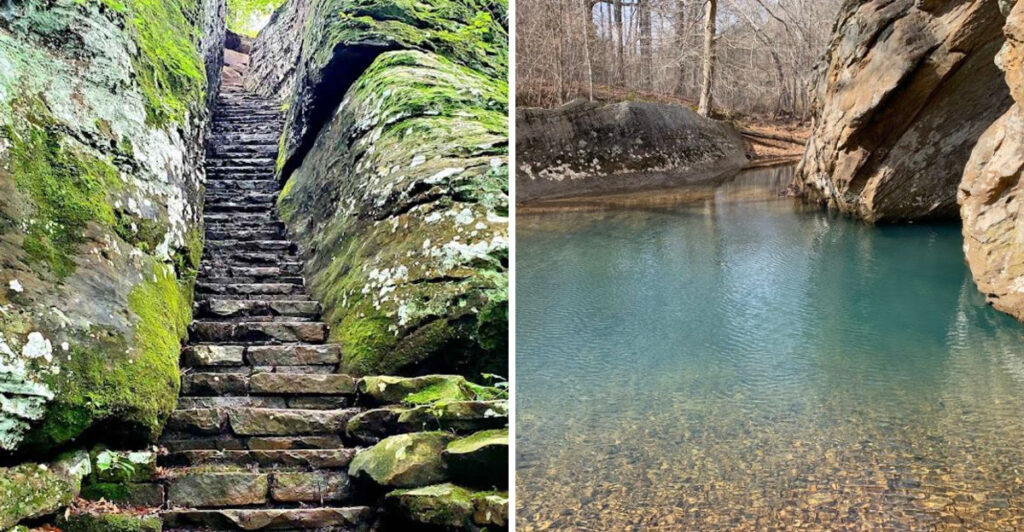
Deep in the Shawnee National Forest, there is a place where ancient sandstone cliffs rise above crystal-clear water, and a set of hand-built stone stairs carved right into the rock face leads you down to one of the most stunning swimming holes in all of Illinois. The trail feels like something out of a storybook, winding past natural rock bridges, hidden springs, and canyon walls draped in green.
The water is so clear you can see straight to the bottom, and the whole scene is so peaceful it almost feels like a secret. Once you find this place, you will wonder how it stayed off your radar for so long.
Where It All Begins: Address and Location
The adventure starts at Bell Smith Springs Rd, Ozark, IL 62972, tucked inside the Shawnee National Forest in the far southern tip of Illinois. Getting there is half the experience, and not always in a comfortable way.
The last stretch of road leading to the parking area is famously rough, full of potholes and uneven gravel that can rattle your car pretty hard. Driving slowly is not just a suggestion here, it is a real necessity, especially if you are in a low-clearance vehicle.
Once you park, the forest surrounds you immediately. There are a few parking spots available, but no large lots designed for RVs or trailers, so plan accordingly.
The area is managed by the U.S. Forest Service and is part of the larger Shawnee National Forest system.
Cell service is limited out here, so downloading an offline map before you leave home is a smart move. The trailhead signage can be a little confusing, and more than a few visitors have walked right past key landmarks without realizing it.
Arriving with a rough plan of the trail system will save you a lot of second-guessing once you are on the ground.
The Stone Stairway That Started It All
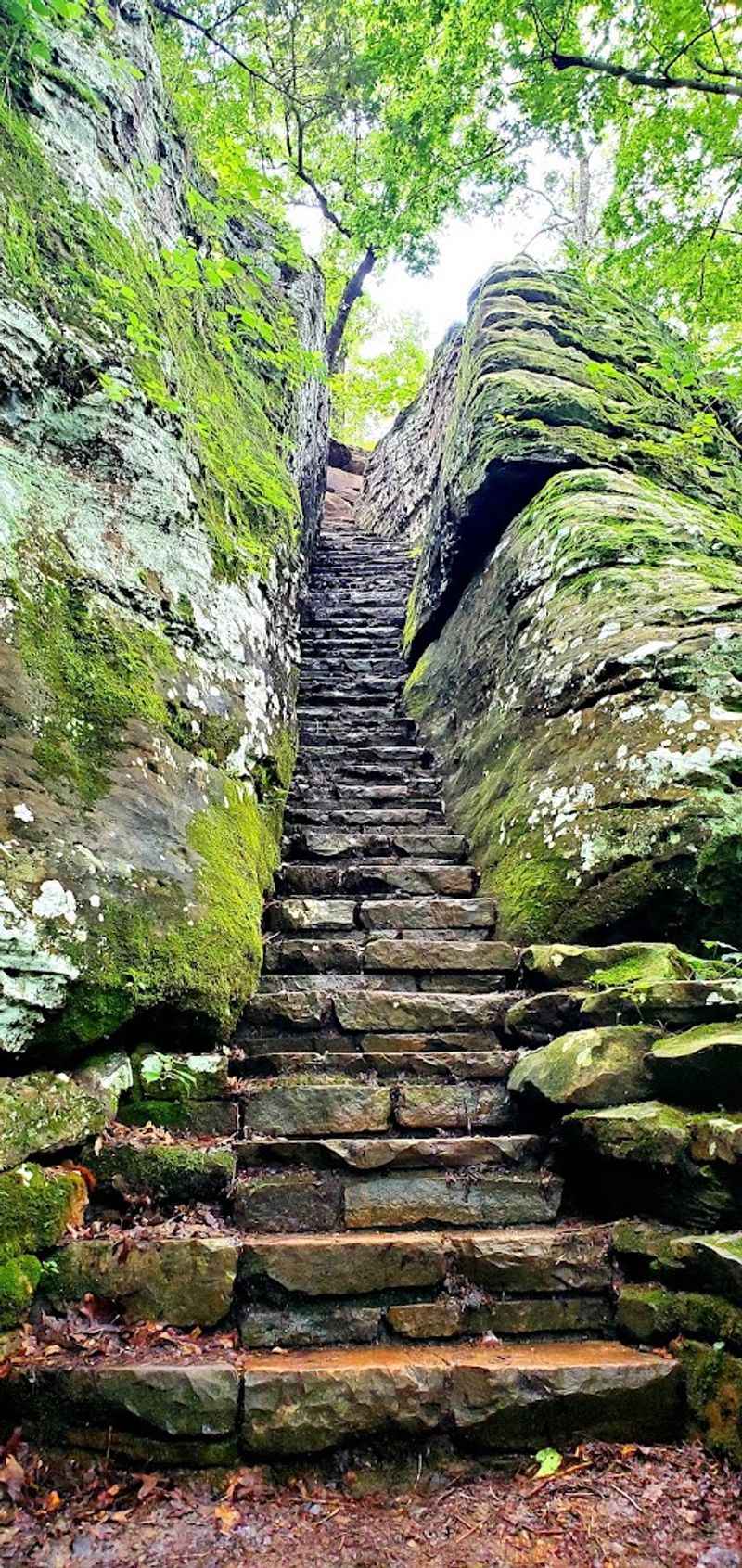
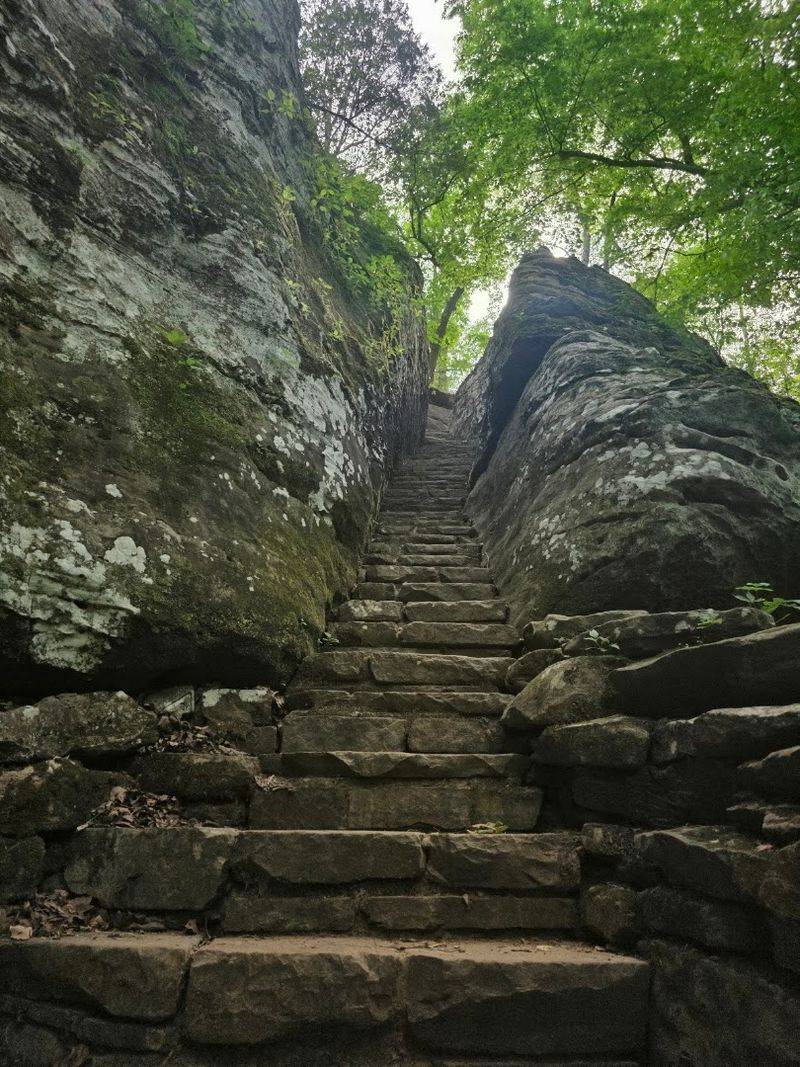
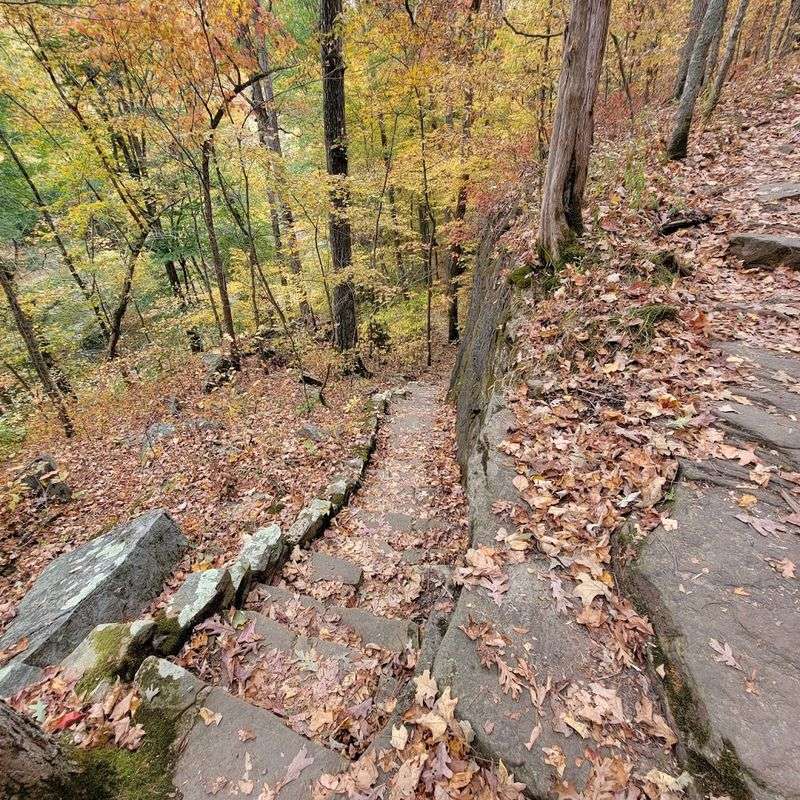
Right near the beginning of the main trail, a set of stone stairs appears almost out of nowhere, built directly into the face of a sandstone cliff. These are not modern concrete steps, they are old, irregular, and carved with real character, the kind that make you slow down and actually look at your feet.
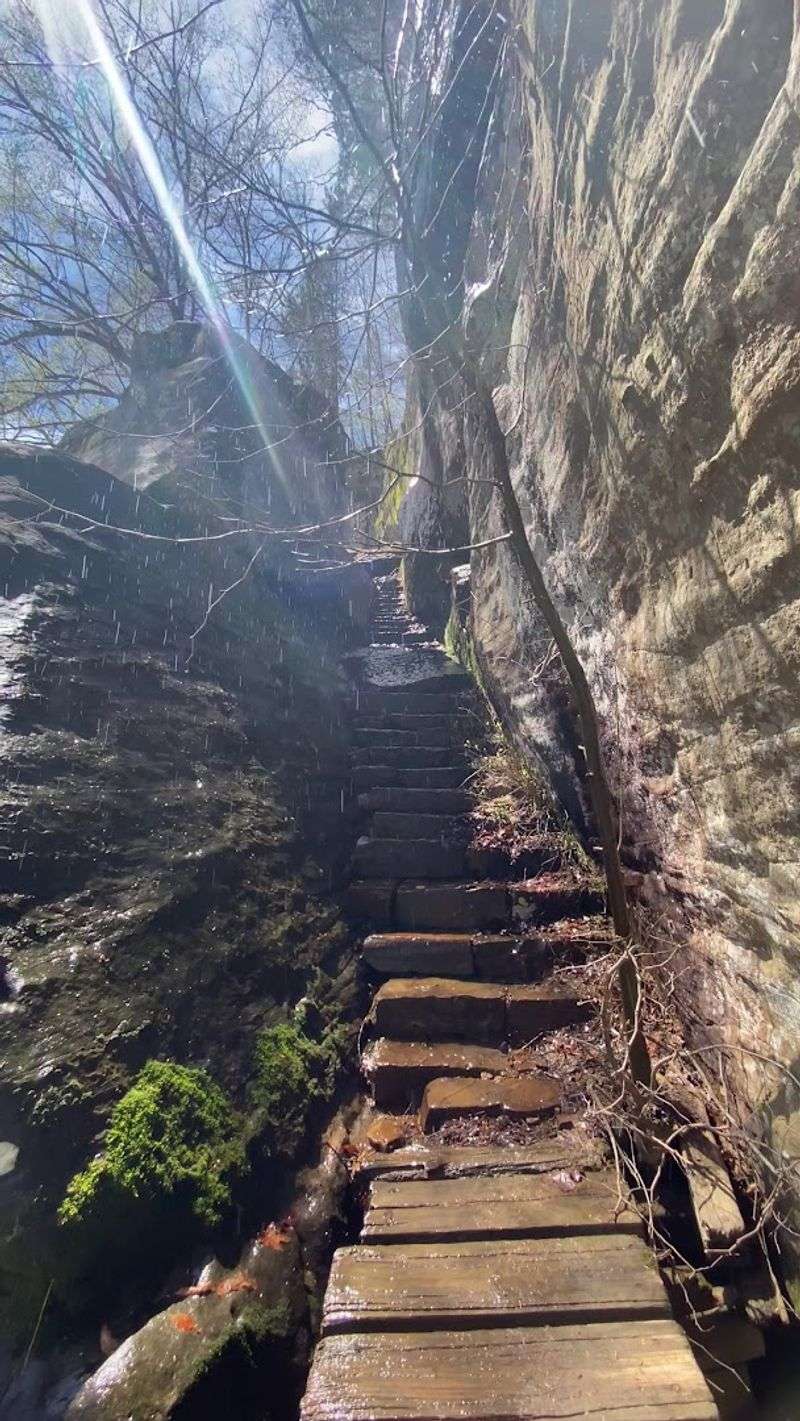
Visitors have counted around 61 large, awkward steps followed by another 61 shorter ones, and the whole descent feels more like climbing down a natural sculpture than walking a maintained trail. The stone is worn smooth in places from years of foot traffic, which adds to the charm but also means you should wear shoes with solid grip.
The stairs lead you down into the canyon below, where the air feels noticeably cooler and the sound of trickling water starts to reach your ears. Someone once described the area around the stairs as feeling like the beginning of a house that nature never finished building, and that description honestly fits.
The visual contrast between the rough cliff walls and the green canopy above is striking. This stairway alone is worth the rough drive in, even before you catch your first glimpse of the water waiting below.
The Swimming Hole That Everyone Talks About
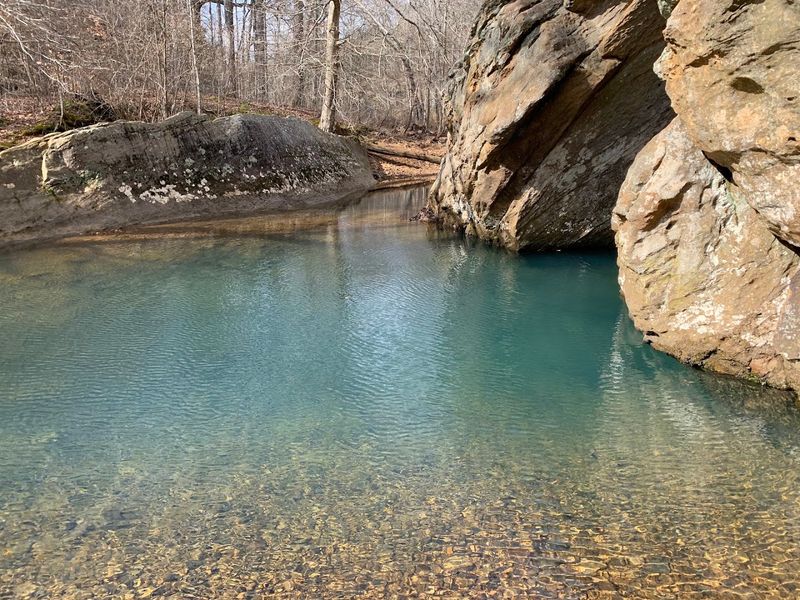
The water at Bell Smith Springs has a color that stops people mid-sentence. It sits somewhere between blue and green, bright and clear enough that you can see every pebble and rock resting on the bottom, even in the deeper sections.
There is a popular swimming spot near the springs where families gather on warm days, and kids wade in while adults find flat rocks to sit on nearby. The creek is generally calm and transparent, which makes it feel safe for younger swimmers who want to splash around without any surprises hiding beneath the surface.
For those feeling a little more adventurous, there is a spot where you can climb up onto a large rock and jump in. The height looks more intimidating than it actually is, and the jump itself is over before you know it.
Going after a recent rainfall makes the whole area even more alive, with small waterfalls trickling down the rock faces and the water level sitting a little higher. The swimming area gets more crowded as the day goes on, so arriving in the morning gives you a better chance of having the spot mostly to yourself and really soaking in the quiet beauty of the place.
The Natural Rock Bridge: A Landmark Worth Finding
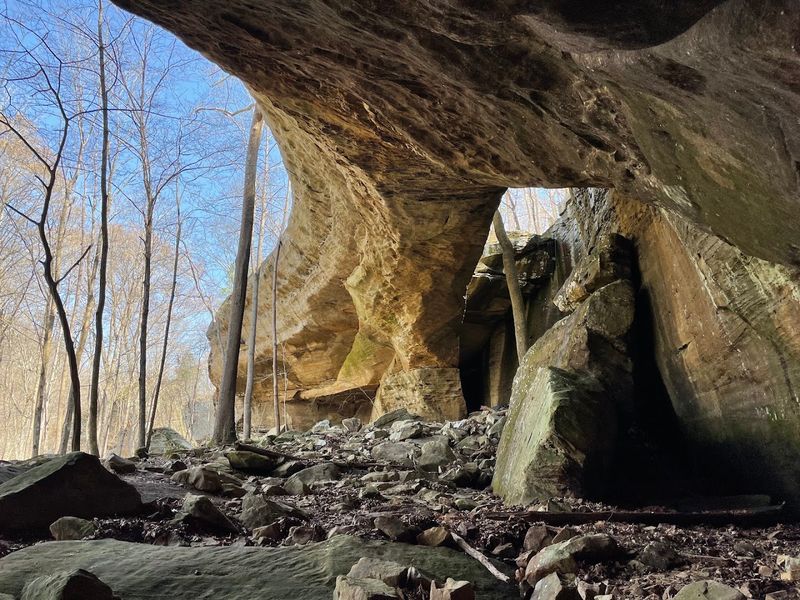
One of the most talked-about features of Bell Smith Springs is its natural rock bridge, a genuine arch of sandstone that you can view from both above and below. The two perspectives are completely different experiences, and most visitors try to do both.
Seeing the arch from below gives you the full scale of it, the way it spans the gap between two walls of rock with nothing holding it up but geology and time. Looking down at it from the top trail gives you a wider view of the canyon and the forest stretching out beyond.
There are two ways to reach the top of the arch, and one of them includes a great iron ladder bolted into the rock face. The ladder adds a fun, slightly heart-pumping moment to the hike, and it is sturdy enough that most hikers tackle it without much hesitation.
A fair warning: the arch is easy to walk right past if you are not paying attention to your surroundings. More than one group has hiked by it twice before recognizing what they were looking at.
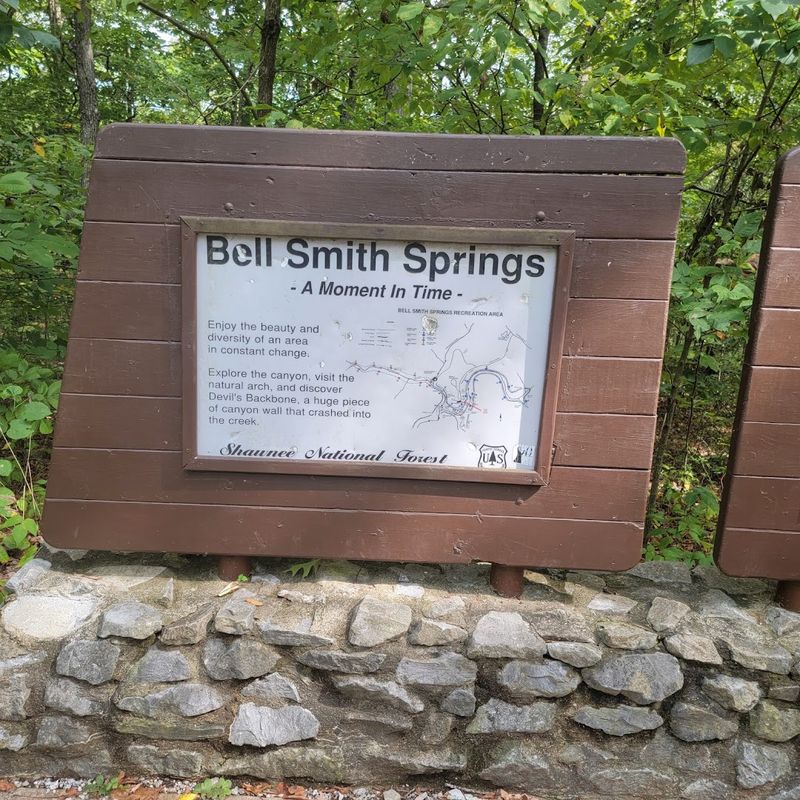
Taking a photo of the trailhead map before you head out is a genuinely useful habit that keeps you oriented when the signage gets sparse deeper in the trail system.
Devil’s Backbone and Other Rock Formations
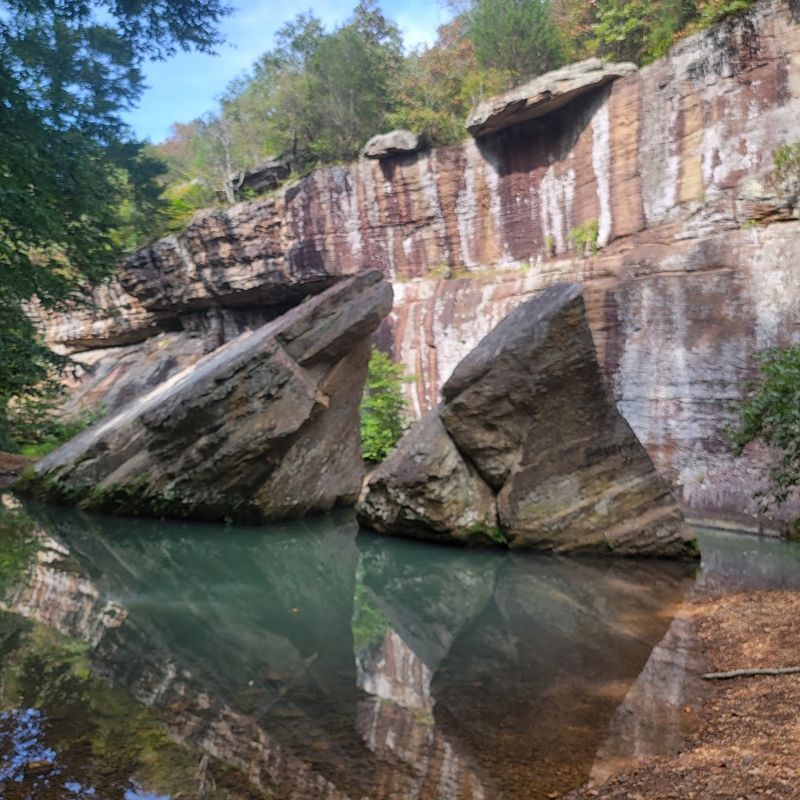
Bell Smith Springs is not short on dramatic geology, and Devil’s Backbone is one of the standout features that hikers keep mentioning. The name does a pretty good job of describing it: a narrow, ridged spine of sandstone that juts up from the landscape like something from a fantasy novel.
The area around it also includes Boulder Falls, scattered canyon walls, and dozens of rock outcroppings that beg to be climbed on and explored. Kids especially tend to love this section of the trail, since there is so much texture and variety to interact with rather than just walking a flat path.
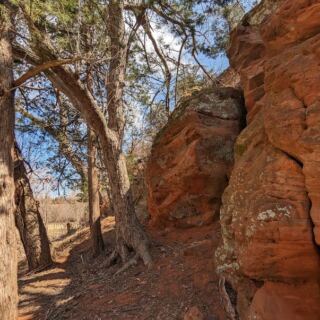
The sandstone throughout the park has a warm, reddish-brown tone that contrasts beautifully with the green of the surrounding trees. After rain, the colors deepen and the rock surfaces take on an almost painted quality that is genuinely hard to photograph well but easy to appreciate in person.
Graffiti on some of the rock formations is an unfortunate reality that a few visitors have noted, which is a reminder of how much these places depend on people choosing to treat them with respect. The geology here took millions of years to form, and every scratch left behind is a small but permanent loss for everyone who visits after.
The Trail System: Eight Miles of Connected Paths
Eight miles of interconnected trails run through Bell Smith Springs, covering enough ground to keep serious hikers busy for a full day. The system includes color-coded routes, with blue, yellow, and green trails each offering a slightly different experience through the terrain.
The trails range from moderate to genuinely challenging, with steep inclines, uneven rock surfaces, and a few spots that require real attention to footing. The descents into the canyon are particularly steep, which means the climb back out at the end of the day will definitely get your heart rate going.
Trail signage is one area where Bell Smith Springs falls a little short. The maps posted at the trailheads have been described as inaccurate in spots, and some of the trail markers are easy to miss when the vegetation gets dense.
Photographing the map at the trailhead before you set off is one of the best pieces of practical advice any experienced visitor can pass along.
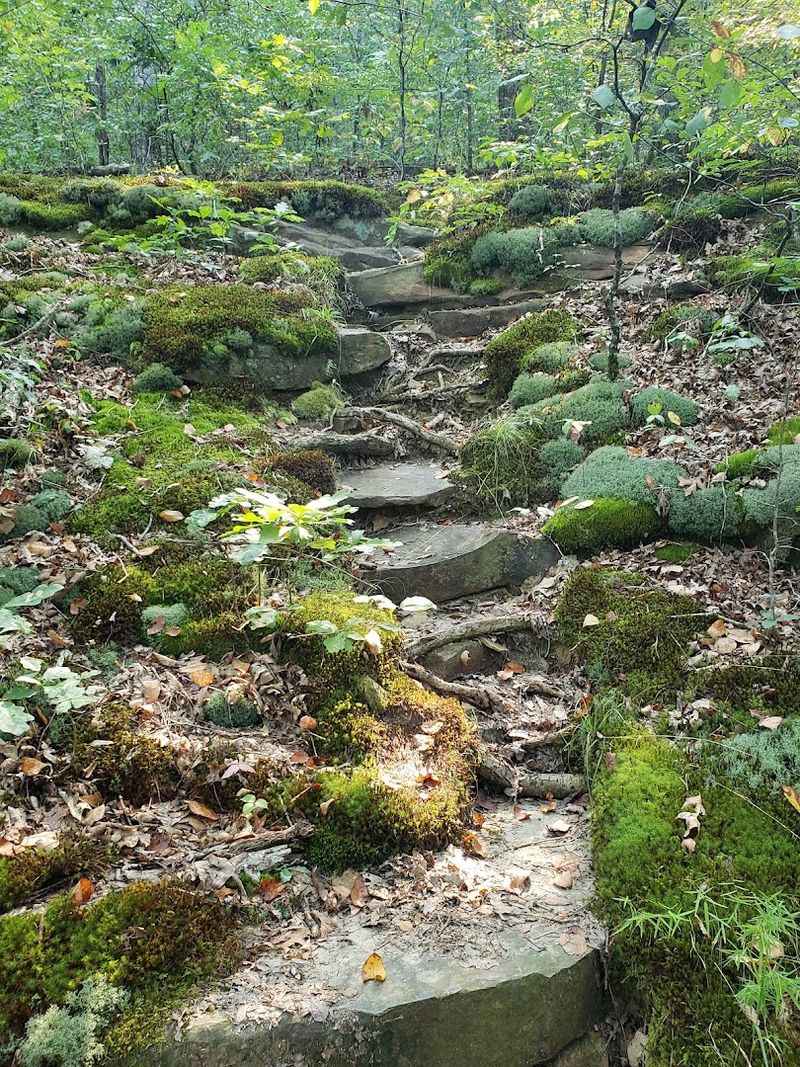
The trails pass through some genuinely lush forest, with a mix of hardwood trees, ferns, and mossy creek banks that shift the mood of the hike every few hundred feet. Even on overcast days, the forest canopy and the sound of running water make the whole route feel worth every step.
Wildlife, Flora, and the Living Forest Around You
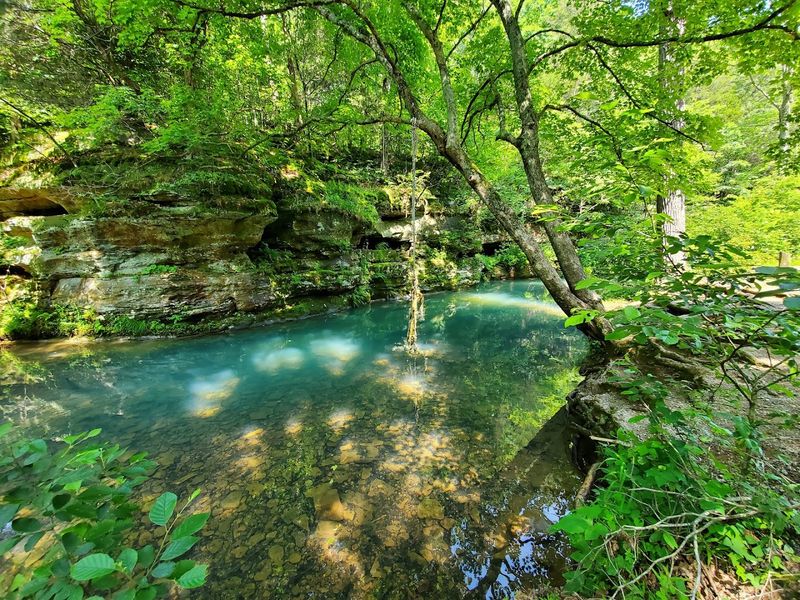
The vegetation at Bell Smith Springs is one of those things that sneaks up on you. You arrive thinking about the water and the rocks, and then you start noticing how dense and varied the plant life actually is, with ferns carpeting the canyon floor, wildflowers tucked into rock crevices, and mosses covering every surface near the creek.
The Shawnee National Forest as a whole is known for its unusual mix of plant species, partly because southern Illinois sits at the crossroads of several different ecological zones. That blend shows up clearly at Bell Smith Springs, where you can find species more typical of the Ozarks alongside plants more common to the eastern hardwood forests.
Birds are active throughout the area, and the creek corridor draws a variety of species that prefer forested stream environments. Bringing a small pair of binoculars adds a whole new layer to the experience if wildlife watching is your thing.
The dogs that visit this trail consistently seem to have a fantastic time, and the area is dog-friendly, which makes it a solid choice for hikers who prefer to bring their four-legged companions along. Keeping dogs on leash near the water and the cliff edges is a smart habit that protects both the animals and the fragile vegetation along the creek banks.
Camping at Bell Smith Springs: Backwoods Style
Camping at Bell Smith Springs is about as close to a true backwoods experience as you can get without leaving the state of Illinois. The sites are first-come, first-served, which means there is no reservation system to stress over, just show up and find your spot.
Payment is handled through easy pay stations at the campground, and the setup is refreshingly straightforward. There are no hookups, no showers, and the bathroom facilities are basic at best, though visitors tend to agree that having something is better than nothing when you are out in the woods.
The campground loop is accessible by bike, even though the hiking trails themselves are foot traffic only. That small detail makes the campground feel a little more relaxed and open compared to spots where every inch is strictly regulated.
Law enforcement patrols the area regularly, which adds a layer of security that families and solo campers both seem to appreciate. The general atmosphere at the campground leans quiet and nature-focused, the kind of place where people tend to go to bed early and wake up to birdsong rather than noise from neighboring sites.
Spending a night here after a full day on the trails is a genuinely satisfying way to end the experience.
Best Time to Visit and What to Expect by Season
Summer is the peak season at Bell Smith Springs, and for good reason. The swimming holes are at their most inviting when the temperature is up, and the combination of cool water and shaded canyon trails makes the heat very manageable.
Spring visits, particularly after recent rainfall, bring the springs and small waterfalls to life in a way that drier months simply cannot match. The water flows more freely, the vegetation is at its most vibrant green, and the whole area feels energized.
That said, flooding is a real possibility in late March and early April, so checking conditions before you go is always worth the two minutes it takes.
Fall brings a dramatic shift in color to the forest canopy, and the trails are noticeably less crowded than in midsummer. The cooler temperatures make the hiking more comfortable, even if the swimming is less appealing.
Winter visits are possible but come with obvious trade-offs, including limited water flow and the potential for icy conditions on the stone stairs and rocky trail surfaces. One reviewer noted that visiting in late April found no springs flowing at all, which is a good reminder that water levels can vary significantly depending on recent weather and the time of year you choose to visit.
Practical Tips for First-Time Visitors
A few practical habits can turn a good visit to Bell Smith Springs into a great one. The road leading in is rough enough that driving slowly and carefully is genuinely important, and if your vehicle sits low to the ground, taking extra caution on the worst sections of the road will save you from a stressful situation.
Footwear matters more here than at a lot of other parks. The stone stairs near the trailhead are uneven and can be slippery when wet, and the trail itself crosses the creek in several places depending on which route you take.
Sturdy hiking shoes or trail runners with good traction are a much better choice than sandals or casual sneakers.
Bringing more water than you think you need is always smart on a trail with this much elevation change. The climb back up from the canyon to the parking lot is steeper than it looks on the way down, and the exertion can catch people off guard.
The park has trash bins near the parking area, but litter on the trails has been a recurring issue noted by multiple visitors. Packing out everything you bring in is a simple habit that keeps the place worth visiting for the next group that comes down those stone stairs after you.
The Hidden Springs and What Makes Them Special
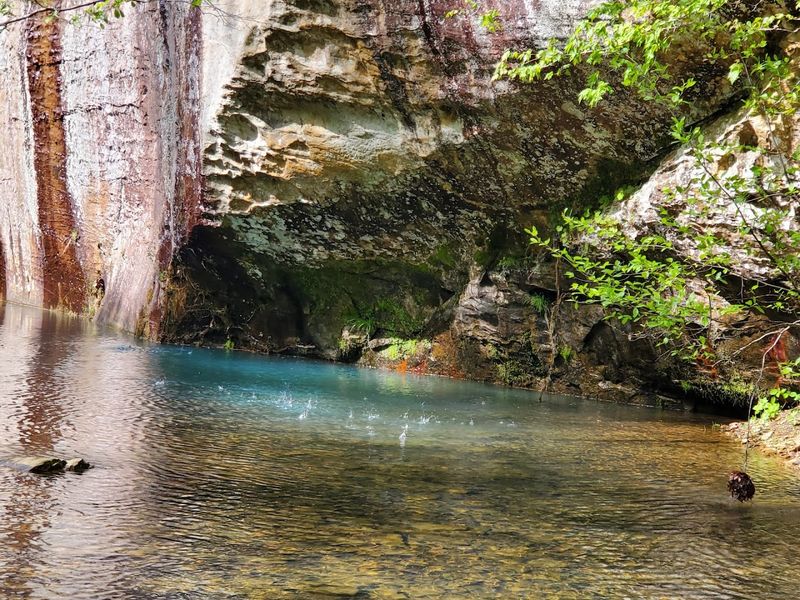
The springs themselves are the quiet heart of this whole area, and they are easy to overlook if you are focused entirely on the bigger landmarks like the arch and the swimming hole. They emerge from the sandstone in small, steady trickles, collecting in rocky pools before feeding into the larger creek system below.
The water clarity at these springs is genuinely remarkable. Visitors consistently describe being able to see straight to the bottom in most areas, with a bright, clean quality that feels almost out of place in a world of murky swimming holes.
The springs are more active and impressive after recent rainfall, when the water table is higher and the flow is stronger. Timing your visit to follow a few days of rain is one of the best pieces of insider advice for anyone who wants to see the area at its most photogenic.
One thing worth knowing is that water levels can drop significantly during dry stretches, and at least one visitor arrived in late April to find no visible springs at all. The landscape is still beautiful under those conditions, but managing expectations before you go means you will appreciate whatever the springs are doing that day rather than feeling let down by the natural variability of the place.
Why Bell Smith Springs Stays With You Long After You Leave
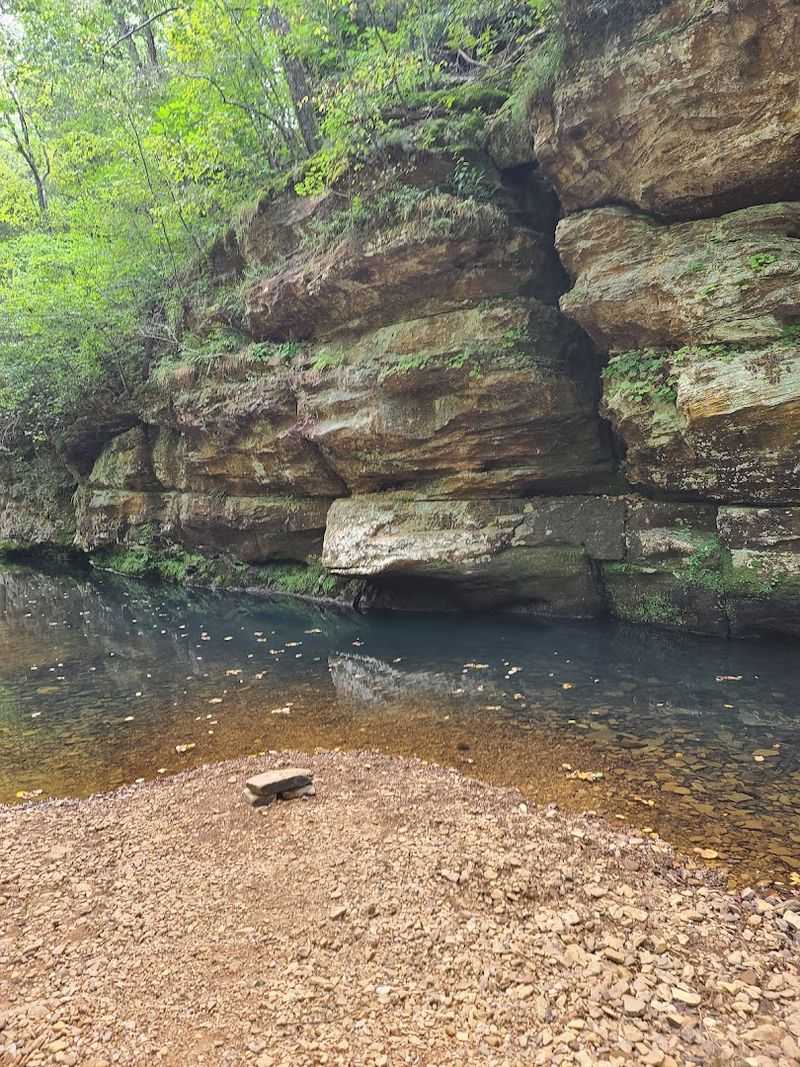
There are places you visit once and check off a list, and then there are places that earn a permanent spot in your memory. Bell Smith Springs tends to fall firmly into the second category for most people who make the trip.
The combination of elements here is hard to find anywhere else in Illinois: ancient stone stairs leading into a canyon, a swimming hole with water clear enough to see through, a natural rock bridge you can walk across, and eight miles of trail connecting it all. Each piece would be worth a visit on its own, but together they create something that feels genuinely rare.
The rough road in, the steep stairs, the imperfect signage, and the basic bathroom facilities are all part of the package, and most visitors seem to agree that none of those things subtract from the experience in any meaningful way. The place earns its reputation through the landscape itself, not through amenities.
Returning visitors almost always mention wanting to come back, whether to swim on a warmer day, catch the springs after a good rain, or explore a section of trail they missed the first time. Bell Smith Springs is the kind of place that rewards every return visit with something new, and that is a quality worth seeking out.
Share this story