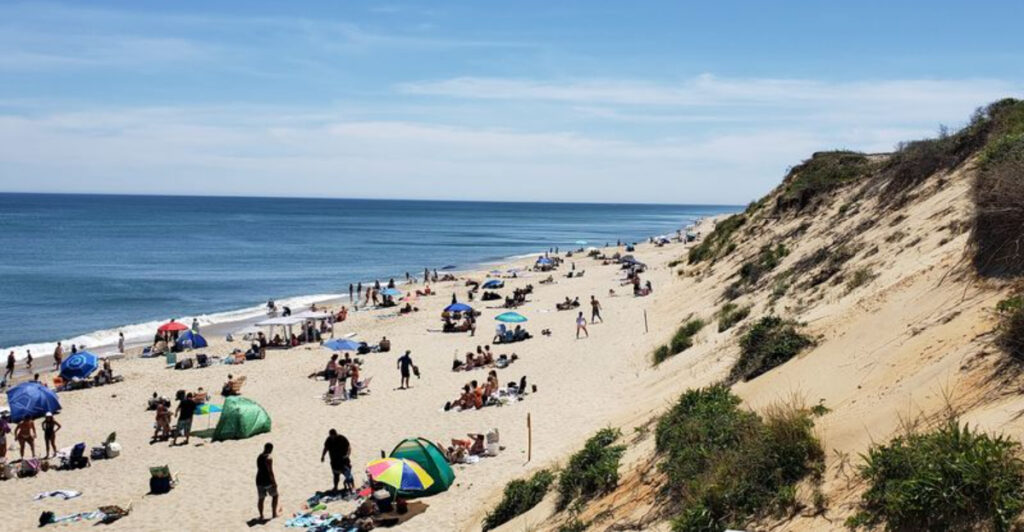
There is a stretch of coastline on Cape Cod that feels like it belongs to another era, one where the Atlantic still has room to breathe and the sand has not yet been crowded out by beach chairs and souvenir stands. The cliffs rise dramatically behind the shore, the seals swim close enough to make you stop and stare, and the whole place carries a quiet that is genuinely hard to find on the East Coast in summer.
This beach also sits on ground where one of the most important moments in communications history actually happened. If you have never heard of it, you are about to want to pack your bag.
The Radio History Buried Right Beneath Your Feet

The beach is named after Guglielmo Marconi, the Italian inventor who set up a wireless telegraph station on this very bluff in the early 1900s. On January 18, 1903, the station at Wellfleet transmitted the first transatlantic wireless message between the United States and England, an exchange between President Theodore Roosevelt and King Edward VII.
The original towers are long gone, claimed by coastal erosion over the past century, but the National Park Service has installed informational signs and a site marker near the parking area so visitors can understand what happened here.
Standing on that bluff and knowing that signals once traveled from this exact spot across the entire Atlantic Ocean adds a layer to the visit that most beaches simply cannot offer. It is the kind of history that sneaks up on you quietly and then sticks around for the rest of the day.
The Cliffs That Make This Beach Look Unlike Any Other
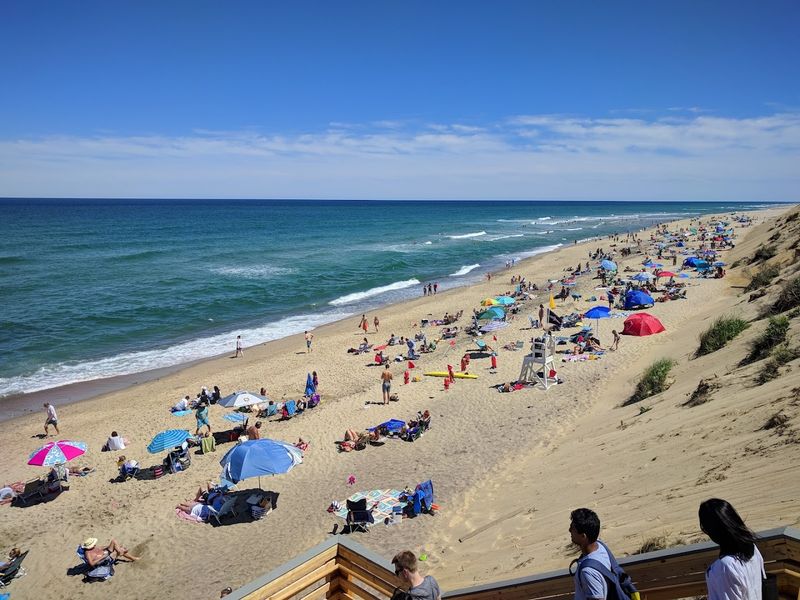
One of the first things that separates Marconi Beach from other Cape Cod beaches is the cliff situation. The beach is backed by tall, layered sandy bluffs that rise sharply from the shoreline, giving the whole place a dramatic vertical scale that flat barrier beaches simply do not have.
These cliffs are actively eroding, which is part of what makes them so visually striking. The layers of sand and sediment tell a geological story going back thousands of years, and the National Park Service notes that erosion here is ongoing and measurable.
From the top of the bluff near the observation platform, the view stretches down the beach in both directions with nothing but sand, surf, and open Atlantic as far as you can see. From the beach itself, looking back up at the cliffs gives you a sense of scale that feels genuinely impressive without needing any exaggeration.
53 Steps Down and Worth Every Single One
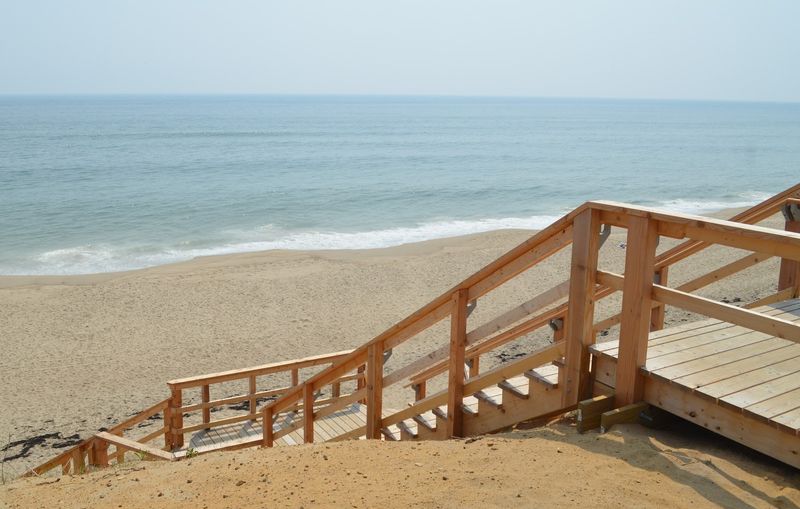
Getting to the beach requires descending a wooden staircase built into the face of the bluff. The staircase has 53 steps, which sounds manageable going down but earns your full attention on the way back up, especially after a long afternoon in the sun with a bag full of wet towels and sandy gear.
The stairs are the only way down to the beach, so anyone with significant mobility challenges should know that ahead of time. There is no ramp or alternative access route currently available at this location.
That said, the staircase itself is well-maintained and sturdy, and the descent gives you a slow reveal of the beach below that builds a bit of anticipation. By the time you reach the bottom and your feet hit the sand, the effort already feels worth it.
Packing light is genuinely good advice here, not just a suggestion.
The Seals That Show Up Like They Own the Place

Seals are a regular and reliable part of the Marconi Beach experience. Gray seals in particular are frequently spotted swimming just offshore, sometimes close enough to the shoreline that you can watch them without binoculars.
Visitors have reported seals swimming within a few feet of people standing at the water’s edge.
The seal population along this stretch of Cape Cod has grown significantly over recent decades, partly due to federal protections under the Marine Mammal Protection Act. The National Seashore is one of the best places on the Cape to observe them in a natural setting.
Where there are seals, there are also occasionally sharks, particularly great whites that follow the seal population. Lifeguards fly a shark flag when activity has been reported in the previous 24 hours.
Seeing that flag is not cause for panic, but it is worth paying attention to before heading into the water.
What the Water Actually Feels Like When You Get In
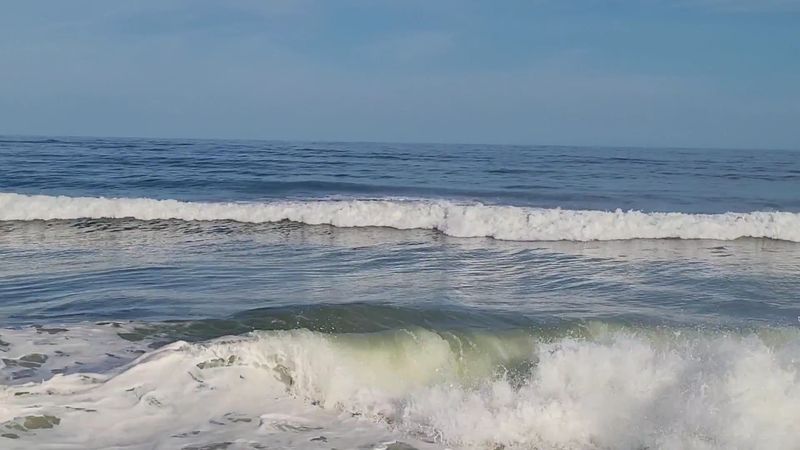
The Atlantic Ocean off Marconi Beach runs cold. Water temperatures typically hover around 60 to 62 degrees Fahrenheit during summer months, which is refreshing in the way that cold water always is, meaning the first few seconds are a genuine shock before your body catches up.
The waves at this beach tend to run around three to four feet on average, which makes the spot reasonably good for boogie boarding and body surfing. A handful of surfers show up regularly, though the rides tend to be shorter compared to more exposed surf breaks further up the coast.
One thing worth knowing before you wade in is that the shoreline where the water meets the sand can have sharp rocks and shells mixed in. Water shoes are a genuinely practical item to bring along, not just a comfort upgrade.
Once you are past the shoreline and into the surf, the sandy bottom opens up considerably.
The Observation Platform That Earns Its View
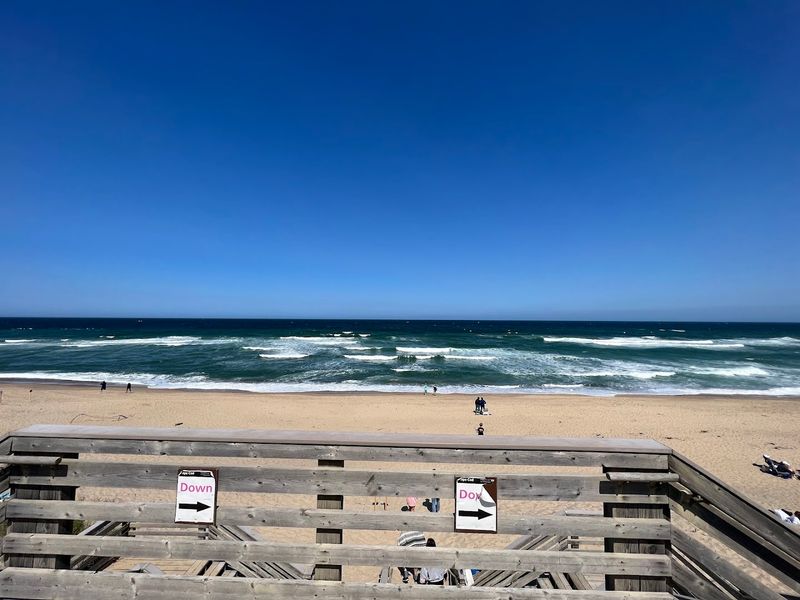
Near the parking area at the top of the bluff, the National Park Service has built a wooden observation platform that looks directly out over the beach and the Atlantic. The platform sits at a height that gives you a broad, unobstructed view of the coastline in both directions.
Sunrise visits are particularly rewarding from this spot. The platform faces east toward the open ocean, which means early morning light hits the water directly and the colors shift through a range of golds and blues that are genuinely worth setting an alarm for.
The platform also works well as a staging area before or after the beach, a place to take in the view before committing to the 53-step descent, or to decompress quietly after a long day in the sun. Informational signs nearby explain the Marconi wireless station history, so the platform serves as both a scenic stop and a small outdoor history lesson.
Trails That Take You Somewhere Completely Different

The parking lot at Marconi Beach serves as the trailhead for more than just the beach. From the same lot, visitors can access the Atlantic White Cedar Swamp Trail, a roughly one-mile loop that takes you through a shaded, dense forest of Atlantic white cedar trees along a wooden boardwalk path.
The contrast between the open, wind-swept beach and the cool, enclosed swamp trail is striking. The cedar swamp feels almost completely removed from the coastal environment just a short walk away, and the boardwalk keeps your feet dry while passing through genuinely interesting terrain.
The trail is rated easy to moderate in difficulty, making it accessible to most visitors. It is a good option for the middle of the day when the sun on the beach gets intense, or for visitors who want more from their stop than just sand and surf.
The National Park Service maintains the trail in good condition.
Parking, Passes, and the After-5 Secret
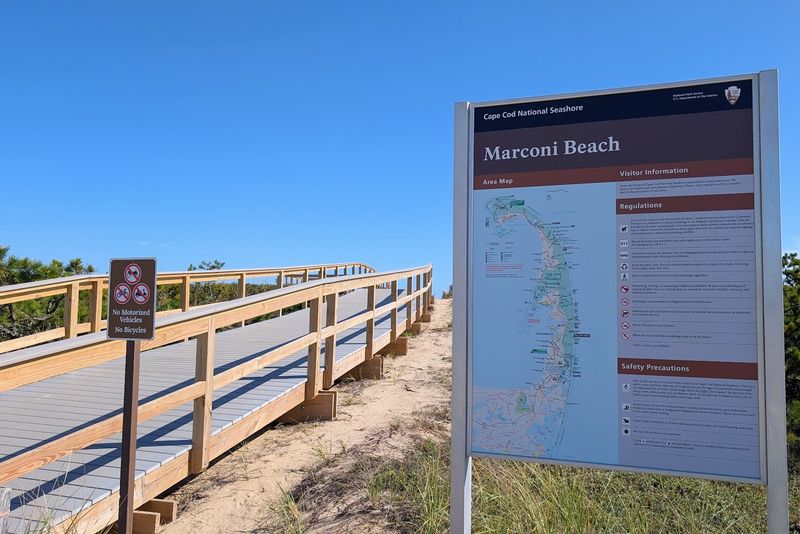
The parking lot at Marconi Beach is notably large, which helps during peak summer season when other Cape Cod beaches fill up fast and turn cars away. A Cape Cod National Seashore vehicle pass is required during the day in season, which covers entry to multiple beaches within the National Seashore.
There is a practical tip that regular visitors have figured out over time. After 5 p.m., parking becomes free.
Arriving in the late afternoon means you can often enjoy the beach with significantly fewer people around, cooler air temperatures, and the possibility of catching a dramatic evening light over the water.
The lot also has restroom facilities and outdoor shower stations available, which makes rinsing off sand and salt water before the drive home a straightforward process. The showers can handle both people and pets, which is a detail that dog owners particularly appreciate after a full afternoon on the beach.
Dogs Are Welcome, With One Important Caveat
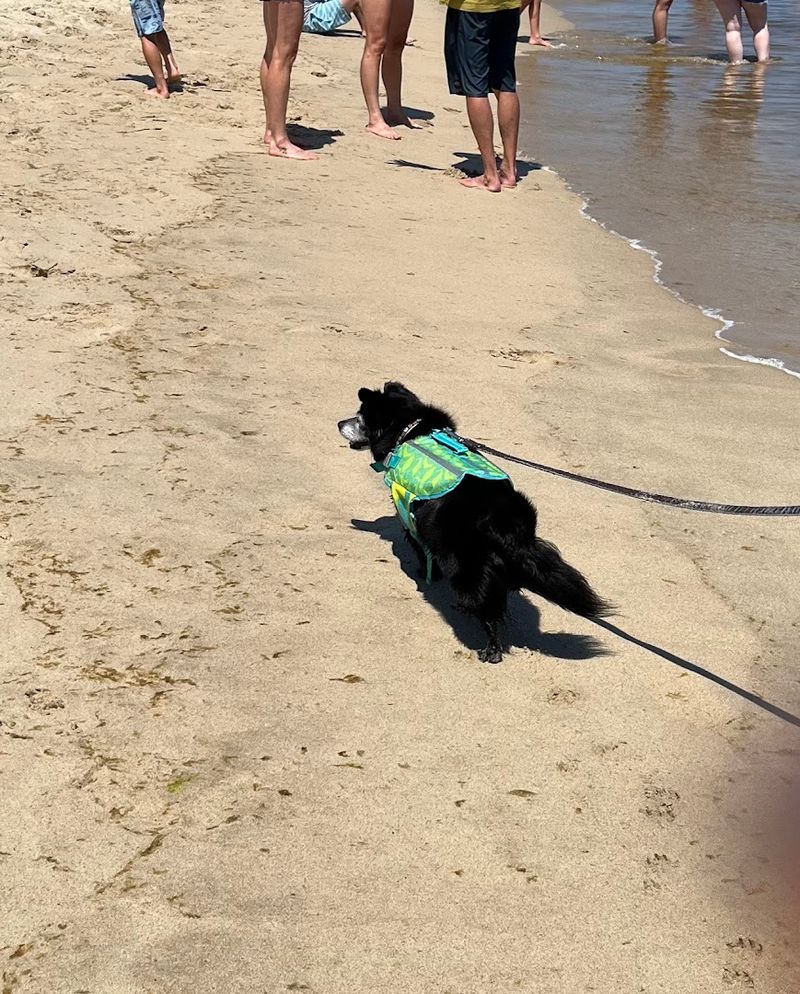
Marconi Beach has a designated section where dogs are allowed, which puts it ahead of many other beaches in the Cape Cod area that restrict or prohibit pets entirely. For dog owners, finding an Atlantic-facing beach that actually welcomes their animal is not always easy, so this detail matters.
That said, the beach environment here comes with some real considerations for pet owners. The sand gets extremely hot on sunny summer days, hot enough to burn paw pads quickly, and the 53-step staircase is a physical challenge for older dogs or animals with joint issues.
Bringing plenty of fresh water is essential, and a cooling vest is worth packing for dogs that are sensitive to heat. The outdoor shower station at the top of the stairs is available for rinsing dogs off after the beach, which saves your car interior from the full sand-and-saltwater combination that a beach dog tends to carry home.
What To Bring So the Day Goes Smoothly
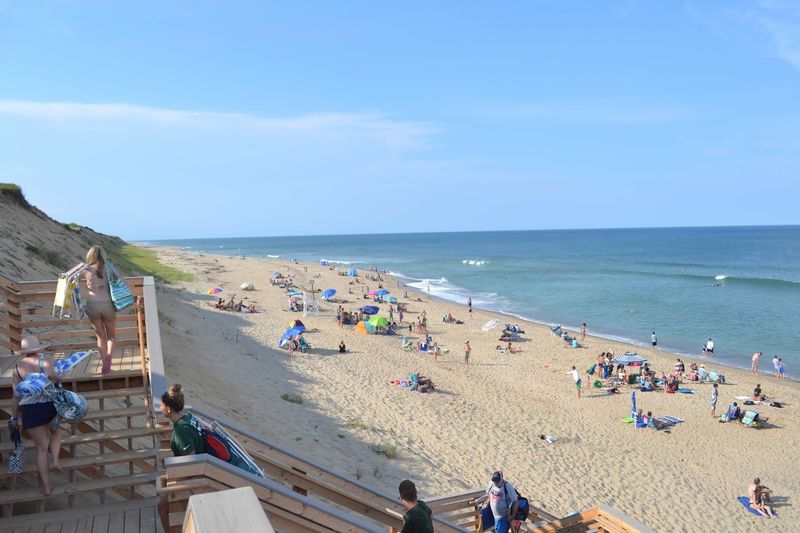
A few practical items make a real difference at Marconi Beach compared to other beaches. Water shoes are at the top of the list because of the rocky shoreline where the waves meet the sand.
The rocks there are sharp enough to cut feet, and several visitors have learned that lesson the hard way on their first visit.
Bug spray is worth packing too. Sand flies are present at this beach and they bite, particularly in the warmer months.
It is the kind of thing that does not come up in most beach packing lists but becomes very obvious once you are sitting on the sand without it.
Beyond those two items, the usual beach kit applies: sunscreen, a large umbrella for shade since the sun on the open bluff is intense, plenty of drinking water, and a bag that you are comfortable carrying back up 53 stairs. Traveling light pays off noticeably here.
Why This Beach Rewards People Who Come Back More Than Once
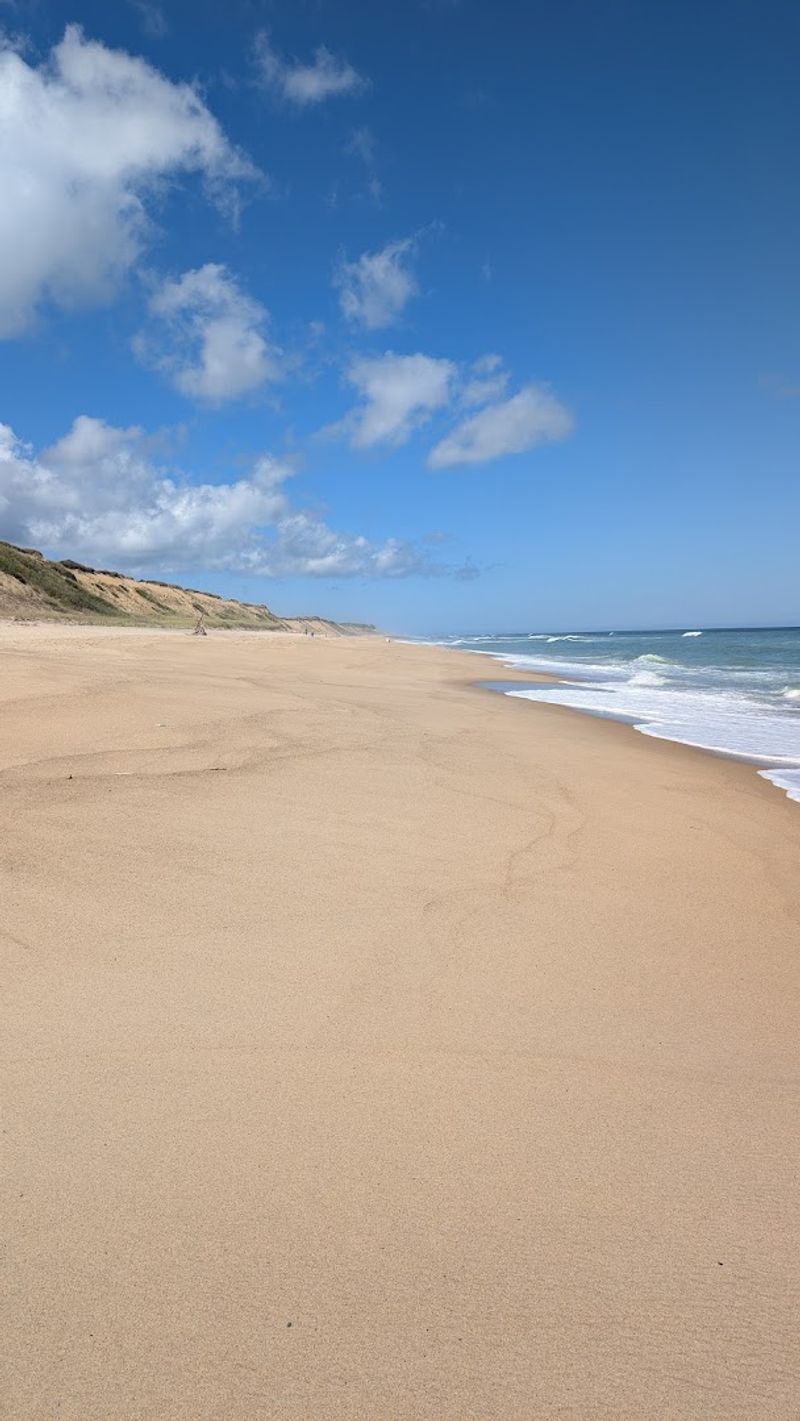
Marconi Beach changes depending on when you show up. Early morning visits offer near-empty shorelines and the kind of sunrise that faces directly east over open ocean, with nothing between you and the horizon.
Midday brings the full summer energy, with waves, seals, and the occasional shark flag adding an edge of wildness to the scene.
Late afternoon arrivals after 5 p.m. get free parking and a noticeably quieter beach, with long shadows stretching across the sand and the light turning warm and low over the water. Off-season visits in fall or winter strip the beach down to its most elemental form: wide open, windswept, and genuinely raw.
One visitor described the beach as worth a stop even on a wet and rainy day, and that tracks. The cliffs, the history, the trails, and the seals are all present regardless of season.
Marconi Beach is the kind of place that holds up every single time.
Where Marconi Beach Actually Is and Why It Matters
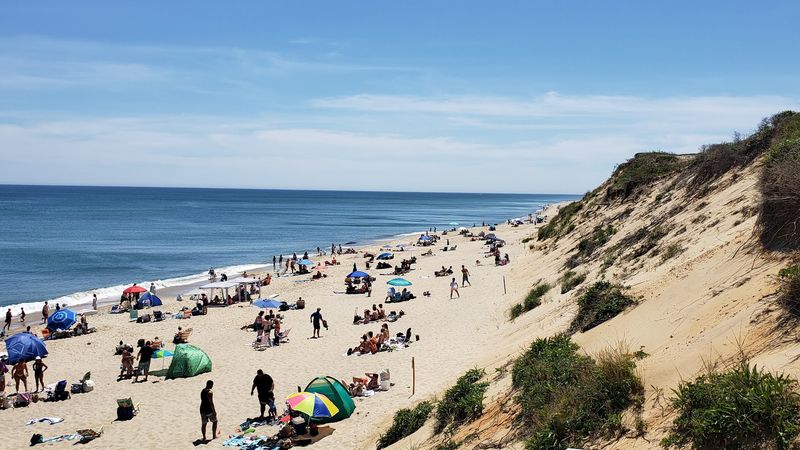
Marconi Beach sits within the Cape Cod National Seashore in Wellfleet, Massachusetts, on the outer Atlantic-facing side of the Cape. The address is off Marconi Beach Road in Wellfleet, MA 02667, and it falls under the management of the National Park Service, which means the land around it is protected from development.
That protected status is a big part of why the beach feels so different from most others along the Massachusetts coast. There are no hotels crowding the bluff, no boardwalk lined with shops, and no carnival atmosphere anywhere nearby.
What you get instead is raw coastline backed by high sandy cliffs, open sky in every direction, and the kind of quiet that reminds you the ocean was here long before any of us arrived. For anyone who has grown tired of overly commercialized beaches, this one lands like a genuine exhale.
Share this story