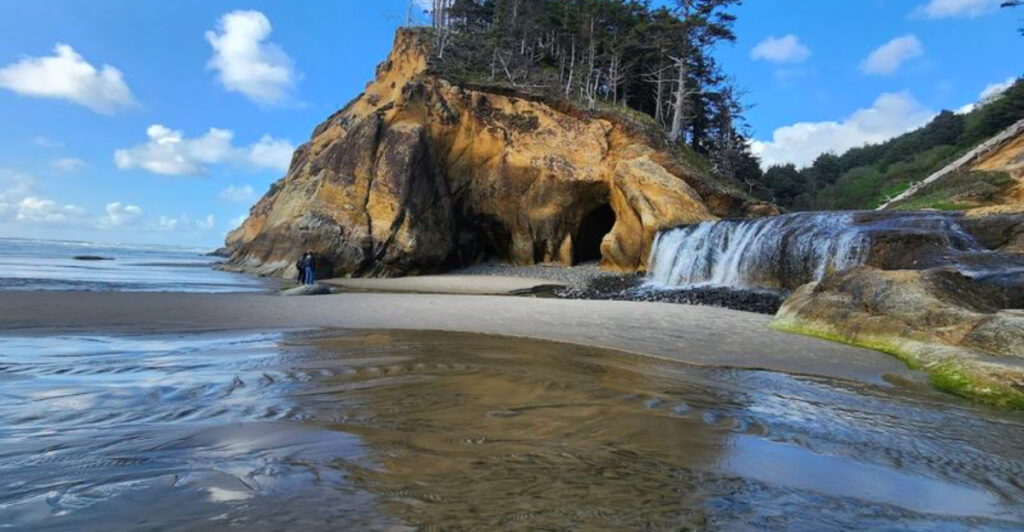
There is a stretch of the Oregon Coast where the Pacific crashes against ancient basalt cliffs, caves tunnel into the rock face, and a freshwater waterfall spills directly onto the sand. I had driven past the turnoff twice before I finally stopped, and the moment I did, I understood why people keep coming back.
The beach is wild, the scenery is stacked with surprises, and the short walk from the parking lot packs more natural drama into a quarter mile than most full-day hikes manage. Pack your curiosity, check the tide chart, and keep reading because this place genuinely earns every five-star review it gets.
Where Exactly Hug Point Is and How to Get There
A small green sign on Highway 101 is almost the only warning you get before the turnoff appears. Hug Point State Recreation Site sits at 80424 Oregon Coast Hwy, Arch Cape, OR 97102, tucked between Cannon Beach to the north and Manzanita to the south, roughly four miles south of Cannon Beach itself.
The parking lot holds about 40 cars, and it fills up fast on weekends and sunny days. Arriving before 9 a.m. on busy days is a smart move, and a midweek visit in the shoulder season almost guarantees you a spot without circling the lot twice.
Restrooms are available right at the parking area, which is a genuine convenience, especially for families with young kids. The beach access path starts at the far end of the lot and leads you down a staircase that is steep in places and has some uneven sections where older steps have washed away.
The whole descent takes only a few minutes, but sturdy footwear helps. Sandals work fine on the sand, though trail shoes give you more confidence on the rocky sections closer to the point and the waterfall.
The Waterfall That Falls Straight Onto the Beach
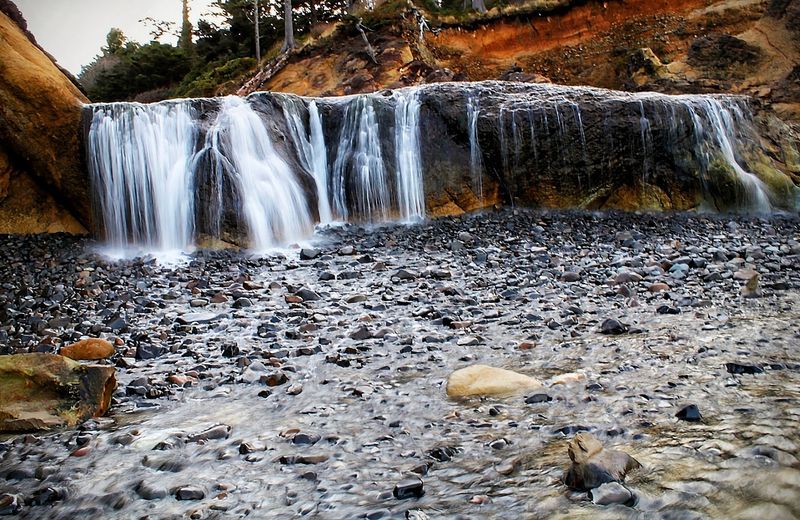
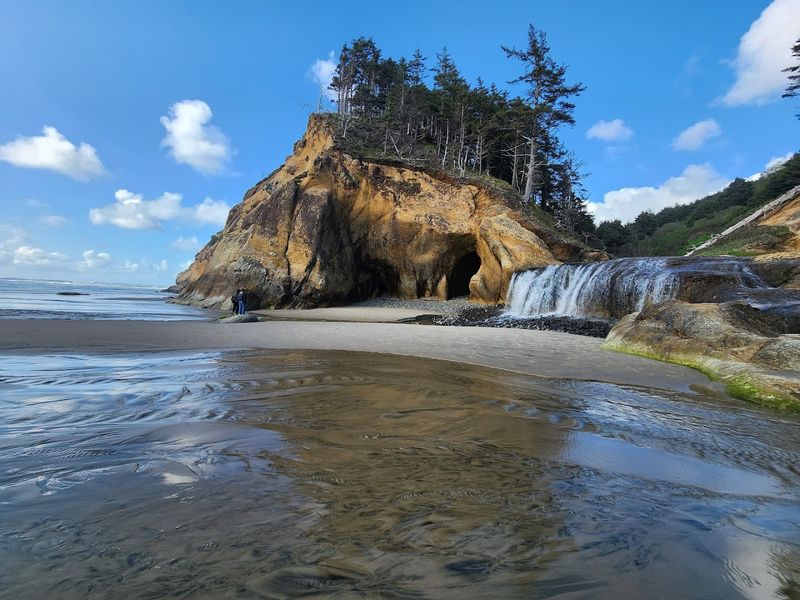
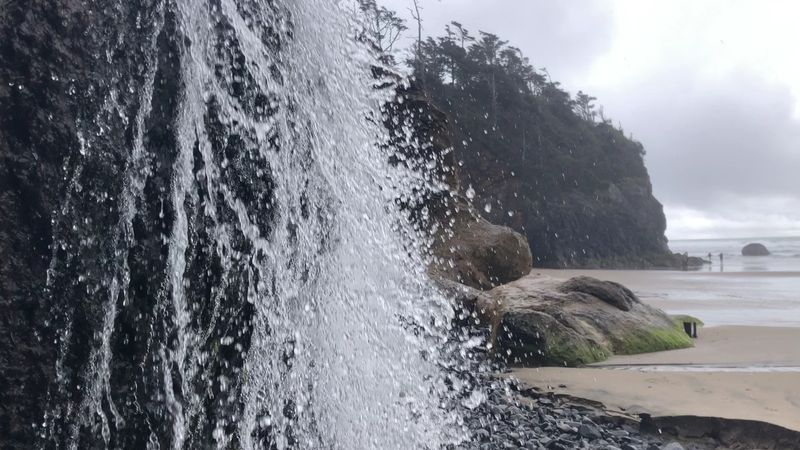
Most waterfalls require a real hike to earn the view. At Hug Point, you walk roughly a quarter mile on flat sand and then round a basalt headland, and there it is: a creek tumbling off a mossy cliff face and landing directly on the beach.
The falls are fed by a small creek that runs year-round, though the flow is noticeably fuller in spring and early winter after rain. In late summer the stream narrows but never disappears entirely, and the visual effect of fresh water meeting salt water on open sand stays striking no matter the season.
The waterfall sits at the northern end of the beach, past the main headland. You need to round the rocky corner to reach it, which is only possible at low or mid tide.
Check a tide chart before you go, because at high tide the ocean pushes right up against the cliff and the route is blocked.
Once you are standing in front of it, the sound is surprisingly loud against the backdrop of wave noise. Eagles have been spotted nesting in the cliffs above, so scanning the rock face while you listen to the falls is always worth a few quiet minutes.
Reading the Tides Before You Go
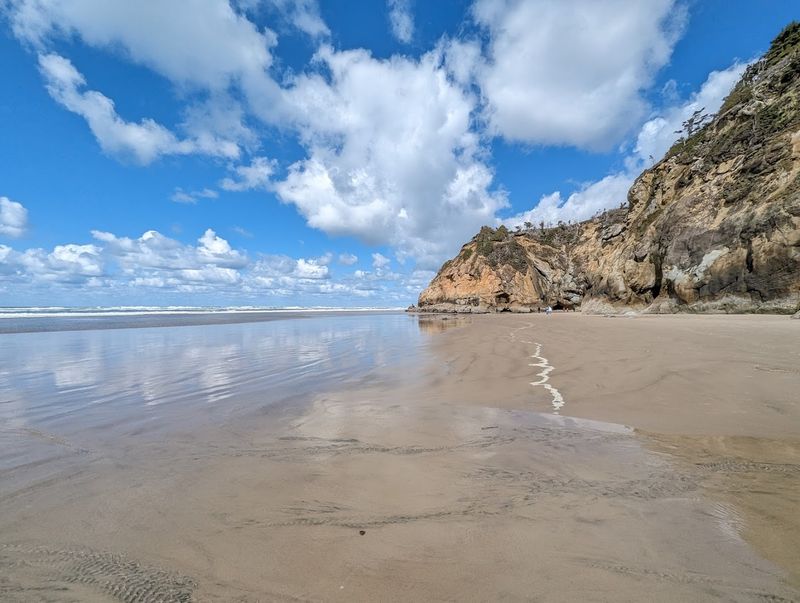
Tide timing at Hug Point is not a minor detail you can skip. It is genuinely the difference between a great visit and a frustrating one where you stand at a rocky wall and cannot go any further.
The caves, the waterfall, the historic wagon road carved into the cliff, and the tide pools around the northern headland are all only accessible during low or outgoing tide. A tide window of roughly two to three hours on either side of low tide gives you comfortable access without feeling rushed.
Free tide prediction tools are easy to find online. The NOAA tide predictor for the Astoria or Cannon Beach stations gives reliable data for this stretch of coast.
Many visitors also use smartphone apps like Tide Chart or MyTide, which let you set a location alert and plan your arrival time down to the hour.
Locals consistently recommend arriving as the tide is going out rather than waiting for the exact low point. That way you get the full window of exploration time and you are not scrambling to get back around the headland as the water rises.
A little planning here pays off enormously.
Sea Caves and Rock Formations Worth Exploring
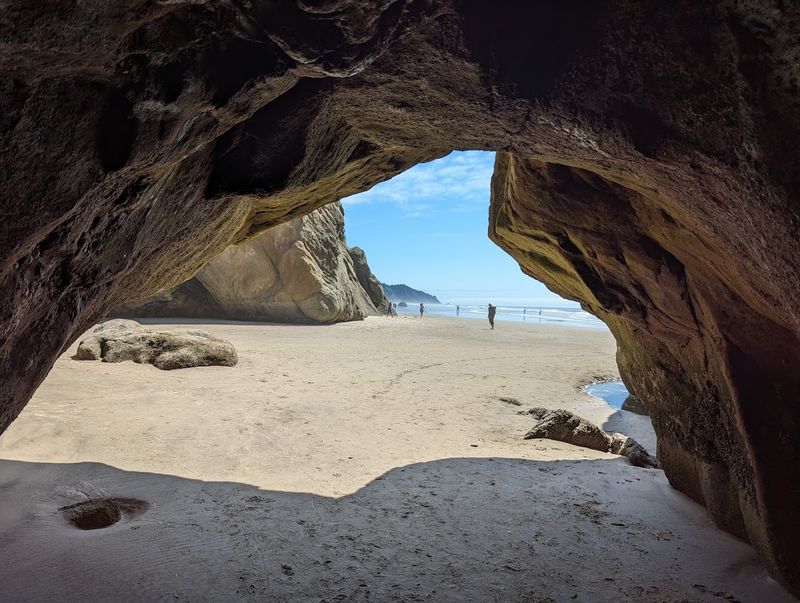
The caves at Hug Point are one of the features that set it apart from the long, flat stretches of sand that define much of the Oregon Coast. Several cave openings are carved into the basalt cliffs along the northern section of the beach, ranging from shallow alcoves you can peer into to larger chambers you can actually enter and explore.
The bigger caves have sandy floors and walls streaked with minerals and algae, giving them a layered, almost geological feel. Some visitors have spotted starfish and small crustaceans clinging to the wet walls near the cave entrances, especially after a receding tide leaves shallow pools behind.
The rock formations outside the caves are just as interesting. Columns of dark basalt jut out of the sand at odd angles, and the wave action over thousands of years has smoothed and sculpted the surfaces into shapes that look almost deliberate.
Kids especially love scrambling around the lower formations.
One practical note: the larger cave near the waterfall is popular enough that on busy weekend afternoons you may find other visitors already set up inside. Arriving earlier in the day or on a weekday usually means you have the cave spaces mostly to yourself.
Tide Pools Teeming With Pacific Marine Life
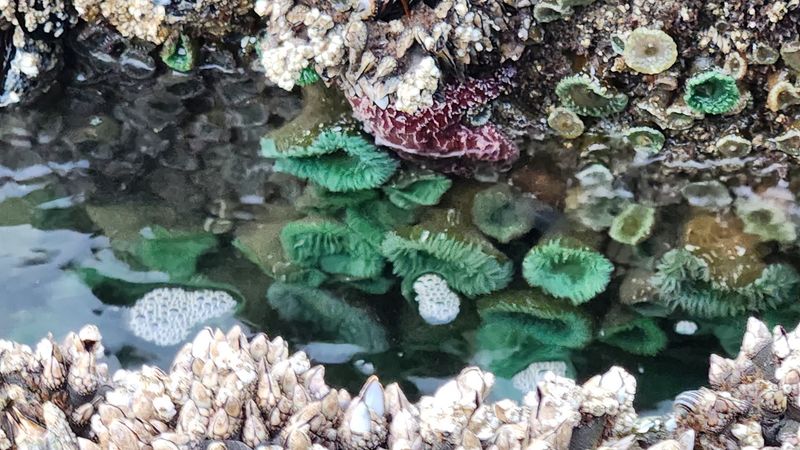
The tide pools at Hug Point are some of the most accessible and well-stocked on the northern Oregon Coast. Because the beach does not get the same foot traffic as Cannon Beach just a few miles north, the ecosystems here tend to be less disturbed and more visually rewarding.
Sea anemones are a consistent highlight. Their green and purple tentacles spread wide in the shallow water, and they close into a compact blob the moment a curious finger gets too close.
Purple sea urchins, hermit crabs, limpets, chitons, and the occasional small sculpin fish round out the pool communities along the rocky base of the headland.
Exploring tide pools responsibly matters here. The Oregon State Marine Board and conservation guidelines ask visitors not to remove any organisms, not to overturn rocks without replacing them carefully, and to step only on bare rock rather than on organisms.
These rules are easy to follow and they keep the pools healthy for the next visitor.
The best pools are concentrated around the base of the northern headland and become more exposed as the tide drops. Plan to spend at least 30 to 45 minutes here if marine biology is your thing, because there is genuinely a lot to find.
The Historic Wagon Road Carved Into the Cliff
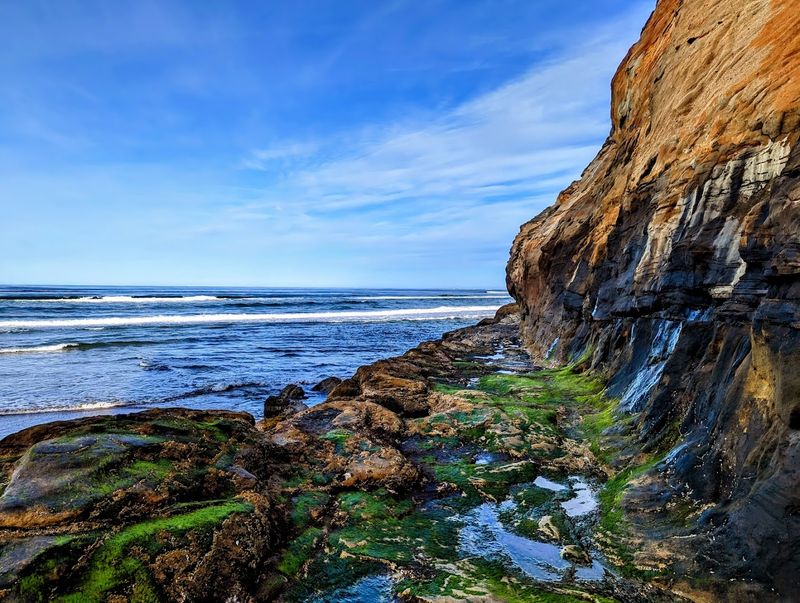
One of the most unexpected details at Hug Point is a piece of 19th-century transportation history etched directly into the basalt headland. Before Highway 101 existed, early settlers and mail carriers traveling the Oregon Coast had to navigate around rocky headlands at low tide, and Hug Point was one of the trickiest obstacles on the route.
To make the passage safer and more reliable, workers blasted and chiseled a narrow road shelf into the cliff face. The route hugged the rock so closely that it gave the point its name.
Wagon wheel ruts are still visible in the stone today, worn into the basalt by years of heavy use before a proper coastal highway made the route obsolete.
Finding the wagon road requires rounding the headland past the waterfall. A short climb up from the beach level brings you to the carved shelf, where you can stand on the same narrow path that horses and wagons once used with the Pacific crashing below.
The historical context makes the setting feel genuinely layered, not just scenic.
A visitor who takes a moment to look at the ruts and think about what that coastal route meant to early Oregon communities walks away with a fuller picture of why this headland carries so much character.
What the Beach Itself Looks and Feels Like
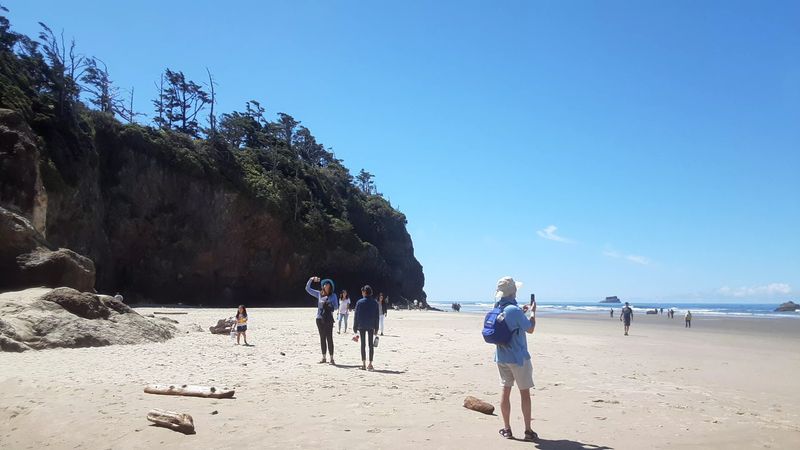
The sand at Hug Point is wide, pale, and scattered with large pieces of driftwood that make natural benches and windbreaks. At low tide the beach stretches broadly enough that it never feels crowded even when the parking lot is full, because people spread out naturally toward the caves and the point.
The overall atmosphere is wilder and more intimate than Cannon Beach. There are no shops, no ice cream carts, and no organized amenities beyond the parking lot restrooms.
What you get instead is the sound of the ocean, the smell of salt and wet rock, and a beach that looks almost exactly as it did a century ago.
Families tend to cluster near the waterfall and cave area, while couples and solo visitors often wander further south along the open sand for quieter stretches. Several large driftwood logs near the base of the access path make comfortable spots for picnics or just sitting and watching the waves.
Sunsets from this beach are genuinely stunning. The westward-facing orientation means the last light of the day hits the cliff faces at a warm angle, turning the basalt orange and gold while the tide pools reflect the color back up from below.
Coming in the late afternoon on a clear day adds a whole extra layer to the experience.
Practical Tips for Visiting With Kids and Dogs
Hug Point is one of those rare coastal spots that genuinely works well for families with kids of almost any age, provided you go in with a little preparation. The beach itself is pet-friendly, and dogs on leash are welcome, which makes it a popular destination for people traveling the coast with their four-legged companions.
The path down from the parking lot includes a staircase that has some steep and uneven sections. Strollers are difficult to manage on the lower portion of the descent, and several visitors have noted needing to carry them down the last stretch.
For toddlers who can walk independently, the path is manageable with a patient adult alongside.
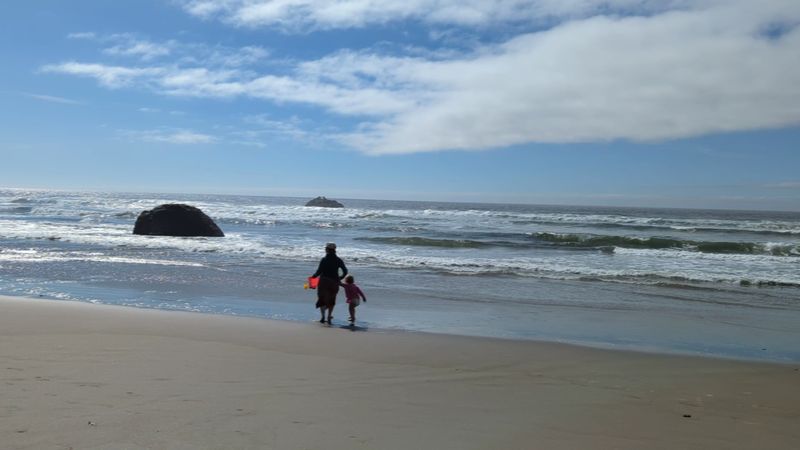
The sand dune that forms a natural shallow area just offshore is a genuine bonus for kids. The sand bar creates a section of water that is only ankle to knee deep even at lower tide levels, giving younger children a safe place to splash without getting pulled by strong currents.
Packing snacks, extra layers, and a change of clothes for the kids is always smart on the Oregon Coast regardless of the forecast. The weather shifts quickly, and kids who have been splashing in tide pools tend to need dry socks sooner than anyone expects.
A small dry bag for phones and cameras is also worth bringing.
How Hug Point Compares to Nearby Cannon Beach
Cannon Beach is one of the most photographed spots on the entire West Coast. Haystack Rock is iconic, the town is charming, and the beach is genuinely beautiful.
But Hug Point, sitting just four miles south, offers something that Cannon Beach simply cannot: solitude, geological variety, and a sense that you found something most tourists drove right past.
The crowds at Cannon Beach on a summer weekend can be significant. The shops, restaurants, and famous rock draw visitors by the thousands, which means the beach itself can feel more like a busy park than a wild coastal experience.
At Hug Point, even on a moderately busy day, the natural layout of the beach and headland disperses people quickly.
The waterfall, the caves, the wagon road, and the tide pools give Hug Point a layered quality that no single feature at Cannon Beach quite matches. The two spots complement each other well on a day trip since they are close enough to visit both, but if you have to pick one for a longer stay, Hug Point rewards slow exploration in a way that is harder to find at more famous destinations.
Many visitors who discover Hug Point after years of going to Cannon Beach describe it as the better-kept secret of the two, and that reputation is well-earned.
Best Times to Visit and What to Expect Each Season
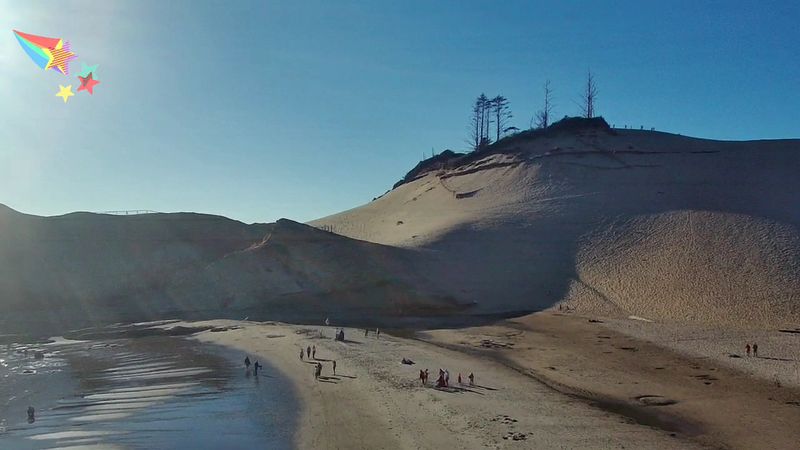
The Oregon Coast does not really have a bad season for visiting, but each time of year at Hug Point comes with its own character. Summer brings the longest days, the warmest temperatures, and the highest chance of clear skies, but it also brings the most competition for parking spots and a busier beach overall.
Spring is arguably the most rewarding season for tide pool enthusiasts. The combination of strong minus tides, active marine life, and green coastal vegetation makes late March through May a particularly rich time to visit.
The crowds are lighter than summer, and the dramatic storm light that lingers into spring gives every photograph a moody quality.
Fall visits offer some of the most pleasant weather on the coast. September and October often bring clear skies, mild temperatures, and noticeably thinner crowds.
The angle of the autumn sun on the cliffs is especially photogenic in the late afternoon hours.
Winter is the quietest season and the most unpredictable. Heavy rain and large swell can make beach access challenging, and some days the weather simply will not cooperate.
But on a clear winter day when the surf is not extreme, Hug Point in January or February has a raw, empty beauty that summer visitors never get to see. Layering up and checking the forecast pays off.
Share this story