 Unearth The Voyage
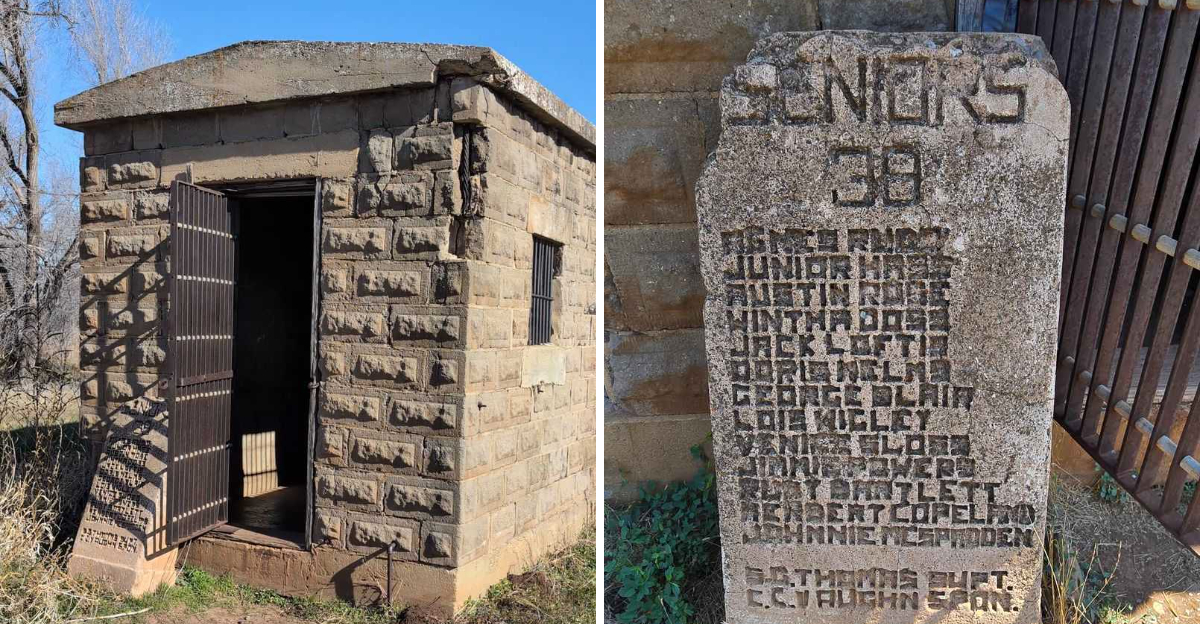
Out in the Oklahoma panhandle, where tumbleweeds roll and history whispers through every crack in the pavement, stands a tiny structure that tells the story of frontier law enforcement. This isn’t some grand courthouse or imposing penitentiary.
This is a jail so small you could almost miss it if you blinked while driving past.
I found myself standing in front of it on a quiet afternoon, wondering how anyone ever survived a night locked inside. The walls are weathered, the door is heavy, and the whole thing feels like a time capsule from an era when towns were rough and justice was personal.
If you’re the kind of traveler who loves oddities and authentic slices of American history, this little lockup is calling your name.
A Tiny Piece of History on Main Avenue
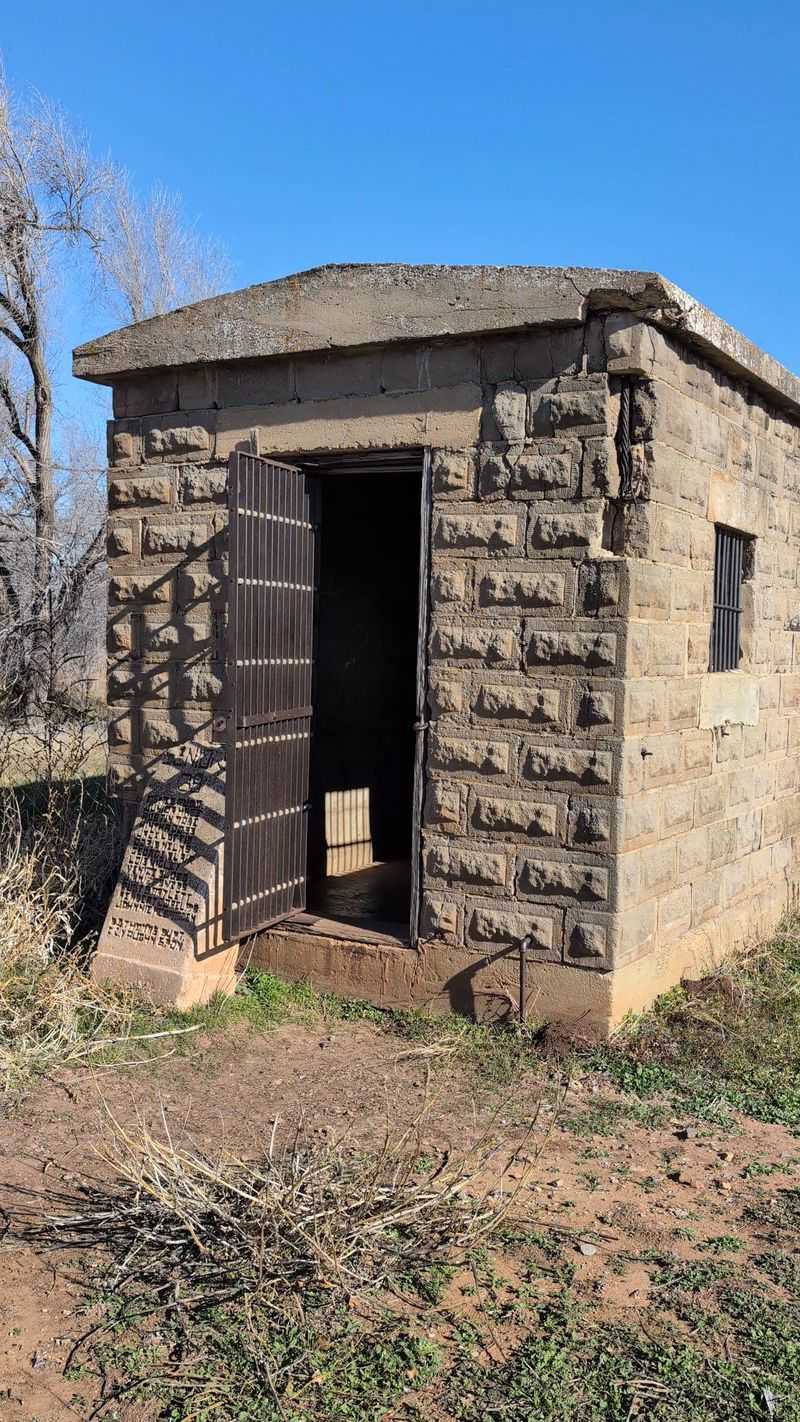
The One Room Jail sits right on Main Ave, Texola, OK 73668, and it’s one of those places that makes you stop and stare. Texola is a ghost town now, barely a blip on the map near the Texas border, but this little jail has outlasted just about everything else in the area.
I parked my car and walked up to it, feeling the weight of over a century of stories pressing down on those stone walls.
Built in the early 1900s, this jail served as the town’s only holding cell for troublemakers, drunks, and anyone who stepped out of line. The structure is made of sturdy stone, designed to withstand both the elements and any attempts at escape.
Standing in front of it, I could almost hear the echo of boots on dirt roads and the clang of the iron door slamming shut.
What struck me most was how impossibly small it is. The entire jail is just one room, barely large enough for a grown person to stretch out.
There’s no bathroom, no bed, no amenities whatsoever. Prisoners were locked in and left to contemplate their choices until the marshal decided they’d learned their lesson.
It’s a humbling reminder of how different life was back then.
The Ghost Town Setting
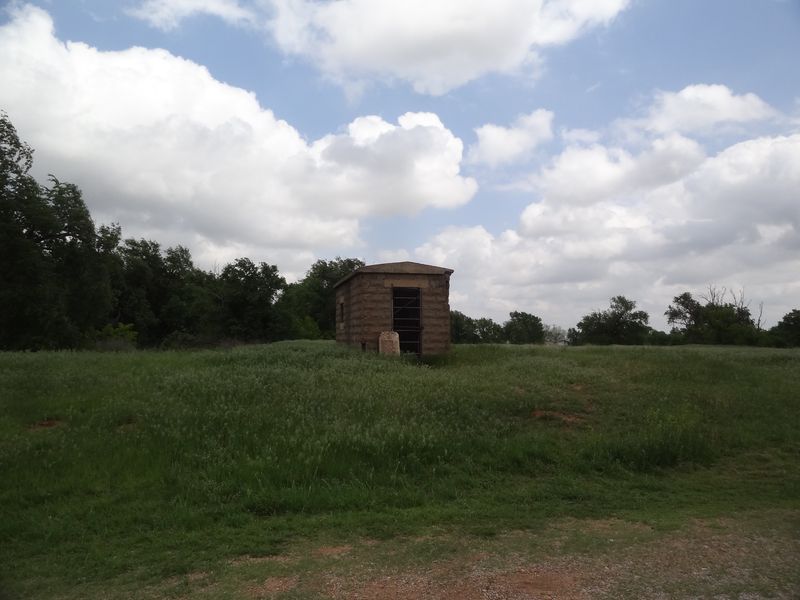
Texola itself is a fascinating backdrop for this old jail. Once a bustling stop along Route 66, the town has since faded into near-total abandonment.
When I visited, I counted maybe a handful of residents still clinging to life in this dusty corner of Oklahoma. Most of the buildings are empty shells, their windows broken and their roofs caving in.
Walking down Main Avenue felt like stepping onto a movie set for a Western film. The silence was almost eerie, broken only by the wind rattling through old storefronts.
The jail stands as one of the few structures still holding its ground, a testament to the quality of its construction and the determination of history buffs who’ve worked to preserve it.
This ghost town setting adds an extra layer of atmosphere to the experience. You’re not just visiting a historic jail; you’re exploring a place where time stopped decades ago.
The combination of the abandoned town and the old lockup creates a powerful sense of what frontier life must have been like. I spent an hour just wandering around, imagining what Texola looked like in its heyday, when the jail actually had regular customers and the streets were full of life.
Construction That Tells a Story
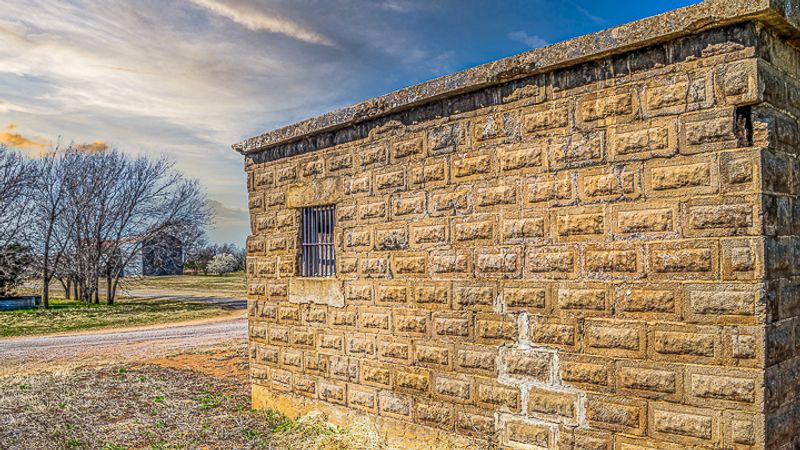
Examining the jail up close, I was impressed by the craftsmanship. The walls are constructed from local stone, fitted together with mortar that has somehow held for over a century.
Each stone was likely hauled by hand or wagon, then carefully placed by builders who knew this structure had to last. There are no fancy architectural flourishes here, just solid, practical construction meant to keep people in and the weather out.
The door is made of heavy iron, with a lock that looks like it could still function today. I ran my hand along the metal, feeling the rust and age beneath my fingers.
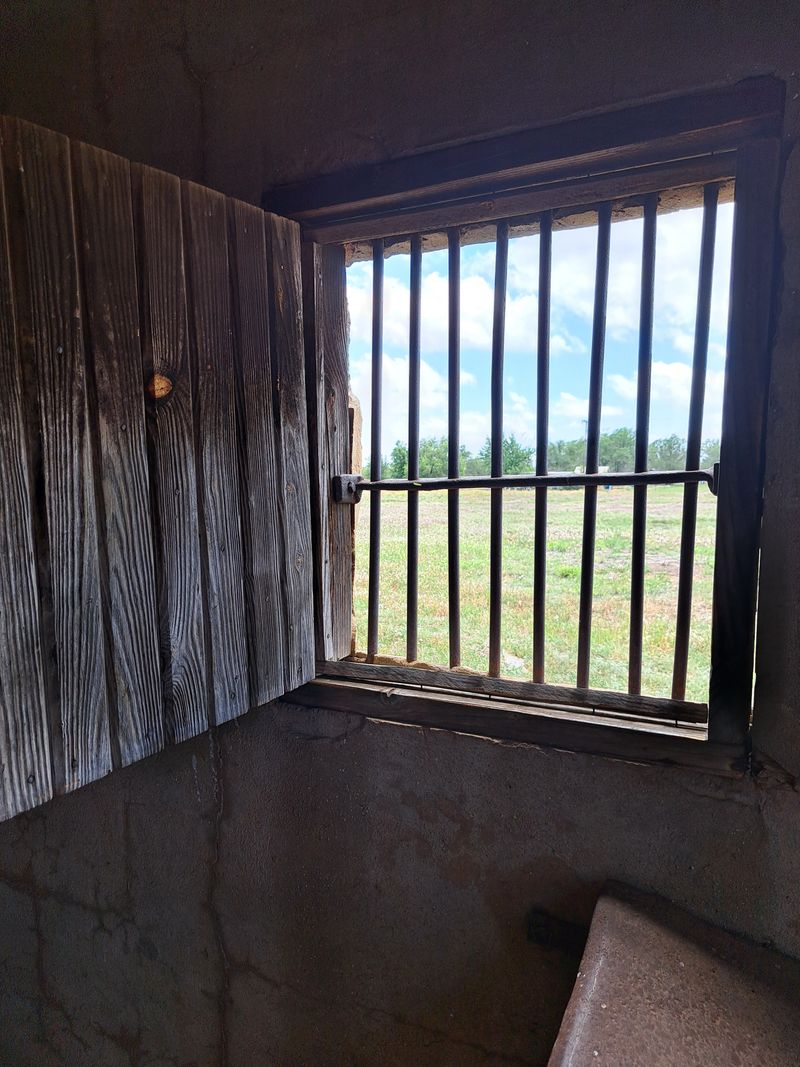
There’s a small barred window cut into one wall, barely large enough to let in a sliver of light. Imagine being locked in here during an Oklahoma summer, with temperatures soaring and no ventilation to speak of.
The roof is low and flat, typical of the era’s utilitarian design. Everything about this jail screams function over form.
The builders weren’t trying to make a statement or create something beautiful. They were solving a problem: where do you put people who break the law when your town is barely a town at all?
The answer was this sturdy little box of stone and iron.
Life Behind Bars in a Tiny Cell
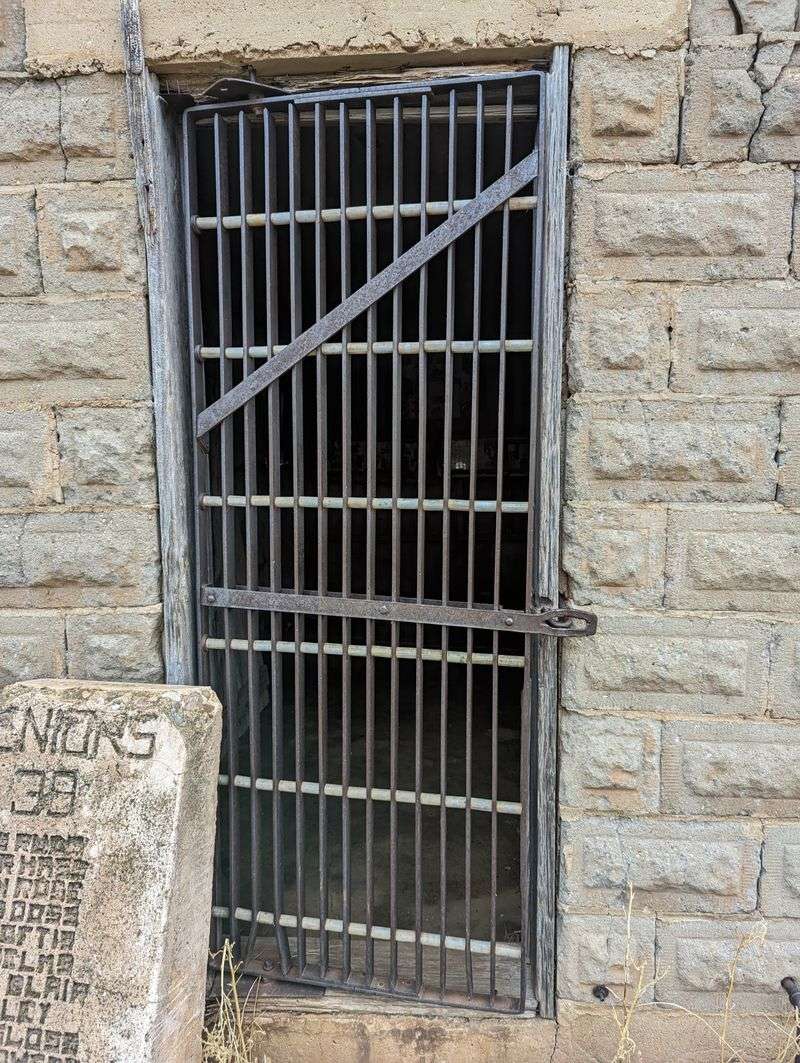
Peering through the bars, I tried to imagine what it must have been like to be locked inside. The space is so confined that I doubt anyone could pace more than a few steps in any direction.
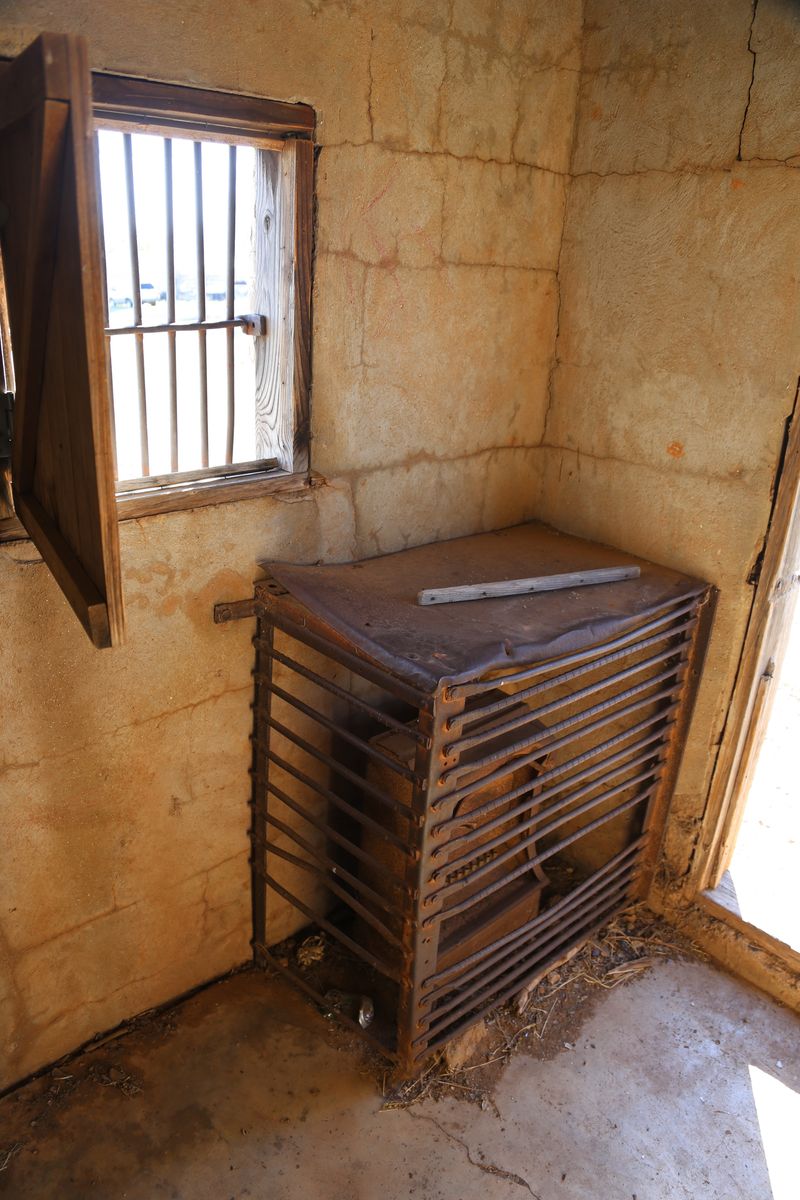
There’s no furniture visible, which means prisoners likely sat or lay directly on the floor. The stone would have been cold in winter and offered no comfort whatsoever.
During my visit, I learned that people were typically held here for short periods, maybe a night or a few days at most. This wasn’t a place for long-term incarceration.
It was a holding cell, a place to cool off and sober up before facing the local marshal or justice of the peace. The discomfort was probably intentional, a deterrent to keep folks from stepping out of line again.
I thought about the kinds of people who ended up here: cowboys who got too rowdy, gamblers who cheated, drifters who caused trouble. In a frontier town like Texola, law enforcement was basic and personal.
There were no lawyers, no lengthy trials, just swift justice delivered by whoever wore the badge. This tiny jail was the physical manifestation of that no-nonsense approach to keeping the peace.
The Marshal’s Domain
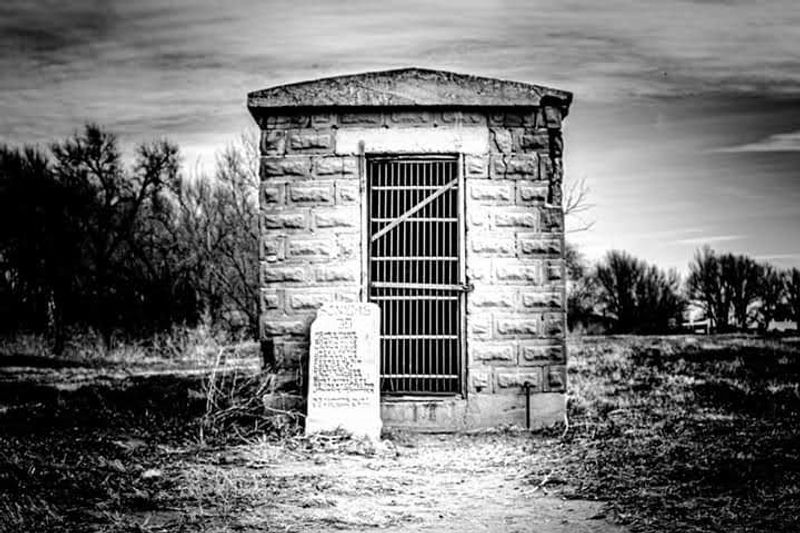
Every jail needs a jailer, and in Texola, that job fell to the town marshal. I found myself wondering about the person who held those keys, who decided who got locked up and for how long.
In small frontier towns, the marshal was often the only law around, responsible for everything from breaking up fights to tracking down horse thieves.
The marshal’s authority was absolute within town limits. There was no police department, no backup, no 911 to call.
If something went wrong, the marshal handled it, often single-handedly. The One Room Jail was his primary tool for maintaining order, a physical reminder that there were consequences for breaking the rules, even in a town as small and remote as Texola.
I imagined the marshal making his rounds, checking on whoever was locked in the jail, maybe bringing them water or food if he felt generous. The relationship between lawman and prisoner must have been strangely intimate in a town this size, where everyone knew everyone else.
You might lock up your neighbor on Saturday night and see his wife at church on Sunday morning. That’s frontier justice for you, personal and immediate.
Preservation Efforts and Historical Significance
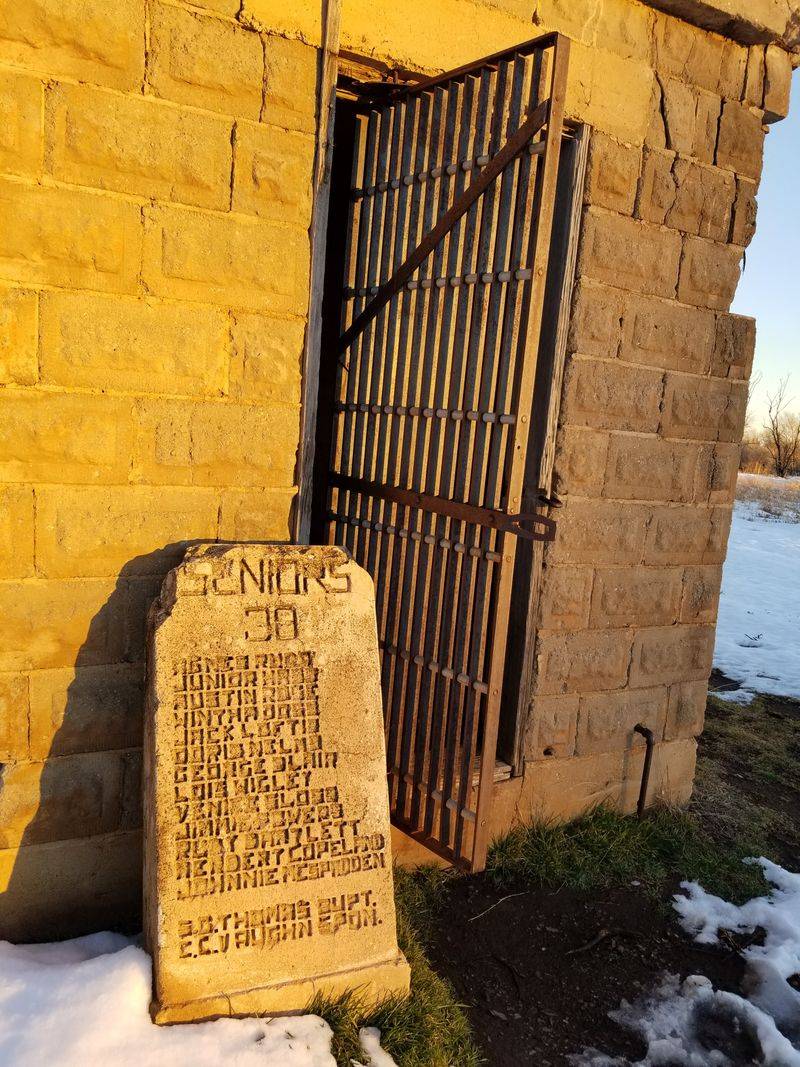
What amazed me most about the One Room Jail is that it’s still standing at all. Many structures from this era have crumbled or been demolished, but this little jail has survived thanks to the efforts of history enthusiasts and preservation groups.
It’s been recognized as a historical landmark, which means it’s protected from development and maintained for future generations to appreciate.
The jail represents an important piece of Oklahoma’s history, a tangible link to the days when the state was still frontier territory. It helps us understand how communities functioned when formal institutions were scarce and people had to create their own systems of justice.
Preserving structures like this isn’t just about nostalgia; it’s about keeping our connection to the past alive and accessible.
During my visit, I noticed that the jail is accessible 24 hours a day, which means you can stop by anytime to take photos and explore. There’s no admission fee, no guided tours, just you and this remarkable piece of history.
I appreciated that simplicity. It felt fitting that a jail built with such straightforward purpose should be experienced in an equally uncomplicated way, without commercialization or crowds.
Route 66 Connection
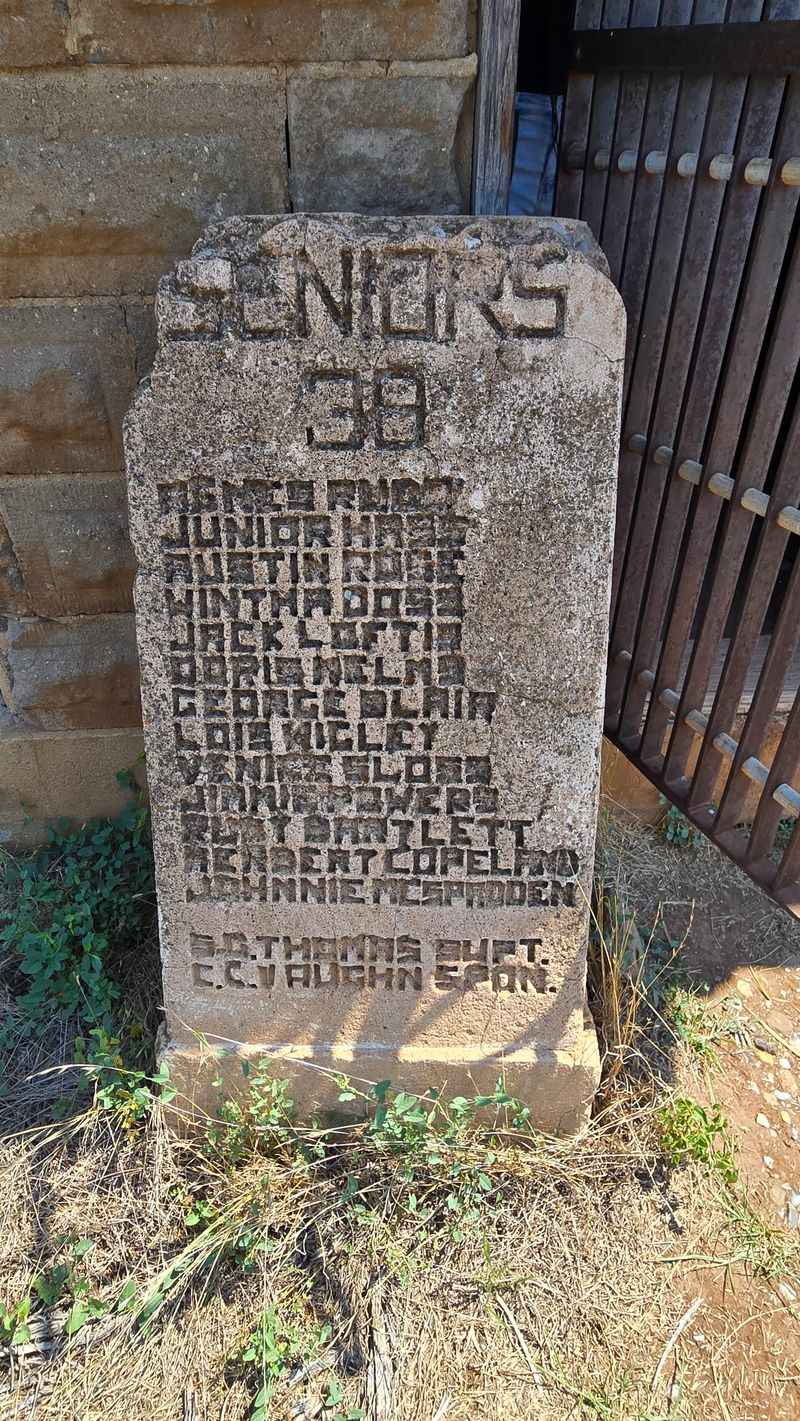
Texola’s location along Route 66 adds another layer to its story. The famous Mother Road once brought travelers streaming through this tiny town, and the jail stood as a silent witness to decades of American road culture.
In the heyday of Route 66, Texola had gas stations, diners, and motels serving the endless parade of cars heading east or west across the country.
I’m a Route 66 enthusiast, so discovering this jail during my road trip felt like finding a hidden treasure. While most people focus on the neon signs and vintage diners along the route, I was drawn to this more somber piece of history.
It reminded me that Route 66 towns were real communities with real problems, not just nostalgic postcards from a simpler time.
The jail’s connection to Route 66 also explains why it’s survived. Roadside history buffs and Route 66 preservationists have taken an interest in Texola’s remaining structures, including the jail.
There’s a growing movement to document and protect these small-town landmarks before they disappear completely. I felt grateful to be part of that story, even if just as a visitor with a camera and a curiosity about the past.
Photography and Exploration
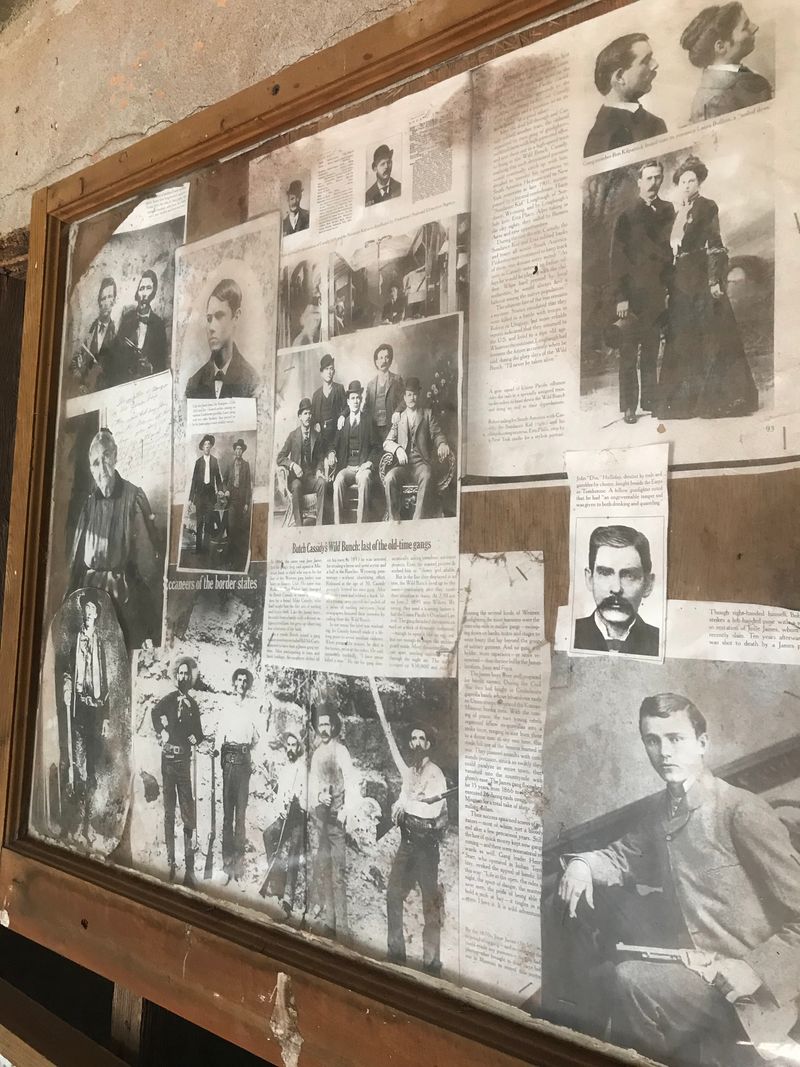
For photographers and history lovers, the One Room Jail is an absolute dream. The weathered stone, the heavy iron door, the stark simplicity of the design—it all makes for compelling images.
I spent at least an hour taking photos from every angle, trying to capture the jail’s character and the atmosphere of the surrounding ghost town.
The lighting changes throughout the day, which means your photos will look different depending on when you visit. I arrived in the late afternoon, and the golden hour light gave the stone walls a warm glow that contrasted beautifully with the harsh reality of what the jail represented.
Early morning would probably offer a different mood, with long shadows and cooler tones emphasizing the structure’s isolation.
Beyond photography, there’s something deeply satisfying about exploring places like this on your own terms. There are no ropes keeping you back, no docents rushing you along.
You can take your time, touch the walls, peer through the window, and really absorb the history. I recommend bringing a flashlight if you want to see inside more clearly, and wear sturdy shoes since the area around the jail is unpaved and uneven.
Weather and the Elements
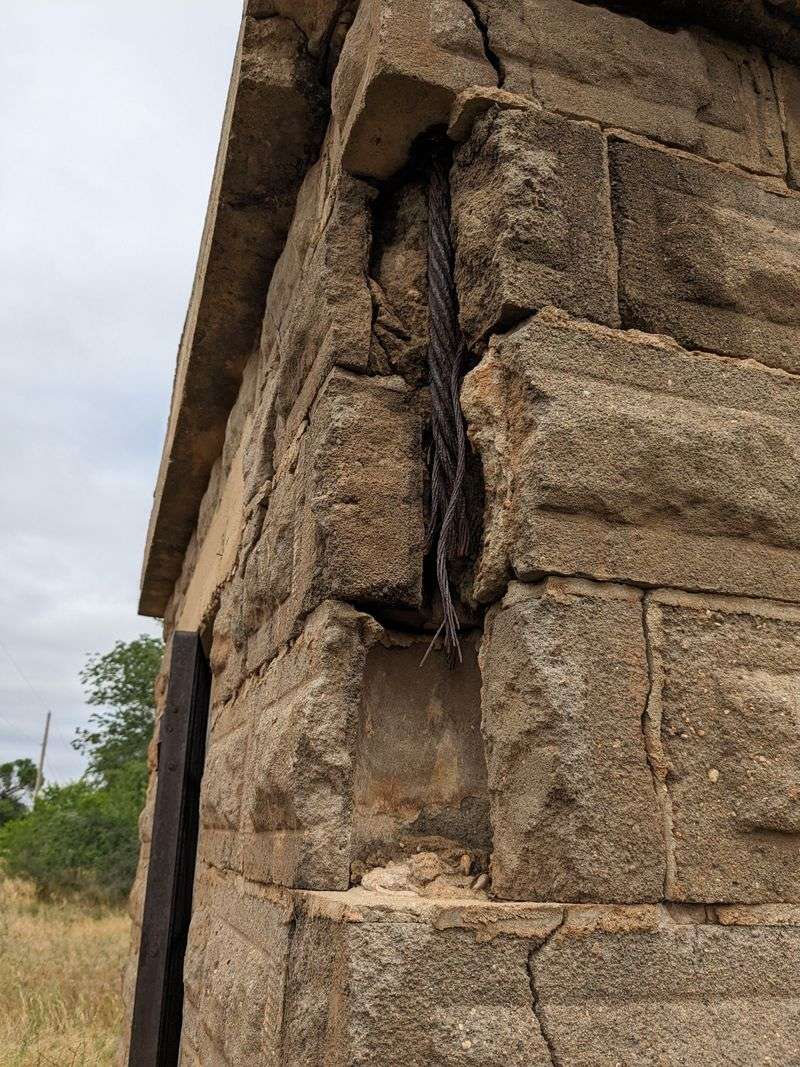
Standing next to the jail, I couldn’t help but think about how it’s survived more than a century of Oklahoma weather. This part of the state sees everything: scorching summers, frigid winters, violent thunderstorms, and the occasional tornado.
The fact that this little stone building is still intact speaks volumes about how well it was built.
The stone walls show signs of weathering, with some erosion visible around the mortar joints, but the overall structure remains solid. The iron door has rusted over the years, but it’s still firmly attached and functional.
I noticed that the roof, while aged, hasn’t collapsed like so many other buildings in Texola have. That’s remarkable considering the lack of regular maintenance over the decades.
Oklahoma’s weather also would have made the jail an incredibly uncomfortable place for prisoners. Summer temperatures regularly exceed 100 degrees, and that small stone room would have turned into an oven.
Winter nights can drop below freezing, and without any heat source, prisoners would have been miserably cold. The weather itself became part of the punishment, an unintended consequence of the jail’s simple design that probably made people think twice before causing trouble again.
Visiting Tips and What to Expect
If you’re planning to visit the One Room Jail, here’s what you need to know. Texola is extremely remote, with virtually no services available.
Bring water, snacks, and a full tank of gas because the nearest town with amenities is several miles away. The jail itself is easy to find on Main Avenue, which is essentially the only street in town.
There are no facilities, no visitor center, and no restrooms at the site. It’s just the jail and the surrounding ghost town.
That’s part of the appeal, but it also means you need to be self-sufficient. I recommend visiting during daylight hours, even though the site is technically accessible 24 hours.
The area is very dark at night, and exploring a ghost town after sunset can be disorienting.
Be respectful of the structure. Don’t try to break in or damage the jail in any way.
It’s a historical landmark that deserves to be preserved for future generations. Take only photos, leave only footprints, as the saying goes.
Also, be aware that Texola is private property in some areas, so stick to public spaces and don’t wander into buildings that look unstable or clearly marked as off-limits.
Frontier Justice and Legal History
The One Room Jail represents a specific moment in American legal history when frontier justice was the norm. In the early 1900s, Oklahoma was still very much a frontier territory, recently transitioned from Indian Territory to statehood.
Law enforcement was rudimentary, courts were informal, and justice was often swift and personal rather than procedural and impartial.
Crimes that might warrant a night in the jail included public intoxication, disturbing the peace, petty theft, or brawling. Serious crimes would have been handled differently, possibly with the prisoner being transported to a larger town with more substantial facilities.
But for everyday troublemakers, this tiny jail was sufficient to make a point and keep the community safe.
I found it fascinating to compare this system to modern justice. Today, we have complex legal procedures, rights for the accused, and extensive prison systems.
Back then, you might get tossed in this stone box overnight and released the next morning with a warning or a fine. There was something almost refreshingly simple about it, though I certainly wouldn’t want to experience it firsthand.
The jail stands as a monument to how far our justice system has evolved.
A Testament to Small Town America
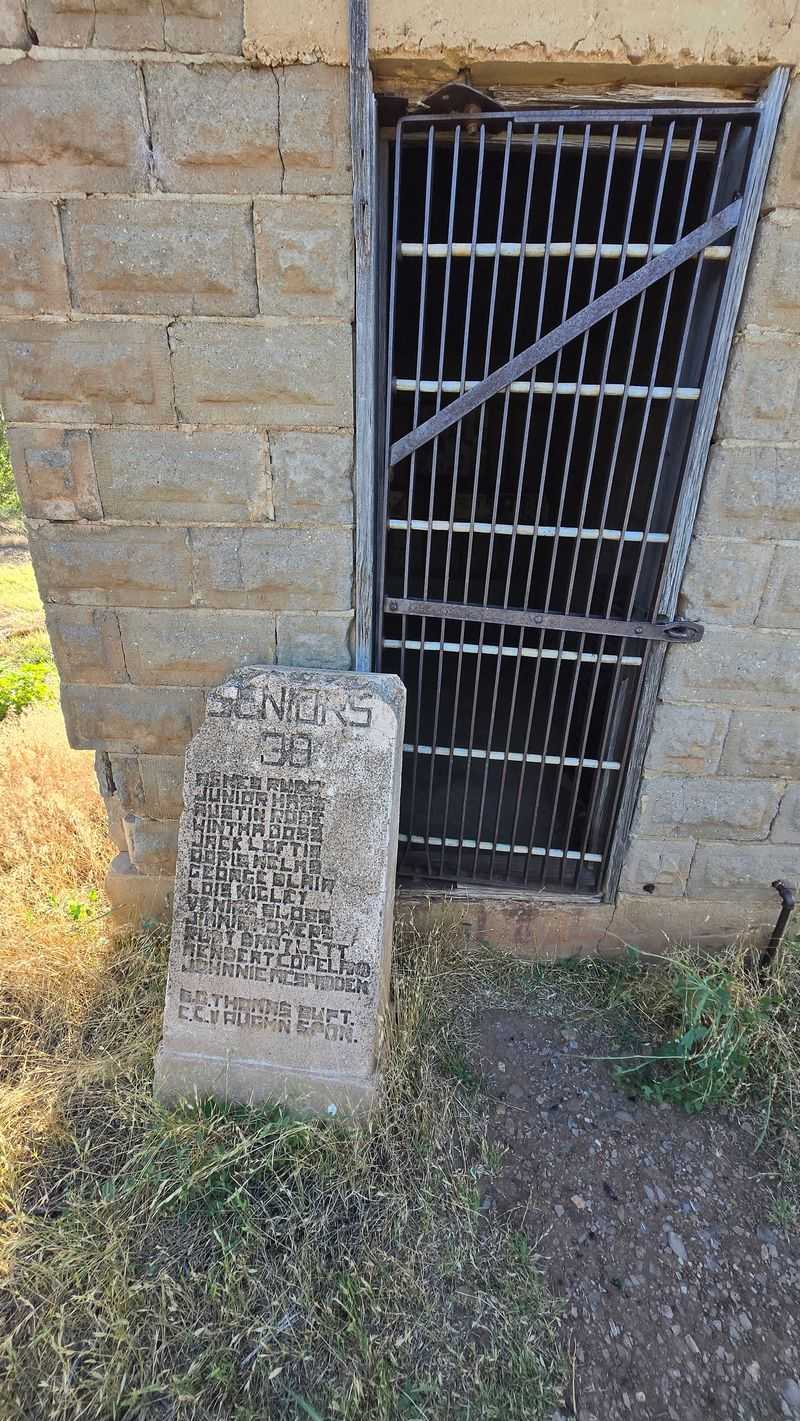
More than anything, the One Room Jail is a testament to the spirit of small-town America and the determination of frontier communities to create order from chaos. Texola may be a ghost town now, but there was a time when it was home to real people with real lives, hopes, and dreams.
The jail represents their collective decision to establish rules and consequences, to build a community worth protecting.
As I prepared to leave, I took one last look at the jail and the empty street beyond. There’s a melancholy beauty to places like this, where history is written in weathered stone and rusted iron.
The jail has outlived the town it served, standing as a lonely reminder of a bygone era when justice was immediate and personal, when communities were small enough that everyone knew everyone else’s business.
I drove away from Texola thinking about all the stories that jail could tell if its walls could speak. Who were the people locked inside?
What did they do? How did they feel waiting in that cramped darkness for the marshal to return?
These questions will never be fully answered, but that’s part of the mystery and magic of historical sites like this. They invite us to imagine, to wonder, and to connect with the past in tangible ways.



