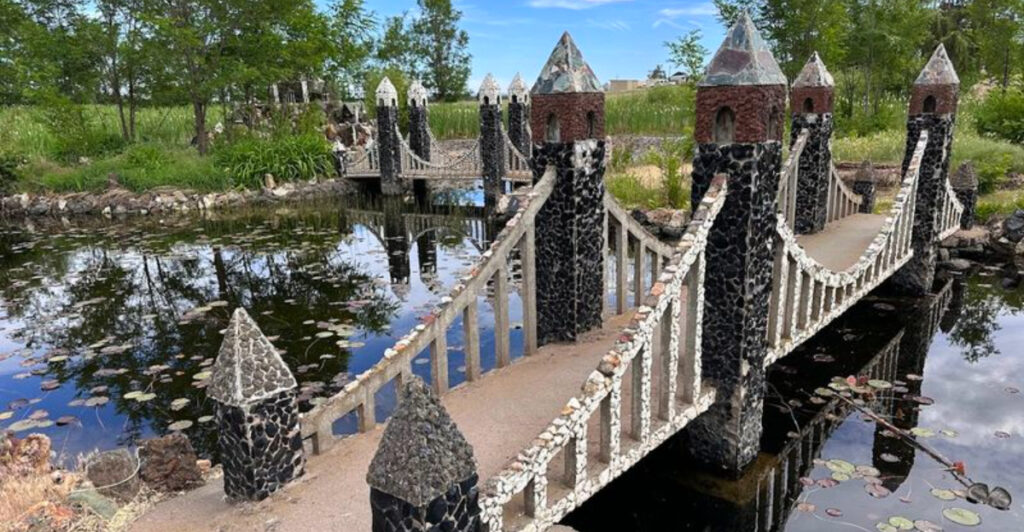
There is a place in Central Oregon where one man spent nearly two decades turning raw rock and lava into something that looks like it belongs in a fairy tale. Miniature castles, bridges, and patriotic monuments rise from the high desert landscape, all built by hand from petrified wood, agate, obsidian, and lava.
The whole property has a wonderfully weathered, time-capsule quality that makes you feel like you have stumbled onto something the rest of the world forgot to tell you about. By the end of this article, you will have ten very good reasons to make the detour.
The Address and Setting of Petersen Rock Garden
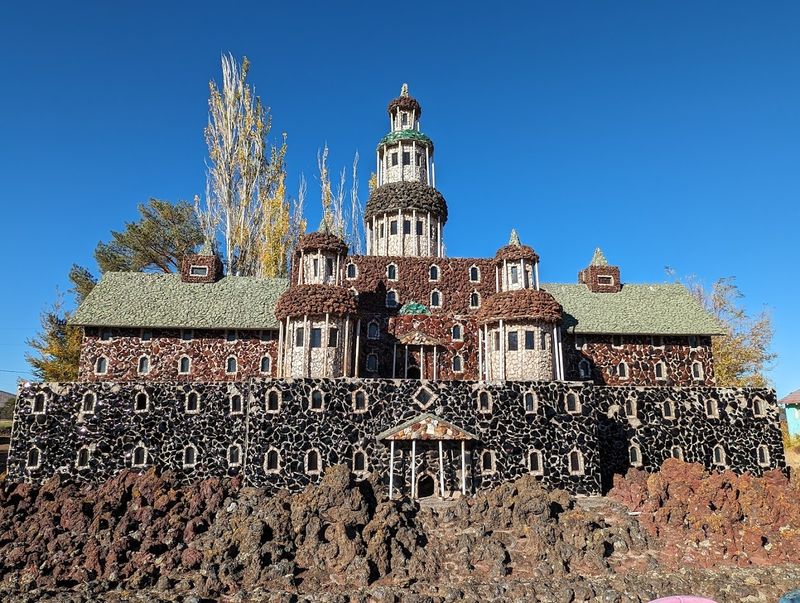
Right off SW 77th Street in Redmond, Oregon, at address 7930 SW 77th St, Redmond, OR 97756, this folk art landmark sits quietly between Redmond and Bend in the heart of Central Oregon. The property does not announce itself with flashing signs or a packed parking lot, which is part of its appeal.
The surrounding high desert stretches out in every direction, and snow-capped mountains frame the background on clear days. That contrast between rugged open land and the intricate rock structures on the grounds is genuinely striking the first time you see it.
Central Oregon is already a popular destination for outdoor lovers, but most travelers zoom right past this stretch of road without a second glance. The garden sits on what was once a working farm, and that agricultural history still shows in the layout of the land.
The wide open space gives every visitor plenty of room to wander at their own pace. You are never crowded, never rushed, and the whole property rewards slow, curious exploration more than a quick walk-through.
The Remarkable Story of Rasmus Petersen
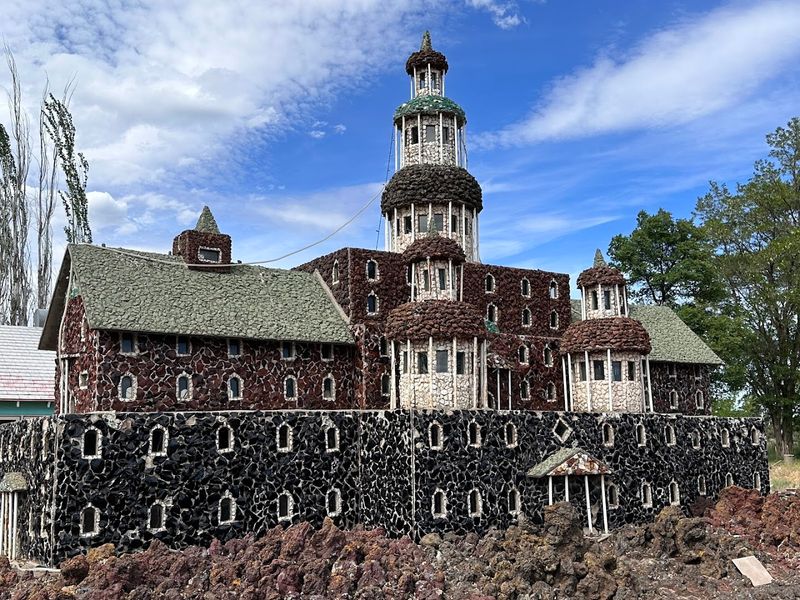
One man built all of this. Rasmus Petersen, a Danish immigrant and farmer, began constructing the rock garden in 1935 and continued working on it until 1952.
He had no formal training in architecture or sculpture, just patience, vision, and an extraordinary dedication to his craft.
Petersen sourced nearly all of his materials from within an 85-mile radius of the property, gathering petrified wood, agate, jasper, obsidian, malachite, and lava rock from the surrounding Central Oregon landscape. The sheer volume of material he collected and shaped by hand over those years is difficult to wrap your head around.
What makes his story even more compelling is that new rock displays he created are apparently still being discovered on the property today. That detail alone says a lot about the scale of his output.
His personal items are preserved inside the on-site museum, giving visitors a tangible connection to the man behind the structures. You leave with a genuine appreciation for what one person can accomplish through focused, sustained effort over many years, and that feeling stays with you long after you drive away.
The Miniature Castles and Rock Structures
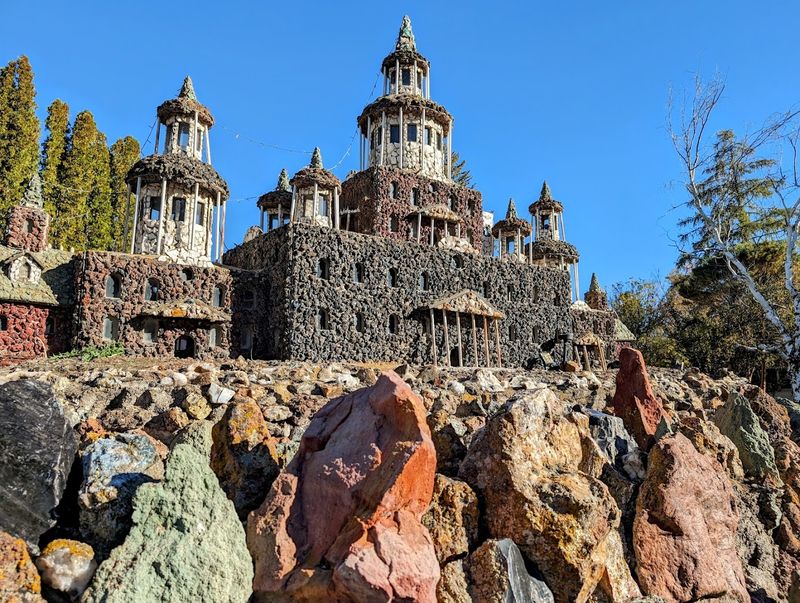
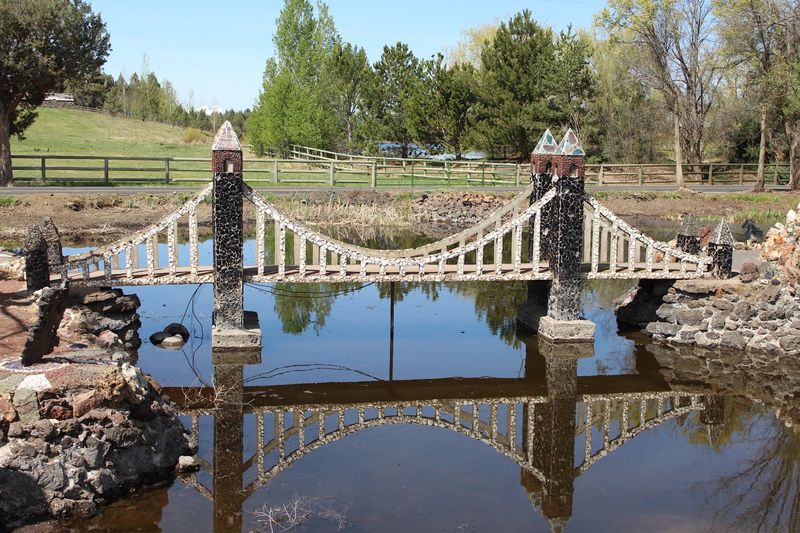
The rock structures at this garden are the main event, and they genuinely earn that status. Miniature castles, bridges, towers, and patriotic monuments fill the grounds, each one built from lava rock, agate, petrified wood, and glass.
The craftsmanship is detailed and surprisingly refined for work done entirely by one person without professional tools.
A clear progression of skill and creativity runs through the collection. The earlier pieces look more experimental, while the later structures show a builder who had fully mastered his unusual medium.
That evolution is fascinating to trace as you move through the garden.
Some structures are large enough to command serious attention, while others are small and easy to miss if you are not paying close attention. The property rewards the kind of visitor who slows down and looks carefully rather than breezing through in ten minutes.
Restoration work is currently underway on several structures, which means the garden is actively improving with each passing season. Coming back in a year or two would likely reveal a noticeably different and more polished version of the property, making repeat visits genuinely worthwhile rather than redundant.
The Museum and Its Extraordinary Rock Collection
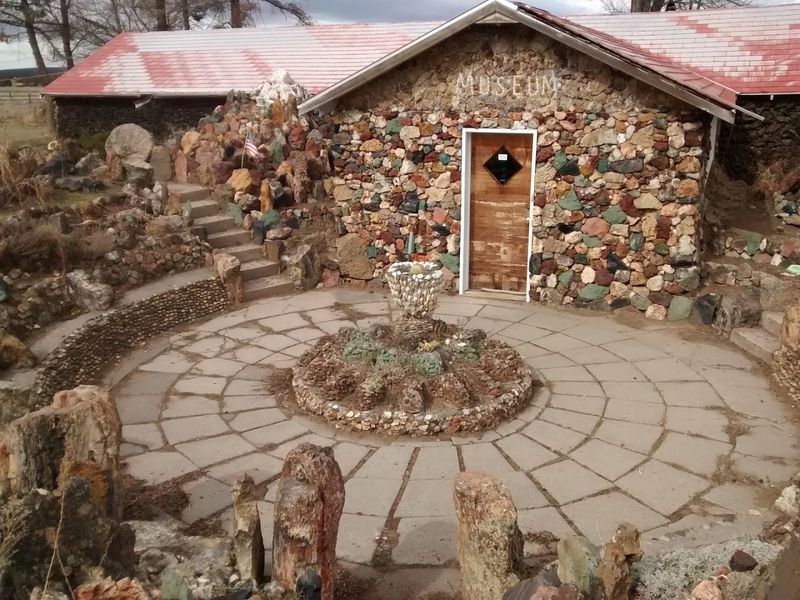
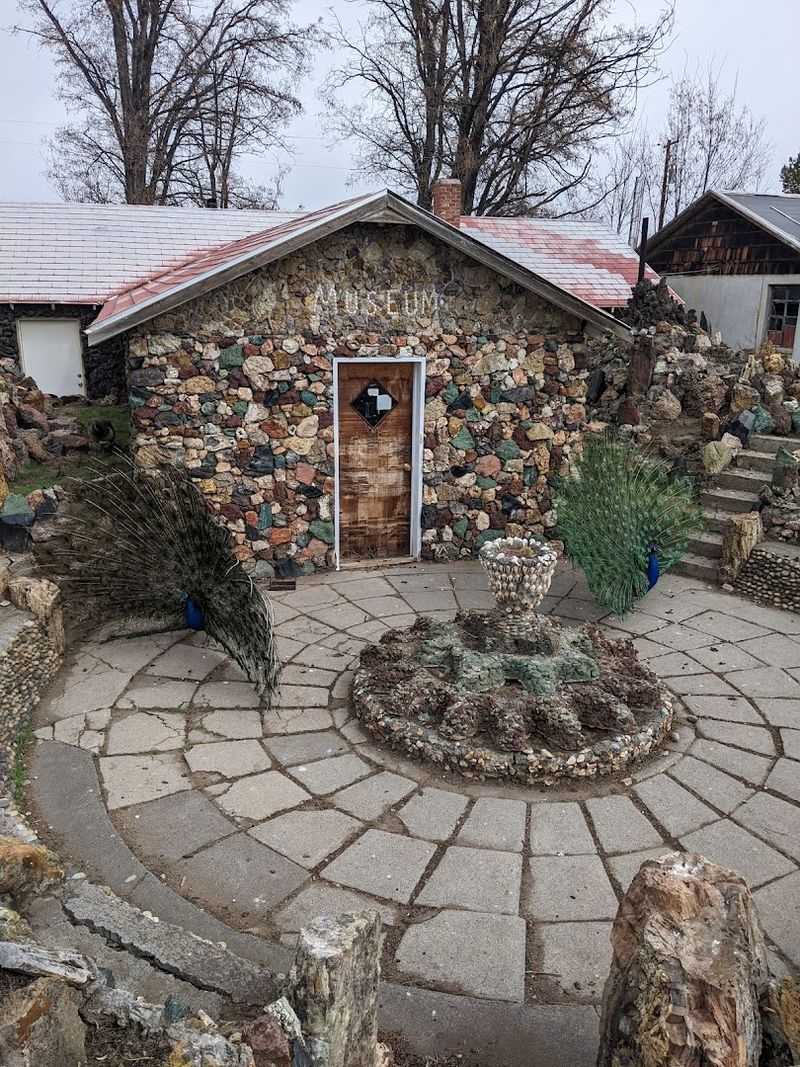
The museum building holds a collection of rocks and minerals that would impress even a seasoned geologist. Petrified wood, obsidian, pumice, quartz, agate, thunder eggs, and specimens from around the world fill the display cases in a way that feels genuinely curated rather than randomly assembled.
Most of the collection comes from within about 80 to 85 miles of the property, which speaks to just how geologically rich Central Oregon really is. That regional focus gives the collection a coherent identity and a strong sense of place.
The volunteers who staff the museum are knowledgeable and enthusiastic about what they are showing you. They offer context, answer questions with real depth, and clearly enjoy sharing the history of both the collection and the surrounding area.
There is also a black light room where certain gemstones and thunder eggs glow in vivid, unexpected colors. That display alone tends to stop visitors in their tracks, and it is especially effective with younger visitors who may not have seen that kind of mineral reaction before.
The museum is open Thursday through Monday from 10 AM to 4 PM, so plan your visit accordingly.
The Black Light Room Experience
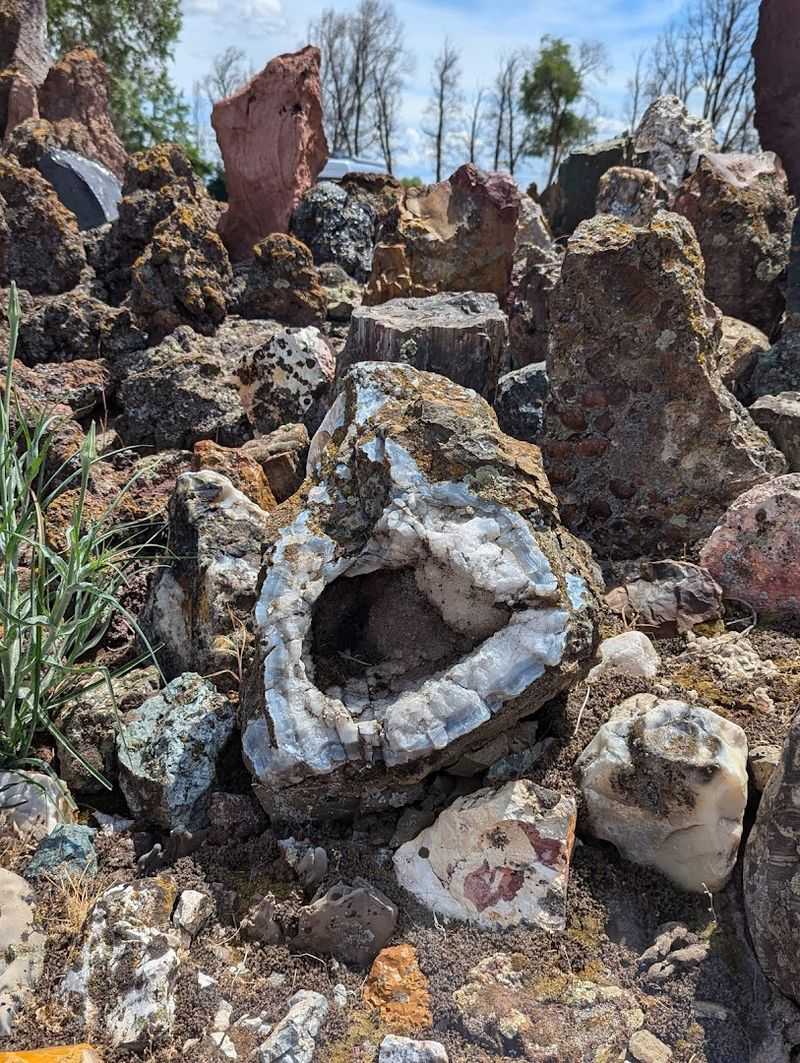
Few things at the property generate more genuine surprise than the black light room tucked inside the museum. Under ultraviolet light, rocks that look completely ordinary in natural daylight suddenly glow in vivid greens, oranges, yellows, and pinks.
The transformation is immediate and visually dramatic.
Thunder eggs are a particular highlight in this setting. These round, unassuming rocks crack open to reveal crystalline interiors, and under black light, those interiors come alive in ways that feel almost theatrical.
Volunteers have been known to demonstrate this effect on the spot, which makes the experience feel interactive rather than passive.
For families with children, this room tends to be a genuine highlight of the visit. Kids who might otherwise lose interest in a rock collection tend to light up when the lights go down and the minerals start glowing.
The science behind fluorescent minerals is also a natural conversation starter for curious young minds.
Oregon is particularly well-known for its thunder eggs, which are actually the official state rock. Seeing them displayed this way, in a small room in the Central Oregon high desert, feels like a fittingly local and personal way to appreciate something the state has to offer.
The Peacocks and Farm Animals Roaming the Grounds
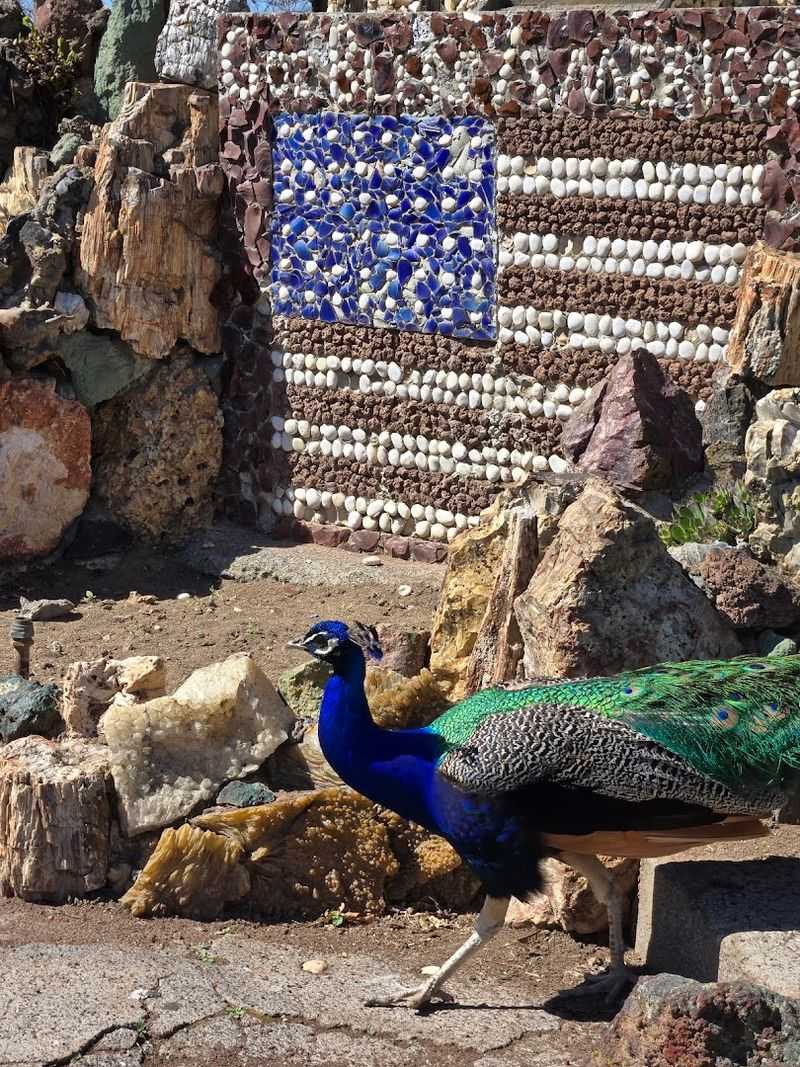
Nobody warns you about the peacocks, and that is honestly the best part. A dozen or more peacocks and peahens roam the property freely, perching on rock structures, strutting across pathways, and occasionally letting out a call that sounds like it belongs in a nature documentary rather than a quiet Oregon garden.
For one dollar, you can buy a cup of seeds at the museum and hand-feed them directly. They are calm enough to approach closely, and their feathers up close are genuinely stunning in the Central Oregon sunlight.
There are also chickens on the property, and at least one visitor has reported holding a chicken for the very first time during their visit here.
The animals add an unexpected layer of life and energy to the garden that no amount of landscaping could replicate. They move through the rock structures like they own the place, which in a way, they do.
The combination of folk art, geology, and free-roaming wildlife makes this property feel unlike any other roadside stop in the Pacific Northwest. You come for the rocks and you stay for the peacocks, and somehow that sentence makes perfect sense once you have been here.
The Water Features and Front Garden Area
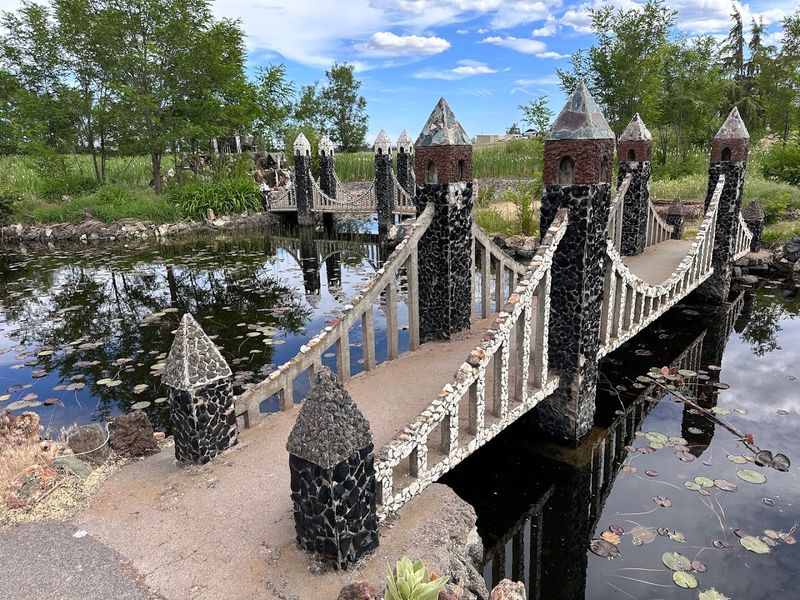
Many visitors nearly miss the front section of the property entirely, and that would be a real shame. The front garden features water elements, small pond-like areas, and rocky islands that are especially beautiful in the summer months when pond lilies bloom and the water reflects the surrounding structures.
The area is not prominently marked, so it takes a bit of intentional exploration to find it. That slight sense of discovery makes stumbling upon it feel genuinely rewarding rather than just another stop on a guided tour.
The water features soften the overall landscape and give the property a more layered, garden-like quality that balances the rougher textures of the lava rock and petrified wood structures elsewhere on the grounds. On a warm afternoon, the pond area is particularly peaceful and a natural spot to slow down and take in the surroundings.
Visiting in summer gives you the full picture of what this property can look like at its most lush and alive. The contrast between the arid high desert just beyond the fence line and the green, water-fed garden inside the property boundary is one of those small details that makes the whole experience feel a bit surreal.
The Wish Shed and Artistic Installations
Tucked away on the property is a small wooden shed with a question painted on the door: what do you want to rock? Inside, hundreds of small wooden boards hang from every surface, each one covered in a handwritten wish left by a previous visitor.
The effect is quietly moving in a way you do not fully expect from a roadside rock garden.
Visitors are invited to write their own wish on a board and add it to the collection. It is a simple activity, but it creates a real sense of participation and connection to the long chain of people who have passed through this property over the years.
The shed also contains an art installation that sits comfortably alongside the folk art spirit of the rest of the property. It does not try to be anything more than what it is, which is exactly what makes it work.
Small, unexpected moments like this one are what separate a genuinely memorable road trip stop from a forgettable one. The wish shed does not appear in most travel guides, and finding it on your own during a wander through the property feels like the kind of quiet discovery that road trips are actually made of.
The Gift Shop and Rock Specimens for Sale
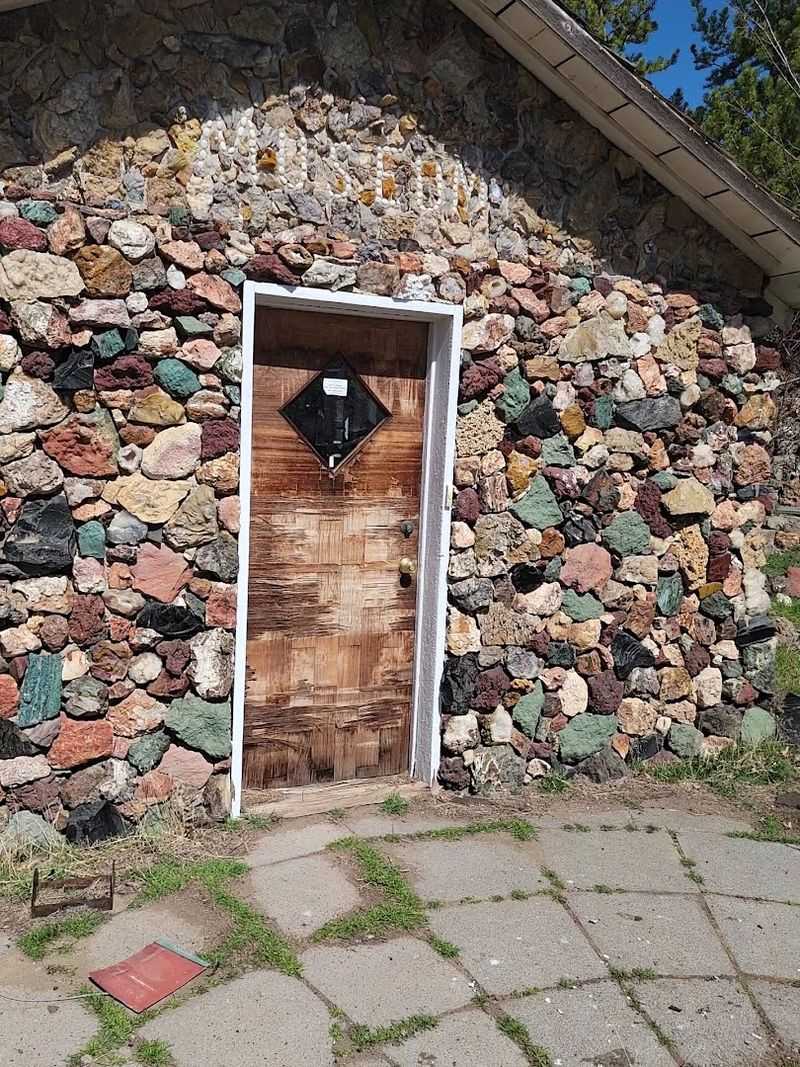
The gift shop at this property is not an afterthought. It carries a genuine selection of minerals, gemstones, and polished specimens at prices that feel almost unreasonably fair compared to what similar pieces fetch in curated boutiques or urban rock shops.
Showpiece-quality agate slices, petrified wood sections, and Oregon thunder eggs are all available at prices that reward the detour.
Staff members in the shop are happy to share the history of the garden and the geology of the surrounding region while you browse. That combination of knowledgeable conversation and quality merchandise makes the shopping experience feel more like a geology lesson than a transaction.
Visitors can also ask about nearby locations where they can search for their own specimens. Central Oregon is rich with rockhounding opportunities, and the staff can point you toward specific spots worth exploring on your own.
The shop accepts Venmo in addition to cash, which is a practical detail worth knowing before you arrive. The suggested donation for entry is ten dollars per adult, and that system operates on the honor principle, which somehow fits the overall character of the place perfectly and encourages visitors to give generously.
Practical Tips for Planning Your Visit
The garden is open Thursday through Monday from 10 AM to 4 PM, and it is closed on Tuesdays and Wednesdays. Arriving earlier in the day gives you the best light for photography and the most time to explore without feeling rushed.
Most visitors spend between one and two hours on the property, though you could easily stretch that with a slow pace.
Entry operates on a donation basis, with a suggested contribution of ten dollars per adult. Children are welcome, and the suggested amount for younger visitors is left to your discretion.
Dogs are allowed on leash, which makes this a strong option for travelers road-tripping with pets through Central Oregon.
Bring cash if possible, though the property does accept Venmo as well. Comfortable walking shoes are a practical choice since the paths are uneven in places.
Picnic tables are scattered around the grounds, so packing a lunch and eating on-site is a genuinely pleasant option.
You can reach the property by phone at 541-904-0557, and more information is available at petersenrockgarden.org. The property is not far from both Redmond and Bend, making it an easy addition to any Central Oregon itinerary without requiring a major detour.
Share this story