 Unearth The Voyage
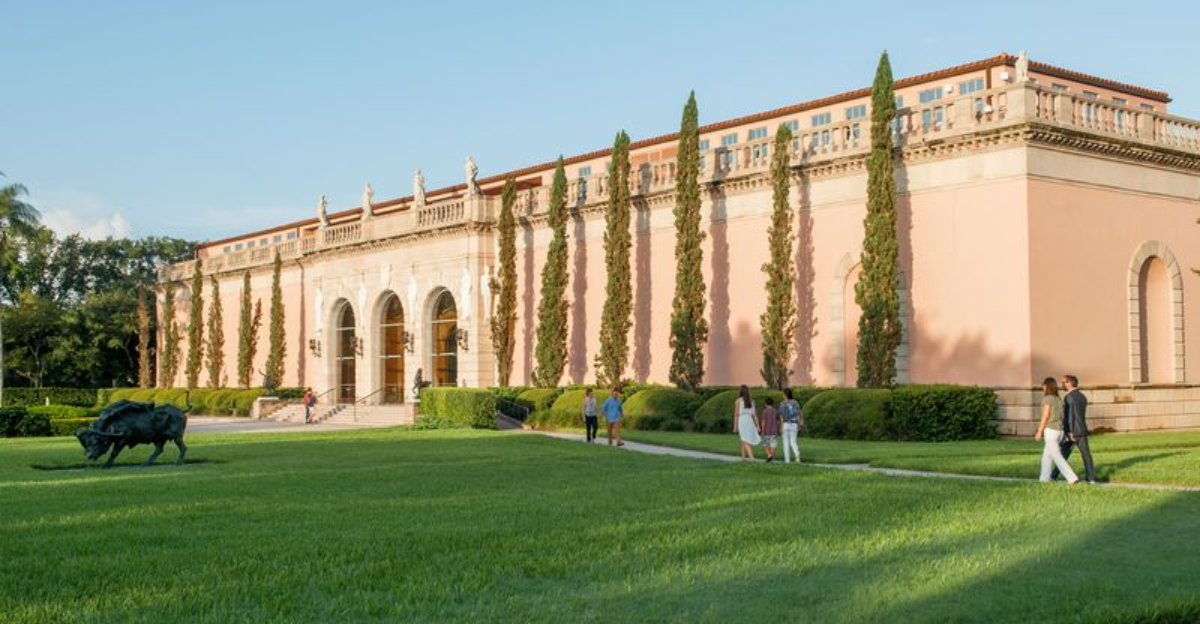
Florida is full of surprises, but few places stop you in your tracks quite like a 66-acre waterfront estate that feels more like a corner of Venice than a stop on the Gulf Coast. A pink Renaissance-style palace, centuries-old masterpieces, a jaw-dropping circus museum, and a bayfront mansion that once hosted America’s most powerful names all share the same address in Sarasota.
This is not your average afternoon museum trip. By the time you finish reading, you will want to clear your entire schedule and head straight there.
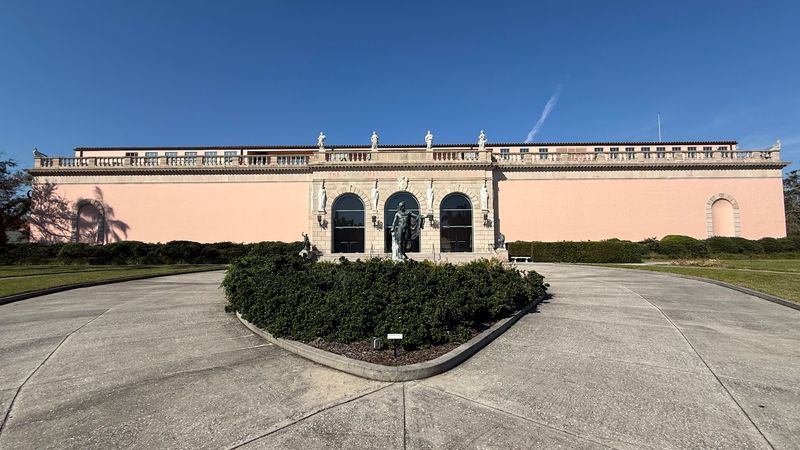
Tucked along the edge of Sarasota Bay, the John and Mable Ringling Museum of Art sits at 5401 Bay Shore Rd, Sarasota, and the setting alone is worth the drive. The grounds stretch across roughly 66 acres, blending manicured gardens, waterfront views, and grand architecture into one sweeping landscape.
From the moment you walk through the main entrance, the scale of everything around you registers quickly. The pink walls of the main museum building catch the Florida light in a way that genuinely makes you do a double take.
The museum is open Monday through Sunday from 10 AM to 5 PM, with extended Thursday hours until 8 PM. Parking is plentiful and free, which is a rare and welcome bonus for a destination this impressive.
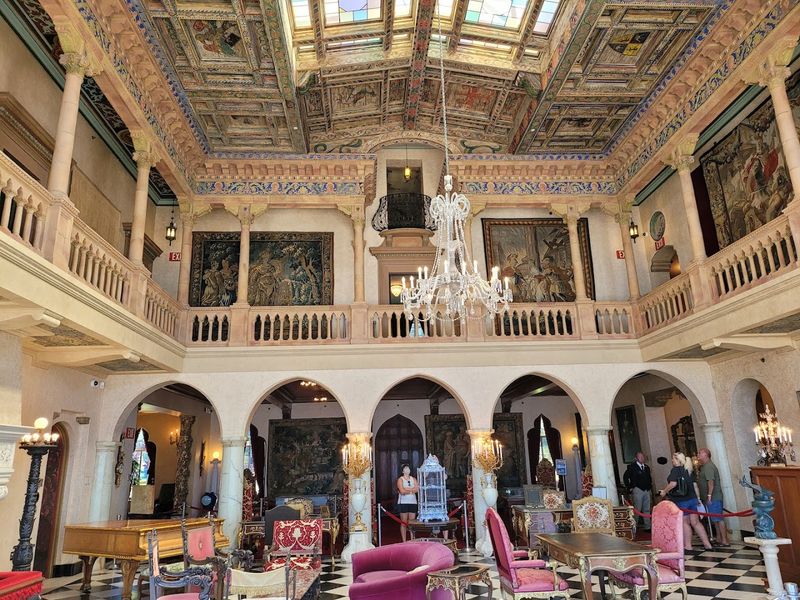
Not many people can say they ran the most famous circus on earth and also built one of the finest art collections in America, but John Ringling managed both with remarkable ambition. As one of the five Ringling brothers who turned a traveling wagon show into the legendary Ringling Bros. and Barnum and Bailey Circus, John accumulated extraordinary wealth during the early twentieth century.
Rather than simply enjoying that wealth, he poured it into European art, Baroque masterpieces, and a museum complex he intended to gift to the state of Florida. He succeeded, and when he passed in 1936, the entire estate transferred to the people of Florida.
Today it functions as Florida’s official State Art Museum, a title that carries real weight when you see the depth and caliber of what he assembled. His story is woven into every gallery wall and garden path across the property.
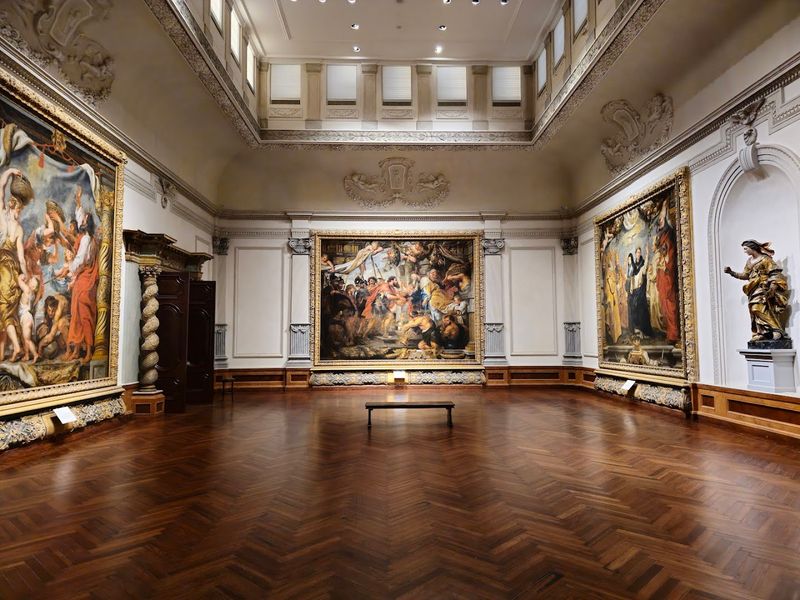
The main art museum building is the kind of place where you walk in planning to spend an hour and somehow end up staying four. Spread across 31 galleries inside a pink Renaissance-style palace, the collection spans everything from antiquities and Old Masters to modern and contemporary works.
Works by Rubens, Tintoretto, Velazquez, Rembrandt, and Giordano hang in rooms with soaring ceilings and elegant architectural details that feel like they belong in a European capital. The scale of some of the Rubens canvases alone is genuinely breathtaking.
What makes the experience feel relaxed rather than overwhelming is the layout. Even on busy weekends, the museum is large enough that crowds disperse quickly, giving you room to stand close to a painting and take it in without anyone rushing you.
Staff members are knowledgeable and genuinely happy to share context about the works on display.
The circus museum occupies two full buildings, and you should budget at least two to three hours if you want to give it the attention it deserves. The collection covers the full arc of American circus history, from its traveling roots to its peak as the self-described Greatest Show on Earth.
One building holds large-scale artifacts including authentic band wagons, performer carts, a human cannon, and John Ringling’s private train car, which has been meticulously restored to its original condition. Seeing that train car up close gives you an immediate sense of how Ringling traveled and how the circus operated as a self-contained moving city.
The second building centers on interactive exhibits with detailed timelines and historical displays that are genuinely engaging for both adults and children. The circus museum is not a side attraction here.
It stands fully on its own as one of the most compelling circus history collections anywhere in the country.
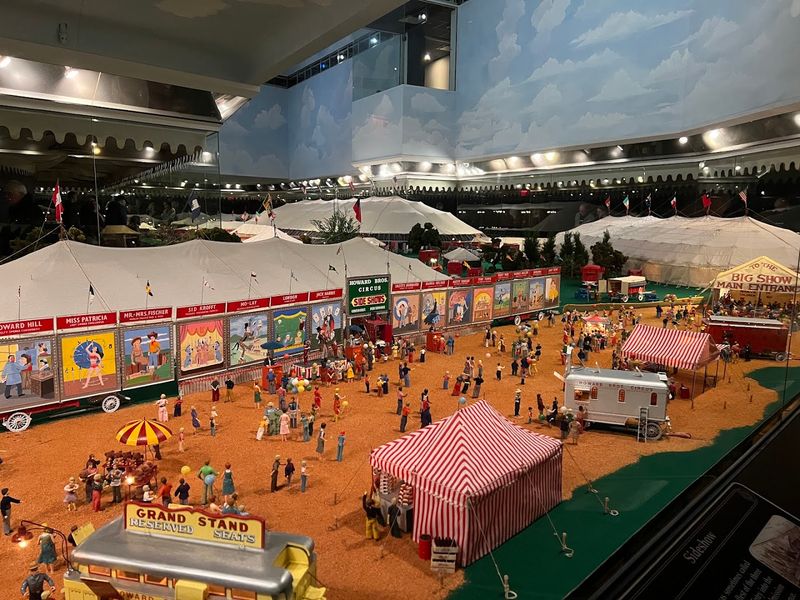
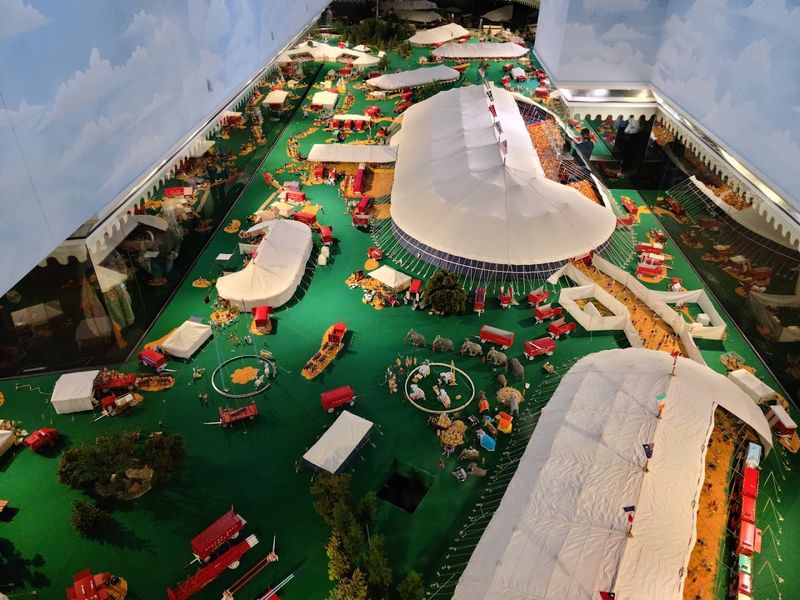
Right in the center of the circus museum’s first building sits something that genuinely stops people mid-step. The Howard Tibbals miniature circus model is a hand-crafted, extraordinarily detailed recreation of an entire circus set up for a one-day stand, built at a scale of 3/4 inch to one foot.
Howard Tibbals spent over 50 years crafting this model, and the result is more than 44,000 individual pieces including tents, animals, performers, crew members, vehicles, and every supporting structure a traveling circus required. You can stand at the viewing rail for a long time and keep spotting new details you missed before.
Children are particularly captivated by it, but adults tend to linger just as long. The model captures something specific about American circus culture that no photograph or documentary quite replicates.
It is interactive in the sense that you move around it, finding new angles and perspectives that reveal entirely different scenes.
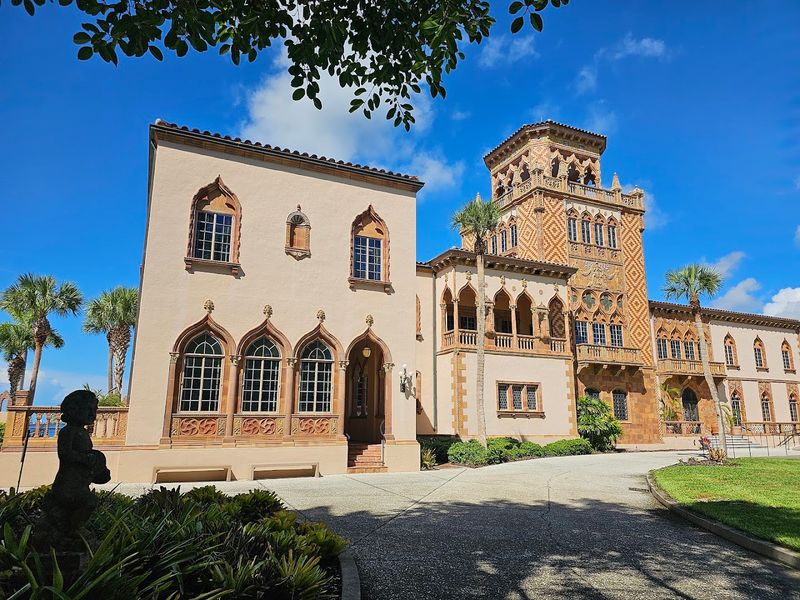
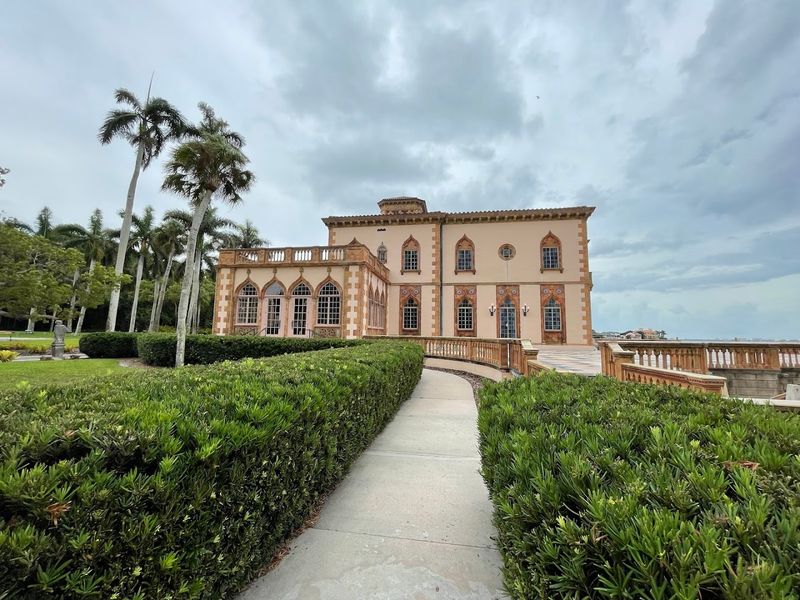
Ca d’Zan, which translates roughly to House of John in Venetian dialect, is the waterfront mansion John and Mable Ringling built between 1924 and 1926. The name fits.
The building draws heavily from Venetian Gothic and Baroque architecture, and when the afternoon light hits the terracotta and cream facade from the bay side, the effect is genuinely striking.
The exterior and waterfront terrace are accessible without a separate ticket, and many visitors find the outside views alone well worth the walk. A guided tour of the first floor interior is available for an additional fee and offers a close look at original hardwood furniture, ornate ceilings, and period details from the 1920s.
The second floor is typically reserved for museum members. On Thursday evenings during certain seasons, the grounds around Ca d’Zan host live music events near the waterfront, making it one of the more memorable ways to experience the property as the sun sets over Sarasota Bay.
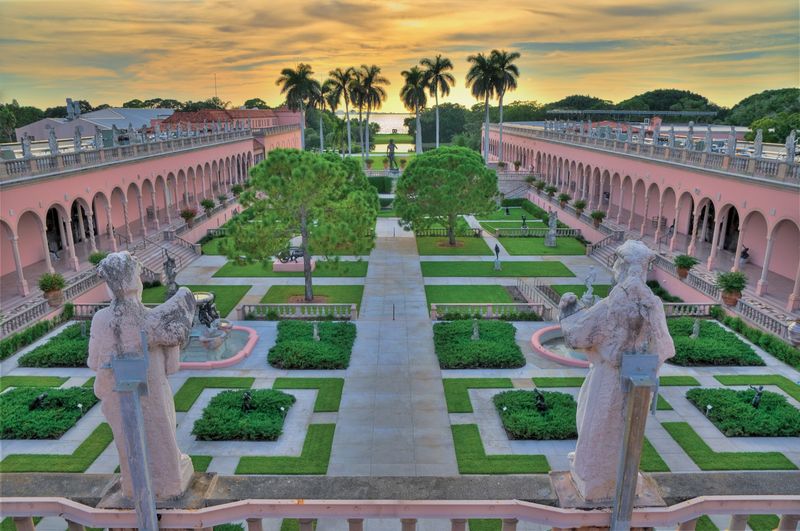
The outdoor spaces at the Ringling estate are easy to underestimate until you are actually walking through them. The grounds cover roughly 66 acres and include rose gardens, a classical sculpture garden with Greek-style statues, wide open grassy areas, picnic tables, and a playground near the rose garden that makes this a genuinely family-friendly destination.
Banyan trees spread across sections of the property with a presence that feels almost architectural. The waterfront pathway along Sarasota Bay offers open views that pair well with the mansion backdrop, especially in the late afternoon when the light softens across the water.
A grounds-only admission fee of around five dollars applies if you want to walk the gardens without entering the museums, which is a reasonable option for a relaxed visit. The gardens are still recovering from hurricane damage in recent years, but the property remains scenic and carefully maintained throughout every season.
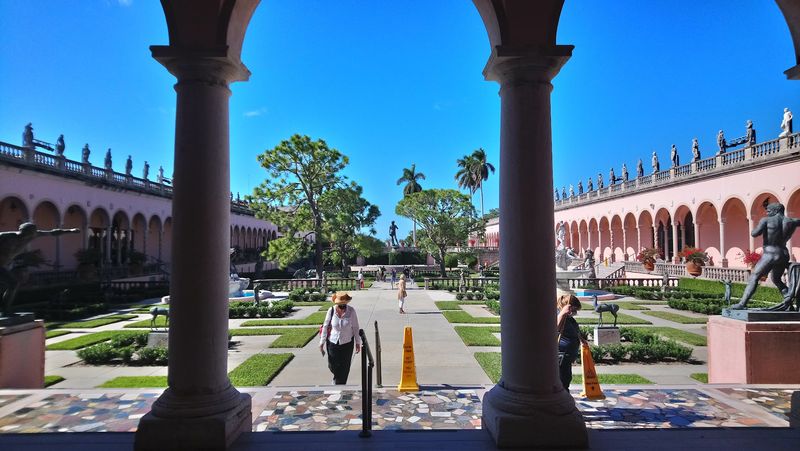
Every Monday, the main art museum galleries open to the public at no charge, and this has become one of the most popular ways to experience the Ringling without spending on general admission. The free Monday offer covers the art museum and the grounds, though the circus museum buildings and Ca d’Zan mansion require separate tickets regardless of the day.
Arriving right at the 10 AM opening is strongly recommended if you plan to visit on a Monday. Lines can form quickly, particularly during holiday weekends and peak tourist season, so getting there early means you walk in without waiting and have the galleries largely to yourself for the first hour.
For those who visit frequently, a museum membership removes all the individual ticketing decisions and grants access to everything on the property. Several longtime visitors make monthly trips specifically because the membership makes every visit feel effortless and unhurried from arrival to close.
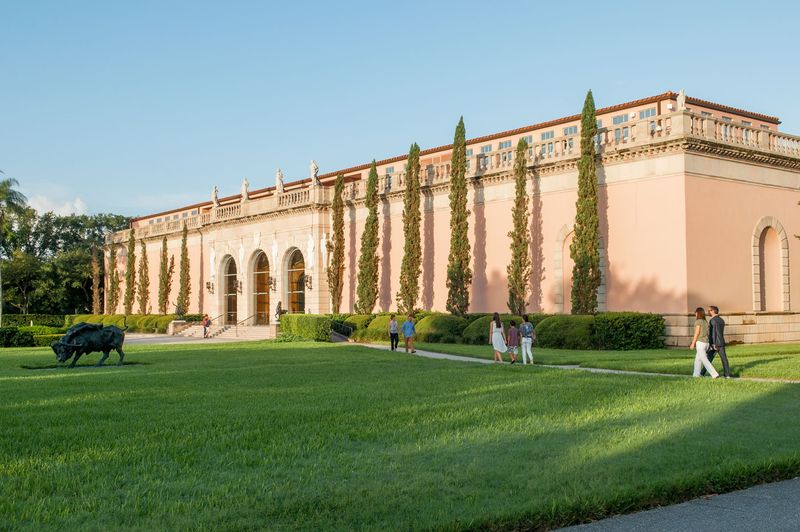
The main museum building does not look like something you expect to find in Florida. Designed in the style of an Italian Renaissance palace and finished in a distinctive shade of pink, the structure was purpose-built to house John Ringling’s art collection and has anchored the estate since the late 1920s.
The interior matches the exterior ambition, with high ceilings, ornate moldings, and gallery rooms that feel genuinely grand without tipping into stuffy. Natural light moves through the spaces in ways that shift how the paintings read at different times of day, which is one reason photographers and art lovers tend to visit more than once.
The courtyard at the center of the building is one of the quieter spots on the property, lined with classical sculpture reproductions and framed by arched colonnades. It offers a natural pause between gallery rooms and a reminder that the building itself is as much a part of the collection as anything hanging on its walls.
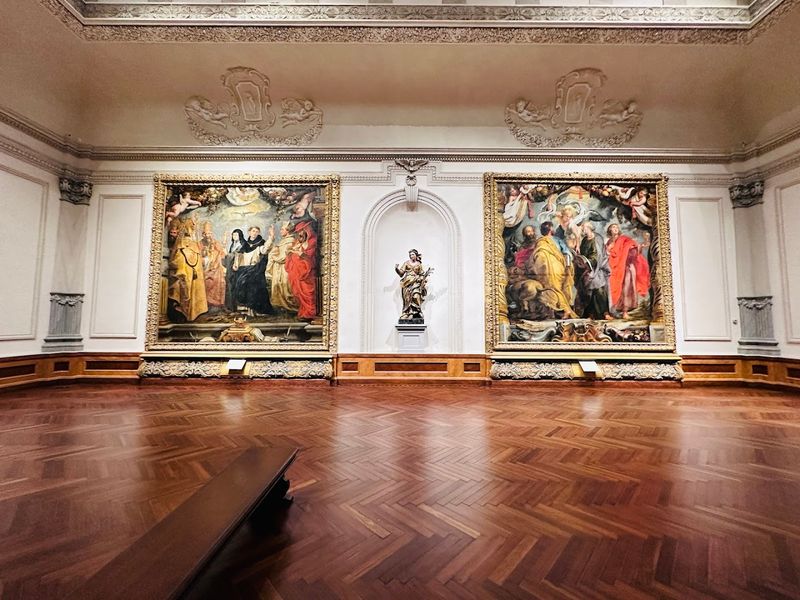
John Ringling had a particular passion for Baroque painting, and that focus shaped the core of the museum’s permanent collection. Works by Peter Paul Rubens anchor several of the grandest gallery rooms, including a series of large-scale cartoons Ringling acquired in the 1920s that remain among the most significant holdings in the museum.
Beyond Rubens, the collection includes strong representations of Italian Renaissance painting, Flemish masters, and works from the Rococo period. Artists like Tintoretto, Giordano, and Velazquez appear throughout the galleries, giving visitors a broad survey of European art history across several centuries.
In recent years the museum has also expanded its programming to include modern and contemporary works, which creates an interesting dialogue between the older and newer pieces across the 31 galleries. The collection spans from antiquity through the present, meaning there is something to engage nearly every kind of art lover who walks through the door.
Among the standout artifacts in the circus museum’s second building, John Ringling’s private train car holds a special place. Restored to its original condition, the car offers a direct look at how Ringling traveled across the country during the height of his circus empire, and the level of craftsmanship inside is a clear reflection of his taste for luxury.
Wood paneling, period-appropriate furnishings, and careful restoration details make the car feel less like a static display and more like something that just pulled into the station. The circus itself traveled by rail, and the train car contextualizes how the entire operation moved from city to city as a temporary, self-sufficient traveling city of performers, animals, and crew.
Standing beside it and looking through the windows gives you a specific and vivid sense of a particular moment in American entertainment history that no exhibit panel alone could fully convey. It is one of those objects that earns its own long look.
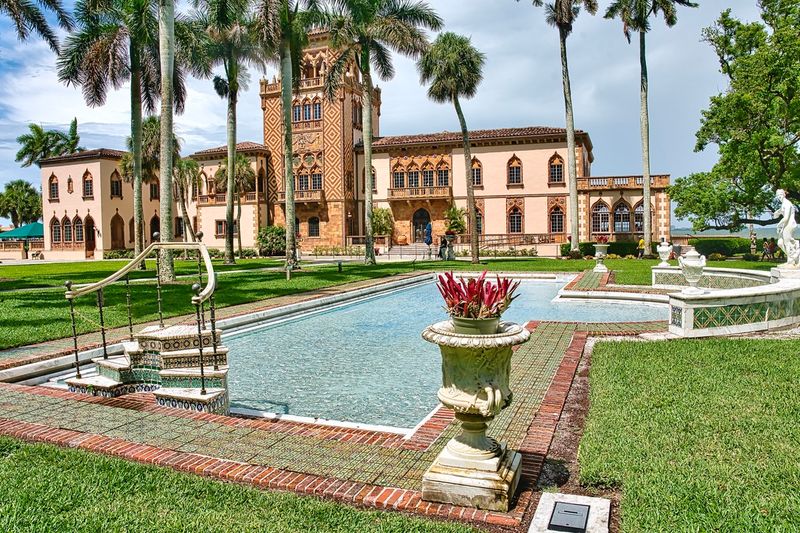
Thursday is a particularly good day to visit the Ringling for several reasons. The museum stays open until 8 PM rather than the standard 5 PM closing, giving you a longer window to move through the galleries at a comfortable pace without feeling rushed toward the exit.
During certain seasons, the grounds around Ca d’Zan host evening events featuring live music and dancing near the waterfront. These after-hours gatherings have a relaxed, festive atmosphere that turns the estate into something more than a daytime museum experience.
The mansion lit up in the evening, with the bay visible behind it, creates a setting that is hard to replicate anywhere else in Sarasota.
The museum also hosts rotating special exhibitions, educational programming, and seasonal events throughout the year. Checking the events calendar on the official website before your visit is a smart habit, since there is often something happening that adds an extra layer to the standard museum experience.
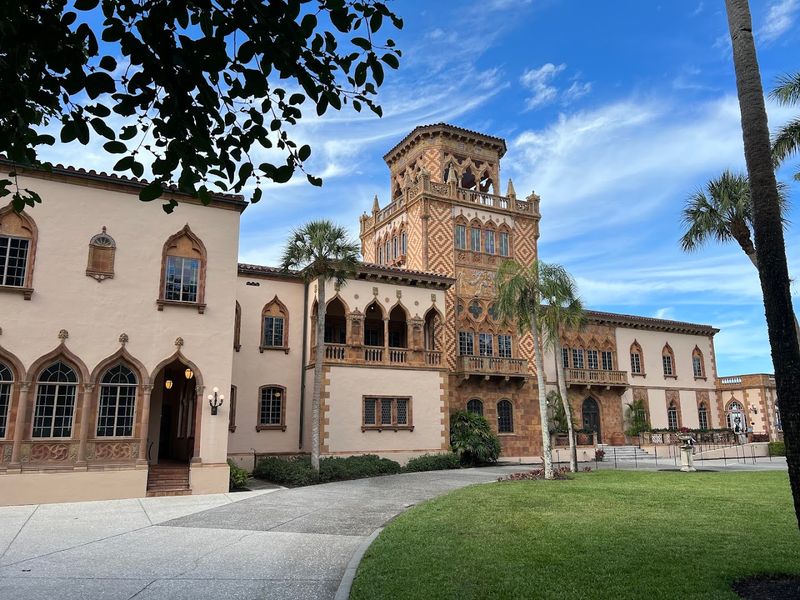
A few practical notes can make a real difference in how much you get out of a visit here. First, buy tickets online in advance rather than at the window.
The e-ticket line moves significantly faster, especially on busy weekends and holiday periods when walk-up lines can stretch noticeably.
Plan for at least four to five hours if you want to visit the art museum, circus museum, and Ca d’Zan without rushing. Visitors who try to cover everything in two hours consistently feel like they missed the best parts.
Off-season weekdays offer the most relaxed experience, while Presidents Day and Labor Day weekends tend to draw the largest crowds.
The grounds include a playground near the rose gardens, making the estate a practical option for families with younger children who need a break from galleries. Picnic tables are scattered across the property, so bringing lunch and settling in for a half-day visit is a perfectly reasonable plan.
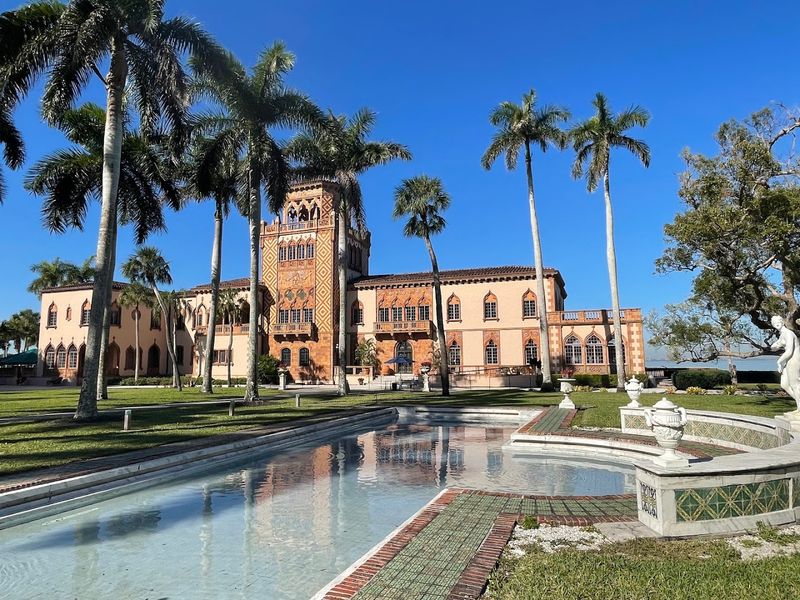
Few places in Florida offer as many naturally compelling compositions in a single visit as the Ringling estate. The courtyard colonnade, the mansion’s waterfront facade, the Greek garden sculptures at golden hour, the banyan trees casting layered shadows across the garden paths, and the gallery interiors with their high ceilings and dramatic paintings all reward a camera.
The museum staff allow visitors to get reasonably close to artworks as long as they stay behind designated lines and never touch anything, which means interior photography is possible and often produces striking results. The outdoor spaces are even more open, with no restrictions on photography across the gardens and grounds.
Thursday evenings near sunset are particularly popular with photographers who want the Ca d’Zan mansion framed against a darkening sky with the bay in the background. The property has also hosted professional wedding photography sessions, a testament to how consistently beautiful the grounds look across different lighting conditions and seasons.



