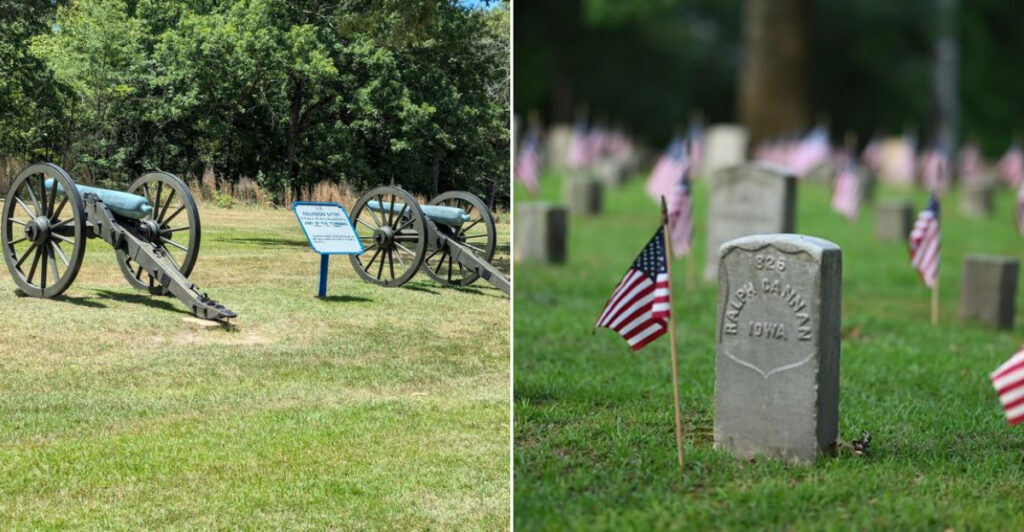
Few places in the United States carry the weight of history the way a quiet stretch of western Tennessee does. In April 1862, two days of fierce fighting along the Tennessee River produced what was, at the time, the bloodiest battle in American history, with over 23,000 casualties on both sides.
The ground where it all happened has been carefully preserved for more than a century, and today it stands as one of the most complete and moving Civil War sites in the country. What makes this place so remarkable is not just the scale of what occurred here, but how thoroughly the park brings that story to life for every person who walks through it.
The Battle That Shook a Nation
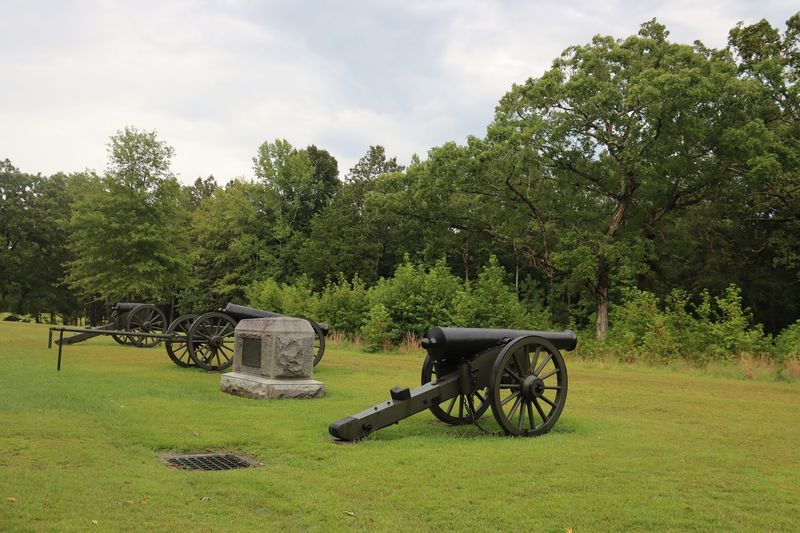
On April 6 and 7, 1862, Confederate forces launched a surprise attack on Union troops camped near Pittsburg Landing, triggering two days of combat that neither side had fully anticipated.
By the time the fighting ended, more than 23,000 soldiers had been counted as casualties, including nearly 3,500 who did not survive. The scale of the battle shocked both the North and the South, and it fundamentally changed how both sides understood the conflict they were in.
Before Shiloh, many believed the war would be short. After it, that idea disappeared entirely.
The battle also marked a turning point in the western theater of the war, securing Union control of a critical stretch of the Tennessee River.
Understanding the scope of what happened here is what makes a visit to this park so much more than a simple afternoon drive through a historic landscape.
Start at the Visitor Center and Do Not Skip It
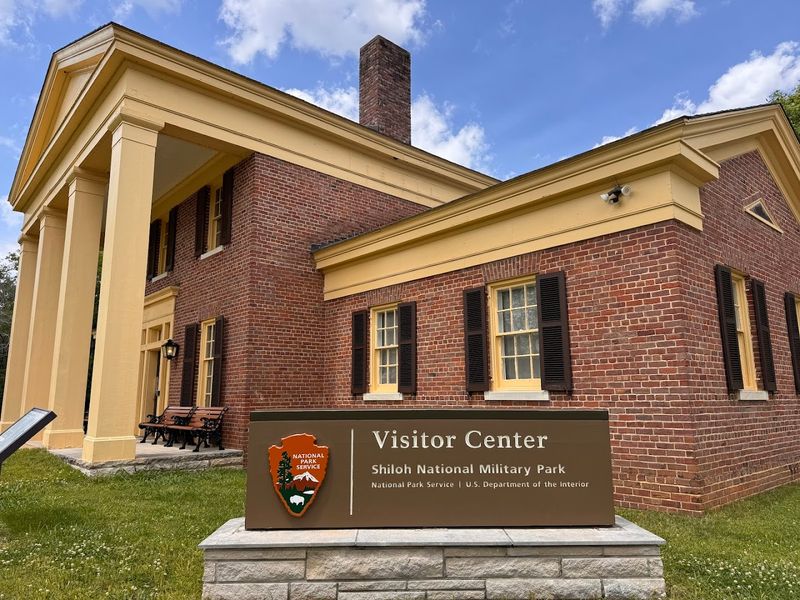
The visitor center is the right place to begin, and spending time there before heading out to the battlefield pays off in a big way. The museum inside features authentic displays, period artifacts, and detailed maps that lay out exactly how the two-day battle unfolded.
Rangers stationed at the center are knowledgeable and genuinely enthusiastic about sharing what they know. Picking up a self-guided tour map here sets the stage for everything that follows on the driving tour.
The center also carries National Park passport stamp books, and this location offers up to four or five different stamps, which is a rare find even among major parks. For those who collect them, that alone makes a stop here worthwhile.
The gift shop and bookstore are also on site, stocked with histories, field guides, and regional titles that go deep into the events of April 1862 for anyone who wants to keep learning after leaving.
The 45-Minute Film That Changes Everything
Before heading out to the battlefield, there is a film shown at the visitor center that runs about 45 minutes and is widely considered one of the best starting points for understanding what happened at Shiloh.
The film covers the lead-up to the battle, the confusion and chaos of both days of fighting, and the aftermath that reshaped the war. Watching it first gives context to every marker, cannon placement, and monument encountered along the driving tour.
Without that background, the battlefield can feel like a collection of stone markers in a field. With it, every stop on the tour becomes a specific moment in a larger story that is much easier to follow.
The film is well-produced and accessible for all ages, which makes it a practical choice for families visiting with younger children who might otherwise find the historical detail hard to absorb. Plan for it and do not rush past it.
The Self-Guided Driving Tour Explained
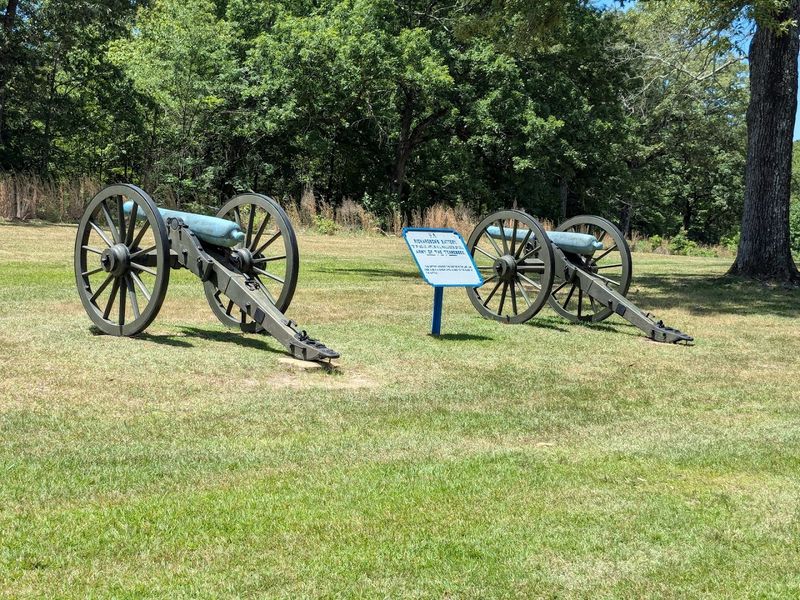
The self-guided driving tour is the backbone of a visit to this park. It winds through the battlefield in chronological order, following the progression of the battle from the Confederate surprise attack on the first morning through the Union counterattack that ended the fighting on day two.
Each stop along the route is marked with numbered signs that correspond to the tour guide map or the National Park Service audio app. Getting out of the car at each stop adds real depth to the experience, and the tour can stretch well beyond two hours when approached that way.
For those using the app, downloading it before arrival is essential since cell service across most of the park is unreliable at best. The tour covers terrain that ranges from open fields to dense tree lines, giving a clear picture of how the landscape shaped the fighting.
The route is easy to navigate and clearly marked throughout, so getting turned around is unlikely even without GPS assistance.
The Hornet’s Nest: The Park’s Most Famous Ground
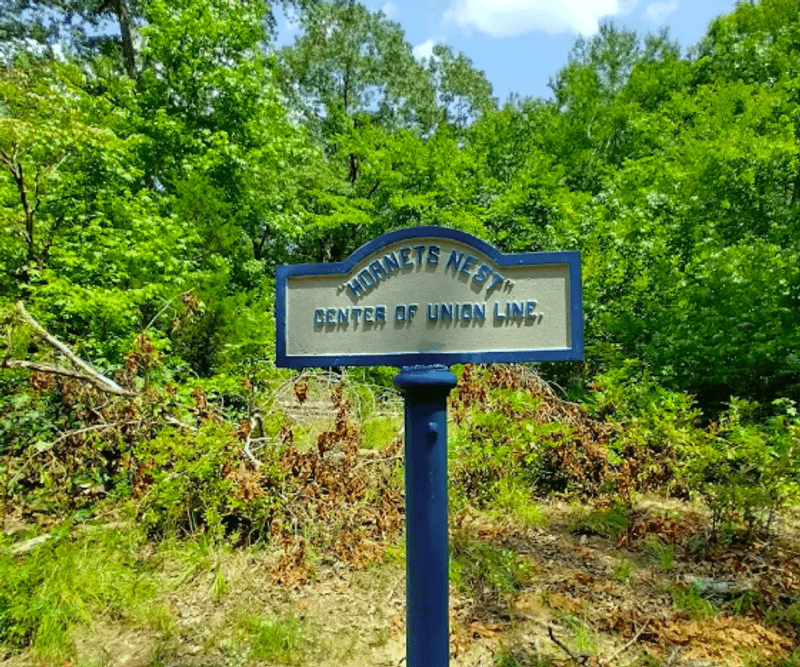
Of all the locations within the park, the Hornet’s Nest carries perhaps the most dramatic story. On April 6, 1862, Union troops under General Benjamin Prentiss held this position against repeated Confederate assaults for several hours, buying critical time for the rest of the Union army to regroup.
Confederate forces launched more than a dozen charges against the line before finally surrounding it and forcing a surrender. The ferocity of the fighting here earned the area its now-famous name, reportedly from soldiers describing the sound of rifle fire passing through the trees.
Today the Hornet’s Nest is marked with cannons, monuments, and detailed interpretive signs that walk through the sequence of events with precision. It sits within the driving tour route but requires a short drive from some other sections of the park.
Spending extra time at this particular stop rewards the patient visitor with a thorough understanding of why those hours of holding the line mattered so much to the battle’s final outcome.
Monuments, Markers, and the Stories They Tell
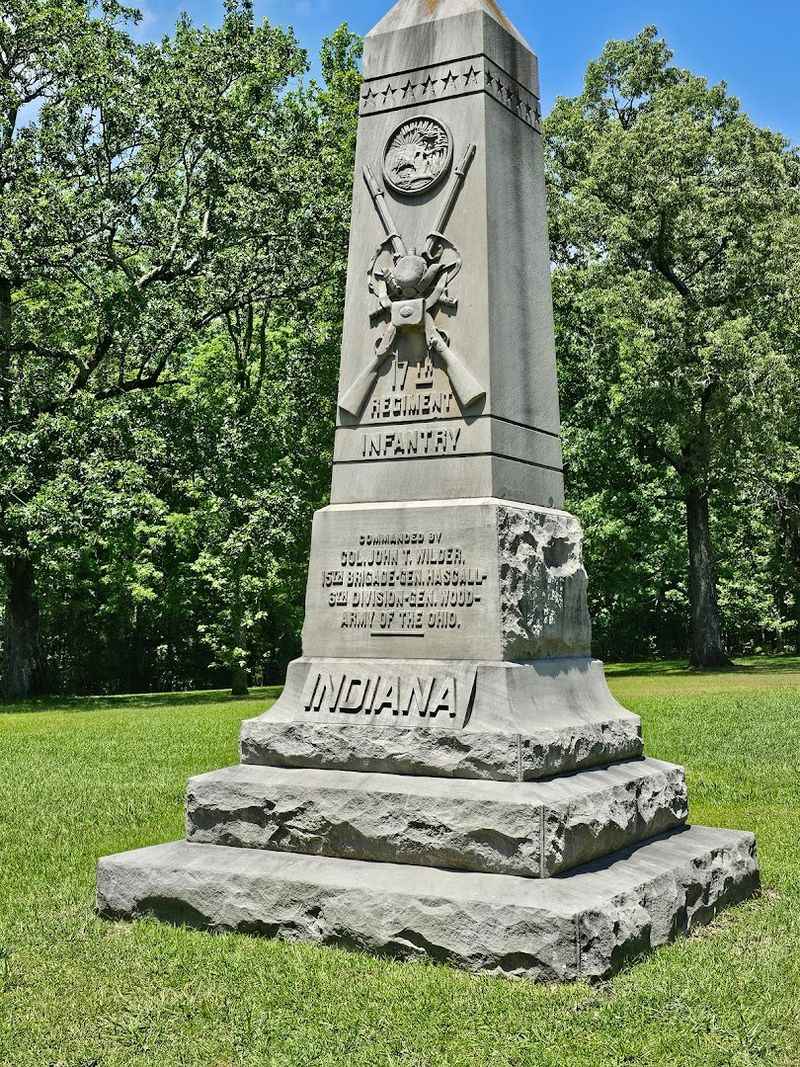
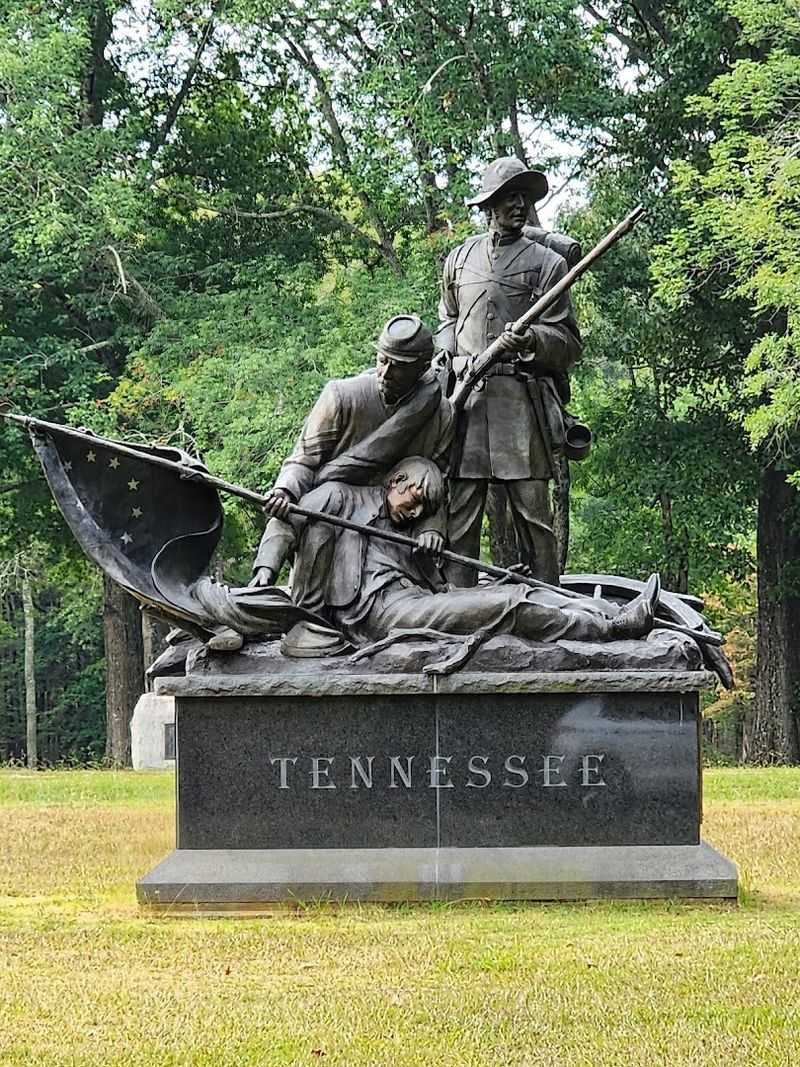
Throughout the park’s 5,000-plus acres, hundreds of monuments, markers, and memorials dot the landscape in nearly every direction. States that sent regiments to fight at Shiloh erected many of these monuments in the decades following the war, each one commemorating specific units and the ground they held or contested.
The markers come in different shapes, and a brief stop near the visitor center to read the explanatory signs about what each shape represents makes the rest of the tour far more readable. Without that key, the markers can look similar but carry very different meanings.
Some monuments are large and elaborately carved, while others are simple stone tablets set low to the ground. Together they form a kind of open-air archive that covers nearly every regiment that participated in the battle.
The density of historical information embedded in these markers is part of what makes Shiloh stand apart from many other Civil War sites, where the documentation is less thorough or less well-preserved.
The National Cemetery on the Grounds
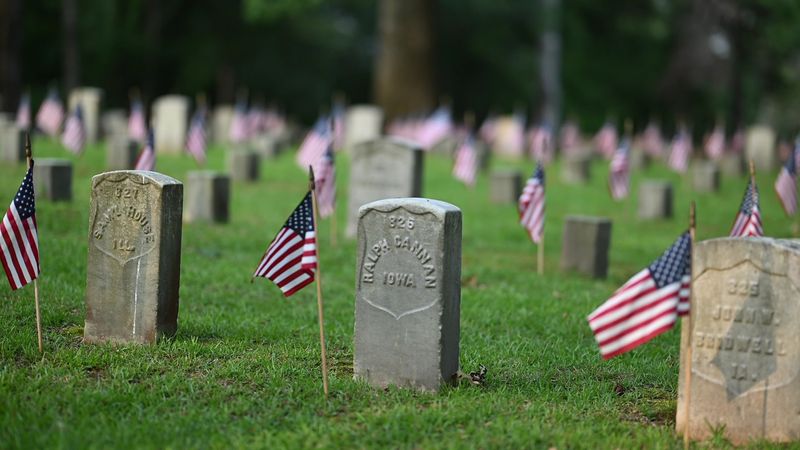
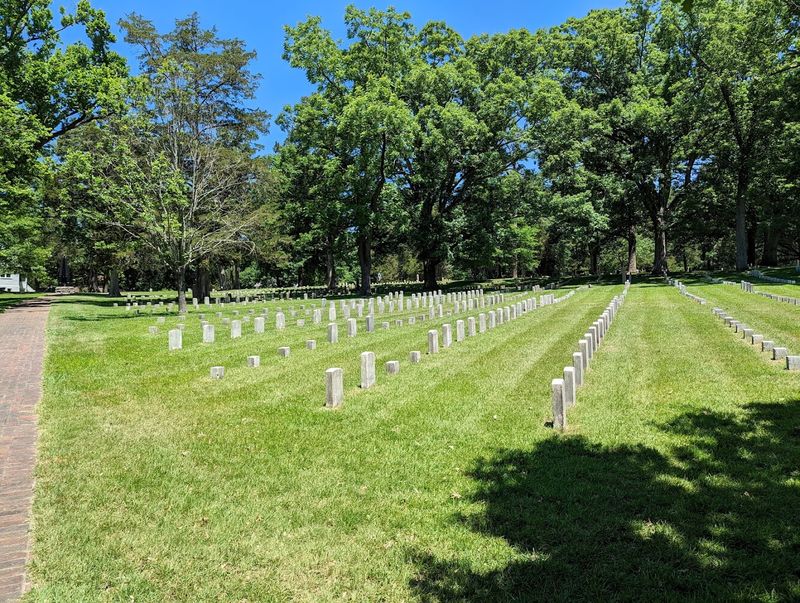
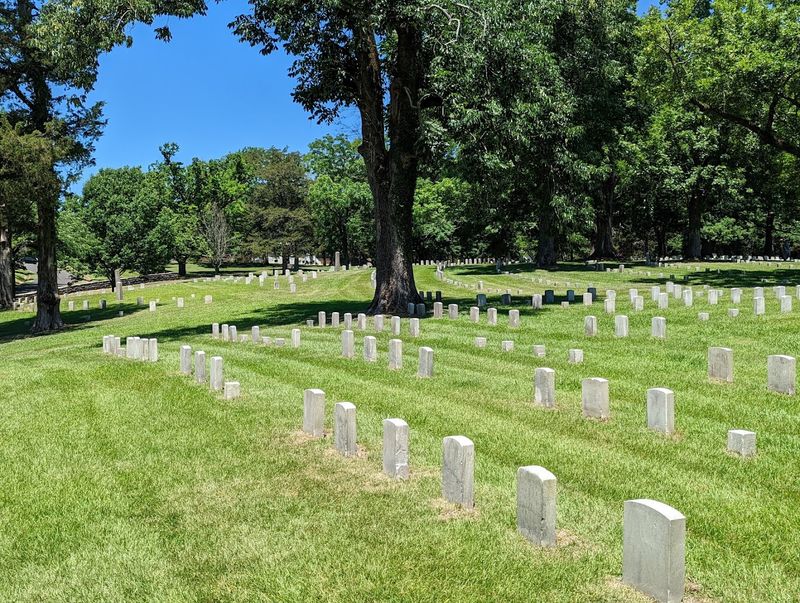
Within the park boundaries sits the Shiloh National Cemetery, a federally maintained burial ground that holds the remains of Union soldiers who fell during the battle and in other engagements throughout the region. The cemetery is one of the quieter corners of the park and carries a noticeably different atmosphere from the battlefield sections.
Rows of white headstones stretch across a carefully kept lawn, and the grounds are maintained with the same precision that defines the rest of the park. Many of the graves belong to soldiers whose identities were never confirmed, a reminder of how chaotic and overwhelming the battle truly was.
The cemetery is open to visitors throughout the day and is part of the driving tour route, so reaching it does not require any extra navigation. Spending a few minutes here before or after completing the battlefield tour gives the entire visit a grounded and reflective quality that stays with people long after they leave.
Hiking and Getting Out on Foot
The park is not just a drive-through experience. Several trails wind through the battlefield and surrounding woodland, giving visitors the option to explore the terrain on foot at their own pace.
The park occasionally offers ranger-led hikes that cover significant ground, with some routes stretching close to eight miles and lasting several hours. These guided hikes go deep into the battlefield geography and provide historical narration at each major point along the way.
For those bringing bikes, cycling through the park is permitted as long as riders wear helmets. The roads through the park are manageable and the terrain is relatively flat in most sections, making it a reasonable option for families with older children.
One practical note worth keeping in mind: poison ivy grows along some of the trails, and the park has also been known to host snakes in warmer months. Staying on marked paths and wearing appropriate footwear keeps the experience enjoyable and problem-free for everyone.
The Prehistoric Mounds Hidden in Plain Sight
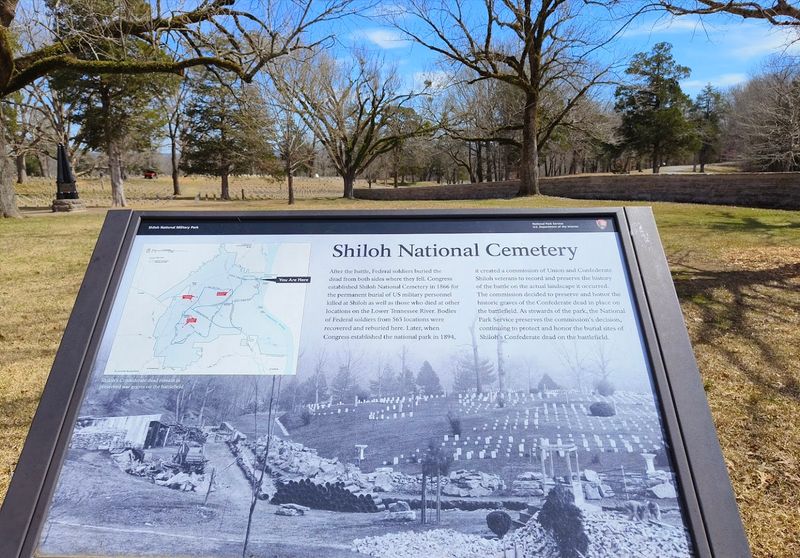
One of the most surprising features of the park has nothing to do with the Civil War at all. Within the grounds of Shiloh National Military Park, there is a set of prehistoric Native American mounds that date back more than a thousand years before the 1862 battle ever took place.
The mounds were built by a culture that inhabited the region long before European contact, and they are preserved as part of the park’s broader historical mission. Interpretive signs near the mounds explain what archaeologists have learned about the people who constructed them and how the site was used.
Many visitors drive past without realizing the mounds are there, which makes them one of the more rewarding hidden details of the park for those who pay attention to the tour guide. They add an entirely different historical layer to a site that already carries centuries of significance.
The mounds are a genuine reminder that this land held meaning long before the war.
Planning Your Visit: Practical Tips That Make a Difference
A few logistical details can make a significant difference in how much a visit to this park delivers. The park covers more than 5,000 acres, and trying to rush through it in an hour or two means missing most of what makes it worthwhile.
Setting aside a full day is the standard recommendation, and some people return for a second visit to cover what they missed the first time.
Because the park sits well outside any town, there are no restaurants or convenience stores nearby. Packing a lunch, snacks, and plenty of water before arriving is a practical necessity rather than just a suggestion.
Cell service throughout the park is minimal, so downloading the National Park Service app and any offline maps ahead of time prevents frustration on the road. Bringing a paper map as a backup is a straightforward precaution that more than a few visitors have been grateful for mid-tour.
The park is free to enter, and restrooms are available at multiple points throughout the grounds.
What Reenactors and Special Events Add to the Experience
On select dates throughout the year, the park hosts living history events and reenactments that bring an additional layer of depth to the site. Groups of reenactors dressed in period-accurate uniforms demonstrate equipment, drill formations, and camp life from the 1862 era.
The anniversary of the battle in early April is typically the most significant event on the park’s calendar, drawing both reenactors and history enthusiasts from across the country. Ranger-led programs and special hikes are also scheduled around this period, offering guided experiences that go well beyond the standard self-guided tour.
Checking the park’s official website at nps.gov/shil before planning a visit is the best way to find out what events are scheduled and whether any special programming aligns with travel dates. Attending during an event weekend adds a dimension to the park that a standard weekday visit simply cannot replicate.
Even without a scheduled event, the park’s depth of preserved history makes every visit feel like something genuinely worth the trip.
Why Shiloh Belongs on Every Civil War Itinerary
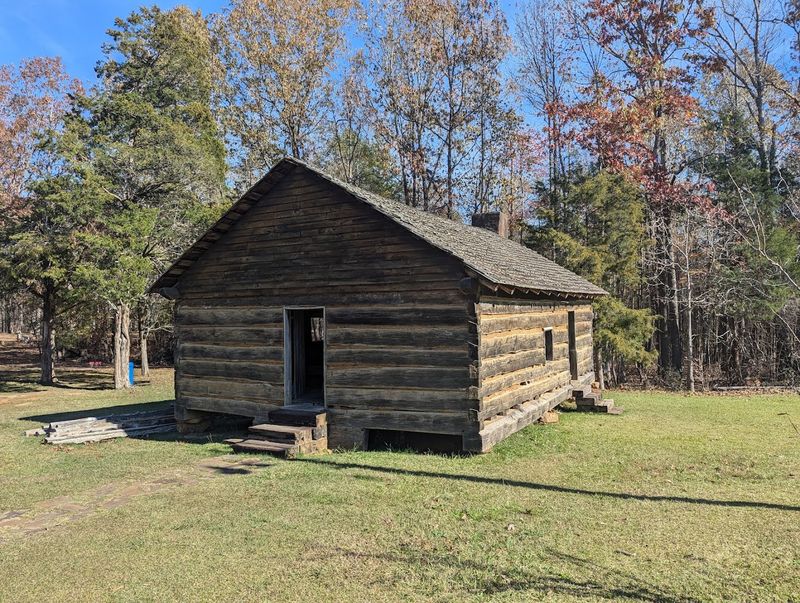
Among Civil War battlefields in the United States, Shiloh holds a particular place because of how thoroughly preserved and documented it remains. The combination of open terrain, dense monument coverage, a well-run visitor center, and a free audio tour makes it one of the most accessible and complete battlefield experiences available anywhere in the country.
The park also connects naturally to nearby sites. A day trip can reasonably include a visit to the Corinth Civil War Interpretive Center across the state line in Mississippi, which served as the Confederate base of operations before and after the battle.
Shiloh rewards visitors who come prepared and stay curious. Reading even one book about the battle beforehand, or at minimum watching the visitor center film, dramatically deepens what the driving tour delivers.
This is not a place that overpromises and underdelivers. The history here is real, the preservation is exceptional, and the experience holds up every single time someone makes the trip to this quiet corner of Tennessee.
Where History Stands Still: The Park’s Location and Setting
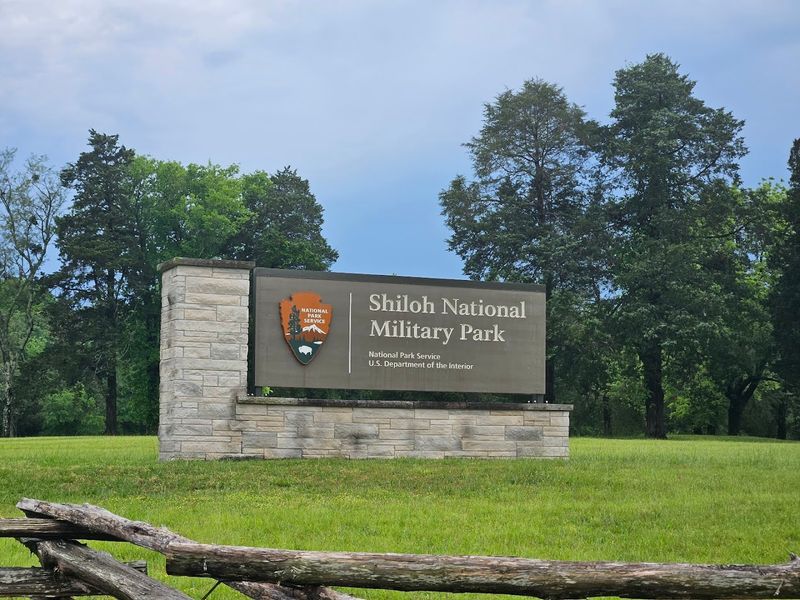
Tucked into the rural landscape of Hardin County, Shiloh National Military Park sits at 1055 Pittsburg Landing Rd, Shiloh, TN 38376, right along the western bank of the Tennessee River.
The park spans more than 5,000 acres, making it one of the largest preserved Civil War battlefields in the nation. Getting there requires a bit of a drive through open countryside, which actually adds to the experience because the setting feels genuinely remote and undisturbed.
Cell service is almost nonexistent throughout much of the park, so downloading the National Park Service app before arrival is a smart move. The park is open every day of the week from 9 AM to 5 PM, and admission is completely free, though donations are welcomed at the visitor center.
Bringing a paper map as a backup is a practical idea that many who have visited here strongly recommend.
Share this story