Somewhere beneath the busy streets of downtown Memphis, Tennessee, sits a museum that most locals have never stepped inside. It holds nearly 1,000 pieces of art spanning thousands of years, two vastly different cultures, and some of the most detailed hand-carved objects you will ever see in your life.
The price to get in is just a few dollars, and the collection inside would not look out of place in a world-class institution. If you have ever walked past a quiet building on South Main Street and wondered what was hiding inside, this is the story you did not know you needed to read.
Nearly 1,000 Pieces on Display and Thousands More in Storage
Most small museums are lucky to fill a few rooms with genuinely interesting objects. The Belz Museum manages to pack close to 1,000 displayed works into a space that feels compact from the outside but opens up considerably once you are inside.
The layout guides you through sections without ever feeling rushed or crowded.
The variety is what catches you off guard first. One moment you are looking at a carved mammoth tusk estimated to be over 10,000 years old, and the next you are standing in front of silk embroidery so fine it looks like a painting from a distance.
Jade carvings, lacquer boxes, porcelain pottery, calligraphy scrolls, bronze warriors, and ceremonial robes all share space in a way that feels cohesive rather than cluttered.
The plaques next to each piece provide context that genuinely adds to the experience, giving dates, origins, and craftsmanship details that make each object more meaningful.
The Story Behind One Family’s Extraordinary Collection
Jack Belz and his family were not curators by training, but they had an eye for quality that most professional collectors would envy. Over several decades, they acquired thousands of objects from China, Japan, India, and Southeast Asia, along with a substantial collection of Judaic ceremonial and fine art pieces.
The collection grew so large that only a fraction of it can be displayed at any given time. Staff at the museum have mentioned that what visitors see on the floor represents roughly ten percent or less of the total holdings.
That detail alone changes how you look at every single piece in the room.
Knowing that the displayed works were selected from thousands of candidates makes the curation feel more intentional. Every object earned its place on the wall or inside a case, which gives the whole experience a sense of weight that larger, noisier museums sometimes lack.
The Jade Collection That Stops People in Their Tracks
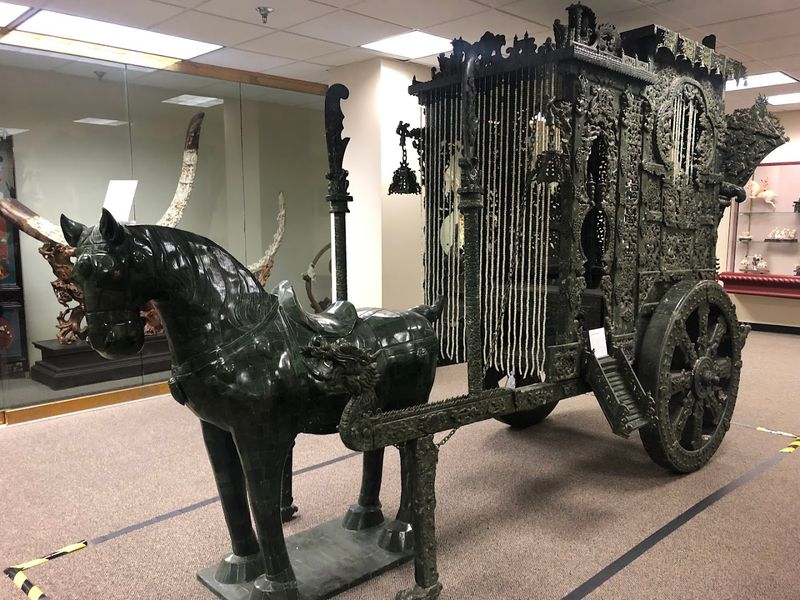
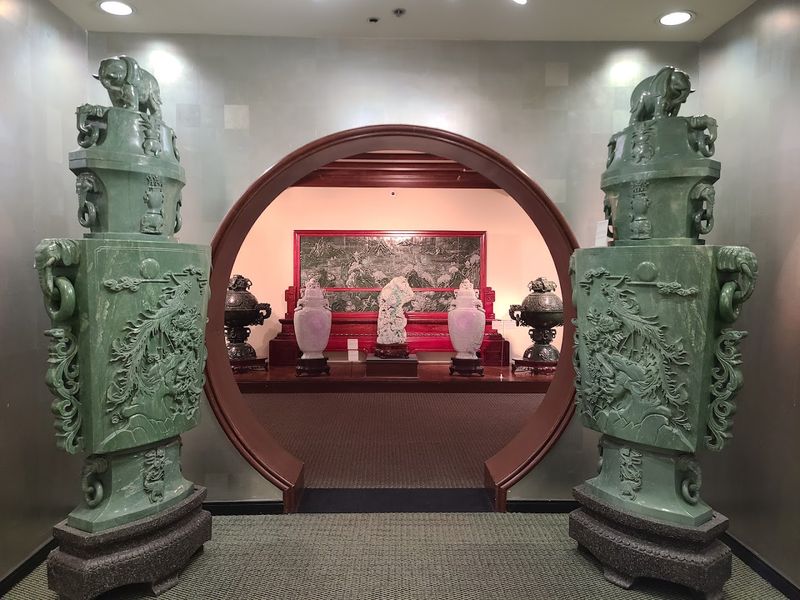
Jade has been carved in China for thousands of years, but seeing a large collection of it in one place is a completely different experience from reading about it. The Belz Museum holds what many visitors describe as one of the largest jade sculpture collections they have ever encountered, and the range of what artisans created from this single stone is almost hard to believe.
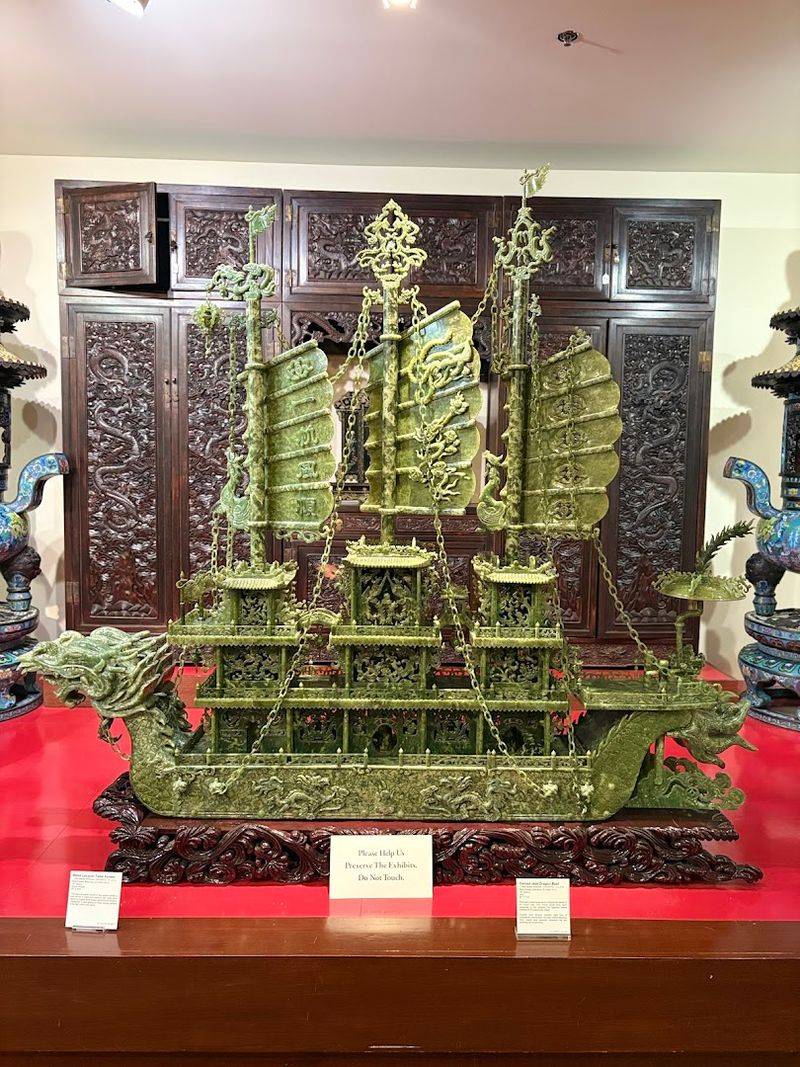
You will find jade carved into flowers, trees, animals, figures, and architectural scenes with details so small you need to lean in close to appreciate the full picture. Some pieces are the size of a fist.
Others fill an entire display case. The color variations alone, from deep forest green to pale white and everything in between, make the collection visually absorbing.
Puzzle spheres, where craftsmen carved multiple interlocking hollow balls from a single piece of jade, are among the pieces that tend to hold visitors the longest. The technique is genuinely difficult to wrap your mind around.
Ivory Carvings That Show What Human Hands Can Do
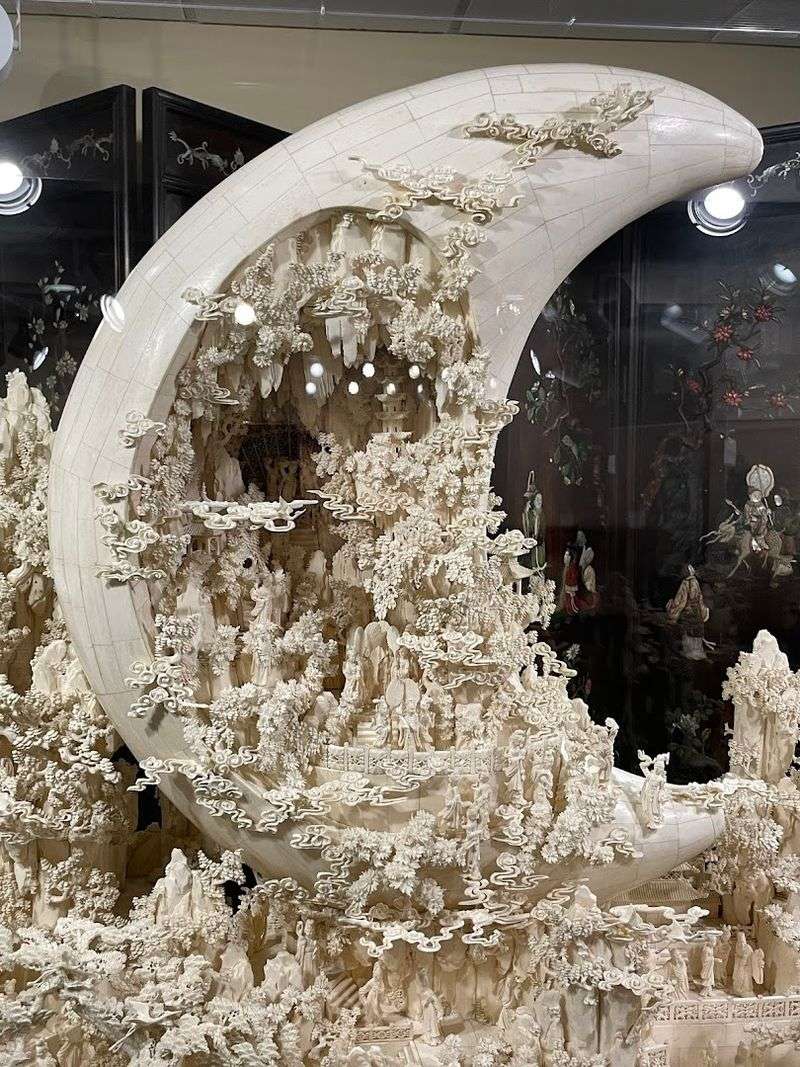
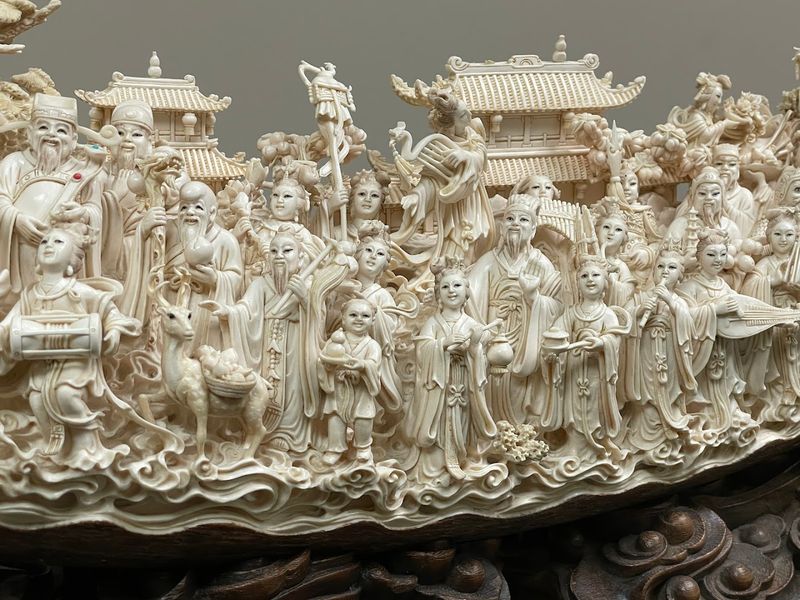
The ivory collection at the Belz Museum is the kind of thing that makes you stand still for longer than you planned. Large carved tusks sit in illuminated cases, covered from base to tip in scenes featuring hundreds of tiny figures, buildings, trees, and animals.
The level of detail is almost disorienting when you realize every element was shaped by hand using tools that would look simple by modern standards.
One piece in the collection is a mammoth tusk estimated to be more than 10,000 years old. That single fact reframes the entire room.
You are not just looking at art. You are looking at a material that existed long before recorded history, shaped by craftsmen who lived centuries ago into something that has survived to the present day.
The tusk carvings in particular tend to generate the most conversation among visitors. People who came in knowing nothing about ivory carving leave with a genuine appreciation for the patience and skill the work required.
Imperial Robes and Silk Embroidery From Ancient China
Fabric does not usually survive for centuries, which makes the textile pieces at the Belz Museum especially striking. The collection includes imperial robes from the Qing dynasty, which ruled China from 1644 to 1912, along with tapestries and embroidered panels that demonstrate a level of craft that modern machine production simply cannot replicate.
The silk embroidery pieces are worth slowing down for. At first glance they can look like paintings, with shading, depth, and fine linework that seems impossible to achieve with thread and needle.
Moving closer reveals individual stitches so small and precisely placed that the overall image holds together with the clarity of a photograph.
These textiles provide a different kind of connection to history than stone or metal objects do. Fabric is fragile.
The fact that these pieces exist at all, in a museum on South Main Street in Memphis of all places, is a small miracle of preservation and careful collecting.
Bronze Warriors and Ceramic Figures From Across the Centuries
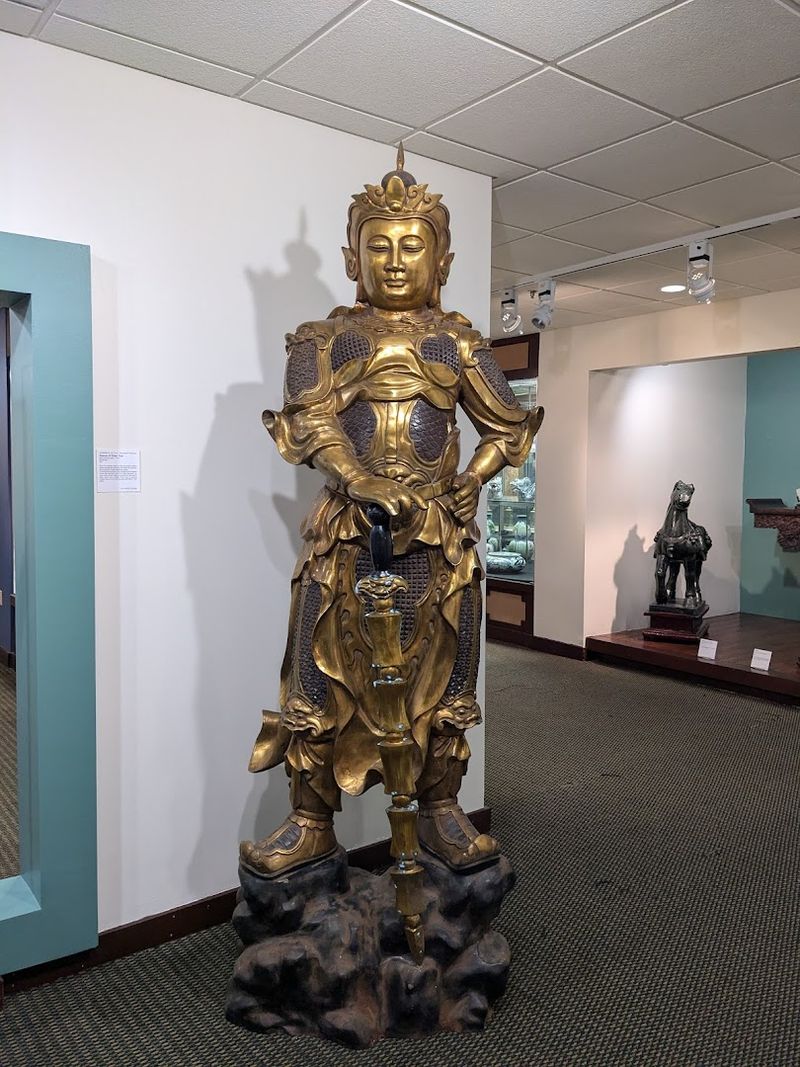
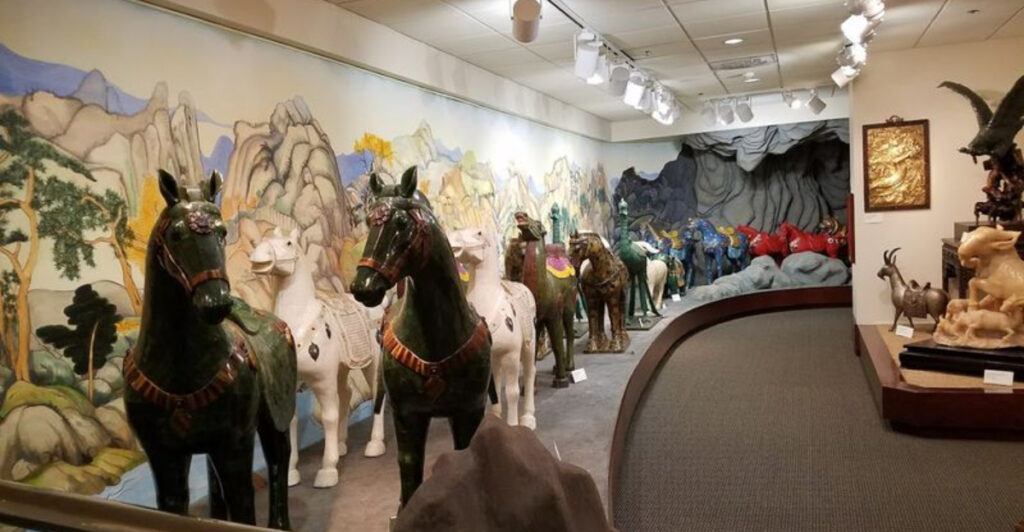
Not everything in the Belz collection fits inside a glass case. Some of the most visually commanding pieces stand freely in the gallery space, including life-size bronze warrior figures that carry a physical presence you do not expect in a museum of this size.
Standing near one of them changes your sense of scale in the room.
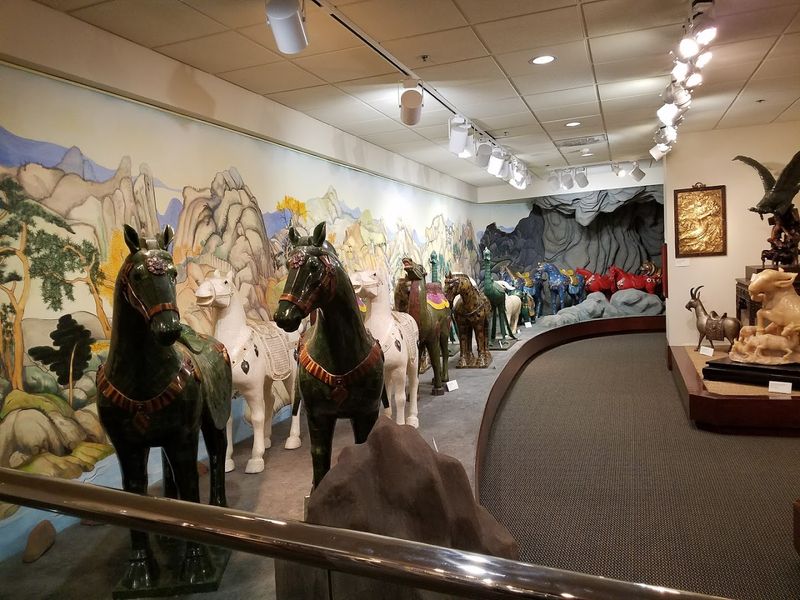
The ceramic collection adds a different kind of depth to the Asian holdings. Horses, camels, and carriages rendered in clay reflect burial and ceremonial traditions from various Chinese dynasties.
These objects were not made for display. They were made for purpose, which gives them a different kind of weight than decorative pieces.
Seeing a ceramic horse from an ancient dynasty and a carved jade puzzle sphere from a later period in the same room is a good reminder of how long Chinese artistic traditions actually ran. The Belz collection compresses an enormous span of history into a walkable space, and that compression is part of what makes it feel so dense with discovery.
The Judaic Collection and What Makes It Rare in the American South
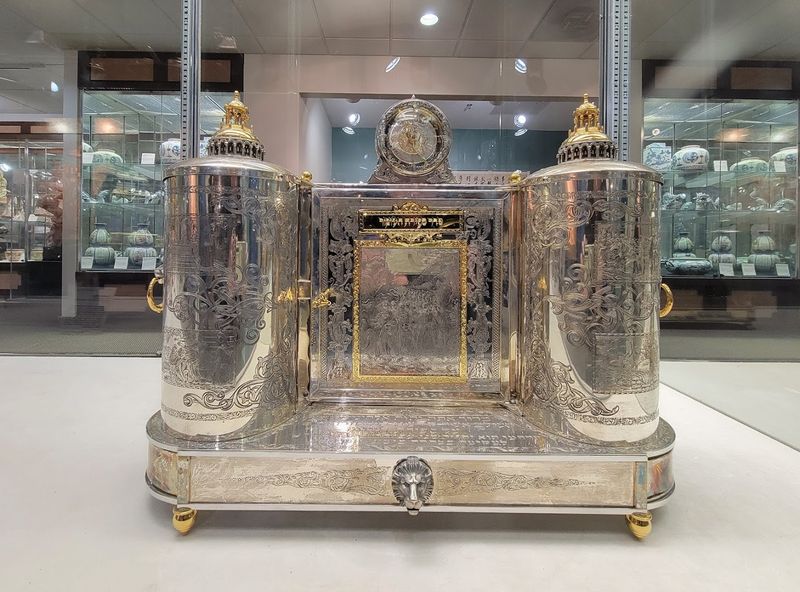
Judaica galleries are not common in the United States, and finding one in the American South is genuinely unusual. The Belz Museum’s Judaic collection covers a wide range of objects, from religious ceremonial pieces like menorahs, Torah ornaments, and Kiddush cups to fine art paintings with a distinctly cultural sensibility.
The paintings in this section drew some unexpected reactions from visitors who came primarily for the Asian art. Several works carry a warm, sometimes humorous tone that reflects Jewish cultural storytelling traditions.
The subject matter ranges from everyday life scenes to religious moments, and the variety keeps the section from feeling one-dimensional.
Silver pieces in the collection are particularly well-crafted, with decorative work that reflects both artistic skill and religious symbolism. For visitors unfamiliar with Judaic art traditions, the plaques here do helpful work in explaining the purpose and meaning behind each object.
The section rewards time and attention in the same way the Asian galleries do.
The Self-Playing Piano and Violin Machine You Were Not Expecting
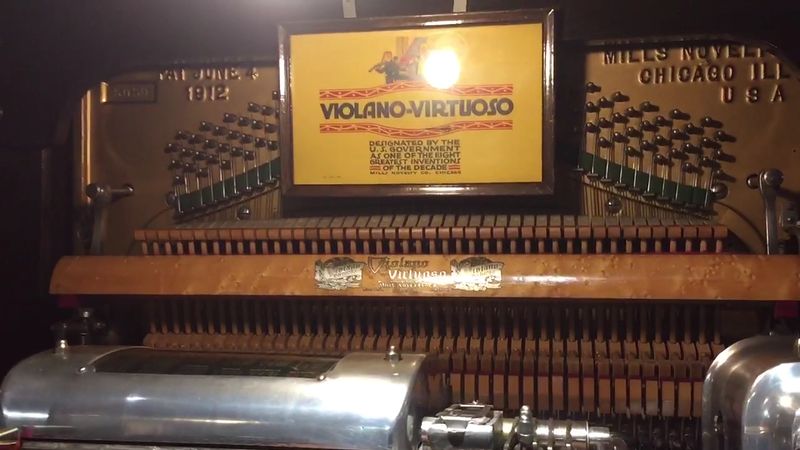
Somewhere in the middle of all the jade and ivory and silk, there is a self-playing piano and violin concert machine that operates with coins. It is one of those details that sounds like it belongs in a different kind of museum entirely, but at the Belz it fits in a way that is hard to explain until you hear it play.
Mechanical music machines were luxury objects in their time, crafted with the same attention to detail as the decorative arts surrounding them. Seeing one in working condition, in a room full of hand-carved objects from the other side of the world, connects two very different traditions of human craftsmanship in an unexpected way.
Bringing a few coins is genuinely worth it. The experience of hearing the machine perform in that quiet, art-filled space is one of those small museum moments that ends up being more memorable than you would predict.
It adds a layer of life to a room that might otherwise feel purely visual.
Practical Tips for Getting the Most Out of Your Visit
The Belz Museum is open Wednesday through Friday from 10 AM, with Friday hours ending at 4 PM rather than 5 PM. Sunday hours run from noon to 5 PM.
The museum is closed Monday, Tuesday, and Saturday. Arriving early gives you the best chance of spending two or more hours without feeling rushed toward the end.
Admission is extremely affordable, typically just a few dollars per person, which makes this one of the best value cultural experiences in the city. The museum is also wheelchair accessible, with a layout that accommodates visitors who need more space to move comfortably between displays.
Reading the plaques next to each piece is strongly worth the extra time. The descriptions provide dates, cultural context, and craftsmanship details that change how you experience each object.
Without them, a carved tusk is impressive. With them, a 10,000-year-old mammoth tusk becomes something genuinely extraordinary.
Plan for at least two hours, and do not cut your arrival close to the closing time.
A Museum Most People Walk Right Past
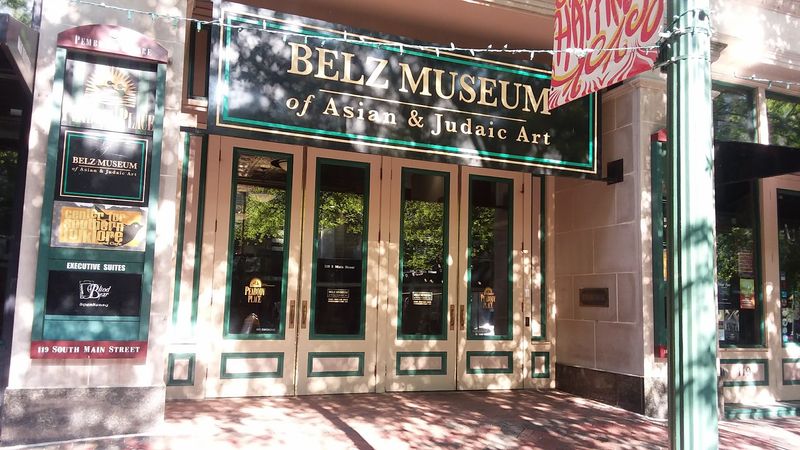
From the outside, there is nothing about 119 S Main St in Memphis, Tennessee that screams world-class art collection. The Belz Museum of Asian and Judaic Art sits quietly on a stretch of South Main Street that most tourists pass without a second glance.
The building does not announce itself. There is no dramatic entrance or towering signage demanding your attention.
That understated exterior is actually part of what makes the first step inside so surprising. The museum holds a private collection built over decades by the Belz family, Memphis real estate developers with a deep passion for Asian and Judaic art.
What they assembled is genuinely remarkable in both scale and quality.
The museum can be reached at 901-523-2787 or through its website at belzmuseum.org. Hours run Wednesday through Friday and Sunday, with the last entry typically well before closing time.
Share this story