 Unearth The Voyage
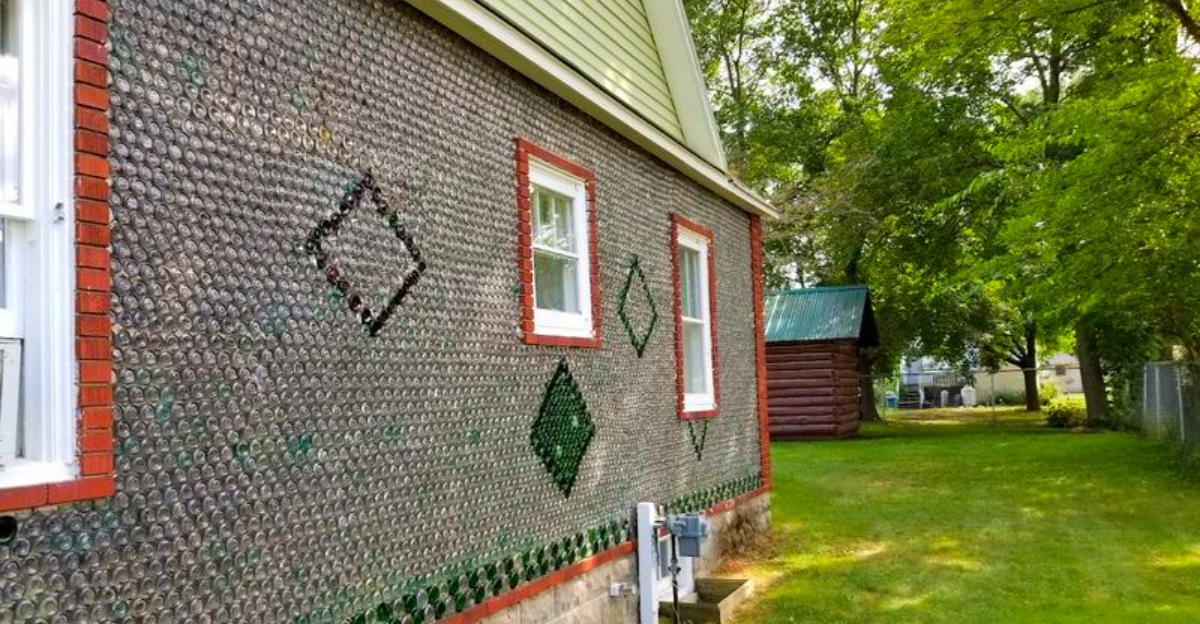
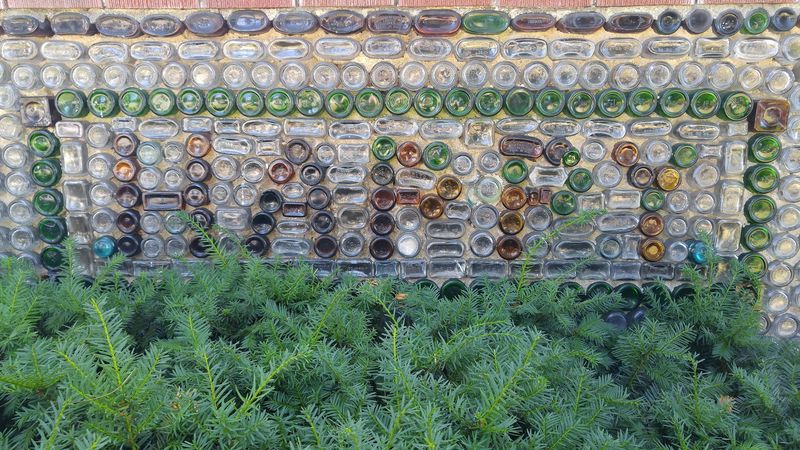
Somewhere in the quiet forests of northwestern Michigan, there is a house that catches the light in a way no ordinary building ever could. Its walls are not made of wood or brick but of tens of thousands of glass bottles, each one pressed into mortar with its bottom facing outward, creating a mosaic of color and texture that stops people cold on the sidewalk.
The man who built it was not an architect or an artist by trade, but a Finnish immigrant with a bottling company and an idea that was either brilliantly practical or wonderfully eccentric, depending on how you look at it. I had heard about this place in passing, the kind of roadside curiosity that sounds too strange to be real, and I knew I had to see it for myself.
What I found at 14551 Wuoksi Ave in Kaleva, Michigan was far more interesting than I expected.
The Story Behind the Bottles
John J. Makinen was not the kind of man who threw things away.
A Finnish immigrant who had built his life in the small town of Kaleva, Michigan, Makinen owned the Northwestern Bottling Works Company, a local soda pop operation that produced thousands of glass bottles every year.
By 1941, he had accumulated enough surplus bottles to do something truly remarkable with them. Rather than discarding the empties, he stacked them into walls, pressed them into mortar, and built an entire house.
The project used over 60,000 bottles in total, a number that is almost impossible to picture until you are standing right in front of the finished result. Makinen passed away in 1942, just one year after completing his creation, which makes the house feel even more like a final, lasting statement from a man who believed in making something out of nothing.
His ingenuity is now permanently woven into the fabric of this small Michigan community.
Finding Kaleva, Michigan
Kaleva sits in Manistee County in the northwestern Lower Peninsula of Michigan, the kind of town that most road maps barely bother to label. The population hovers around 500 people, and the downtown is the sort of place where a single hardware store and a post office feel like a full commercial district.
Getting there requires intentional effort. The nearest larger city is Manistee, about 20 miles to the southwest, and the drive in takes you through stretches of pine forest and farmland that feel genuinely remote.
The Bottle House Museum sits at 14551 Wuoksi Ave, tucked into a quiet residential neighborhood that gives almost no warning of what is about to appear around the corner. That element of surprise is part of the charm.
You round a bend on an otherwise ordinary street, and suddenly there it is, a building that looks like it belongs in a fairy tale rather than a Michigan suburb.
What the Building Actually Looks Like Up Close
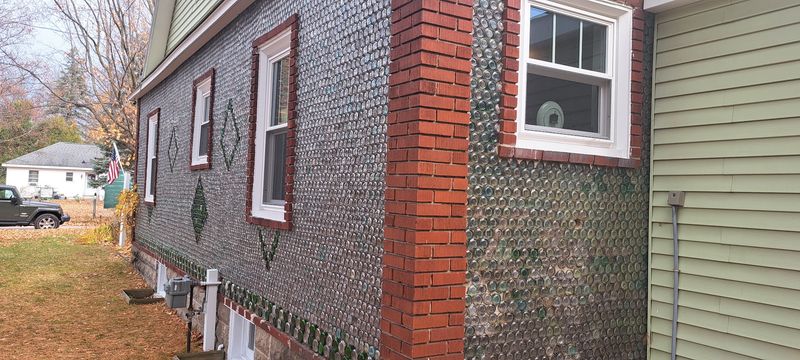
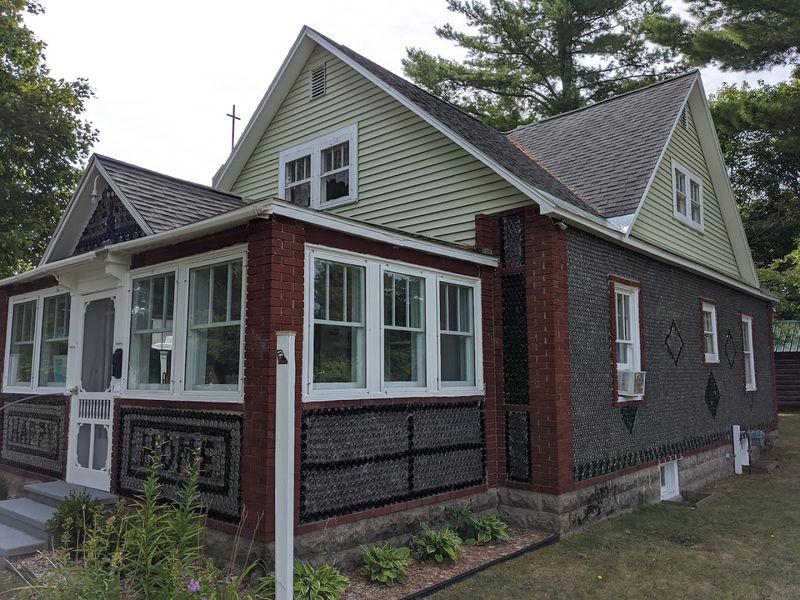
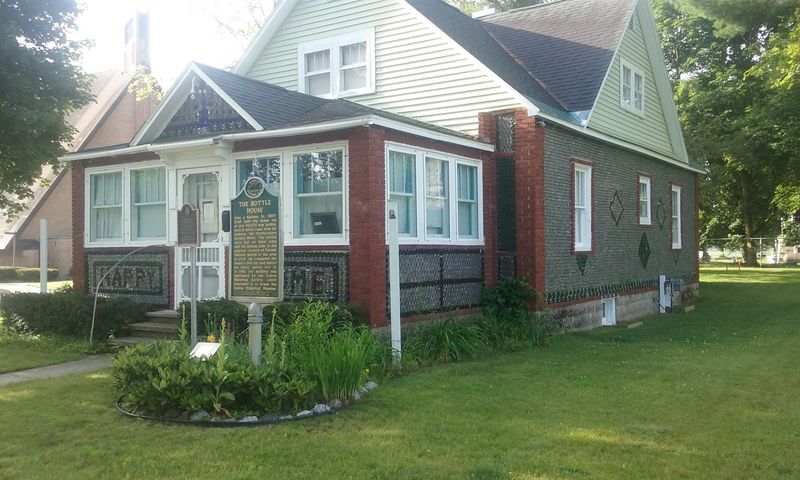
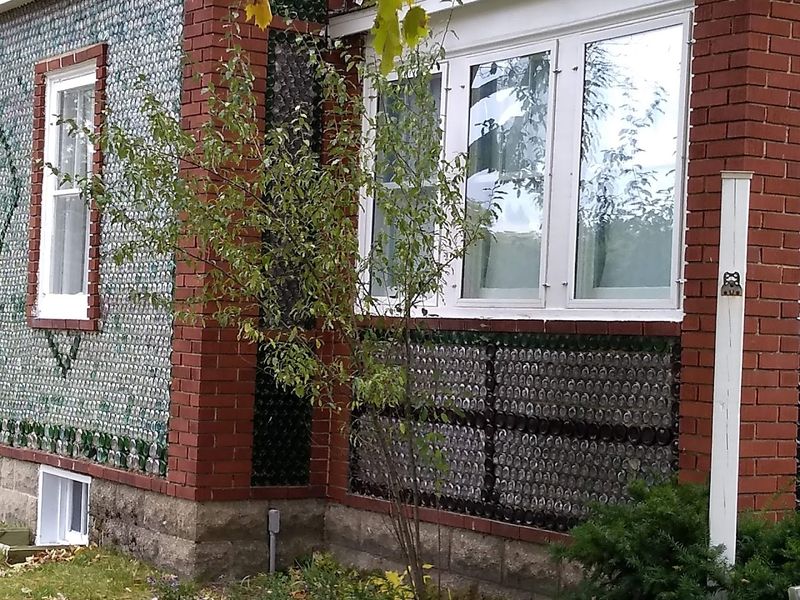
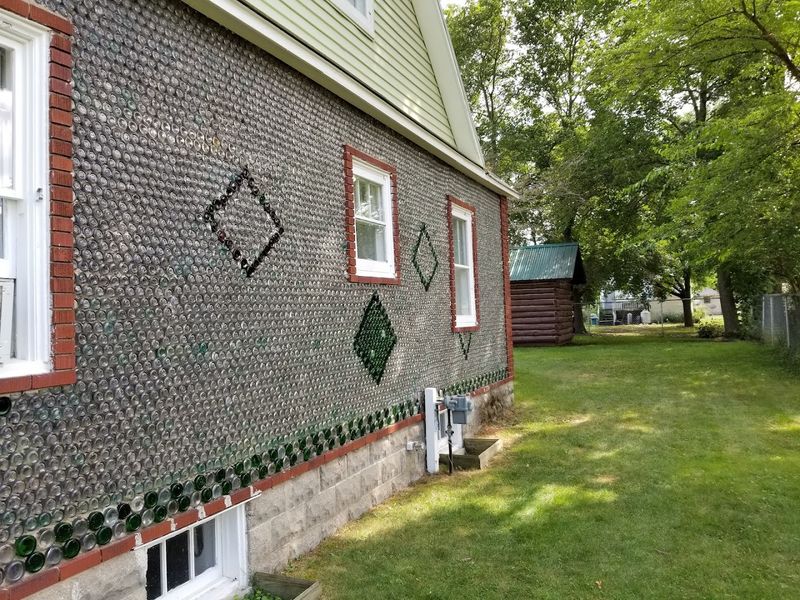
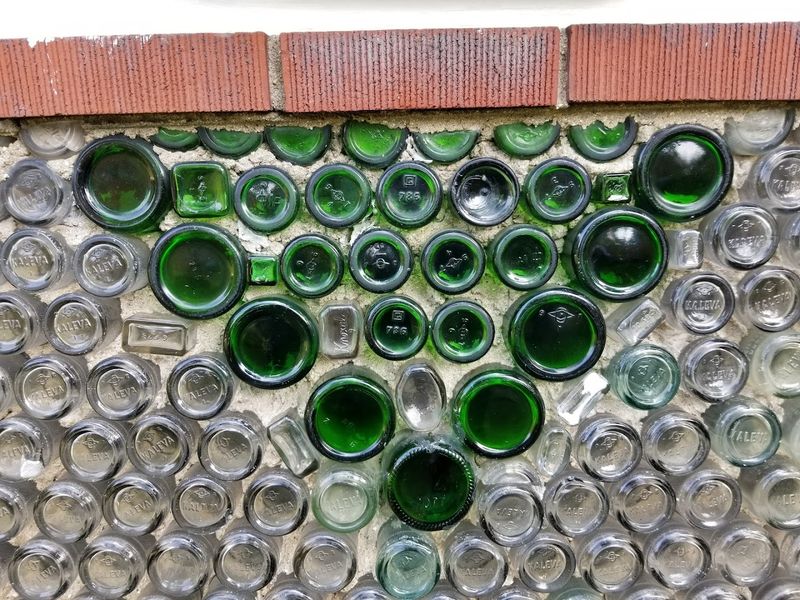
Nothing fully prepares you for the first moment you see the bottle house up close. The walls shimmer even on an overcast day, because every surface is covered with the circular bottoms of glass bottles, each one sealed into mortar and reflecting light at a slightly different angle.
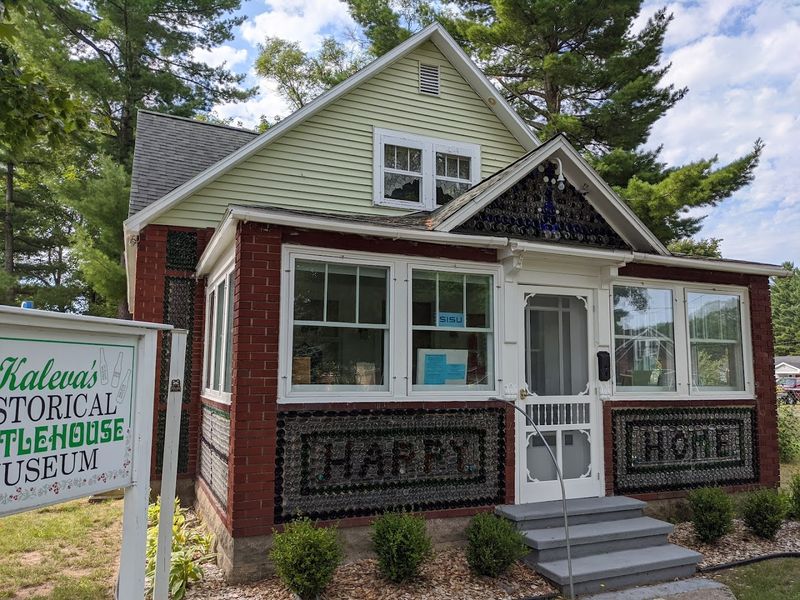
The bottles are not randomly arranged. Makinen laid them out in deliberate patterns, and on the front porch, the bottle arrangement actually spells out the words “HAPPY HOME” in a design that is both cheerful and surprisingly precise for a man working without architectural training.
The color palette runs from clear glass to amber to deep green, giving the exterior a mosaic quality that changes depending on the time of day and the direction of the sun. Up close, you can see that the bottles are packed tightly together with almost no gaps, a level of craftsmanship that speaks to just how seriously Makinen took this project from the very beginning.
Inside the Museum: Local History on Every Wall
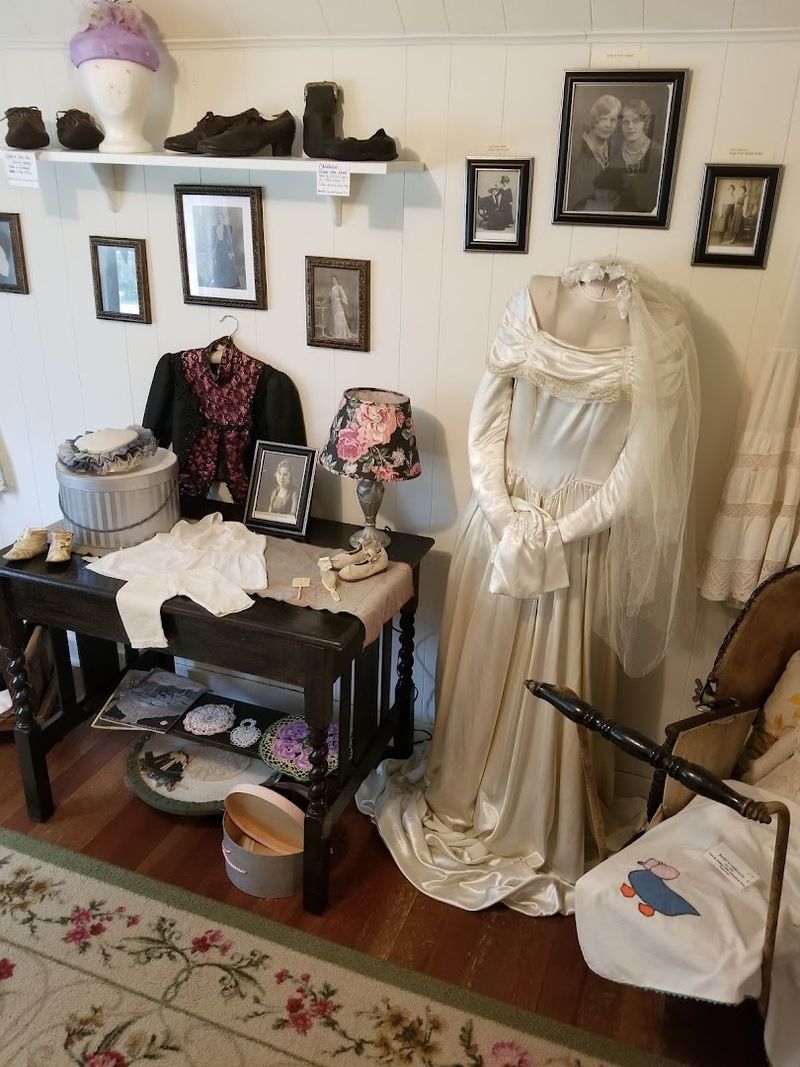
Once you step through the front door, the bottle house transforms from a quirky architectural novelty into a genuine history museum. The Kaleva Historical Society took over the property in 1983 and spent considerable effort converting the interior into a display space for artifacts from the 19th and 20th centuries.
The rooms are filled with objects that reflect the Finnish-American heritage of the region, including tools, photographs, household items, and documents that paint a vivid picture of what life looked like for early settlers in this part of Michigan.
What makes the experience feel unusually personal is that almost everything on display is touchable. During my visit, I noticed only one item in the entire house marked with a “please do not touch” sign, which is almost unheard of in a traditional museum setting.
That hands-on quality makes the collection feel less like a formal exhibit and more like a preserved home, which is exactly what it originally was.
The Finnish-American Heritage Connection
Kaleva was founded largely by Finnish immigrants in the late 1800s, and that heritage runs deep through everything the museum preserves. The town’s name itself comes from the Finnish national epic, the Kalevala, a detail that tells you just how deliberately this community held onto its cultural roots even as it built a new life in Michigan.
The museum’s collection reflects that pride directly. Visitors can find items that document the daily rhythms of Finnish-American farm families, including the foods they prepared, the crafts they practiced, and the community gatherings they organized through churches and social clubs.
Makinen himself was part of this immigrant story, a man who came from Finland, built a business, and then left behind a structure so unusual that it has kept his name alive for more than 80 years. The bottle house is not just an architectural oddity; it is a physical record of one immigrant’s ambition and creativity in a new country.
A National Register Landmark in a Tiny Town
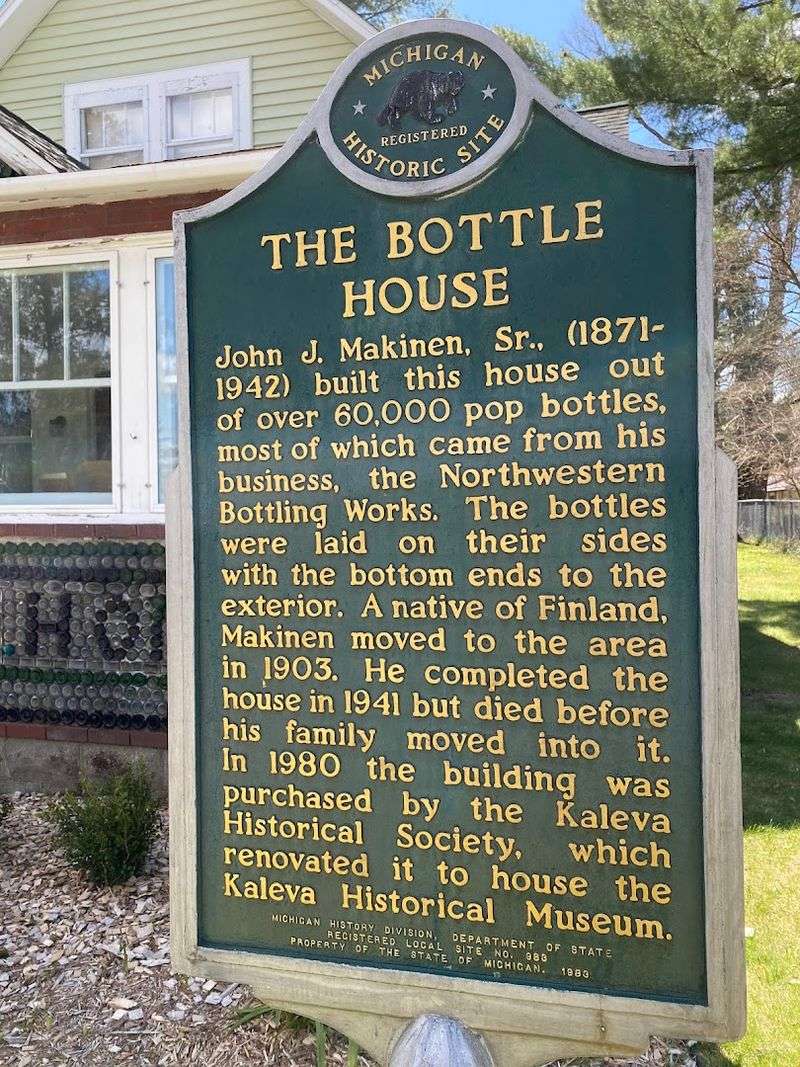
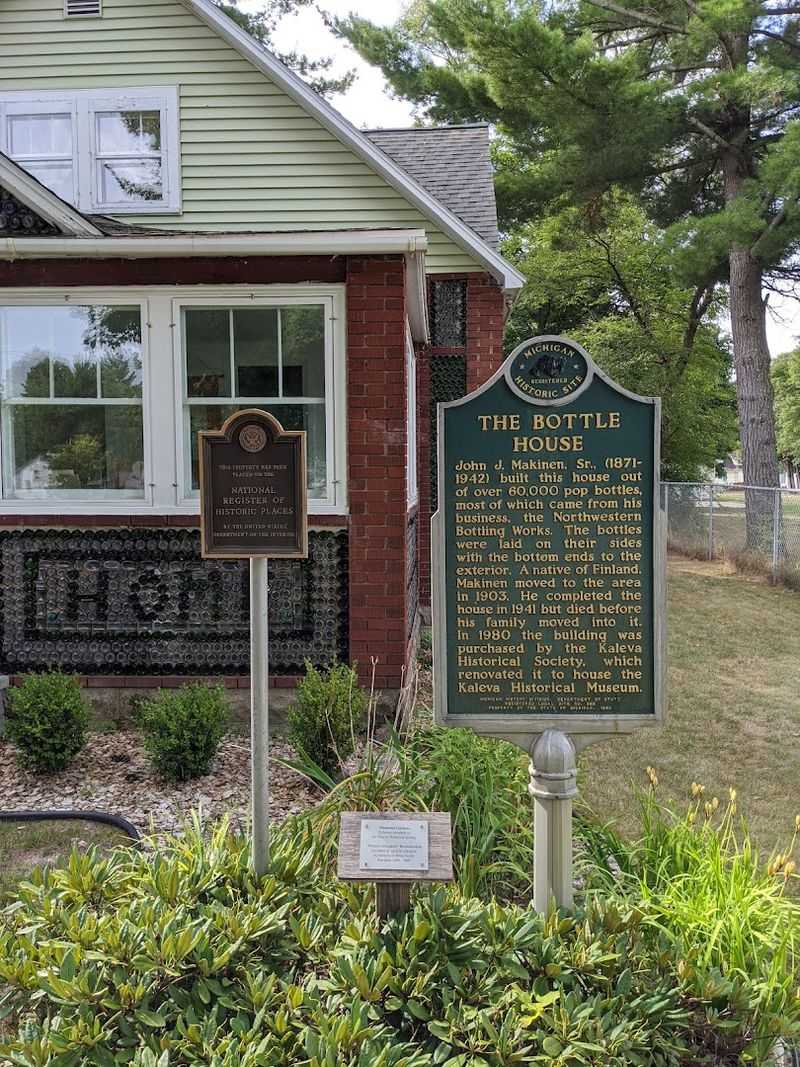
It is not every day that a small-town curiosity earns a spot on the National Register of Historic Places, but the Bottle House Museum has done exactly that. The building is also listed on the Michigan Register of Historic Sites, recognitions that reflect how seriously preservation experts take both its architectural uniqueness and its cultural significance.
These designations matter beyond the prestige. They help secure funding for maintenance, ensure the building is protected from demolition, and signal to travelers that this is not just a local novelty but a site of genuine historical importance.
For a town of 500 people, having a nationally recognized landmark is a meaningful point of community pride. The residents of Kaleva are well aware that their bottle house draws visitors from across Michigan and beyond, and that awareness shapes how carefully the historical society tends to the property.
Some of the best-preserved small-town landmarks in America are the ones that local communities refuse to let disappear.
When and How to Visit
The museum keeps a schedule that rewards a little planning. It is open on weekends only, from Memorial Day through Labor Day, with hours running from noon to 4 PM on both Saturday and Sunday.
Weekday visits are not possible, which catches some travelers off guard, especially those passing through during the week.
The address is 14551 Wuoksi Ave, Kaleva, MI 49645, and the phone number for the museum is (231) 362-2487. Group tours can be arranged by contacting the historical society in advance, which is the best approach if you are bringing a larger group or want a guided experience.
Entry is free, though the museum does suggest a donation to help with upkeep. Given how much care has gone into maintaining the property, even a small contribution feels like a worthwhile gesture.
My honest advice: call ahead before making the drive, because the schedule can occasionally vary from what is posted online, and the nearest alternative activity is not exactly around the corner.
The Outside-Only Experience (And Why It Still Works)
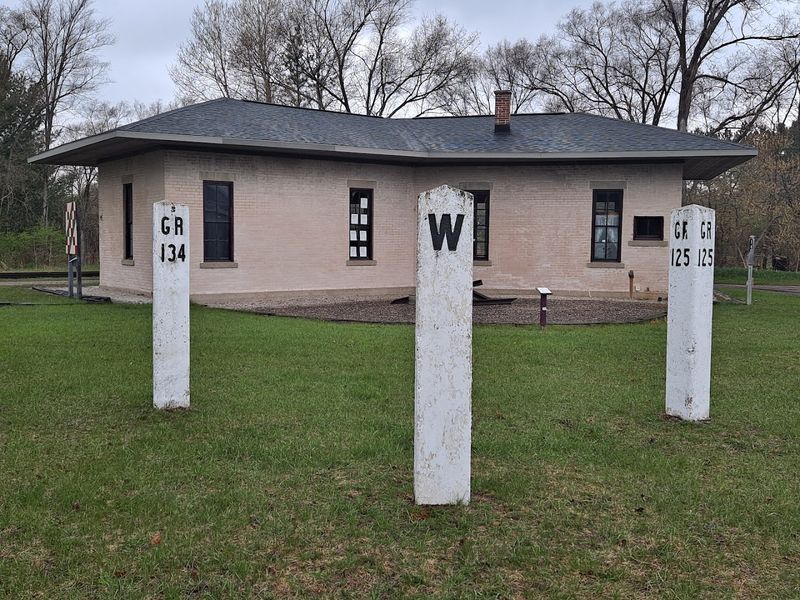
A fair number of visitors end up seeing only the exterior of the bottle house, either because they arrive outside of operating hours or because the museum is unexpectedly closed on a particular weekend. And while missing the interior is genuinely disappointing, the outside alone is worth the detour.
The building is compact, which means you can walk a full loop around it in just a few minutes, taking in the bottle patterns from every angle. The front porch with its “HAPPY HOME” lettering is the most photographed spot, but the side walls have their own appeal, especially in afternoon light when the glass picks up a warm amber glow.
There are informational signs posted around the property that explain the history even when the doors are locked, so you can still leave with a solid understanding of who built it and why. The house sits in a quiet residential neighborhood, and the contrast between its extraordinary appearance and its ordinary surroundings is part of what makes it so visually striking.
What Kids Think of the Bottle House
Children tend to have an immediate and enthusiastic reaction to the bottle house, and it is not hard to understand why. A building made of tens of thousands of glass bottles is the kind of thing that sounds like it came from a picture book, and seeing it in person has a way of triggering genuine wonder even in kids who are usually hard to impress.
The hands-on nature of the museum interior makes it especially good for younger visitors. Being able to touch most of the exhibits means kids stay engaged rather than spending the whole visit being told not to touch things, which is a refreshing change from many formal museum settings.
The walk around the exterior is short enough to hold a child’s attention, and the bottle patterns are visually stimulating in a way that sparks natural curiosity and questions. More than one young visitor has reportedly circled the building multiple times just to keep looking at the glass, which says something about how effectively the building captures the imagination.
The Atmosphere of Kaleva Itself
Kaleva is the kind of town that moves at its own pace, and spending time there feels noticeably different from visiting a tourist-oriented destination. The streets are quiet, the neighbors are friendly, and the overall atmosphere has a genuinely unhurried quality that is increasingly rare.
The bottle house sits within a neighborhood of modest homes and mature trees, and the surrounding area feels lived-in rather than staged for visitors. That authenticity is part of what makes the stop feel meaningful rather than commercial.
A small gift shop connected to the museum offers local items and information about the area, and if you find the museum unexpectedly closed, the gift shop is reportedly a good first stop for getting someone to help you access the building. The broader Kaleva area also has connections to the larger Manistee National Forest, so combining a bottle house visit with some time outdoors in the surrounding forest and lake country makes for a very satisfying day trip from almost anywhere in northwestern Michigan.
Creative Recycling Before It Was Trendy
Long before sustainability became a cultural talking point, John Makinen was doing something that modern environmentalists would recognize immediately: turning waste into something useful and beautiful. His surplus soda bottles, which might otherwise have been discarded or destroyed, became the primary building material for a structure that has now stood for more than 80 years.
The construction method itself was surprisingly practical. Glass bottles are durable, weather-resistant, and when set in mortar with the bottoms facing outward, they create a surface that is both structurally sound and visually dynamic.
Makinen was not following a trend or making a philosophical statement about consumption; he was simply solving a problem with the materials he had on hand.
That pragmatic creativity is what makes the bottle house feel so genuinely human. There is no pretension to it, no artistic manifesto behind the design.
Just a man with too many bottles and enough determination to turn them into something that people are still talking about eight decades later.
Why This Place Stays With You
There are plenty of roadside attractions across Michigan that promise something unusual and deliver something forgettable. The Bottle House Museum is not one of them.
The combination of genuine craftsmanship, real historical depth, and a story rooted in immigrant ingenuity gives it a weight that most quirky roadside stops simply do not have.
The building earns its place on the National Register not because it is merely strange but because it represents something specific and human about a particular time and place. It is a record of how one community built itself, and of one man’s determination to leave something lasting behind.
My visit to Kaleva was short, as most visits to small Michigan towns tend to be, but the bottle house has stayed in my memory in a way that larger and more famous attractions sometimes do not. Some places earn your attention through spectacle; this one earns it through sincerity, and that is a quality that no number of promotional signs can manufacture.



