 Unearth The Voyage
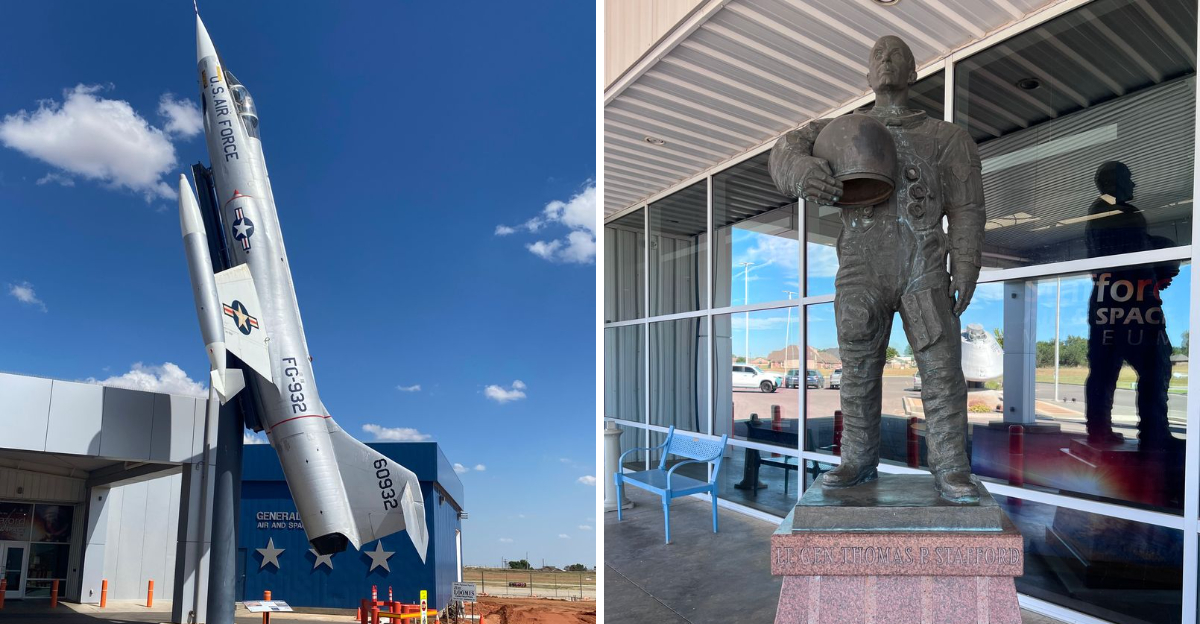
Weatherford might not be the first place that comes to mind when you think about space exploration, but this small Oklahoma town holds one of the country’s most impressive collections of aerospace history. Tucked away off the beaten path, you’ll find over 3,500 artifacts that tell the story of humanity’s journey beyond Earth’s atmosphere.
I stumbled upon this place during a cross-country road trip, and what I thought would be a quick stop turned into an all-day adventure that left me absolutely starstruck.
The museum honors not just any astronaut, but one of Oklahoma’s own space heroes, and the exhibits here rival anything you’d find in much larger cities. From actual spacecraft to interactive displays that let you experience what it’s like to pilot through the cosmos, this place delivers an experience that’s both educational and thrilling.
Whether you’re a space enthusiast or just looking for something unexpected to explore, this hidden treasure proves that world-class attractions can pop up in the most surprising places.
A Museum Born from One Man’s Legacy
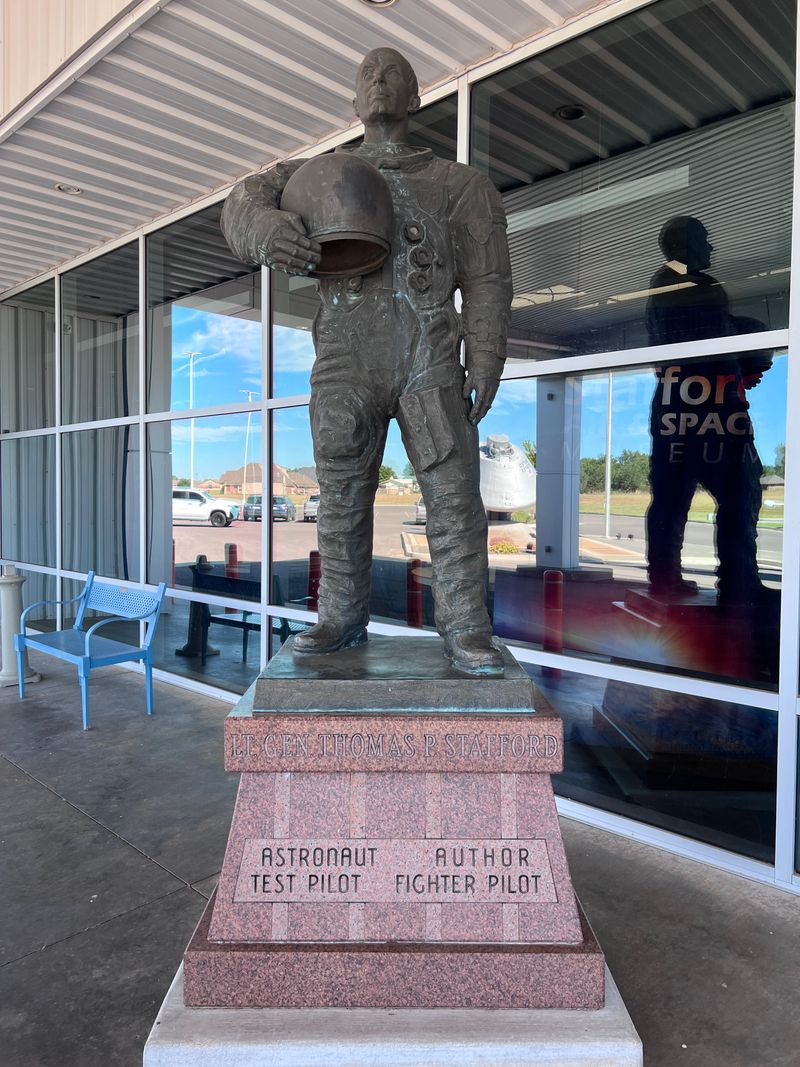
The Stafford Air & Space Museum sits at 3000 Logan Road in Weatherford, Oklahoma, and it carries the name of one of America’s most accomplished astronauts, Lieutenant General Thomas P. Stafford.
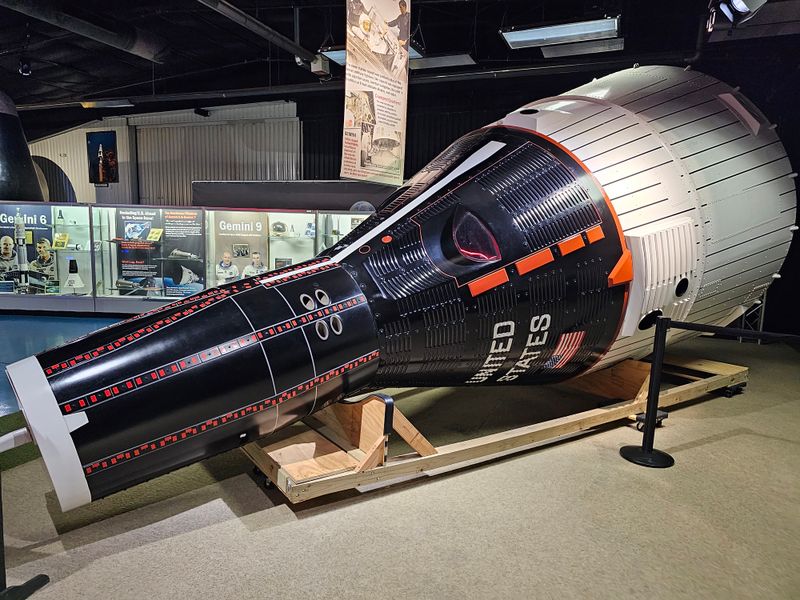
Born right here in Weatherford, Stafford flew on four space missions including the historic Apollo-Soyuz Test Project that marked the first international space rendezvous during the Cold War. His achievements include commanding Gemini 9 and Apollo 10, which served as the dress rehearsal for the moon landing.
When I first pulled into the parking lot, I honestly wasn’t sure what to expect from a space museum in such a small town. The building itself immediately caught my attention with its modern architecture and the fighter jets displayed outside.
Inside, I discovered that this isn’t just a tribute to one man’s career but a comprehensive celebration of aerospace history.
The museum opened its doors in 2000, and since then it has grown into a facility that houses artifacts spanning from the earliest days of flight through modern space exploration. General Stafford himself remains actively involved with the museum, and his personal collection forms the core of many exhibits.
The 3,500-plus artifacts here represent one of the most extensive aerospace collections in the region, making this Oklahoma institution a legitimate destination for anyone interested in aviation and space travel.
Walking Through Space History
My journey through the museum began in the main gallery, where the sheer scale of the collection became immediately apparent. Actual spacecraft hang from the ceiling, including a full-scale model of the Apollo Command Module that gives you a real sense of just how cramped those pioneering astronauts had it.
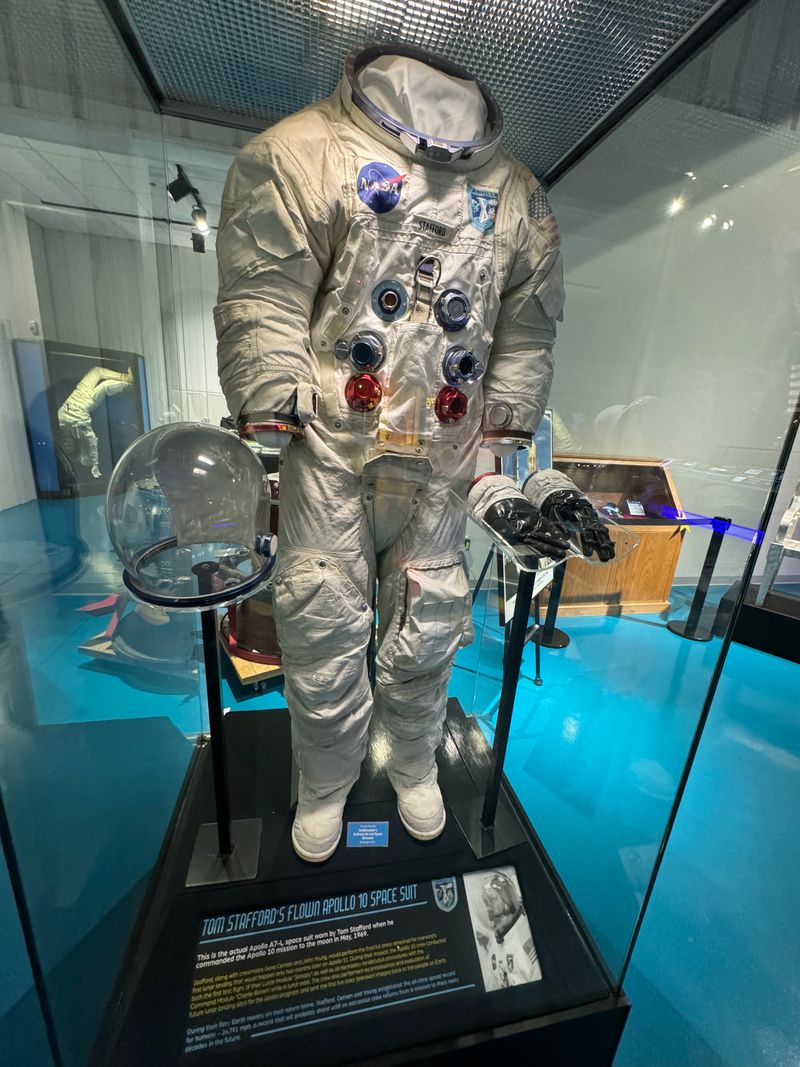
Glass cases line the walls, filled with space suits, mission patches, navigation equipment, and personal items that astronauts carried into orbit.
One of the most striking displays features General Stafford’s actual flight suits from his various missions. Standing inches away from the fabric that traveled to space creates an unexpectedly emotional connection to those historic moments.
I spent nearly an hour in this section alone, reading every placard and examining every detail.
The museum doesn’t just focus on American space achievements either. Artifacts from the Soviet space program sit alongside their American counterparts, telling a more complete story of the space race.
This balanced approach felt refreshing and educational, especially when viewing items related to the Apollo-Soyuz mission where Cold War rivals worked together in orbit.
Interactive displays let visitors experience simulated rocket launches and orbital maneuvers. I tried my hand at docking a spacecraft, which proved far more challenging than it looks in movies.
These hands-on elements make the museum engaging for visitors of all ages, transforming what could be static displays into active learning experiences.
The Outdoor Aviation Collection
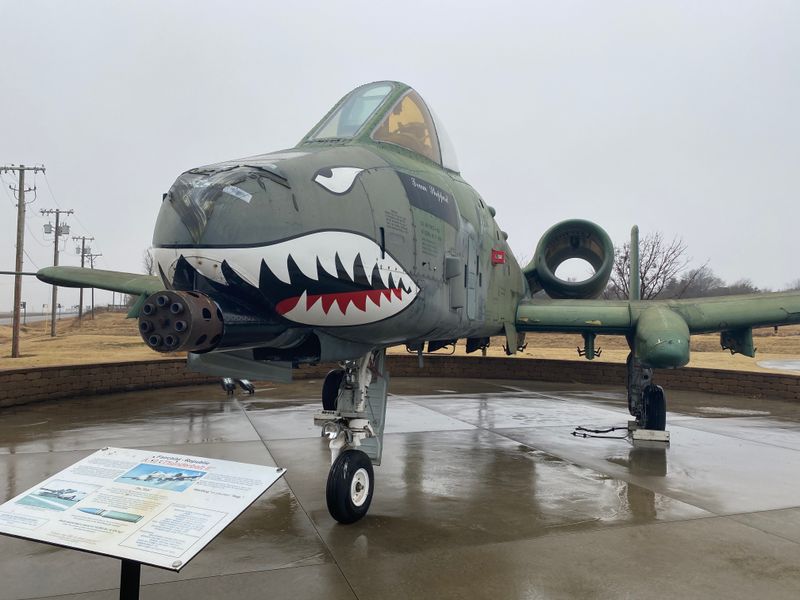
Stepping outside revealed another dimension to the museum experience. The outdoor grounds feature an impressive collection of military aircraft that spans several decades of aviation history.
Fighter jets, helicopters, and other military aircraft sit on display, allowing visitors to walk around them and appreciate their size and engineering up close.
An F-16 Fighting Falcon catches everyone’s attention immediately, its sleek design still looking futuristic despite being decades old. Next to it sits an F-4 Phantom, the workhorse of Vietnam-era aviation.
I walked beneath the wings of these machines, marveling at the complexity of their construction and trying to imagine the pilots who flew them in combat and training missions.
The outdoor collection also includes helicopters like the UH-1 Huey, which visitors can actually climb inside for a closer look at the cockpit. I took advantage of this opportunity, settling into the pilot’s seat and gripping the controls.
The view from inside gave me newfound respect for helicopter pilots who operate these machines in challenging conditions.
What makes this outdoor display special is the care taken to maintain these aircraft. They’re not rusting relics but well-preserved examples of aviation technology.
Information plaques accompany each aircraft, providing technical specifications and historical context that helps visitors understand their significance in military and aerospace history.
Interactive Experiences That Inspire
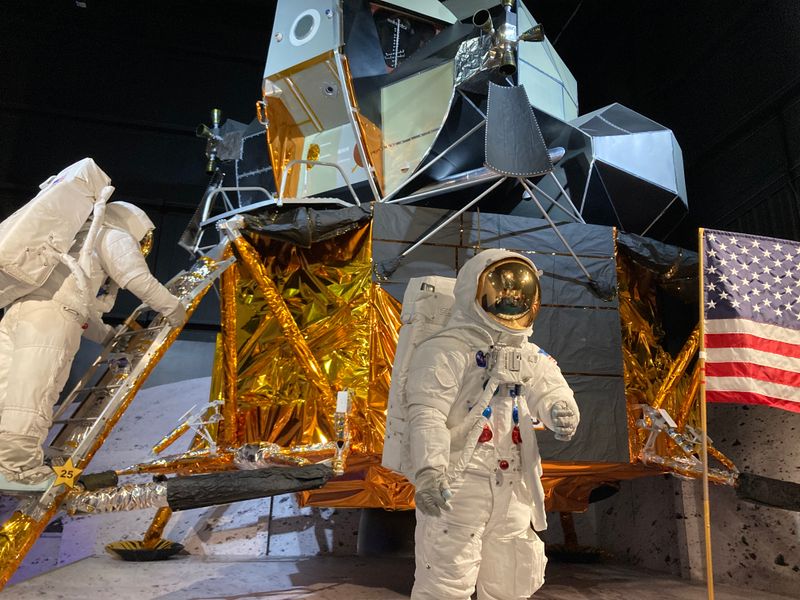
Beyond the static displays, the museum offers several interactive experiences that bring space exploration to life. Flight simulators let visitors test their piloting skills, and I spent considerable time trying to master a simulated landing sequence.
The controls respond realistically, making you appreciate the skill required to operate these complex machines.
A planetarium theater presents shows throughout the day, projecting stars and planets across a domed ceiling while narrators explain celestial phenomena. I caught a presentation about the formation of our solar system, and the immersive experience made complex astronomical concepts easy to grasp.
The comfortable seating and professional-quality production values matched what you’d find at much larger science centers.
Children especially love the kid-friendly zones where they can dress up in junior astronaut suits and pose for photos. Interactive computer stations quiz visitors on space facts and let them design their own missions.
I watched several young visitors completely absorbed in these activities, their enthusiasm reminding me why places like this matter so much for inspiring future scientists and engineers.
The museum also offers educational programs and summer camps that provide deeper dives into aerospace topics. While I visited as a casual tourist, seeing the structured learning opportunities available made me wish I’d had access to something similar during my own childhood in Oklahoma.
Treasures from the Space Race Era
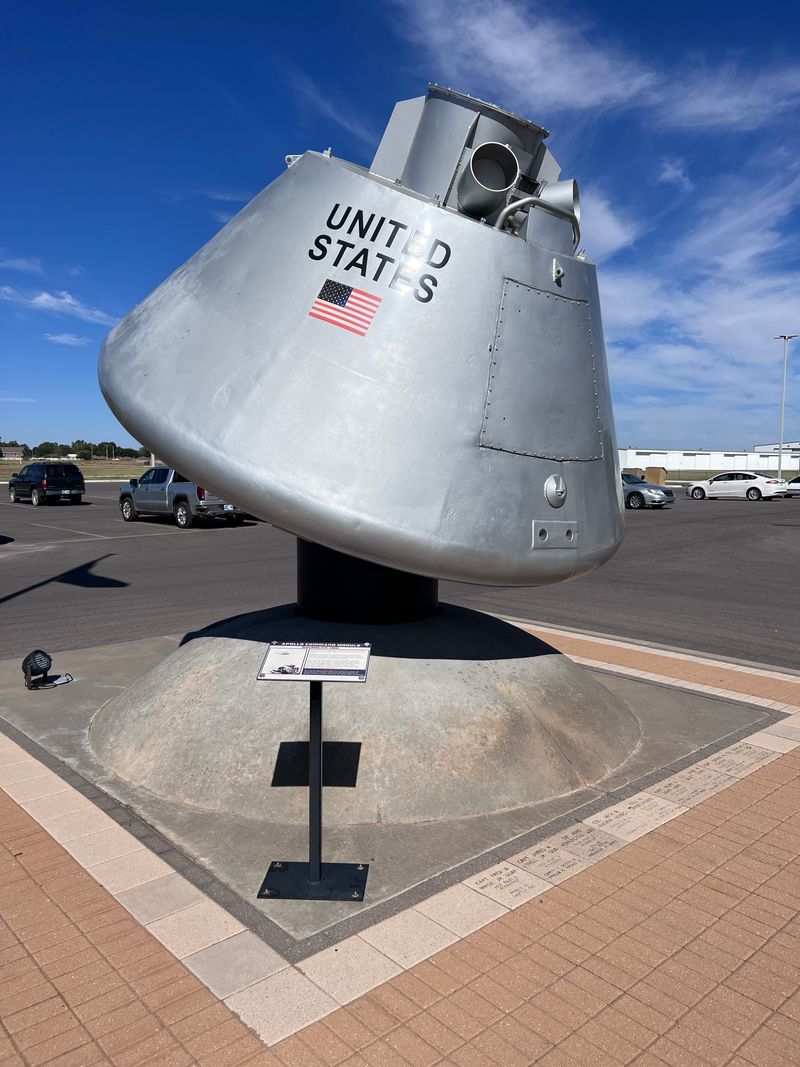
One gallery focuses specifically on the competitive years when America and the Soviet Union raced to achieve space milestones. Artifacts from both sides of the Iron Curtain sit side by side, creating a fascinating comparison of different approaches to the same challenges.
Soviet space food packages look remarkably similar to their American equivalents, proving that some problems have universal solutions.
The museum houses actual components from various space missions, not just replicas. I stood before a heat shield that protected astronauts during the fiery reentry through Earth’s atmosphere, its scorched surface bearing witness to the extreme temperatures it endured.
Seeing the physical evidence of space travel’s dangers made those historic missions feel even more courageous.
Mission control equipment from the Gemini and Apollo eras demonstrates how much technology has evolved. The computers that guided spacecraft to the moon had less processing power than a modern smartphone, yet they performed flawlessly when lives depended on them.
These displays really highlight human ingenuity and the ability to accomplish incredible things with limited resources.
Personal items from various astronauts add human touches to the technical displays. Family photos carried into space, handwritten notes, and small mementos remind visitors that behind every mission were real people with families and emotions, not just highly trained professionals executing procedures.
Planning Your Visit
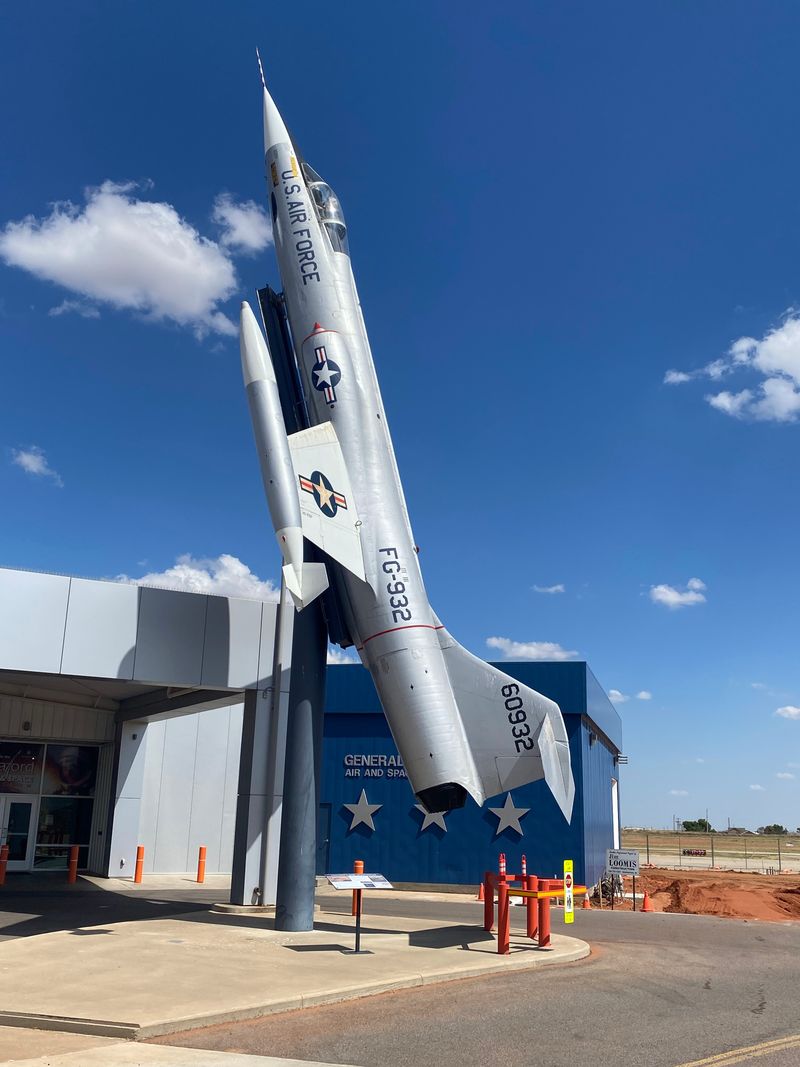
The museum operates Tuesday through Saturday from 9 AM to 5 PM, giving visitors plenty of time to explore thoroughly. I arrived right when the doors opened and still felt slightly rushed trying to see everything before closing.
If you’re serious about experiencing all the exhibits, plan for at least three to four hours, though dedicated space enthusiasts could easily spend an entire day here.
Admission prices are remarkably reasonable, especially considering the quality and quantity of what you get to see. The staff members I encountered were knowledgeable and passionate about the collection, happy to answer questions and share additional stories about various artifacts.
Their enthusiasm enhanced my visit significantly.
The museum includes a gift shop stocked with space-themed merchandise, books, and educational toys. I picked up a few items as souvenirs, including a detailed model kit and a biography of General Stafford.
The proceeds support the museum’s operations and educational programs, so purchases feel purposeful rather than frivolous.
Weatherford itself offers several dining options within a short drive of the museum, though the surrounding area is fairly rural. I’d recommend eating before or after your visit since the museum doesn’t have an on-site cafeteria.
The small-town atmosphere adds to the charm, making the whole experience feel like discovering a secret that most tourists miss completely.
Educational Programs and Community Impact
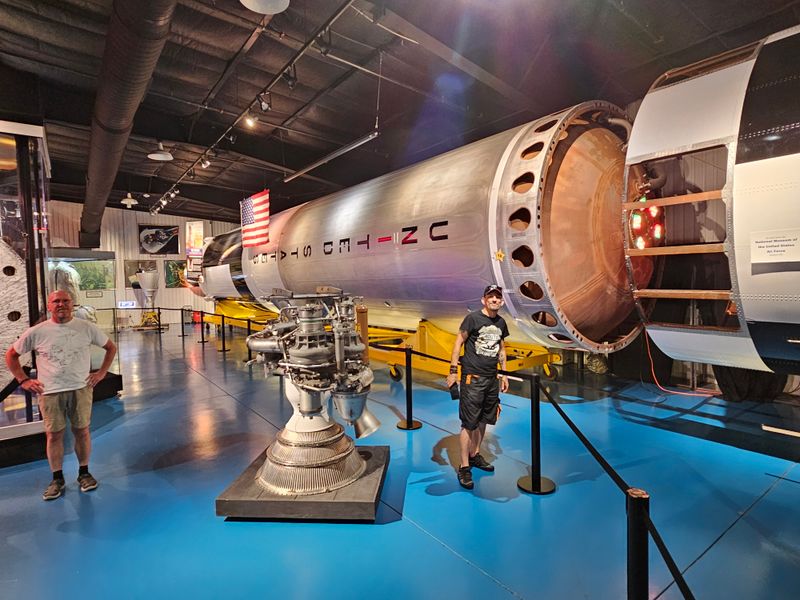
What truly sets this institution apart is its commitment to education beyond just displaying artifacts. The museum runs extensive programs for local schools, bringing students from across Oklahoma to experience hands-on science education.
During my visit, I observed a group of elementary students participating in a guided tour, their excitement palpable as they learned about rockets and satellites.
Summer camps offered here cover topics ranging from basic rocketry to advanced aerospace engineering concepts. These programs provide opportunities that many small-town students wouldn’t otherwise have access to, potentially sparking interests that lead to future careers in science and technology fields.
The museum’s educational staff designs age-appropriate activities that make complex topics accessible and engaging.
The facility also hosts special events throughout the year, including lectures by astronauts, engineers, and other aerospace professionals. These presentations connect visitors directly with people who’ve worked in the field, offering insights and inspiration that static displays alone cannot provide.
I checked the museum’s calendar and noted several upcoming events that would be worth timing a return visit around.
By serving as a regional hub for aerospace education, the museum has become a point of pride for Weatherford and the surrounding communities. It demonstrates how cultural institutions can thrive outside major metropolitan areas when they’re built on authentic stories and genuine passion for their subject matter.
Why This Hidden Gem Matters
After spending the day exploring every corner of this facility, I left with a profound appreciation for what the Stafford Air & Space Museum represents. In an era when cultural attractions increasingly concentrate in major cities, this world-class collection thrives in a town of fewer than 13,000 people.
It proves that meaningful experiences don’t require big-city zip codes.
The museum preserves not just artifacts but stories of human achievement and international cooperation. General Stafford’s own journey from small-town Oklahoma boy to space pioneer embodies the American dream, showing visitors that extraordinary accomplishments can begin anywhere.
This message resonates especially powerfully in its rural setting.
For families traveling through western Oklahoma, this museum offers an educational stop that beats generic roadside attractions by miles. Children who visit here might discover interests in science, engineering, or aviation that shape their futures.
Adults gain perspective on one of humanity’s greatest adventures, presented with professionalism that rivals institutions with far larger budgets.
The museum stands as a testament to what passionate individuals can create when they commit to sharing knowledge and preserving history. My visit exceeded every expectation, transforming what I’d assumed would be a modest local museum into one of the most memorable stops of my entire trip through Oklahoma and beyond.



