 Unearth The Voyage
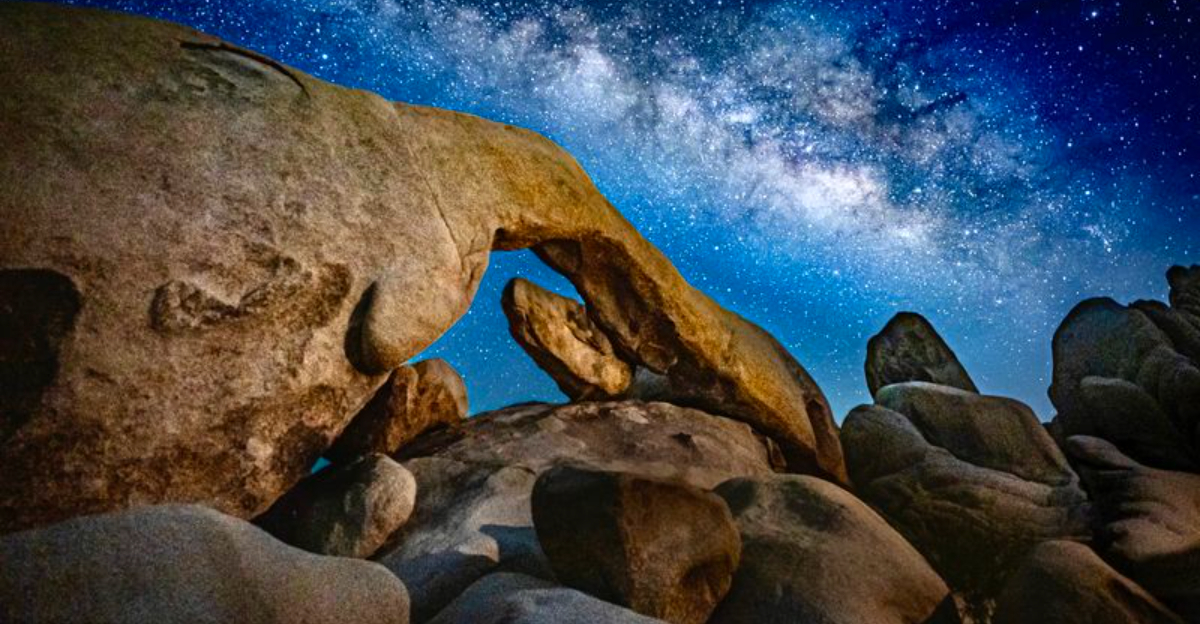
Somewhere between the Mojave and Colorado deserts sits a place that doesn’t try too hard, yet somehow gets under your skin in the best way. Joshua Tree is one of those towns where you show up for a weekend and leave plotting your return trip before you’ve even hit the freeway.
The landscape is strange and stunning, the vibe is chill but creative, and there’s this magnetic pull that’s hard to explain until you experience it yourself.
1. Do the ‘two-hour’ Joshua Tree National Park drive that turns into your whole day
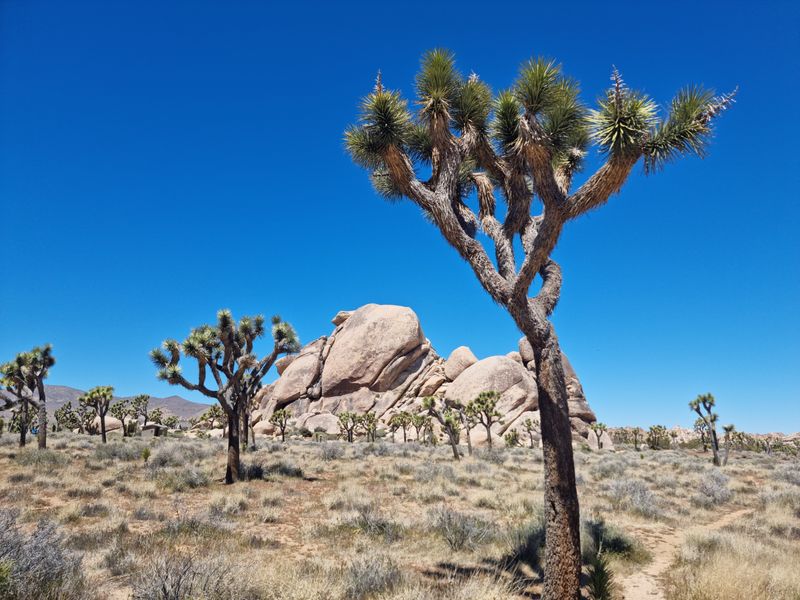
Everyone arrives with the same plan: a quick scenic loop through the park, maybe two hours tops, then on to the next thing. But here’s what actually happens: you pull over at one scenic overlook, then another, and suddenly you’re scrambling up boulders you swore you’d only photograph from the car.
Every curve in the road reveals another otherworldly landscape that demands a closer look.
The park’s main roads wind through distinct desert ecosystems, each with its own character and color palette. What starts as a casual drive morphs into an all-day adventure filled with spontaneous hikes, wildlife sightings, and way too many photos of the same twisted tree from slightly different angles.
You’ll find yourself saying “just one more stop” at least a dozen times.
Before heading out, check current park conditions online since specific roads and trails can close temporarily for maintenance or weather. Bring more water than you think you need, snacks for the extended stay you didn’t plan, and a full tank of gas.
The two-hour drive myth is Joshua Tree’s best-kept secret: nobody actually sticks to two hours, and that’s exactly the point. Surrender to the desert’s pace and let the day unfold however it wants.
2. Hidden Valley Nature Trail
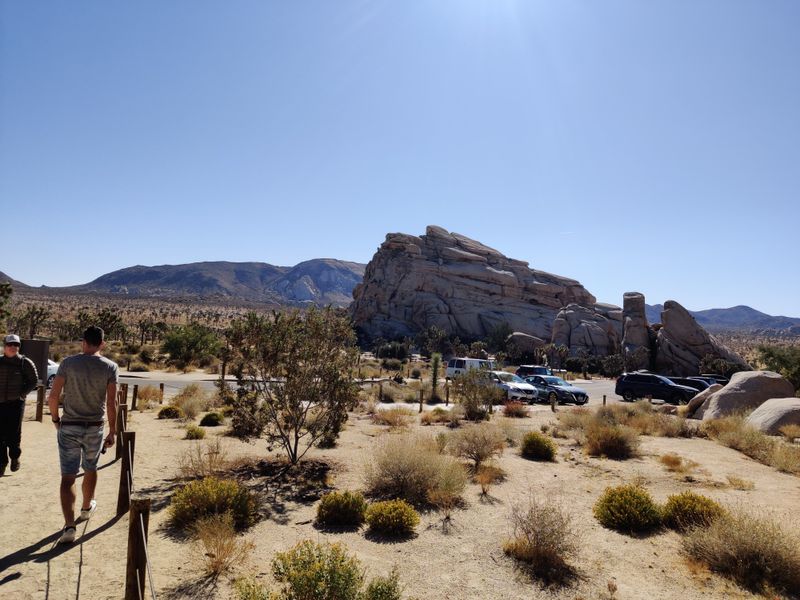
Tucked behind a natural rock entrance that feels almost secretive, this one-mile loop delivers way more magic than its short distance suggests. Massive granite boulders create a natural enclosure that early ranchers supposedly used for cattle, though nowadays it’s hikers and climbers who claim the space.
The trail weaves through narrow passages where rock walls tower overhead, making you feel delightfully small.
Families love this trail because it’s genuinely easy but never boring. Kids treat the boulder formations like a natural obstacle course, ducking through tight spots and imagining themselves in hidden fortresses.
The loop takes most people about 30 to 45 minutes at a leisurely pace, but you’ll likely linger longer, exploring side paths and scrambling up rocks for better views.
Morning light here is spectacular, casting long shadows across the valley floor and highlighting the textured surfaces of ancient granite. Wildflowers occasionally burst through the sandy soil after winter rains, adding unexpected splashes of purple and yellow to the muted desert palette.
The amphitheater vibe the trail is known for becomes obvious when you reach the valley’s center and realize you’re surrounded on all sides by sculptural rock walls. It’s a contained wilderness experience that somehow feels both intimate and grand at the same time.
3. Barker Dam Trail (yes, there’s history out here)
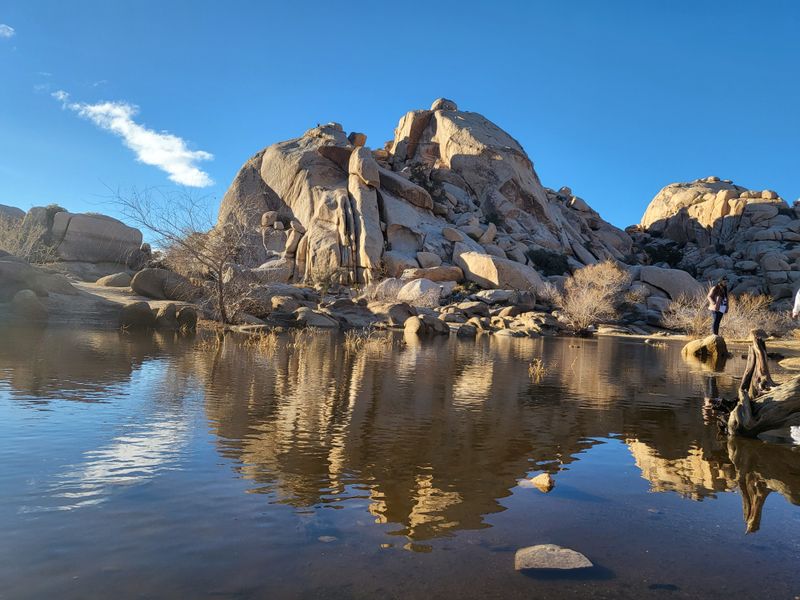
Built by early cattle ranchers in the early 1900s and later improved by a man named Barker, this dam created a small reservoir that still holds water during wetter seasons. The 1.3-mile loop around it offers an easy, mostly flat walk that’s perfect for all ages and fitness levels.
But what makes this trail special isn’t just the engineering feat; it’s the layers of human history visible along the way.
Petroglyphs etched into rock faces by indigenous peoples remind you that survival strategies in this harsh landscape go back centuries, not decades. Approach these ancient markings with respect and resist any urge to touch them, as oils from skin can cause irreversible damage.
Some of the rock art was unfortunately painted over by a film crew in the 1960s, a cautionary tale about preserving what we find.
The scenery surrounding the dam is classic Joshua Tree: jumbled boulders, scraggly desert plants, and that signature combination of ruggedness and strange beauty. When the reservoir holds water, it becomes a vital resource for desert wildlife, and patient visitors might spot bighorn sheep, birds, or other creatures coming for a drink.
The trail proves that desert landscapes aren’t empty or lifeless; they’re just operating on a different, quieter frequency that rewards those who pay attention.
4. Skull Rock: the fastest “how is this real?” stop in the park
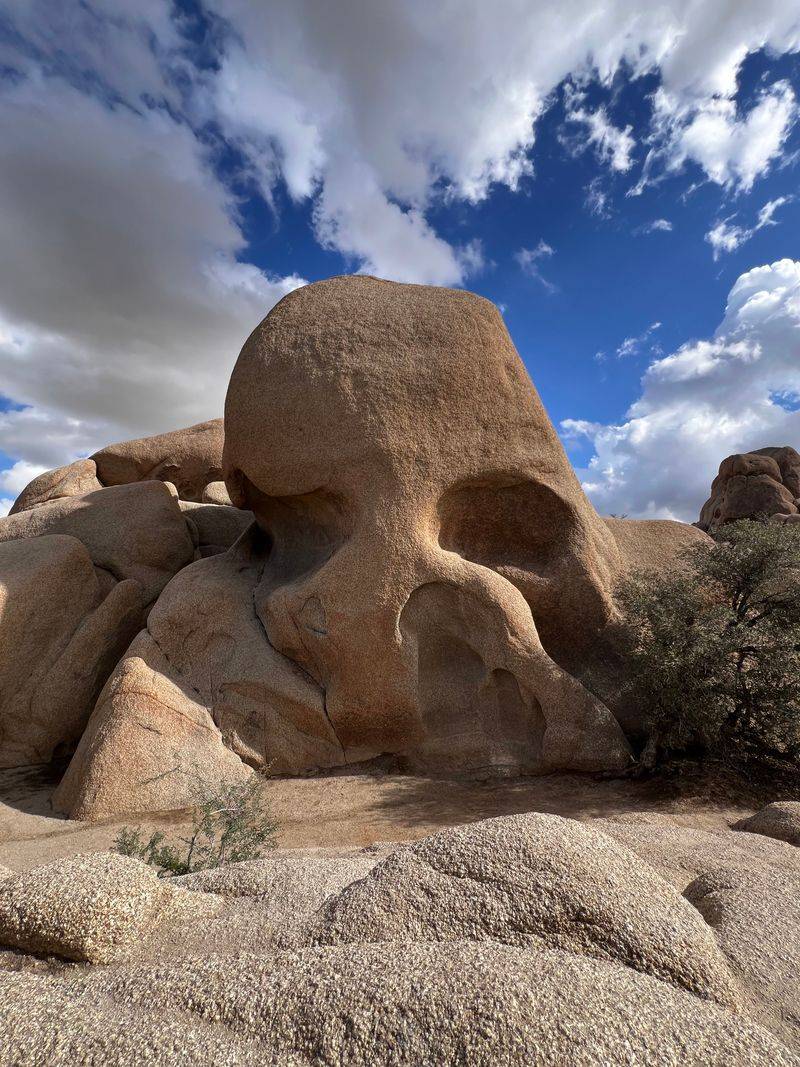
From the parking area, it takes maybe 60 seconds to walk to Skull Rock, and the formation lives up to its name so perfectly it’s almost comical. Two dark hollows stare out like eye sockets from a rounded granite dome that absolutely resembles a giant skull resting in the sand.
You’ll snap your obligatory photo, check it off the list, and think you’re done.
Then something happens. You notice the maze of boulders spreading out in every direction, stacked and balanced in ways that seem to defy physics and common sense.
What was supposed to be a five-minute photo op transforms into half an hour of clambering over rocks, squeezing through gaps, and generally behaving like you’re eight years old again. There’s no official trail through this area, just endless opportunities for exploration.
The rock formations here are endlessly photogenic, with smooth curves, interesting textures, and that warm desert glow that makes everything look better than real life. Climbers often practice bouldering techniques on these rocks, adding a dynamic human element to the landscape.
For kids and adventurous adults alike, this spot is pure unstructured fun: no ropes, no rules, just you and a geological playground that invites curiosity and movement. Just watch your footing and know when to turn back from sketchy climbs.
5. Cap Rock Trail (tiny loop, peak Joshua Tree vibes)
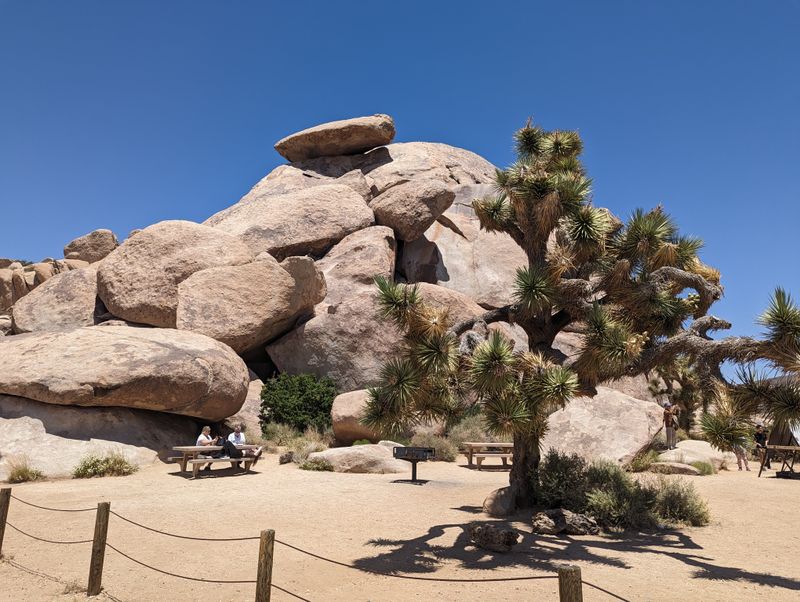
At only 0.4 miles, this trail barely qualifies as a hike, yet it packs more visual punch per step than trails ten times its length. Smooth, rounded granite boulders cluster alongside a paved path that’s accessible to wheelchairs and strollers, making this one of the park’s most inclusive experiences.
Joshua trees grow at artistic angles here, their spiky silhouettes contrasting beautifully against the soft, weathered rock.
Photographers obsess over this spot, especially during golden hour when the low sun warms the granite to glowing amber and casts dramatic shadows across the landscape. The light changes minute by minute, transforming the same scene into something new with each shift.
You’ll take far more photos than you intended, convinced each angle is somehow better than the last.
Interpretive signs along the trail explain the unique geology and ecology of the area, offering context without overwhelming you with information. The loop is short enough that even reluctant hikers won’t complain, but engaging enough that enthusiastic explorers will find plenty to examine up close.
Families with young children appreciate that the whole experience takes maybe 20 minutes if you’re moving, but an hour if you’re really soaking it in. Cap Rock delivers that quintessential Joshua Tree aesthetic in a concentrated, accessible package that feels almost designed for first-time visitors who want to understand what all the fuss is about.
6. Keys View (the ‘oh wow’ overlook)
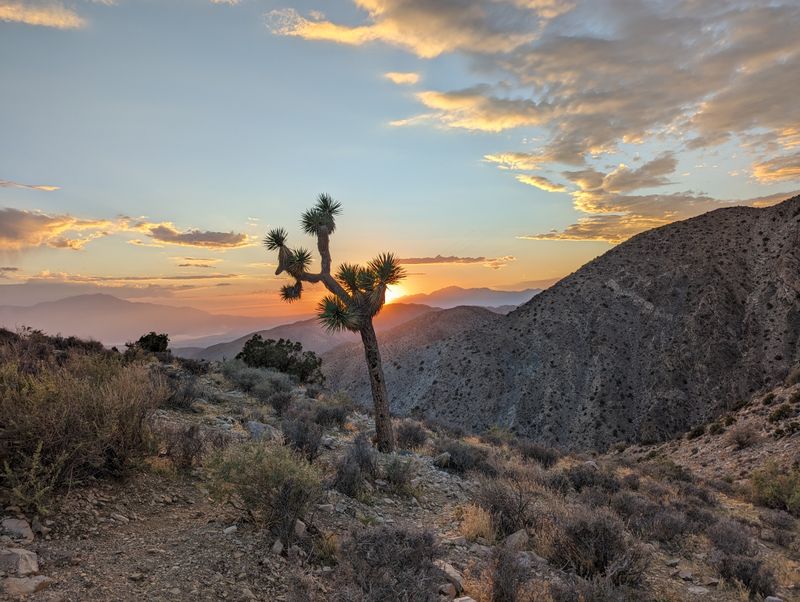
Perched at 5,185 feet elevation, Keys View offers one of those perspective-shifting moments where you suddenly grasp just how vast and varied the desert really is. On clear days, the view stretches across the Coachella Valley all the way to the Salton Sea, with the San Andreas Fault visible as a distinct line cutting through the landscape below.
Mountains rise in layers, each range a different shade of blue or purple depending on distance and light.
The overlook sits at the end of a short, paved path from the parking area, making it accessible to almost everyone regardless of mobility. Interpretive panels help you identify landmarks: the shimmering geometry of Palm Springs and the valley’s agricultural patches spreading like a quilt across the desert floor.
When atmospheric conditions cooperate, you can even spot Mount San Gorgonio and Mount San Jacinto rising dramatically to frame the valley.
Sunsets here draw crowds for good reason, as the westward view catches the full show of changing colors and lengthening shadows. But sunrise visits offer their own rewards: fewer people, cooler temperatures, and that special quality of early light that makes everything feel fresh and full of possibility.
The drive up to Keys View climbs steadily, so the air feels noticeably cooler and thinner than down in the desert basins. Bring a light jacket even on warm days, and give yourself time to just stand and stare at the cinematic scale of it all.
7. Arch Rock (plus the detours that steal the show)
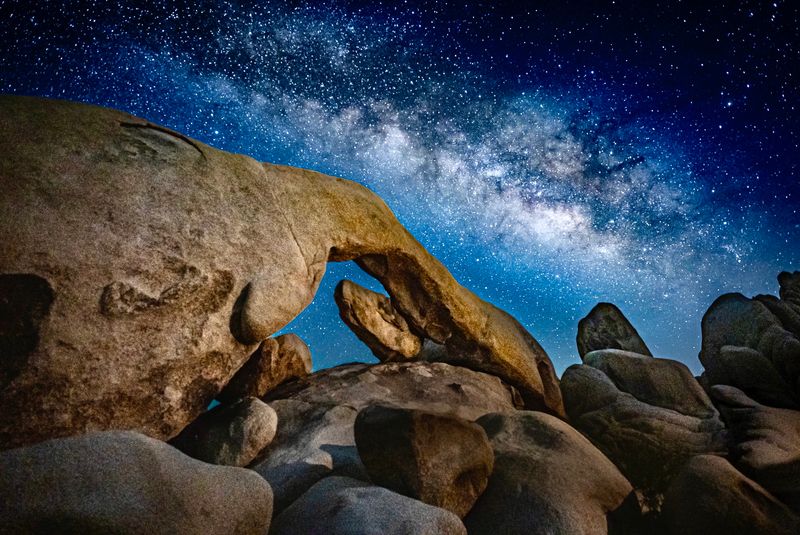
The main attraction here is obvious: a natural arch carved by wind and water over countless millennia, photogenic and family-friendly. But honestly, the supporting cast of rock formations along this 0.5-mile trail might be even more entertaining than the headliner.
Whale Rock looks exactly like a massive whale breaching from the sand, complete with a curved back and tail-like protrusion that kids immediately recognize and want to climb.
Heart Rock requires a tiny detour off the main path, but it’s worth the 30-second scramble to find the heart-shaped opening in the stone. Couples love posing here for photos, and even cynical teenagers admit it’s pretty cool.
The whole trail feels like a scavenger hunt where geology provides the clues and your imagination fills in the stories.
Because the trail is short and the terrain relatively easy, families with young children flock here, and the vibe is generally cheerful and unhurried. You’ll see toddlers waddling between rocks, older kids racing ahead to be first to each formation, and parents actually relaxing because the trail is contained and safe.
The sandy path winds through classic Joshua Tree boulder piles, offering plenty of opportunities for off-trail exploration if you’re feeling adventurous. Just remember that the journey is the destination here; don’t rush straight to Arch Rock and back.
Wander, explore, and let the weird wonderful rocks work their magic on your mood.
8. Hall of Horrors: the scramble that turns adults into happy chaos gremlins
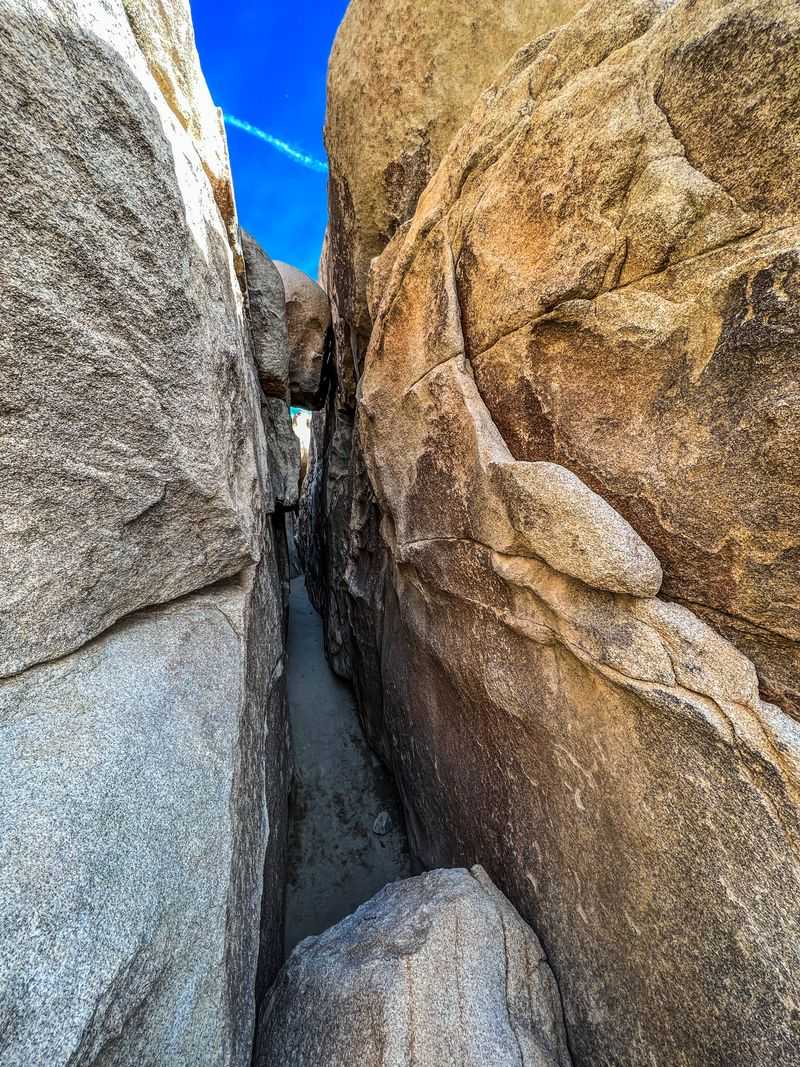
The name sounds ominous, but the reality is pure playground energy for grown-ups who miss unstructured outdoor adventure. This isn’t a marked trail with signs and distances; it’s a warren of boulders, slots, passages, and scrambles that climbers have explored and named over decades.
You’ll find yourself squeezing through gaps barely wider than your shoulders, balancing across tilted rocks, and giggling at the absurdity of your own enthusiasm.
Routes through the Hall of Horrors vary in difficulty, and there’s no shame in turning back when a passage looks sketchy or beyond your comfort zone. Some slots require a bit of upper body strength to pull yourself through; others are more about flexibility and creative body positioning.
The whole experience feels like being a kid again, when exploring meant following your curiosity without overthinking every move.
Climbers use this area for bouldering practice, so you might see people tackling vertical faces with impressive skill and calm focus. For non-climbers, the horizontal maze of passages provides plenty of entertainment without requiring technical skills.
Wear sturdy shoes with good grip, bring gloves if you have sensitive hands, and be prepared to get a little dusty. Move carefully, test holds before committing your weight, and communicate with your group so nobody gets separated in the rock labyrinth.
The Hall of Horrors rewards curiosity and playfulness while demanding respect for your own physical limits and the unforgiving nature of granite.
9. Ryan Mountain (earn the view)
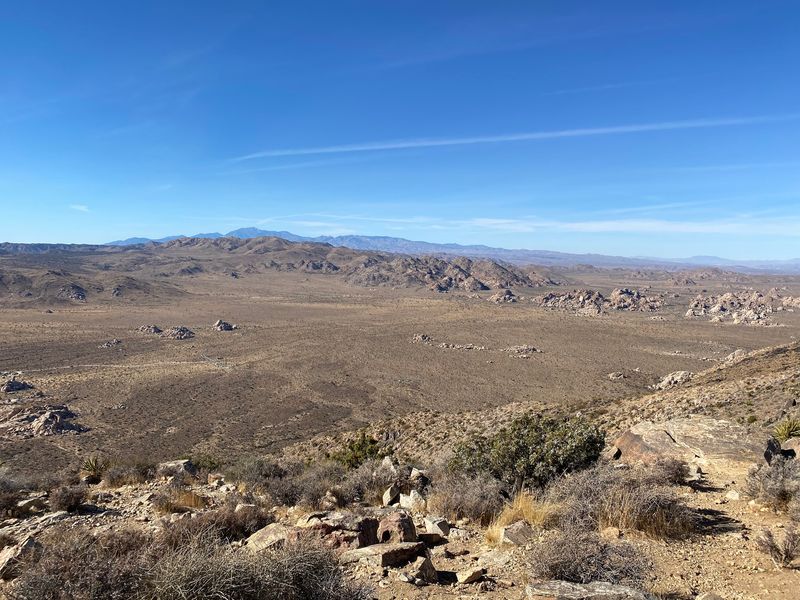
This 1.5-mile climb gains about 1,000 feet in elevation, which means you’ll definitely feel it in your legs and lungs, especially if you’re not acclimated to the altitude or the heat. But every upward step is an investment in one of the park’s most rewarding panoramic views.
The trail switchbacks steadily up the mountain’s flank, offering increasingly expansive views as you climb higher.
About halfway up, many hikers pause to catch their breath and reassess their life choices, but the summit pull is strong and most people push through. The trail is well-maintained and clear, though rocky in sections, so watch your footing and bring trekking poles if you like extra stability.
Shade is essentially nonexistent, so early morning or late afternoon hikes are smarter choices than midday slogs under the full desert sun.
From the 5,457-foot summit, the view unfolds in every direction: Lost Horse Valley to the south, Queen Valley to the north, and the park’s signature rock piles and Joshua tree forests spreading out like a living topographic map. On clear days, you can see mountain ranges stacking up toward distant horizons, each one a slightly different shade of hazy blue.
The sense of accomplishment at the top is real; you worked for this view, and it feels earned in a way that roadside overlooks never quite match. Bring plenty of water, start early to avoid heat, and give yourself time at the summit to just breathe and absorb the scale of the landscape you just climbed above.
10. Noah Purifoy Outdoor Desert Art Museum of Assemblage Art
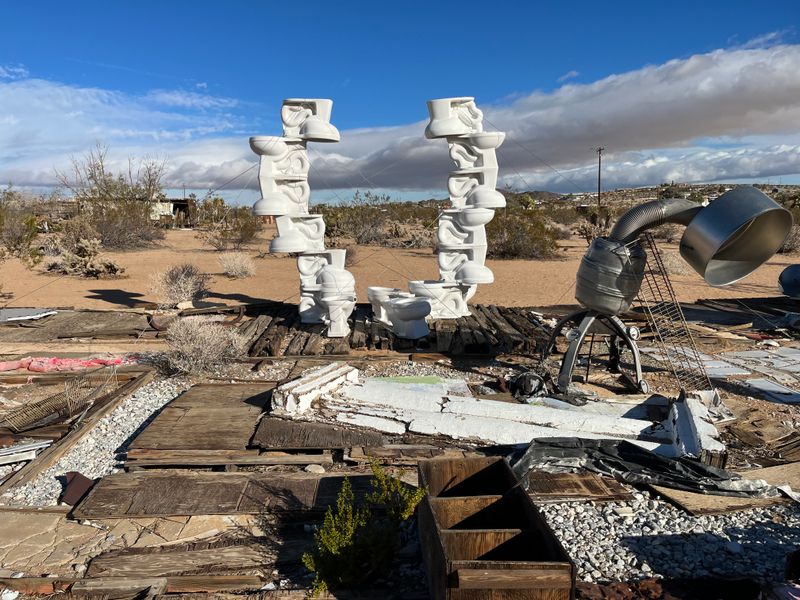
Spread across ten acres of open desert just outside the town of Joshua Tree, this outdoor museum feels like stumbling into someone’s beautifully chaotic dream. Artist Noah Purifoy created large-scale sculptures and installations from salvaged materials, discarded objects, and found items, transforming junk into thought-provoking art.
Rusted metal, old appliances, broken furniture, and mysterious mechanical parts are arranged into pieces that range from whimsical to haunting.
There are no ropes, no guards, no admission fees, and no set path through the space. You wander freely among the installations, getting as close as you want, seeing details from every angle.
Some pieces comment on social issues; others seem purely abstract or playful. The desert setting adds another layer to the experience, with the harsh sun and endless sky providing a dramatic backdrop that changes the mood and shadows throughout the day.
Purifoy worked on this outdoor museum from 1989 until his death in 2004, and the installations remain as he left them, weathering naturally in the elements. The site is open from sunrise to sunset every day, and it’s completely free to visit.
Bring water, wear sun protection, and give yourself at least an hour to really explore and absorb the creativity on display. It’s one of those unexpected cultural gems that makes Joshua Tree feel like more than just a nature destination; it’s a place where art, environment, and human imagination collide in the most fascinating ways.
11. The World Famous Crochet Museum
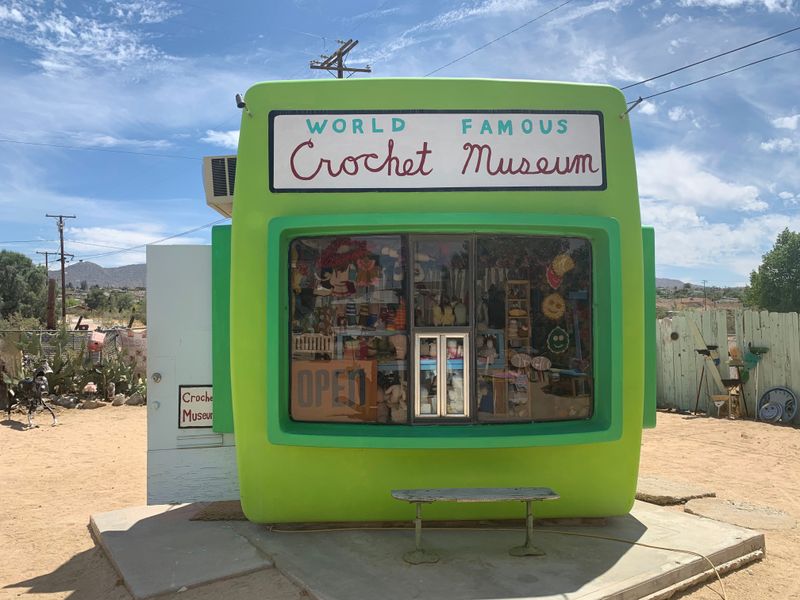
Housed in a small storefront in downtown Joshua Tree, this museum is exactly what the name promises: a collection of crocheted items that range from adorable to absurd to absolutely mind-blowing in their detail and creativity. Founder Shari Elfman has filled the space with her own work and pieces from other fiber artists, creating a celebration of this often-underappreciated craft.
Crocheted celebrities, animals, foods, and fantastical creatures fill every available surface.
The museum is tiny, so your visit might only last 15 or 20 minutes, but those minutes will be filled with smiles and surprised laughter. Where else can you see a crocheted version of Leonardo DiCaprio or a yarn-based recreation of your favorite cartoon character?
The skill and patience required to create these pieces becomes obvious when you look closely at the intricate stitchwork and clever construction.
Admission is free, though donations are welcomed and help keep this quirky little gem operating. The museum’s hours can be irregular, so check their social media or website before making a special trip.
But if you catch it open, it’s a delightful palate cleanser between hikes and nature time, proof that Joshua Tree’s creative spirit extends well beyond visual art and music into every imaginable medium. It’s charming, weird, handmade, and utterly memorable in a way that perfectly captures the town’s offbeat character.
You’ll leave grinning and probably telling everyone you know about the crocheted museum you found in the desert.
12. Joshua Tree Coffee Company (caffeine + desert mornings)
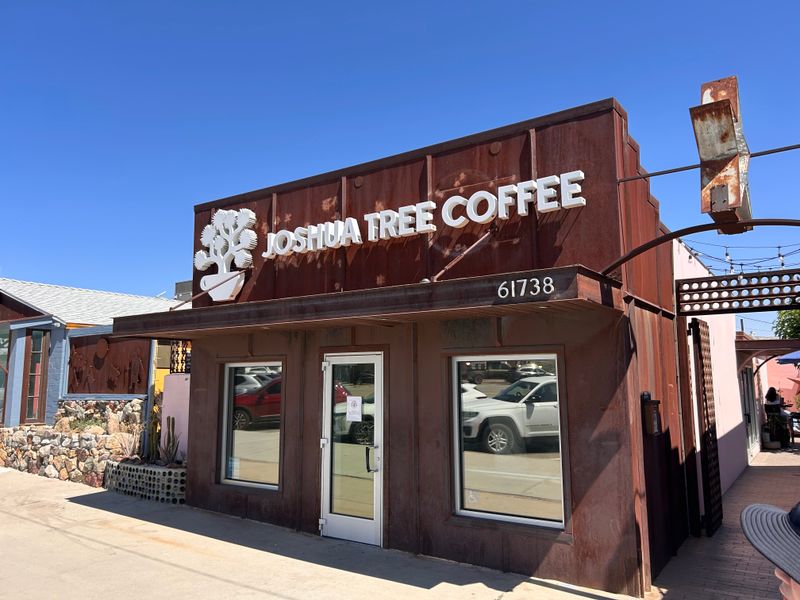
Before you hit the trails or after you’ve already spent three hours scrambling over rocks, this local coffee shop provides exactly what you need: good coffee, friendly service, and a laid-back atmosphere that matches the desert’s unhurried vibe. Located in the heart of Joshua Tree village, the shop serves as an unofficial gathering spot where locals, climbers, hikers, and curious visitors all converge over espresso drinks and breakfast items.
The coffee itself is reliably good, with standard espresso options plus seasonal specials and alternative milk choices for various dietary preferences. Pastries, bagels, and light breakfast foods provide fuel for the adventures ahead.
The vibe is casual and welcoming, with outdoor seating that lets you soak up the morning sun and that particular quality of desert light that makes everything feel a little more vibrant.
You’ll overhear conversations about trail conditions, climbing routes, and which campsites have the best sunrise views. It’s the kind of place where strangers strike up conversations easily, bonded by shared appreciation for the landscape and the lifestyle it attracts.
The staff knows their regulars and greets newcomers with genuine warmth, offering recommendations if you ask. On busy weekends, expect a bit of a wait, but that’s part of the experience: sipping your drink while people-watching and soaking in the collective energy of a community that chose this strange, beautiful desert as home.
It’s not fancy, but it’s real, and that authenticity is exactly what makes it essential.
13. Joshua Tree Saloon (open every day)
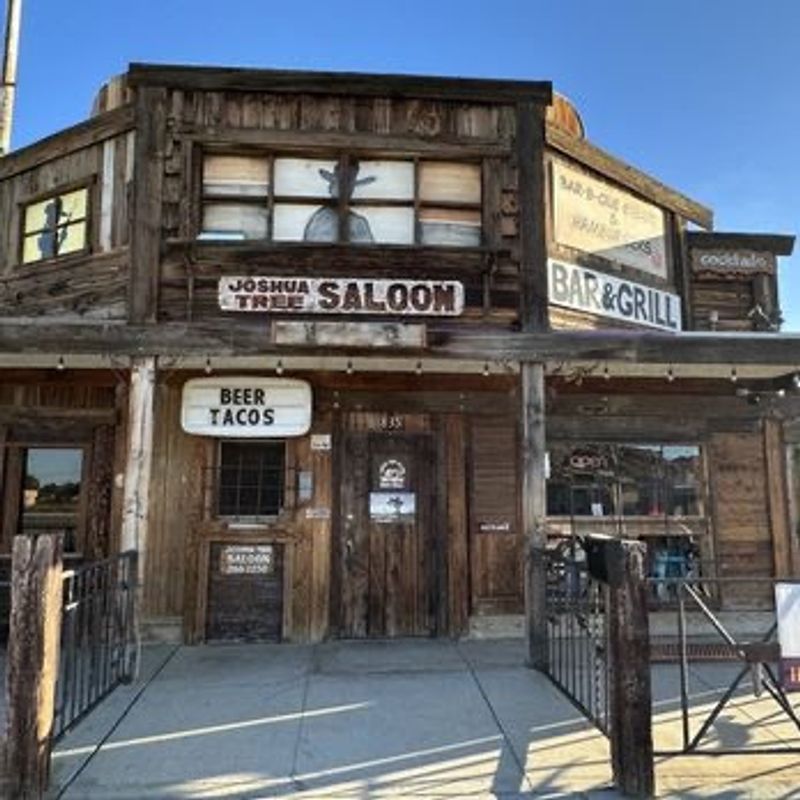
When the sun drops and the desert cools down, this old-school watering hole comes alive with an energy that’s equal parts local hangout and curious-visitor welcome mat. The Saloon has been serving drinks and food in Joshua Tree for decades, building a reputation as the kind of place where everyone eventually ends up at some point during their visit.
The interior has that perfectly worn-in feel: dim lighting, well-used pool tables, and walls decorated with the accumulated character of countless nights.
The menu offers solid pub fare, nothing fancy but satisfying after a long day of hiking and exploring. Burgers, sandwiches, and appetizers pair well with cold beer and the casual, no-pressure atmosphere.
Live music and open mic nights happen regularly, drawing local musicians and the occasional touring act passing through the area. The talent level varies wildly, which is part of the charm; some nights you’ll catch genuinely great performances, other nights you’ll enjoy enthusiastic mediocrity, and both experiences are equally entertaining.
The crowd is wonderfully mixed: weathered locals who’ve been coming here for years, young climbers still dusty from the day’s adventures, artists, retirees, tourists, and everyone in between. Conversations flow easily across the usual social boundaries, lubricated by drinks and the shared experience of being in this particular desert town at this particular moment.
It’s open every single day, a reliable constant in a landscape defined by extremes and unpredictability. When you want the night to continue but don’t need anything fancy or curated, the Saloon delivers exactly what it promises.
14. Pioneertown’s Mane Street (and the night out that follows)
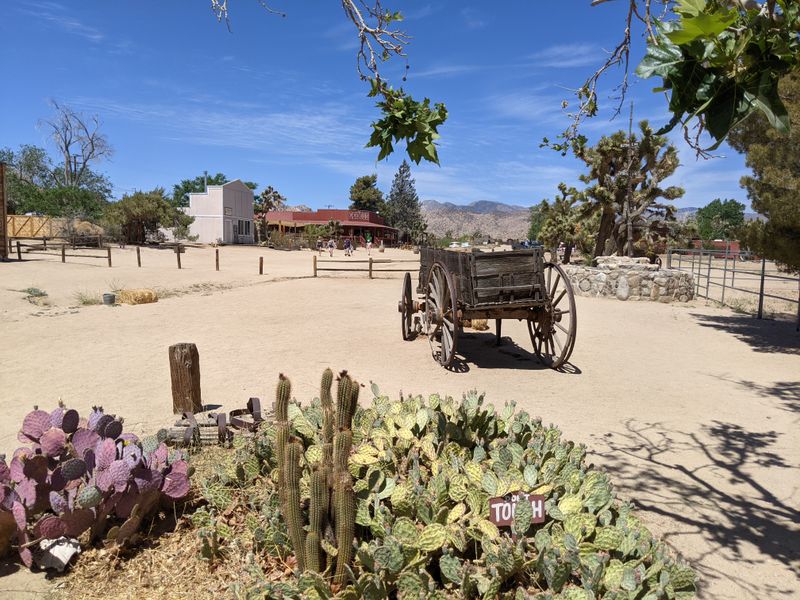
About 20 minutes from Joshua Tree sits Pioneertown, a working movie set built in the 1940s that’s now a functioning community with a main street straight out of a Western film. Mane Street (yes, spelled that way) features old-fashioned storefronts, wooden sidewalks, and hitching posts that make you feel like you’ve time-traveled to the Old West.
The street is open to the public 365 days a year, free to explore and photograph to your heart’s content.
During the day, it’s a quirky photo opportunity and a glimpse into Hollywood’s location-shooting history. But the real magic happens when the sun goes down and you make your way to Pappy and Harriet’s, the legendary honky-tonk that’s become a destination in its own right.
This indoor-outdoor venue serves excellent barbecue, cold drinks, and hosts an impressive lineup of live music ranging from indie rock to country to experimental sounds you can’t quite categorize.
The venue operates daily, with its kitchen serving food and the bar pouring drinks even on quieter nights. But when there’s a show, the place transforms into something special: a packed crowd of music lovers, stellar acoustics in an unlikely desert setting, and performances that feel intimate despite the venue’s size.
Big-name acts sometimes play here between major tour stops, drawn by the venue’s reputation and unique vibe. Reservations for dinner are smart on weekends and show nights.
What starts as a quick detour to see a movie-set street often turns into a full evening of food, music, and the kind of spontaneous fun that makes desert trips memorable. It’s dangerously easy to fall down the Pioneertown rabbit hole and emerge hours later, happily dazed and already planning your next visit.



