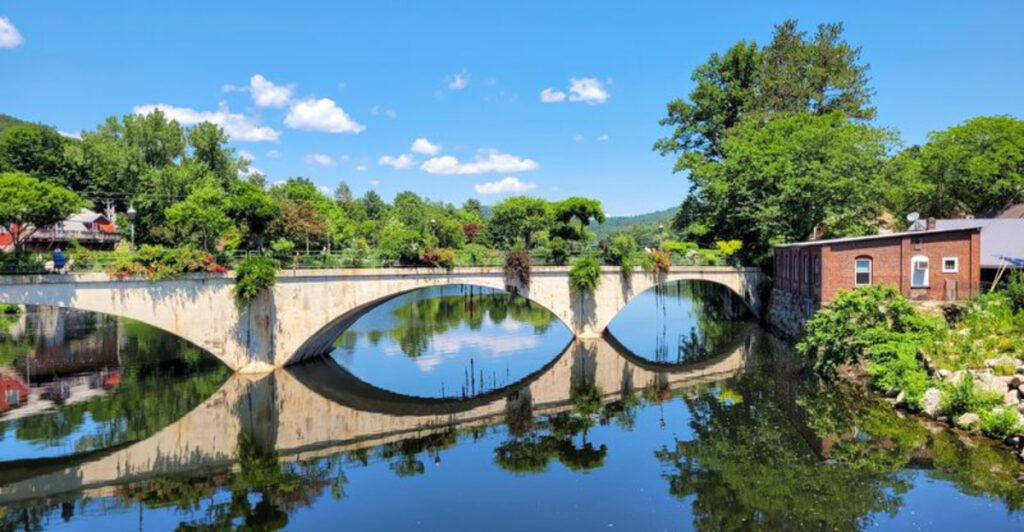
There is a bridge in western Massachusetts that does not carry cars, trains, or freight. It carries flowers.
Hundreds of them, in every color you can think of, blooming from spring through fall above the Deerfield River. This bridge connects the towns of Shelburne and Buckland in one of the most unexpected and charming ways possible.
What started as a forgotten trolley bridge became a beloved landmark that draws people from across New England and beyond. Whether you are a garden enthusiast, a history buff, or just someone looking for a genuinely beautiful place to spend an afternoon, this bridge delivers something that is hard to find anywhere else.
This article takes a close look at everything that makes the Bridge of Flowers so special, from its fascinating origins to the best tips for planning your visit.
A Trolley Bridge With a Second Life
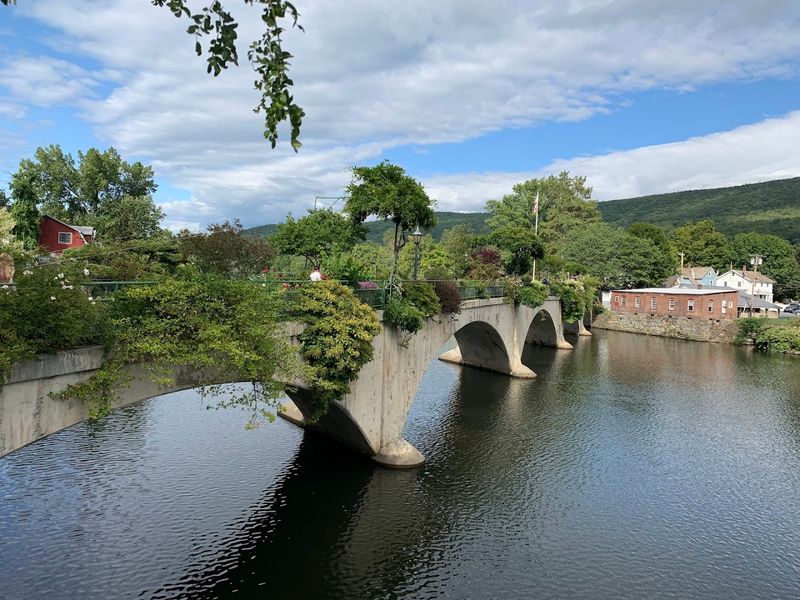
Back in 1908, the bridge was built to carry electric trolleys between Shelburne Falls and Buckland. For years, it served as a practical piece of infrastructure, nothing more than a functional crossing above the river.
When the trolley line shut down in the 1920s, the bridge was left without a purpose. The town considered tearing it down entirely, which would have been a straightforward end to its story.
That is where the Shelburne Falls Women’s Club stepped in. In 1929, the group took on the project of transforming the abandoned structure into a public garden, planting flowers along its length and opening it to the public.
That decision turned a piece of forgotten infrastructure into one of the most photographed spots in New England. The original vision from nearly a century ago is still very much alive today, maintained by volunteers and a dedicated nonprofit organization.
The Flowers That Define the Bridge
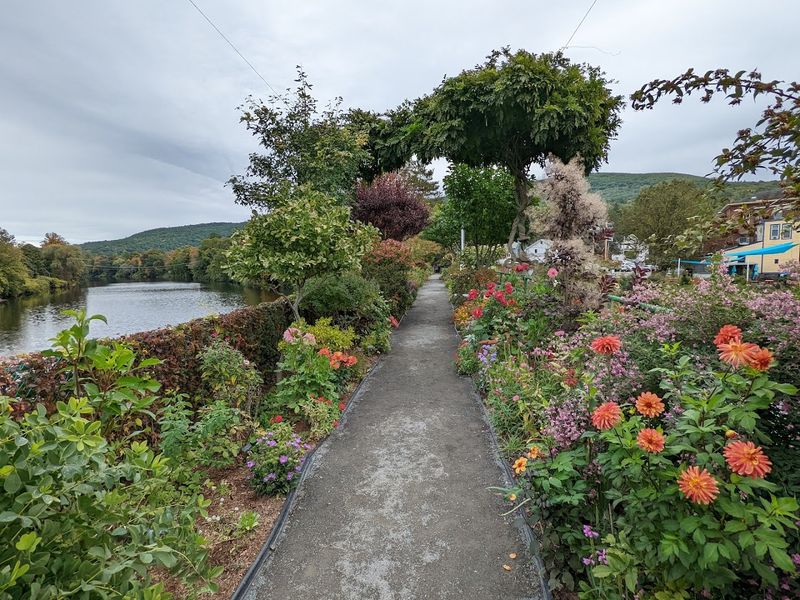
The plant selection on the bridge is genuinely impressive in its variety. Over 500 species and varieties of flowers, shrubs, and vines have been documented on the bridge across different growing seasons.
Spring brings tulips, daffodils, and pansies that ease the bridge into color after winter. Summer is the peak season, when zinnias, dahlias, marigolds, sunflowers, petunias, and cosmos fill every available inch of the planting beds.
By late summer and into early fall, the display shifts toward late-season bloomers like sedum, asters, and ornamental grasses that keep the bridge looking full and colorful well into October.
The plantings are arranged in a way that creates depth and visual interest at every step. Tall plants rise behind shorter ones, trailing vines spill over the edges, and the whole arrangement gives the impression of a carefully designed outdoor gallery rather than a simple garden path.
Who Actually Keeps This Garden Going
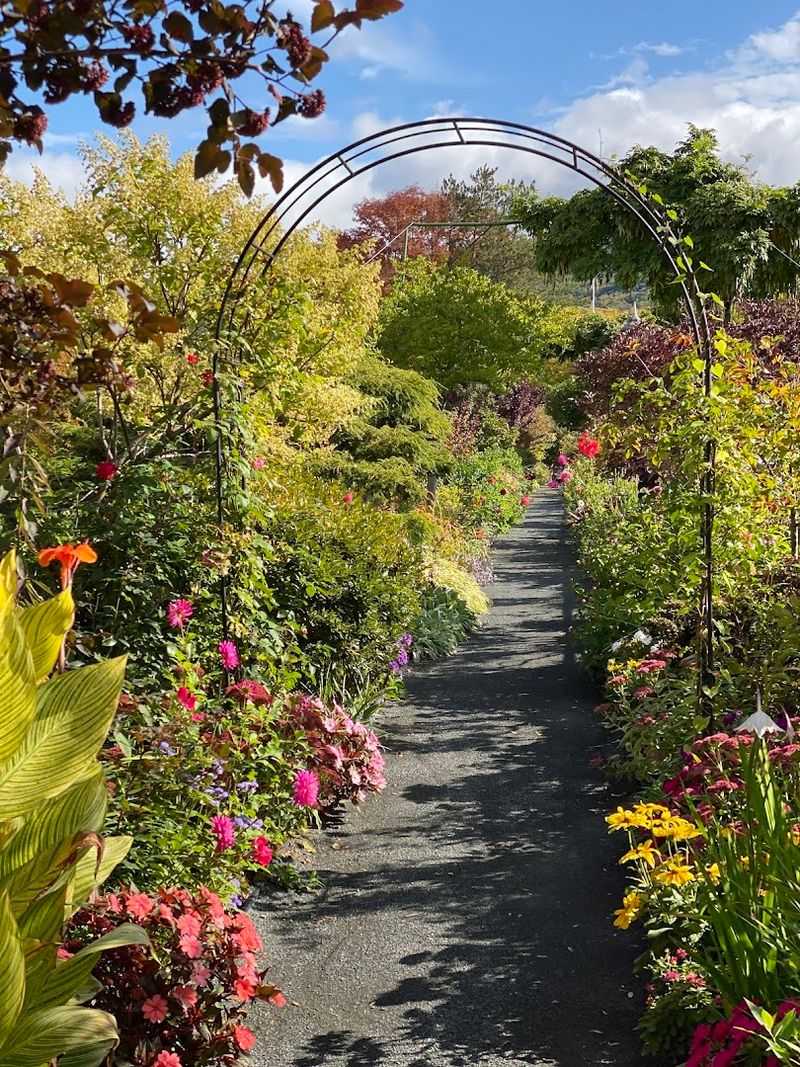
The Bridge of Flowers is maintained entirely through volunteer labor and public donations, which makes its consistent quality all the more remarkable. A nonprofit organization, the Bridge of Flowers Inc., oversees operations and coordinates the seasonal planting and upkeep.
Each year, volunteers put in thousands of hours of work, planting new flowers in spring, watering and weeding throughout summer, and clearing the beds in fall. The level of care required to maintain hundreds of plant species in a narrow outdoor space above a river is not small.
A donation box and a visitor sign-in sheet sit at the entrance to the bridge. Those small contributions help fund the plants, soil, and maintenance that keep the garden looking the way it does.
The fact that this bridge has been continuously maintained as a public garden since 1929 says a great deal about how much the local community values it as a shared resource.
The Recent Restoration Project
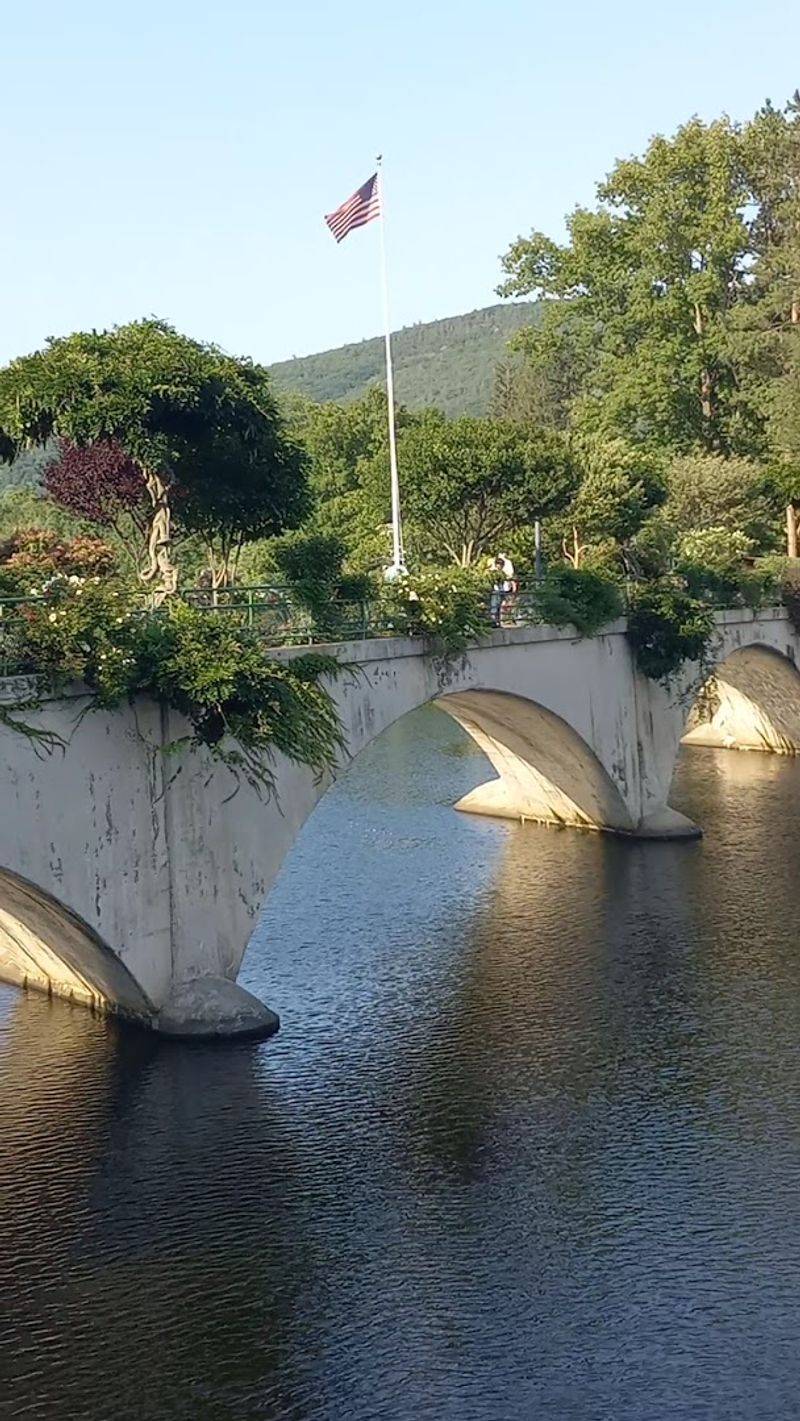
The original 1908 bridge structure eventually reached a point where serious repairs could no longer be delayed. After more than a century of use, the concrete and underlying framework needed significant work to remain safe and functional.
A major restoration project was undertaken to address the structural issues, which meant the bridge had to be closed for a period while work was completed. The replanting that followed the repairs meant that the gardens looked younger and less established than usual during the first season after reopening.
That temporary dip in floral abundance is simply part of the recovery process. Plants need time to root deeply, spread, and reach their full potential, especially in the unique conditions of a bridge garden above a river.
The restored structure now provides a solid foundation for decades of future growth. As the new plantings mature, the bridge is expected to return to and eventually surpass its previous level of floral density and variety.
What the Walk Actually Feels Like
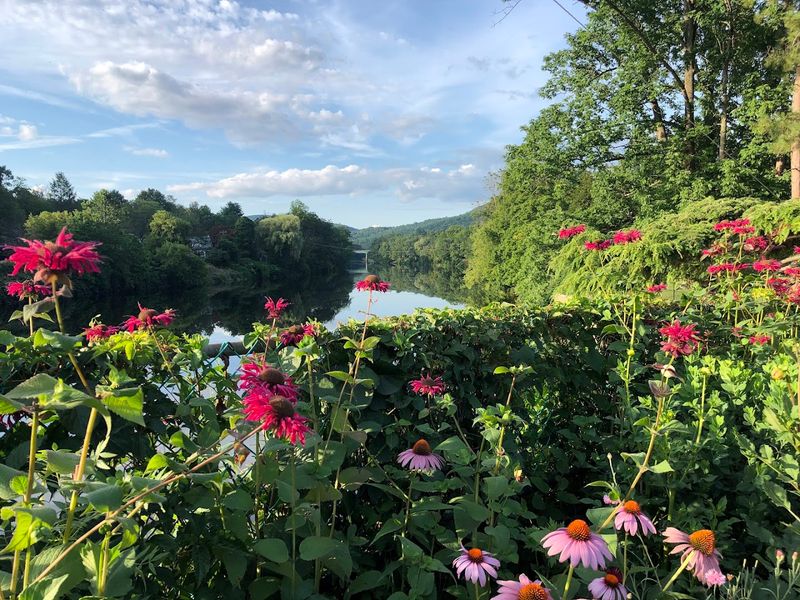
The bridge is not a long walk. At roughly 400 feet, most people cross it in a few minutes, though nearly everyone slows down considerably once they are on it.
The walkway is narrow, with planting beds on both sides leaving a passage wide enough for two people to pass comfortably.
Benches are placed at intervals along the bridge, giving visitors a spot to sit and take in the garden without having to keep moving. On busy days, those benches fill up quickly, particularly in midsummer when the blooms are at their fullest.
Bees are a regular presence on the bridge, which should not be surprising given the density of flowering plants. People with bee allergies are advised to take that into account before visiting.
The view from the bridge in both directions along the river is part of the appeal. The combination of moving water below and dense flowers above creates a setting that is genuinely unlike anything else in the region.
Best Times of Year to Visit
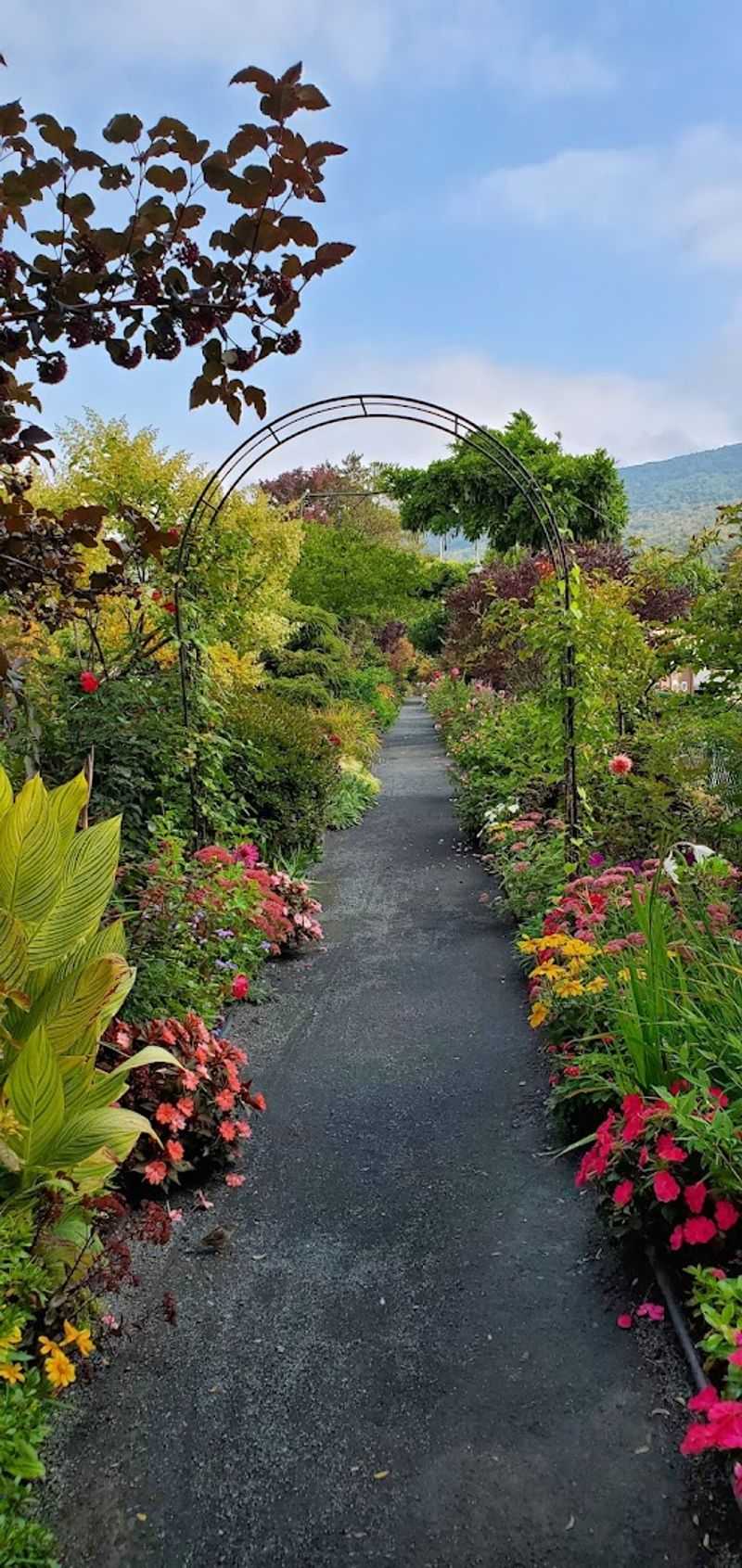
The bridge is officially open from late April through late October, following the natural growing season of the plants. Outside of those months, the planting beds are empty and the bridge is typically closed to the public.
Late spring, roughly May through early June, brings the first wave of color with bulb flowers and early perennials. This is a quieter time to visit, with smaller crowds and a fresh, unhurried atmosphere.
Peak season runs from late June through September, when the widest variety of flowers are in bloom simultaneously. This is also the busiest period, with weekends drawing the largest numbers of visitors.
Early October is worth considering as a slightly underrated window. Many late-season flowers are still blooming, the surrounding hills begin showing fall color, and the overall crowds are smaller than in the height of summer.
The bridge opens at 8 AM, and arriving early on a summer weekend is the most reliable way to enjoy it without navigating heavy foot traffic.
The Town That Surrounds the Bridge
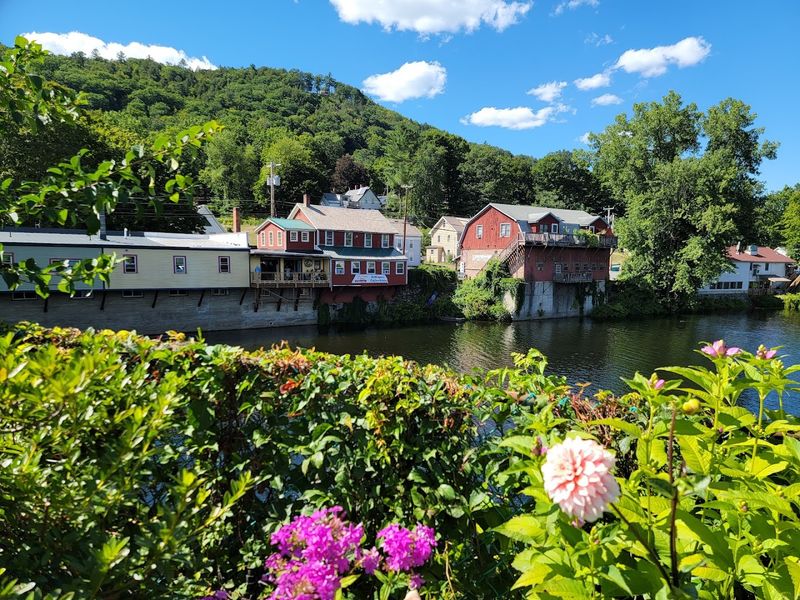
Shelburne Falls is the kind of small New England town that rewards slow exploration. The main commercial area sits just steps from the bridge entrance, with a mix of independent shops, art galleries, and cafes lining the streets on both sides of the river.
The arts community here is notably active for a town of its size. Local galleries display work from regional artists, and the overall character of the place leans toward the creative and independent rather than the generic.
Several cafes and eateries are within easy walking distance of the bridge, making it simple to extend a visit into a full half-day or even a full day out. The combination of the bridge, the town, and the surrounding natural landscape gives visitors more than enough to fill a few hours comfortably.
Weekend days in summer bring a lively but still relaxed energy to the streets, with most people moving at a leisurely pace and the general mood staying friendly throughout.
The Glacial Potholes Nearby
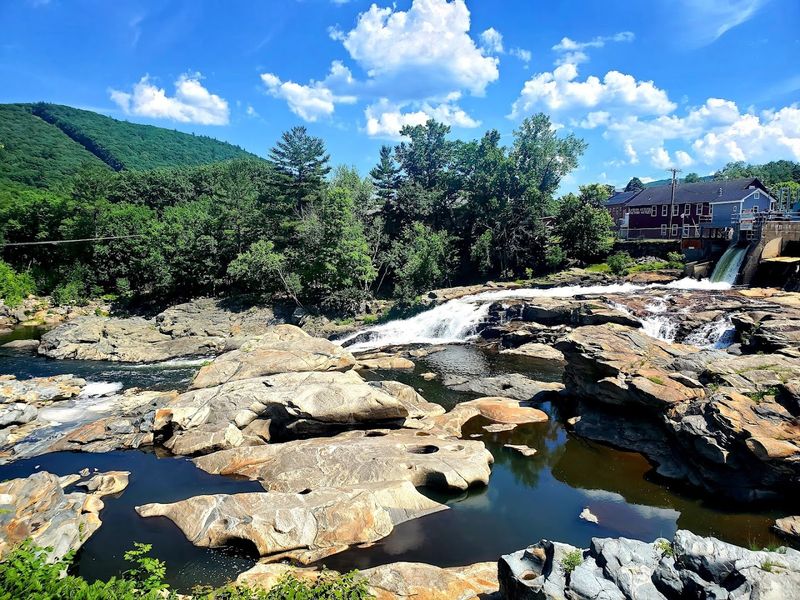
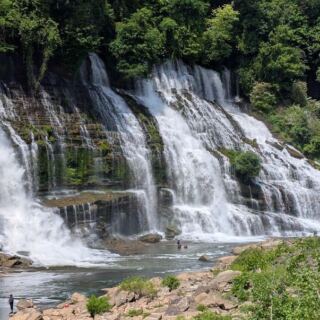
Just a short walk from the Bridge of Flowers, the Deerfield River reveals another natural curiosity that most first-time visitors do not expect. The glacial potholes at Salmon Falls are a series of circular depressions carved into the riverbed by swirling debris during the Ice Age.
These formations range from small bowls a few inches across to massive hollows large enough for a person to stand inside. The largest potholes in the area are considered among the finest examples of glacial pothole formations in the entire northeastern United States.
The potholes are visible from the riverbank and can be explored more closely when water levels permit. They represent a completely different kind of attraction from the bridge, adding a geological dimension to what might otherwise be a purely horticultural visit.
Combining the Bridge of Flowers with a stop at the potholes makes for a well-rounded visit that covers both the human history and the natural history of the Shelburne Falls area in a single afternoon.
The Shelburne Falls Trolley Museum
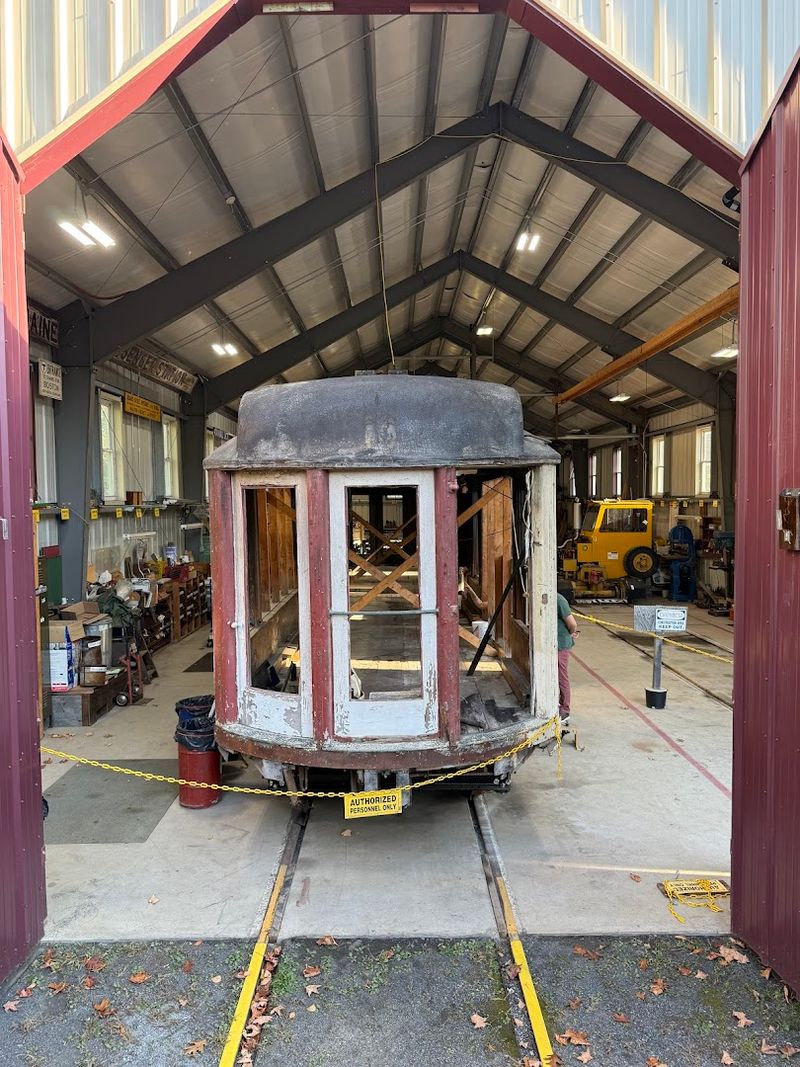
The story of the Bridge of Flowers is inseparable from the history of the trolley system that once ran through Shelburne Falls, and the Shelburne Falls Trolley Museum keeps that history accessible to anyone who wants to understand the full picture.
The museum is located nearby and houses a restored electric trolley car along with exhibits covering the history of the local trolley line that once operated across the very bridge that is now a garden. It is a small but genuinely informative stop.
Seeing the trolley up close adds real context to a visit to the bridge. Understanding what the structure was originally built for makes the transformation into a flower garden feel even more remarkable by contrast.
The museum is volunteer-run and operates on a seasonal schedule, so checking ahead before planning a visit is worthwhile. It pairs naturally with the bridge as part of a broader exploration of Shelburne Falls and its layered history.
Photography on the Bridge
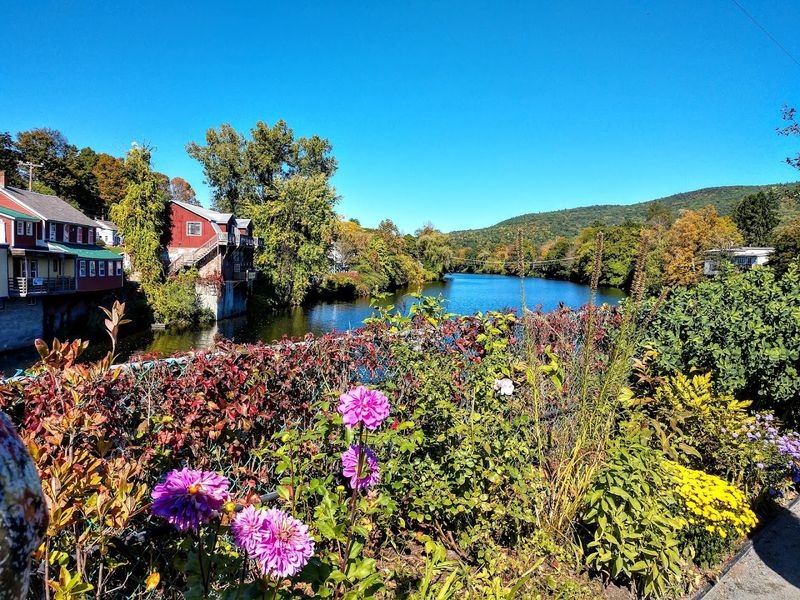
The Bridge of Flowers has developed a strong reputation among photographers, and it is easy to understand why. The density and variety of the plantings create an almost unlimited number of close-up and wide-angle compositions within a very small space.
Macro photography works particularly well here. Individual flowers, insects visiting blooms, and water droplets on petals all present themselves as subjects within arm’s reach throughout the growing season.
The natural light filtering down onto the bridge from above can be especially favorable in the morning hours.
Wide shots that include the river below and the hills in the background give the bridge a sense of place that pure close-up shots cannot fully convey. Mixing both approaches during a single visit tends to produce the most complete visual record of the experience.
The narrow walkway does require some patience when other visitors are present, but most people on the bridge are moving slowly and are generally cooperative about pausing to allow a clear shot.
Wildlife on and Around the Bridge
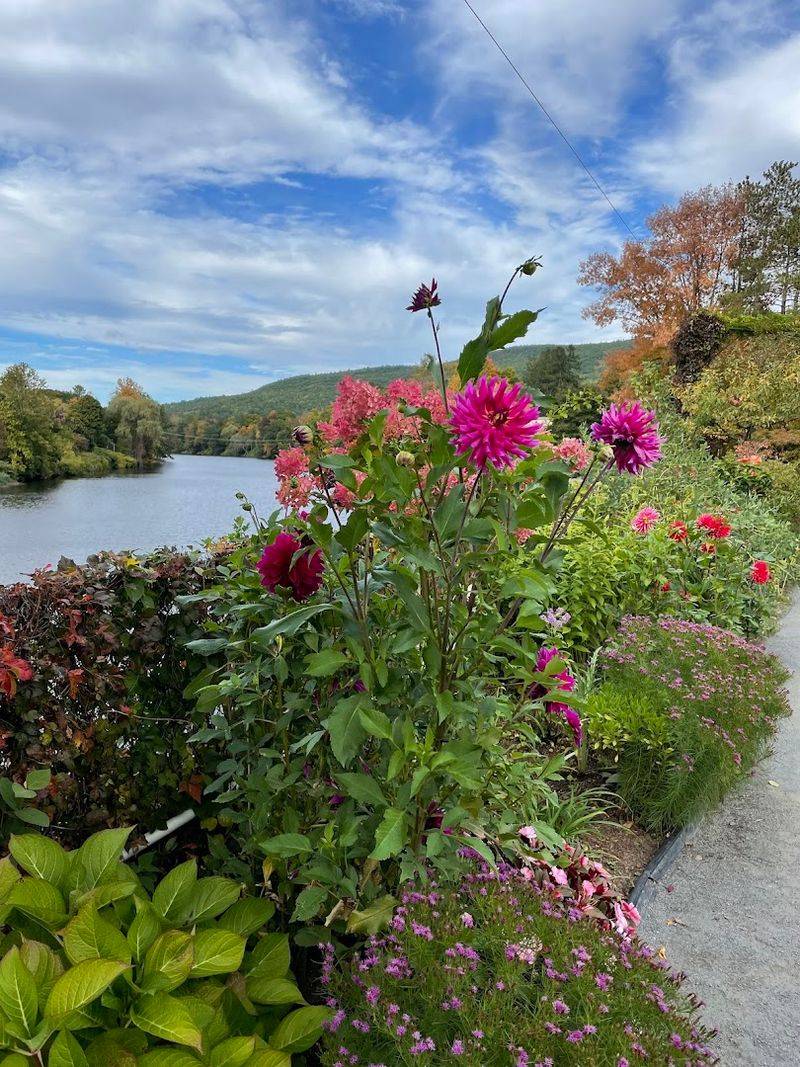
The dense concentration of flowering plants on the bridge makes it an active corridor for pollinators throughout the growing season. Bees are the most consistently visible wildlife, moving steadily from flower to flower at all hours of the day when blooms are open.
Butterflies are a regular presence as well, particularly in midsummer when the widest variety of nectar-producing plants are in simultaneous bloom. The bridge essentially functions as a pollinator highway stretched above the Deerfield River.
Birds can be spotted from the bridge, particularly along the riverbanks and in the trees on either side. The river corridor below supports a variety of species that are visible to patient observers from the bridge railing.
The ecological activity on the bridge is one of the details that makes it feel genuinely alive rather than simply decorative. A garden that supports this level of pollinator traffic is doing something right, and the plantings here are clearly chosen with that in mind.
The Mohawk Trail and the Broader Region
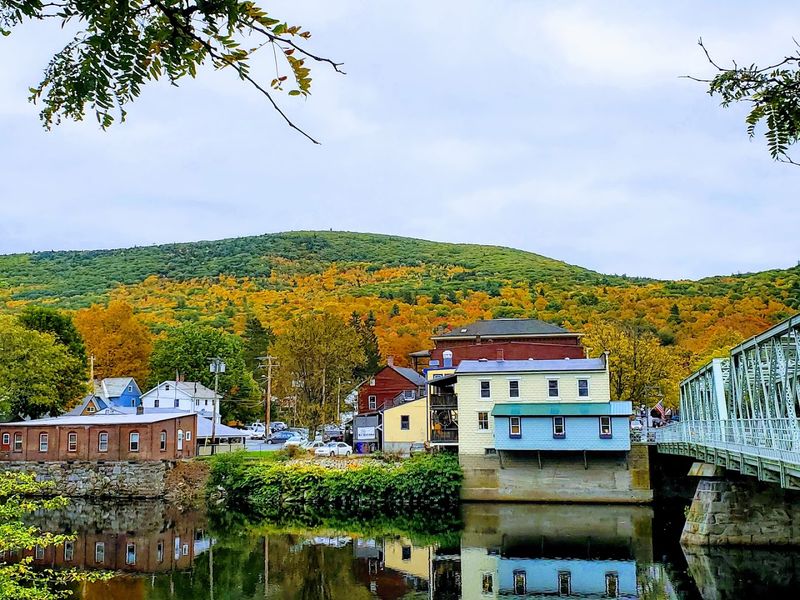
The Bridge of Flowers sits along the Mohawk Trail, one of the most scenic driving routes in Massachusetts. Route 2 winds through Franklin County and into the Berkshires, passing through forested hills, river valleys, and small historic towns along the way.
In fall, the Mohawk Trail becomes one of the most traveled foliage routes in New England, with the tree cover turning shades of orange, red, and yellow that make the drive genuinely spectacular. Shelburne Falls sits in a particularly attractive stretch of this corridor.
Day trips from Shelburne Falls can extend in either direction along the trail. Historic Deerfield to the east offers a preserved colonial village, while the Berkshire Hills to the west provide hiking, cultural institutions, and additional natural scenery.
Using the Bridge of Flowers as the anchor of a longer road trip through this part of western Massachusetts is a strategy that consistently produces a satisfying itinerary, especially during the late summer and early fall window.
Why the Bridge Keeps Bringing People Back
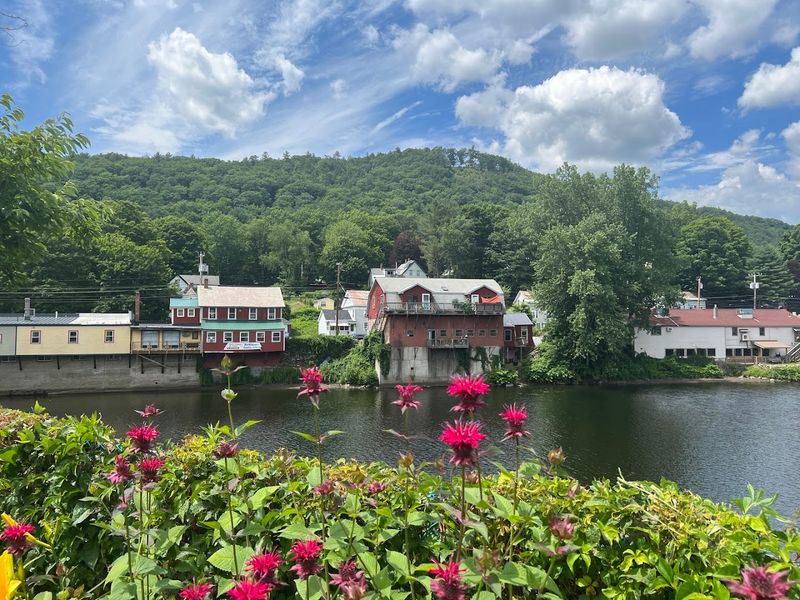
There are not many places where a piece of civic infrastructure from 1908 ends up becoming a beloved public garden nearly a century later, still maintained entirely through community effort and public goodwill. That backstory alone gives the bridge a quality that purpose-built tourist attractions rarely have.
The combination of factors here is genuinely unusual. A historic structure, a flowing river, hundreds of plant species, a charming surrounding town, nearby natural wonders, and a community that clearly cares about keeping it all going creates a package that is hard to replicate anywhere else.
The bridge does not ask much of visitors. There is no admission fee, no required tour, and no rigid schedule beyond the daily opening hours of 8 AM to 8 PM.
Donations are welcome and go directly toward maintaining the garden.
What keeps people returning season after season is the simple fact that the bridge is always changing, always growing, and always worth the trip across the Deerfield River.
Where the Bridge Meets the River
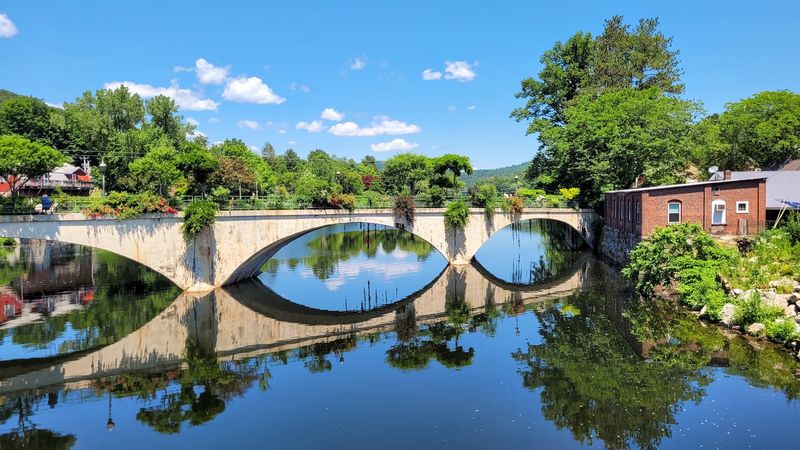
The Bridge of Flowers sits at 22 Water St, Shelburne Falls, MA 01370, spanning the Deerfield River between the villages of Shelburne Falls and Buckland in Franklin County, western Massachusetts.
The bridge stretches roughly 400 feet across the river, offering a walking path flanked on both sides by densely planted flower beds. The Deerfield River moves steadily below, framed by the rolling hills that define this part of the state.
Shelburne Falls itself is a small, walkable community with galleries, cafes, and independent shops lining its main streets. The bridge acts as the centerpiece of the entire area, drawing attention from the moment you arrive.
Free two-hour parking is available on the west side of the river, clearly marked with signs, making arrival straightforward. The bridge is open daily from 8 AM to 8 PM, giving visitors a generous window to explore at their own pace.
Share this story