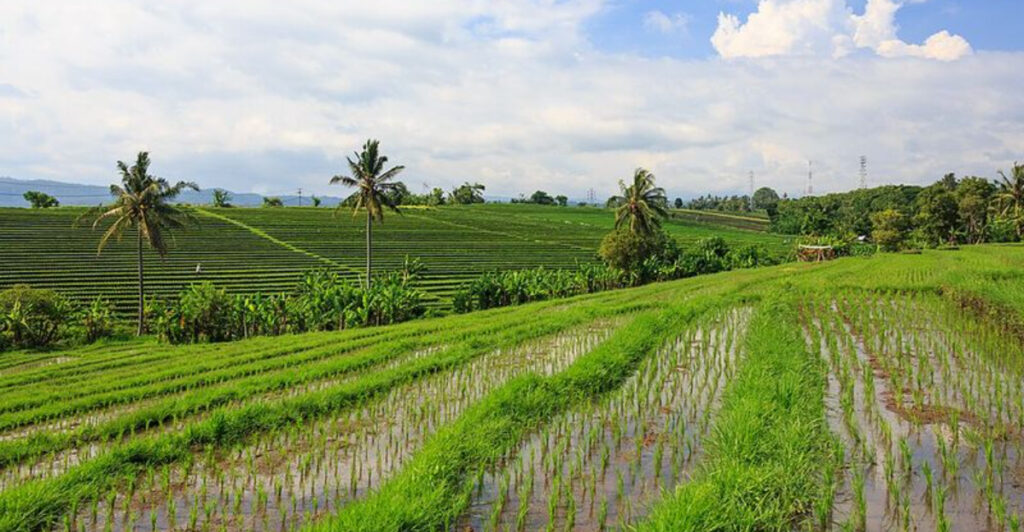
Food doesn’t just appear on your plate by magic. It comes from vast stretches of land spread across the globe, where farmers grow crops, raise animals, and work the soil every single day.
Some countries have enormous amounts of agricultural land, giving them a major role in feeding the world’s population. From the wide plains of Asia to the open rangelands of Australia, here are the 15 countries with the most agricultural land on Earth.
1. China – Approximately 5.3 Million Square Kilometers
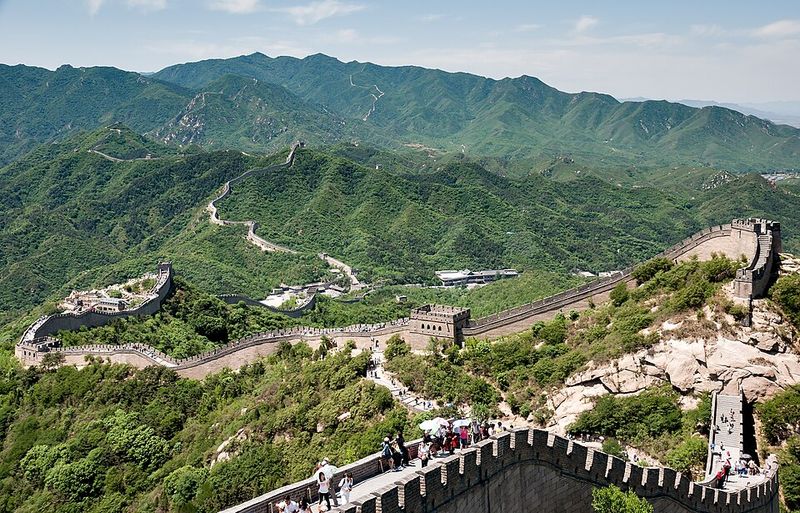
China holds the top spot on this list, and for good reason. With roughly 5.3 million square kilometers of agricultural land, it supports the largest population on Earth, over 1.4 billion people.
That is an enormous responsibility that shapes how the entire country uses its land.
Much of China’s farmland is used to grow rice, wheat, and corn, which are staples in the Chinese diet. The country has been farming for thousands of years, making it one of the oldest agricultural civilizations in the world.
Ancient irrigation systems built centuries ago still influence farming methods today.
Despite having so much land, China also faces real challenges. Soil degradation, water shortages, and urban expansion are putting pressure on farmland.
The government invests heavily in agricultural technology to keep food production strong and sustainable for future generations.
2. United States – Approximately 4.1 Million Square Kilometers
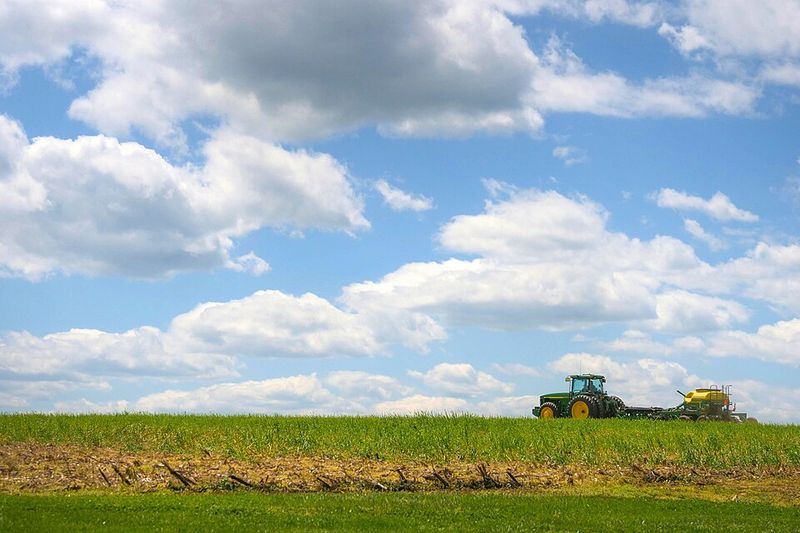
Picture endless golden wheat fields stretching to the horizon in Kansas, or massive corn rows cutting through the Iowa countryside. That image captures just a slice of why the United States ranks second on this list with around 4.1 million square kilometers of agricultural land.
American farms produce an incredible variety of food, from soybeans and cotton to fruits, vegetables, and beef. The country is one of the world’s top food exporters, sending products to countries on every continent.
States like California, Iowa, and Texas are agricultural powerhouses on their own.
Technology plays a huge role in American farming. GPS-guided tractors, drone monitoring, and precision irrigation help farmers get more out of every acre.
Even so, climate change and drought are growing concerns, pushing the agriculture industry to constantly adapt and innovate.
3. Australia – Approximately 4.0 Million Square Kilometers
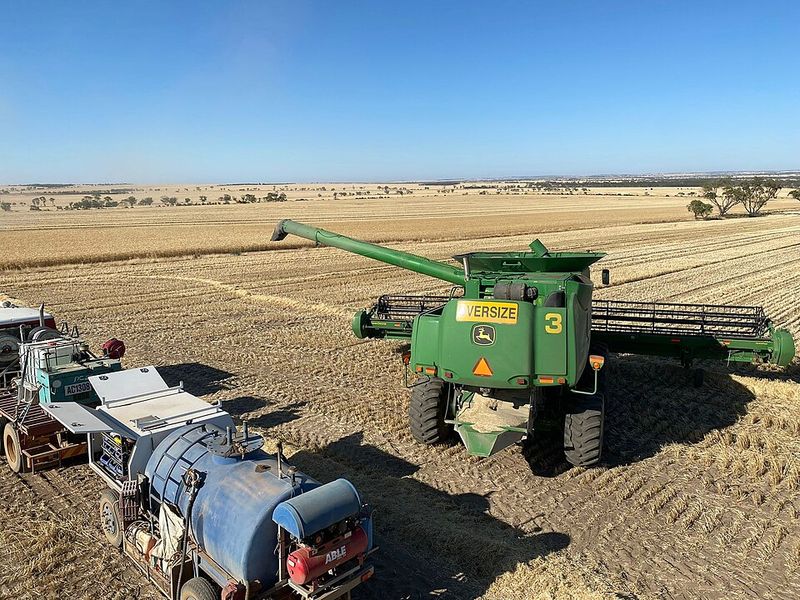
Australia might surprise you with its ranking. While much of the country looks like dry, red desert, it still holds about 4.0 million square kilometers of agricultural land, placing it just behind the United States.
The secret is that a huge portion of that land is used for grazing livestock rather than growing crops.
Sheep and cattle ranching are central to Australian agriculture. The country is one of the world’s largest exporters of beef and wool.
Some cattle stations, which is the Australian word for ranches, are so big they are larger than some entire countries.
Crop farming happens mostly in the wetter coastal regions, where wheat, barley, and sugarcane thrive. Australia’s agricultural industry also deals with serious climate challenges, including droughts and wildfires, which have become more frequent in recent decades.
4. Brazil – Approximately 2.8 Million Square Kilometers
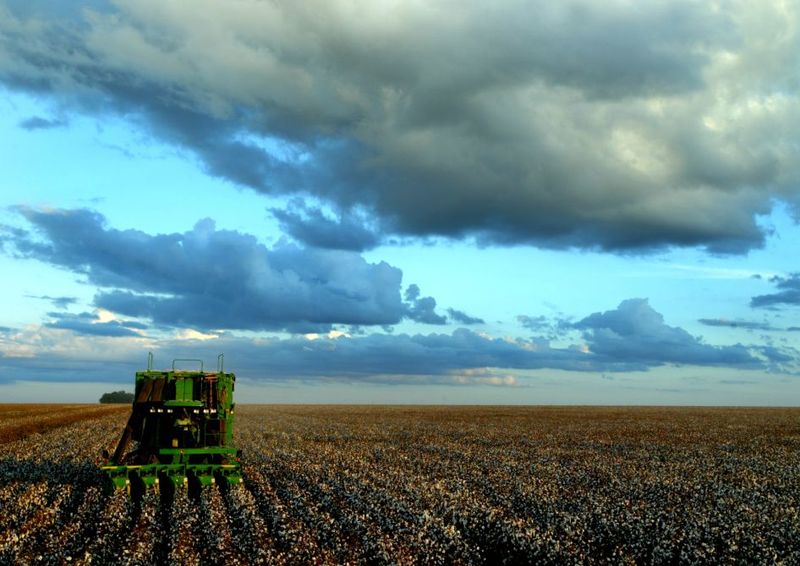
Brazil is an agricultural giant in South America, and its numbers back that up. With around 2.8 million square kilometers of agricultural land, it is one of the most productive farming nations on the planet.
Brazil is the world’s top producer of sugarcane and coffee, and a leading exporter of soybeans and beef.
A large portion of Brazil’s farmland sits in the Cerrado, a vast tropical savanna that has been converted into cropland over the past few decades. This expansion has fueled economic growth but has also raised serious environmental concerns about deforestation and habitat loss.
Brazil’s agricultural success comes from a mix of fertile soil, a warm climate, and heavy investment in farming research. The country’s agricultural research agency, known as Embrapa, is world-renowned for developing crop varieties suited to tropical conditions, helping Brazil compete globally.
5. Russia – Approximately 2.2 Million Square Kilometers
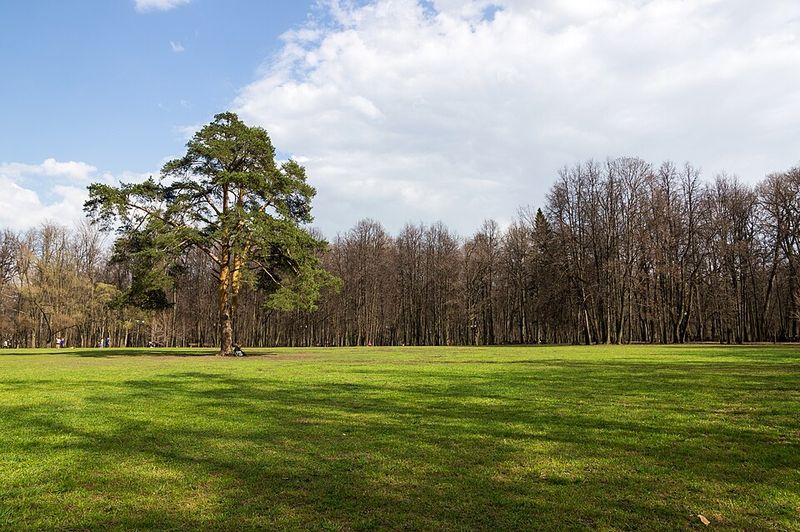
Russia’s agricultural story is one of extremes. The country has around 2.2 million square kilometers of farmland, but its cold climate means that much of the growing season is short and unpredictable.
Still, Russia has emerged as one of the world’s biggest wheat exporters in recent decades.
The fertile Black Earth region, known in Russian as Chernozem, runs through southwestern Russia and is considered some of the richest soil on Earth. This area produces enormous quantities of grain, sunflowers, and sugar beets.
It is essentially Russia’s agricultural heartland.
Russia’s farming history is complicated, shaped by Soviet-era collective farming policies that disrupted traditional agriculture for generations. After the Soviet Union collapsed, the industry had to rebuild almost from scratch.
Today, modern investments are helping Russian agriculture grow stronger, though political and economic factors continue to influence its global role.
6. Kazakhstan – Approximately 2.1 Million Square Kilometers
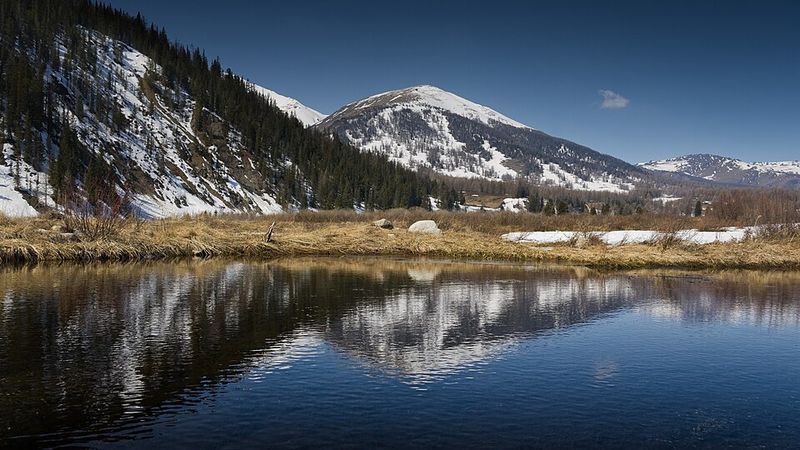
Not many people think of Kazakhstan when they think of farming, but this Central Asian nation has about 2.1 million square kilometers of agricultural land, making it one of the largest farming countries in the world. Most of that land is used for pasture and grain crops, especially wheat.
Kazakhstan was once home to massive Soviet-era collective farms, and the legacy of that period still shapes how farming is organized today. The country is now among the top wheat exporters globally, with grain grown across the vast northern steppe region.
The land is flat, wide, and well-suited for large-scale mechanized farming.
Water availability is a significant challenge for Kazakhstan’s agriculture. The shrinking of the Aral Sea, one of the world’s most dramatic environmental disasters, serves as a warning about overusing water resources.
Sustainable water management is now a top priority for the country’s farming future.
7. India – Approximately 1.8 Million Square Kilometers
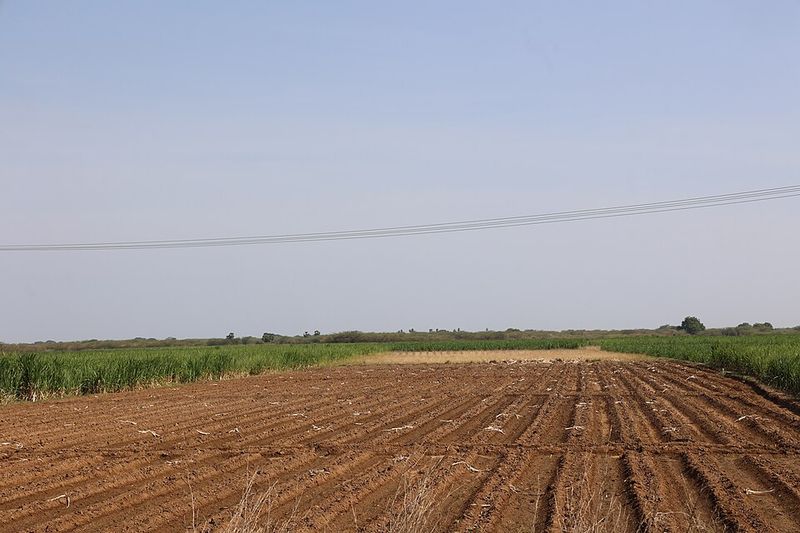
India packs an incredible amount of agricultural activity into its 1.8 million square kilometers of farmland. As the world’s second most populous country, India depends heavily on its farmers to feed over a billion people.
Agriculture is not just an industry here; it is a way of life for hundreds of millions of families.
The country grows a staggering variety of crops, including rice, wheat, cotton, sugarcane, and spices. India is the world’s largest producer of milk and one of the top producers of fruits and vegetables.
The diversity of its climate, from the tropical south to the cooler north, allows for year-round farming across different regions.
Small family farms dominate the Indian agricultural landscape. While this creates strong community ties, it also makes it harder to adopt large-scale technology.
Government programs focused on irrigation, seeds, and farmer education are working to improve productivity and rural incomes.
8. Saudi Arabia – Approximately 1.7 Million Square Kilometers (Mostly Grazing Land)
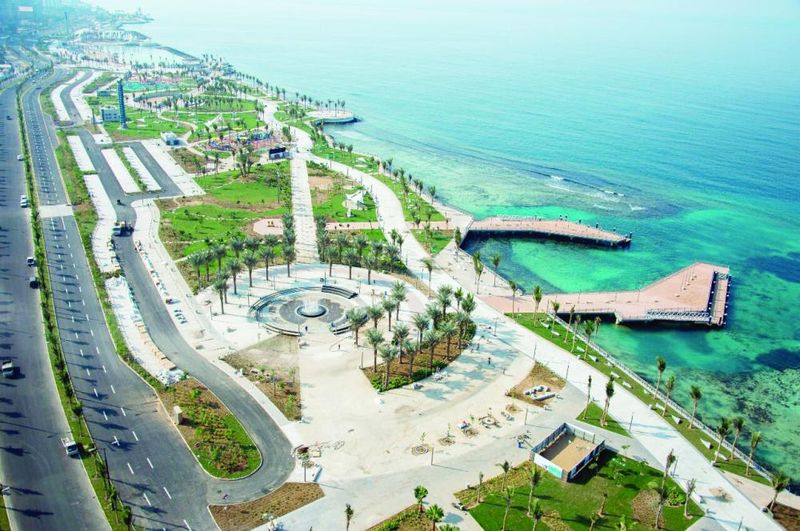
Finding nearly 1.7 million square kilometers of agricultural land in one of the world’s driest countries might seem impossible, but Saudi Arabia makes the list. The catch is that the vast majority of this land is classified as grazing territory, used by camels, goats, and sheep that roam the desert landscape.
Crop farming does exist in Saudi Arabia, but it requires massive amounts of water drawn from underground aquifers. The country famously grew wheat in the desert during the 1980s and 1990s using these non-renewable water sources.
That program was eventually scaled back because it was draining ancient water reserves at an unsustainable rate.
Today, Saudi Arabia is investing in modern food production methods, including vertical farming and hydroponics, to grow food with far less water. The country also imports a large share of its food needs, making global food markets an essential part of its national food security strategy.
9. Argentina – Approximately 1.4 Million Square Kilometers
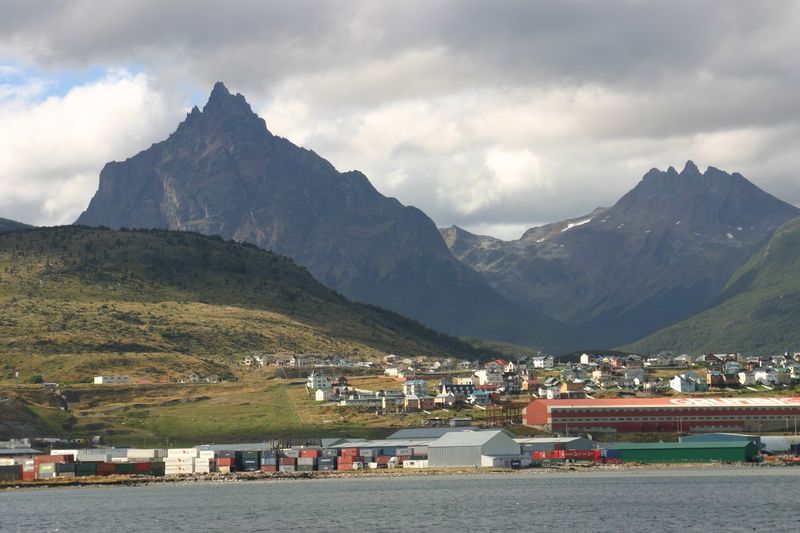
Argentina’s Pampas region is legendary in the farming world. This enormous, flat, and incredibly fertile grassland covers a huge portion of the country and forms the backbone of Argentina’s 1.4 million square kilometers of agricultural land.
The Pampas is one of the most naturally productive farming regions anywhere on Earth.
Beef is Argentina’s most famous agricultural product, and the country has built a global reputation for its high-quality cattle raised on open pasture. Soybeans have also become a dominant crop in recent decades, making Argentina one of the world’s top soy exporters alongside Brazil and the United States.
Farming is central to Argentina’s economy and culture. The gaucho, the traditional Argentine cowboy, remains a beloved symbol of the country’s ranching heritage.
Today, modern agribusiness and traditional ranching coexist, with Argentina continually expanding its role as a major global food supplier.
10. Mongolia – Approximately 1.2 Million Square Kilometers (Primarily Pasture)
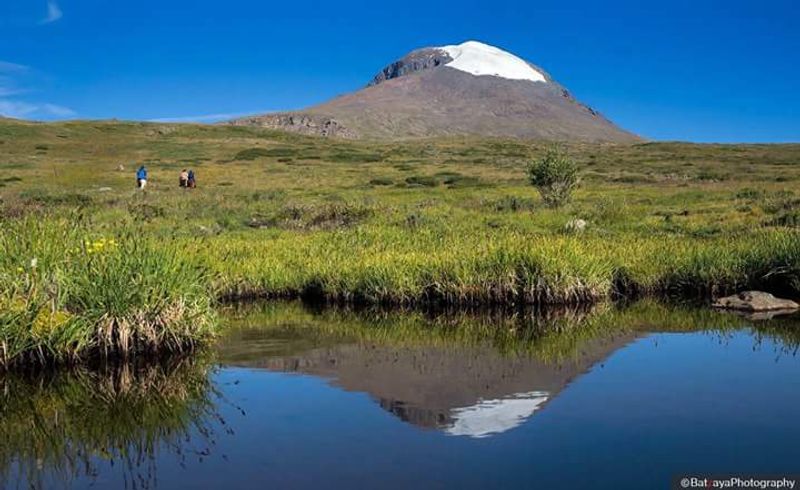
Mongolia is a country where the land and livestock are deeply intertwined with culture and identity. With about 1.2 million square kilometers of agricultural land, almost all of it is natural pasture used by nomadic herders who move their animals across the steppe with the seasons.
This lifestyle has continued for thousands of years.
Horses, sheep, goats, yaks, and camels are the backbone of Mongolian agriculture. Rather than growing rows of crops, Mongolian herders manage vast herds across open grasslands that stretch in every direction.
The country has more livestock per person than almost any other nation in the world.
Climate change is reshaping this ancient way of life. Extreme winters called dzuds, which freeze the ground and kill livestock, have become more frequent and severe.
Many herding families have lost their animals in recent years, pushing younger generations toward city life and threatening a centuries-old tradition.
11. Mexico – Approximately 1.1 Million Square Kilometers
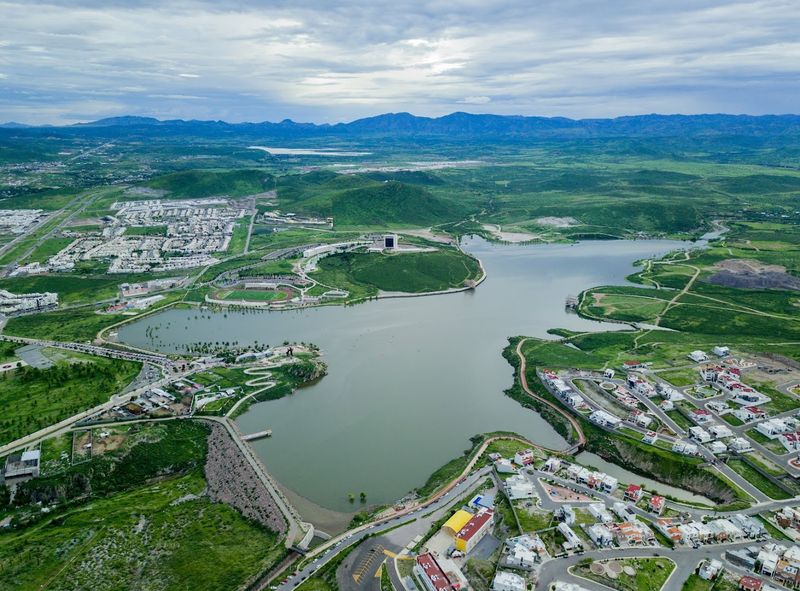
Mexico has a rich farming tradition stretching back thousands of years. Long before European contact, Indigenous civilizations in Mexico developed agriculture that gave the world crops like corn, tomatoes, peppers, avocados, and chocolate.
Today, Mexico maintains about 1.1 million square kilometers of agricultural land that continues this long legacy.
The country’s diverse geography, from coastal lowlands to high mountain valleys, allows for an incredibly wide variety of crops. Mexico is currently one of the top global exporters of avocados, tomatoes, and berries.
Its proximity to the United States makes it a key supplier for North American grocery stores year-round.
Smallholder farming is common in many rural Mexican communities, where families grow food using traditional methods passed down through generations. At the same time, large commercial farms in the northwest have modernized rapidly to meet international export demand, creating a two-speed agricultural economy across the country.
12. South Africa – Approximately 0.9 Million Square Kilometers

South Africa punches well above its weight in agriculture. With around 0.9 million square kilometers of farmland, it is the most food-secure country on the African continent and a significant exporter of agricultural products.
Its varied climate zones support everything from wine grapes in the Cape to sugarcane on the east coast.
The country is a leading producer of citrus fruits, wine, maize, and wool. South African wines have earned international recognition, and the country’s fruit exports reach markets across Europe and Asia throughout the year.
Commercial farming operations in South Africa are often highly mechanized and export-oriented.
Agriculture in South Africa also carries the weight of a complex history. Land ownership disparities rooted in the apartheid era remain a sensitive and ongoing issue.
Efforts to redistribute land more equitably while maintaining food production levels continue to shape agricultural policy and rural development across the nation.
13. Sudan – Approximately 0.8 Million Square Kilometers
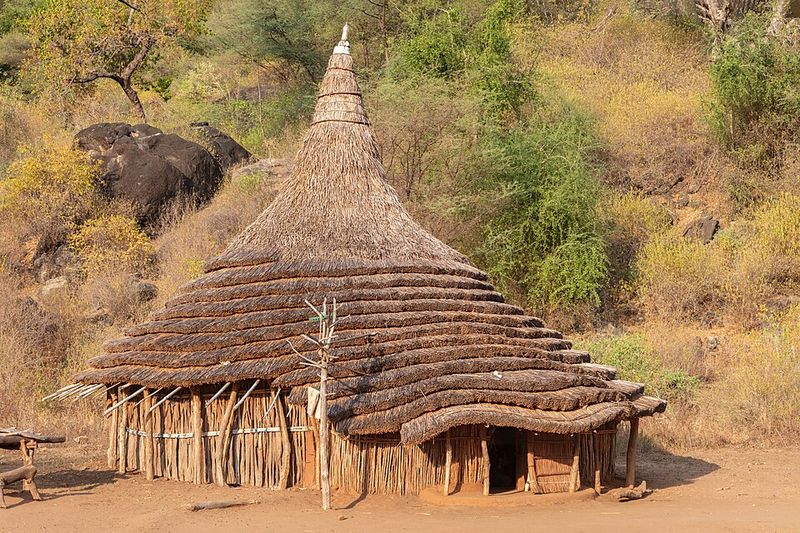
Sudan sits in northeastern Africa and holds approximately 0.8 million square kilometers of agricultural land, much of it concentrated along the Nile River and its tributaries. The Nile has been the lifeblood of farming in this region for millennia, providing water in an otherwise arid landscape.
Ancient civilizations here understood the power of river-fed agriculture long before modern irrigation existed.
Sorghum, millet, sesame, and cotton are among Sudan’s most important crops. The country has enormous potential as a food producer given the size of its arable land, but that potential has been limited by years of political instability, conflict, and economic hardship.
Infrastructure gaps also make it difficult to get farm products to market efficiently.
International organizations and regional partners are working with Sudan to develop its agricultural sector. With better investment and stability, Sudan could become a major food producer for the African continent and beyond, given the sheer scale of its farmable land.
14. Canada – Approximately 0.6 Million Square Kilometers
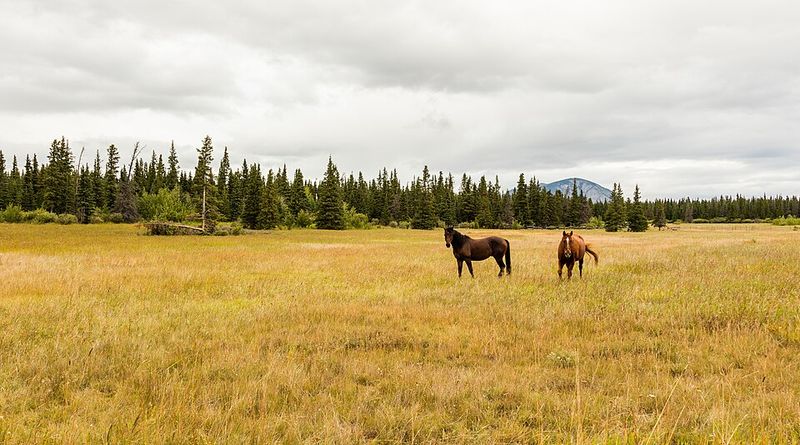
Canada’s bright yellow canola fields are one of the most iconic agricultural images in the world. Despite being a massive country, only a fraction of Canada’s land is suitable for farming due to its cold climate and rocky terrain.
Still, that fraction adds up to about 0.6 million square kilometers, concentrated mostly in the Prairie provinces of Alberta, Saskatchewan, and Manitoba.
Canada is a global leader in exporting canola, wheat, pulses like lentils and chickpeas, and barley. Saskatchewan alone produces more wheat than many entire countries.
Canadian grain feeds people across Asia, Africa, and the Middle East, making the country a quietly critical player in global food security.
The short growing season is a defining challenge for Canadian farmers, who must plant, grow, and harvest within a narrow window each year. Advances in cold-resistant crop varieties and precision farming technology are helping farmers make the most of every available growing day.
15. Indonesia – Approximately 0.6 Million Square Kilometers
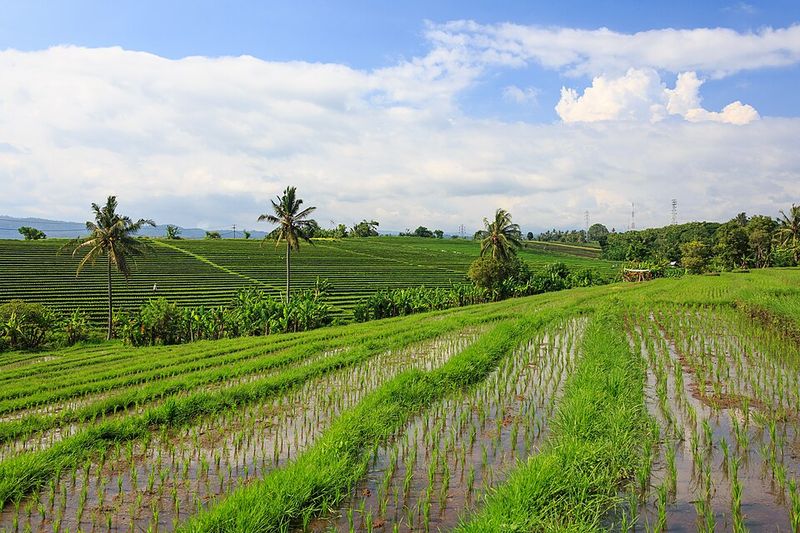
Indonesia is a tropical archipelago made up of over 17,000 islands, and yet it manages to pack about 0.6 million square kilometers of agricultural land across this scattered geography. The country’s warm, humid climate and rich volcanic soils make it ideal for growing a wide variety of crops year-round.
Rice is the cornerstone of Indonesian agriculture and culture. The country is one of the world’s largest rice producers, and rice fields called sawah cover huge portions of islands like Java and Bali.
Indonesia is also the world’s top producer of palm oil, a crop that has transformed its economy but sparked serious environmental debates about deforestation.
Rubber, coffee, cocoa, and spices are other major agricultural products that have shaped Indonesia’s history and economy for centuries. The country’s spice trade drew European explorers to Southeast Asia long ago, and today Indonesia remains a major supplier of these valuable commodities to global markets.
Share this story