The glamour of Hollywood’s golden age lives on in a handful of historic hotels and resorts across the United States. From properties that hosted movie stars and early Academy Awards events to secluded retreats where celebrities escaped the spotlight, these destinations preserve the elegance and stories of a bygone era.
Whether you’re a classic film enthusiast or simply love historic architecture, these twelve iconic stays offer a fascinating glimpse into old Hollywood at its finest.
1. The Beverly Hills Hotel, Beverly Hills, California, USA
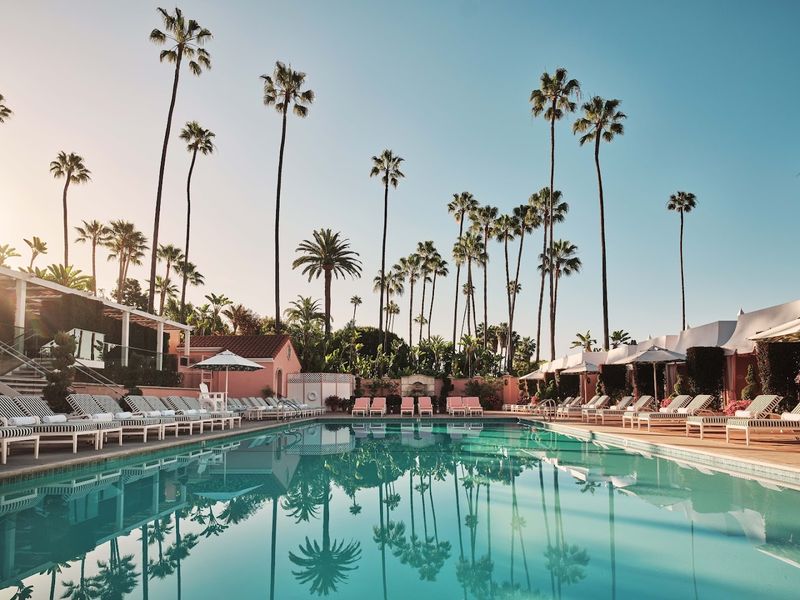
Long before Beverly Hills was even officially a city, this legendary pink landmark was already open for business. The Beverly Hills Hotel opened its doors in 1912, making it older than the city it helped put on the map.
That is a fun fact worth dropping at your next dinner party.
Known as the Pink Palace, the hotel quickly became a magnet for silver-screen royalty. Marilyn Monroe lived in Bungalow 20 from 1958 to 1960, while Elizabeth Taylor reportedly spent multiple honeymoons in Bungalow 5.
The Rat Pack, Marlene Dietrich, and Charlie Chaplin were all regulars at the Polo Lounge.
The hotel’s signature banana leaf wallpaper has become one of the most recognizable design details in hospitality history. It even inspired the cover art for the Eagles’ album Hotel California.
Guests today can book the same bungalows that sheltered Hollywood’s biggest names, making a stay here feel genuinely historic rather than just expensive.
2. Hotel del Coronado, Coronado, California, USA
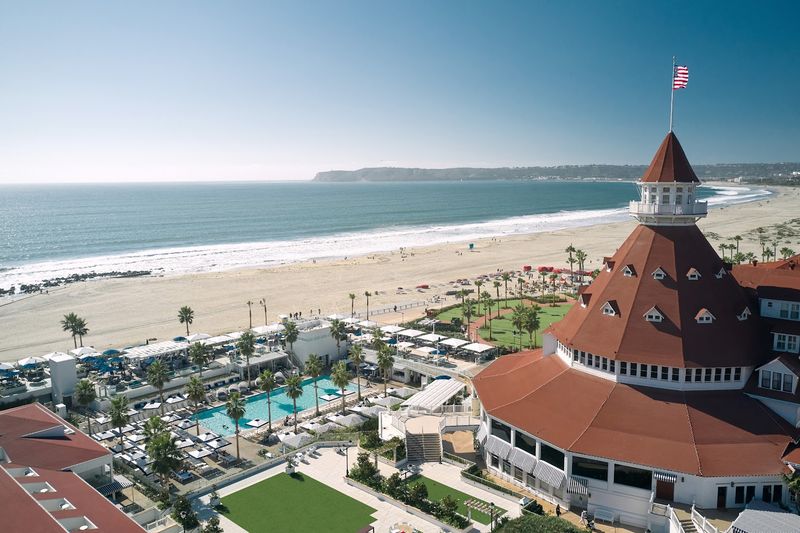
Red cupolas, white-painted wood, and an oceanfront address that has been turning heads since 1888 make this Victorian resort one of America’s most photographed landmarks. Hotel del Coronado earned its place in cinema history when Billy Wilder chose it as the main filming location for the 1959 comedy Some Like It Hot, starring Marilyn Monroe, Tony Curtis, and Jack Lemmon.
The hotel became a National Historic Landmark District in 1977, a recognition that feels entirely deserved given its nearly 140-year history. Over the decades, it has welcomed Bette Davis, Gary Cooper, Judy Garland, Humphrey Bogart, and Kirk Douglas, among many others.
Today, guests can walk the same beachfront that appeared on the silver screen and stay in rooms that have barely changed in character since the silent film era. The sweeping ocean views and Victorian architecture create a backdrop that makes every photograph look like a movie still.
This is California coastal history at its most dramatic.
3. Chateau Marmont, Los Angeles, California, USA
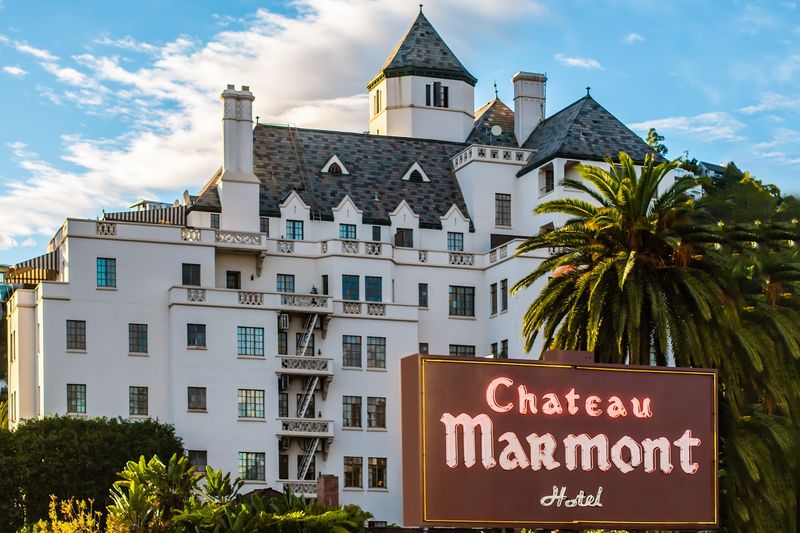
Columbia Pictures founder Harry Cohn once gave Hollywood’s most famous piece of advice: “If you must get in trouble, do it at the Chateau Marmont.” That quote alone tells you everything about this hotel’s legendary reputation for privacy and discretion.
Completed in 1929 and modeled loosely after the Chateau d’Amboise in France’s Loire Valley, the property quickly became a refuge for stars who needed to disappear from public life. Greta Garbo resided here.
F. Scott Fitzgerald suffered a health episode on its grounds.
The hotel’s 63 rooms, suites, cottages, and bungalows have sheltered creative minds for nearly a century.
Perched above Sunset Boulevard, the castle-inspired structure still draws writers, directors, and actors who value its old-world character and low-key layout. There are no splashy lobbies or grand entrances designed for attention.
The charm is entirely in its restraint, its history, and the sense that the walls have heard conversations that will never be repeated anywhere else.
4. The Hollywood Roosevelt, Los Angeles, California, USA
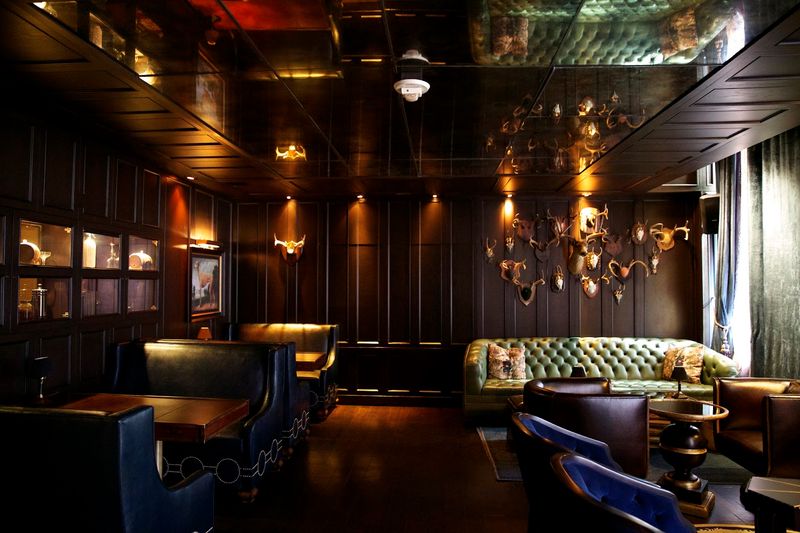
The year was 1929, and the location was the Blossom Room of a brand-new hotel on Hollywood Boulevard. That night, the very first Academy Awards ceremony took place, and the Hollywood Roosevelt became part of film history before it had even celebrated its second birthday.
Opened in 1927 with Spanish Colonial Revival architecture, the hotel features wrought-iron chandeliers, tiled fountains, and hand-painted coffered ceilings that have remained remarkably intact. Marilyn Monroe lived here early in her career and completed her first modeling shoot at the Tropicana Pool.
Charlie Chaplin, Clark Gable, and Shirley Temple were among the hotel’s most celebrated early guests.
The property sits directly on the Hollywood Walk of Fame, so history is quite literally beneath your feet the moment you step outside. The lobby alone is worth a visit, with its carefully preserved details transporting visitors back to the era when movie stars were the closest thing America had to royalty.
A stay here is genuinely educational.
5. The Mission Inn Hotel & Spa, Riverside, California, USA
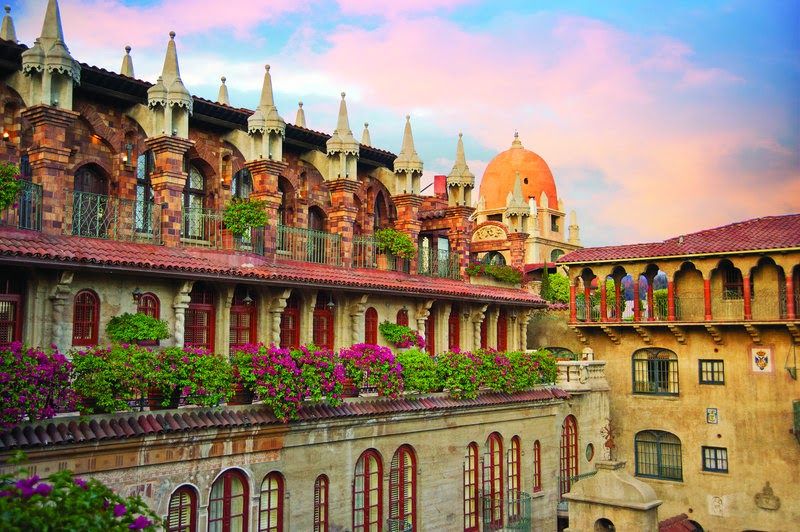
There is no single architectural style that defines the Mission Inn, which is exactly what makes it so fascinating. Built across multiple construction phases beginning in the 1870s, the property incorporates Spanish Mission Revival, Moorish, Gothic, and Renaissance influences into one sprawling, theatrical complex that genuinely looks like a movie set.
Celebrities and world leaders have been visiting for more than a century. Richard Nixon and Pat Ryan had their wedding reception here.
Ronald Reagan and Nancy Davis also celebrated their wedding dinner at the property. The guest list over the decades reads like a who’s who of American cultural and political life.
Every corridor, courtyard, and tower offers a new detail to discover, from hand-crafted ironwork to imported antiques displayed throughout the building. The property spans an entire city block in downtown Riverside, making it one of the largest Mission Revival structures in the United States.
For anyone drawn to grand architecture with genuine history behind it, this is a destination that rewards careful exploration and slow wandering.
6. La Valencia Hotel, La Jolla, California, USA
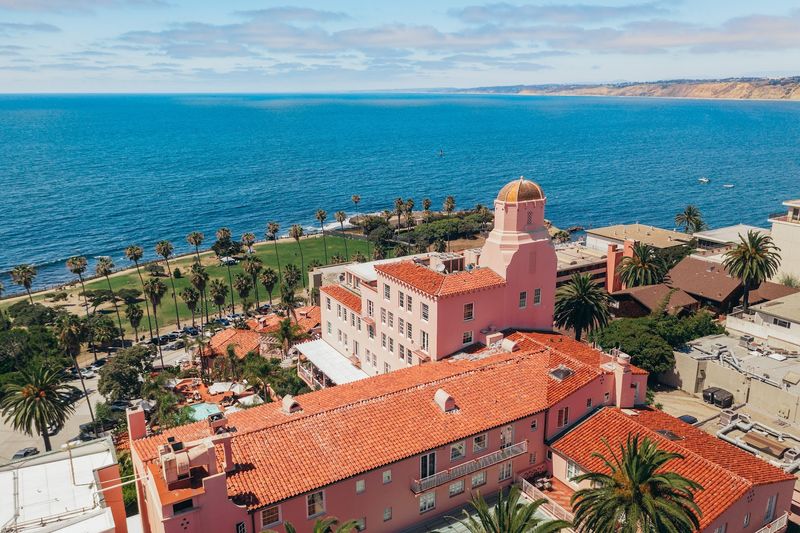
Nicknamed the Pink Lady of La Jolla, this Mediterranean-style landmark has been a coastal retreat for the glamorous set since 1926. Perched above the Pacific with views that stretch toward the horizon, La Valencia offered Hollywood stars a stylish escape from the studio system’s relentless schedules and public attention.
The hotel’s pale pink exterior and arched windows give it a distinctly European character that felt exotic and luxurious to 1930s visitors. Stars from Los Angeles found that the roughly two-hour drive south was just enough distance to feel truly away from it all.
The combination of ocean views, quiet village surroundings, and refined interiors made La Valencia a reliable favorite.
Today the hotel retains its vintage personality without feeling like a museum. The architecture has been carefully maintained, and the public spaces still carry the proportions and details of their original 1920s design.
Guests who appreciate understated coastal elegance over flashy modern renovations tend to fall completely in love with La Valencia’s particular brand of old-school California charm.
7. The Georgian Hotel, Santa Monica, California, USA
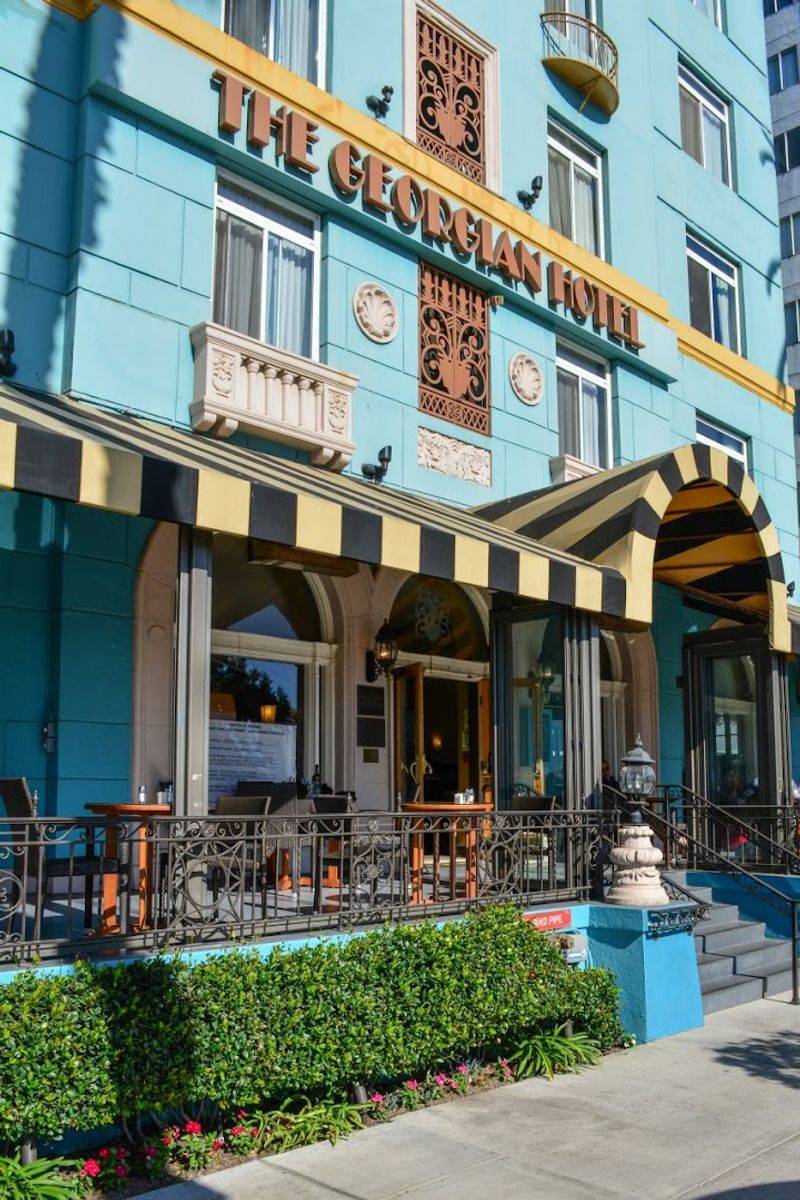
Art Deco architecture does not get much more striking than the Georgian Hotel’s turquoise and gold facade, which has stood just steps from the Pacific Ocean since 1933. When it opened, this Santa Monica landmark immediately attracted Hollywood celebrities looking for a stylish seaside alternative to the city’s inland hotel scene.
The location was part of the appeal. Santa Monica in the 1930s was a lively beach destination, and the Georgian placed its guests right at the center of that energy without sacrificing any of the elegance they expected.
The hotel became a well-known gathering spot for stars taking breaks between productions.
Beautifully restored interiors now celebrate the hotel’s Art Deco heritage, with period-appropriate details preserved throughout the public spaces. Guests can even request vintage vinyl records during their stay, which adds a genuinely fun and retro touch to the experience.
The ocean views from the upper floors remain as impressive as they were when the first Hollywood guests checked in nearly a century ago.
8. The Arizona Biltmore, Phoenix, Arizona, USA
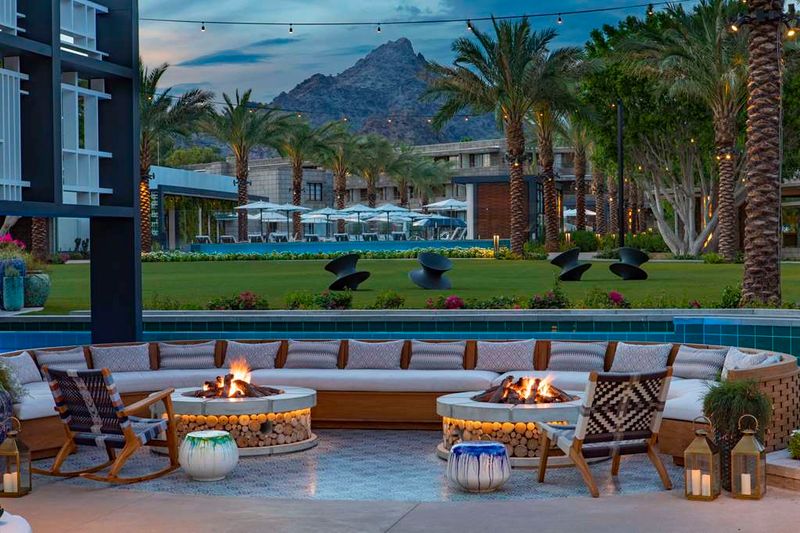
Opening in 1929 just as the Great Depression was about to reshape American life, the Arizona Biltmore somehow managed to become a symbol of enduring luxury in the middle of the desert. Its distinctive geometric architecture, influenced by Frank Lloyd Wright’s design philosophy, set it apart from every other resort property in the American Southwest.
The guest list over the decades has included an extraordinary range of celebrities, entertainers, and dignitaries. Irving Berlin reportedly composed White Christmas while staying here.
Marilyn Monroe, Clark Gable, and numerous other Hollywood figures made the Biltmore a regular stop on their travel itineraries, attracted by its combination of desert privacy and first-class facilities.
Today the property retains the sophisticated desert charm that made it famous. The geometric tile patterns, ornate ironwork, and grand pool areas all reflect the original vision of a resort designed to feel both monumental and welcoming.
For visitors who want Old Hollywood glamour with a Southwestern twist, the Arizona Biltmore delivers in a way that few properties anywhere can match.
9. The Plaza Hotel, New York City, New York, USA
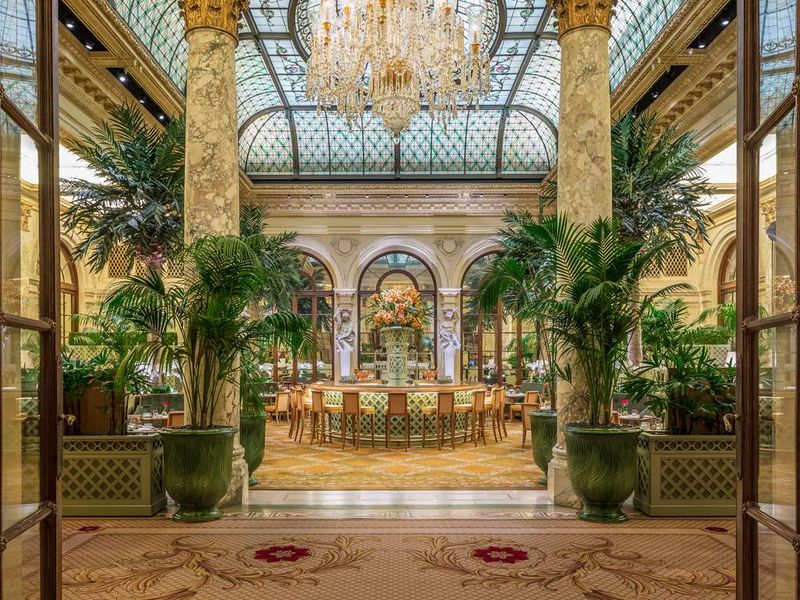
Technically located on the opposite coast from Hollywood, the Plaza Hotel never let geography get in the way of its celebrity reputation. Since opening in 1907 at the corner of Fifth Avenue and Central Park South, it has been the preferred New York address for movie stars, directors, and entertainment royalty visiting the East Coast.
The French Renaissance chateau exterior and the grand interiors created a setting that rivaled anything Hollywood’s studio designers could produce on a backlot. Cary Grant, Marlene Dietrich, Frank Sinatra, and The Beatles all stayed here during their respective peaks of fame.
The hotel also appeared in numerous films, reinforcing its connection to cinema culture.
A stay at the Plaza today means sleeping in a building that has hosted more history than most cities can claim. The Palm Court remains one of New York’s most celebrated dining spaces, and the overall grandeur of the property has been carefully preserved through multiple renovation phases.
This is a hotel that understands exactly what it is and makes no apologies for its spectacular sense of self-importance.
10. The Colony Hotel, Palm Beach, Florida, USA
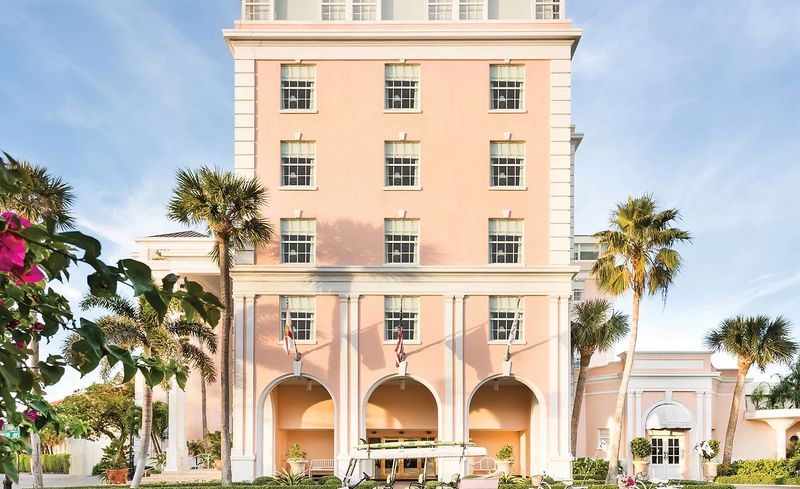
Palm Beach in the late 1940s was America’s most glamorous winter destination, and the Colony Hotel arrived right on time to become its social headquarters. Opened in 1947 with a pastel exterior and an atmosphere calibrated precisely for celebrity comfort, the Colony quickly attracted socialites, entertainers, and cultural icons escaping northern winters in serious style.
The hotel’s mid-century design has been maintained with genuine care, preserving the proportions and color palette that made it famous. Unlike many historic properties that have been gutted and modernized beyond recognition, the Colony wears its vintage identity proudly.
The result is a hotel that genuinely feels like a time capsule from Hollywood’s most fashionable era.
Guests today arrive to find a property that balances historical authenticity with modern comfort in a way that feels effortless rather than forced. The location on Palm Beach’s main thoroughfare puts visitors within easy reach of the island’s boutiques, restaurants, and waterfront areas.
For a taste of mid-century glamour with Florida sunshine included, the Colony Hotel remains the obvious choice.
11. The Carolina Inn, Chapel Hill, North Carolina, USA
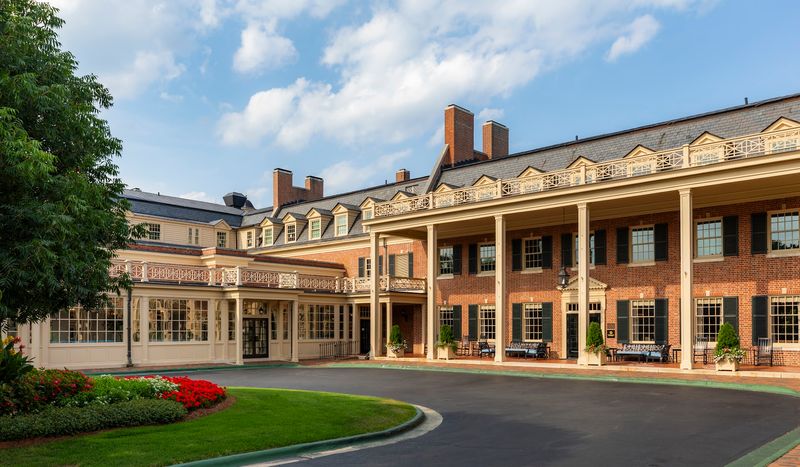
Opened in 1924 and connected to the University of North Carolina, the Carolina Inn built its reputation as the South’s most gracious retreat for distinguished visitors. Politicians, writers, academics, and celebrities all found their way to Chapel Hill over the decades, drawn by the inn’s combination of Southern hospitality and genuine architectural elegance.
The property’s stately Colonial Revival exterior and carefully maintained interiors reflect a design sensibility that prioritized comfort and dignity over showmanship. For Hollywood figures who occasionally needed a quieter, more understated setting than their usual California haunts, the Carolina Inn offered exactly that kind of refined retreat.
Visitors today often comment that the inn feels remarkably consistent with its original character, which is a genuine compliment given how many historic properties have lost their identity to renovation trends. The public spaces display historic photographs and memorabilia that help guests understand the building’s long and varied history.
For travelers interested in Southern history alongside their Old Hollywood nostalgia, the Carolina Inn provides a thoughtful and satisfying combination.
12. Greenbrier Resort, White Sulphur Springs, West Virginia, USA
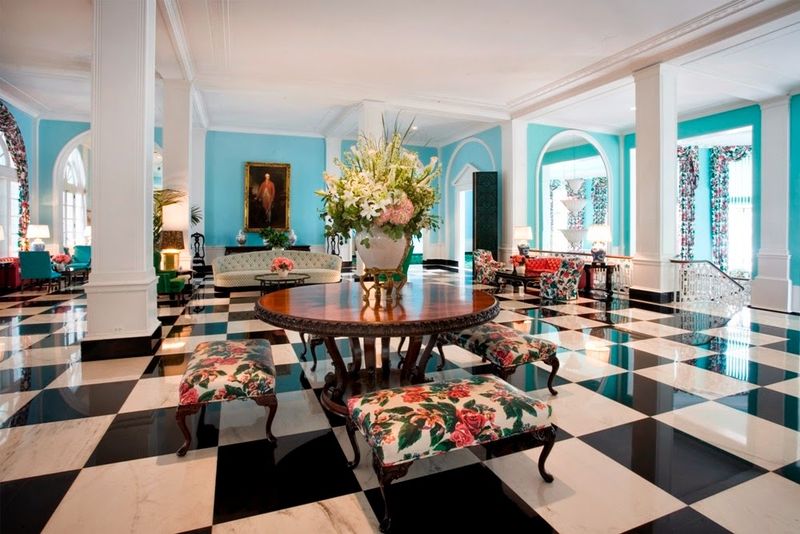
Few American resorts can claim a history stretching back to the eighteenth century, but the Greenbrier is not in the business of modest claims. Presidents, royalty, and Hollywood legends have all made the journey to White Sulphur Springs, West Virginia, to experience a resort that has consistently defined what American luxury looks like at its most ambitious.
During Hollywood’s Golden Age, the Greenbrier attracted entertainers and film industry figures who appreciated its combination of grand ballrooms, extensive grounds, and mountain surroundings. The interiors, famously redesigned by Dorothy Draper in the 1940s with bold colors and oversized floral patterns, became as iconic as the resort itself and remain one of the most distinctive design statements in American hospitality history.
The property also contains one of America’s most extraordinary secrets: a Cold War-era underground bunker built beneath the resort to house Congress in the event of a national emergency. That bunker is now open for public tours, adding an unexpected layer of intrigue to what is already one of the country’s most historically layered destinations.
Share this story