This Troy restaurant has built a reputation strong enough to draw customers from across Michigan for its cold noodles and traditional Korean dishes. Everything is made in-house, from the noodles to the beef bone broth, which is served directly from a tap.
The menu stays focused on authenticity, even to the point where staff may guide first-time visitors away from unfamiliar dishes. It is a rare approach that prioritizes the food over making an easy sale.
With a self-service setup, complimentary barley tea, and a menu rooted in traditional recipes, this spot stands out for doing things its own way and doing them consistently well.
Where to Find Sambong and What to Expect on Arrival
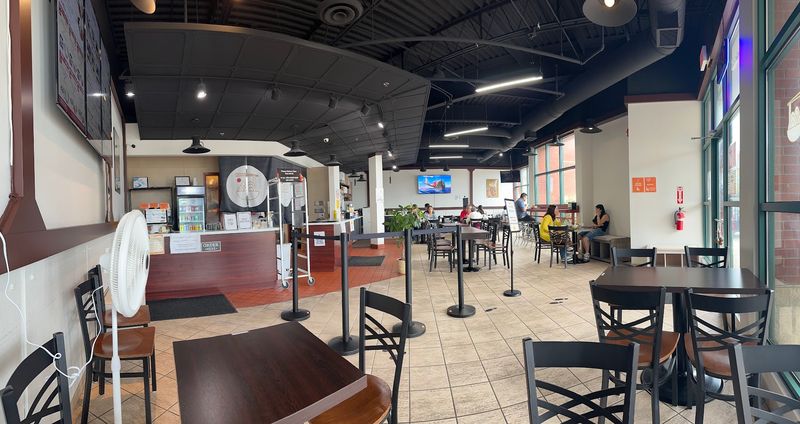
Sambong Korean Restaurant sits at 5389 Crooks Rd, Troy, MI 48098, tucked into a modest commercial strip that gives almost no hint of what is waiting inside. The first thing worth knowing is that this is a self-service restaurant, which means you order and pay at the counter, pick up your tray when your number is called, and settle into a table on your own terms.
No server hovering, no tip jar, no performance. Just food, and plenty of it.
The setup feels refreshingly honest, and the zero-tip model makes the whole experience feel more relaxed from the moment you walk in.
The restaurant is open Tuesday through Sunday, with lunch hours running from 11:30 AM to 3 PM on most days, and it closes on Tuesdays. Parking is easy, the interior is compact but clean, and the crowd on any given weekend tells you immediately that this place has earned serious local loyalty.
The Cold Noodle Legacy That Built This Restaurant’s Name
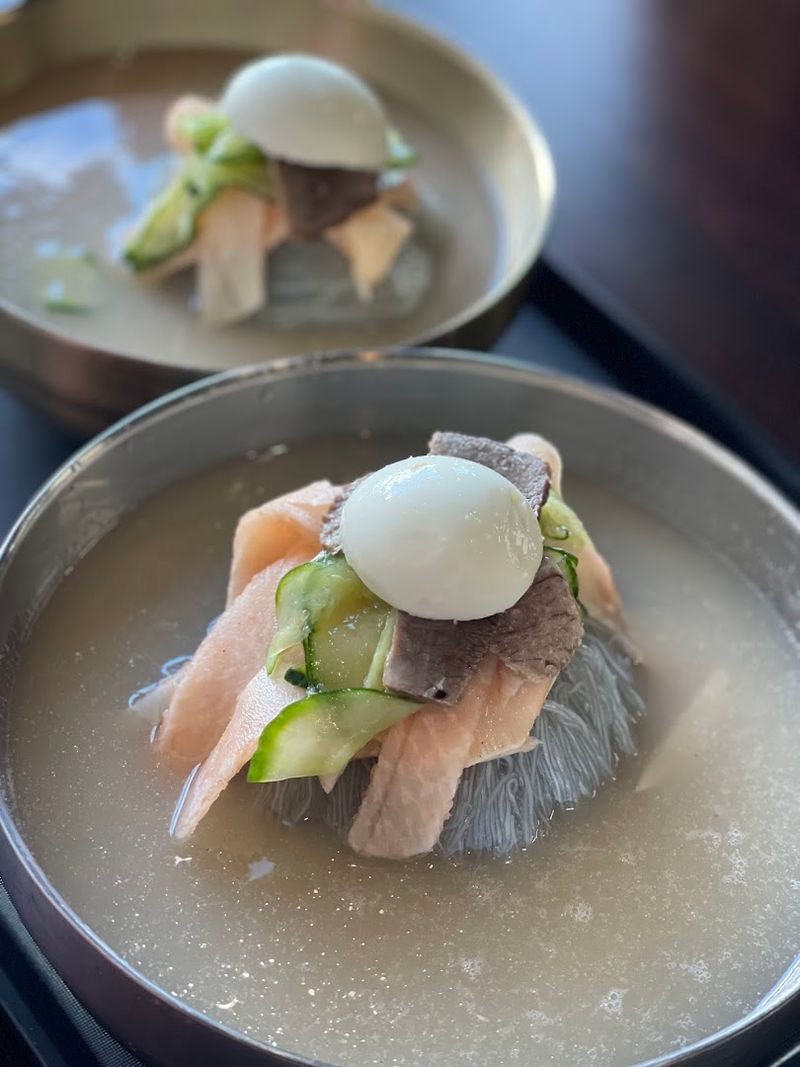
Cold noodles might sound like a strange thing to obsess over, but naengmyun has a devoted following in Korean cuisine, and Sambong has built much of its reputation on doing it right. The restaurant makes its buckwheat noodles entirely in-house, using an ultra-thin style that begins absorbing the broth almost immediately, which means you eat with purpose and no apologies.
The hwe naengmyun, which is the spicy cold noodle version served with fermented, salted raw fish, delivers a flavor that hits sweet, sour, spicy, and deeply savory all at once. The icy broth keeps everything refreshingly cold, and the chewy noodles provide a satisfying contrast in texture.
One insider move worth knowing: at the end of your bowl, ask for yuksu, the hot beef broth, and pour it in. It softens the sharp vinegar edge and adds a warm, savory depth that transforms the last few bites into something genuinely memorable.
That finishing ritual alone is reason enough to come back.
Bone Broth on Tap: The Free Detail Everyone Talks About
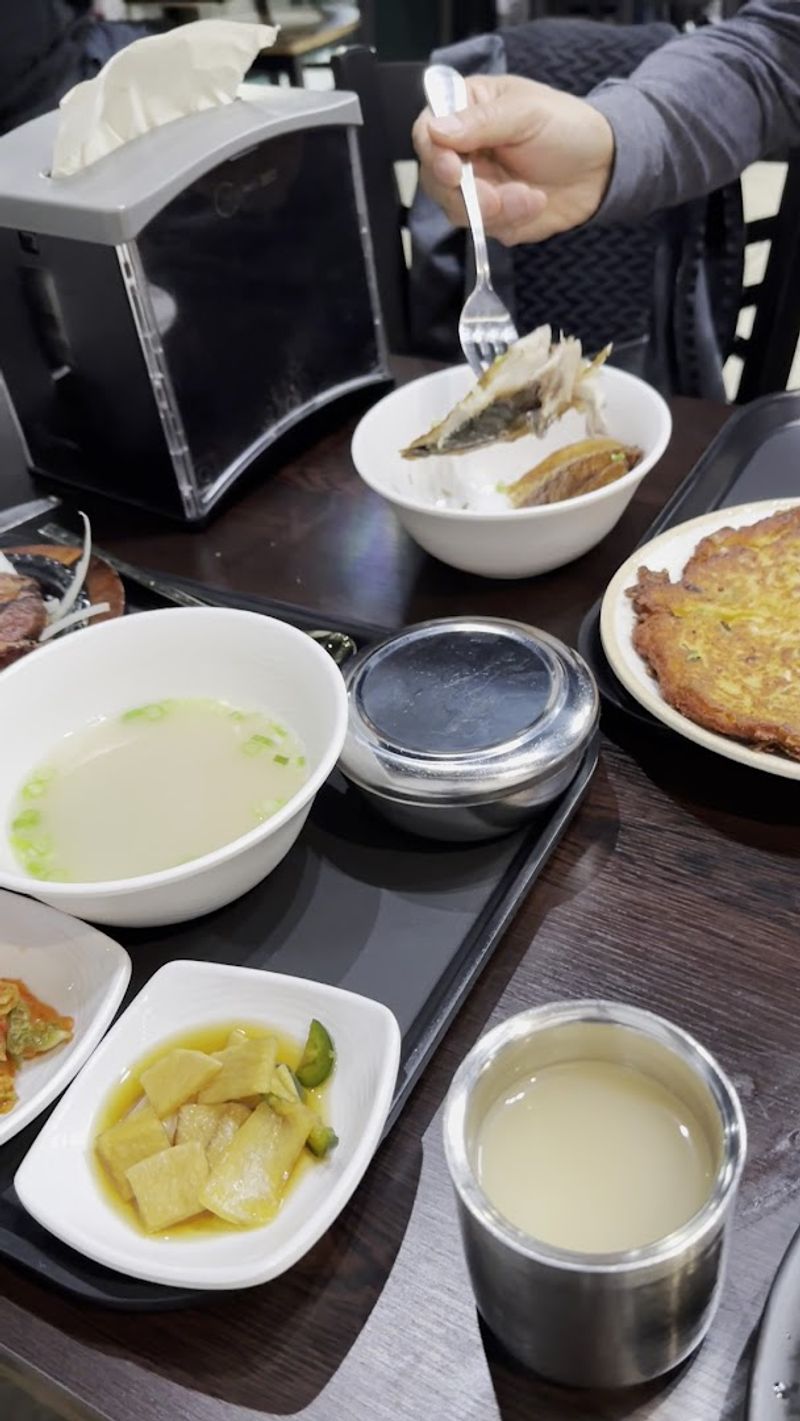
Few things at Sambong generate as much genuine enthusiasm as the complimentary beef bone broth available to every diner. Rich, milky, and deeply savory, it flows freely from a tap at the self-service station and costs absolutely nothing extra.
It arrives warm, with a clean, slow-cooked depth that makes it feel less like a freebie and more like a deliberate statement of quality.
Regulars treat it as both a starter and a palate cleanser, sipping it before their meal or using it to finish off the last of their noodles. The broth reportedly contains no MSG, which makes its flavor all the more impressive given how full-bodied it tastes.
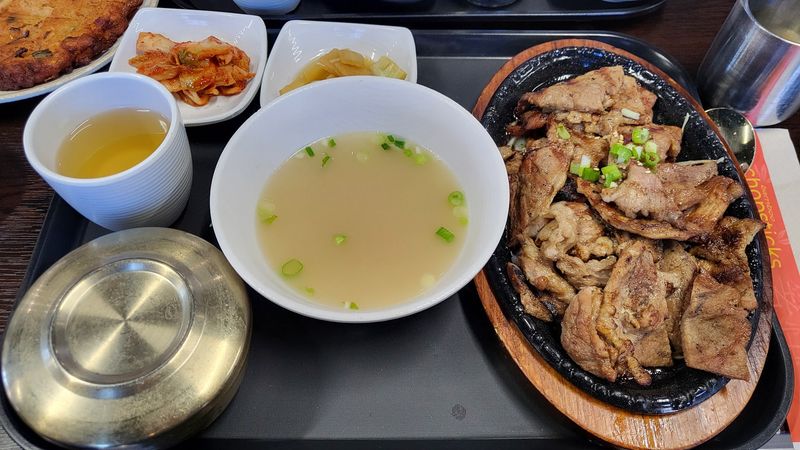
Alongside the broth, Sambong also offers complimentary barley tea, served warm and earthy, a traditional Korean pairing that calms the palate beautifully. Together, these two free offerings set a tone for the meal that most paid appetizers at other restaurants simply cannot match.
And the food itself? That comes next.
Japchae With Bulgogi: The Dish That Converts First-Timers
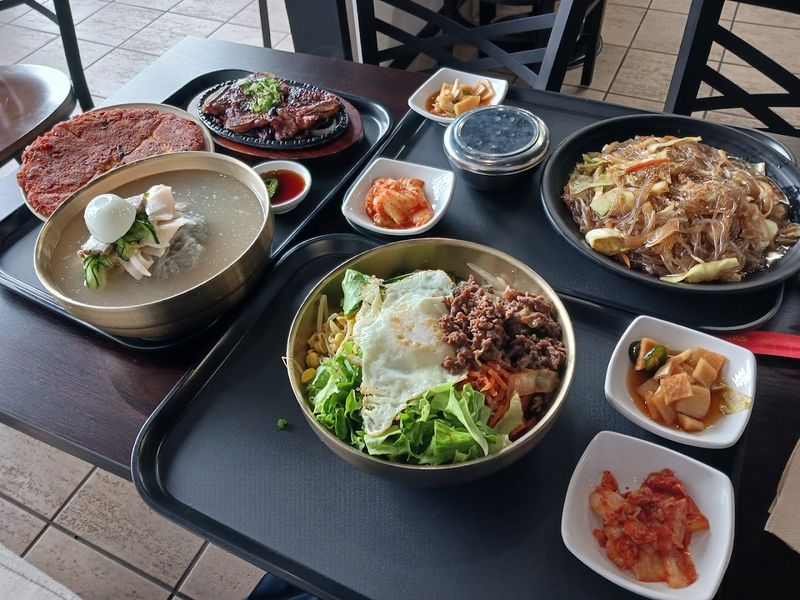
Japchae is one of those Korean dishes that looks deceptively simple on the menu and then completely reorganizes your expectations once you taste it. At Sambong, the version made with bulgogi is consistently praised as some of the best in Michigan, with glass noodles that carry the seasoning without becoming heavy or greasy.
The bulgogi itself is marinated with that characteristic Korean balance of sweet and savory, and when it mingles with the soft, slightly chewy sweet potato noodles and the colorful stir-fried vegetables, the result is a dish that feels both hearty and elegant at the same time.
First-timers to Korean food often land on japchae as their entry point, and Sambong’s version is the kind that makes people immediately want to explore the rest of the menu. The portion size is generous, the flavors are well-seasoned without being overwhelming, and the price point makes it a genuinely satisfying lunch choice for anyone stopping in on a weekday.
Mandu Guk and Bindaetteok: Comfort Food Done With Intention
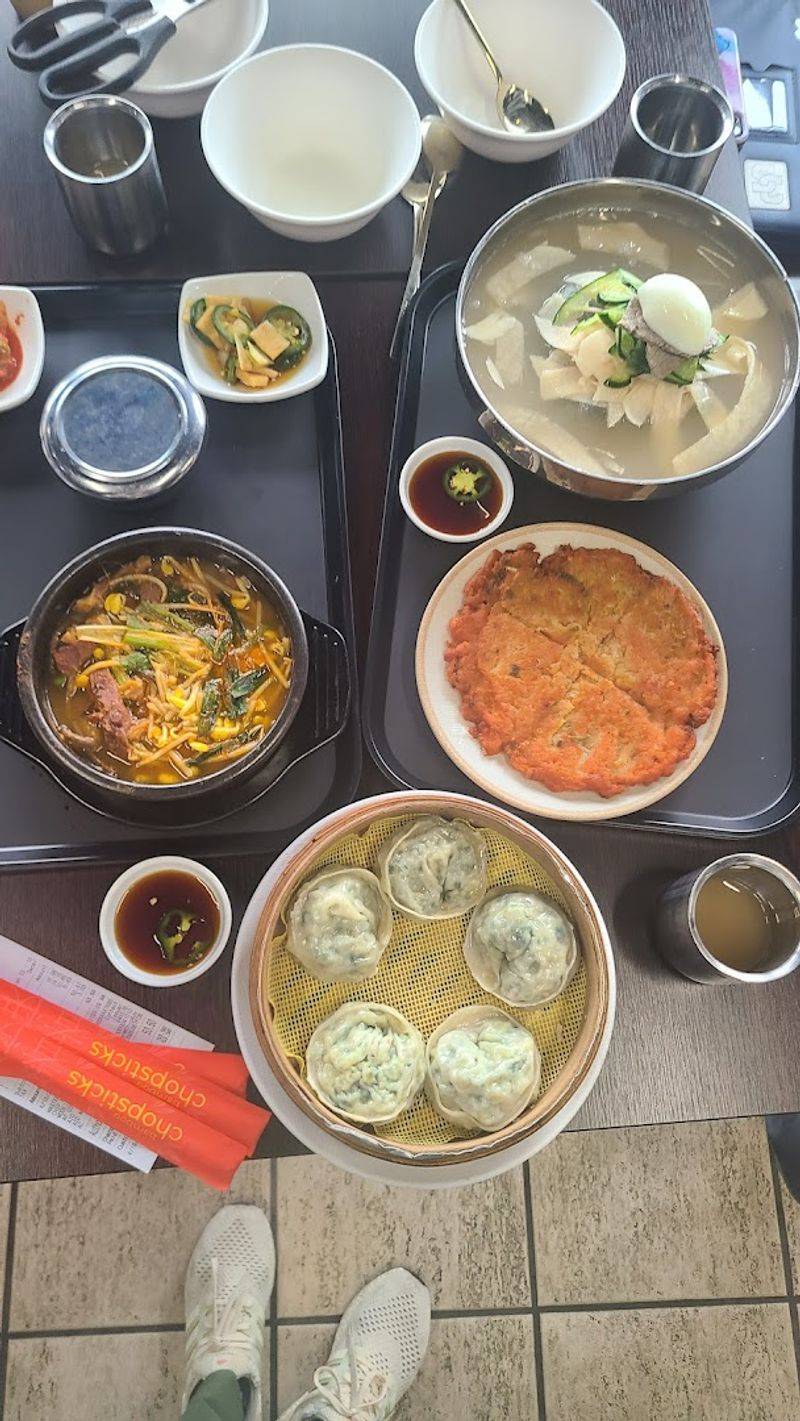
Mandu guk, the Korean dumpling soup, arrives at Sambong in a broth that is milky, rich, and built from beef bones in the same careful tradition as the complimentary broth at the self-service station. The dumplings are hearty and well-filled, and the overall bowl has that particular quality of food that feels restorative rather than just filling.
On a cold Michigan afternoon, it is exactly the kind of dish that makes you understand why Korean cuisine has such a devoted following beyond the Korean diaspora. The soup is straightforward, unpretentious, and genuinely warming in a way that lingers after the bowl is empty.
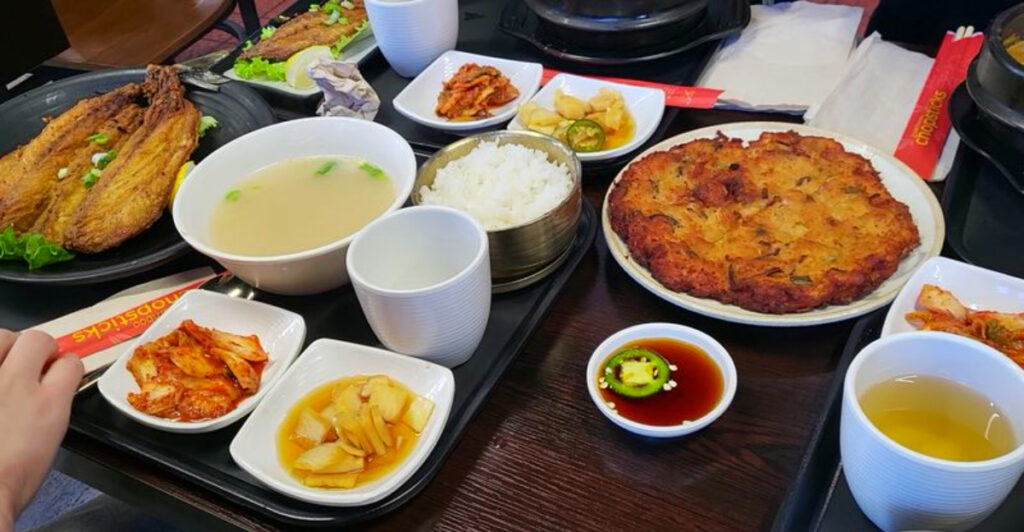
Bindaetteok, the mung bean pancake, rounds out a meal beautifully as a side or shared starter. Crisp on the outside, soft and savory inside, it is one of those small-menu items that often gets overlooked by newcomers but quickly becomes a must-order for regulars.
The texture contrast alone makes it worth adding to any order without hesitation.
Mackerel Meals and Galbi: The Proteins That Anchor the Menu
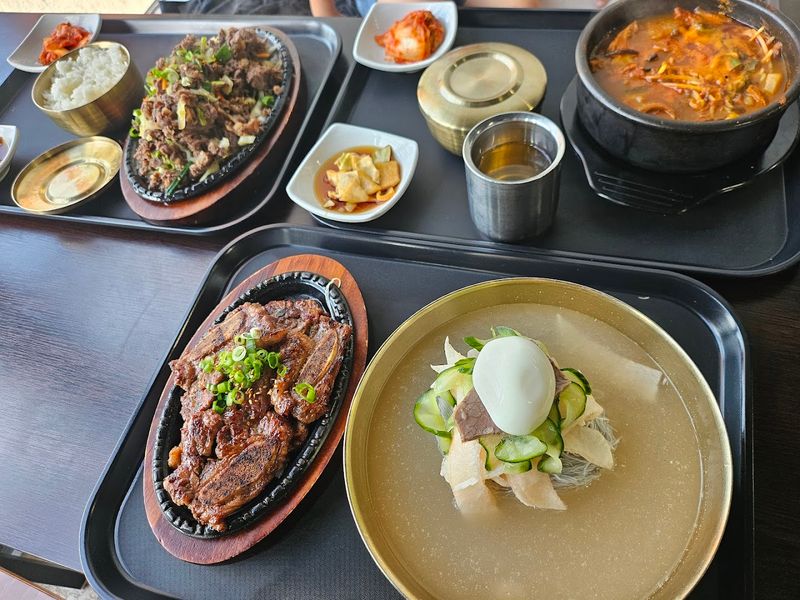
Sambong keeps its menu focused rather than sprawling, and that restraint pays off in the quality of every protein on the list. The mackerel meal is a recurring favorite, served with steamed rice, kimchi, radish kimchi, vegetables dipped in soy, and soup, creating a full traditional Korean spread from a single order.
Galbi, the short ribs, appear on the menu with a sweet, slightly caramelized marinade that has drawn comparisons to top Korean restaurants in larger cities. The meat is tender, the flavor is layered, and the portion size matches the price without making you feel shortchanged.
What stands out about both dishes is the completeness of the meal experience. Korean dining traditionally involves multiple small accompaniments alongside the main protein, and Sambong honors that tradition faithfully.
Every tray arrives with enough variety to make each bite slightly different from the last, which keeps the meal interesting from the first forkful straight through to the final spoonful of broth.
Bibimbap and Jjamppong: For When You Want to Explore the Menu
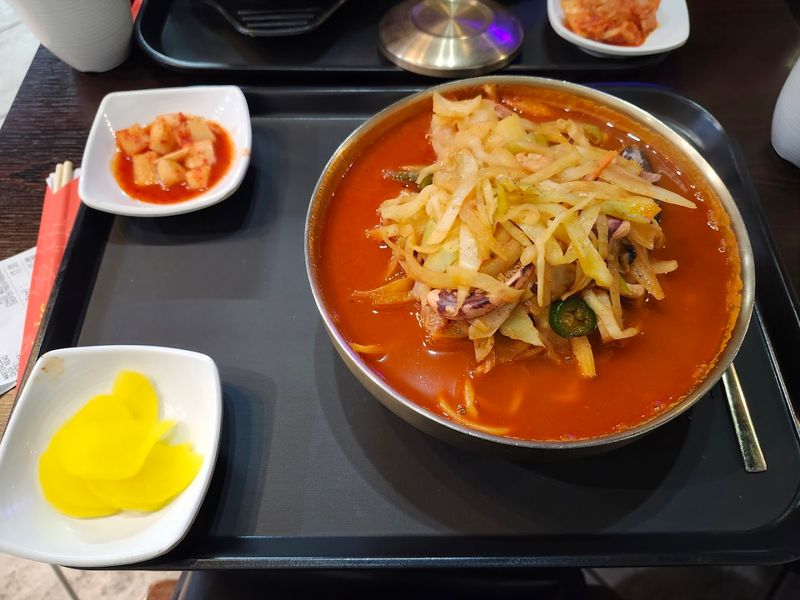
Beyond the cold noodles and soups, Sambong offers a handful of dishes that cater to diners who want something slightly different. The vegetable bibimbap with tofu takes a fresher approach than the sizzling dolsot style found elsewhere, presenting more of a salad-over-rice preparation with a solid variety of vegetables and clean, well-balanced seasoning.
It is not the dramatic hot-stone bowl version that arrives crackling at the table, but it holds its own as a lighter, satisfying option for anyone who wants something colorful and nourishing without the heat factor.
Jjamppong, the spicy seafood noodle soup, brings a respectable kick with a broth that has genuine depth behind the spice. The heat level lands in a range that feels authentic without being punishing, making it approachable for diners who enjoy bold Korean flavors but are still building their spice tolerance.
Both dishes confirm that even the quieter corners of Sambong’s menu are worth exploring thoroughly.
The Self-Service System That Makes Dining Here Uniquely Relaxed
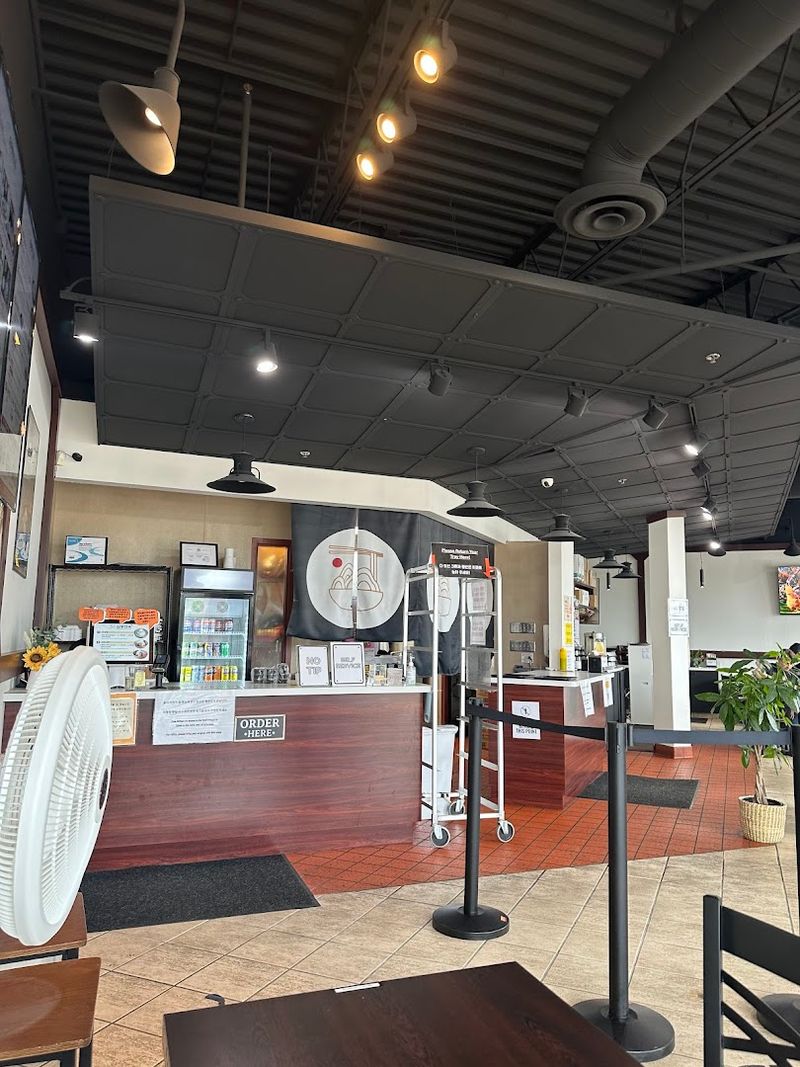
The self-service model at Sambong is not a compromise or a cost-cutting measure. It is a deliberate choice that shapes the entire atmosphere of the restaurant in a genuinely positive way.
You order at the counter, receive a number, and pick up your completed tray when it is ready. Chopsticks and spoons are stored in a drawer built into each table, and the condiment station is well-stocked and easy to navigate.
There is no pressure to flag down a server, no awkward moment when the check arrives, and no guilt about lingering over your broth. The no-tip policy removes the last remaining social friction from the dining experience entirely.
The system does require a little homework if you are visiting for the first time, since the menu can feel unfamiliar to newcomers. A quick look at the menu online before arriving is genuinely helpful, especially for understanding the difference between mul naengmyun and hwe naengmyun.
That small preparation makes the whole visit smoother and more enjoyable from the start.
What the Banchan and Sides Tell You About the Kitchen
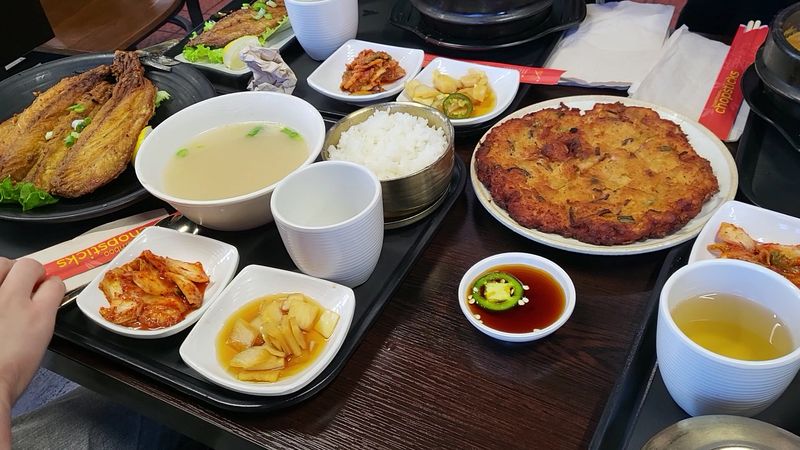
In Korean dining culture, the quality of the banchan, the small side dishes served alongside the main course, is one of the clearest signals of how seriously a kitchen takes its craft. At Sambong, the sides that accompany most meals include kimchi, radish kimchi, and vegetables marinated in soy, and they are served with consistency and care.
The kimchi has divided opinion slightly among reviewers, with some finding it excellent and others comparing it unfavorably to supermarket versions. But the radish kimchi and the soy-marinated vegetables have received consistently warm feedback as clean, well-prepared accompaniments that do their job without overshadowing the main dish.
What the banchan selection ultimately communicates is a kitchen that respects the full structure of a Korean meal rather than treating the sides as an afterthought. Each component on the tray has a role, and the overall effect of eating everything together is more satisfying than any single element in isolation.
The details matter here, and the kitchen clearly knows it.
The Crowd Inside and What It Signals About Authenticity
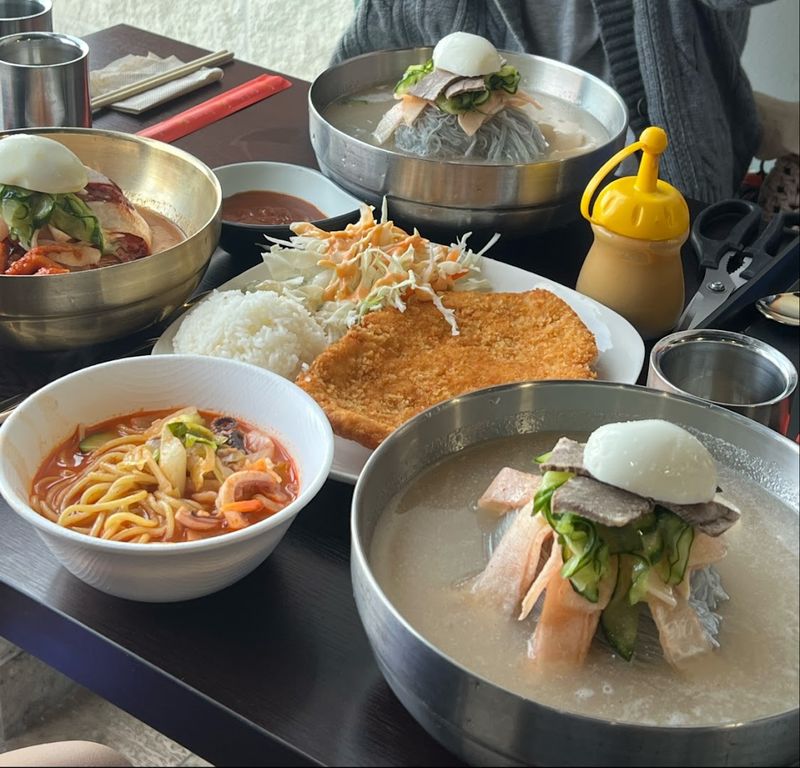
One of the most reliable ways to gauge whether a restaurant is doing something right is to look at who fills the tables. At Sambong, the weekend lunch crowd skews heavily toward Korean diners, including families, church groups, and regulars who clearly know exactly what they are ordering before they reach the counter.
That kind of clientele is not accidental. It reflects a kitchen that has earned trust through consistency rather than marketing, and it creates an atmosphere that feels genuinely lived-in rather than curated for outside approval.
The energy inside during a busy Sunday service is warm, communal, and slightly chaotic in the best possible way.
The dining room is compact, and tables are placed close together, so privacy is not exactly the draw here. But the tightness of the space contributes to a lively, social atmosphere that mirrors the communal spirit of Korean dining culture.
Arriving just before the lunch rush on a weekday gives you the best chance of a comfortable, unhurried meal.
Pricing, Value, and the No-Tip Model Explained
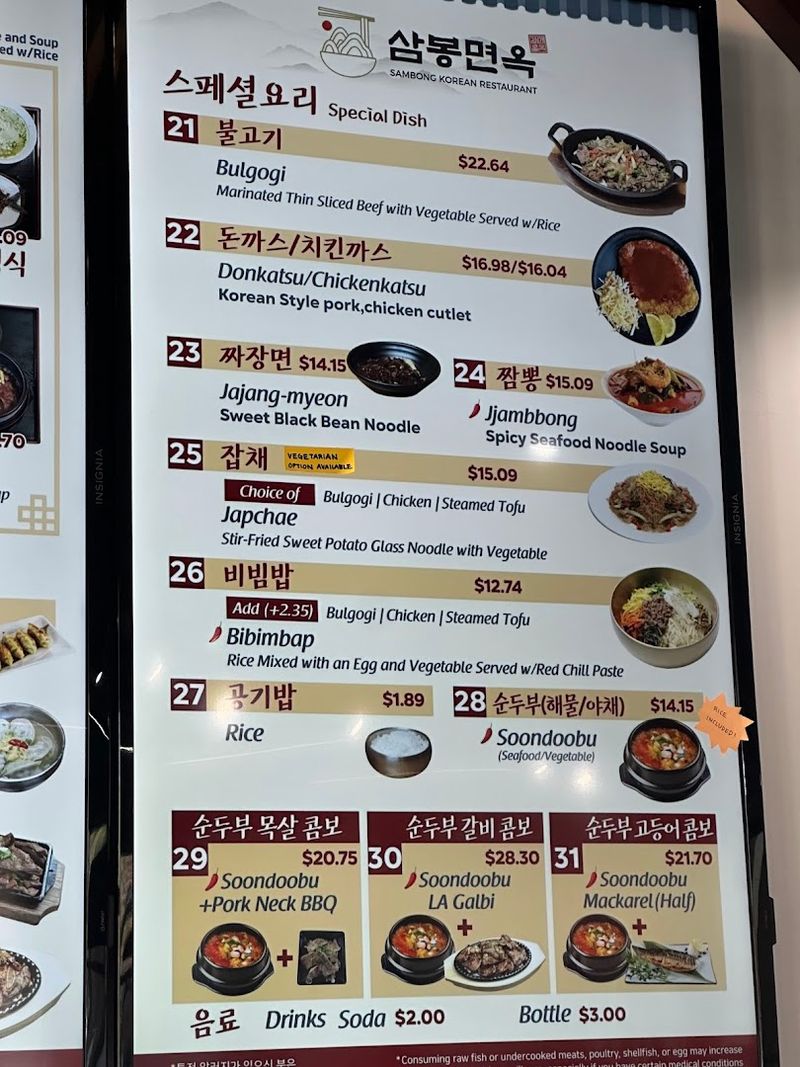
Sambong sits on the pricier side of the casual Korean dining spectrum in Michigan, a detail that comes up regularly in reviews but almost always followed by the acknowledgment that the value is genuinely there. A full spread of cold noodles, dumplings, and a mung bean pancake for two people can land around fifty dollars, which feels fair for the quality and quantity involved.
The no-tip policy is a significant factor in the overall value calculation. What might look like a slightly elevated menu price quickly becomes reasonable when you factor out the additional cost that tipping adds at most comparable restaurants.
The pricing is transparent, and there are no surprise charges at the end of the meal.
For anyone new to Korean cuisine who worries about ordering wrong or overspending, Sambong’s focused menu actually makes budgeting easier than at larger Korean restaurants with sprawling options. A few core dishes, generous portions, and free broth and tea mean most visitors leave feeling both satisfied and fairly treated on the financial side.
Tips for Getting the Most Out of Your Visit to Sambong
A few practical notes can make a first visit to Sambong significantly smoother and more enjoyable. The restaurant is closed on Tuesdays, so plan accordingly.
Hours run from 11:30 AM to 3 PM on all other days, which makes it a lunch-only destination for most of the week. Arriving early or slightly before noon on a weekend is the best strategy for avoiding a wait.
Browsing the menu online before you go is genuinely useful, especially if Korean cuisine is new to you. The owner is known to steer diners away from dishes that might not suit unfamiliar palates, which is a kindness rather than a sales tactic, but having some baseline knowledge helps you order with confidence.
Do not skip the complimentary barley tea and beef bone broth at the self-service station. They are both excellent and set the right tone for the meal ahead.
Banana milk is available as a dessert option and makes a sweet, simple ending for younger diners. Sambong can be reached at +1 248-731-7859 for any questions before your visit.
Share this story