Europe has always been a continent where the trees seem to know something you don’t. Long before maps were drawn and roads were paved, vast forests covered much of the land, and the people who lived beside them filled those shadowy groves with gods, monsters, witches, and wandering spirits. Some of those stories have survived for thousands of years, passed down through generations until they became inseparable from the landscape itself. The forests on this list are not just beautiful natural spaces.
Each one carries a distinct history, a local legend, or a reputation that makes walking beneath its canopy feel like turning the pages of a very old book. From ancient primeval woodlands in Eastern Europe to mist-wrapped laurel forests on Atlantic islands, these thirteen regions represent some of the most storied and surprising places you can visit on the continent. Get comfortable, because these woods have a lot to say.
1. Black Forest, Baiersbronn, Baden-Württemberg, Germany
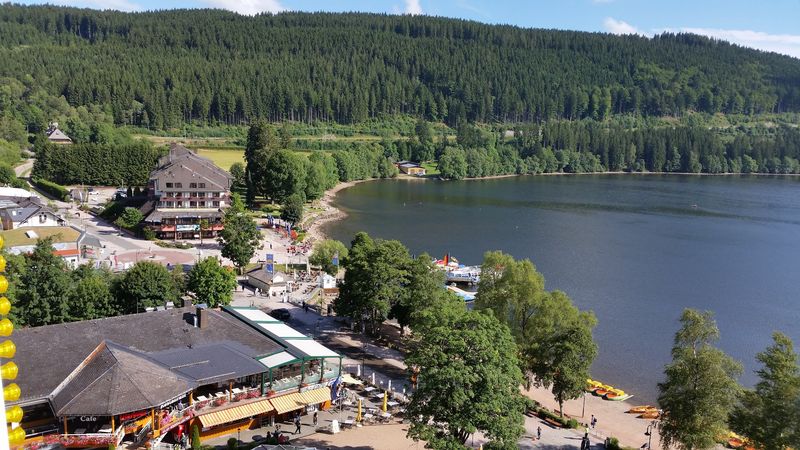
Few forests in the world carry as much storytelling weight as this one. The Black Forest in southwestern Germany is directly tied to the Brothers Grimm fairy tale tradition, with scholars linking stories like “Hansel and Gretel” and “Snow White” to the landscape and folk culture of this region.
Beyond fairy tales, local legends describe witches gathering on hilltops, water spirits called Nixies lurking near streams, and a dragon-like creature known as the Tatzelwurm said to haunt the deeper valleys. The Werewolf of Morbach is another popular local legend that has been retold for generations.
Visitors today will find over 23,000 kilometers of marked hiking trails cutting through dense spruce and fir woodland. Charming towns like Baiersbronn sit tucked into forested valleys, offering easy access to waterfalls, panoramic viewpoints, and cultural museums. The forest covers roughly 6,000 square kilometers, making it one of Germany’s largest and most varied natural landscapes.
2. Białowieża Forest, Białowieża, Podlaskie, Poland
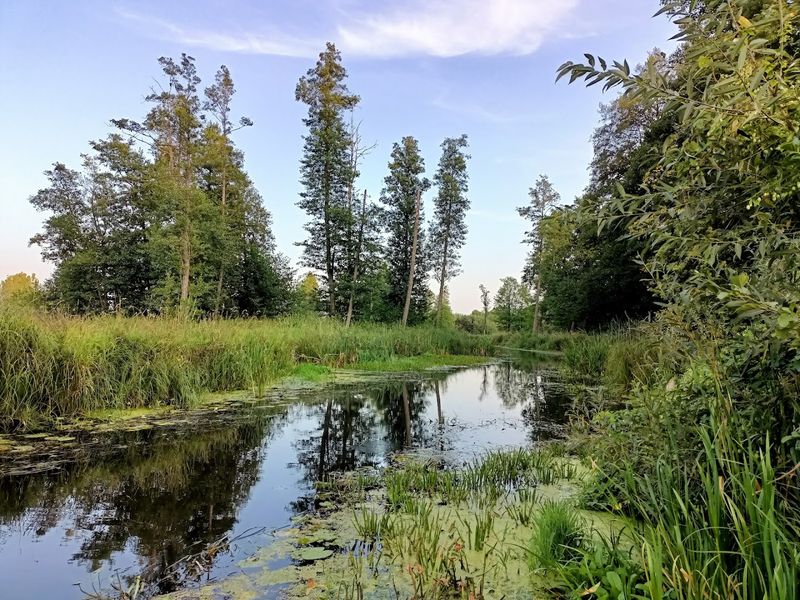
Białowieża Forest is what most of Europe looked like thousands of years ago, before agriculture and industry cleared the land. Straddling the border between Poland and Belarus, this UNESCO World Heritage Site is one of the last true primeval forests on the continent, with trees that have never been logged and wildlife that roams freely through the undergrowth.
The forest is home to the European bison, the heaviest land animal in Europe, which was hunted to near-extinction and successfully reintroduced here in the twentieth century. Ancient legends surrounding these woods describe sacred groves protected by forest spirits, and Polish royal records from the fifteenth century show that kings hunted here and treated the land as something close to sacred.
Walking through the strictly protected zones requires a licensed guide, but the experience is unlike anything else in Europe. Old-growth oaks, some over five hundred years old, tower above a forest floor that feels genuinely unchanged by time.
3. Hoia-Baciu Forest, Cluj-Napoca, Cluj County, Romania
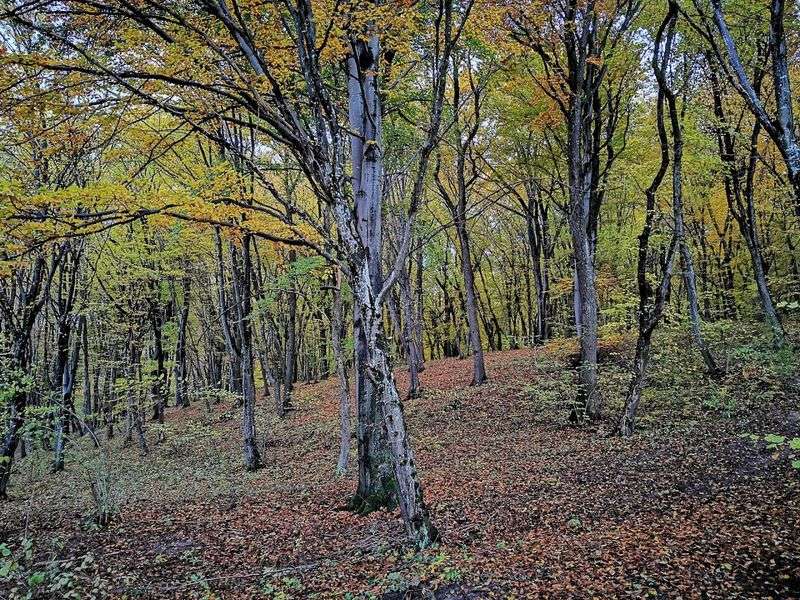
Romania’s most talked-about forest has earned a reputation that stretches far beyond its borders. Hoia-Baciu sits just outside Cluj-Napoca and has been nicknamed the Bermuda Triangle of Transylvania, largely due to decades of reported unexplained phenomena including strange lights, compass malfunctions, and vivid accounts of disorientation among visitors.
The forest gets its name from a shepherd who allegedly disappeared here along with a flock of two hundred sheep, leaving no trace behind. That story, combined with the forest’s visually striking trees, which grow in twisted, contorted shapes unlike the surrounding woodland, has fueled its reputation as one of Europe’s most mysterious places.
Scientists have studied the area and offered various geological and biological explanations for the unusual tree growth patterns, but the legends persist. For visitors who prefer facts over folklore, Hoia-Baciu also offers pleasant walking trails and genuine biodiversity. The circular clearing at its center, where vegetation refuses to grow, remains unexplained to this day.
4. Huelgoat Forest, Huelgoat, Brittany, France
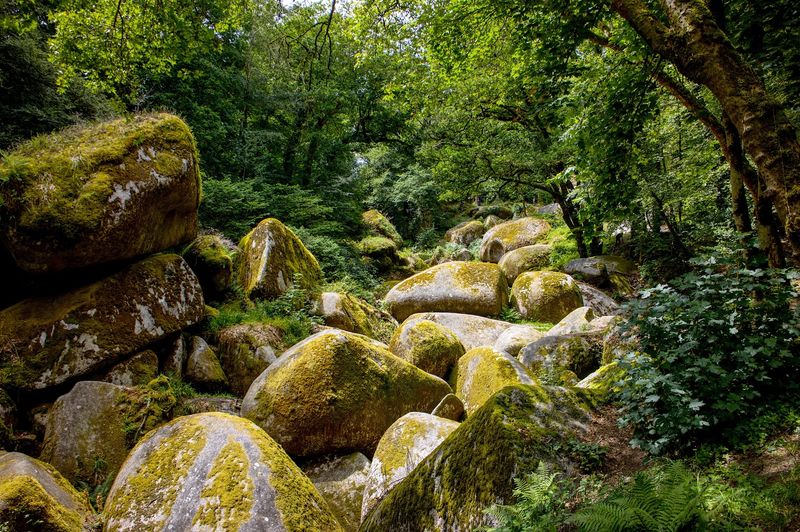
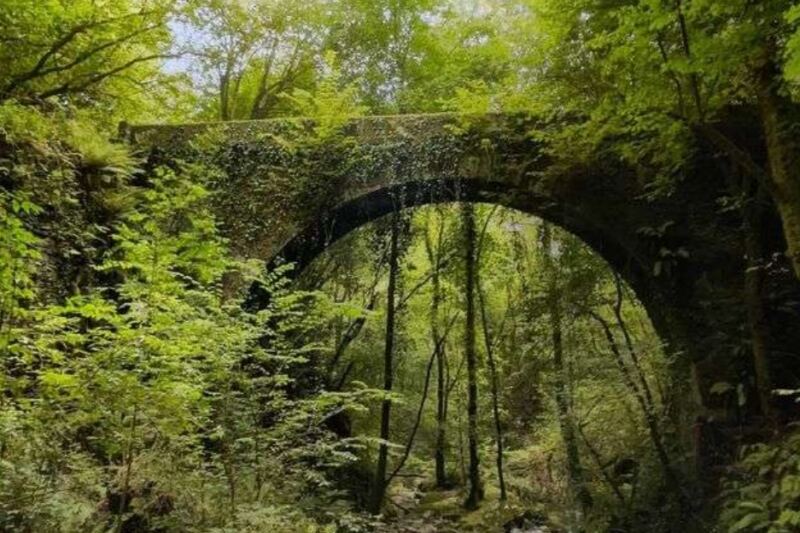
Granite boulders the size of small houses are scattered across Huelgoat Forest as if a giant stopped mid-game and left everything where it fell. That is actually not far from local legend: Breton mythology attributes the chaotic rock formations to the giant Gargantua, who supposedly hurled the stones in a fit of anger after a disagreement with the townspeople.
The forest is also connected to Arthurian traditions, with local tales placing Merlin and King Arthur in this part of Brittany. Specific rock formations have names drawn from legend, including the Devil’s Cave, the Trembling Rock, and the Chaos of Rocks, a dense cluster of boulders wedged so tightly together that visitors can squeeze between them on marked paths.
Huelgoat is a small, quiet town, and the forest is rarely overcrowded, which makes it a genuinely relaxed destination. The combination of unusual geology, dense woodland, and layered mythology gives this Breton forest a personality unlike anywhere else in France.
5. Hallerbos, Halle, Flemish Brabant, Belgium
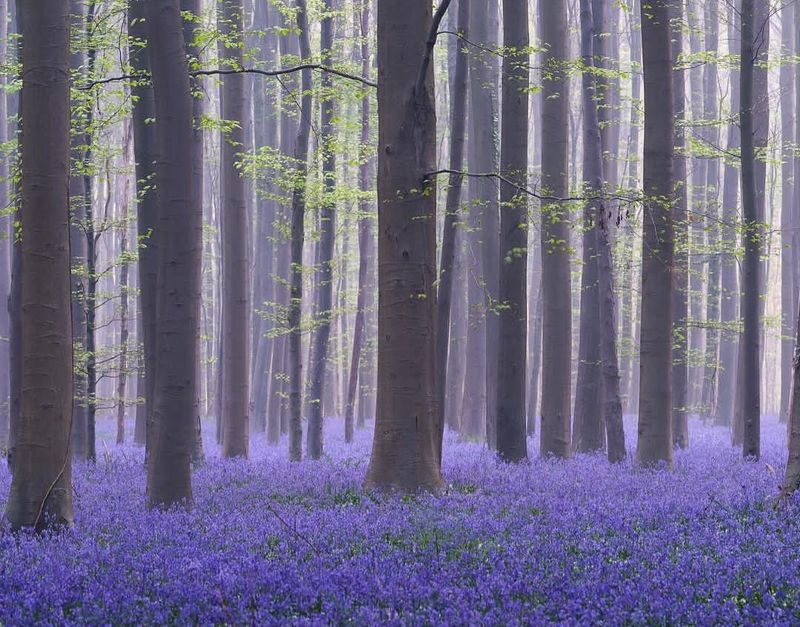
For a few weeks every spring, Hallerbos pulls off one of the most dramatic seasonal transformations in European nature. Millions of wild bluebells emerge beneath the beech canopy, turning the entire forest floor a vivid shade of purple-blue. Photographers and day-trippers travel from across Belgium and neighboring countries to witness the display, which typically peaks in mid-April.
Local folklore describes Hallerbos as a place of wandering spirits and enchanted woodland, and the beech forest does have an otherworldly quality even outside bluebell season. The trees are remarkably tall and straight, creating natural corridors that stretch far into the distance.
Hallerbos covers around 552 hectares and is managed by the Agency for Nature and Forests. Marked trails make it accessible for all fitness levels, and the forest is free to enter year-round. Outside the bluebell season, it remains a popular destination for hikers and cyclists who appreciate the quiet, well-maintained paths through mature beech woodland just south of Brussels.
6. Irati Forest, Ochagavía, Navarre, Spain
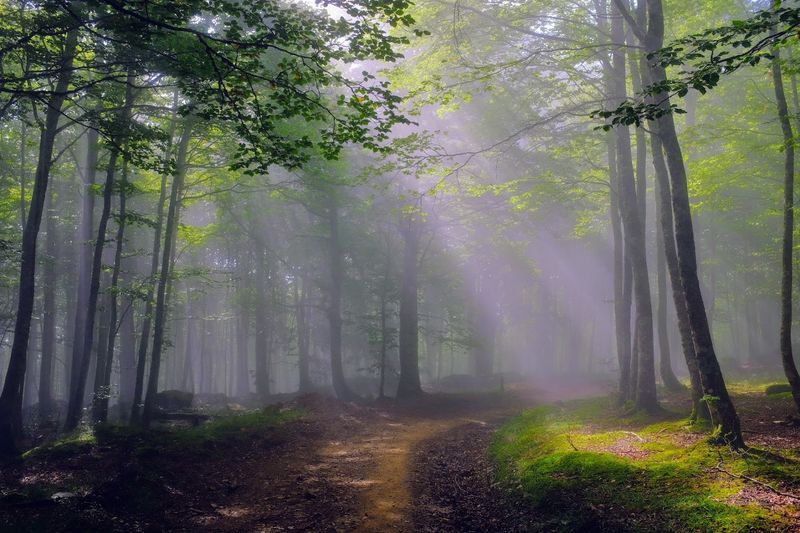
Irati Forest covers roughly 17,000 hectares of beech and fir woodland in the Navarrese Pyrenees, making it one of the largest continuous forests of its kind in all of Europe. The sheer scale of it is part of what makes the place feel ancient and slightly overwhelming in the best possible way.
Basque mythology runs deep through this landscape. The Basajuan, a towering hairy creature described as a guardian of the forest and mountains, is said to roam these hills. According to legend, the Basajuan taught early humans how to cultivate wheat and forge iron, which makes this particular forest spirit considerably more helpful than most.
The Irati Reservoir sits at the heart of the forest and provides a focal point for visitors exploring the area. Autumn is the most popular season, when the beeches turn every shade between yellow and deep copper. Hiking trails range from easy lakeside walks to demanding mountain routes with views stretching deep into the Pyrenees.
7. Garajonay National Park, San Sebastián de La Gomera, Canary Islands, Spain
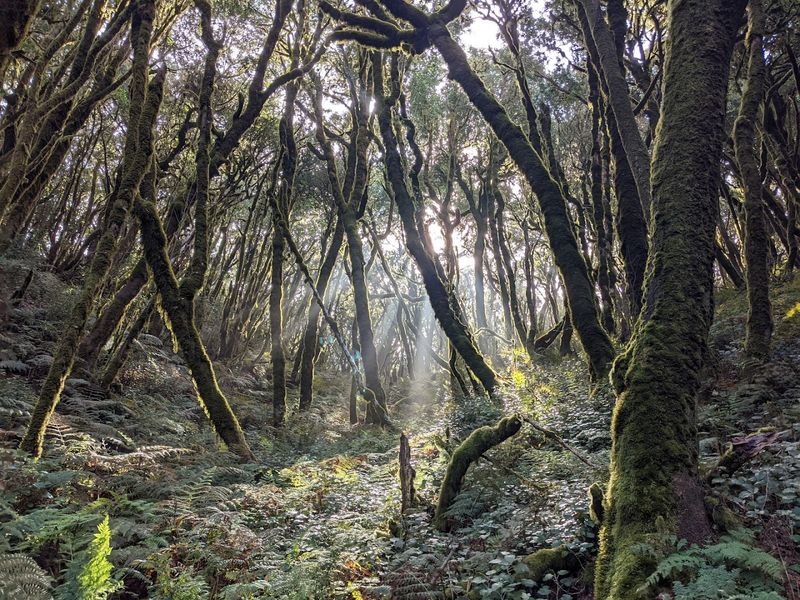
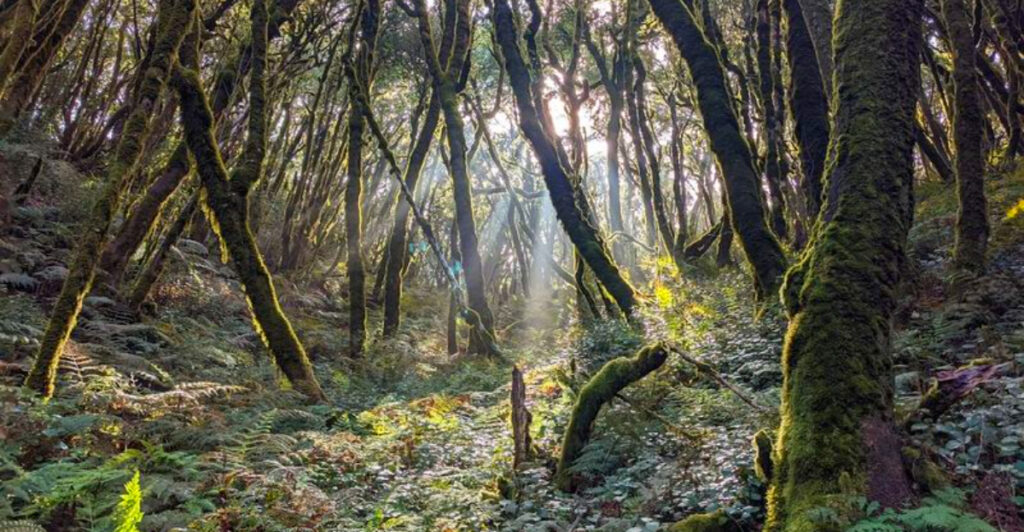
Garajonay National Park preserves a type of forest that once covered much of southern Europe and North Africa during the Tertiary period, millions of years before the last ice age. When the climate shifted and those forests disappeared from the mainland, they survived on the Canary Islands, making Garajonay a genuine living relic of prehistoric vegetation.
The park covers about 3,984 hectares on the island of La Gomera and was designated a UNESCO World Heritage Site in 1986. The laurel trees here, some of enormous girth, are draped in thick moss and ferns, creating a dense, layered canopy that keeps the interior cool and heavily shaded even on warm days.
Local Guanche legends, from the indigenous people of the Canary Islands, describe the park’s central peak as a place of deep spiritual significance. The name Garajonay itself comes from a tragic local love story involving two young people named Gara and Jonay. Hiking trails cross the park in multiple directions, offering remarkable views of neighboring islands on clear days.
8. Foresta Umbra, Monte Sant’Angelo, Apulia, Italy
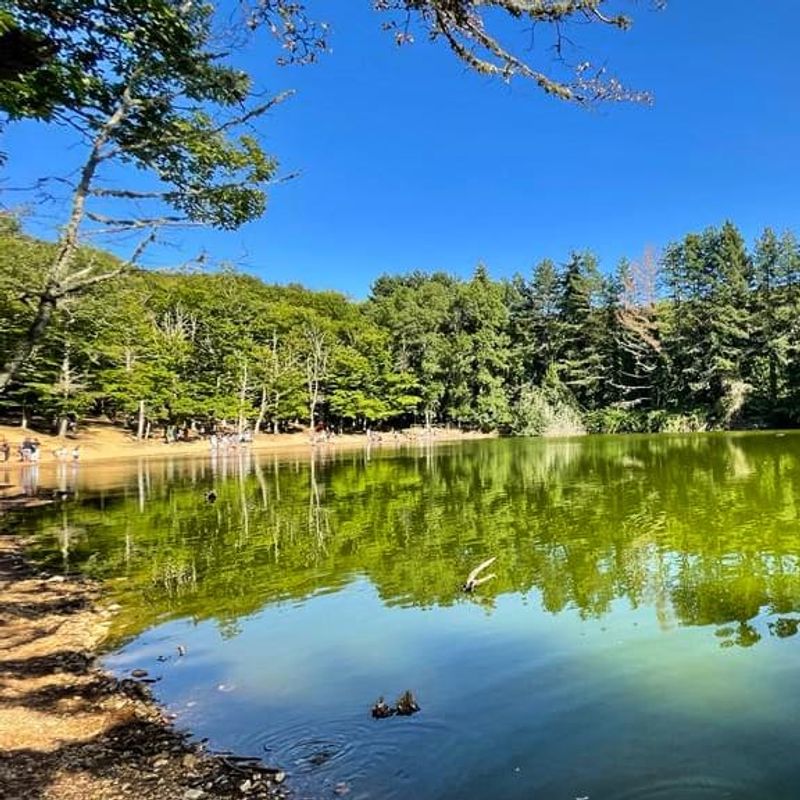
Most visitors to Apulia spend their time along the coast, which means Foresta Umbra remains one of southern Italy’s best-kept natural secrets. Tucked inside Gargano National Park on the heel of the Italian boot, this ancient beech forest feels completely out of place in a region better known for olive groves and whitewashed towns.
The name translates roughly to Shadow Forest, a reference to the dense canopy that blocks sunlight even at midday. Medieval legends describe this woodland as a refuge for hermits and pilgrims traveling to the nearby sanctuary of Monte Sant’Angelo, one of the most important archangel shrines in Christian tradition. The forest’s reputation as a place of spiritual encounter goes back well over a thousand years.
Today, the forest is home to roe deer, wild boar, and several rare tree species including ancient yews and Oriental hornbeams. A small visitor center near the main entrance provides trail maps and information about the park’s ecology. The combination of unusual biodiversity and deep historical context makes Foresta Umbra genuinely worth the detour.
9. Vienna Woods, Vienna, Austria
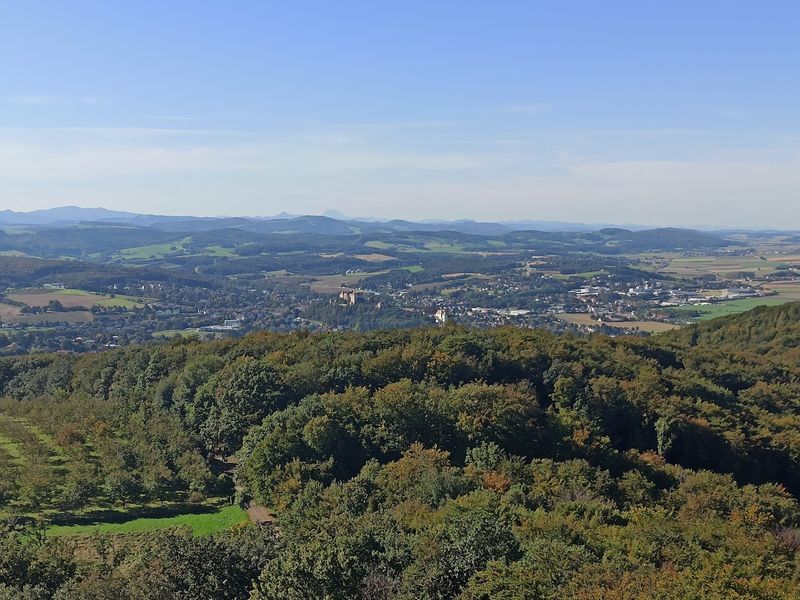
The Vienna Woods hold a remarkably privileged position in European cultural history. Stretching along the western and southwestern edge of Austria’s capital, this forested upland region has inspired composers including Beethoven and Johann Strauss, who wrote his famous waltz “Tales from the Vienna Woods” in tribute to the landscape.
Medieval castles, old monasteries, and ancient vineyards are embedded throughout the hills, and the folklore of the region includes everything from tales of wandering knights to stories about the Roman settlements that once occupied the valleys below. The woods were formally protected as early as the twelfth century under Babenberg rule, making this one of Europe’s oldest continuously managed forests.
The UNESCO Biosphere Reserve designation the Vienna Woods received in 2005 reflects both its ecological value and its cultural significance. Visitors can follow well-marked trails between historic sites, stopping at hilltop viewpoints that look back over the city. The proximity to Vienna means the woods are easily accessible without any complex travel planning.
10. Sonian Forest, Brussels, Belgium
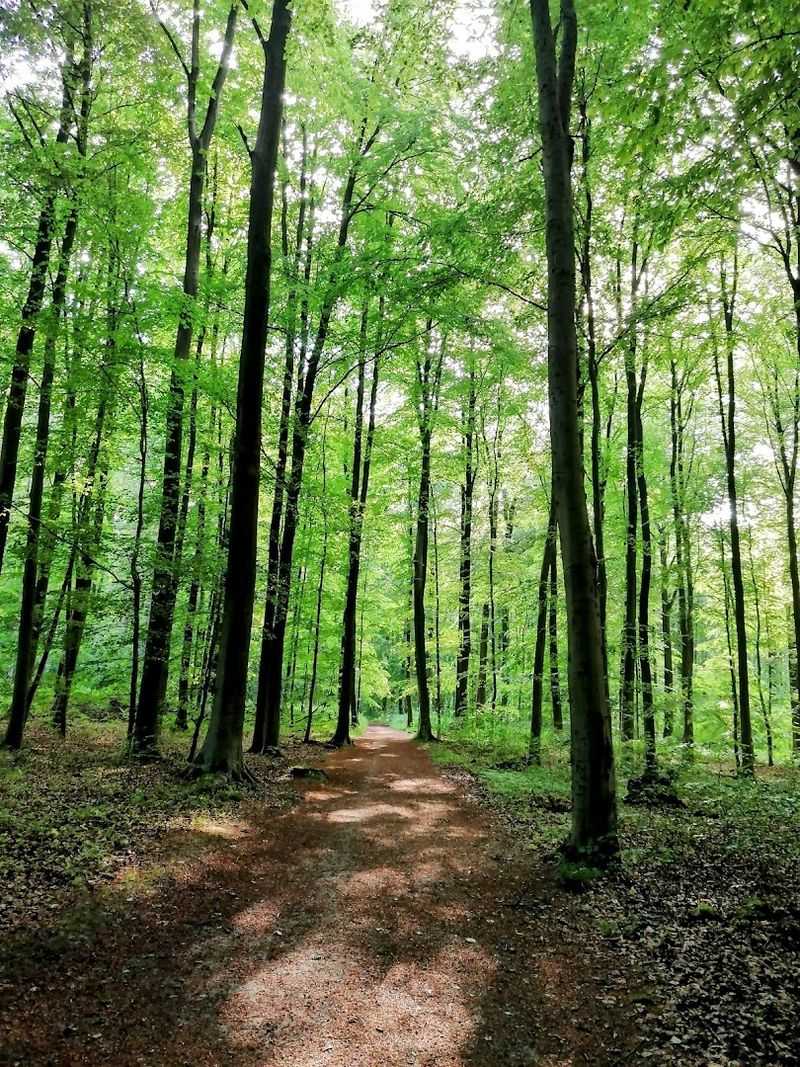
Directly bordering Brussels, Sonian Forest is the kind of place that surprises people who expect a city park and instead find one of Belgium’s most impressive natural landscapes. The forest covers about 4,400 hectares and contains some of the finest old-growth beech trees in Western Europe, with trunks rising remarkably straight to heights that dwarf most urban trees.
The history of Sonian goes back to the ancient Silva Carbonaria, a vast forest that once stretched across much of northern Belgium. Medieval monks, royal hunters, and later Napoleonic soldiers all passed through these woods, leaving behind layers of history that are still visible in old boundary markers and historic roadways cutting through the trees.
Today the forest is divided between three Belgian regions and is jointly managed for conservation and public access. Cycling routes and walking trails connect several picturesque ponds and historic sites within the woodland. The forest is also part of a UNESCO World Heritage listing shared with other ancient beech forests across Europe, recognizing its exceptional ecological value.
11. Forest of Dean, Coleford, Gloucestershire, England, United Kingdom
The Forest of Dean has been a royal forest since at least the time of William the Conqueror, and its history as a hunting ground, iron-producing region, and source of naval timber gives it a backstory as layered as its woodland canopy. Ancient free miners still hold legal rights to mine coal and iron ore here under a system dating back to medieval law.
Local legends are equally rich. The Beast of Dean, described as an abnormally large wild boar, became a modern folk story when boar sightings were reported across the forest after a population was reintroduced in the early 2000s. Earlier folklore includes tales of outlaws hiding in the deep woodland and hidden treasures buried by Civil War soldiers.
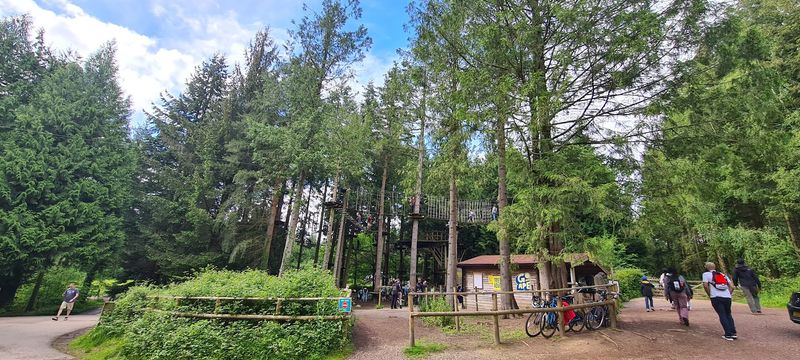
The forest covers around 110 square kilometers and offers an impressive range of activities including mountain biking, hiking, and a popular Go Ape treetop adventure course. Sculpture trails weave through the trees, and the nearby town of Coleford provides a practical base for exploring. Few forests in England pack this much history into one place.
12. Triglav National Park, Kranjska Gora, Slovenia
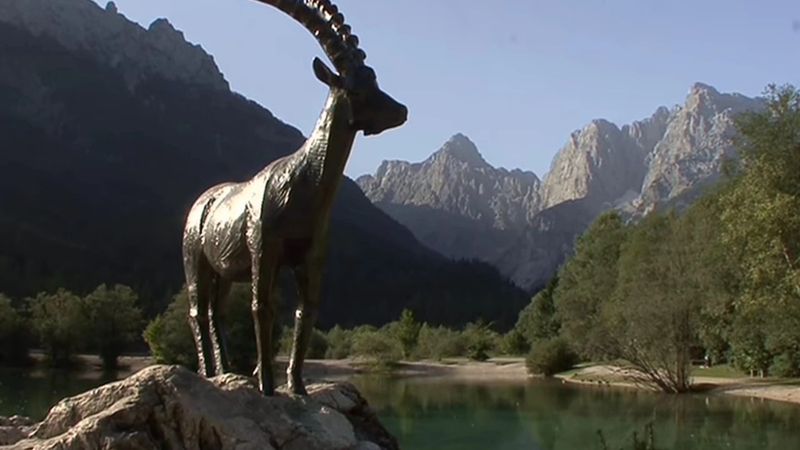
Slovenia’s only national park is named after Mount Triglav, the country’s highest peak and a symbol so central to Slovenian national identity that it appears on the national flag. But the park is far more than its famous summit. Extensive valley forests, glacial lakes, and rivers with water so clear they look artificially colored make this one of Central Europe’s most visually striking natural areas.
Slovenian folklore is woven tightly into the landscape. The legend of Zlatorog, a white chamois with golden horns said to guard hidden mountain treasures, originated in this region. According to the tale, Zlatorog’s blood had the power to grow magical healing flowers wherever it fell, and hunters who pursued him were ultimately punished for their greed.
The park covers 880 square kilometers and includes the famous Soča River valley, known for its extraordinary turquoise water. Hiking routes range from gentle valley walks to demanding alpine ascents. The town of Kranjska Gora serves as a well-equipped gateway with accommodation, trail information, and easy access to multiple forest and mountain routes throughout the park.
Share this story