 Unearth The Voyage
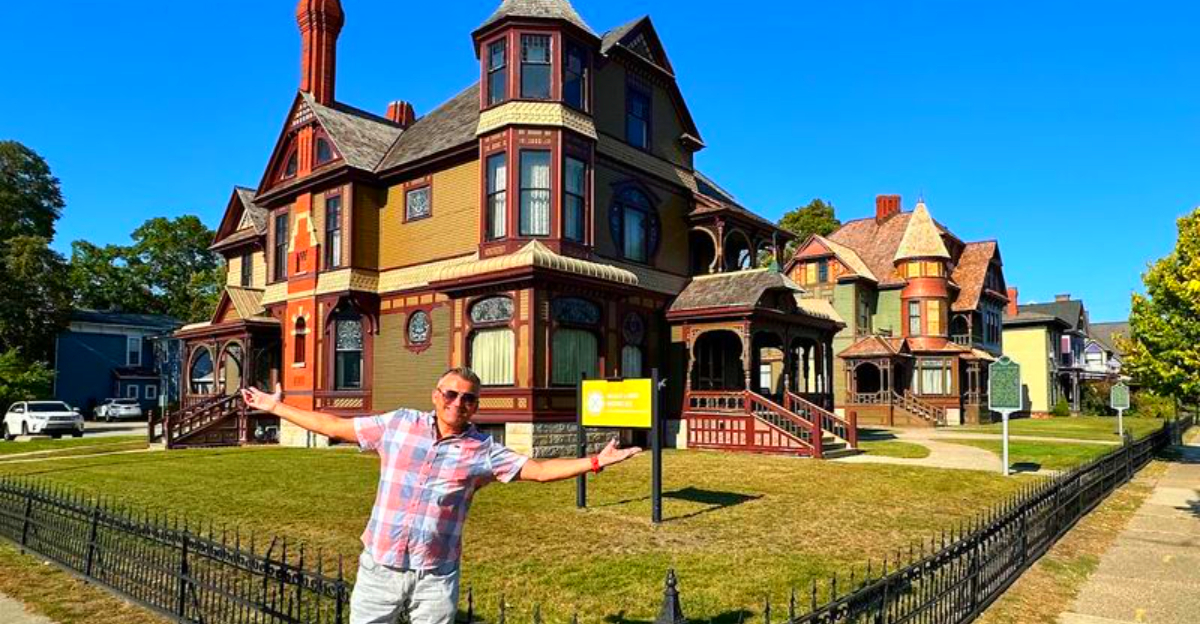
Two neighboring mansions in Muskegon tell the story of how the lumber industry created extreme wealth in late 1800s Michigan. Built by Charles Hackley and Thomas Hume, these homes showcase what that money turned into, from detailed wood interiors to preserved period design.
The Hackley and Hume Historic Site at 484 W. Webster Avenue includes five buildings open to the public, with seasonal tours running May through October.
For about fifteen dollars, visitors can walk through both mansions and see how two business partners lived at the height of the timber boom.
What makes this stop stand out is the level of detail inside and the contrast between the two homes. Each room reflects personal choices, status, and the influence of an industry that shaped the region.
The Story Behind the Side-by-Side Mansions
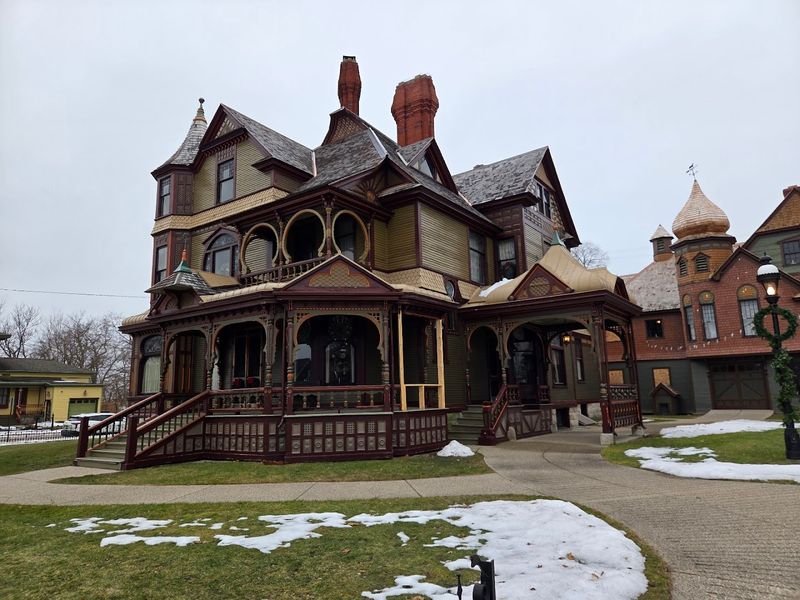
Not many historic sites can claim that two separate lumber millionaires decided to build their dream homes right next door to each other, but that is exactly what happened at 484 W. Webster Avenue in Muskegon, Michigan 49440.
Charles Hackley and Thomas Hume were business partners who ran one of the most successful lumber operations in the Great Lakes region during the late 1800s.
When the timber money started rolling in, both men commissioned grand Victorian mansions on the same street, almost simultaneously. Hackley’s home went up in 1890, and Hume’s followed just two years later in 1892.
The result is a rare double portrait of wealth, taste, and ambition from an era that transformed Michigan’s economy.
Touring both homes back to back gives you a fascinating comparison of two men with different personalities but equally impressive bank accounts. The site is managed by the Lakeshore Museum Center, which has done a remarkable job keeping the history alive and accessible.
The Hackley House and Its Castle-Worthy Woodwork
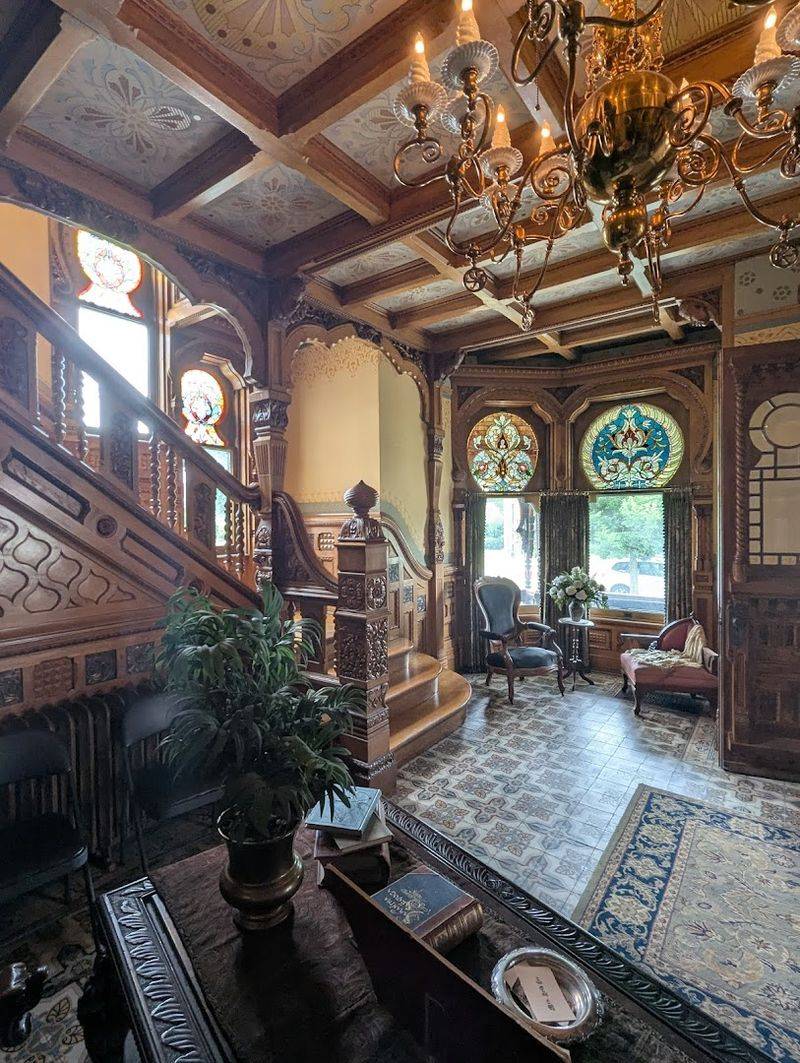
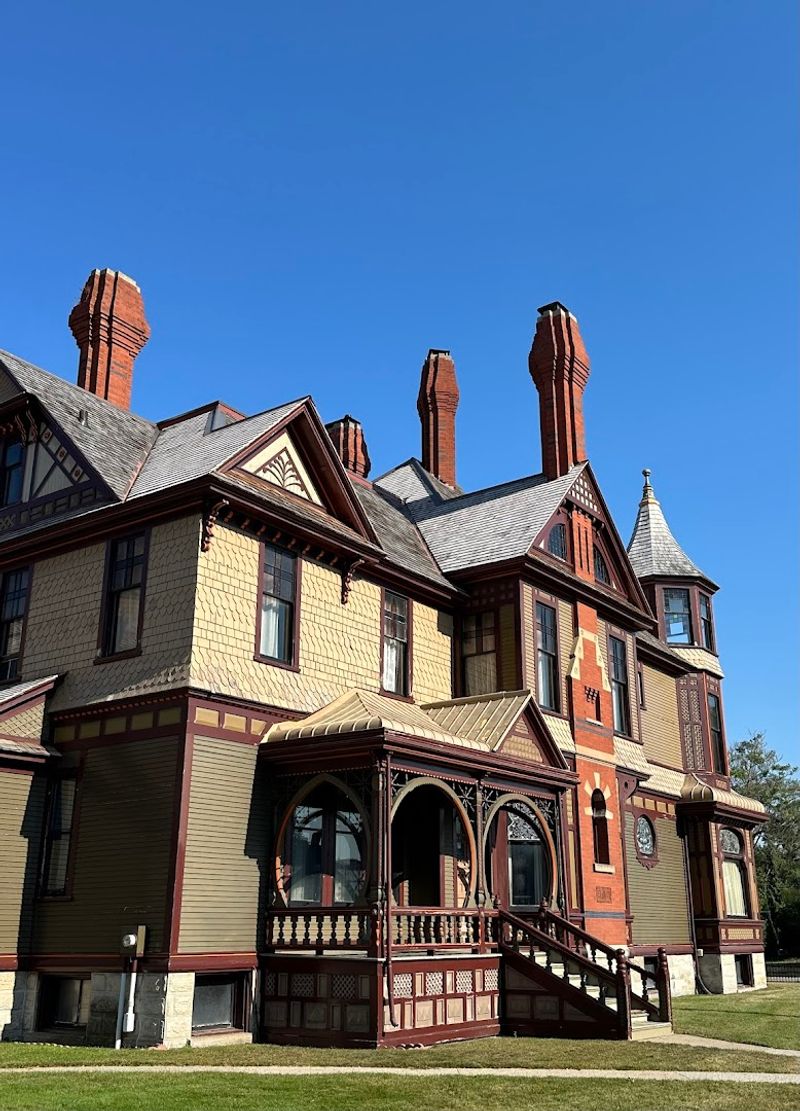
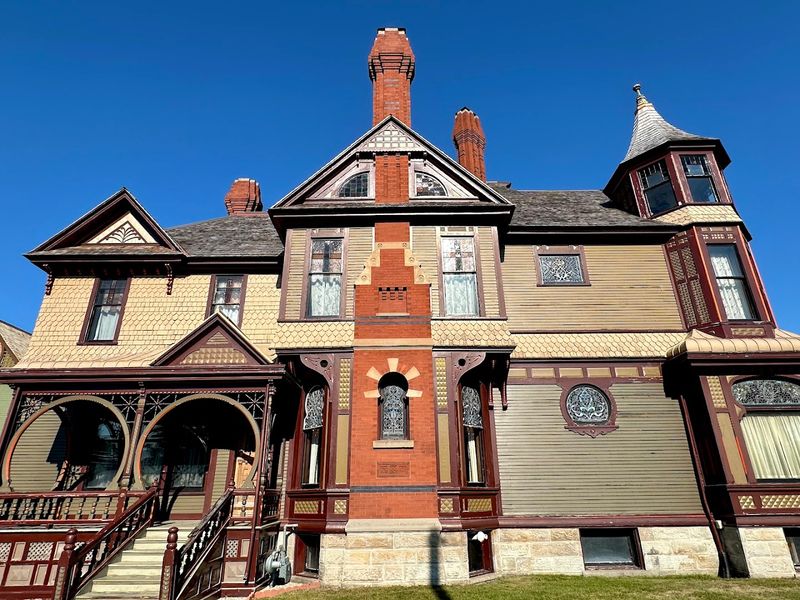
The Hackley House is the kind of place that makes you stop mid-step and stare at the ceiling, the walls, and the floor, all at once. Built in 1890 in the Queen Anne style, it features 16 rooms filled with woodwork so detailed and precise that one visitor famously compared it to touring a castle in Germany.
Every surface seems to tell a story. The grand staircase curves upward with carved balusters, stained glass throws colored light across the floors, and the overall effect is one of controlled extravagance.
Nothing feels overdone, but nothing was left plain either.
Charles Hackley clearly had strong opinions about craftsmanship, and he spared no expense bringing those opinions to life in every room. The restoration work done by the museum team is equally impressive, preserving the original materials and finishes with careful attention to historical accuracy.
What you see today is as close to 1890 as modern preservation science can get, and that makes every room feel genuinely alive.
Inside the Hume House: A Different Kind of Elegance
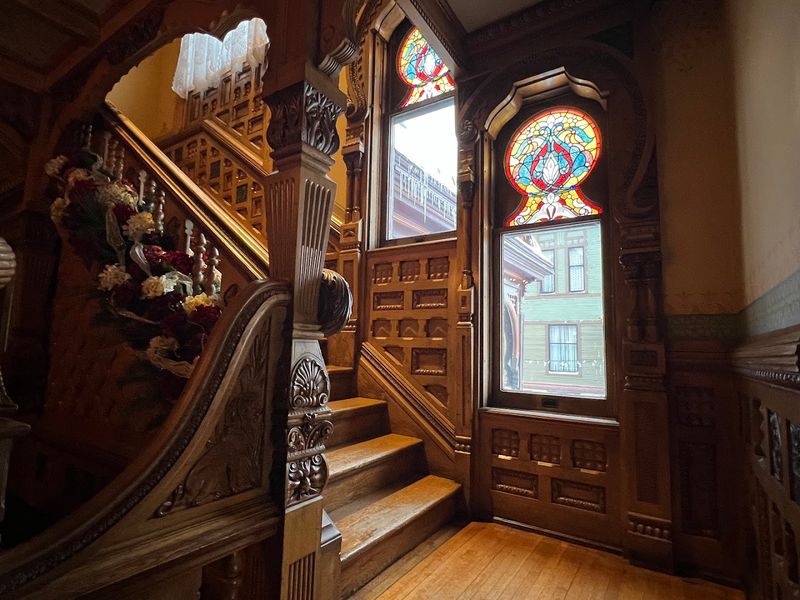
Right next door to the Hackley House stands a mansion with a completely different personality. The Hume House, completed in 1892, follows the Richardsonian Romanesque style, which favors heavier stonework, rounded arches, and a more serious, almost fortress-like presence compared to its neighbor’s playful Queen Anne flair.
Thomas Hume’s home includes 16 rooms, among them a library and a music room that speak to a man who valued quiet intellectual pursuits alongside his business dealings. The grand staircase here has its own distinct character, broader and more commanding than the one in the Hackley House.
Touring the Hume House right after the Hackley House is a genuinely interesting exercise in contrast. Same era, same street, same level of wealth, but two very different visions of what a home should feel like.
The furnishings throughout are period-accurate, and the guides are skilled at connecting the objects in each room to the actual lives of the Hume family, making the tour feel personal rather than purely academic.
What the Lumber Boom Actually Looked Like
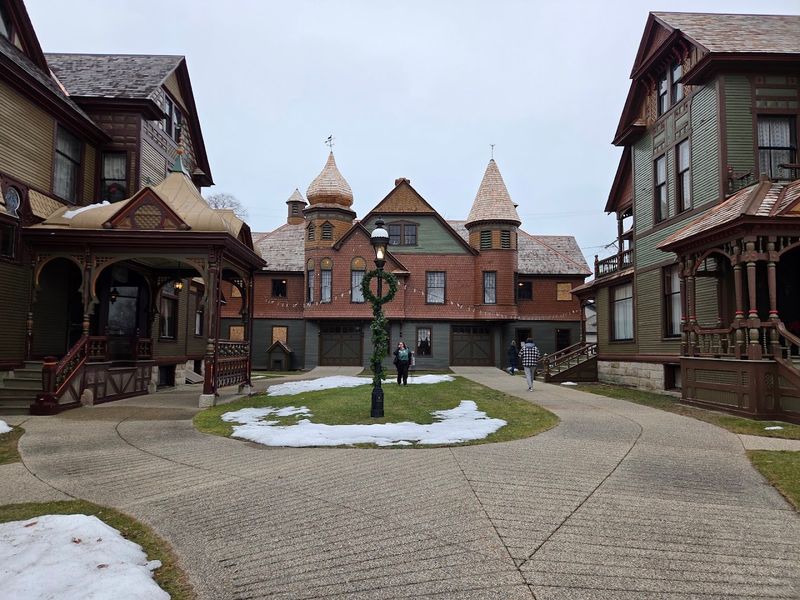
To really appreciate the Hackley and Hume Historic Site, it helps to understand just how wild and fast the Michigan lumber boom actually was. During the second half of the 1800s, the Great Lakes region held some of the densest forests in North America, and the demand for lumber to build America’s expanding cities was almost insatiable.
Muskegon sat at the center of this activity, with dozens of sawmills operating along its lakeshore at the industry’s peak. The city was producing more lumber than almost anywhere else in the country, and the money that poured through it created fortunes almost overnight.
Hackley and Hume were not just witnesses to this boom. They were two of its biggest engines.
Their partnership built a lumber empire that made both men extraordinarily wealthy by any standard, and the mansions they built on Webster Avenue are the most visible evidence of that success. Understanding the scale of what they accomplished makes every room in both houses feel like a chapter in a story you did not expect to find in a Michigan city.
The Five Buildings Your Ticket Actually Covers
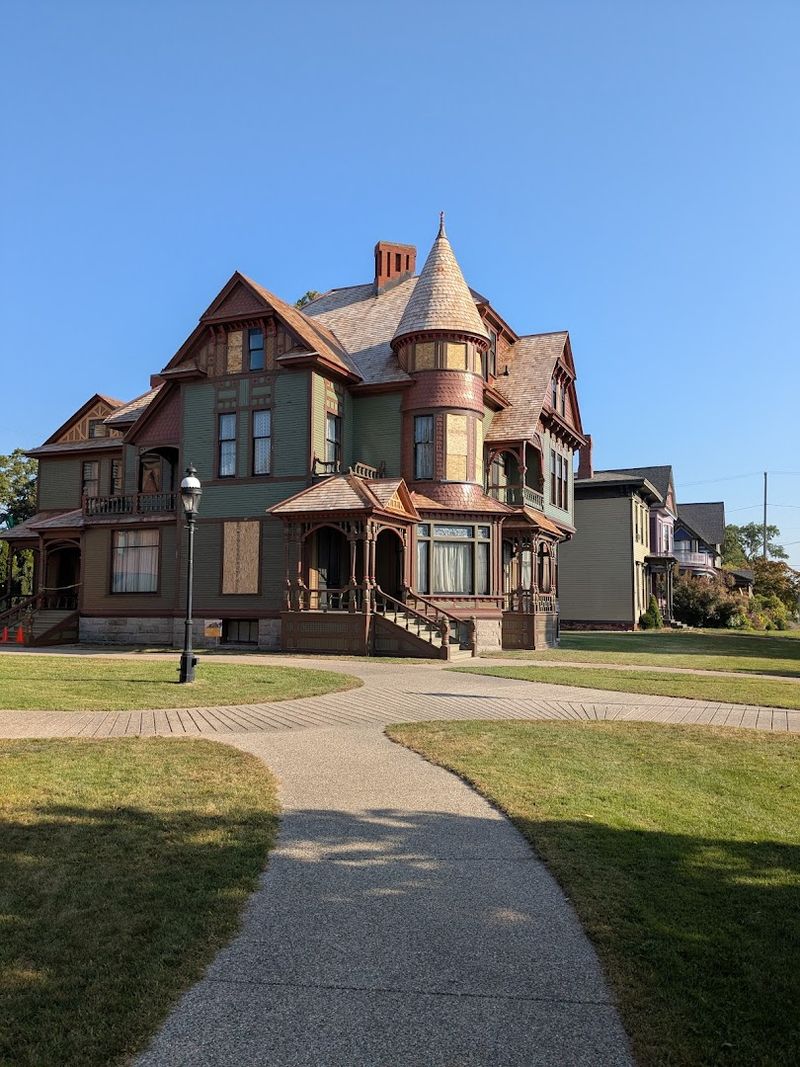
One of the best surprises at the Hackley and Hume Historic Site is the sheer amount of ground your admission ticket covers. For around fifteen dollars, visitors get access to not just the two main mansions but a total of five historic buildings on and near the property.
The carriage house is a highlight that often catches visitors off guard. It is a beautifully preserved structure that gives you a sense of how transportation and daily logistics worked for a wealthy household in the 1890s.
Then there is the historic Fire Barn Museum, a short walk from the mansions, which houses vintage firefighting equipment and tells the story of Muskegon’s early fire department.
The fact that all of this is bundled into a single reasonably priced ticket makes the site one of the best value heritage experiences in the entire state. Many visitors arrive expecting to spend an hour and find themselves still exploring two hours later.
The campus rewards curiosity, and every building adds a new layer to the story of what Muskegon looked like at its most prosperous.
Tour Guides Who Actually Know Their Stuff
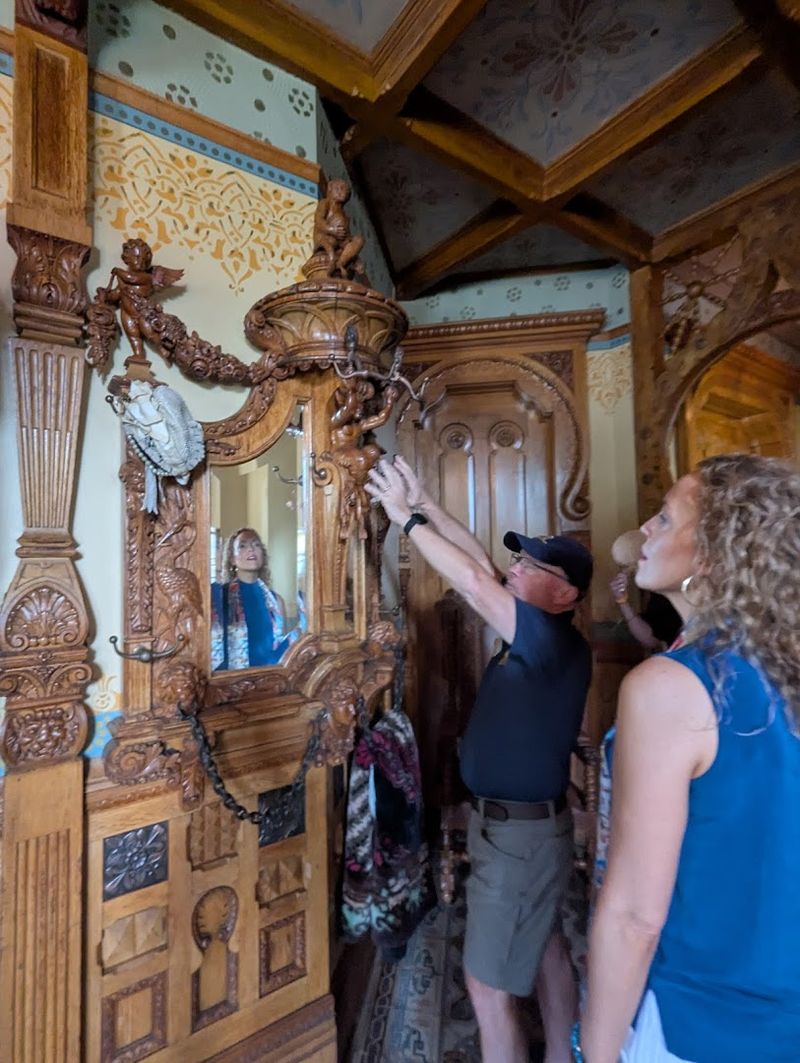
A historic house tour lives or falls on the quality of its guides, and the team at the Hackley and Hume Historic Site consistently earns high praise for their depth of knowledge and genuine enthusiasm. The guides do not just recite facts.
They connect the objects in each room to real events and real people, which turns what could be a dry walk-through into something genuinely engaging.
The best moments come when a guide picks up on a visitor’s curiosity and goes deeper into a specific detail, whether that is the origin of a piece of furniture, the symbolism in a stained glass design, or a personal story about one of the families who lived there. That kind of responsive storytelling is hard to teach and even harder to fake.
Visitors with kids have noted that the guides are especially skilled at keeping younger audiences interested by drawing comparisons between Victorian-era life and modern technology. What did children play with before screens?
How did a house stay warm without central heating? The guides handle these questions with patience and real insight, and that makes the tour work for almost everyone.
The All-Access Backstage Tour Experience
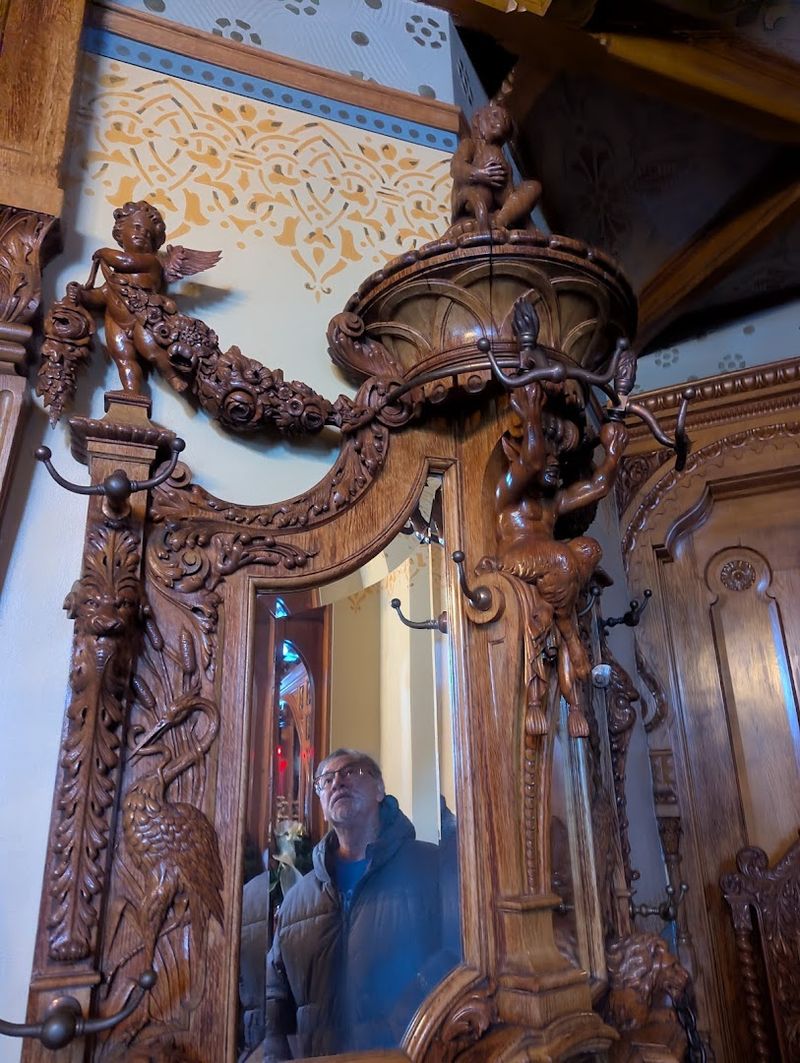
For visitors who have already done the standard tour and want to go deeper, the All-Access Tour is a genuinely exciting option. This special guided experience takes small groups into areas of the mansions that are normally roped off during regular visits, offering a behind-the-scenes look at rooms, storage areas, and architectural details that most people never get to see.
The phrase “all the ropes were down” captures it perfectly. You are not peering through a doorway or looking at something from a distance.
You are actually in the space, up close with the original materials, with a guide explaining exactly what you are looking at and why it matters.
This tour format works especially well for architecture enthusiasts, history researchers, and anyone who has ever stood in a historic house wishing they could just open that one closed door. Reservations for the All-Access Tour are recommended well in advance since group sizes are kept small to protect the historic interiors.
It is the kind of experience that turns a casual visitor into a repeat one.
The After Dark Tour and Its Atmospheric Appeal
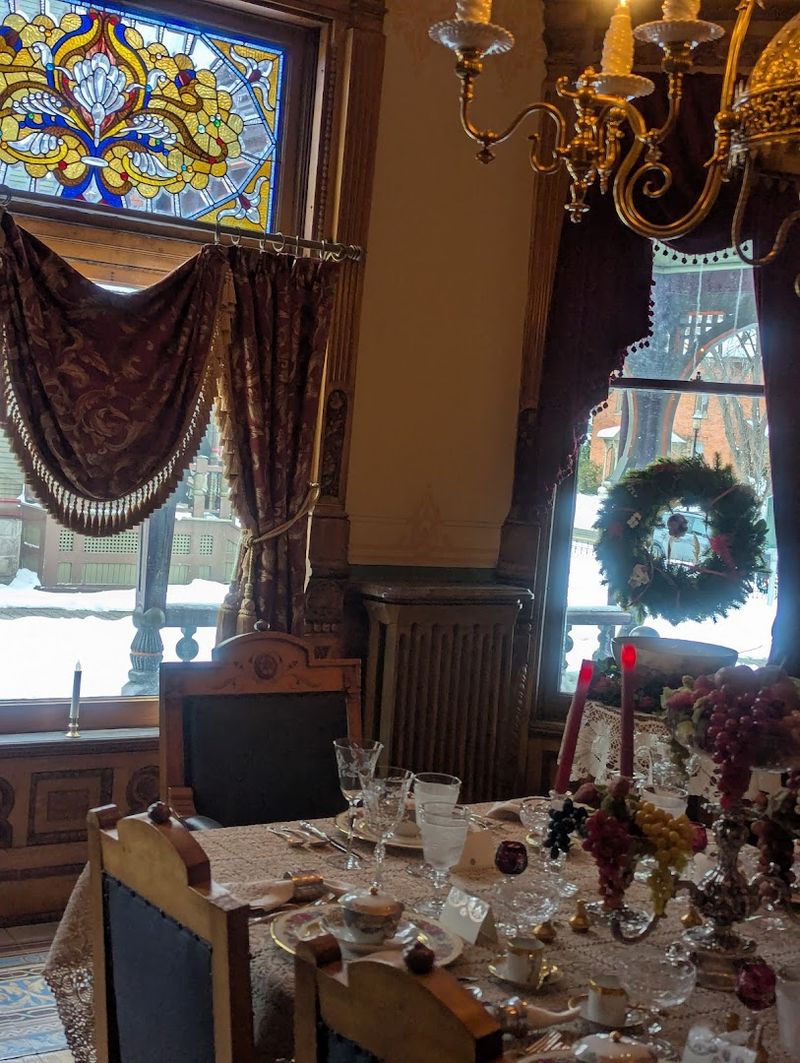
The After Dark Tour at the Hackley and Hume Historic Site is a completely different experience from the daytime visit, and not just because of the lighting. The guides shift their storytelling approach for the evening format, leaning into the atmospheric qualities of the mansions and the more unusual corners of their history.
Victorian homes have a natural dramatic quality after sunset. The carved woodwork casts longer shadows, the stained glass loses its color and becomes something more mysterious, and the silence of the rooms feels heavier.
The guides use all of this deliberately, pacing the tour to match the mood of the space.
Past visitors have described the After Dark Tour as well-executed and genuinely entertaining, with guides who strike the right balance between informative and atmospheric without crossing into anything cheap or gimmicky. It is a smart option for visitors who want a slightly different angle on the history, or for those who simply enjoy experiencing beautiful spaces in a less conventional way.
Booking ahead is strongly advised since these tours tend to fill quickly.
Charles Hackley’s Remarkable Legacy Beyond the Mansion
Charles Hackley’s story does not end at the front door of his mansion. After making his fortune in lumber, Hackley turned his attention to giving back to Muskegon in ways that still shape the city today.
He funded the construction of a public library, a hospital, an art museum, a park, and several other civic buildings that remain in use more than a century later.
The scale of his philanthropy was extraordinary for any era. Hackley reportedly gave away millions of dollars to his adopted city at a time when that sum represented a genuinely transformative investment in a mid-sized Michigan community.
His library in particular became a landmark, and visitors who explore Muskegon beyond the historic site will encounter his name and his buildings repeatedly.
Knowing this context before you tour the mansion changes how you experience it. The opulence of the house stops looking like pure self-indulgence and starts looking like one chapter in a longer story about a man who accumulated wealth and then spent a significant portion of it on everyone around him.
Practical Tips for Planning Your Visit
Getting the most out of a visit to the Hackley and Hume Historic Site starts with a little planning. Tours run seasonally from May through October, and hours can vary depending on the time of year, so checking the Lakeshore Museum Center’s website at lakeshoremuseum.org or calling ahead at 231-722-7578 is a smart first move before you make the drive.
Street parking is available directly in front of the mansions on W. Webster Avenue, making access straightforward.
The site does not have air conditioning, which is worth knowing if you are visiting on a hot summer afternoon. Light, breathable clothing makes the experience considerably more comfortable during peak season.
Admission is very reasonably priced at around fifteen dollars for access to all five buildings. Children under five may find the no-touching rule challenging since most items on display are original to the homes and extremely fragile.
Bringing a camera is strongly encouraged because nearly every room offers a composition worth capturing, and the guides are generally happy to pause for photos at key moments throughout the tour.
Why This Site Belongs on Every Michigan Itinerary
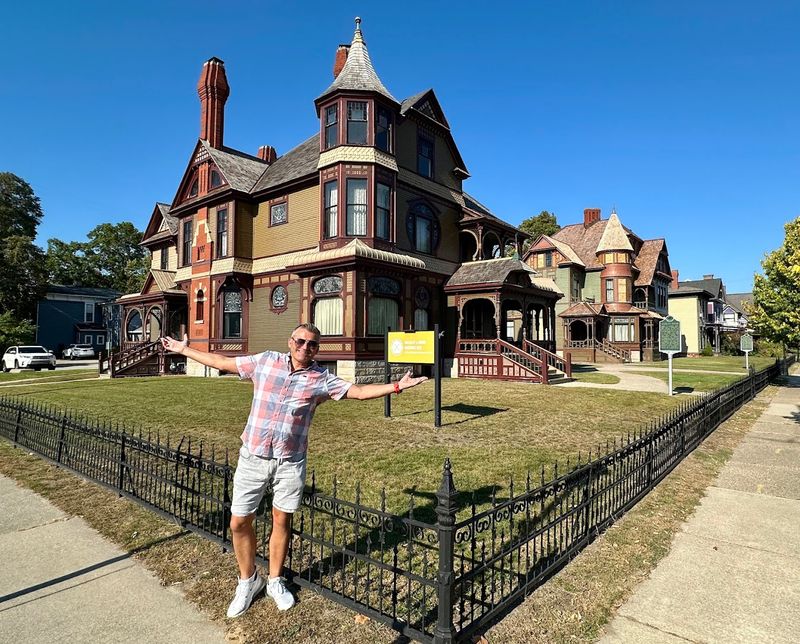
There is a specific kind of travel experience that stays with you long after you get home, and the Hackley and Hume Historic Site reliably delivers it. The combination of architectural beauty, well-told history, and genuine human stories makes this more than a standard museum visit.
It is a place where the past feels present in a very concrete way.
The site holds a 4.8-star rating across nearly 440 reviews, which is remarkable consistency for any attraction and reflects the sustained quality of the experience rather than a single lucky visit. Repeat visitors are common, and the variety of tour formats, including the standard guided tour, the All-Access Tour, and the After Dark Tour, gives people real reasons to come back.
Muskegon itself is worth exploring before or after the tour. The waterfront, the downtown area, and the other Hackley-funded landmarks nearby can fill a full and satisfying day.
The mansions at 484 W. Webster Avenue are the anchor of that experience, and they are an anchor that holds up every single time you visit.



