There is a place in eastern Oregon where the past does not feel distant at all. Wagon ruts carved into the earth more than 160 years ago are still visible, and the stories of the people who made that grueling journey westward are told with surprising depth and emotion.
The National Historic Oregon Trail Interpretive Center sits atop Flagstaff Hill near Baker City, and it pulls you in from the moment you arrive. Whether you are a history enthusiast, a curious road tripper, or a parent looking for something genuinely educational, this 500-acre site delivers an experience that is hard to forget.
Where the Center Stands: Address, Location, and First Impressions
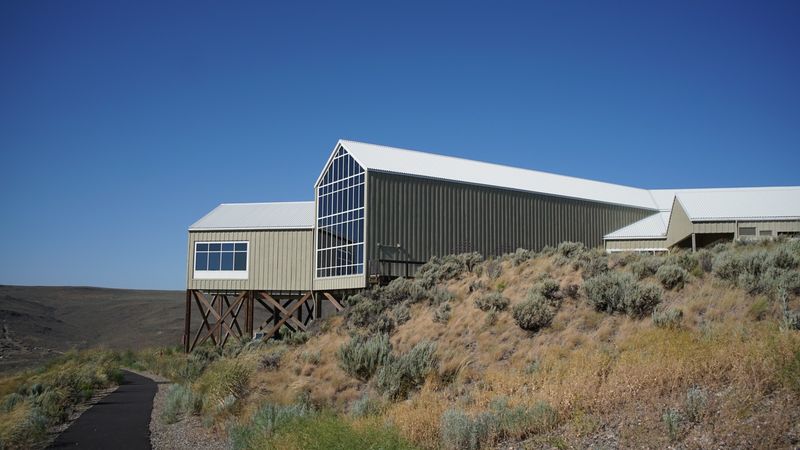
The National Historic Oregon Trail Interpretive Center is located at 22267 OR-86, Baker City, Oregon 97814, perched on top of Flagstaff Hill in the high desert of eastern Oregon. Getting there from Interstate 84 takes only a few minutes, and the entrance is clearly marked, so finding the place is refreshingly simple.
The building itself is modern and well-maintained, designed to blend with the surrounding sagebrush landscape without competing with it. From the parking area, you can already see sweeping views of the valley below and the Blue Mountains in the distance.
The parking lots are large, with dedicated space for RVs, and the whole setup feels organized and welcoming from the start.
The center is open daily from 9 AM to 5 PM, and the entrance fee runs under ten dollars for adults, with children getting in free. If you carry an America the Beautiful annual pass, admission is covered at no extra cost.
You can reach the center by phone at +1 541-523-1843, or visit the official BLM website for current details before your trip.
The Story Behind the Trail: History That Actually Hits Home
The Oregon Trail was not a road. It was a 2,000-mile dirt path that hundreds of thousands of people walked, rode, and dragged their lives across between roughly 1843 and the early 1870s.
Most of them had never done anything like it before, and many of them had no idea what was waiting ahead.
The center does a remarkable job of making that reality land with full weight. Exhibits feature actual diary entries from pioneers, some written in pencil on fragile paper, describing the heat, the dust, the broken wagon wheels, and the quiet moments of beauty along the way.
Reading those firsthand accounts in the voice of someone who was actually there is a completely different experience than reading a textbook summary.
The Westward Expansion period covered here spans roughly 1843 to 1853, though the trail saw use for years beyond that. The center frames this migration not just as an American achievement but as a deeply human story, full of difficult choices and real consequences.
By the time you finish the museum loop, the weight of that history settles in a way that stays with you long after you leave.
Inside the Museum: Exhibits, Dioramas, and Interactive Displays
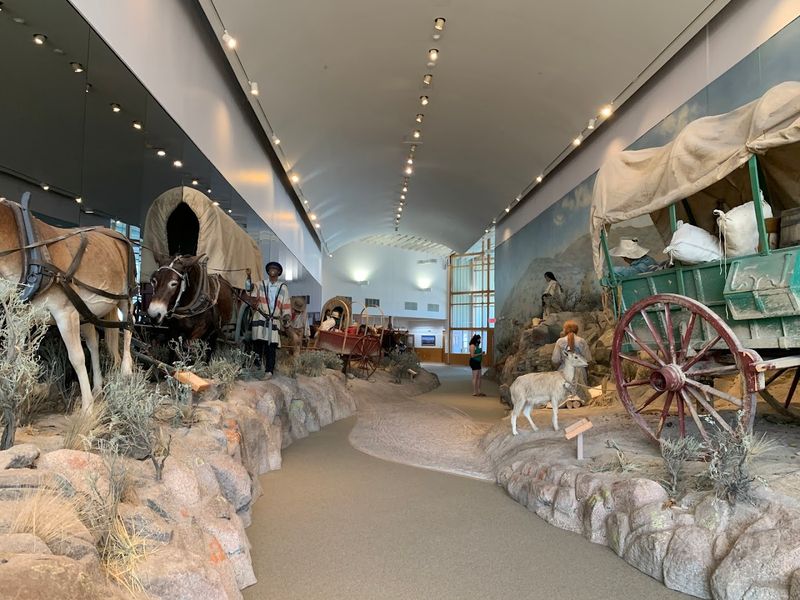
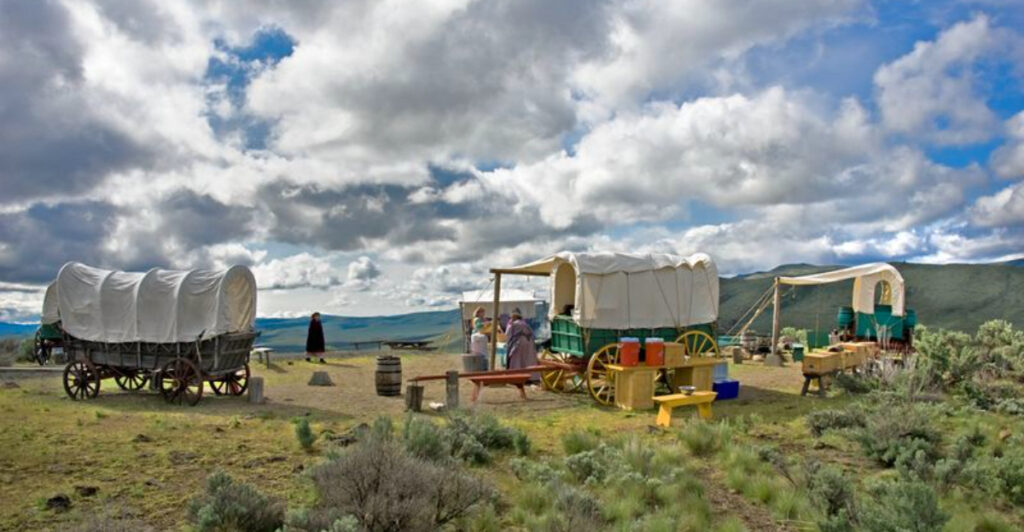
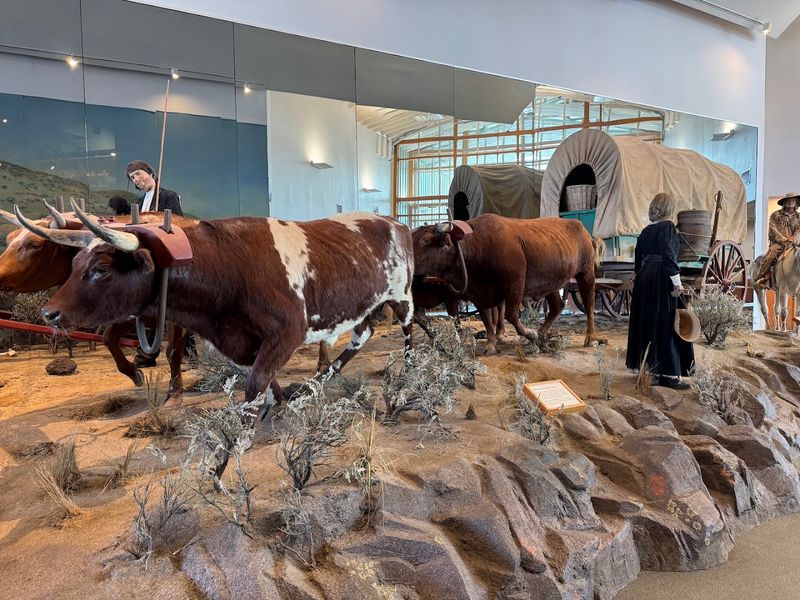
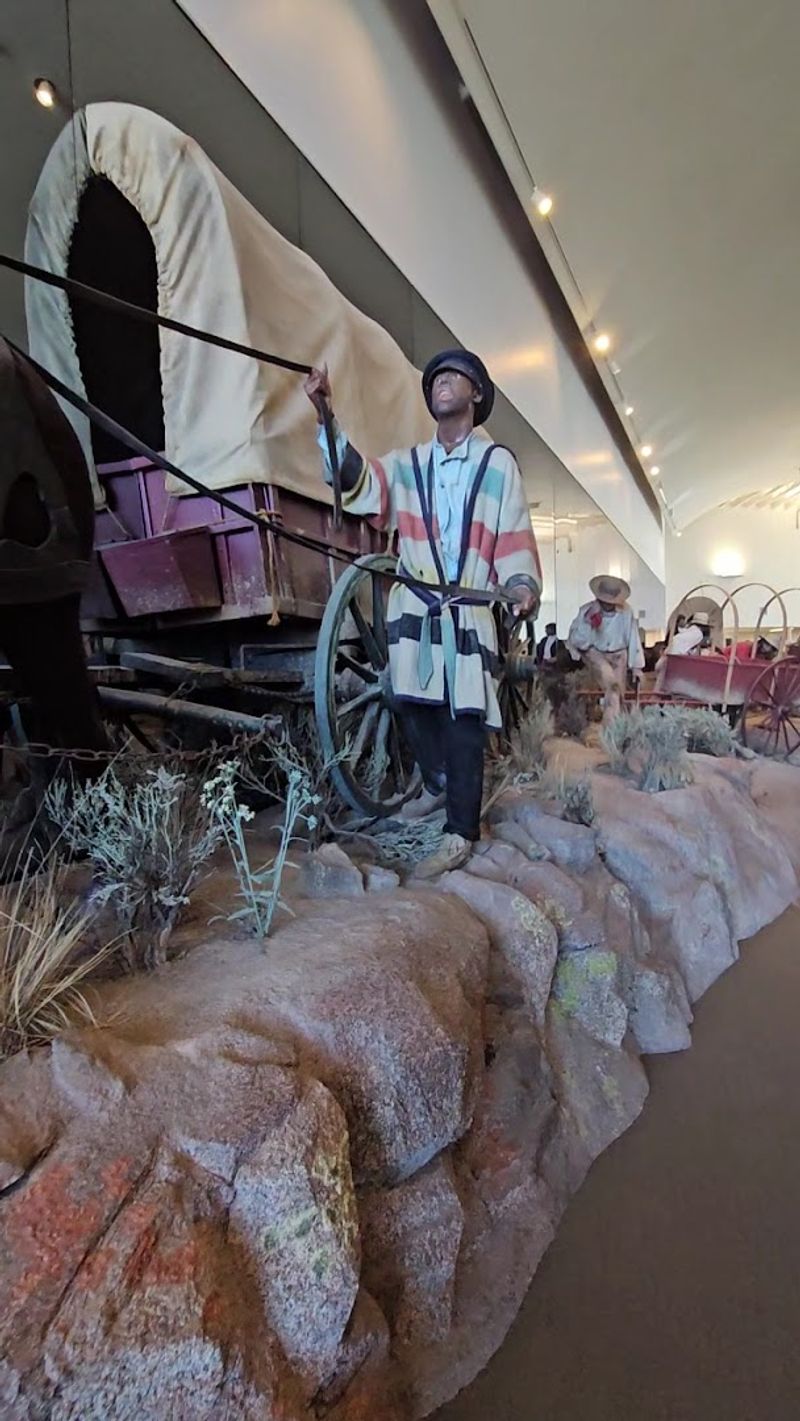
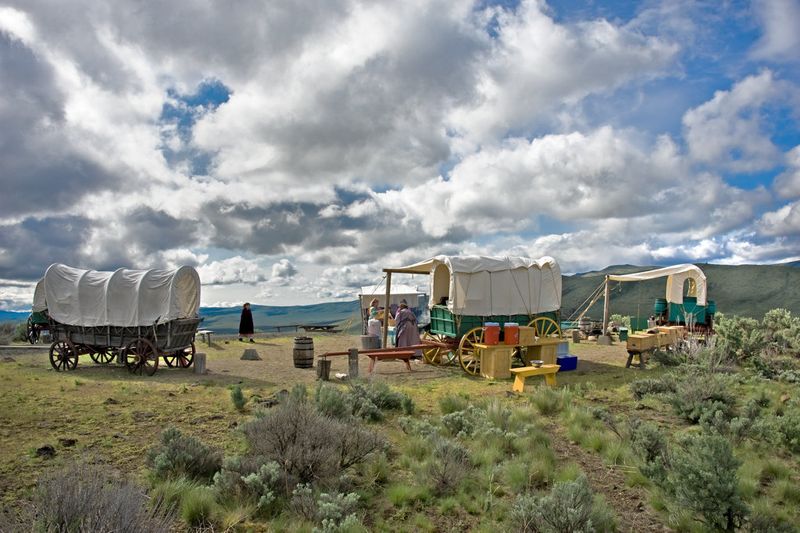
The museum floor is thoughtfully laid out, guiding you through the story of the Oregon Trail in a logical sequence that never feels rushed or cluttered. Life-size dioramas feature mannequins dressed in authentic period clothing, posed in scenes that recreate camp life, river crossings, and the daily grind of trail travel.
The detail in these displays is genuinely impressive, right down to the pots, tools, and food supplies packed into the wagons.
Interactive stations let you engage with the material rather than just read about it. Kids can answer questions, handle replicas, and work through activity books provided by the staff.
The ranger-led bingo game is a surprisingly fun way to absorb information, and it tends to get even adults more invested than they expected.
Multimedia presentations and short films are woven throughout the exhibit space, giving context to what you are seeing in the displays. One film in particular ties the whole journey together in a way that makes the earlier exhibits click into place.
The exhibits do show some age in spots, but the quality of the storytelling more than compensates. Plan to spend at least 90 minutes inside before you even think about heading outdoors.
Ranger Talks and Live Presentations: The Human Element
Some museums hand you a brochure and wish you luck. This one gives you real people who are genuinely passionate about what they are sharing.
The ranger-led presentations here are a highlight that visitors consistently mention as the thing that made their experience feel complete.
Rangers open each talk with context that helps you appreciate the scale of what the Oregon Trail represented, and they field questions with patience and enthusiasm. The combination of walking the exhibits first and then hearing a ranger tie it all together creates a layered understanding that sticks.
High fives from the rangers are apparently a real thing here, and they add a warmth that you do not expect from a federal site.
Live theater presentations are also part of the programming, using costumed performers to bring specific moments from the trail era to life. These short performances are scheduled throughout the day and are worth timing your visit around if you can.
The staff as a whole, from the rangers to the front desk team, carry a level of knowledge and genuine care for the subject that elevates the entire visit. Good people running a good place is not something to take for granted, and here it shows.
The Outdoor Trails: 4.2 Miles of Living History
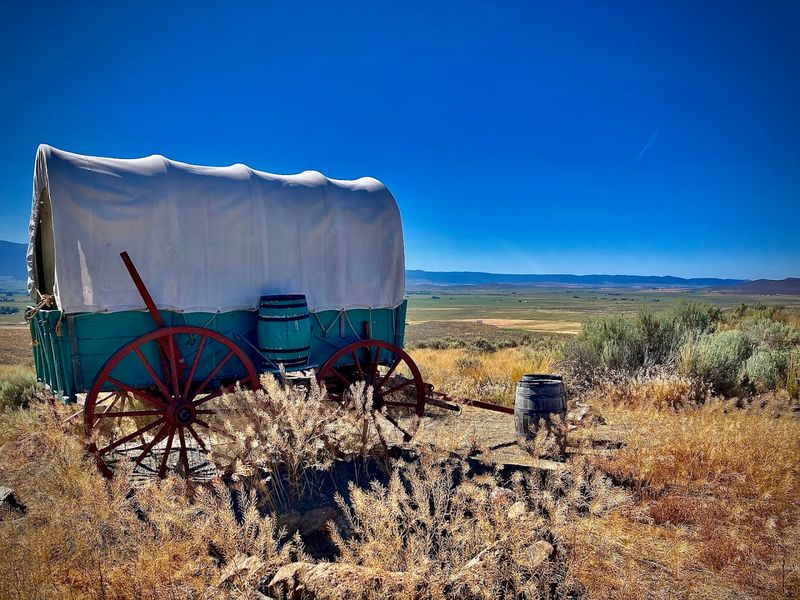
The real magic of this place does not stay inside four walls. The center sits on a 500-acre site crisscrossed by over four miles of interpretive trails, and getting outside is absolutely worth your time and energy.
The trail system offers a few different route options depending on how much time and physical ability you have.
The most popular loop takes you down to the actual wagon ruts and back up via an alternate path, covering roughly 3 miles total. A shorter option trims that to about 2.6 miles.
The terrain is high desert, which means dry, open, and exposed to the sun, so bring water and wear sunscreen regardless of the season. The trails are well-maintained and accessible, though some sections involve elevation change that can feel tiring on a warm day.
Along the way, interpretive signs explain what you are seeing and connect the landscape to the pioneer experience. You pass a replica blacksmith shop and remnants of the historic Flagstaff Gold Mine, adding another layer to the story.
The panoramic views from the higher points on the trail stretch across Baker Valley to the Blue Mountains, and on a clear day, the scenery alone is worth the walk. The whole outdoor experience turns a museum visit into something closer to a genuine adventure.
Standing in the Wagon Ruts: A Moment That Stays With You
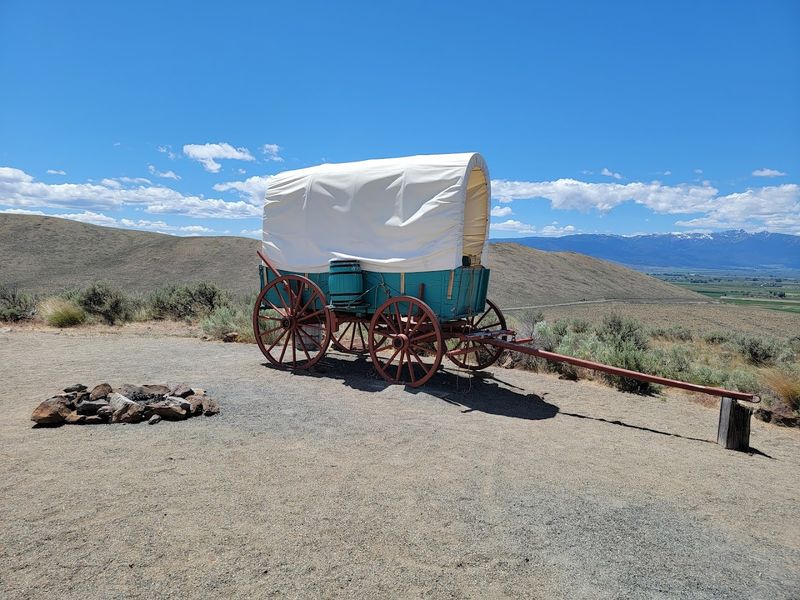
There is something different about standing in the actual ruts left by pioneer wagons more than 160 years ago. No exhibit panel or film can fully prepare you for the feeling of placing your feet in the same grooves worn into the earth by thousands of wagon wheels.
It is quiet out there, and that quiet carries weight.
The ruts themselves are not dramatic in a visual sense. They are shallow channels in the dry ground, subtle enough that you might walk past them without the interpretive signs pointing them out.
But once you know what you are looking at, the simplicity of them becomes the point. These grooves were made by real people carrying everything they owned toward a place they had never seen.
You can also drive to a separate small parking area closer to the trail and walk a short distance to reach the ruts without doing the full loop, which is a good option if mobility is a concern. Either way, standing in that spot is one of those travel moments that does not require explanation to anyone who has been there.
The earth remembers, and so will you long after the drive home.
Panorama Point and the Views Across Baker Valley
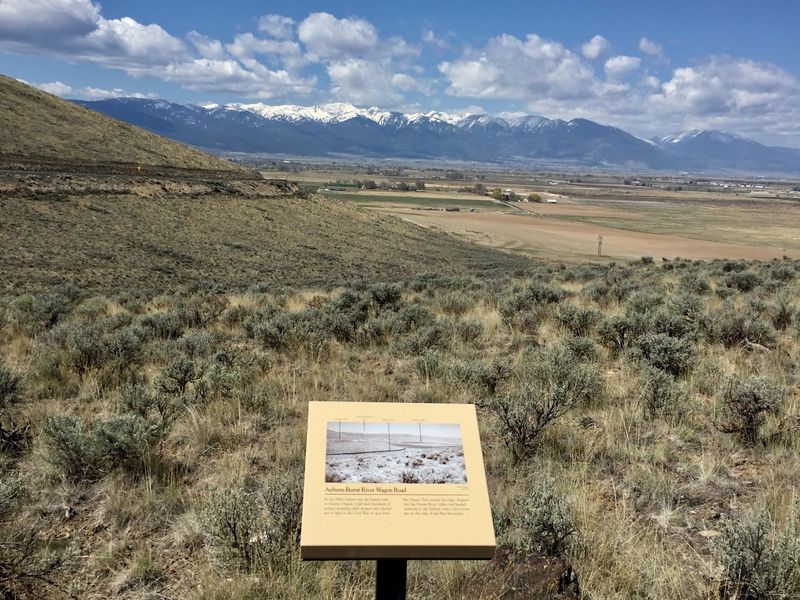
At a certain point along the outdoor trail, the landscape opens up into a view that earns its name without any argument. Panorama Point delivers a wide-angle look at Baker Valley, the city of Baker City below, and the Blue Mountains rising to the west.
On a clear day, the visibility stretches far enough to make you stop walking and just look.
From this vantage point, you can actually trace portions of the historic trail route through the valley below, which gives the whole experience an added sense of continuity. You are not just reading about the trail.
You are looking at it from the same hillside where pioneers would have scanned the horizon for what was ahead.
The high desert blooms in spring, typically from late April through May, when wildflowers dot the sagebrush landscape and the whole site takes on a completely different character. Visitors who return in spring consistently describe it as a visual transformation worth planning a second trip around.
Even without the flowers, the views from Flagstaff Hill are exceptional in every season. The combination of historical significance and genuine natural beauty is what makes this site feel like more than just a museum stop on a road trip.
The Flagstaff Gold Mine Remnants and Pioneer Context
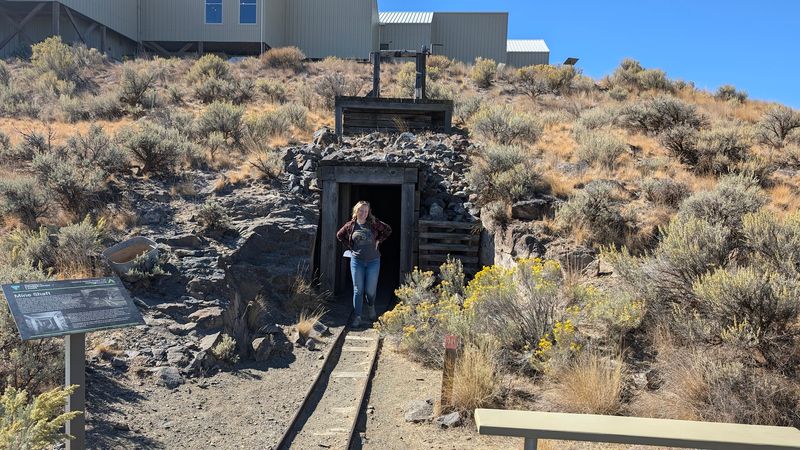
The Oregon Trail story does not exist in isolation, and the center makes sure you understand the broader world that surrounded it. Along the outdoor trails, you come across the remnants of the historic Flagstaff Gold Mine, which operated in the area during the same era that pioneers were passing through.
A replica blacksmith shop sits nearby, giving a tangible sense of the tools and trades that frontier life depended on.
Gold played a major role in drawing people westward, and the mine remnants here connect the trail narrative to the larger story of resource extraction, settlement, and the transformation of the American West. The interpretive signs along this section of the trail do a solid job of linking the two histories without overwhelming you with information.
For younger visitors, this part of the trail tends to spark curiosity in a different way than the wagon exhibits inside. Something about standing next to a real historical structure, even a weathered one, makes the era feel tangible in a way that a display case cannot quite replicate.
The 500-acre site holds more layers of history than most people expect when they pull off the interstate, and the mine remnants are one of the more unexpected and rewarding parts of the whole visit.
Practical Tips for Planning Your Visit
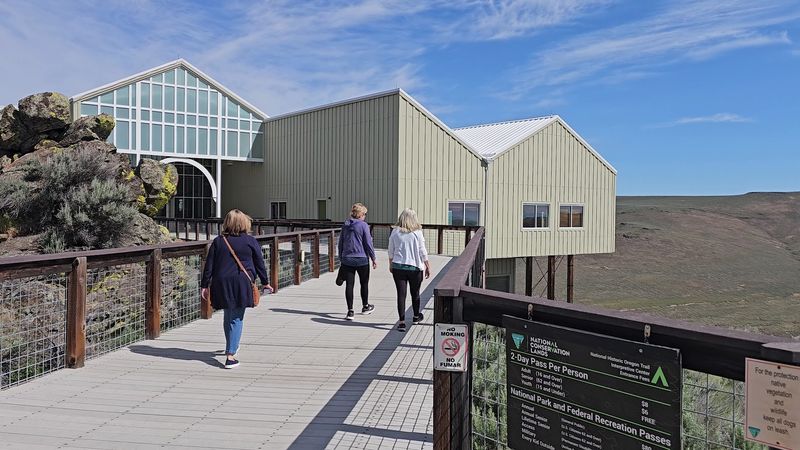
A little planning goes a long way here. The center is open every day of the week from 9 AM to 5 PM, which gives you solid flexibility whether you are passing through on a weekday or making a weekend trip out of it.
Arriving earlier in the day gives you the best chance of catching a ranger talk and having enough time to do both the museum and the outdoor trails.
Admission runs under ten dollars per adult, and children get in free. The America the Beautiful annual pass covers entry for the whole car, which makes this a zero-cost stop for national park pass holders.
The restrooms are clean and well-maintained, and the water station inside reportedly has some of the best-tasting water around, which is worth mentioning if you are filling up before the trail walk.
If you are bringing pets, leave them at home or in a temperature-controlled vehicle, as there is no shade in the parking area. The gift shop is worth a browse, and you can pick up a passport stamp for your national parks collection at the visitor center.
Picnic areas are available on-site, making it easy to turn the visit into a relaxed half-day or full-day outing without needing to rush.
Why This Place Deserves a Spot on Your Travel List
Not every roadside stop earns a second visit. This one does.
The combination of a well-designed museum, knowledgeable and genuinely enthusiastic staff, and a trail system that puts you physically in contact with history creates something that most heritage sites never quite pull off. The 4.2 miles of interpretive trails alone would be worth stopping for, but paired with the indoor exhibits and live presentations, the whole experience becomes something you talk about on the drive home.
The center holds a 4.7-star rating across more than 850 reviews, which in a world of hard-to-please travelers says a great deal about the consistency of the experience. Families with kids, solo travelers, road-trippers cutting across Oregon on I-84, and history enthusiasts making a dedicated detour all seem to leave with the same feeling: this was worth it.
Baker City itself is a charming small town worth exploring after your visit, with good food and a relaxed pace that makes it a natural overnight stop. The National Historic Oregon Trail Interpretive Center is one of those places that reminds you why slowing down and paying attention to what happened before us actually matters.
The trail is still out there, and it is still telling its story to anyone willing to listen.
Share this story