 Unearth The Voyage
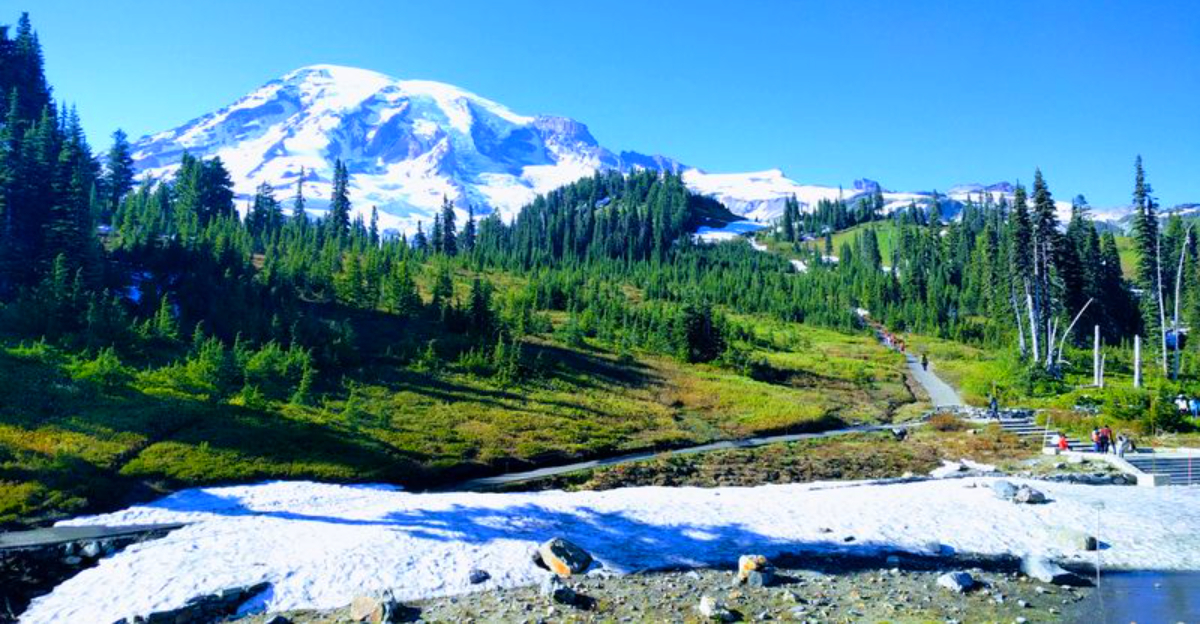
Mount Rainier rises like a living giant, wrapped in glaciers and crowned with snow that glows at sunrise. Step onto the trail and the world shifts to meadows buzzing with bees, waterfalls whispering from hidden cliffs, and views that stop you mid stride. If you have been craving big mountain energy with easy access and real solitude, this is your sign. Come early, pack smart, and let the volcano show you what wild really means.
1. Sunrise at Paradise
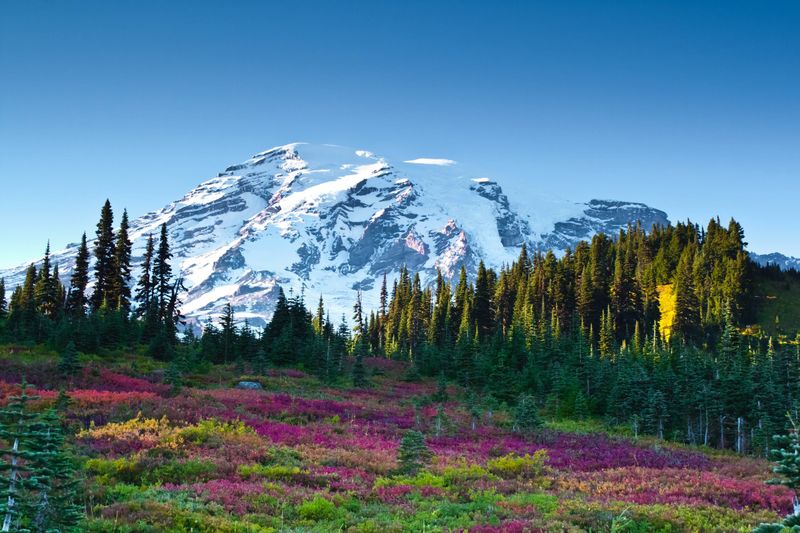
Arrive before the crowds and the parking fills, and you will watch alpenglow wash over the summit like a soft ember. The Skyline Trail begins here, winding through subalpine meadows that explode with lupine and paintbrush in late summer. Marmots whistle from rocky knolls as you climb toward Glacier Vista and the first close look at crevasse streaked ice.
Stay flexible with weather because clouds can sock in quickly, turning the mountain into a ghost. On clear days, you will see layers of ridgelines fading blue toward the horizon. Bring layers, water, and snacks since services are limited up top, and pace yourself on the grade.
2. Hidden Falls of the Skyline
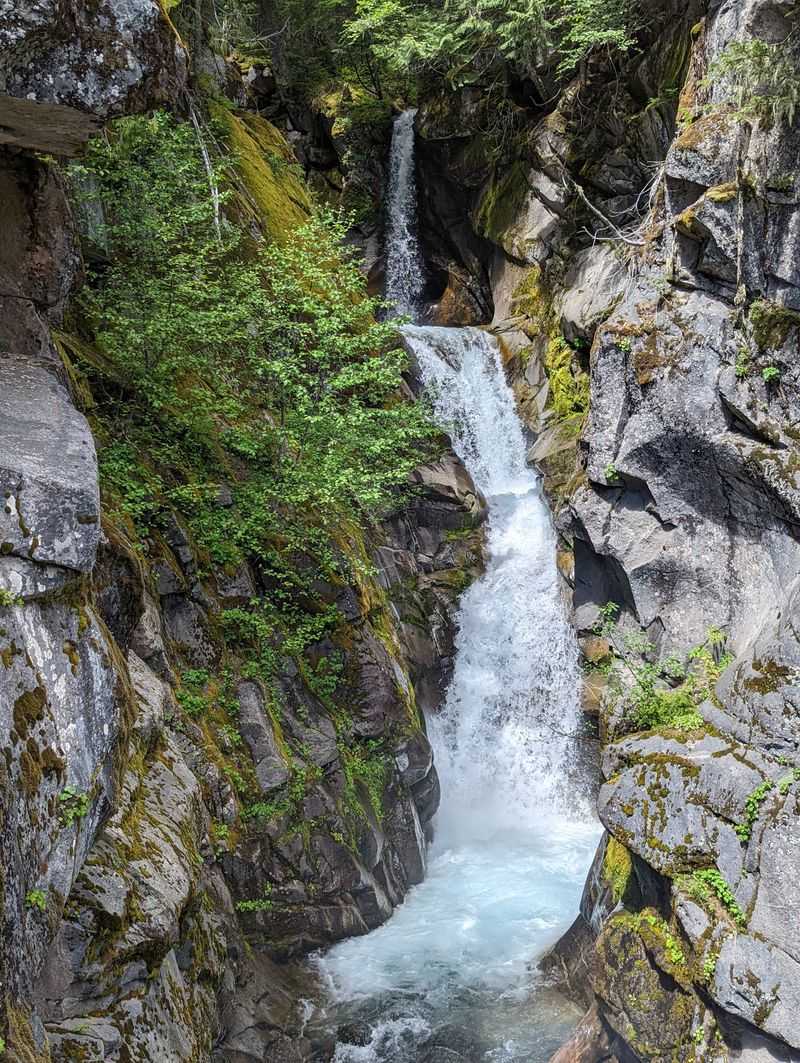
Follow side paths off Skyline and you will hear it first, a cool hiss behind the pines. Small cascades braid down volcanic rock, sometimes unnamed, sometimes missed by hikers charging for the summit views. Step carefully on wet stones and you will find perfect pockets for long exposure photos.
These little waterfalls feel secret at midday when crowds stick to the main loop. Keep an eye on fragile vegetation and stay on durable surfaces. If you love photography, pack a light tripod and a neutral density filter to blur the flow without blowing out highlights.
3. Reflection Lakes Mirror Hour
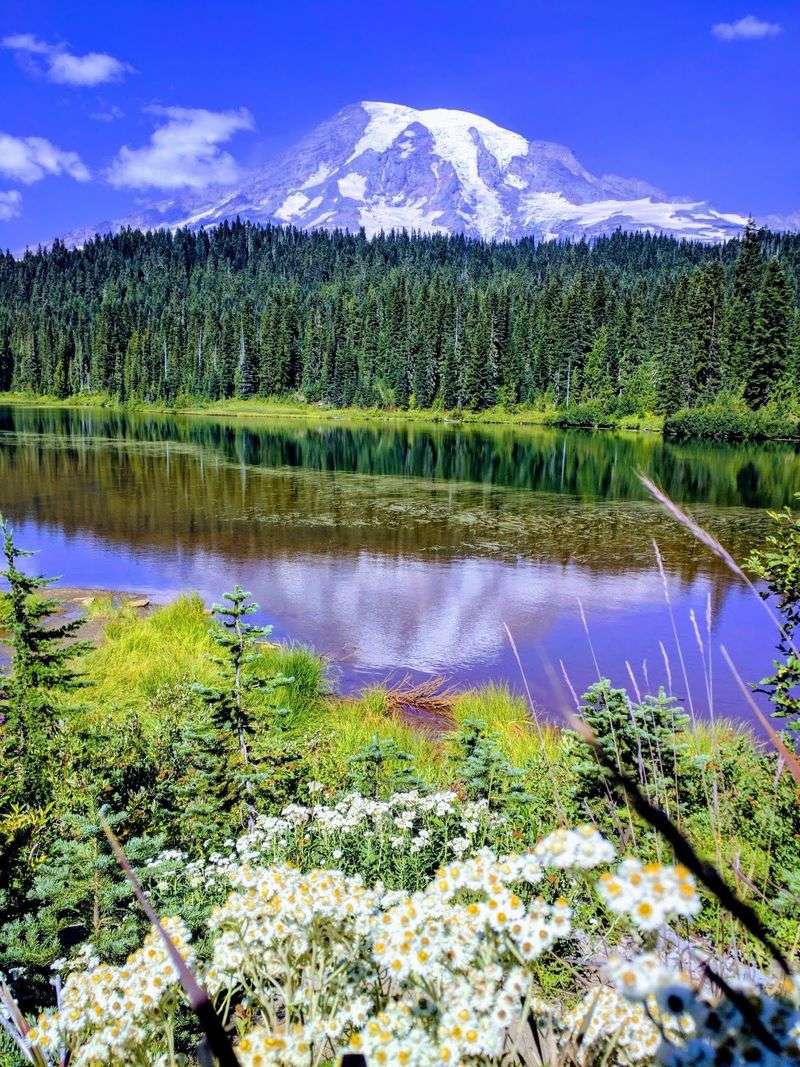
When wind calms, Mount Rainier doubles in Reflection Lakes like a postcard come to life. Arrive early or near sunset for glassy water and fewer ripples from breeze and ducks. The pullouts make it easy, but the magic comes when the light turns pink and the mountain glows.
Walk the short loop to find wildflower pockets and clearer sightlines. Winter turns this area into a snowshoe wonder, but you may need tire chains in shoulder seasons. Respect closures and stay off fragile lake edges to keep that mirror pristine for the next visitor.
4. Glacier Vista Lookout
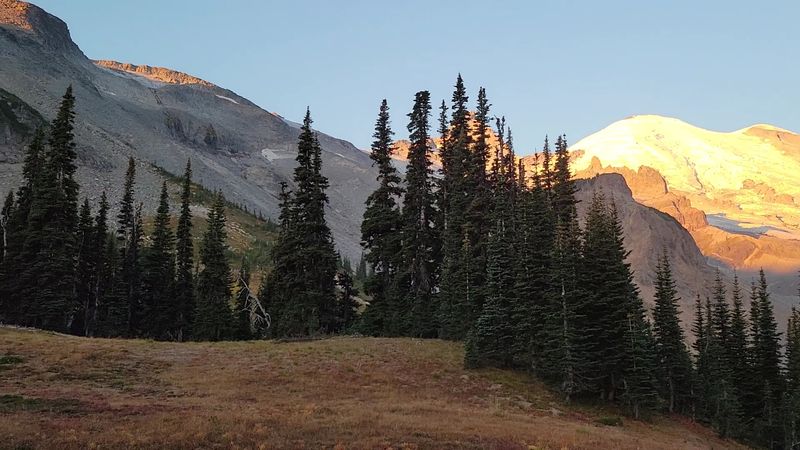
Glacier Vista lives up to the name with raw ice rumbling in the distance and crevasses opening like blue cathedrals. From Paradise, the climb is steady but the payoff is immediate. You will feel the temperature drop as katabatic winds slide off the Nisqually Glacier.
Listen for rockfall and the occasional crack that reminds you the mountain is alive. Bring a wind shell and keep snacks handy because the viewpoints invite lingering. If clouds roll in, wait ten minutes, the show often resets with dramatic reveals.
5. Wildflower Season at Paradise Meadows

Late July to early August turns the meadows into a painter’s palette of purple lupine, scarlet paintbrush, and yellow arnica. The scent of warm pine and crushed heather follows every step. You will want to stop every few yards for photos, and that is exactly the point.
Stay on the paved or gravel paths to protect delicate roots. Early morning is best for dew kissed blooms and fewer people, while afternoon brings bees and butterflies in full swing. Check bloom reports from the park service before you go to time it right.
6. Sunrise Area and Sourdough Ridge
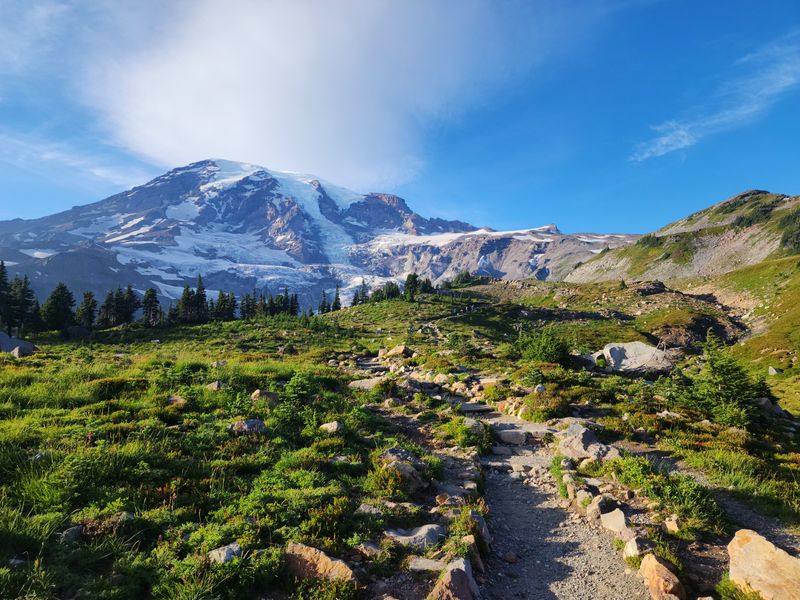
On the park’s east side, Sunrise trades lush meadows for crisp ridgelines and big sky. The Sourdough Ridge Trail gives quick elevation and sweeping views to Emmons Glacier, the largest by area on the mountain. On clear days, the Cascades stretch like waves frozen in place.
Facilities open seasonally, so check hours before you go. Mornings here feel wild and bright, with light that makes every ridge edge pop. Pack sun protection and extra water since the exposure is real and shade is scarce.
7. Grove of the Patriarchs Boardwalk
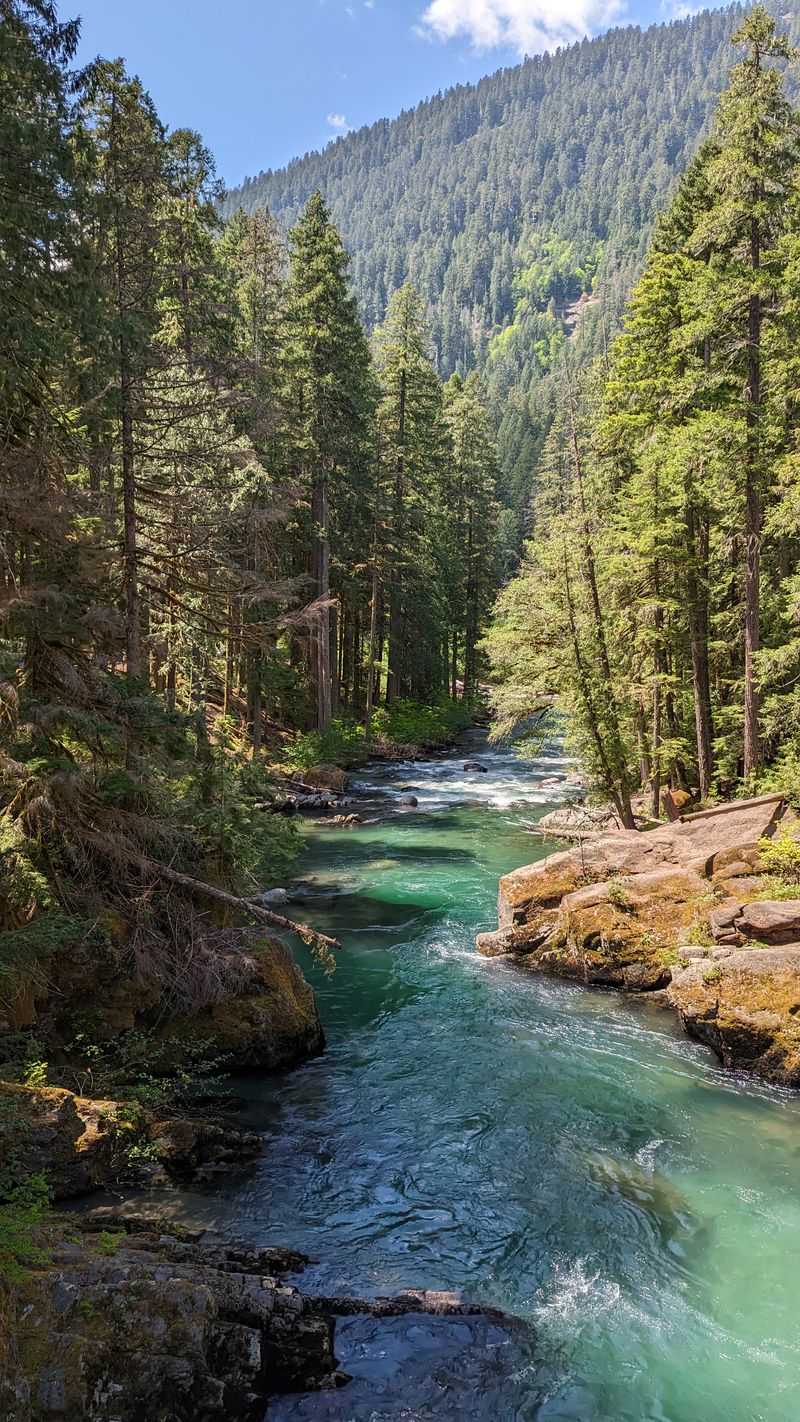
Step into a hush of ancient giants where cedar and Douglas fir tower above a teal river. The boardwalk weaves through a grove that feels like time forgot, with trunks wider than a car door. Even kids fall quiet here, staring up into green cathedrals.
Storm damage sometimes closes the suspension bridge, so confirm current status before driving out. Early or late visits avoid the crunch of midday interest. Keep dogs at home since pets are not allowed on national park trails.
8. Narada and Myrtle Falls Duo
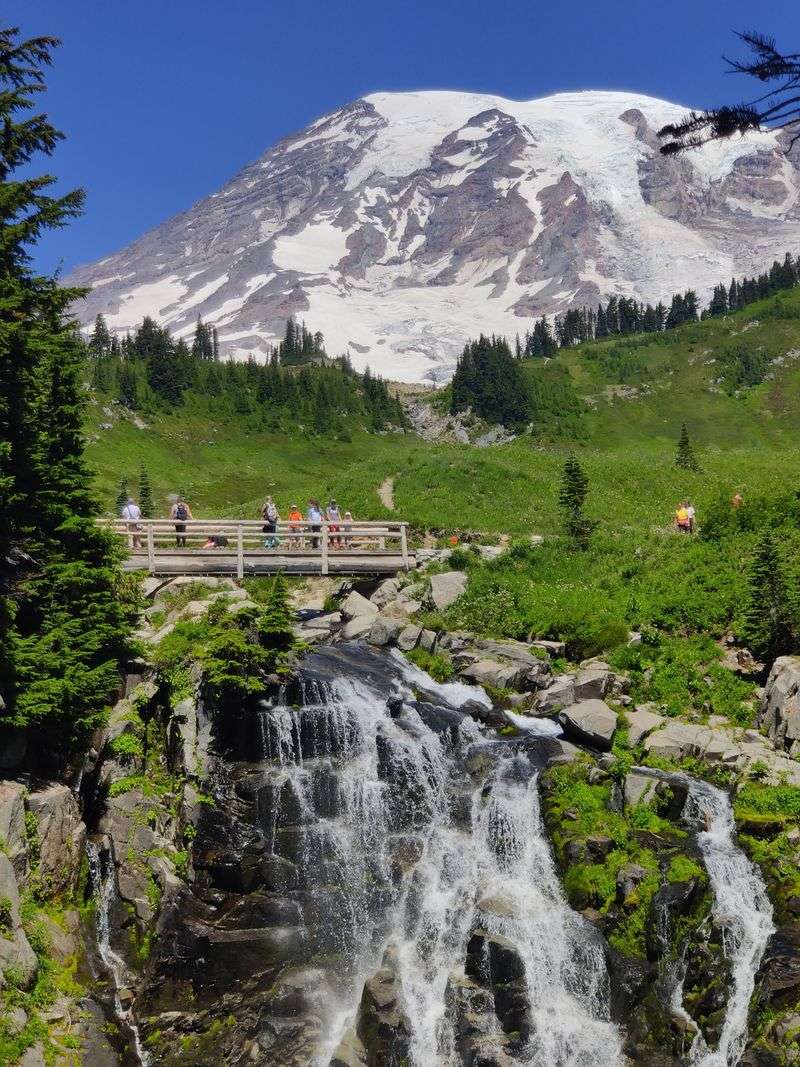
Narada Falls greets you with cool spray and a rainbow when the sun swings right. A short drive or hike links it with Myrtle Falls, where the mountain stands perfectly behind a frothy drop. These are the classic shots that fill calendars for a reason.
Trails can be slick, so wear shoes with grip and mind the railings. Sunrise and evening provide calmer light and fewer crowds. If you have only an hour, hit these two and leave satisfied with a highlight reel.
9. Stargazing Above the Trees
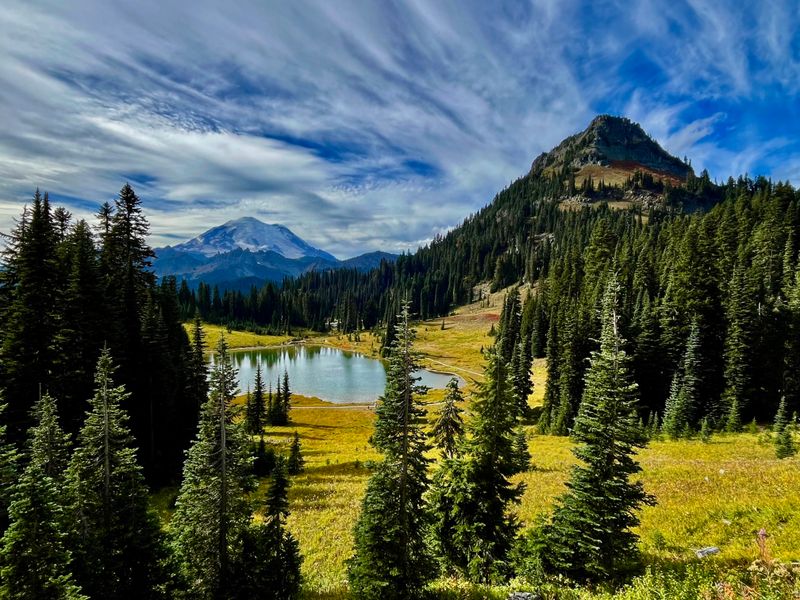
When the last cars roll out, the sky flips to a dome of stars over the summit. On moonless nights you can trace the Milky Way arcing over the glaciers, a scene that makes you whisper without thinking. Bring a headlamp with a red light to protect your night vision.
Paradise and Sunrise both offer wide horizons, but check cloud cover before committing. Cold settles fast at night, even in August, so pack layers and a thermos. Astrophotographers will want a fast wide lens and a sturdy tripod for sharp shots.
10. Winter Snowshoe From Paradise
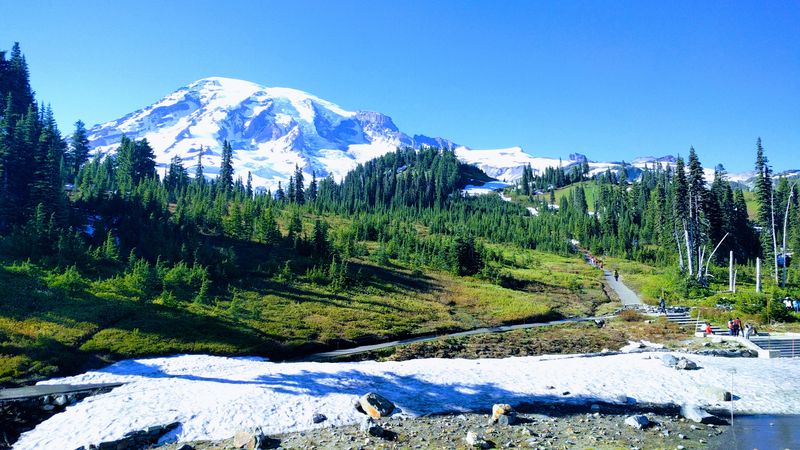
Winter turns routes into white canvases where your footsteps draw the map. Ranger led snowshoe walks sometimes run on weekends, and open slopes offer safe options when avalanche risk is low. The mountain feels extra quiet, every sound muffled under fresh powder.
Carry traction, avalanche awareness, and chains for your vehicle when conditions require. Check forecasts and road status because closures can happen quickly. With planning, you will have a peaceful day that feels a world away from city noise.
11. Sunrise Visitor Center Essentials
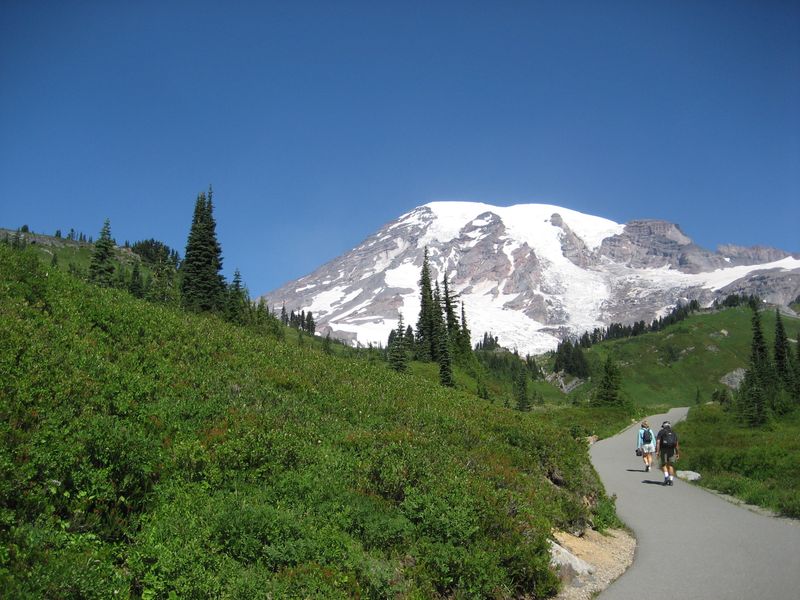
When open, the Sunrise Visitor Center anchors the high country with maps, exhibits, and a reality check on weather. Grab trail updates, refill water, and confirm conditions for Dege Peak or Burroughs Mountain. The staff is kind and efficient, helping you make the most of limited time.
Parking fills quickly on weekends, so arrive early or aim for late afternoon turnover. Restrooms and limited snacks are available, but bring your own food to avoid lines and high prices. Use this stop to calibrate your day and hike smart.
12. Burroughs Mountain Close Encounter
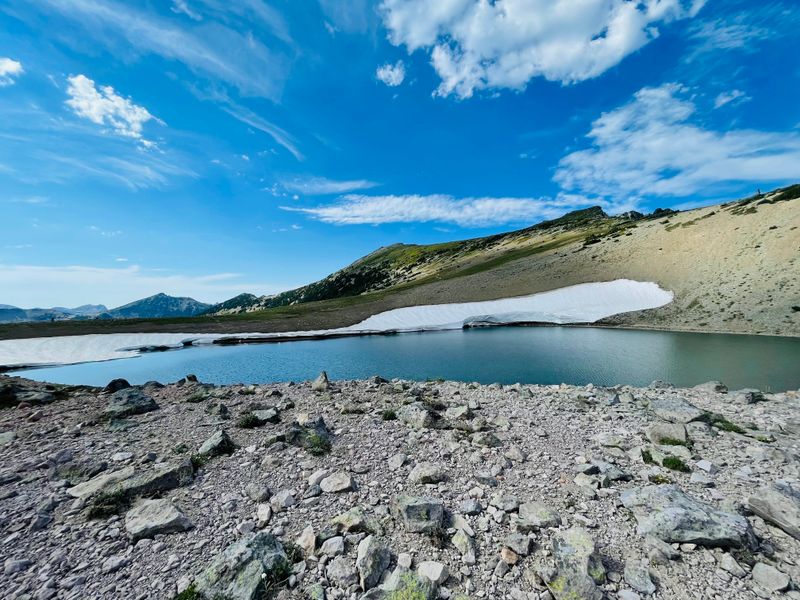
From Sunrise, the Burroughs Mountain trail carries you across tundra like terrain to stand startlingly close to the Emmons Glacier. The mountain feels within arm’s reach here, every ridge and serac etched sharp. Wind can be fierce, but the views are pure adrenaline.
Bring layers, and consider trekking poles for the rocky sections. Turn back if weather builds, since storms move fast across open plateaus. On a clear day, you will remember this edge of the world feeling for years.
13. Box Canyon of the Cowlitz

Carved deep into volcanic rock, Box Canyon slices so narrow that the river disappears into shadowed slots. A short loop delivers big drama as water thunders far below your feet. The viewpoints are safe but sobering, a reminder of relentless glacial meltwater.
Combine this stop with a drive toward Stevens Canyon for scenic pullouts and wildflowers. Midday light reaches the canyon best, revealing texture and depth. Keep your hat and phones secured since gusts can surprise you on the bridge.
14. Tipsoo Lake and Naches Peak Loop
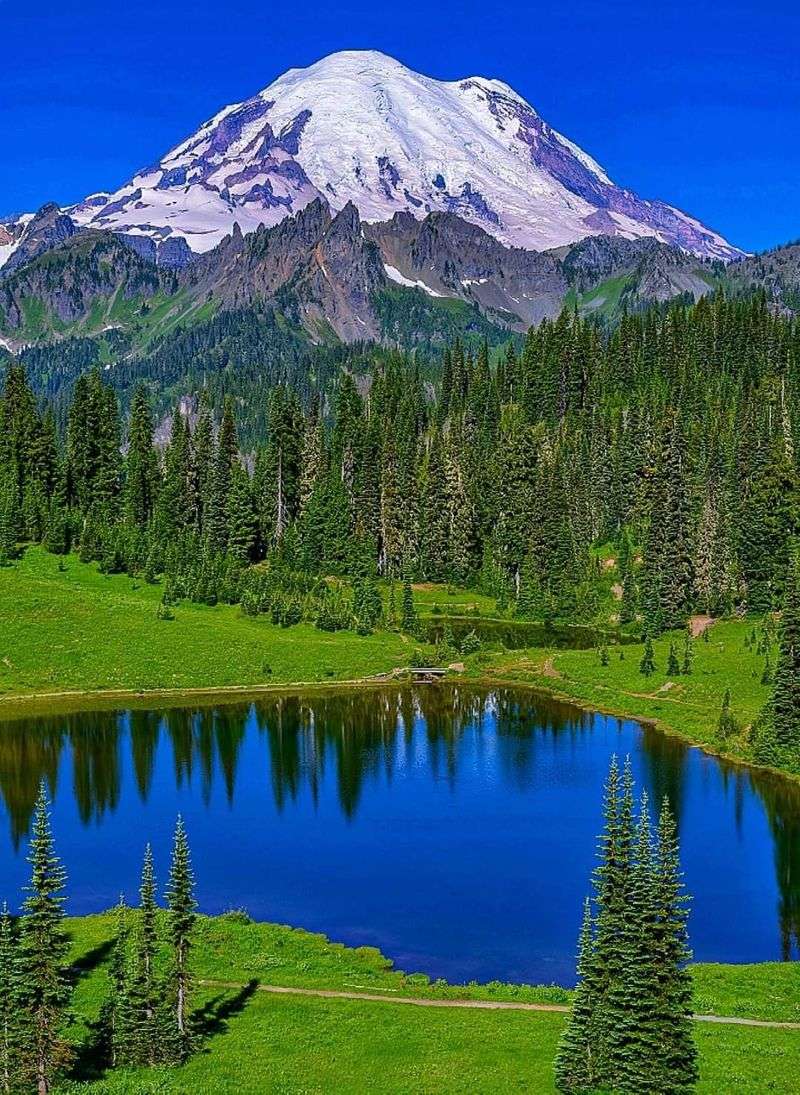
Right by Chinook Pass, Tipsoo Lake frames the mountain with lilies and reflections when the wind cooperates. The Naches Peak Loop adds gentle miles with nonstop views and huckleberries late in the season. It is an easy win for families or a golden hour dash.
Parking is limited on peak days, so plan for overflow and patience. Follow the loop clockwise for the best Rainier sightlines. Pack a light jacket since weather flips quickly near the pass.
15. Camping and RV Know How
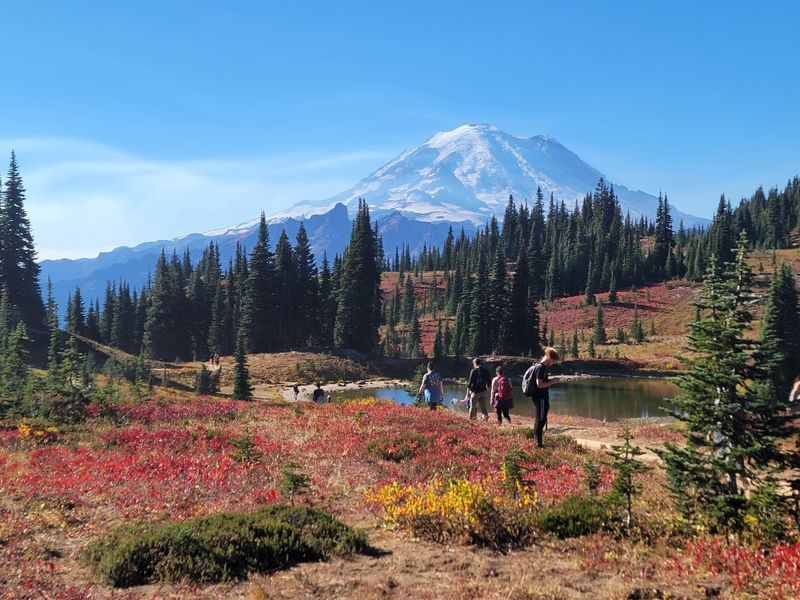
Camps fill fast in summer, and RV spots roll in early with folks chasing cool mountain air. Reserve ahead when possible, and arrive with a backup plan in case lots close. Quiet nights bring owl calls, cold air, and sunrise coffee that tastes better than any cafe.
Pack out every crumb, store food properly, and respect quiet hours. Cell service is spotty, so download maps and offline info. Bring tire chains in late fall and early winter when conditions and rules may require them.
16. Food, Coffee, and Practical Fuel
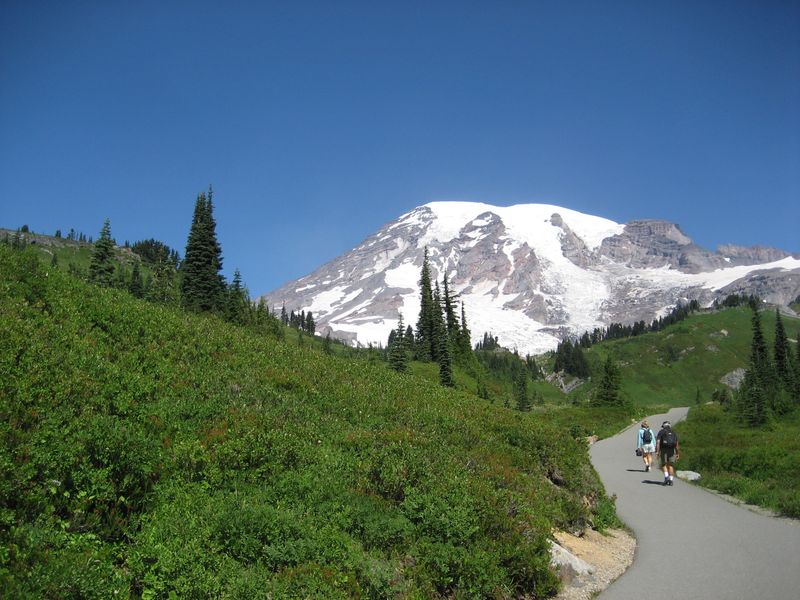
Bring your own food unless you are fine with simple options like burgers and hot dogs at select pullouts when open. Coffee and breakfast bites are available near Paradise at times, but hours shift and lines grow. A thermos and trail friendly snacks keep you moving without stress.
Water spigots are limited at higher elevations, so carry more than you think you need. A small cooler in the car makes post hike recovery easy. With a little planning, you will spend time chasing views instead of chasing menus.



