 Unearth The Voyage
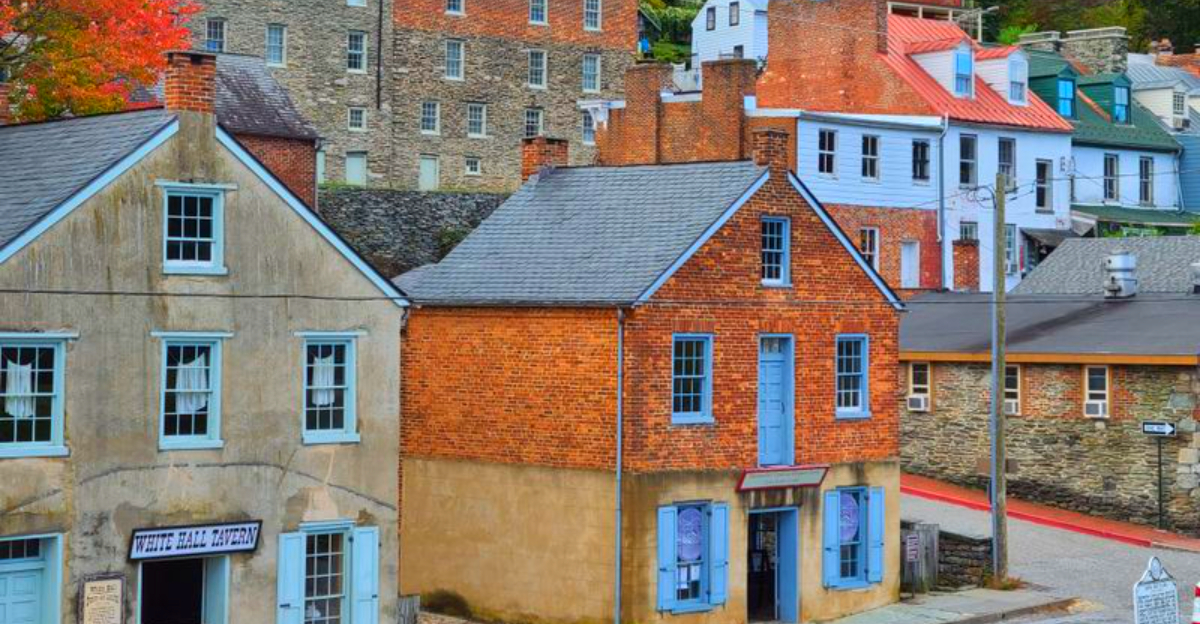
Harpers Ferry sits at the meeting of two rivers, where brick streets and steep hills make history feel close enough to touch. As you wander, 19th century storefronts, ringing church bells, and the distant rumble of freight trains wrap around you like a living soundtrack.
Travelers come for the views and stay for the stories, from John Brown’s raid to the Appalachian Trail’s heartbeat. Step in, slow down, and feel the past walking alongside you.
Lower Town Streets and Shopfronts
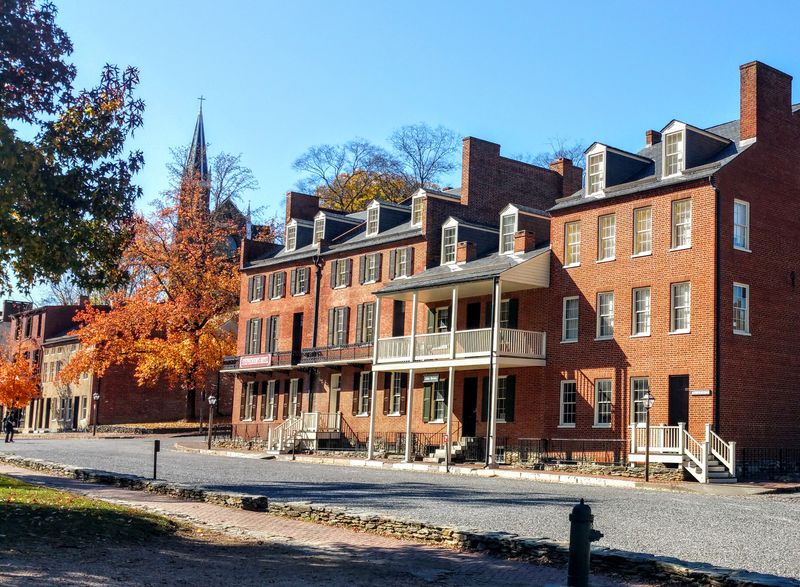
You step onto Shenandoah Street and the 19th century springs to life. Brick facades glow a warm red, wood signs creak lightly, and the scent of coffee drifts from a corner cafe tucked into an old mercantile.
Your shoes click on the old stone as freight cars hum across the river, folding modern rhythm into antique texture.
Inside the shops, interpreters talk about muslin, iron nails, and ink recipes like they are today’s headlines. You run your hand along a wavy glass pane and catch your reflection, bent by time.
Across the way, a ranger answers a child’s question about John Brown with gentle precision, grounding myth in detail.
When the sun lifts over Maryland Heights, windows flash like lanterns. You can hear footsteps on stairs above you, life layered through centuries.
Stop by the historical confectioner and taste molasses chews while reading placards that make these blocks feel like open pages.
Benches face the tracks, framing the Potomac like a moving diorama. A breeze carries river-cool air up the street, cutting summer heat.
Stand still for a minute and the town exhales around you, steady and sure, reminding you that everyday moments make the best museums.
The Point: Where Two Rivers Meet
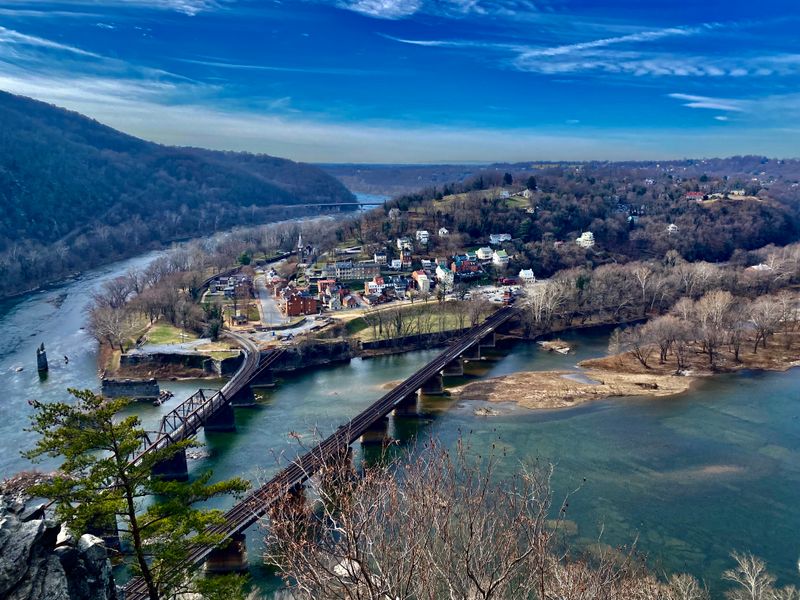
The Point is where you watch the Potomac and Shenandoah braid together like a silver ribbon. Stand at the railing and feel cool river air slide under your collar while train bridges stitch the view.
The cliffs of Maryland Heights rise like a stage curtain, catching first light that turns stone gold.
The water smells faintly mineral, clean and steady, and the current draws your eyes toward distant towns. Look down and you will see kayakers as colored commas, pausing mid sentence in the riffles.
A pair of ospreys sometimes rides the wind seam, scanning with patient circles.
Come at sunrise if you can. The crowds are thin, the light is honest, and the rails hum like a quiet overture.
You will catch reflections so sharp the sky looks doubled, and the old town behind you feels almost unreal.
Use The Point to orient your day. From here, trails, museums, and cafes radiate like spokes, each inviting a different pace.
When you finally step back from the railing, you carry a wider map in your head, the kind drawn by water, stone, and a moment you can still feel in your chest.
Appalachian Trail Through Town and Visitor Center
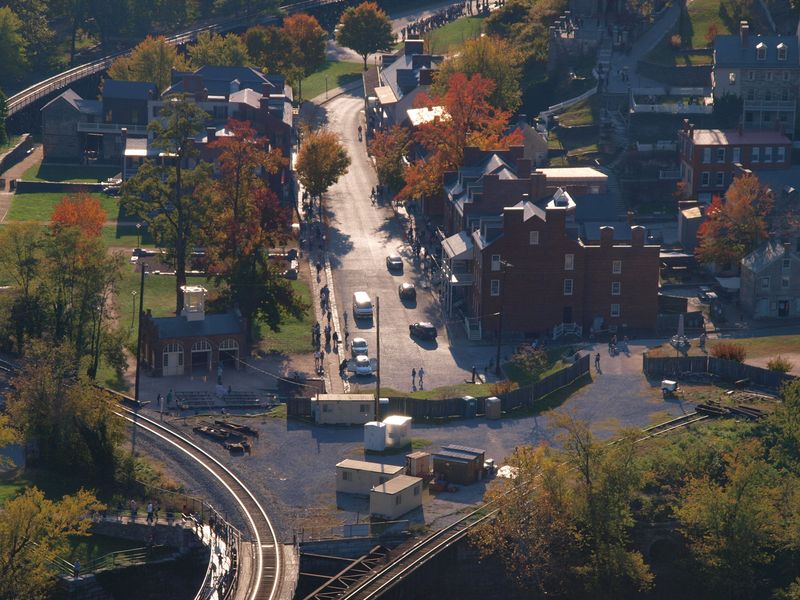
Harpers Ferry calls itself the psychological midpoint of the Appalachian Trail, and you feel it the second you spot a white blaze on a lamppost. Hikers drift through town with dusty calves, swapping mile counts and snack intel like weather reports.
The Visitor Center adds backbone to that energy, with maps, journals, and boots that tell stories in scuffs.
Step inside and trace the ridge line with your fingertip. Staff answer questions about shuttles, water sources, and trail etiquette with the calm of people who have solved blisters before.
You watch someone mail home extra gear, shaving ounces like a ritual.
Walk a short segment yourself. The path slips past churches and up wooded slopes where cardinals flash red through oak shade.
When trains pass, the sound threads through leaves, a reminder that wilderness and industry have been neighbors here for centuries.
According to the Appalachian Trail Conservancy, overall trail visitation has risen in recent years, with day use increasing significantly post 2020. That shows at the board where fresh Polaroids bloom daily.
Add your face if you like, or just your footsteps, and let the town stamp your day with trail grit and simple, moving purpose.
John Brown’s Fort and the Armory Grounds
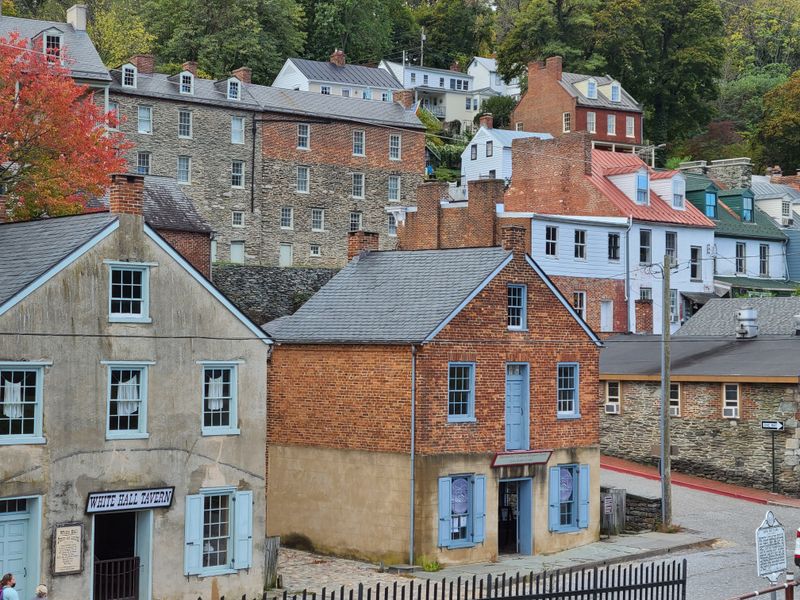
John Brown’s Fort surprises you with its compact size, a brick heartbeat for a story that shook the nation. You stand at the doorway imagining lantern light, the scrape of boots, the urgent rustle of plans in the dark.
Rangers explain the building’s travels and eventual return, and you feel the weight of movement and memory.
Walk the armory grounds, where low foundations sketch a vanished complex that once powered federal innovation. The wind carries a metallic whisper, and the placards translate what’s missing into what remains.
You try to picture workers at forges, hammer sparks rising like fireflies against the river dusk.
Context matters here, and it is everywhere. From the alley sightlines to the river crossing, every angle sharpens why this raid mattered and why the nation listened.
You overhear a teenager connect the dots between abolitionist urgency and today’s debates, which makes the past sound uncomfortably current.
Photograph the Fort, then put the camera down. Spend a full minute listening to train horns echo against the cliffs, as if voices answering across time.
By the end, the site feels less like a monument and more like a conversation you will keep replaying long after you leave.
St. Peter’s Roman Catholic Church and Hilltop Vistas
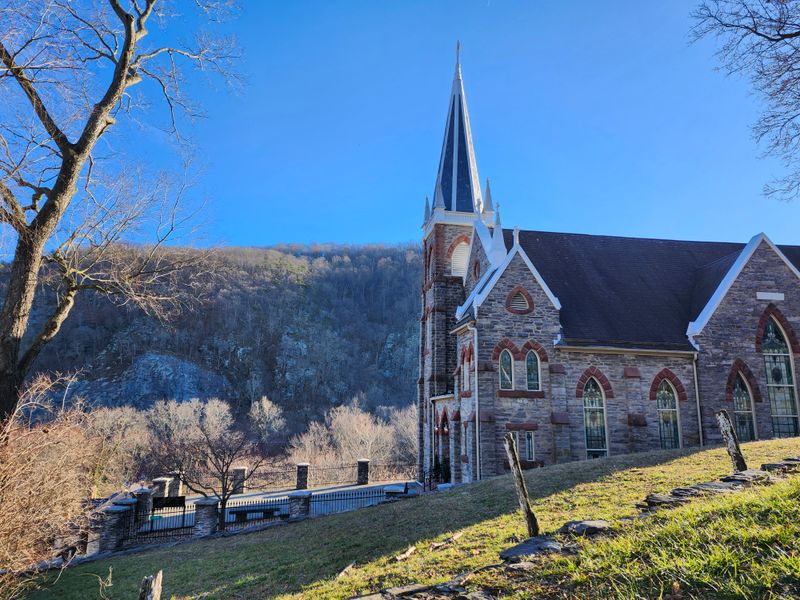
Climb the steep steps to St. Peter’s and the town unfurls beneath you like a hand drawn map. The church’s stone walls keep cool shade even on hot days, and stained glass throws colored patches that drift over pews.
When the bell rings, it folds into the river wind as if the hills themselves are singing.
From the overlook, rooftops stack neatly, tracks curve, and bridges cut clean lines across water. You can make out hikers on the far ridge, tiny as punctuation.
Pause here to breathe between stops and let your legs stop shaking from the climb.
The church tells a story of resilience through wars and floods, a survivor with a steady spine. Volunteers share quiet details you would miss on your own, like how the steeple aligns with sightlines used by photographers at sunset.
Bring a camera, but also bring time.
Around sunset, the town blushes into soft pinks and copper. For a few minutes, everything feels held, from brick to leaf to river skin.
When you descend, steps measured and sure, you carry a gentler pace back to the busy streets below.
Maryland Heights Trail and Civil War Overlook
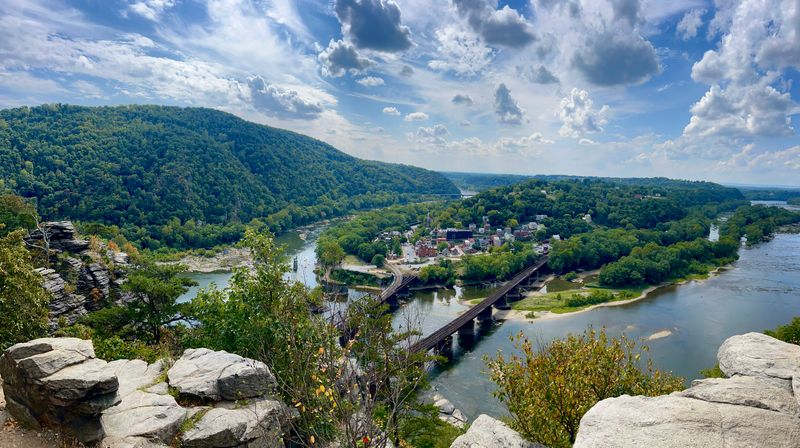
Maryland Heights makes you earn your view with switchbacks that test both lungs and stubbornness. The path climbs through oak and hickory, where chipmunks skitter and the ground smells like leaf tea.
As you rise, interpretive signs piece together the Civil War defenses that once bristled across these slopes.
The overlook itself stops conversation mid sentence. Harpers Ferry appears as a miniature, trains sliding like toys, rivers braiding bright under the sun.
Set your pack down, sit on the warm rock, and let your breathing sync with the valley’s slow pulse.
Good shoes, water, and patience are the winning trio. Start early to dodge crowds and bring a layer because the ridge breeze can run chilly even in July.
The descent is kinder on the lungs but harder on knees, so trekking poles earn their keep.
Battle lines that once felt abstract gain shape here. You can trace fields of fire and supply routes with a finger sweep, turning dates into geography.
Leave no trace, and take only the kind of memory that makes you look at maps differently for a long time afterward.
Museums and Living History on Shenandoah Street
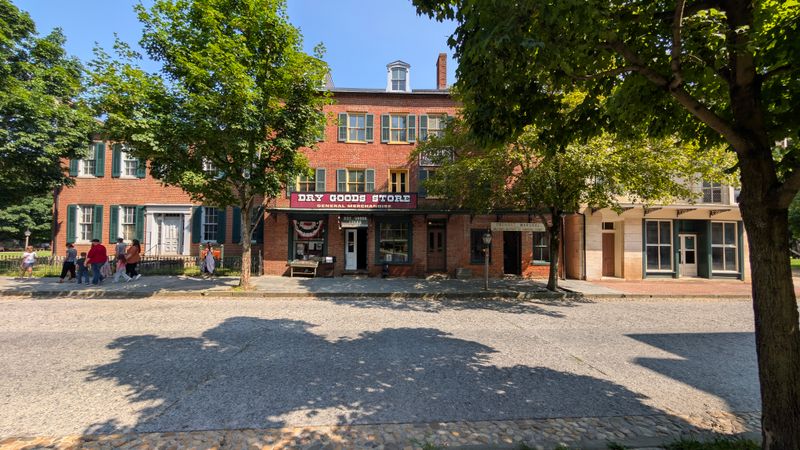
On Shenandoah Street, museums open like chapters, each with hands on exhibits and friendly interpreters. You watch a printing press bite paper with careful ink, then step into a dry goods store where bolts of fabric whisper when touched.
Kids lean in close, eyes bright, while rangers shape stories with simple props and careful timing.
The Civil War Museum grounds heavy topics in small, digestible moments. A uniform’s stitching, a soldier’s tin cup, a map with thumb dents from constant folding.
You move slowly because the rooms ask that of you, translating the grand scale into human pace.
Living history weekends add extra spark. A tinsmith taps a rhythm you feel in your chest, and a baker slides loaves from a wood fired oven that perfumes the whole block.
You learn more in ten minutes here than in an hour of scrolling.
According to National Park Service figures, Harpers Ferry National Historical Park draws hundreds of thousands annually, a steady flow that helps sustain this careful storytelling. That presence shows in tidy sidewalks and well kept exhibits.
Come curious and leave with sentences you cannot wait to repeat at dinner.
The C&O Canal Towpath and Railroad Bridges
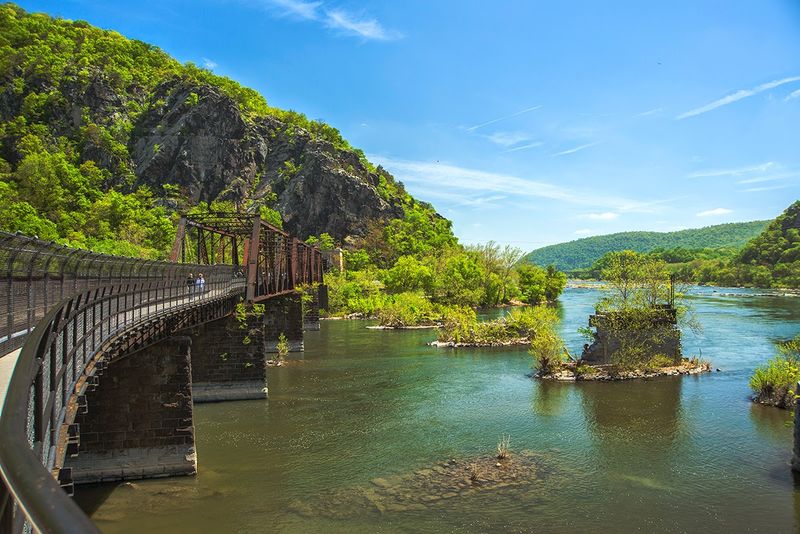
Cross the footbridge and you step onto the C&O Canal Towpath, a level ribbon perfect for an easy spin or unhurried walk. The Potomac keeps steady company on one side, while old locks rest like patient machines between eras.
Cyclists glide by with bell dings that sound pleasantly old fashioned under the bridge trusses.
Look up at the iron geometry of the railroad bridges. Freight trains muscle through with a low thunder that vibrates in your ribs, then fade until only bird chatter remains.
The contrast turns the towpath into a meditation on motion, slow beside fast, present beside past.
Bring water and plan a quiet hour. Herons stalk in the shallows, turtles sun on drifted logs, and sycamores peel their bark like parchment.
The crushed stone crunch underfoot might be the most satisfying soundtrack of your day.
If you want mileage, head toward Brunswick or stay local and loop back to The Point. Wayfinding is simple, bathrooms are spaced reasonably, and benches appear just when a pause sounds perfect.
You return to town with legs loosened and mind cleared, ready for one more museum room or one more scenic overlook.
Cafes, Local Eats, and Evening Glow
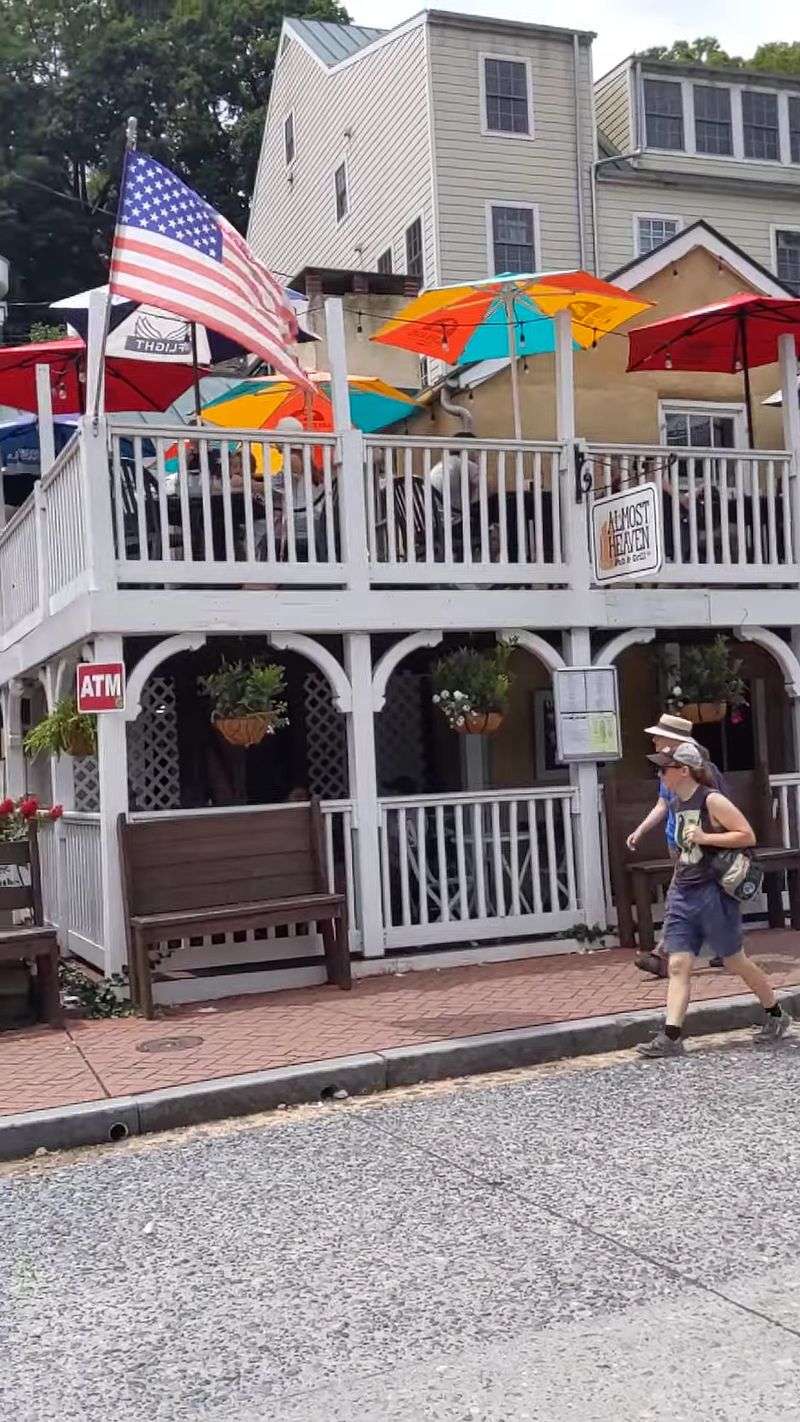
By late afternoon, the town shifts from field trip energy to a softer, golden hum. Cafes pull espresso shots that smell like caramel, and pastry cases sparkle with flaky proofs against the brick walls.
You snag a small table, watch hikers trade trail mix tips, and map out tomorrow on a napkin.
Portions lean comforting and practical, from hearty sandwiches to seasonal soups that taste like someone cared. Local taps pour crisp ales that suit the river air, and lemonade lands tart and honest after a hot climb.
If you want a sweet finish, the fudge shops make a persuasive case in tiny squares.
Sunset lights the windows like hearths. You will see couples wandering with cones, photographers lingering at crosswalks, and families debating one more overlook before dark.
The town’s pace drops into something human sized and deeply kind.
Insider tip: order early on busy weekends because lines can stretch out the door. Then take your cup outside and let the evening settle onto your shoulders.
When streetlights blink on, you realize the day has taught you a simple rule here: history tastes better when savored slowly.



