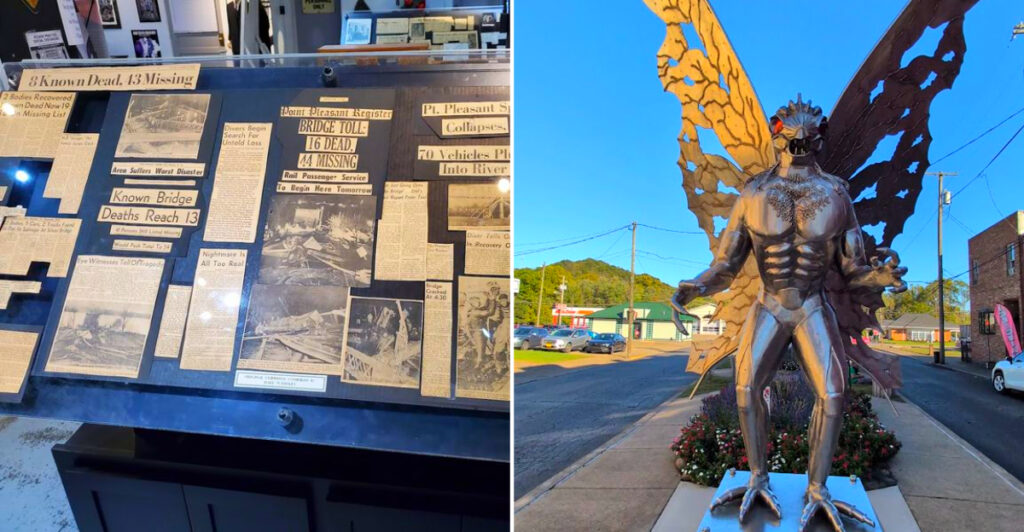
Point Pleasant, West Virginia, has become synonymous with the Mothman, a mysterious winged figure first reported in 1966. What began as a series of unexplained sightings has grown into one of America’s most enduring folklore legends, drawing curious visitors from around the world.
At the center of the story is the Mothman Museum, where newspaper clippings, eyewitness accounts, photographs, and artifacts explore the events that put this small river town on the map. Far more than a novelty attraction, it offers a fascinating look at a mystery that continues to spark debate decades later.
Here’s why this unusual museum remains one of West Virginia’s most popular and intriguing roadside attractions.
Where the Legend Lives on Main Street
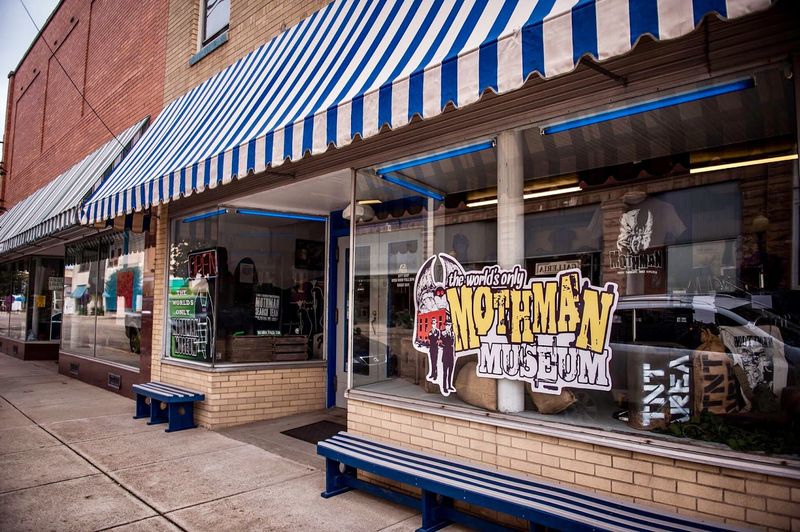
The Mothman Museum sits at 400 Main St, Point Pleasant, WV 25550, right in the heart of downtown, and the address alone feels like it belongs on a map of American folklore. Point Pleasant is a small river town tucked along the Ohio River in Mason County, West Virginia, and it wears its cryptid identity with genuine pride.
The moment you turn onto Main Street, the whole block signals that something unusual is celebrated here. Mothman-themed shop signs, painted murals, and the towering metallic statue outside the museum entrance set the tone before you ever reach the front door.
The museum opened in 2006, founded by local author and historian Jeff Wamsley, who has dedicated decades to documenting the legend with care and credibility. Hours run Monday through Wednesday and Thursday from 10 AM to 5 PM, Friday and Saturday from 10 AM to 6 PM, and Sunday from 12 to 5 PM.
The whole street feels like a living tribute to one very strange year in West Virginia history.
The Sightings That Started It All
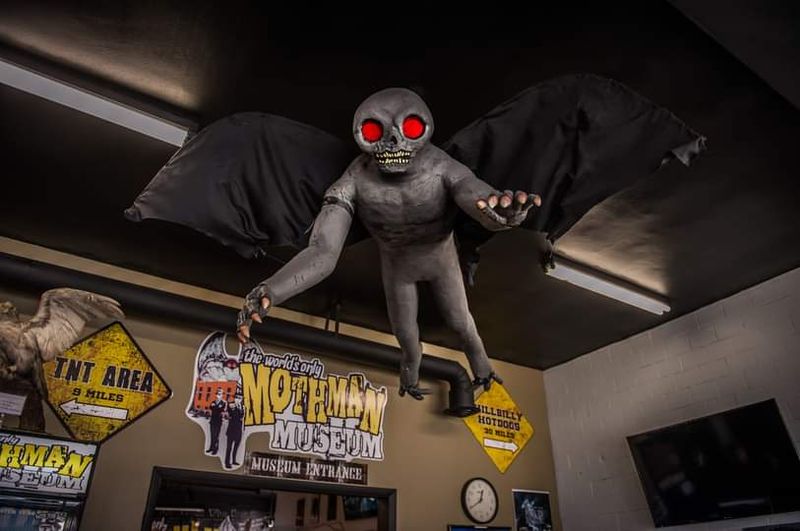
November 1966 was not a quiet month in Point Pleasant. Over the course of about 13 months, dozens of local residents reported encounters with a creature unlike anything they could explain, a large winged humanoid standing roughly six to seven feet tall with a wingspan that witnesses estimated at ten feet or more.
The glowing red eyes were the detail that appeared in nearly every account, described as hypnotic and unsettling by people who swore they were not making things up. Many sightings were clustered around the McClintic Wildlife Management Area, known locally as the TNT area, a former World War II munitions plant north of town where abandoned igloos and overgrown fields created an already eerie backdrop.
The museum dedicates significant floor space to these original reports, presenting them not as entertainment but as documented historical accounts. Reading the actual handwritten police reports under glass is a genuinely strange experience, because the fear in those words feels completely real.
That authenticity is what separates this museum from a simple novelty shop.
Original Documents That Send a Chill Down Your Spine
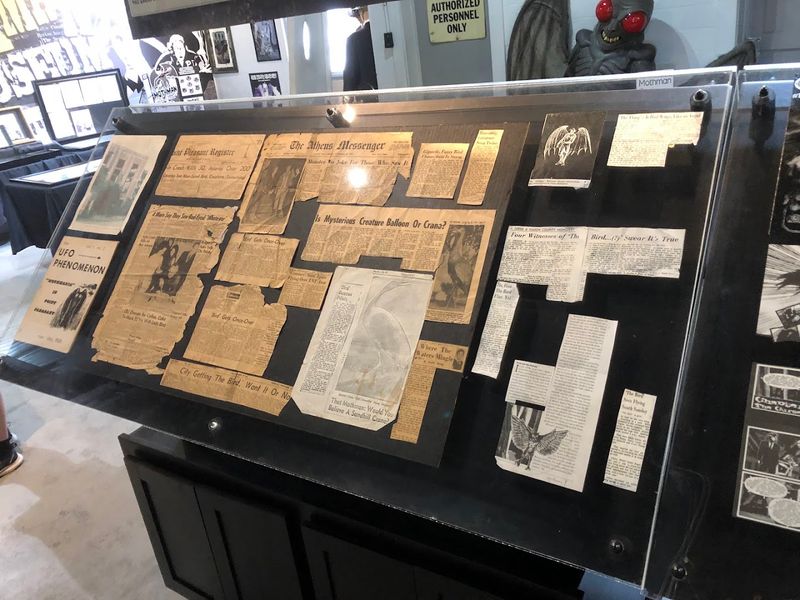
One of the most unexpected parts of my visit was how much primary source material the museum actually holds. These are not reprints or dramatized recreations.
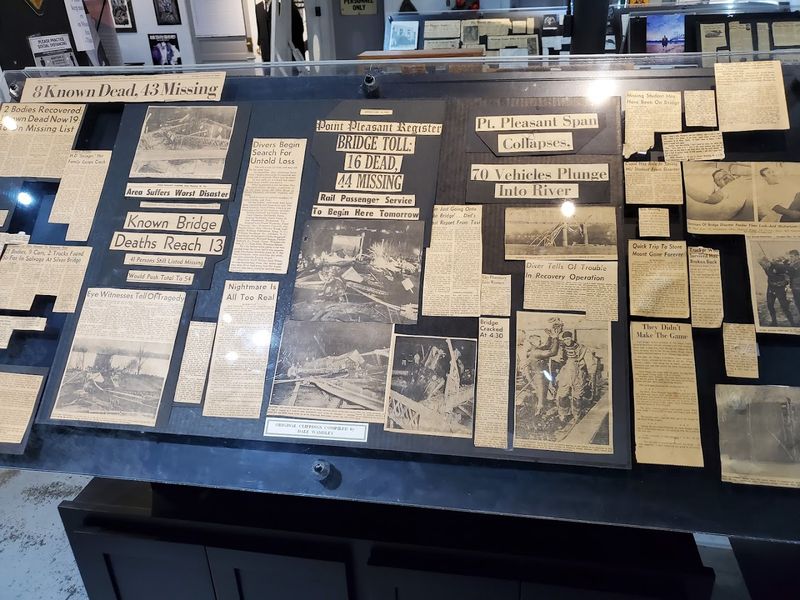
The newspaper clippings on display are the real pages from 1966 and 1967, yellowed and fragile, reporting on the creature sightings with the same matter-of-fact tone a reporter might use for a county fair story.
The handwritten police reports are even more striking. Officers took these witness statements seriously, and reading the careful, official language used to describe something so bizarre creates a genuinely unsettling cognitive dissonance.
You find yourself rereading sentences just to confirm what you just absorbed.
Local journalist Mary Hyre, who covered the Mothman story extensively for the Athens Messenger, gets dedicated exhibit space as well, recognizing her role in documenting the phenomenon in real time. Her work helped establish a contemporaneous record that researchers still reference today.
The museum treats these documents as the historical artifacts they are, and that respect for the source material elevates the entire experience well above typical roadside attraction territory.
The Silver Bridge and the Shadow It Cast
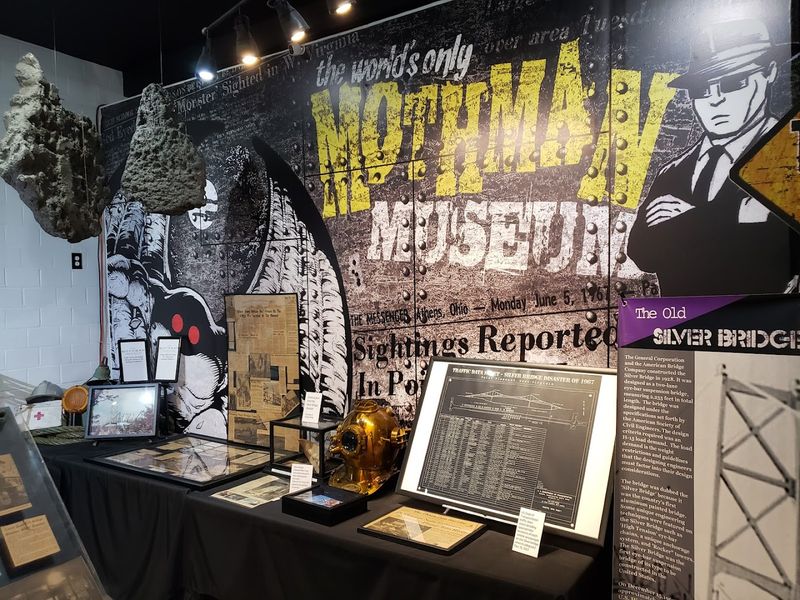
December 15, 1967, is the date that permanently fused the Mothman legend with genuine tragedy. The Silver Bridge, a suspension bridge connecting Point Pleasant to Gallipolis, Ohio, collapsed during rush hour, sending dozens of vehicles into the icy Ohio River.
Forty-six people lost their lives in one of the worst bridge disasters in American history.
The timing was impossible to ignore. Mothman sightings had been concentrated in the months leading up to the collapse, and after the bridge fell, the reports essentially stopped.
Whether that connection is meaningful or purely coincidental remains a matter of spirited debate, but the museum handles the subject with appropriate gravity rather than sensationalism.
Photographs of the collapse, artifacts recovered from the scene, and detailed historical context are presented alongside the cryptid exhibits in a way that grounds the legend in real human experience. That balance is one of the museum’s genuine strengths.
The tragedy is not exploited for atmosphere; it is treated as a pivotal chapter in Point Pleasant’s history that deserves honest documentation alongside everything else.
John Keel and the Book That Made Mothman Famous
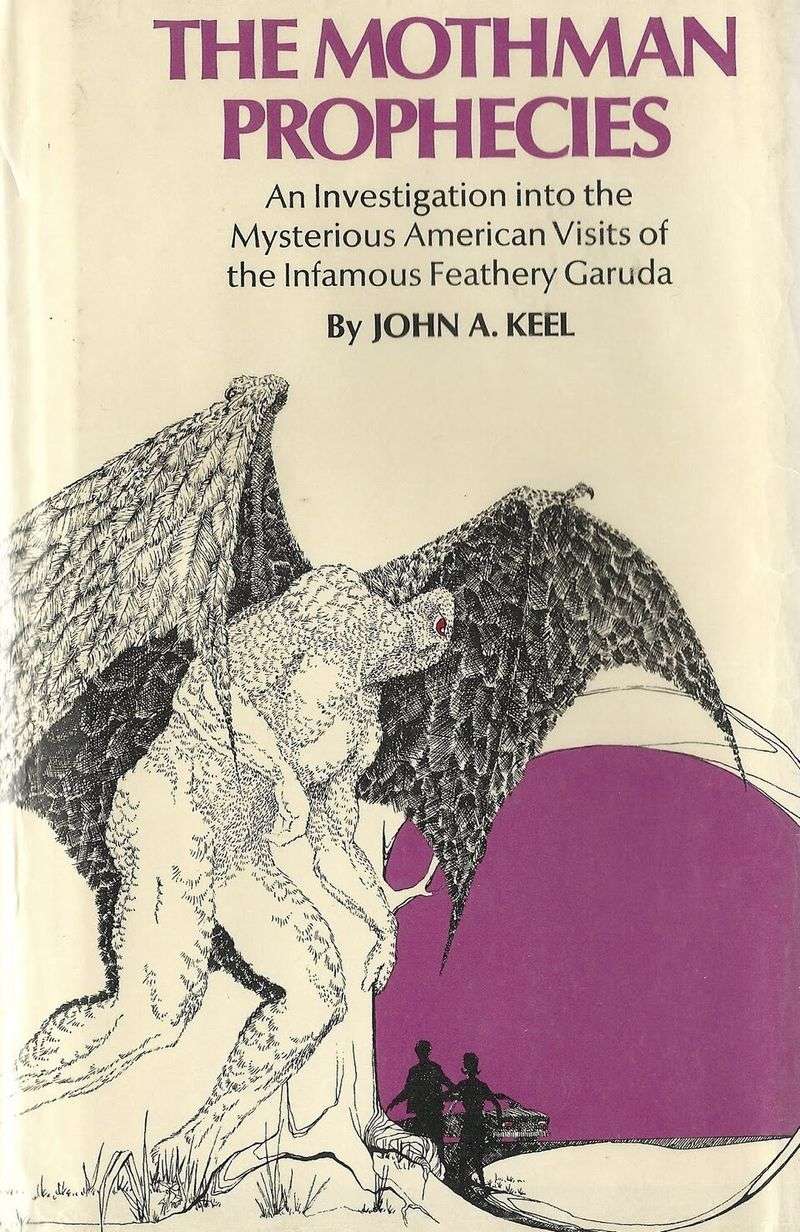
Before the 2002 film brought Mothman to multiplex audiences, there was John Keel’s 1975 book, The Mothman Prophecies, and its influence on how the legend spread cannot be overstated. Keel was an investigative journalist and author who traveled to Point Pleasant during the sightings, interviewed witnesses firsthand, and wove the Mothman encounters into a broader framework of paranormal activity, UFO sightings, and mysterious phone calls that residents reported during the same period.
His book transformed a regional West Virginia story into an internationally recognized piece of American folklore. The museum dedicates meaningful exhibit space to Keel’s research and legacy, displaying materials related to his investigation and his relationship with local contacts including Mary Hyre.
Reading about his methods and conclusions inside the very town he wrote about adds a layer of context that you simply cannot get from the book alone. Keel’s work is treated here as serious inquiry rather than fringe entertainment, which reflects the museum’s overall commitment to presenting the full story with intellectual honesty.
His chapter in this legend is genuinely fascinating to explore in person.
Hollywood Came to Point Pleasant
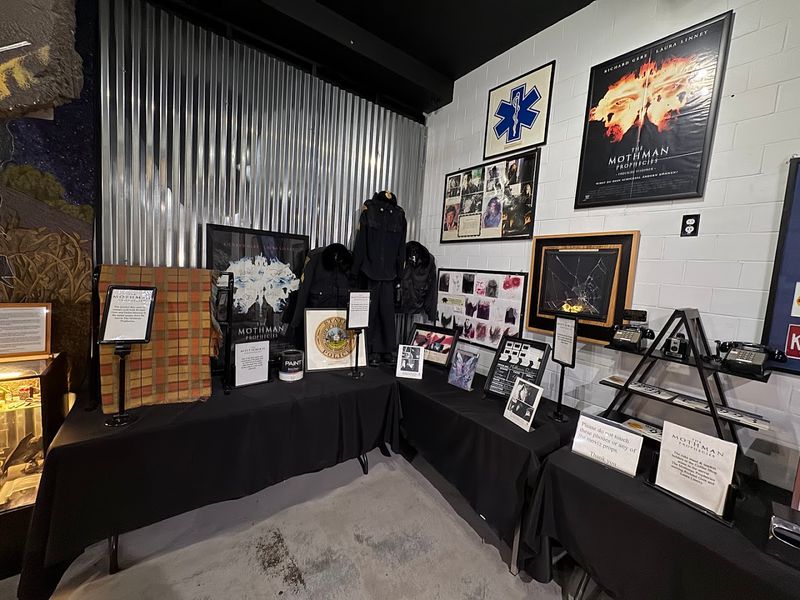
The 2002 film The Mothman Prophecies, starring Richard Gere, introduced the legend to a global audience who had never heard of Point Pleasant, and the museum embraces that pop culture chapter without apology. A dedicated section of the exhibits displays props, promotional materials, and behind-the-scenes memorabilia from the production, creating a fun contrast with the historical documents just a few feet away.
Seeing actual items from the film displayed alongside real 1966 newspaper clippings illustrates just how far this story traveled from a small West Virginia town to a Hollywood production budget. The film took creative liberties with the source material, but it genuinely reignited public interest in the legend and brought a new generation of visitors to Point Pleasant.
The museum does not pretend the film is a documentary, but it celebrates the cultural impact honestly. For visitors who first heard about Mothman through the movie, this section serves as a satisfying bridge between the cinematic version and the documented historical record.
It is one of those rare exhibits where pop culture and local history actually enhance each other rather than competing for credibility.
The Mysterious Men in Black
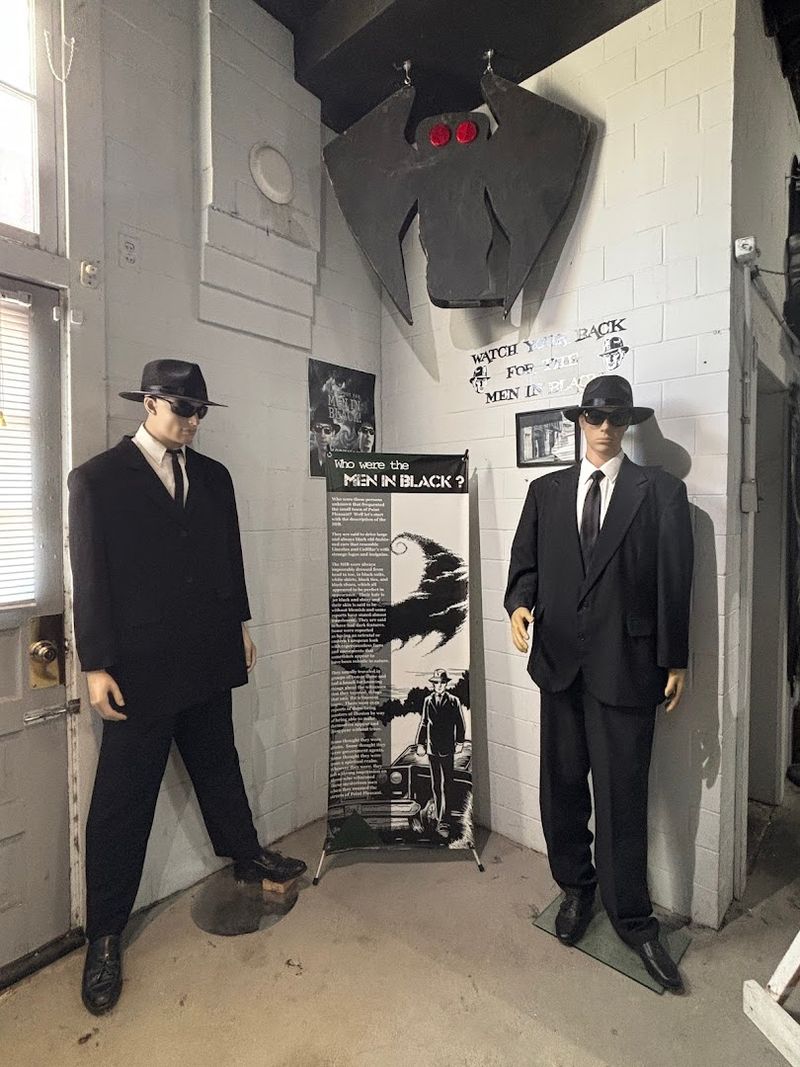
Among the stranger subplots woven through the Mothman era is the recurring appearance of mysterious figures known as the Men in Black, and the museum gives this thread its own dedicated attention. Witnesses who reported Mothman sightings or UFO activity during 1966 and 1967 also described visits from unusual men in dark suits who warned them to stop talking about what they had seen.
These accounts came from multiple unconnected individuals, and the consistency of the descriptions across different witnesses is one of the details that researchers find most difficult to dismiss outright. The museum presents the Men in Black material with the same documentary approach it applies to everything else, letting the accounts speak for themselves rather than pushing a particular interpretation.
Whether you read these stories as evidence of government suppression, mass hysteria, or something else entirely, the exhibit is genuinely thought-provoking. It also connects Point Pleasant’s experience to a broader national conversation about unexplained phenomena that was happening across the country during the same years.
That wider context makes this section one of the most intellectually engaging stops in the entire museum.
The Iconic Statue Standing Guard Outside
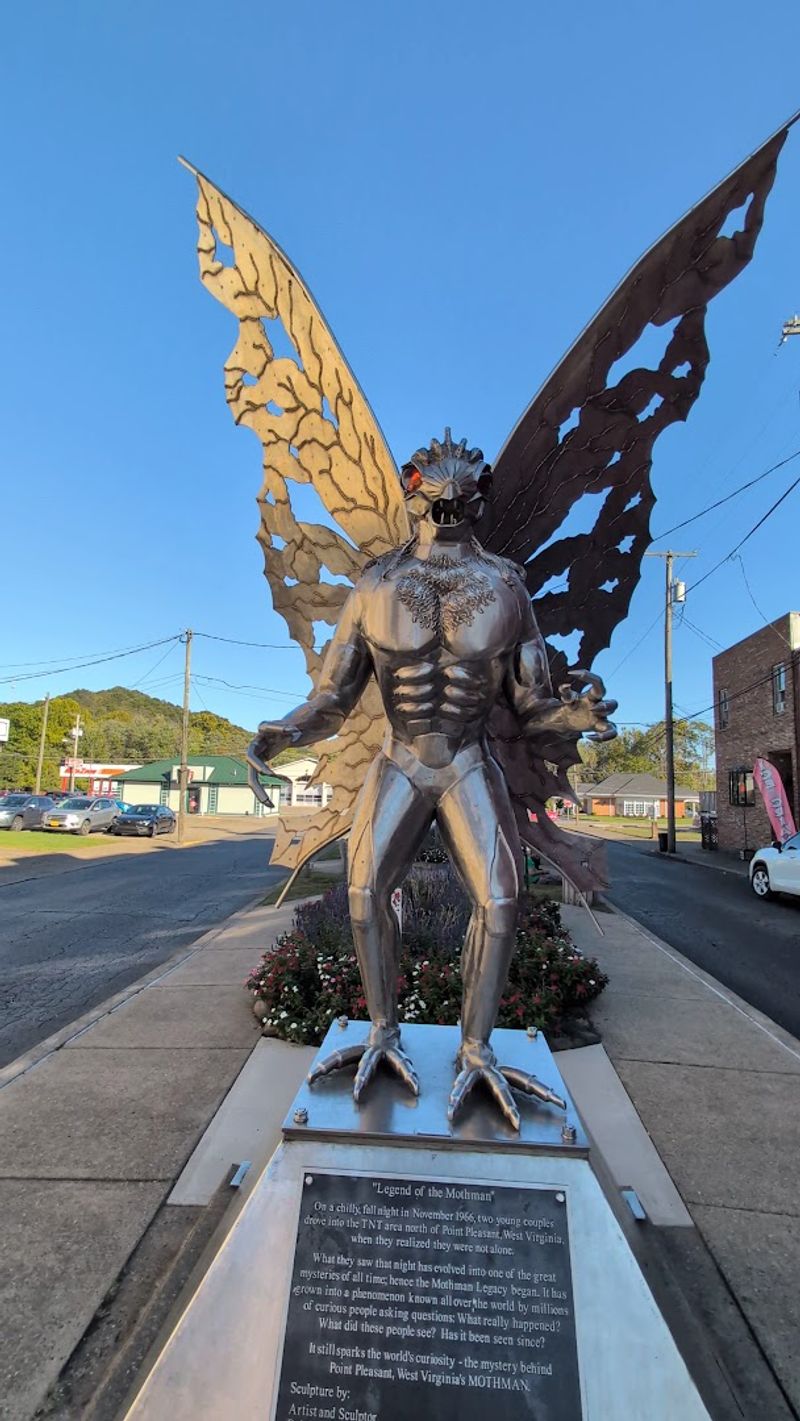
You cannot visit the museum without spending time with the 12-foot stainless steel Mothman statue that stands just outside on Main Street, and honestly it earns its own paragraph in any honest account of the trip. Unveiled in 2003 and sculpted by artist Bob Roach, the statue is shiny, muscular, dramatic, and just unsettling enough to make you pause before walking up to it.
The red eyes catch light in a way that seems almost intentional regardless of the time of day, and the wingspan is genuinely impressive at this scale. It has become one of the most photographed roadside landmarks in West Virginia, drawing visitors who make the drive specifically to stand next to it for a photo.
The staff near the entrance are happy to help with pictures, and the gentleman who sometimes stands by the statue has a reputation for excellent local recommendations and a genuine enthusiasm for the legend. The statue sets the mood for the museum visit perfectly, and leaving without a photo next to it feels like a missed opportunity that you will regret on the drive home.
What the Gift Shop Actually Has to Offer
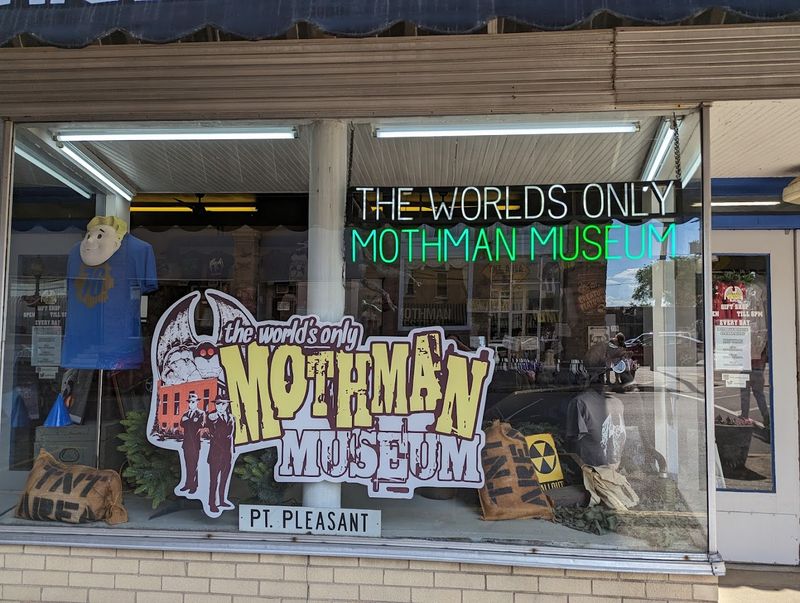
The gift shop at the front of the museum is genuinely well-stocked, and I say that as someone who usually speeds past souvenir sections without a second glance. The range of merchandise covers everything from expected items like t-shirts, hoodies, hats, and stickers to more specific finds like books on the legend, pressed pennies from the machine near the entrance, plush Mothman toys, and mugs that make excellent conversation starters at the office.
Prices are reasonable across the board, which is a refreshing contrast to some tourist destinations where a magnet costs eight dollars. The overall admission price for the museum itself runs around five dollars, making the entire visit one of the more budget-friendly cultural experiences you can have on a road trip through West Virginia.
The merchandise selection reflects genuine enthusiasm for the legend rather than generic tourist trap energy. Many of the designs are specific to Point Pleasant and the Mothman story, so what you bring home actually means something as a memento.
The gift shop alone justifies a stop even if you are only passing through town on a tight schedule.
A Surprisingly Deep Exhibit in a Compact Space
Every review I read before visiting mentioned the museum’s compact size, and that is accurate. This is not a sprawling multi-floor institution with cafeterias and gift wings.
The footprint is modest, more like a well-curated specialty gallery than a regional history museum, but the density of information packed into that space is genuinely impressive.
Display cases line the walls with layered content, photographs sit beside documents, artifacts share space with explanatory text, and the overall curation rewards slow, careful attention rather than a quick walk-through. I ended up reading far more than I planned to, and I was still finding details I had initially missed during a second loop around the exhibits.
The staff is knowledgeable, approachable, and clearly invested in the subject matter rather than just working a shift. Questions get real answers, not rehearsed scripts.
For a museum with a rating of 4.7 stars across nearly 5,000 reviews, the consistency of the visitor experience speaks to how well the space has been maintained and managed since Jeff Wamsley opened it in 2006. Small does not mean shallow here.
Why Point Pleasant Deserves More Than a Quick Stop
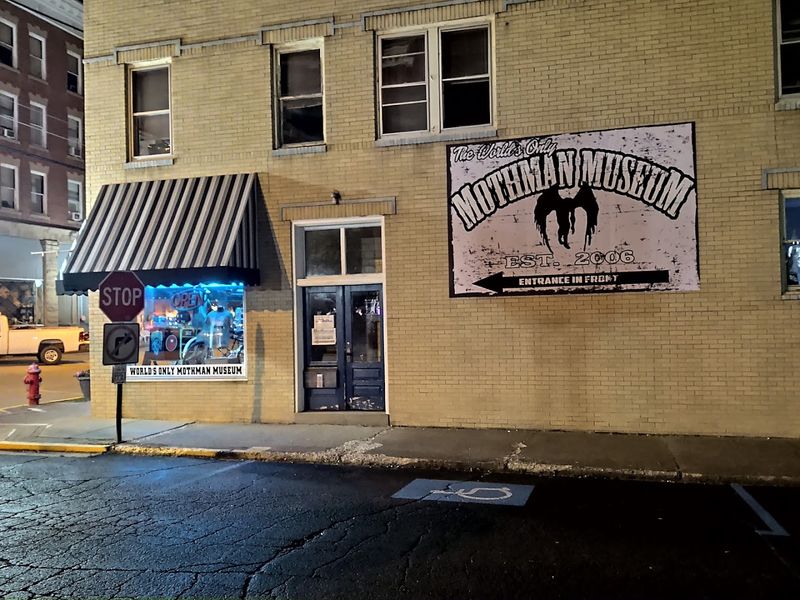
Point Pleasant rewards visitors who treat it as a destination rather than a detour. The town sits at the confluence of the Ohio and Kanawha rivers, and the riverfront area offers a genuinely pleasant backdrop for a leisurely afternoon once you have finished at the museum.
The surrounding streets have a relaxed, welcoming character that makes it easy to spend a full day rather than a quick hour.
Beyond the museum, the Mothman mini golf course next door provides a lighthearted follow-up activity that families find particularly enjoyable. The themed shops along Main Street each have their own personality, and browsing them feels like an extension of the museum experience rather than a commercial afterthought.
The drive to and from Point Pleasant through the West Virginia hills adds its own quiet reward, especially in autumn when the foliage turns and the landscape looks like something from a painting. A town this committed to its own strange history, this warm to strangers, and this honest about what it is offering deserves more credit than it typically gets on standard travel itineraries.
Come curious and leave thoroughly satisfied.
Share this story