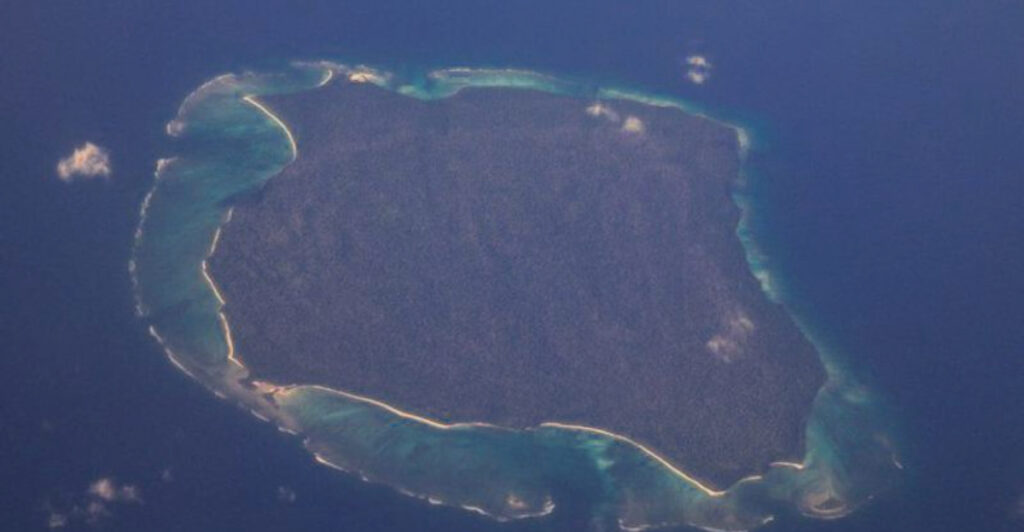
There is a small island in the Indian Ocean where outsiders are not welcome, and the government of India backs that up with a strict legal exclusion zone. The people who live there have made it clear, for thousands of years, that they want nothing to do with the outside world.
Every attempt to make contact has ended with arrows, spears, and a firm message to turn back. North Sentinel Island, part of the Andaman and Nicobar Islands, sits like a locked door in the Bay of Bengal, and the story behind why it stays locked is one of the most fascinating on the planet.
From ancient survival instincts to modern legal protections, every layer of this island’s story raises more questions than it answers. Keep reading, because this one is worth every word.
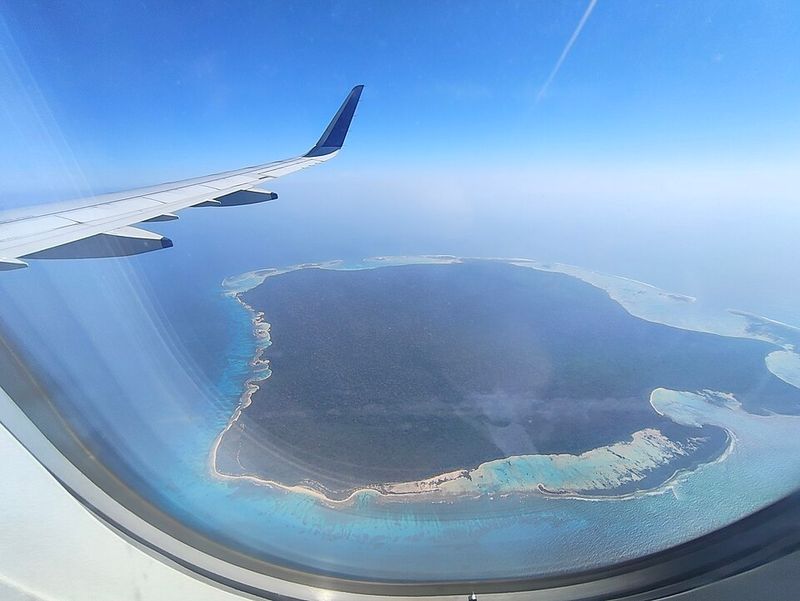
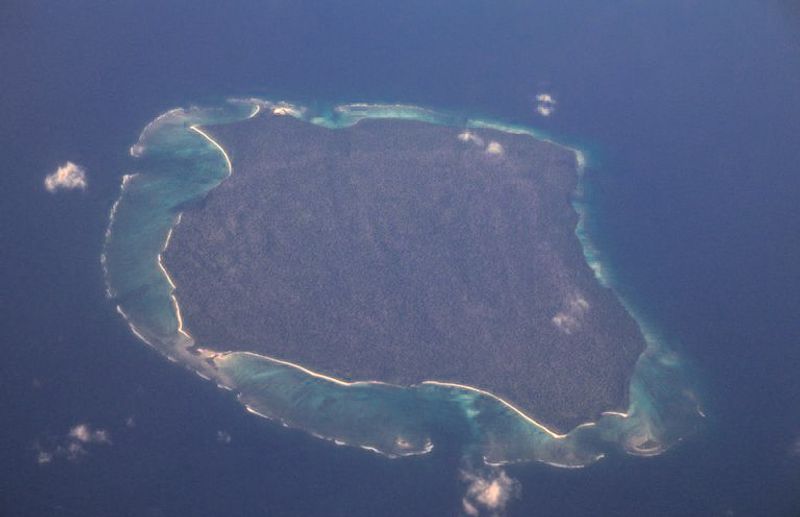
From above, North Sentinel Island looks like a postcard. Crystal-clear turquoise water wraps around a dense, unbroken jungle canopy, and white sandy beaches line the shore without a single dock, road, or structure in sight.
The island sits in the Bay of Bengal, part of the Andaman and Nicobar Islands territory of India, at approximately 11.55 degrees north latitude and 92.23 degrees east longitude. It covers roughly 72 square kilometers, which is about the size of Manhattan.
What makes it so striking is not its size but its completeness. The jungle looks untouched because it genuinely is.
No logging, no farming, no construction has ever broken through that green wall. The island exists today almost exactly as it did thousands of years ago, sealed off from the modern world by choice, geography, and law.
The Sentinelese are one of the last truly uncontacted peoples on Earth. They are believed to have lived on North Sentinel Island for up to 60,000 years, making them one of the oldest continuous human populations anywhere on the planet.
No one outside their group speaks their language. No anthropologist has ever sat with them, no researcher has ever documented their customs up close, and no outsider has ever returned from the island with a friendly story to tell.
Their exact population is unknown. Estimates range from as few as 40 to as many as 500 individuals, and the Indian government has wisely chosen not to attempt a census.
What is known is that they are healthy, organized, and fully capable of sustaining themselves without any outside help. They are not primitive.
They are simply private, on a scale most of us cannot comprehend.
India does not just discourage visits to North Sentinel Island. It makes them illegal.
Under the Andaman and Nicobar Islands (Protection of Aboriginal Tribes) Regulation of 1956, and strengthened further in 1991, approaching within five nautical miles of the island is a criminal offense.
The Indian Coast Guard and Navy actively patrol these waters to enforce the exclusion zone. Anyone caught violating the boundary can face arrest, fines, and prosecution under Indian law.
The regulation exists for two reasons. First, it protects outsiders from genuine physical danger.
Second, and more importantly, it protects the Sentinelese from diseases to which they have zero immunity. A common cold introduced to their population could be catastrophic.
The law is not a bureaucratic formality. It is a carefully considered shield, built around the understanding that some communities have the right to say no, permanently and completely.
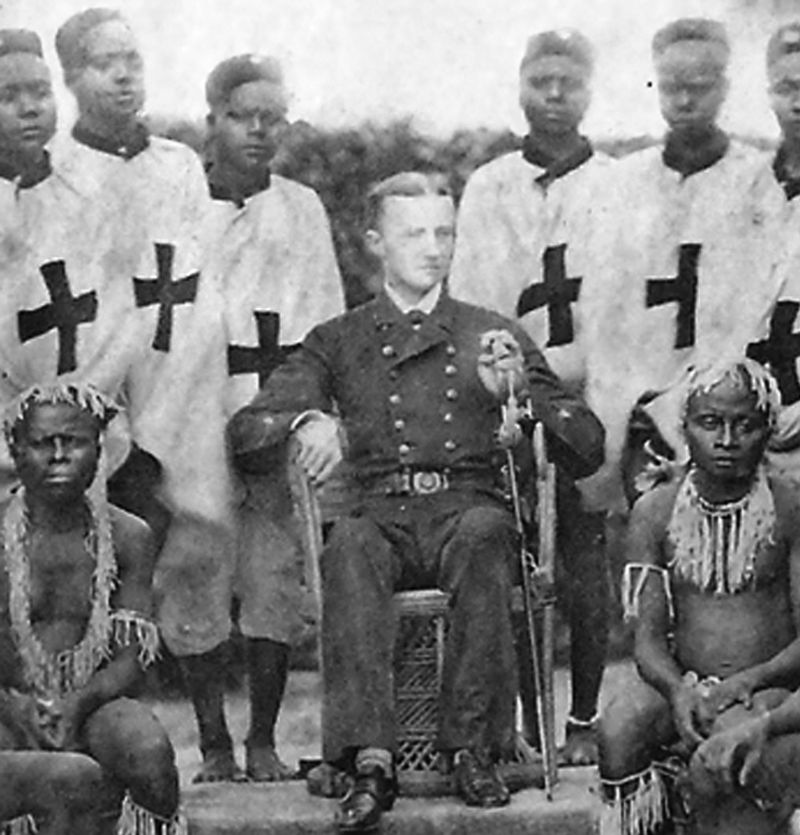
The Sentinelese have never been shy about their boundaries. Records of hostile encounters go back to the 19th century, when British colonial administrator Maurice Vidal Portman led expeditions to the island in the 1880s and 1890s.
Portman actually captured several Sentinelese individuals, including elderly people and children, and brought them to Port Blair. The adults became ill and passed away quickly.
The children were returned to the island with gifts. The Sentinelese response to subsequent visits made it very clear that the experience had not improved their opinion of outsiders.
Through the 20th century, various contact attempts by Indian anthropologists were met with arrows and spears. A National Geographic expedition in the 1970s resulted in the photographer being struck by an arrow.
Each attempt ended the same way, with the Sentinelese drawing a line in the sand and daring anyone to cross it.
When the devastating 2004 Indian Ocean tsunami struck, the world held its breath for the Sentinelese. The earthquake that caused it registered 9.1 on the Richter scale, and surrounding islands in the Andaman chain suffered severe damage and loss of life.
An Indian Coast Guard helicopter flew over North Sentinel Island days after the event to check for survivors. What the crew saw stopped everyone in their tracks.
A Sentinelese man stood on the beach and fired arrows at the helicopter.
That single image told the world everything it needed to know. The Sentinelese had survived one of the most powerful natural disasters in recorded history, apparently without outside help and without significant loss.
Their deep knowledge of their environment, likely passed down across thousands of generations, had guided them to safety. The helicopter turned back, and the exclusion zone held firm once more.
In November 2018, an American missionary named John Allen Chau paid local fishermen to take him close to North Sentinel Island. He had made multiple attempts to approach the shore over several days, driven by a personal mission to make contact with the Sentinelese.
On his final attempt, he paddled to the beach alone in a kayak. He did not return.
Indian authorities later confirmed through observation that the Sentinelese had ended his life on the beach. The fishermen who had transported him were arrested for violating the exclusion zone.
The incident reignited a global debate about consent, indigenous rights, and the ethics of contact. Most anthropologists and human rights organizations sided clearly with the Sentinelese.
The island’s legal protections exist precisely to prevent situations like this one, and the tragedy underscored how seriously those protections need to be respected and enforced.
Genetic and archaeological evidence suggests the Sentinelese descended from the first wave of modern humans to migrate out of Africa, possibly as long as 60,000 years ago. That migration followed the coastlines of South Asia and eventually reached the Andaman Islands.
This makes them one of the most ancient surviving human lineages on Earth. Their DNA, studied through limited samples from other Andamanese groups with some historical contact, shows deep divergence from mainland Asian and South Asian populations.
What that means in practical terms is extraordinary. The Sentinelese may carry genetic and cultural knowledge that stretches back further than almost any other living human community.
Their isolation, which many outsiders view as a barrier, may actually be the reason their lineage has survived intact for so long. Every generation that passes without outside contact is, in a strange way, a victory for human diversity and continuity.
Based on observations from a safe distance and brief, carefully managed contact attempts in the 1990s, researchers have pieced together a partial picture of how the Sentinelese live. They are hunter-gatherers who rely on fishing, hunting, and foraging within their island’s jungle and reef system.
They craft bows and arrows with impressive precision, use outrigger canoes for fishing in the shallows, and have demonstrated knowledge of metallurgy by repurposing iron recovered from shipwrecks near their island. That last detail is particularly striking.
They are not simply surviving. They are adapting, problem-solving, and innovating within their own framework.
Their shelters, glimpsed briefly during aerial surveys, appear to be well-constructed structures suited to the island’s climate. They wear minimal clothing and use body paint and ornaments.
Every detail that has been observed points to a community that is fully functional, deeply skilled, and entirely self-sufficient on its own terms.
One of the strongest arguments for keeping North Sentinel Island off-limits is purely medical. The Sentinelese have lived in complete isolation for tens of thousands of years, which means their immune systems have never been exposed to the diseases that the rest of the world has built up resistance to over centuries of contact and trade.
Common illnesses like influenza, measles, or even the common cold could tear through their population with devastating speed. History offers grim examples of exactly this happening to other isolated indigenous groups when outsiders arrived.
The Andaman Islanders who were contacted by the British in the 19th century saw their populations collapse dramatically within decades.
The Sentinelese do not need vaccines or medicine from the outside world. What they need is distance.
The five-nautical-mile exclusion zone is not a wall keeping them in. It is a barrier keeping the outside world’s pathogens out, and it may be the most important public health measure in the entire Indian Ocean.
At the heart of every conversation about North Sentinel Island is a question that does not get asked enough: do the Sentinelese have the right to say no? The answer, according to international human rights frameworks and most modern anthropologists, is an unambiguous yes.
The United Nations Declaration on the Rights of Indigenous Peoples, which India has endorsed, affirms the right of indigenous communities to maintain their own institutions, cultures, and traditions, free from outside interference. The Sentinelese have expressed their preference without any ambiguity, across centuries of consistent behavior.
Respecting that choice means more than just staying away physically. It means resisting the urge to frame their isolation as a problem to be solved or a mystery to be unlocked.
North Sentinel Island is not a puzzle waiting for the right explorer. It is a home, and the people inside it have decided, on their own terms, exactly how they want to live.
Share this story