 Unearth The Voyage
Street food is one of the best ways to experience a new culture, but some dishes push even the bravest eaters to their limits. Around the world, vendors serve up snacks that look, smell, or sound like nothing you have ever encountered before.
Whether it is a crunchy spider in Cambodia or a pungent cheese in Italy, these foods tell fascinating stories about history, survival, and tradition. Get ready to explore 15 street foods that truly test the adventurous traveler in you.
1. Balut – Philippines

Crack open a boiled egg in the Philippines and you might find something that surprises even seasoned food lovers. Balut is a fertilized duck egg with a partially developed embryo inside, boiled and eaten straight from the shell.
It is one of the most iconic street snacks in the country.
Vendors typically sell balut late at night, and locals enjoy it with a pinch of salt or a splash of vinegar. The broth inside the egg is often sipped first, followed by the yolk and embryo.
The texture ranges from soft and creamy to slightly chewy depending on how developed the egg is.
Balut has been eaten in the Philippines for centuries and is considered a good source of protein. Many travelers who try it say the flavor is surprisingly rich and savory.
It is definitely one of those foods you remember for life.
2. Stinky Tofu – Taiwan
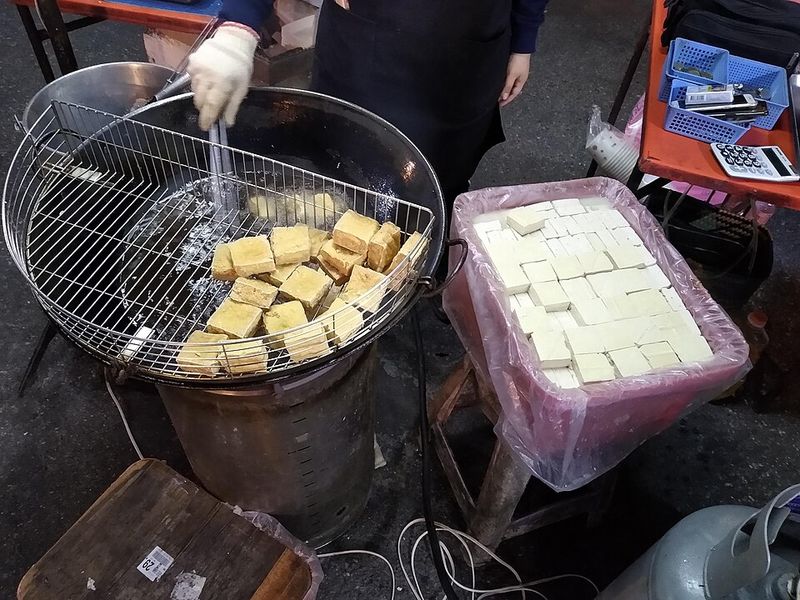
You will often smell stinky tofu long before you see it. This fermented tofu is famous across Taiwan for its overwhelmingly pungent odor, which many people compare to garbage or old socks.
Still, locals and curious tourists line up for it every single night.
The tofu is soaked in a brine of fermented milk, vegetables, and meat for days or even weeks before cooking. Once deep-fried, the outside becomes crispy while the inside stays soft and almost creamy.
It is usually served with pickled cabbage and a drizzle of chili sauce.
Fans of stinky tofu say the flavor is far more pleasant than the smell suggests, with a deep, savory richness that is hard to describe. Night markets in Taipei and Tainan are some of the best places to try it.
Many first-timers are genuinely surprised by how much they enjoy it.
3. Fried Tarantulas – Cambodia
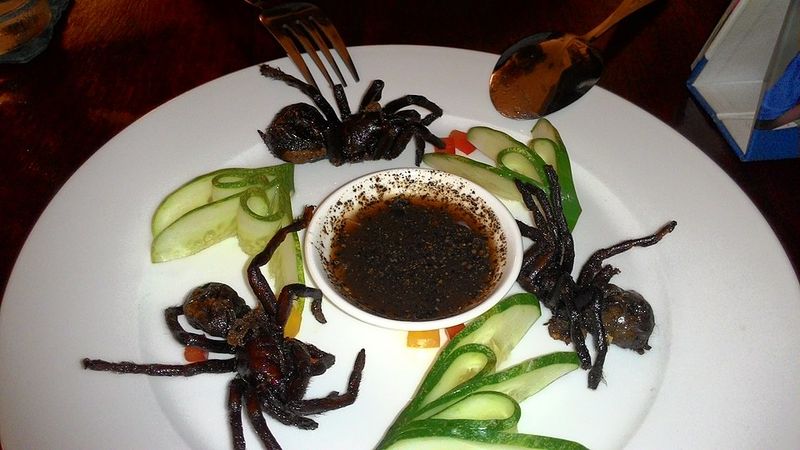
Skuon, a small town in Cambodia, has earned the nickname Spiderville for one very specific reason. Vendors there sell deep-fried tarantulas as a popular and affordable street snack.
These large spiders are seasoned with salt, sugar, and garlic before being fried until golden and crispy.
The practice of eating tarantulas reportedly grew during the Khmer Rouge era in the 1970s when food was extremely scarce. People turned to whatever protein sources they could find, including insects and spiders.
Over time, the habit became a cultural tradition and eventually a tourist attraction.
Today, travelers from around the world visit Skuon specifically to try this crunchy snack. The legs and body are edible, and many people describe the flavor as similar to soft-shell crab.
The abdomen has a softer, earthier texture that not everyone enjoys. If you are feeling bold, this one is worth the try.
4. Century Eggs – China
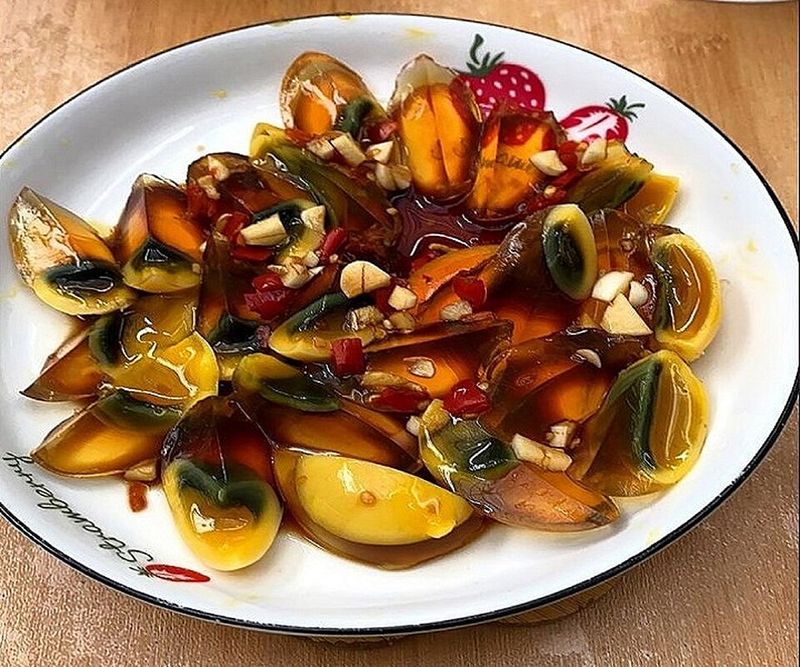
Century eggs look like something out of a science fiction movie. These preserved eggs have dark, translucent whites and creamy greenish-black yolks that can catch first-time viewers completely off guard.
Despite the dramatic appearance, they are a beloved delicacy in Chinese cuisine.
The eggs are not actually aged for a century. They are preserved for weeks or months in a mixture of clay, ash, salt, quicklime, and rice hulls.
This process transforms the egg’s texture and flavor into something rich, complex, and deeply savory.
Century eggs are often served sliced with pickled ginger or tofu as a side dish or appetizer. Street vendors in China sell them as quick snacks, sometimes paired with congee or noodles.
The flavor has been described as intensely umami with a slight sulfuric edge. Adventurous eaters who get past the appearance often find them surprisingly enjoyable and satisfying.
5. Surströmming – Sweden
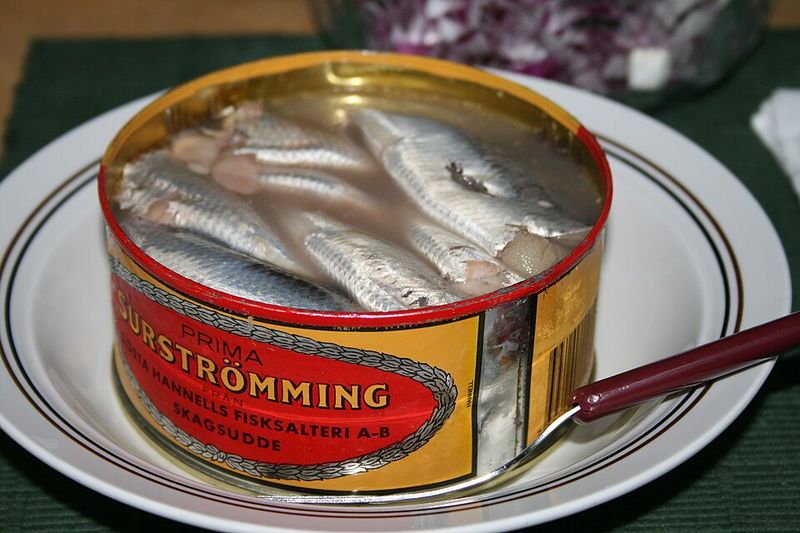
Opening a can of surströmming is considered so intense that many people do it outdoors, away from buildings and other people. This Swedish fermented herring has one of the strongest smells of any food on the planet.
Scientists have actually measured its odor and ranked it among the most pungent foods ever tested.
The herring is caught in the spring, lightly salted, and left to ferment in barrels for months before being canned. The fermentation process continues inside the can, which is why the lids often bulge outward from the built-up gas pressure inside.
Swedes traditionally eat surströmming on flatbread with butter, potatoes, and chopped onions. The flavor, according to fans, is salty, sour, and intensely fishy in the best possible way.
Some airlines have even banned it from flights due to its smell. If you try it in Sweden, locals will appreciate your courage and curiosity.
6. Hákarl – Iceland
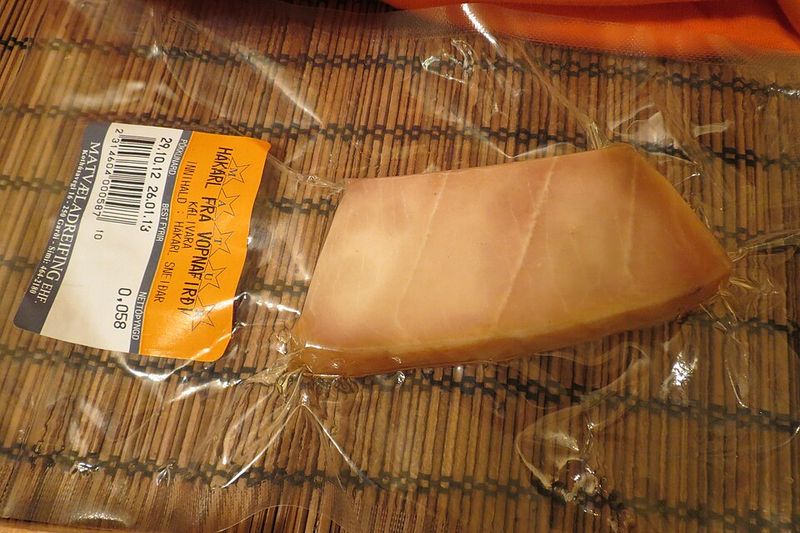
Anthony Bourdain once called hakarl the single worst thing he had ever eaten. That kind of review tends to spark curiosity rather than discourage adventurous travelers.
This Icelandic delicacy is made from Greenland shark meat that has been cured and fermented for several months.
Fresh Greenland shark is actually toxic to humans because of high levels of trimethylamine oxide in its flesh. Fermenting and drying the meat over many months breaks down those toxins and makes it safe to eat.
The finished product has a rubbery texture and an overwhelming ammonia smell.
Hakarl is traditionally eaten in small cubes on toothpicks and often washed down with a shot of Brennivin, a strong Icelandic schnapps. It is most commonly found at winter festivals and food markets in Reykjavik.
First-timers are usually advised to hold their breath while chewing to manage the intense ammonia aroma.
7. Cuy – Peru
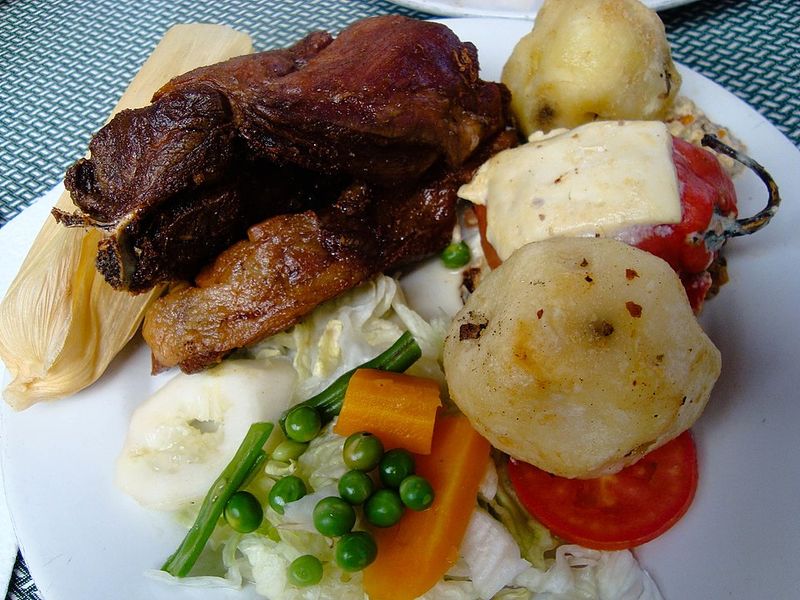
Guinea pigs might be household pets in many countries, but in Peru they have been a valued food source for thousands of years. Cuy, as roasted guinea pig is known locally, has been part of Andean culture since long before the Spanish arrived in South America.
At festivals and markets in cities like Cusco and Arequipa, vendors roast whole guinea pigs on spits or in clay ovens. The skin becomes crackling and crispy while the meat inside stays tender and flavorful.
Cuy is often served with boiled potatoes and corn, which are also native to the region.
The flavor is often compared to rabbit or dark chicken meat, with a slightly gamey edge. Many travelers who try it are surprised by how good it tastes once they get past the unfamiliar presentation.
Cuy is also protein-rich and environmentally sustainable, which has renewed global interest in this ancient food.
8. Escamoles – Mexico
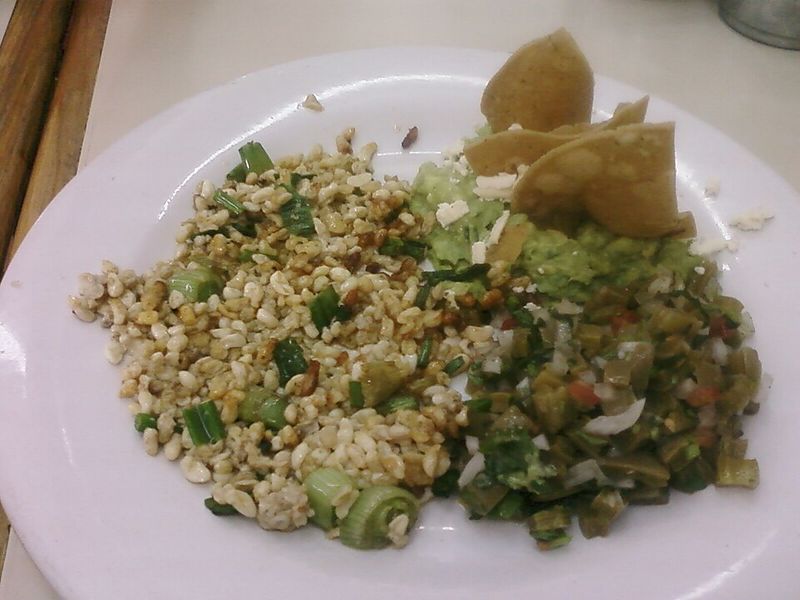
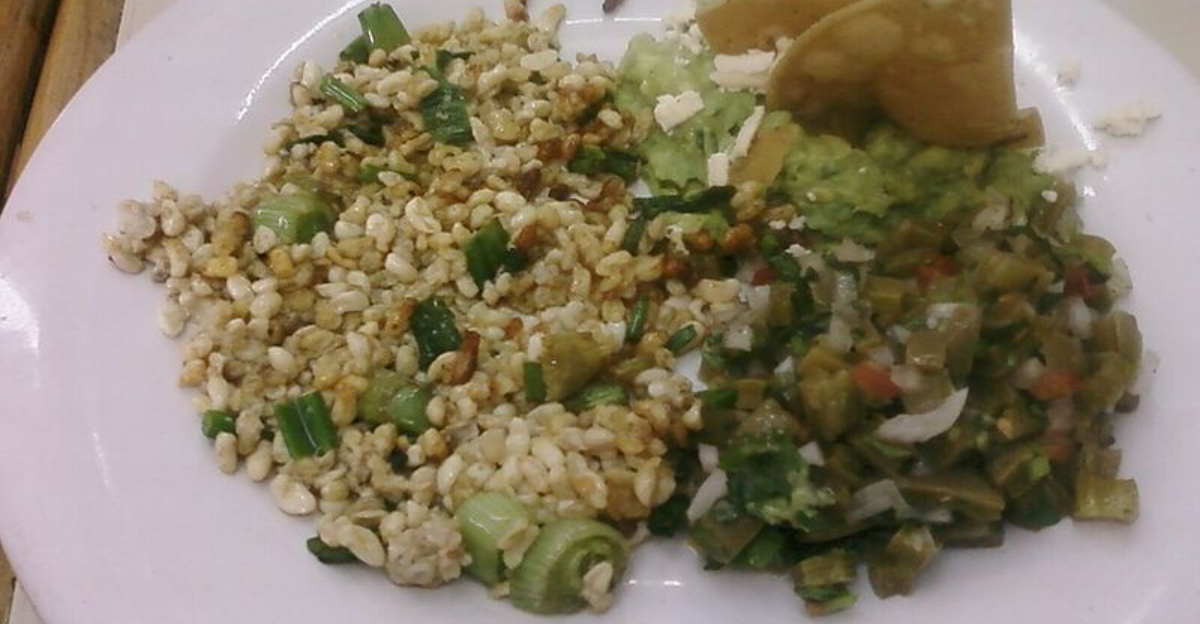
Long before caviar became a luxury food in Europe, the Aztecs were already enjoying their own version of it. Escamoles are the larvae of giant black ants, harvested from the roots of agave plants in central Mexico.
They have been eaten in the region for over 2,000 years.
Harvesting escamoles is a delicate and labor-intensive process, which is why they are considered a seasonal delicacy and can be quite expensive. The larvae are typically sauteed in butter with onions and epazote, a fragrant Mexican herb, before being served in tacos or on toast.
The texture is soft and slightly creamy, often compared to cottage cheese or scrambled eggs. The flavor is mild, buttery, and nutty with a subtle earthiness.
Street food stalls in Mexico City and Hidalgo state often feature them during spring months when they are freshest. Many food lovers consider escamoles one of Mexico’s most refined and underrated culinary treasures.
9. Sannakji – South Korea
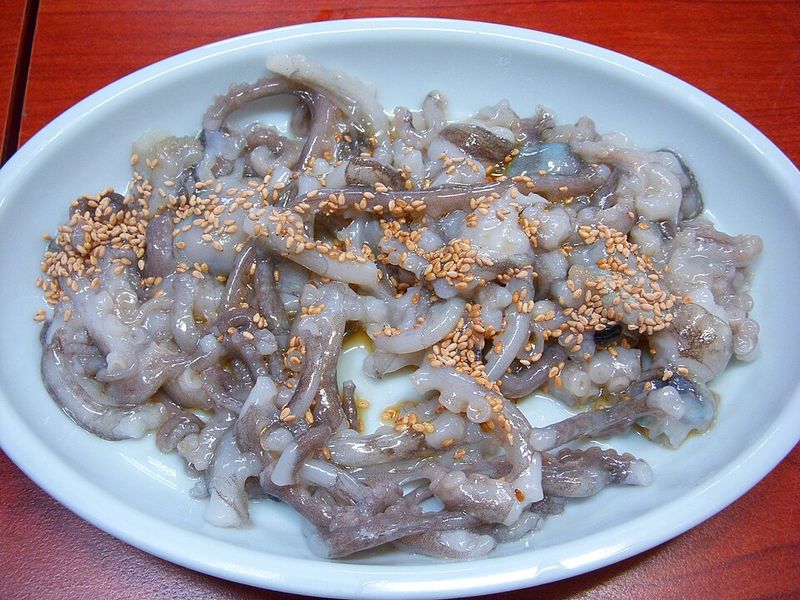
Watching your food move on the plate is not an experience most people expect at dinner. Sannakji is a Korean dish made from freshly cut octopus served while the tentacles are still wriggling on the plate.
The movement comes from nerve activity in the severed pieces, not because the octopus is still alive at that point.
The dish is served raw, seasoned simply with sesame oil and sesame seeds, letting the natural ocean flavor of the octopus come through. It is a popular item at pojangmacha, which are small street food tents commonly found throughout South Korea.
Eating sannakji requires caution because the suction cups on the tentacles can stick to the inside of the throat if not chewed thoroughly. Food safety experts recommend chewing each piece carefully before swallowing.
Despite the unusual eating experience, many visitors find the flavor clean, fresh, and surprisingly pleasant once they get comfortable with the movement.
10. Mopane Worms – Southern Africa
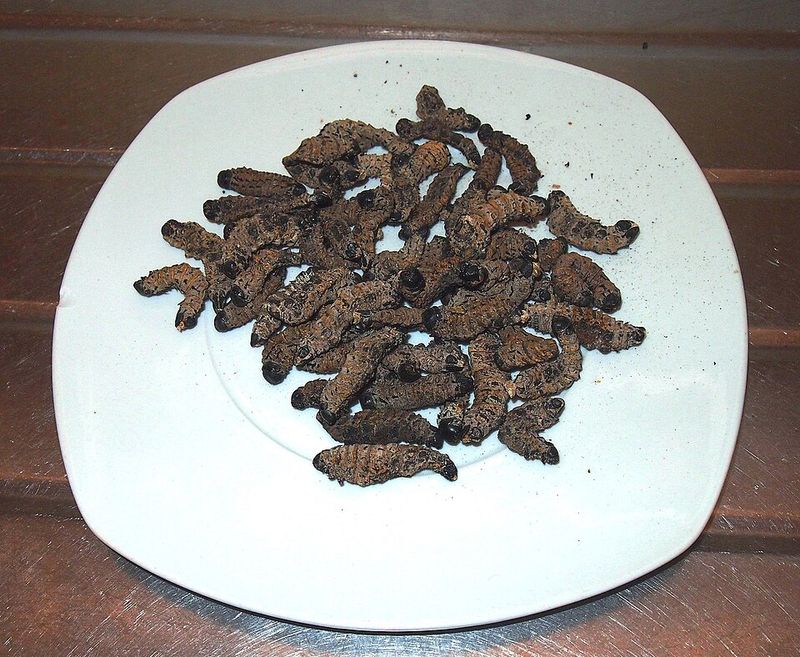
Mopane worms are not actually worms at all. They are the caterpillars of the emperor moth, named after the mopane trees they feed on across southern Africa.
In countries like Zimbabwe, Botswana, and South Africa, they have been a staple source of nutrition for generations.
The caterpillars are harvested by hand, gutted, and then either dried in the sun or fried with spices. Dried mopane worms have a crunchy texture and a flavor that many describe as smoky, earthy, and slightly woody.
Fried versions are often seasoned with chili, garlic, and tomato for extra kick.
Nutritionally, mopane worms are impressive. They are packed with protein, iron, and calcium, making them a highly efficient food source in regions where meat can be expensive.
Street vendors sell them by the bag at markets and bus stops throughout the region. For travelers curious about sustainable eating, mopane worms offer a genuinely eye-opening experience.
11. Casu Marzu – Sardinia, Italy
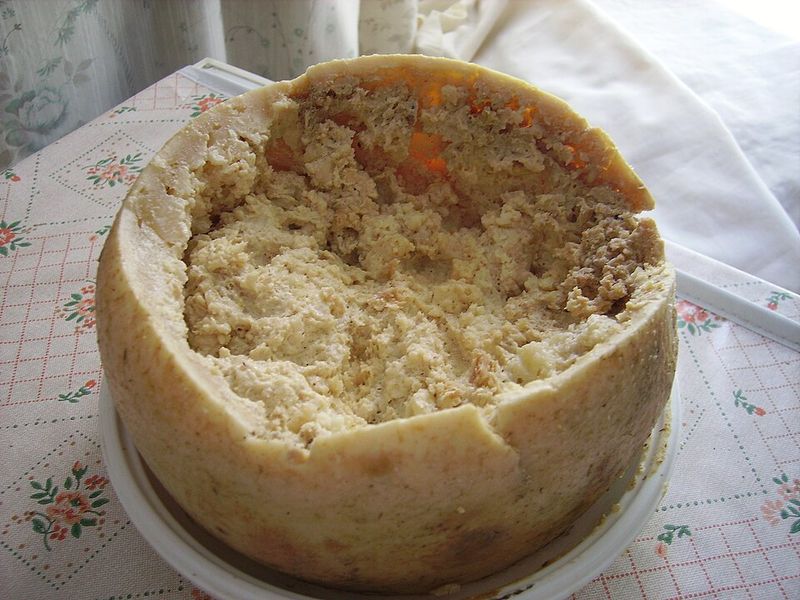
Casu marzu is possibly the most controversial cheese in the world, and it is technically illegal to sell commercially in the European Union. This traditional Sardinian sheep cheese is intentionally left out so that cheese flies can lay eggs inside it.
The larvae that hatch help break down the fats in the cheese, creating an extremely soft, almost liquid texture.
The flavor is intensely sharp, pungent, and fermented, going far beyond any standard aged cheese. Locals typically eat it spread on flatbread, sometimes with the larvae still present inside.
Some people prefer to remove the larvae first, while others consider eating them part of the authentic experience.
Casu marzu has been made in Sardinia for centuries and is deeply tied to local identity and tradition. Finding it requires knowing the right people since it is mostly made and shared privately.
Travelers who manage to taste it describe it as one of the most unforgettable food experiences of their lives.
12. Durian Desserts – Southeast Asia

Few fruits in the world inspire as much passionate debate as durian. Known as the king of fruits across Southeast Asia, durian is celebrated for its rich, custard-like flesh but notorious for its powerful smell.
The odor has been compared to onions, turpentine, and gym socks all at once.
Hotels, airports, and public transit systems in Singapore, Thailand, and Malaysia have posted signs banning durian from their premises. Despite this, durian desserts are everywhere at night markets, from sticky rice with durian to durian ice cream, crepes, and pastries.
Locals treat these treats with the same enthusiasm that people in other countries reserve for chocolate.
The flavor, for those willing to get past the smell, is often described as sweet, creamy, and complex with hints of vanilla and almond. Many first-time tasters end up becoming fans after just one bite.
Durian season in Thailand and Malaysia draws food tourists from all over the world each year.
13. Chicken Feet – China
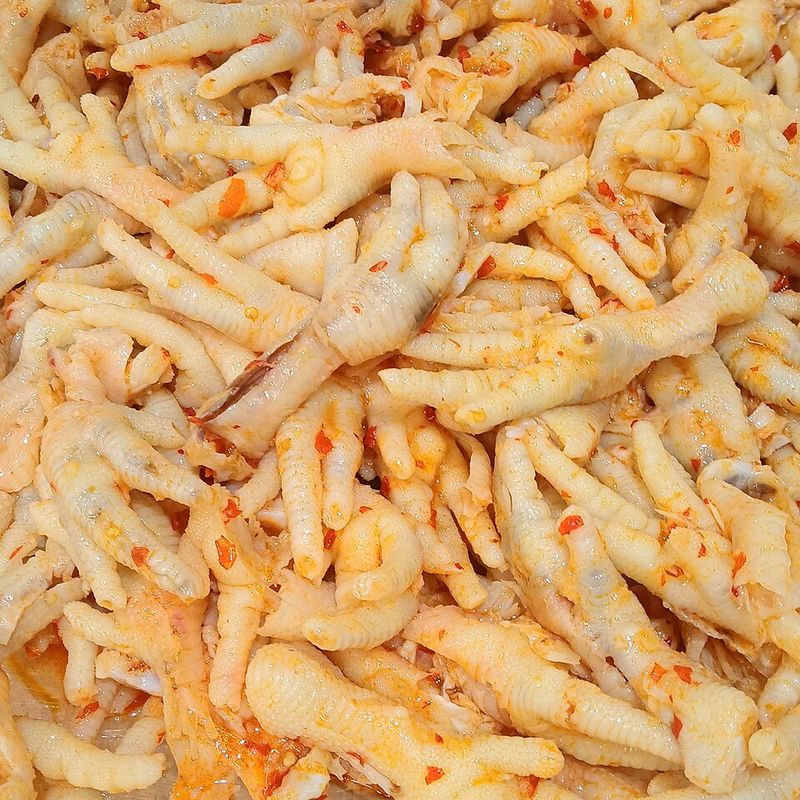
Chicken feet might seem like an unusual snack to many Western travelers, but in China they are considered a genuine delicacy and a popular street food. Vendors prepare them in several ways, including deep-frying, braising in soy sauce and spices, or steaming with black bean sauce in dim sum style.
The appeal of chicken feet is mostly about texture rather than meat content. There is not much actual flesh on a chicken foot, so eating them is a slow, satisfying process of pulling the skin and cartilage off the small bones.
The braised versions are especially flavorful, soaking up rich sauces and aromatics over hours of slow cooking.
Night markets across cities like Chengdu, Shanghai, and Guangzhou all feature chicken feet as a go-to snack. They are cheap, filling, and deeply flavorful.
Travelers who approach them with an open mind often find the experience far more enjoyable than they expected, coming back for seconds.
14. Blood Sausage Snacks – Various Countries
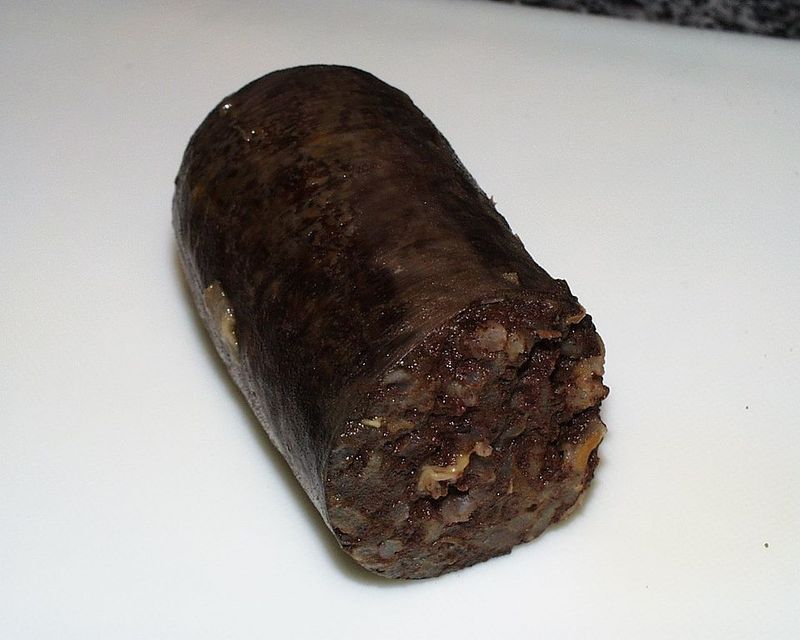
Blood sausage goes by many names around the world. In the United Kingdom it is called black pudding, in Spain it is morcilla, in South Korea it is soondae, and in Mexico it is moronga.
Nearly every culture that raises livestock has developed its own version of this ancient food.
The basic idea is the same across all versions: animal blood, usually from pigs or cows, is mixed with fat, grains, or spices and stuffed into a casing before being cooked. The result is a dense, savory sausage with a rich, iron-forward flavor that is unlike anything else.
Street vendors across Europe, Asia, and Latin America sell blood sausage as a quick and affordable snack. In the UK, black pudding is a beloved breakfast staple.
In South Korea, soondae is a popular street snack served with fish cake broth. Travelers who try local versions of blood sausage often discover one of the most deeply cultural foods a destination has to offer.
15. Fried Scorpions – China and Thailand
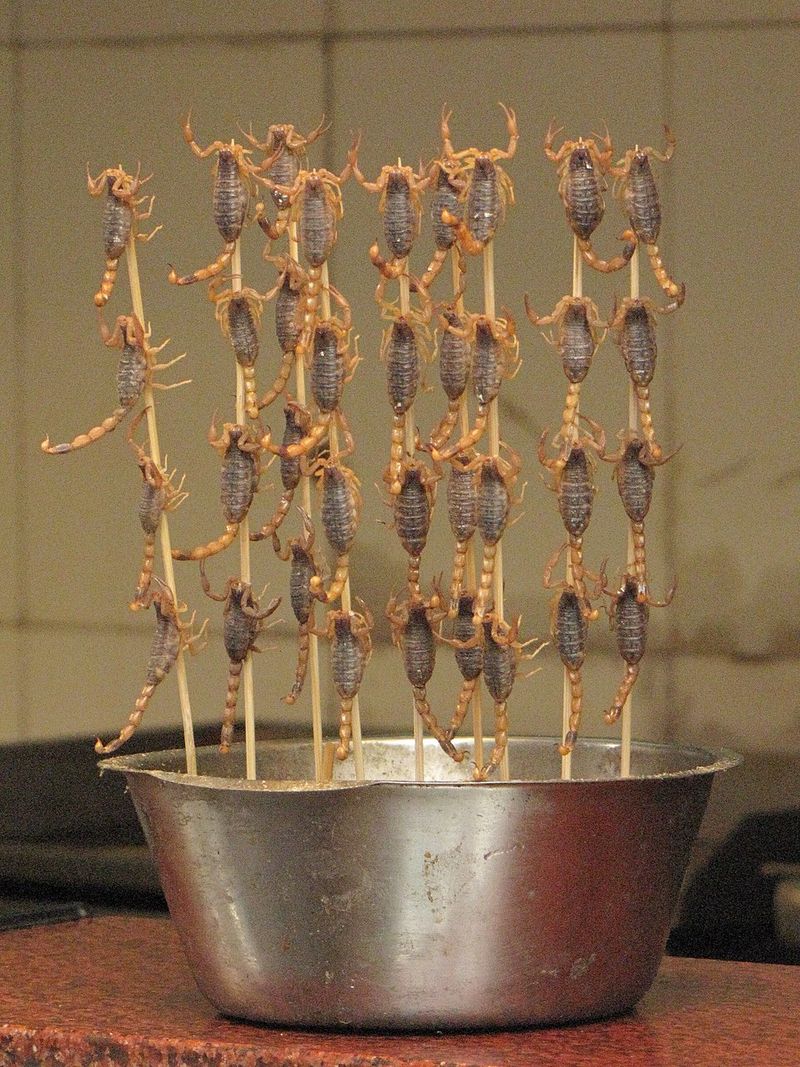
Walking through Beijing’s Wangfujing Night Market or Bangkok’s Khao San Road, you will almost certainly spot skewers of deep-fried scorpions on display. These crunchy insects have become one of the most photographed street foods in Asia, partly because of their dramatic appearance and partly because of the daring required to eat one.
Scorpions are typically skewered alive before being deep-fried in hot oil, which neutralizes the venom and kills the creature instantly. The heat also makes the exoskeleton puff up and turn golden, creating a satisfying crunch.
They are usually seasoned with salt or light spices and eaten whole.
The flavor is often described as nutty and slightly smoky, not unlike sunflower seeds or popcorn. Many travelers buy a skewer more for the experience and the photo than for the taste, but plenty of adventurous eaters genuinely enjoy them.
Fried scorpions are a reminder that street food is as much about cultural storytelling as it is about flavor.



