 Unearth The Voyage
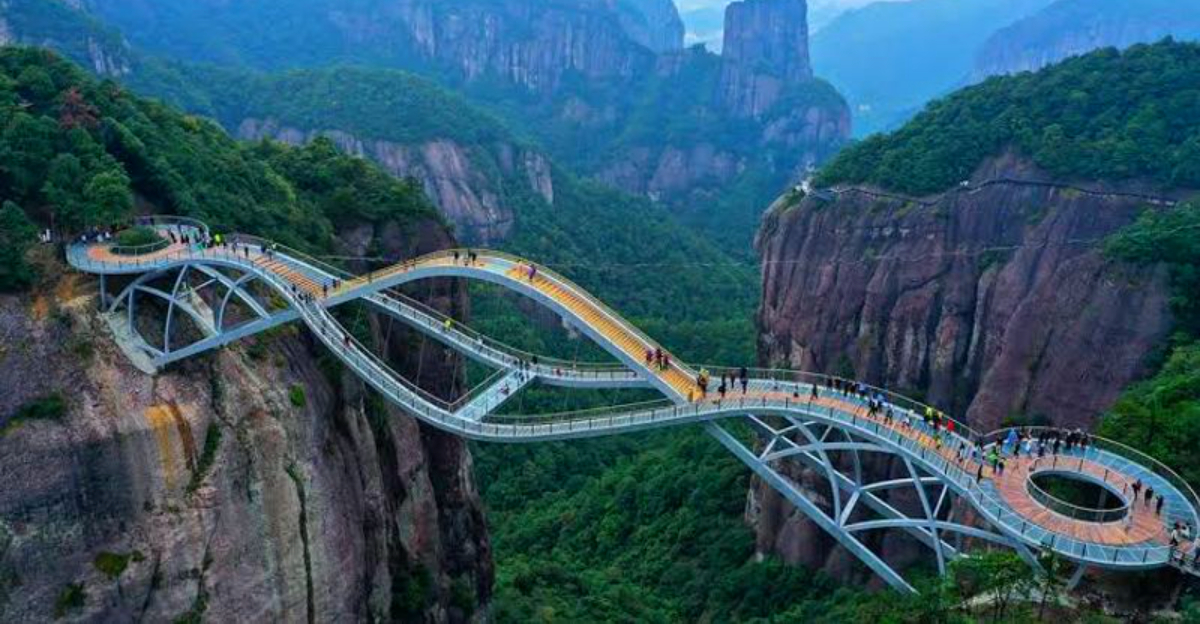
Standing on a glass walkway that curves and twists hundreds of feet above a misty mountain valley, with nothing but air between you and the ground far below is a challenge. China’s Ruyi Bridge is one of the most jaw-dropping architectural feats in the world, blending ancient symbolism with modern engineering to create an experience that tests your nerves and rewards your courage.
Whether you’re an adrenaline junkie or just curious about this viral sensation, this bridge is rewriting what we think is possible when it comes to scenic viewpoints.
1. It’s called the Ruyi Bridge and it’s designed to look like a traditional symbol of good fortune
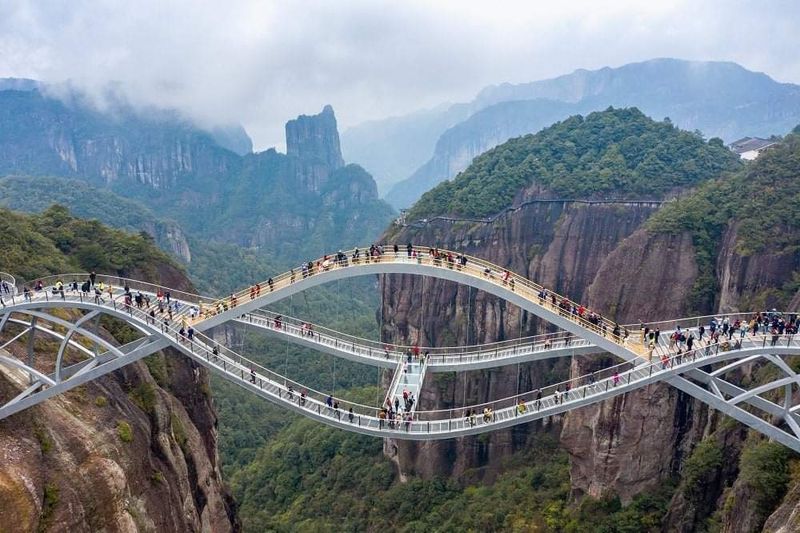
The name and shape come from a ruyi, a ceremonial scepter in Chinese culture associated with power, luck, and everything going your way. That’s why the bridge looks like an elegant, floating curve rather than a straight crossing.
Ancient emperors and nobles used the ruyi as a symbol of authority and blessing, and architects wanted to honor that tradition in a modern, breathtaking way.
When you see photos of the bridge, you might notice how it doesn’t look like typical infrastructure. Instead of rigid lines, it flows like calligraphy or a ribbon frozen in mid-air.
This design choice wasn’t just about aesthetics; it was about creating a sense of wonder and connection to cultural heritage.
Visitors often say the bridge feels less like a walkway and more like art you can step onto. The curves make every angle different, so no two photos look the same.
If you’re someone who appreciates both history and innovation, this bridge offers a rare chance to walk through both at once.
The symbolism runs deep here. By naming and shaping the structure after the ruyi, designers invite everyone who crosses to carry a little bit of that ancient good fortune with them.
2. It’s located in Shenxianju Scenic Area, Zhejiang Province (near Taizhou)
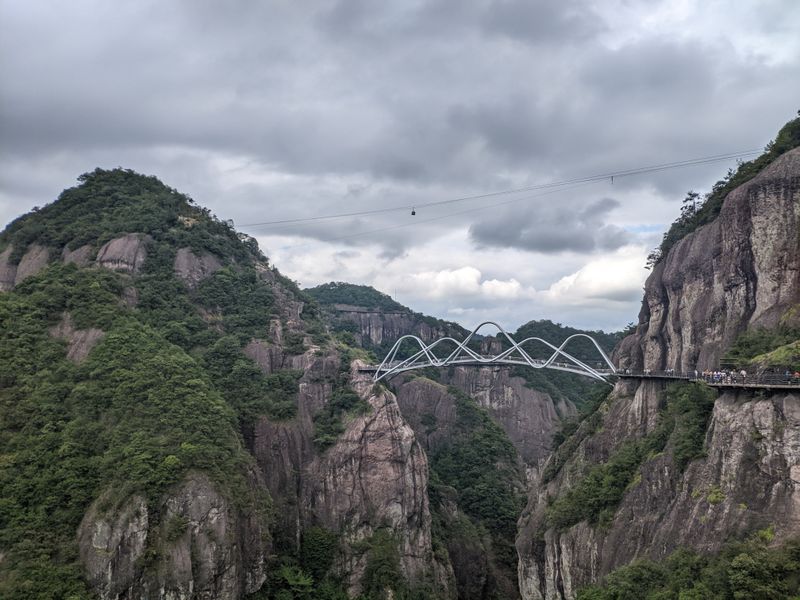
You’ll find it in eastern China, in a mountainous tourist area known for steep cliffs, forested valleys, and panoramic viewpoints. Shenxianju translates roughly to “Dwelling Place of the Immortals,” and once you see the landscape, the name makes perfect sense.
Jagged peaks rise out of the mist like something from a fantasy painting, and the valleys below are lush with greenery year-round.
Taizhou isn’t as internationally famous as Beijing or Shanghai, but it’s becoming a destination for adventure seekers and nature lovers. The region offers hiking trails, waterfalls, and rock formations that have inspired poets and artists for centuries.
Adding the Ruyi Bridge to this already stunning area turned it into a must-see stop for travelers.
Getting there usually involves a combination of train or bus travel from major cities, followed by a scenic drive into the mountains. The journey itself is part of the experience, with winding roads and glimpses of rural Chinese life.
Once you arrive, the scenery alone is worth the trip, even before you step onto the bridge.
Local tourism boards have worked hard to balance accessibility with preservation, so the area remains beautiful without feeling overdeveloped.
3. The ‘headline’ number: it’s about 140 meters above the valley
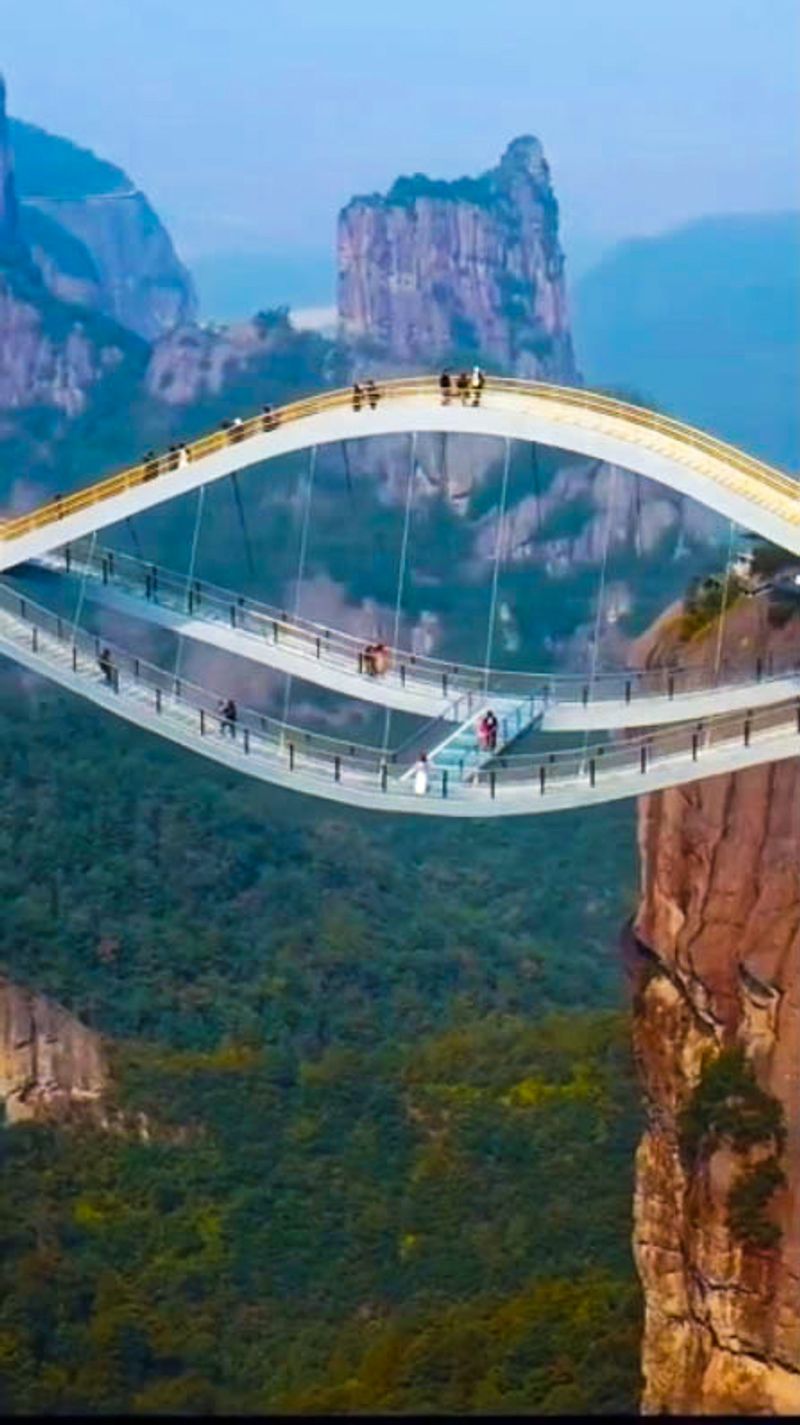
Many reports describe the bridge as rising to around 140 meters over the valley floor, high enough to make even confident visitors slow down. To put that in perspective, 140 meters is roughly the height of a 45-story building.
Standing on the bridge and looking down, you’ll see treetops, rock formations, and sometimes clouds drifting below you.
That height isn’t just for show. It positions the bridge perfectly to offer unobstructed views in every direction, turning the crossing into a 360-degree nature experience.
The elevation also means the air feels cooler and fresher, especially on warm days when the valley below holds heat.
For many people, the psychological impact of that height is more intense than they expect. Your brain knows you’re safe, but your body might react differently when you glance down through the glass.
Some visitors describe a tingling sensation in their legs or a sudden awareness of how small they are compared to the landscape.
Interestingly, the 140-meter figure is what most official sources cite, making it the number you’ll see repeated in travel guides and news stories. It’s become the defining statistic of the bridge, even though there’s more to the story.
4. A detail some people miss: some sources report a higher peak point
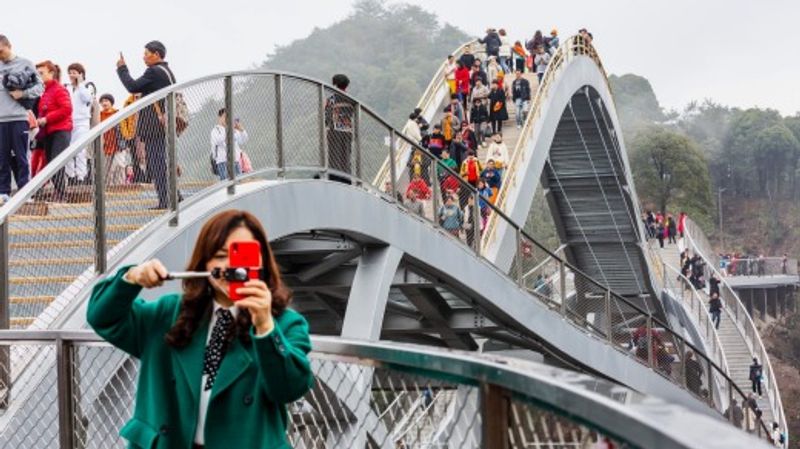
You may also see figures like 155 to 165 meters referenced for certain humps or sections, depending on what exactly is being measured. The most commonly published official-style figure remains around 140 meters.
This discrepancy comes from how different parts of the bridge are measured against different reference points in the uneven valley below.
Architectural measurements can get complicated when the ground itself isn’t level. The bridge has multiple high points, and each one might have a different distance to the nearest valley floor.
Some reports measure from the lowest point in the gorge, while others use the average valley elevation.
Why does this matter? If you’re comparing this bridge to others around the world, the exact height determines where it ranks.
A difference of 15 or 25 meters can move it up or down the list of the world’s highest glass bridges. For most visitors, though, the experience feels the same whether you’re at 140 or 165 meters.
The takeaway is simple: no matter which number you trust, you’re going to be very, very high above solid ground. Splitting hairs over the exact measurement won’t change the thrill or the view.
5. It’s not one bridge – it’s three intertwined spans
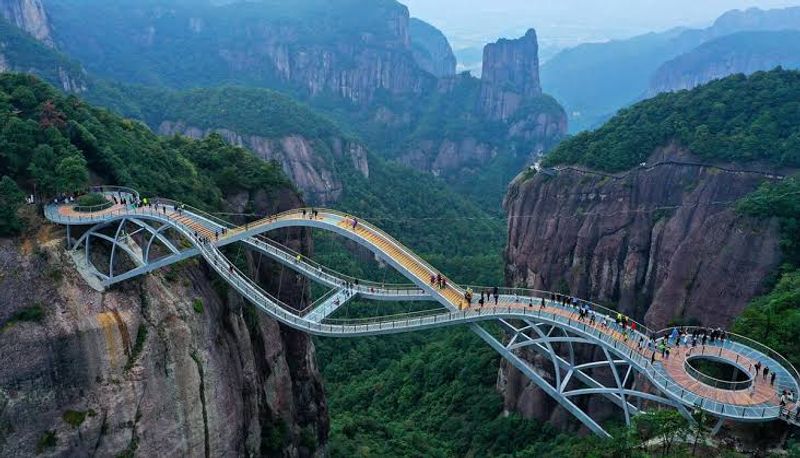
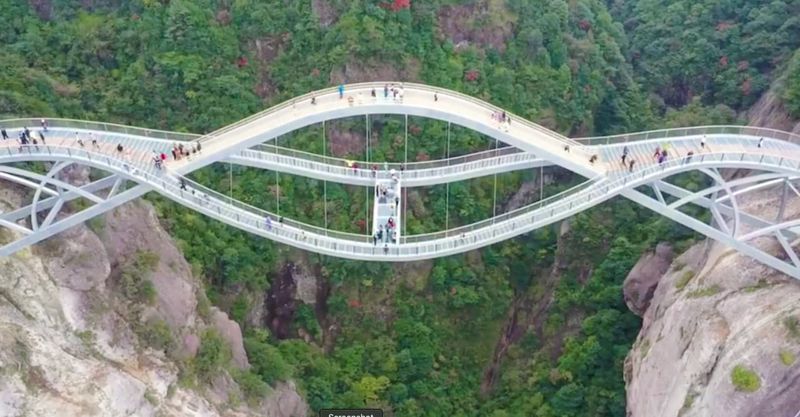
That’s a big part of why it looks so unreal: it’s made up of three connected, wavy sections that overlap and cross in a visually dramatic way. Each span follows its own curved path, and where they meet, the structure forms loops and intersections that defy what we usually expect from a bridge.
Engineers had to solve incredibly complex problems to make sure each piece supported the others without creating weak points.
The three-span design also serves a practical purpose. By distributing weight and stress across multiple paths, the bridge can handle larger crowds and stronger winds than a single-span structure of the same length.
It’s a masterpiece of both form and function, where beauty and safety work hand in hand.
Walking across, you’ll notice how the path shifts and changes direction. One moment you’re heading toward a peak, the next you’re descending into a gentle curve.
This constant variation keeps your attention locked on the experience, making it feel longer and more immersive than a straight walkway.
From below or from a drone’s perspective, the three spans look like a knot or a piece of abstract sculpture suspended in the sky.
6. It’s roughly 100 meters long
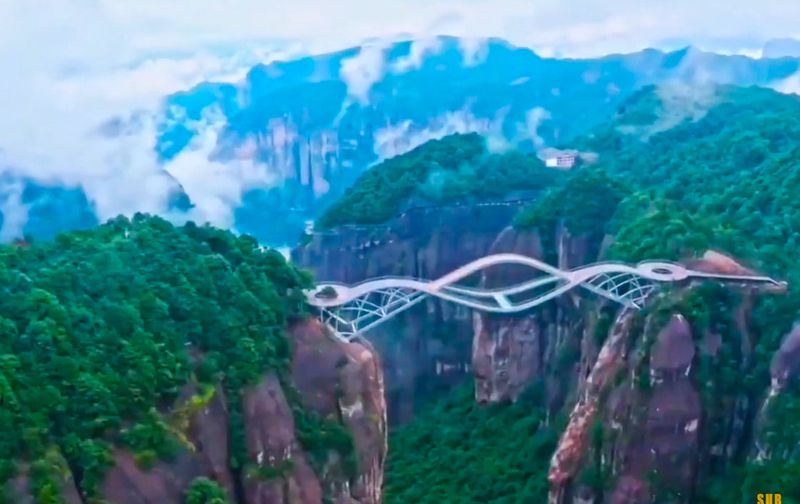
It’s not the longest glass bridge in China, but it might be one of the most visually striking because of its shape and multi-level feel. Other glass bridges in the country stretch for hundreds of meters in straight or gently curving lines, prioritizing distance over drama.
The Ruyi Bridge takes the opposite approach: it packs maximum visual impact into a relatively compact space.
One hundred meters might not sound like much, but when you’re walking it at a height of 140 meters with curves and stairs, it feels longer. The changing elevation and direction mean you’re constantly adjusting your balance and perspective.
Time seems to stretch when every step requires a little extra focus.
The shorter length also makes the bridge more accessible to a wider range of visitors. You don’t need marathon endurance to complete the crossing, just a willingness to take your time and manage your nerves.
Families with kids, older adults, and people with mild fear of heights often find it challenging but doable.
In terms of engineering, a shorter bridge is easier to maintain and inspect, which is crucial for a structure made partly of glass and subjected to weather extremes. Quality over quantity is the philosophy here.
7. It opened to the public in late September 2020
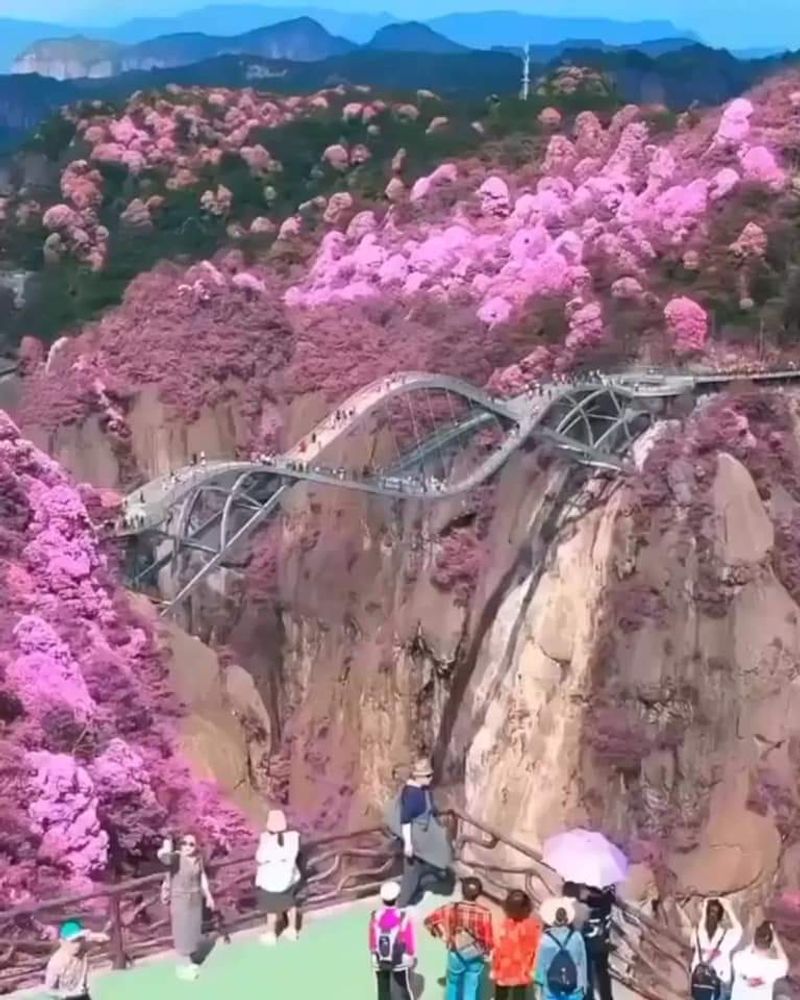
The bridge became a social media phenomenon soon after opening, partly because it looks too crazy to exist. Videos and photos spread rapidly across platforms like TikTok, Instagram, and Weibo, racking up millions of views within days.
People couldn’t believe something so surreal was real, and the debate over whether the images were edited only fueled more interest.
Opening during the tail end of 2020 was both a blessing and a challenge. Global travel was still heavily restricted due to the pandemic, so most early visitors were domestic tourists.
This created massive demand within China, with people eager to experience something new and exciting after months of lockdowns.
The timing also meant the bridge entered the world stage during a period when people were craving escapism and wonder. Seeing footage of the bridge offered a mental break from the stress of the pandemic, even for those who couldn’t visit in person.
It became a symbol of human creativity and resilience.
Since that initial opening, the bridge has maintained steady popularity. It’s no longer just a novelty; it’s an established landmark that draws visitors year-round.
The early viral buzz helped, but the bridge’s lasting appeal comes from the experience itself.
8. It took years to build (planning/construction began around 2017)
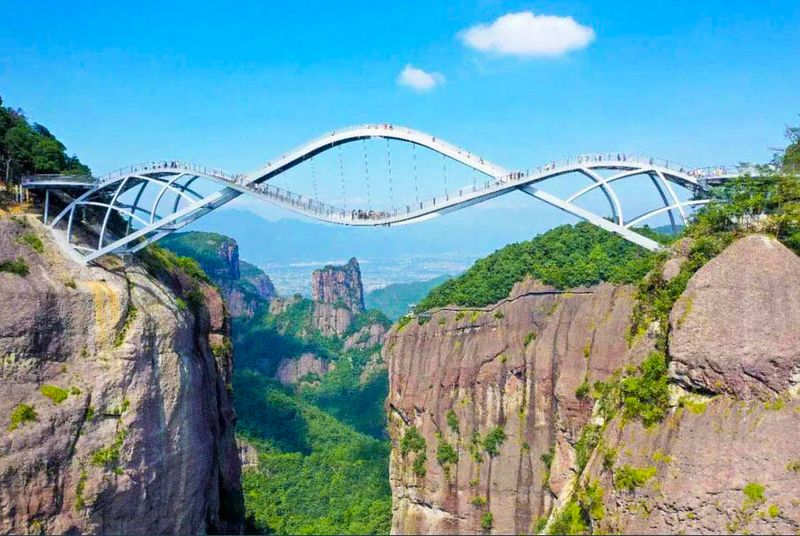
It may look like it appeared overnight, but it was a multi-year project involving hundreds of workers, engineers, and designers. Planning began around 2017, with teams studying the landscape, testing materials, and running simulations to ensure the structure could withstand earthquakes, high winds, and heavy snow.
Every curve and connection point had to be calculated with precision.
Construction in such a remote, mountainous area presented unique logistical challenges. Heavy equipment and materials had to be transported along narrow, winding roads, and much of the work had to be done at extreme heights.
Weather delays were common, especially during the rainy season when visibility dropped and winds picked up.
The design itself went through multiple revisions. Early concepts were more conservative, but the team pushed for something bolder and more visually dramatic.
The final design required custom-fabricated steel components and specially treated glass panels that could handle both the weight of visitors and the forces of nature.
By the time the bridge opened in 2020, it represented thousands of hours of labor and innovation. The fact that it was completed on schedule and without major incidents is a testament to the skill and dedication of everyone involved.
9. The designer is He Yunchang, a well-known steel-structure expert
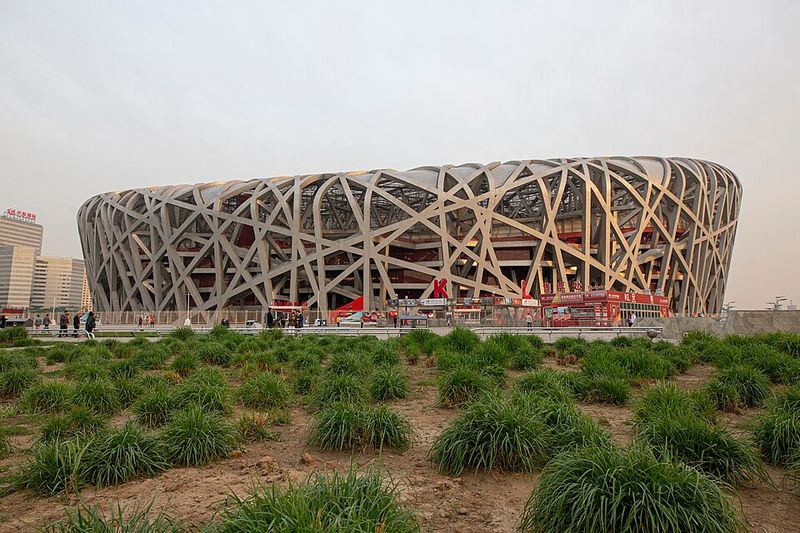
He’s frequently linked in coverage to major Chinese steel-structure projects, including Beijing’s Bird’s Nest stadium. His reputation for combining artistic vision with engineering precision made him the ideal choice for a project as ambitious as the Ruyi Bridge.
He Yunchang has spent decades pushing the boundaries of what steel can do, and this bridge is one of his most daring achievements.
His design philosophy focuses on creating structures that feel light and graceful despite being made from heavy materials. The Ruyi Bridge embodies this approach, with its flowing curves and delicate appearance masking the incredible strength required to support it.
Every line and angle serves both an aesthetic and a structural purpose.
He Yunchang has said in interviews that he wanted the bridge to feel like it was part of the landscape rather than imposed on it. By echoing the natural curves of the mountains and valleys, he aimed to create harmony between human creation and the environment.
The result is a bridge that enhances the scenery rather than dominating it.
His work on the Bird’s Nest stadium brought him international recognition, but projects like the Ruyi Bridge show his range. He’s equally comfortable designing for massive urban events and intimate natural settings.
10. Yes, it’s real – viral disbelief is part of its story
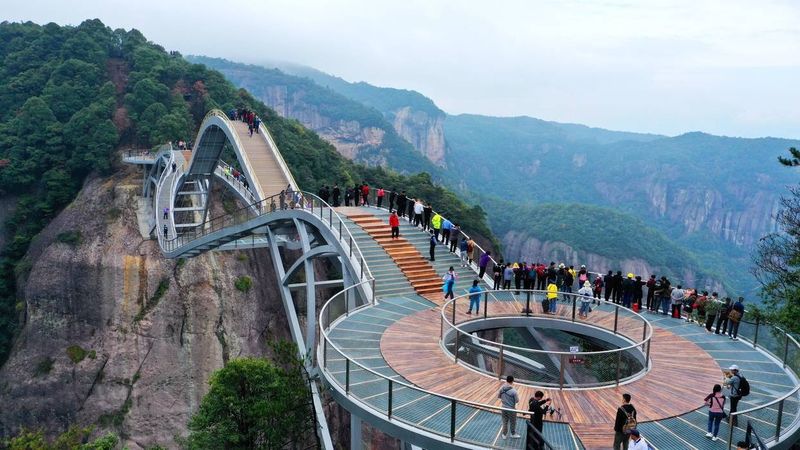
When drone footage spread online, a lot of people assumed it was edited or AI-generated. Fact-checkers later confirmed the bridge exists.
The initial wave of skepticism actually helped the bridge gain even more attention, as people shared the videos with captions like “This can’t be real” or “Someone prove this is fake.” The more people doubted it, the more others rushed to verify it.
Part of the disbelief came from how the bridge looks in photos and videos. The curves are so extreme and the setting so dramatic that our brains struggle to accept it as a real, physical object.
It doesn’t help that some early images were taken from angles that made the bridge look even more impossible, almost like a digital rendering.
News outlets and travel bloggers eventually visited the site and posted their own footage, complete with interviews with workers and tourists. These firsthand accounts put the rumors to rest, but the “too good to be true” reputation stuck.
Even now, people encountering the bridge for the first time often express shock that it’s real.
This viral disbelief has become a defining feature of the bridge’s identity. It’s not just a tourist attraction; it’s a conversation starter and a challenge to our expectations.
11. The scariest part for many visitors isn’t the glass – it’s the steep arch with stairs
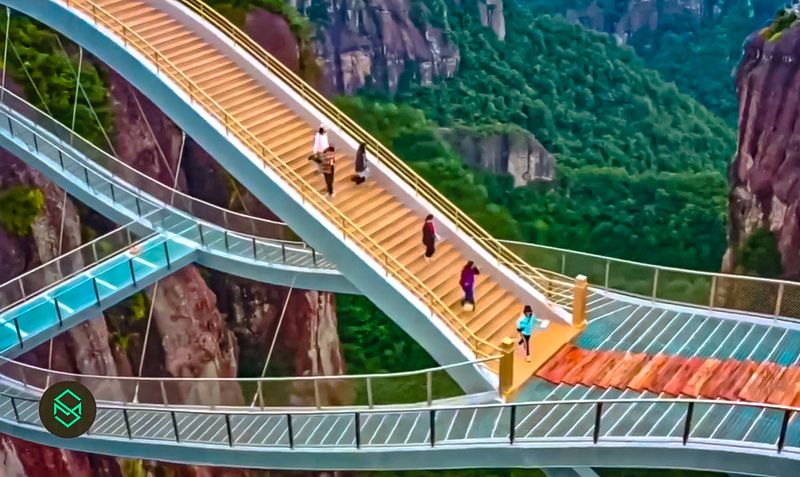
One of the bridge’s high points forms a pronounced hump, and stairs lead up to the top. If heights make your legs feel wobbly, that climb can feel longer than it looks.
The stairs are well-built and secure, but there’s something psychologically intense about ascending when you’re already suspended high above a valley. Each step takes you higher, and the view becomes more expansive and dizzying.
Many visitors report that the glass sections, while unnerving, are easier to handle than the stairs. With glass, you can choose to look down or not.
With stairs, you have to focus on each step, and your body reminds you constantly that you’re climbing into open air. Handrails help, but they can’t completely erase the sensation.
The hump also creates a unique visual effect. When you’re at the bottom looking up, the top seems impossibly far away.
When you’re at the top looking back, the descent looks steeper than you remember. This distortion adds to the thrill but can also trigger anxiety in people who are already nervous.
Taking breaks is completely acceptable. There’s no rush, and stopping to catch your breath or calm your nerves is part of the experience for most people.
12. Glass sections are there for the thrill, not the entire crossing
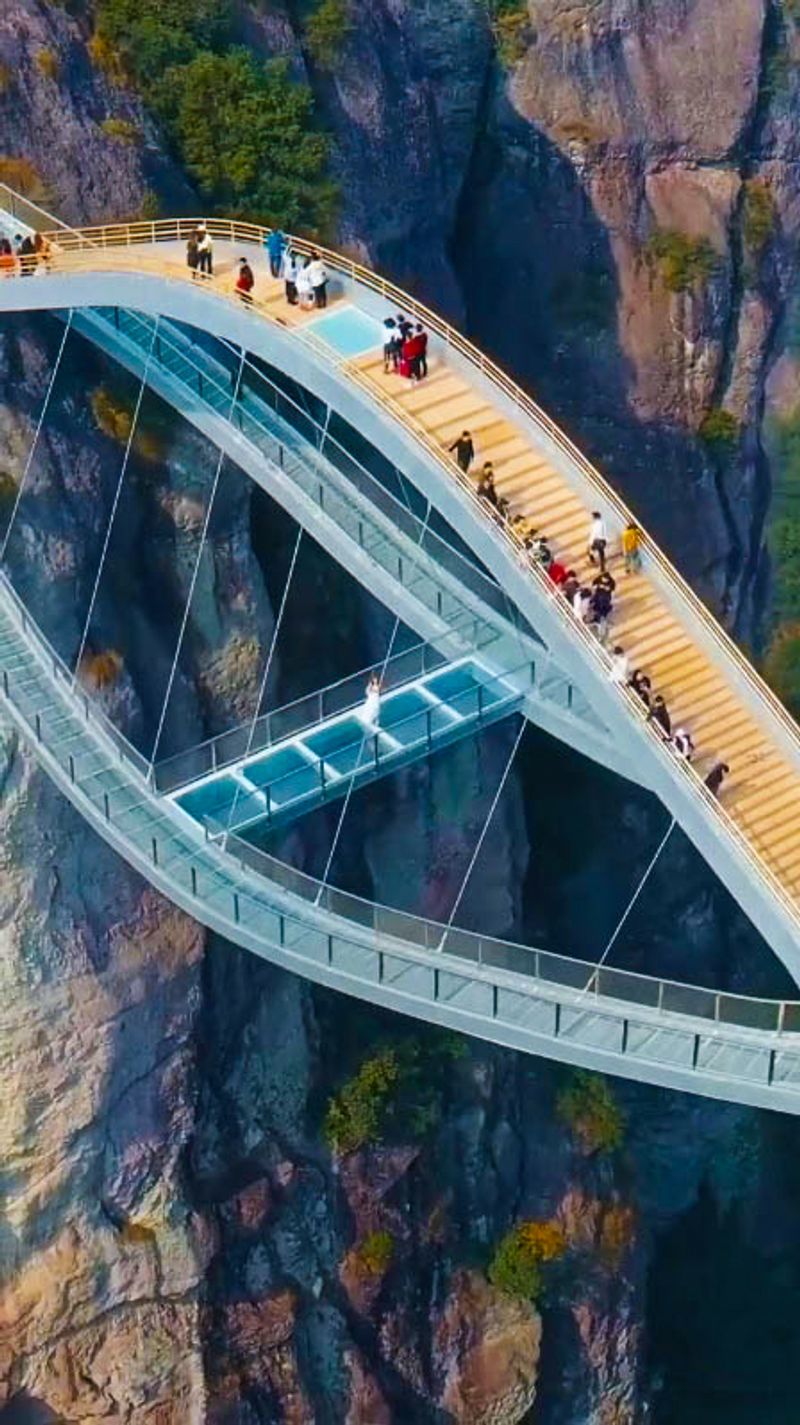
You’ll encounter transparent segments designed for that stomach-drop moment, balanced with non-glass walking surfaces so the whole experience isn’t constant panic mode. The designers knew that too much glass would be overwhelming and potentially limit who could enjoy the bridge.
By mixing materials, they created moments of intensity followed by moments of relief.
The glass panels are strategically placed at points where the view below is most dramatic. Walking onto one, you might see a sheer drop to jagged rocks or a forested slope hundreds of feet down.
These sections are usually shorter, giving you just enough time to experience the thrill without feeling trapped.
Non-glass sections are often made of metal grating or solid decking, which still allows airflow and some visibility but feels much more stable underfoot. These areas give your nervous system a chance to reset before the next glass segment.
It’s a rhythm that keeps the experience exciting without becoming exhausting.
Some visitors even say they appreciate the glass sections more because they’re not constant. The contrast makes each transparent panel feel special, like a reward or a challenge depending on your perspective.
You can prepare yourself mentally before stepping onto glass, which helps manage fear.
13. It’s built as a tourist attraction – so expect crowd management
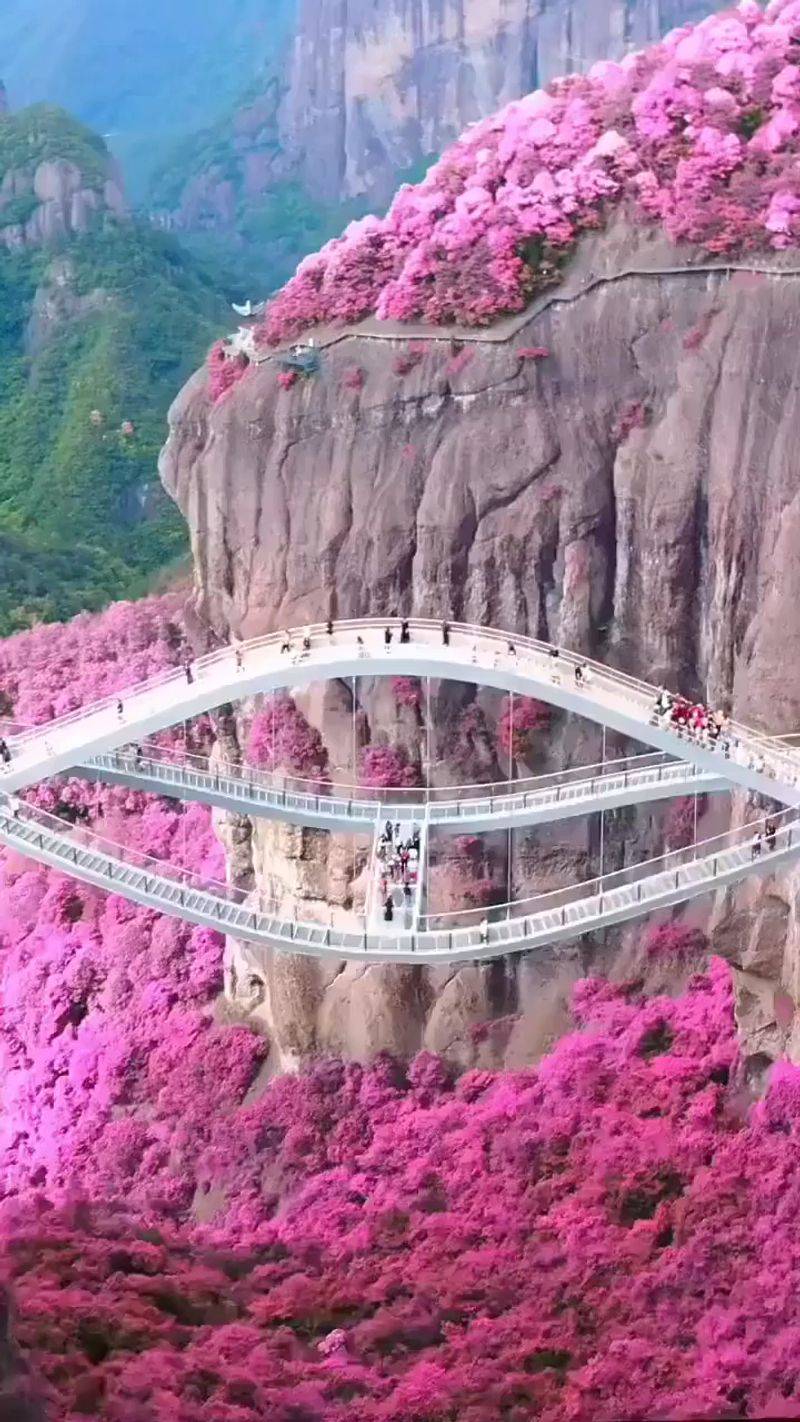
Reports from shortly after opening mention very large visitor numbers, which usually means timed entry, flow control, and occasional wait times during peak travel periods. The bridge can only safely hold a certain number of people at once, so staff monitor capacity carefully.
During Chinese national holidays or weekends, you might wait in line for 30 minutes to an hour before stepping onto the bridge.
Crowd management also includes rules about behavior on the bridge. Running, jumping, or roughhousing is prohibited for obvious safety reasons.
Some visitors are asked to remove shoes with hard heels or metal cleats that could scratch or damage the glass. These measures help preserve the bridge and keep everyone safe.
Timed entry can actually improve the experience. When the bridge isn’t packed shoulder to shoulder, you have more room to stop, take photos, and absorb the scenery.
Smaller groups also mean less waiting when you want to cross a glass section or climb the stairs. Patience at the entrance pays off once you’re on the bridge.
If you want to avoid the biggest crowds, try visiting on a weekday or during the off-season. Early morning or late afternoon slots tend to be less busy than midday.
14. The best strategy: treat it like an experience, not a “test of courage”
If you rush, your body will feel it. Go slow, keep your eyes forward instead of straight down, pause at viewpoints, and let the design sink in.
The bridge isn’t just about fear; it’s about floating through a landscape most people only see from a lookout point. Approaching it as a chance to connect with nature and architecture, rather than a dare, changes everything.
Many people put pressure on themselves to act brave or to conquer their fear quickly. This mindset can backfire, making anxiety worse and stealing the joy from the experience.
Instead, acknowledge your feelings, move at your own pace, and celebrate small victories like reaching the first glass section or making it to the top of the stairs.
The bridge rewards attention. Notice how the light changes as you move, how the curves frame different parts of the valley, and how the structure feels both solid and delicate at the same time.
These details are easy to miss if you’re focused only on getting to the other side as fast as possible.
Bringing a friend or family member can help. Having someone to talk to or hold onto makes the experience less isolating and more fun.
Share the moments, take turns with photos, and remind each other to breathe.



