Ohio has produced more astronauts than almost any other state, and that cosmic connection runs deep through the towns, museums, and planetariums scattered across its landscape. From the birthplace of Neil Armstrong to cutting-edge observatories tucked into quiet college campuses, the Buckeye State delivers space experiences you might never expect to find this close to home.
Whether you are a lifelong stargazer or just looking for something different on a Saturday afternoon, these 10 stops make a strong case that Ohio truly belongs in the stars.
1. Armstrong Air & Space Museum – Wapakoneta
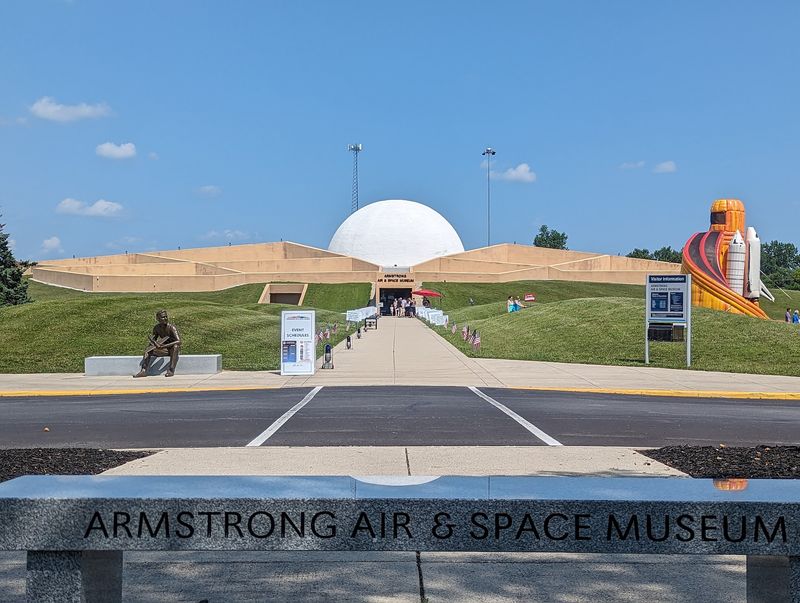
Walk through the front doors in tiny Wapakoneta, and you are standing in the hometown of the first person to set foot on the moon. Armstrong Air & Space Museum honors its most famous son with a collection that includes his Gemini VIII spacecraft, an actual moon rock, and personal artifacts from Armstrong’s life that rarely appear elsewhere.
The museum’s distinctive dome rises from the flat western Ohio countryside like a spacecraft of its own. Inside, interactive exhibits trace the history of flight from the Wright Brothers through the Apollo program.
Kids can climb into cockpit replicas, and the museum’s short film about Armstrong’s lunar landing still gives visitors chills.
Wapakoneta itself leans into its space heritage with astronaut-themed murals and an annual Moon Festival each July. If you are driving along I-75, the detour is absolutely worth the stop.
2. Cleveland Museum of Natural History’s Shafran Planetarium – Cleveland
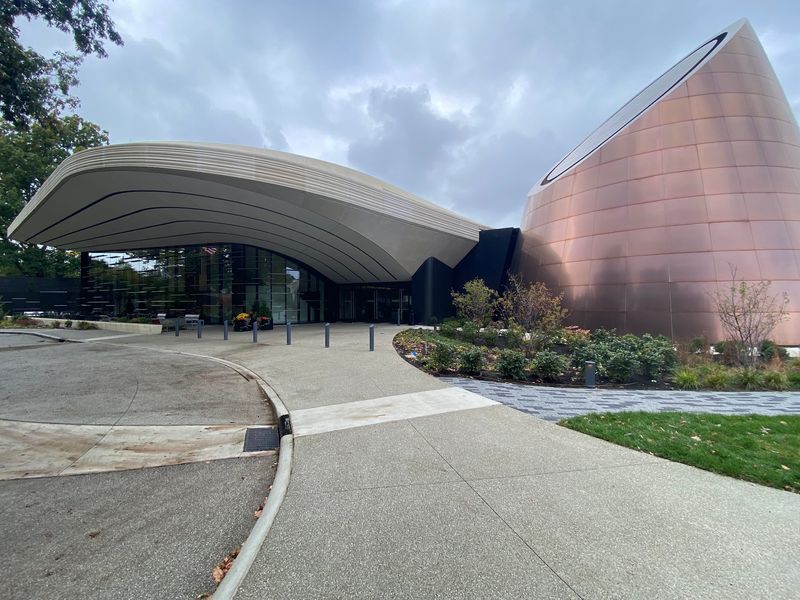
Few planetariums in the Midwest can match the immersive power of the Shafran Planetarium inside the Cleveland Museum of Natural History. After a major renovation, the planetarium now features a state-of-the-art digital projection system that fills its 40-foot dome with jaw-dropping visuals of distant galaxies and solar system fly-throughs.
Shows rotate regularly, covering everything from the science behind black holes to seasonal sky guides that teach you exactly what constellations to look for over Northeast Ohio. The planetarium staff often tailors presentations for school groups, making it a favorite field trip destination across the region.
Since it sits inside the larger museum, you can easily pair a planetarium show with a stroll through dinosaur halls and wildlife exhibits. The combination makes for a full day that keeps both space fans and nature lovers entertained.
3. COSI (Center of Science and Industry) – Columbus

Columbus locals have been bringing their kids to COSI for decades, and the space-themed exhibits remain some of the most popular draws. The planetarium here uses a high-resolution digital system under a massive dome, delivering shows that feel more like space travel than a classroom lesson.
Beyond the planetarium, COSI houses a genuine space capsule, hands-on exhibits about rocket propulsion, and rotating displays from NASA. A highlight for younger visitors is the chance to simulate a mission control experience, complete with headsets and countdown sequences.
Sitting right along the Scioto River in downtown Columbus, COSI is easy to reach and surrounded by restaurants and parks. It regularly lands on national lists of the best science museums in the country, and the space programming is a big reason why.
4. NASA Glenn Research Center’s Visitor Center – Cleveland
Not many states can claim an active NASA facility, but Ohio has one right on the edge of Cleveland Hopkins International Airport. The Glenn Research Center has been advancing aerospace technology since 1941, and its visitor center gives the public a window into real, ongoing space research.
Exhibits inside focus on propulsion systems, power generation for spacecraft, and communications technology that keeps astronauts connected to Earth. You can see actual engine components, scale models of the International Space Station, and displays about Ohio astronauts who trained or worked with Glenn engineers.
The center occasionally hosts open house events where visitors can tour labs and meet NASA scientists. Checking the schedule ahead of time is smart, since these events draw big crowds.
For anyone who wants to see where real space work happens today, not just where it happened in the past, Glenn delivers something no museum can replicate.
5. Ward Beecher Planetarium – Youngstown
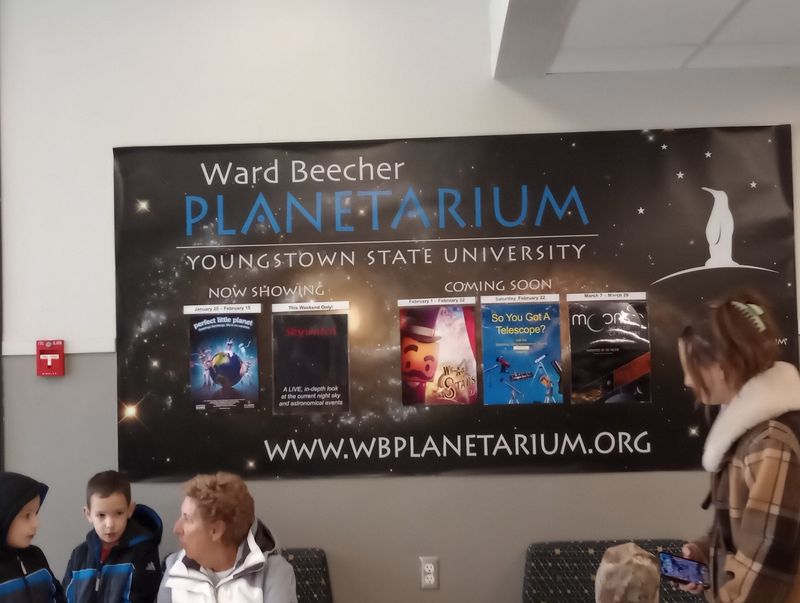
Youngstown State University operates one of Ohio’s best-kept secrets for stargazers. The Ward Beecher Planetarium offers free public shows on select evenings, and the quality rivals paid attractions at much larger institutions.
A Spitz star projector paired with digital technology fills the 40-foot dome with crisp, realistic night skies. The shows are presented by university faculty and students who genuinely love astronomy, and that enthusiasm comes through in every program.
Topics range from beginner-friendly constellation tours to deep explorations of exoplanets and cosmic phenomena.
Because it is free, the planetarium draws a loyal local following. Families, college students, and retired couples fill the seats on show nights, creating a community atmosphere that bigger venues sometimes lack.
If you find yourself in the Mahoning Valley on a clear evening, checking the schedule is well worth your time.
6. Armstrong Air & Space Museum’s Apollo Command Module – Wapakoneta
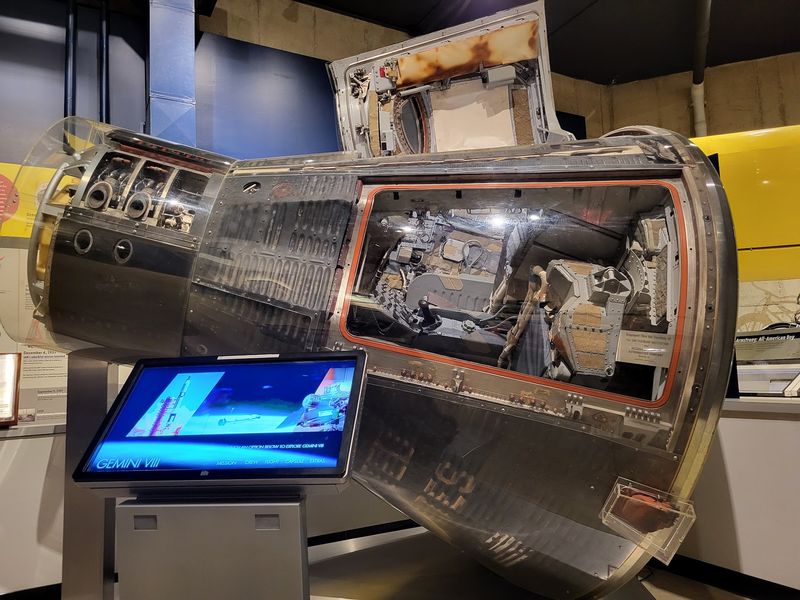
Yes, Wapakoneta appears twice on this list, and for good reason. The Gemini VIII spacecraft housed in the Armstrong Museum is remarkable on its own, but the broader Apollo exhibit surrounding it deserves separate attention for space history buffs who want to go deeper.
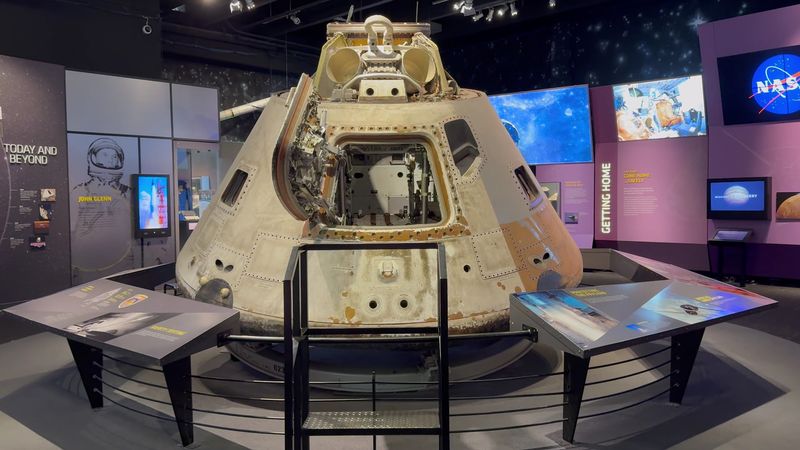
Standing inches from a spacecraft that actually traveled to space changes your perspective on the entire Apollo program. The charred heat shield, the cramped interior visible through the hatch window, and the frayed wiring all tell a story of extraordinary human courage wrapped in surprisingly fragile engineering.
Interpretive panels walk you through the timeline of the Gemini and Apollo missions with a level of detail you rarely find outside the Smithsonian. Docents on site are well-versed in Armstrong’s career and happy to answer questions.
For anyone who has ever watched grainy footage of the moon landing and wondered what it felt like up close, this exhibit brings you as near as you can get without leaving Earth.
7. John Glenn Astronomy Park – Logan
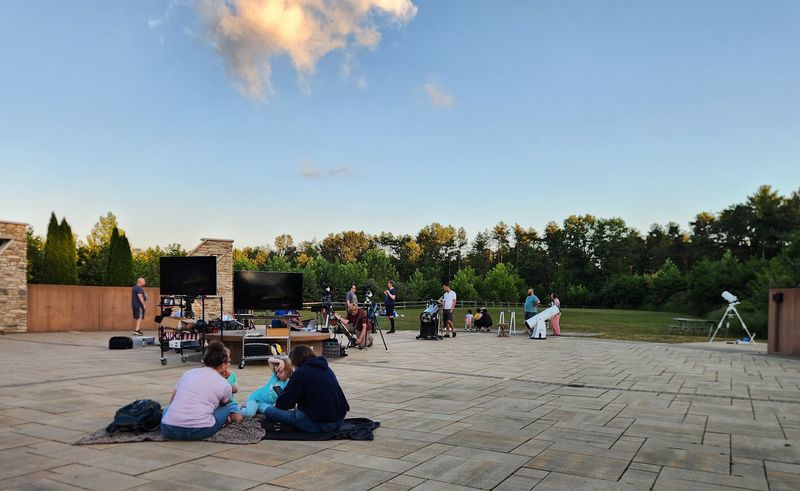
Deep in the Hocking Hills region, the John Glenn Astronomy Park sits on a ridge specifically chosen for its dark skies. Light pollution is minimal here, making it one of the best spots in the entire state for naked-eye stargazing and telescope observation.
The park, named after Ohio’s legendary astronaut and senator, opened in 2018 and features an observation deck, solar viewing stations, and regular programming led by trained astronomy volunteers. On clear weekend nights, volunteers set up powerful telescopes and guide visitors through views of Saturn’s rings, Jupiter’s moons, and deep-sky objects like the Andromeda Galaxy.
What makes this park special is its setting. You are already surrounded by the gorges, waterfalls, and forests of Hocking Hills, so a nighttime astronomy session pairs perfectly with a day of hiking.
Few places in Ohio let you experience nature above and below the treeline in a single trip.
8. National Museum of the United States Air Force – Dayton
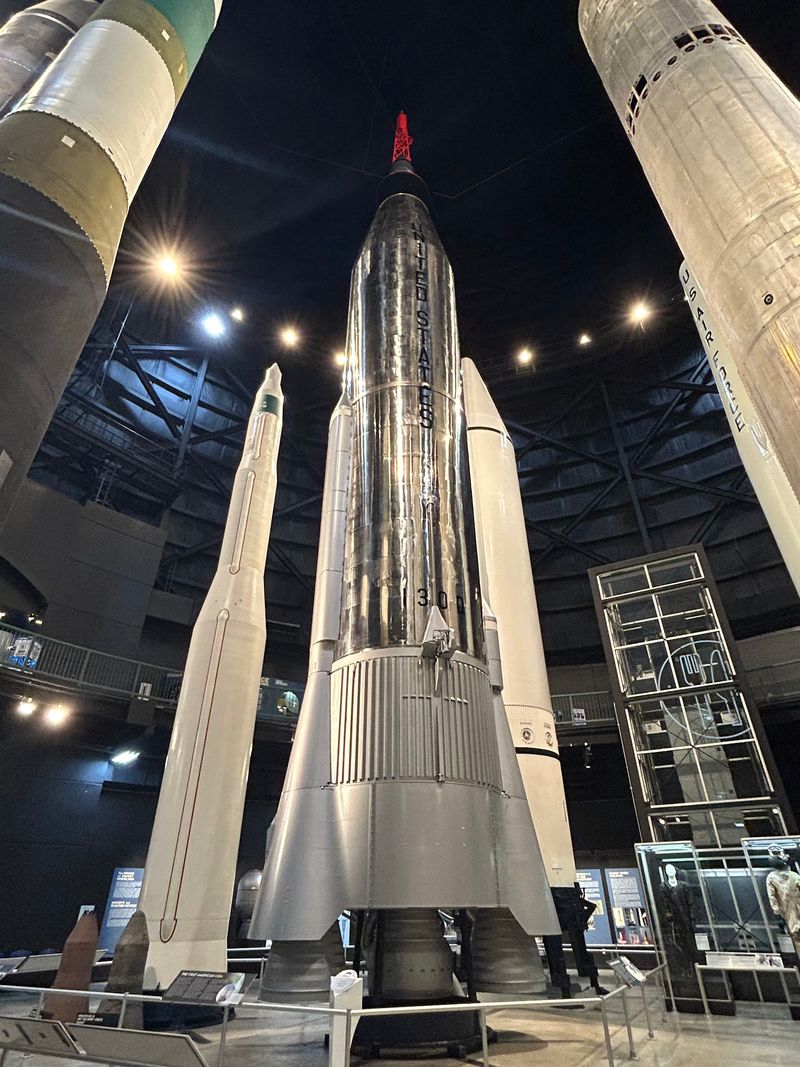
Dayton’s massive Air Force museum is free to visit and ranks among the most impressive aviation and space collections on the planet. Four enormous hangars hold over 350 aircraft and spacecraft, and the Space Gallery alone could fill an entire afternoon.
Inside that gallery, you will find a NASA Space Shuttle trainer crew compartment, ICBMs from the Cold War, satellites, and the Apollo 15 command module. The sheer scale of these machines is hard to appreciate in photos.
Standing beneath a Titan IV rocket or peering into the cramped quarters of a Mercury capsule makes the history feel visceral.
Because the museum is run by the U.S. Air Force, admission is completely free, which makes it one of the best deals in American tourism.
Dayton is also the birthplace of the Wright Brothers, so you can trace the entire arc of human flight, from bicycle-shop tinkerers to astronauts, in a single Ohio city.
9. Perkins Observatory – Delaware
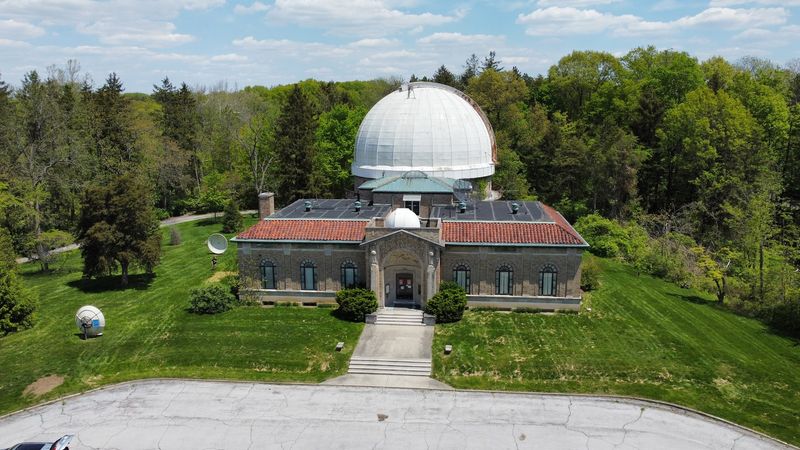
Built in 1923, Perkins Observatory near Delaware has been introducing Ohioans to the night sky for over a century. Originally operated by Ohio Wesleyan University and later by Ohio State, the observatory today is run by a dedicated nonprofit that keeps its mission alive through public programs and special events.
The signature experience here is a Friday night public program that includes a presentation in the lecture hall followed by telescope viewing through the historic 32-inch reflector, weather permitting. The telescope itself is a piece of astronomical history, and looking through it feels different from peering at a digital screen.
Perkins also hosts astrophotography workshops, solar viewing sessions, and seasonal events like meteor shower watch parties. The hilltop location north of Delaware offers reasonably dark skies for central Ohio, and the intimate atmosphere makes every visit feel personal rather than institutional.
10. International Women’s Air & Space Museum – Cleveland
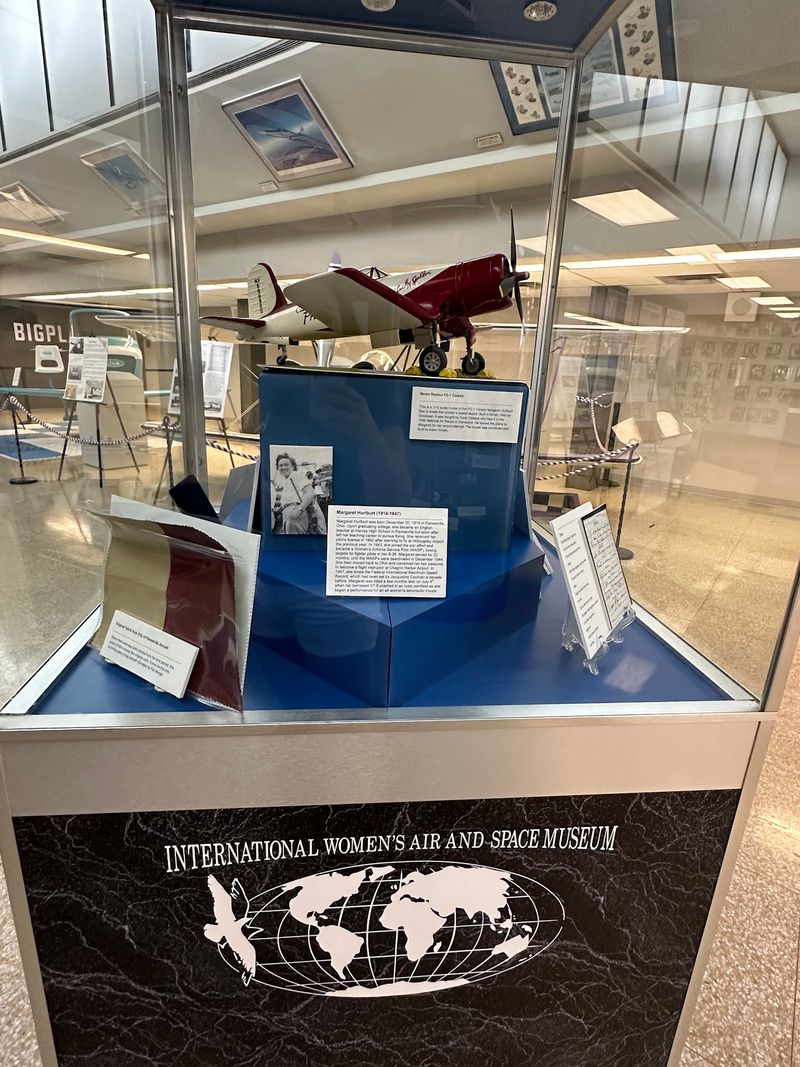
Tucked inside the terminal at Burke Lakefront Airport in downtown Cleveland, this small but powerful museum highlights the women who helped shape aviation and space exploration. From Amelia Earhart to Sally Ride to modern-day fighter pilots, the exhibits tell stories that mainstream aerospace museums often overlook.
Displays include personal artifacts, uniforms, flight logs, and photographs that bring these pioneers to life. One section focuses on the Mercury 13, the group of women who passed the same physical tests as NASA’s original astronauts but were never given the chance to fly.
Their story is both inspiring and infuriating, and the museum presents it with honesty.
Admission is free, and the museum is compact enough to tour in about an hour. Its airport location means you might stumble upon it while waiting for a flight, but it deserves a deliberate visit.
For anyone interested in the full, unfiltered story of who got us to the stars, this stop fills in chapters that too many other museums skip.
Share this story