Some American downtowns have changed so much that longtime residents would barely recognize them. Historic storefronts were demolished, entire blocks disappeared, and busy shopping streets gave way to highways, parking garages, and enclosed malls.
In Seattle, parts of the old city still exist beneath today’s sidewalks. Muskegon lost three blocks of its main shopping street to a mall, only to bring the street back decades later.
In Elmira, a devastating 1972 flood led to the demolition of much of the downtown commercial district.
These 12 cities reveal what happened to their original downtowns, why so many historic buildings disappeared, and where visitors can still discover pieces of the past.
1. Seattle, Washington
Seattle once had a mud problem so serious that the city simply decided to move its streets up a floor. After the Great Fire of 1889 burned roughly 25 blocks of wooden buildings, leaders rebuilt in brick and stone.
They also raised the streets, by as much as 22 feet in some spots. The old level sat too close to the tide and flooded often.
For a while, shoppers climbed ladders between the new streets and the old shop doors below. Later, new sidewalks with glass skylights covered the lower level for good.
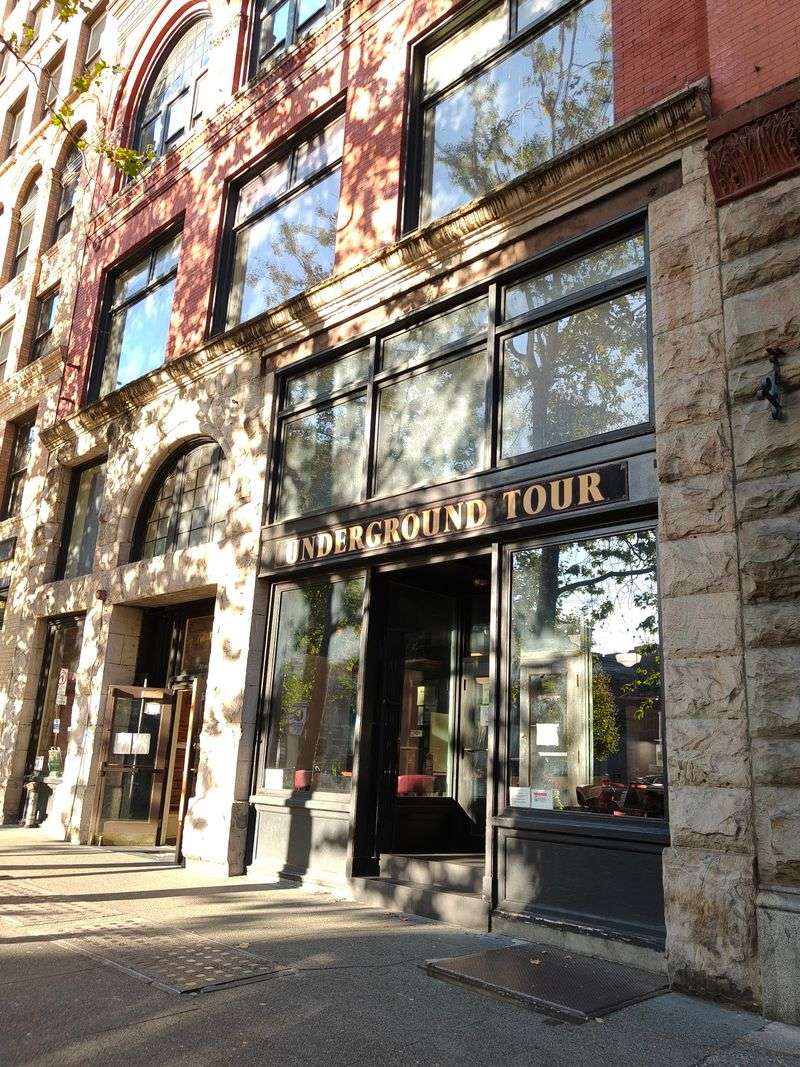
Bill Speidel’s Underground Tour lasts about 75 minutes and starts beneath Doc Maynard’s Public House. Guides lead groups through brick passages and former storefront spaces that most residents never see.
The tour is known for its jokes, so expect history served with a grin. Its popularity even helped bring attention to Pioneer Square, which became a historic district in the 1970s.
Wear sturdy shoes, since some paths are uneven. Booking ahead is smart in summer.
2. Muskegon, Michigan
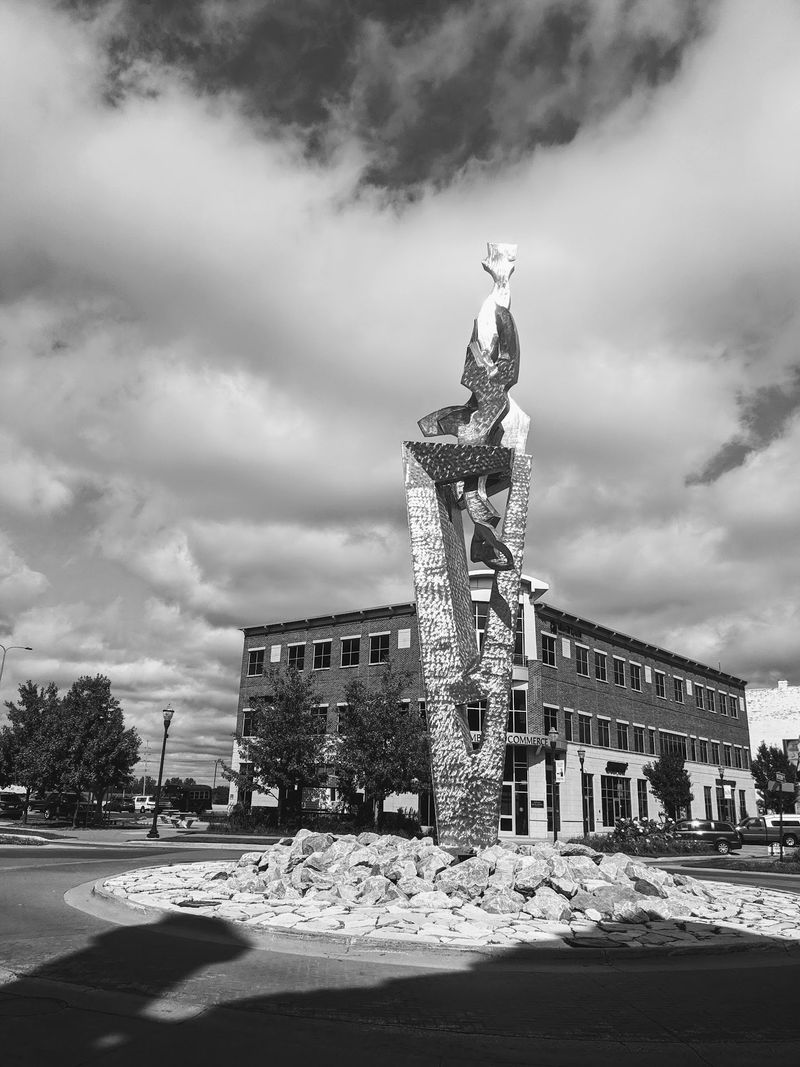
Few streets have been closed, swallowed, and then set free again, but Western Avenue in Muskegon pulled it off. Through the mid-1900s, it was the busy center of local shopping and parades.
In 1976, the Muskegon Mall covered three blocks of the avenue. Nearby streets were rerouted, and landmarks such as the Flatiron Building came down.
The mall struggled through the 1990s and closed in December 2001. Demolition began in 2003, the same year the city launched its Imagine Muskegon plan.
By around 2006, Western Avenue reopened to traffic with new sidewalks, street trees, lighting, and public art. That is a comeback story worth a slow lap on foot.
Hackley Park offers the calm center of that lap. Lumber businessman Charles H.
Hackley donated it in 1890 to honor Civil War veterans.
An eighty-foot soldiers monument stands in the middle. Statues of Lincoln, Grant, Sherman, and Farragut sit around it, and the park still hosts community events through the warmer months.
3. Elmira, New York
June 1972 rewrote the map of downtown Elmira in a matter of days. Hurricane Agnes pushed the Chemung River over its banks and caused the worst flooding in county records.
All four downtown bridges washed out, along with a railroad bridge. Water Street businesses took some of the heaviest damage.
Downtown lost about 40 percent of its buildings. Under the New Elmira Plan, many damaged blocks along Water Street were cleared instead of rebuilt, and a riverfront park took their place.
Shoppers then drifted to suburban malls, and the old district never quite regained its former bustle.
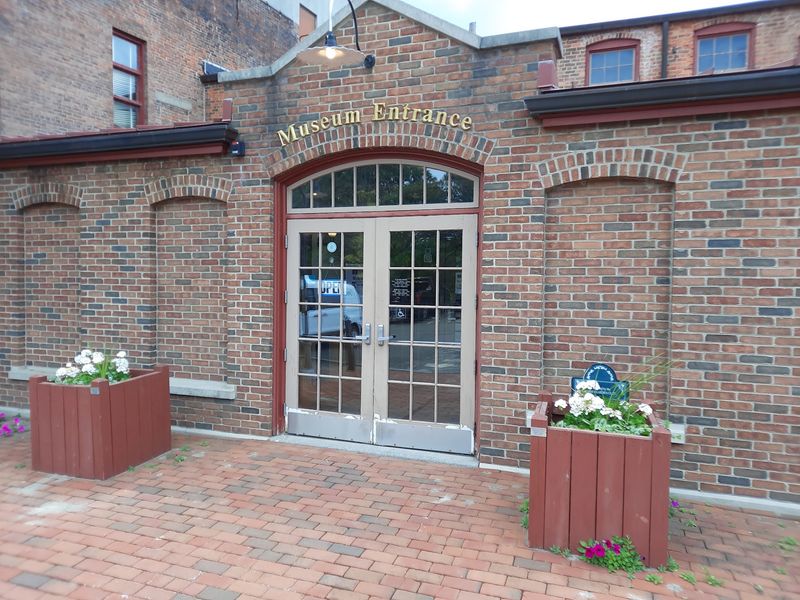
The Chemung Valley History Museum sits at 415 East Water Street inside the old Chemung Canal Bank Building. A former bank now guards the city’s memories instead of its money.
Exhibits cover early settlement, Mark Twain’s ties to the area, and John W. Jones, who helped freedom seekers on the Underground Railroad.
Displays on the Civil War prison camp add another layer.
Plan at least an hour inside.
4. Mason City, Iowa
Mason City took a big swing in 1985 and opened Southbridge Mall right in the middle of town. Several downtown blocks of tightly packed shops were cleared to make it happen.
At first, the mall brought shoppers back. By the 2000s, though, enclosed malls had lost their shine across the country.
The city now owns the former mall and is giving it a second act. A multi-purpose arena already fills an old department store space.
Plans for a family fun center called Hollywoodland may add go-kart racing and a comedy club. Downtown is clearly not done reinventing itself.
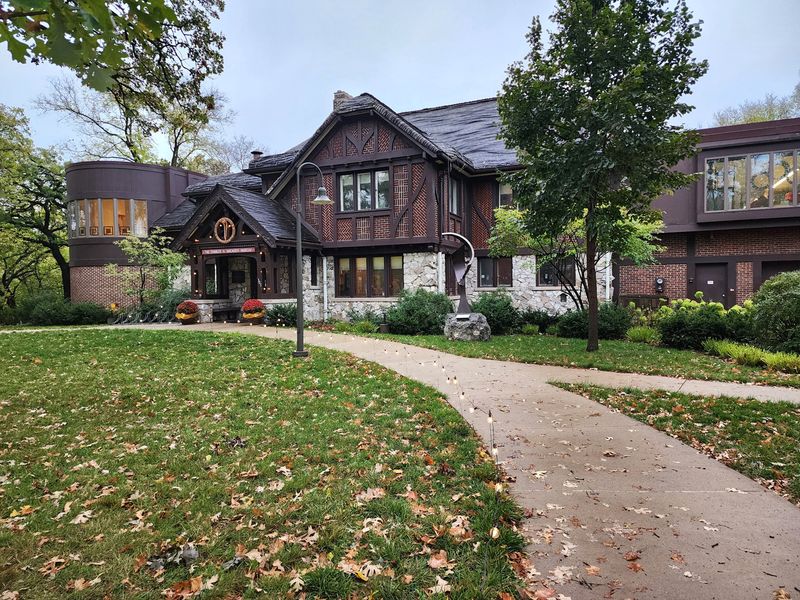
The Charles H. MacNider Art Museum sits a short trip away.
It opened in 1966 and focuses on American art, including paintings, sculpture, and ceramics.
Its most famous residents are puppets made by Bil Baird, a Mason City native known for his work in film and television. Kids and grownups both tend to linger there.
Admission has traditionally been free, so check hours before you go.
5. New Haven, Connecticut
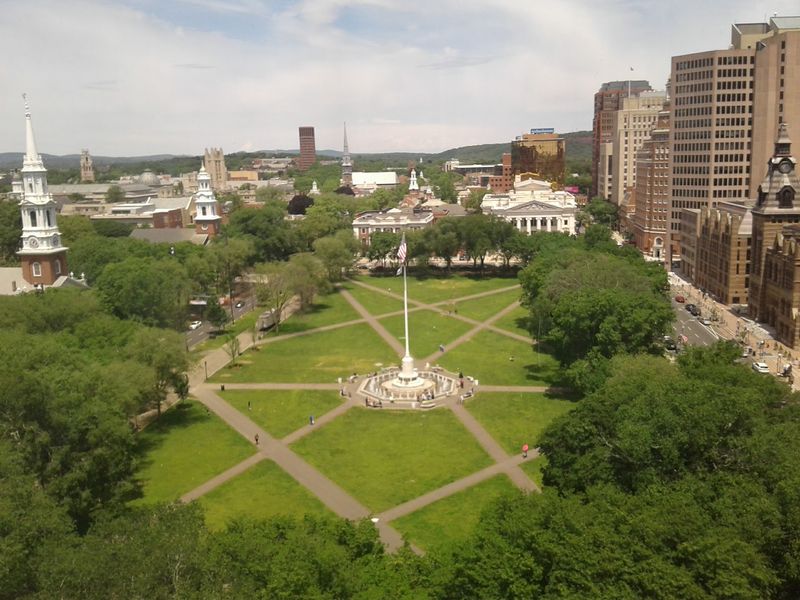
Planners in 1638 gave New Haven a nine-square grid, making it one of the earliest planned towns in America. The grid survived, but much of what grew around it did not.
Mayor Richard C. Lee led a huge urban renewal push from 1954 to 1969.
The Oak Street neighborhood, home to African American, Italian, Irish, and Jewish families, was cleared.
In its place came the Route 34 Expressway, nicknamed the Oak Street Connector. Close to 900 households and 350 businesses were displaced.
The highway was never fully finished, earning the label expressway to nowhere. The New Haven Coliseum went up downtown and later came down too.
The 16-acre New Haven Green remains the steady center square. It began as a shared marketplace and civic space and is now a National Historic Landmark.
Three churches built between 1812 and 1816 line one side. Center Church, United Church, and Trinity Church offer a quick lesson in Federal and Gothic Revival styles.
Yale’s campus sits right next door.
6. Alexandria, Virginia
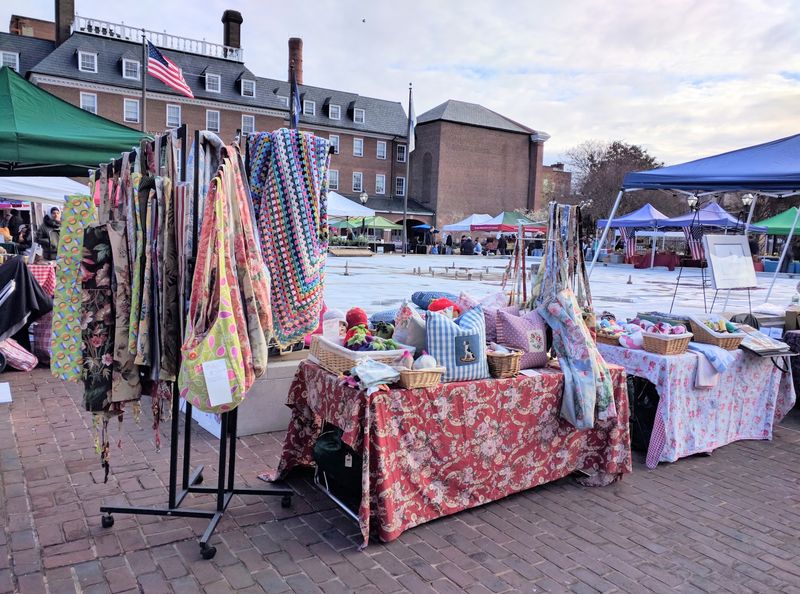
Fresh tomatoes have been changing hands in Alexandria since 1753, which makes this one of the longest running markets in the country.
Market Square was the city’s business center from the start. Even so, the Gadsby Commercial Urban Renewal Plan, approved in 1963, changed it sharply.
Work began in 1965 and removed dozens of 18th and 19th century buildings near King, North Royal, and North Fairfax Streets. A wide open plaza and an underground parking garage replaced the crowded old marketplace.
Visitors who admire Old Town today often have no idea how much was cleared.
History is now repeating itself in a gentler way. City Hall and Market Square are getting their first major makeover since the 1960s, including a new garage and plaza.
Since January 2026, the market has moved across the street to the 100 block of North Royal Street and the Tavern Square courtyard. More than 70 vendors set up every Saturday morning.
Arrive early for the best baked goods.
7. Vicksburg, Mississippi
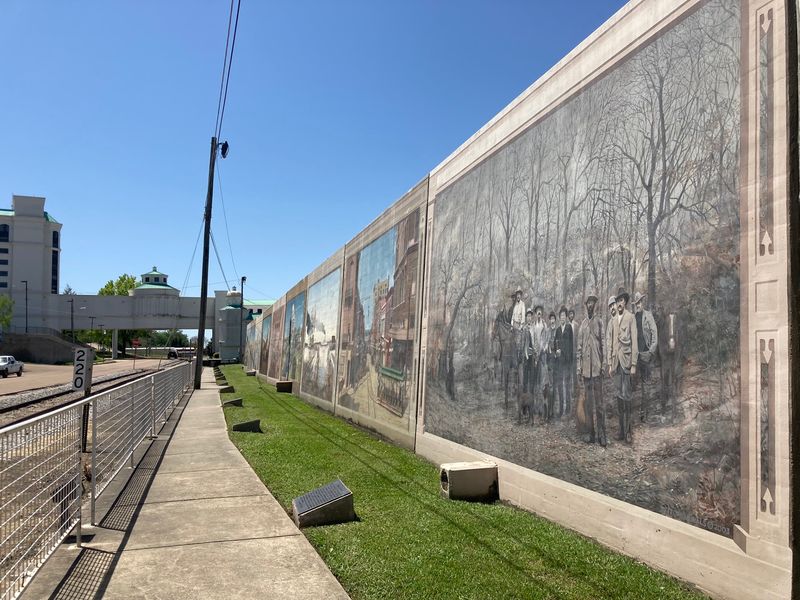
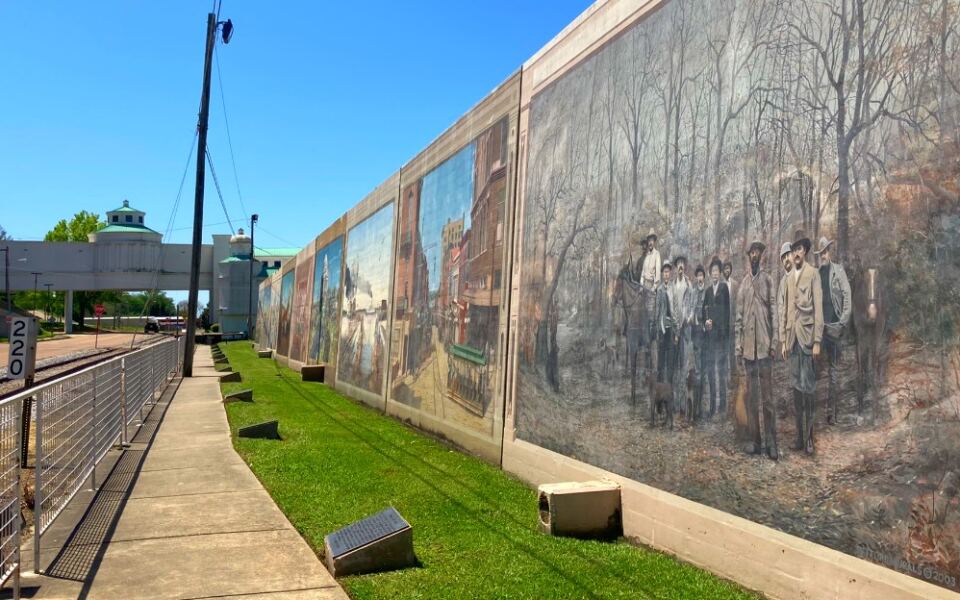
Here is a fun trivia nugget: Coca-Cola was first bottled in Vicksburg, and you can see that moment painted on a floodwall.
Long before the murals, the city’s first business district sat on Main Street near the Mississippi River. A fire in 1839 pushed trade over to Washington Street.
More fires followed in later years. Then a powerful tornado in December 1953 damaged or destroyed nearly a thousand buildings, including hotels, banks, and theaters.
Urban renewal projects removed still more of the old streetscape. Very little of that first Main Street remains to explore.
The Riverfront Murals fill the gap with paint. Artist Robert Dafford created most of the panels along Levee Street, with the first one unveiled in 2002.
Scenes include Theodore Roosevelt’s famous bear hunt and key river traditions. A 2001 abstract piece by local artist Martha Ferris honors the river, the railroad, and the highway.
The walk is free and easy. Read the small signs beside each panel for the backstory.
8. Topeka, Kansas
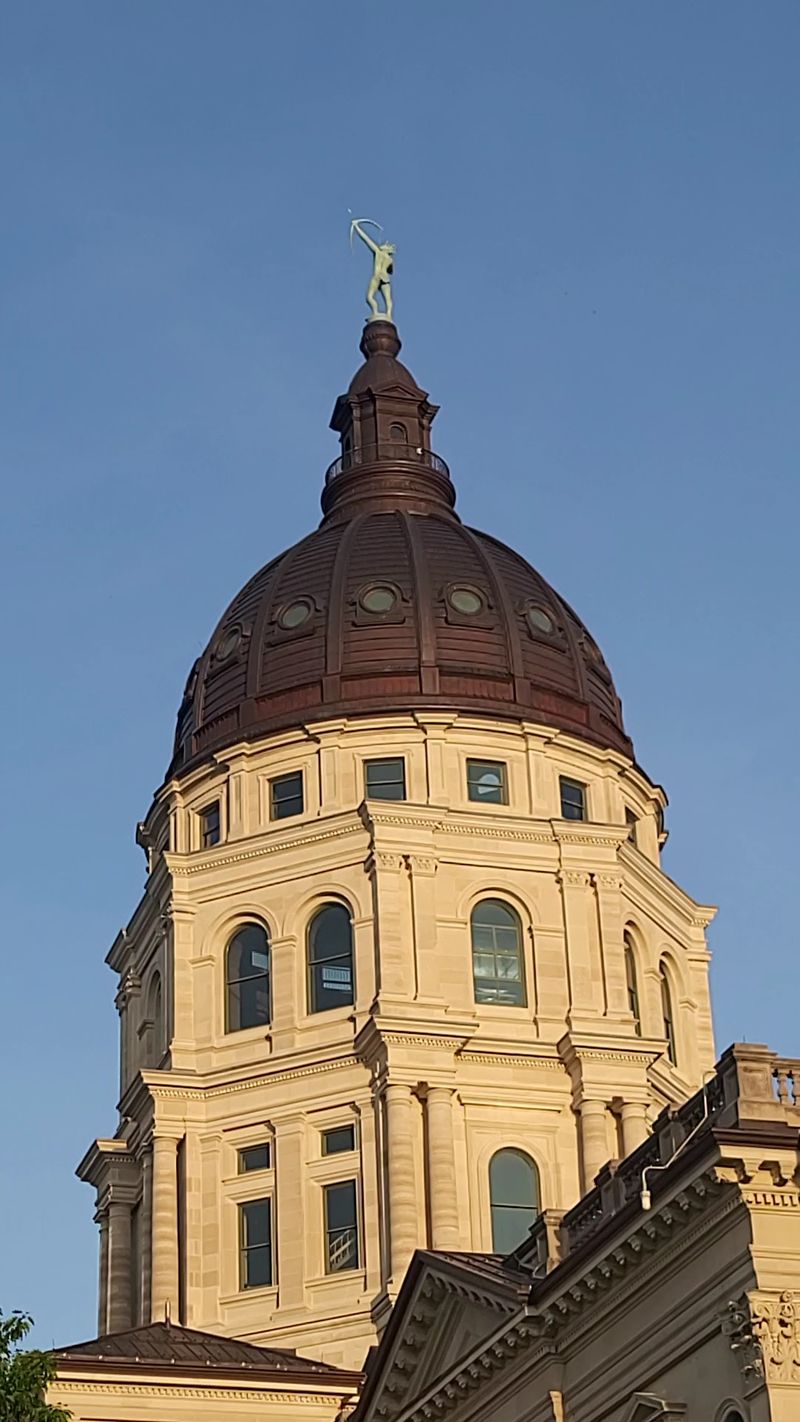
Climbing 296 steps is a big ask, but the view from the Kansas State Capitol dome makes the burning legs worth it.
Kansas Avenue served as Topeka’s main shopping street from 1854. Nearby sat The Bottoms, a thriving Black business district with close ties to the local Latino community.
The Keyway Urban Renewal Project began in 1956. It cleared The Bottoms, displaced more than 3,000 residents, and removed homes, shops, and a historic church.
Interstate 70 then cut a path eight blocks long through downtown. Critics say the highway boxed in the city center for decades.
The Capitol stands as a grand survivor. Construction took 37 years and wrapped up in 1903, using Kansas limestone.
The Ad Astra statue on top shows a Kansa warrior aiming at the North Star. Inside, John Steuart Curry’s Tragic Prelude mural draws the biggest crowds.
A 13-year restoration finished in 2014. Free guided tours run on weekdays, and dome climbs have limited spots.
9. Bristol, Connecticut
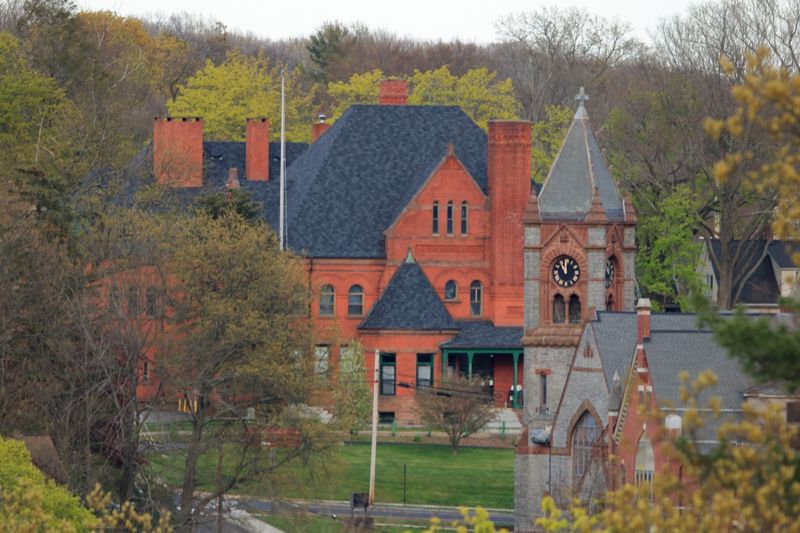
Clocks made Bristol famous, yet the town’s downtown could not stop time from rearranging it.
In the mid-1960s, urban renewal cleared older shops and rerouted North Main Street. The Bristol Centre Mall opened around 1969 and 1970 on land that once held about five city blocks.
Several important old buildings disappeared in the process. The familiar street pattern was broken up.
The mall never really caught on. The city bought it in 2005 and tore it down in 2008.
Now the site, called Centre Square, is filling with homes, shops, offices, and a hotel. New roads, sidewalks, and trees aim to stitch it back to Main Street.
The Bristol Historical Society keeps the earlier story safe. Its home is Bristol’s first high school, a sturdy Richardsonian Romanesque building from the 1890s.
Exhibits explore clock making, ball bearing factories, and daily life in town. Hours are limited, so check the schedule first.
Pair your visit with the American Clock and Watch Museum nearby.
10. Manhattan, Kansas
Manhattan, Kansas, grew up around Poyntz Avenue, where river and railroad traffic kept 19th century shops busy.
Then came October 26, 1987. That day, the Manhattan Town Center mall opened and changed the shape of downtown.
Some original businesses moved or closed to make room for the enclosed complex. Shopping shifted from sidewalk storefronts to indoor hallways.
Unlike many malls on this list, this one still operates as the region’s main indoor shopping spot. Downtown now mixes surviving older blocks with newer projects.
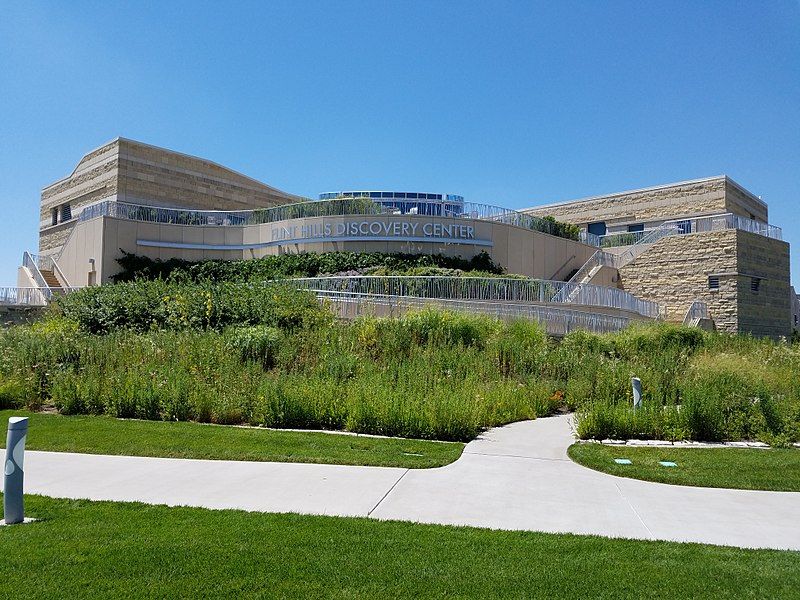
The Flint Hills Discovery Center opened on April 14, 2012. It is a city run science and heritage center focused on the tallgrass prairie.
The building covers 35,000 square feet, with more than 10,000 square feet of hands-on exhibits. An immersive theater show explains prairie fires, wildlife, and ranching history.
Kids can explore an underground prairie exhibit showing root systems. Families should plan about two hours.
Afterward, walk over to Poyntz Avenue to compare old and new downtown side by side.
11. Lawton, Oklahoma
Few malls have traded shoe stores for science labs, but Lawton’s is doing exactly that.
During the 1970s, urban renewal cleared much of the business district along C Avenue and 3rd Street. Small storefronts and local shops came down.
Central Mall opened in 1979 on 48.5 acres, with lots of surface parking. Many residents were upset to lose the historic buildings.
Anchor stores like Sears and Dillard’s closed in the late 2010s. In 2021, the city bought the mall for 14.6 million dollars and renamed it Central Plaza.
Working with the FISTA Development Trust Authority, Lawton is turning big sections into a defense technology campus with labs and offices.
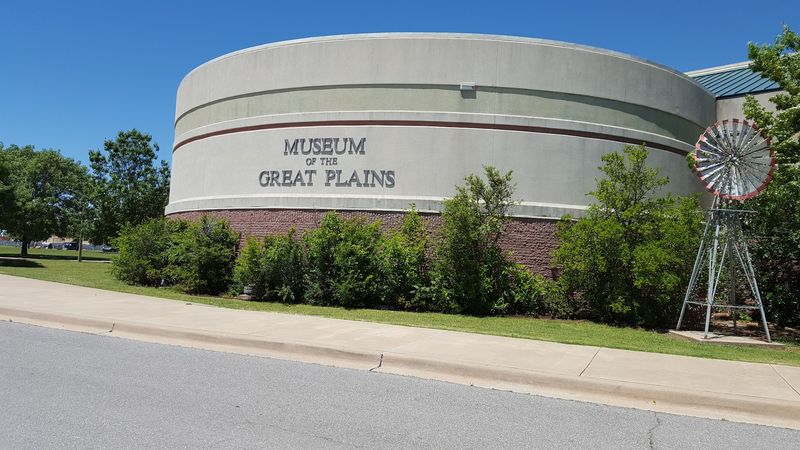
For the older story, head to the Museum of the Great Plains in Elmer Thomas Park. Founded in 1961, it covers Indigenous peoples, homesteading, and early farming.
Outside, a 1902 Elgin depot and a 1901 Blue Beaver schoolhouse let visitors step back in time. The nearby Wichita Mountains make a great side trip.
12. Hartford, Connecticut
A two-headed calf is not what most people expect inside a state house, yet Hartford delivers.
First, the backstory. In the mid-1900s, Interstates 91 and 84 cut through dense neighborhoods and separated downtown from the Connecticut River.
The East Side immigrant neighborhood was cleared for Constitution Plaza, a raised complex of office towers, garages, and a hotel. Later, the Civic Center replaced two blocks of shops, theaters, and hotels in 1975.
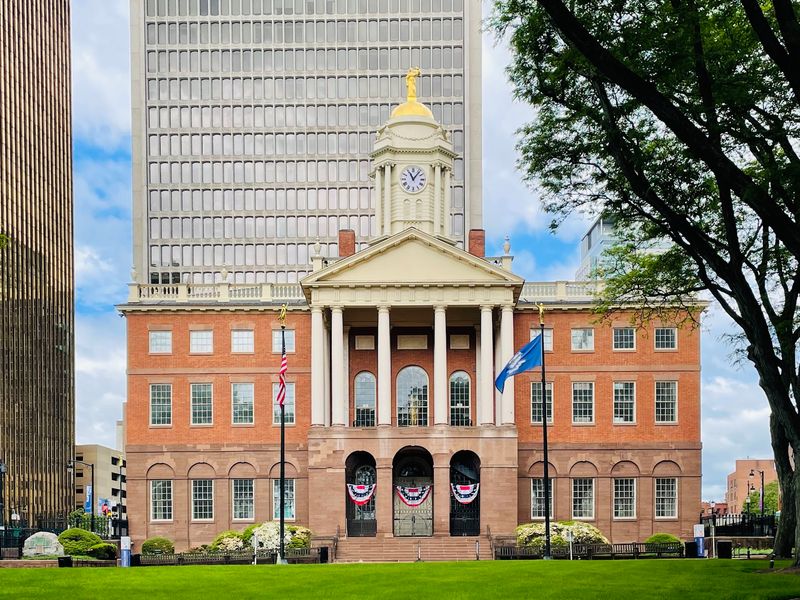
Connecticut’s Old State House survived it all. Completed in 1796 and often credited to architect Charles Bulfinch, it served as the state capitol until 1878.
It later worked as Hartford’s city hall. After years of neglect, a major restoration reopened it as a museum in 1996.
Visitors can tour the restored Senate chamber and other rooms in several historic styles. The third floor holds the Joseph Steward Museum of Curiosities, a recreation of a quirky museum first opened there in 1797.
Expect odd specimens, natural history items, and Steward’s own paintings.
Share this story