Most backyards hold a grill, a few lawn chairs, and maybe a tomato plant that never quite makes it. A handful of Americans looked at the same patch of dirt and decided it needed a sphinx, a 99-foot tower, or a house wrapped in flattened cans.
None of them had a team of architects. Most had a bag of cement, a pile of broken dishes, and a stubborn streak that lasted for decades.
One man lost his job and started building tiny castles. Another simply hated mowing grass.
A retired couple wanted something to do after work ended. Their neighbors probably raised an eyebrow or two.
Today, strangers drive hundreds of miles to see what these folks made, and many of the sites are now protected parks and museums. In the sections below, you will learn who built each one, what odd materials they used, and how their work was saved.
You will also get practical tips, such as which spots are free, which offer guided tours, and when to visit. Grab a snack and get ready to rethink what a backyard can become.
1. Beer Can House, Houston, Texas
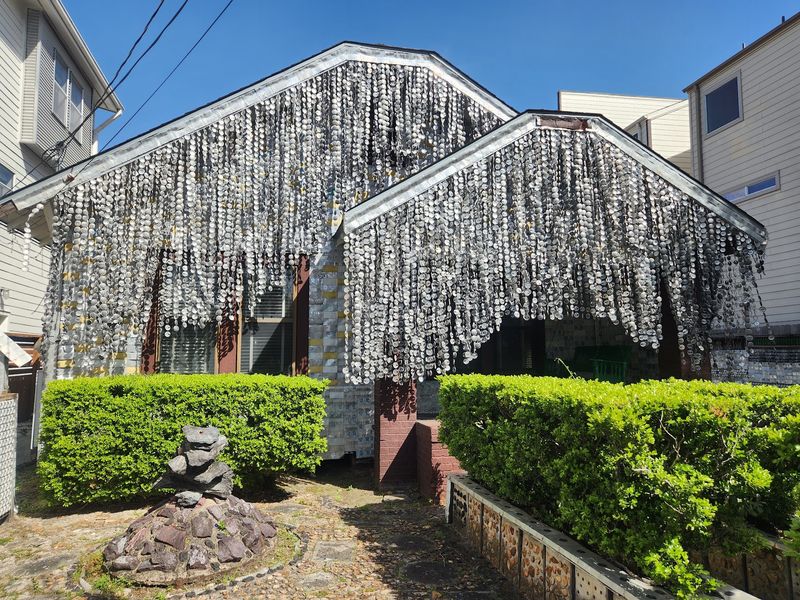
Some people solve a lawn problem with a new mower. John Milkovisch, a retired railroad upholsterer, solved his in 1968 by getting rid of the grass entirely.
He paved the front and back yards with concrete and pressed in marbles, rocks, and bits of brass. Then he turned his attention to the house.
Over roughly 18 years, Milkovisch flattened somewhere between 30,000 and 50,000 cans and used them as siding. He arranged them in patterns that look a lot like a quilt.
His recycling streak went further. Can tops and pull-tabs became long garlands hanging from the roof, and they even shaded the house enough to trim the family’s energy bills.
Talk about a can-do attitude.
The Orange Show Center for Visionary Art bought the home after his wife Mary was gone. It reopened in 2008 at 222 Malone Street.
You can view the outside for free. Guided interior tours cost a small fee and explain his methods.
In 2025, the National Trust for Historic Preservation added it to its Historic Artists’ Homes and Studios network.
2. Randyland, Pittsburgh, Pennsylvania
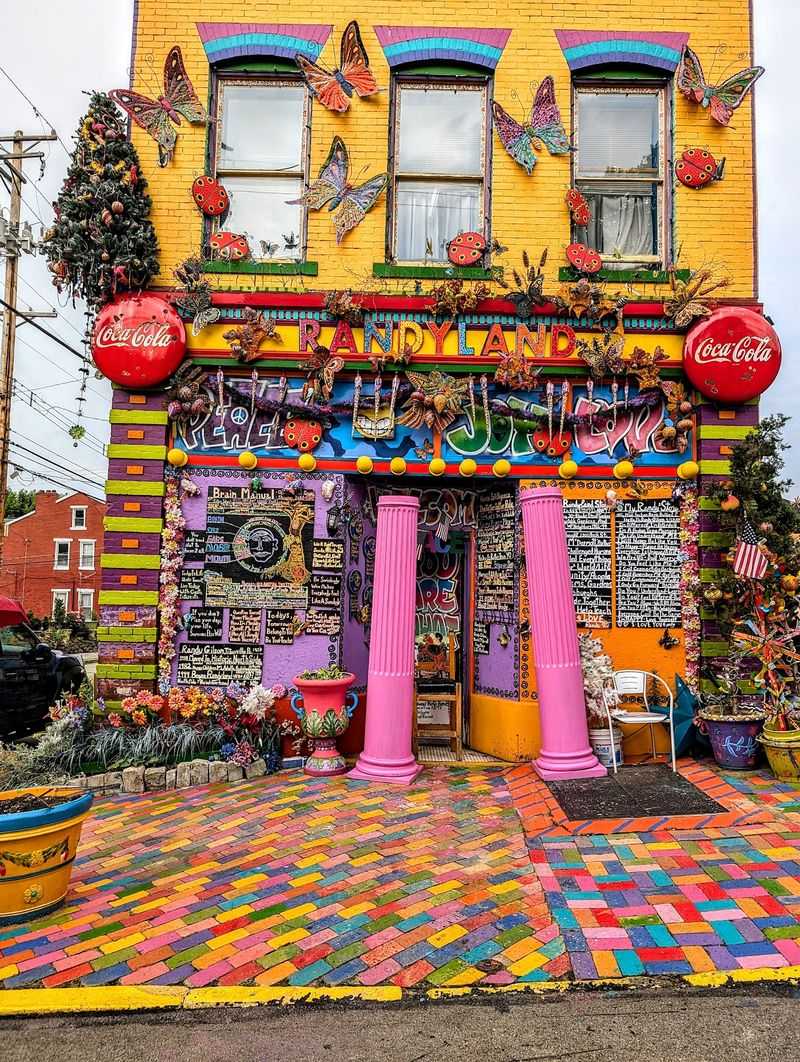
Few people buy a house with a credit card. Randy Gilson did exactly that in 1995, picking up a run-down property on Pittsburgh’s Central Northside.
Gilson was already known around town for planting hundreds of street and vegetable gardens. His new home became his biggest project yet.
Today, nearly every surface at 1501 Arch Street is painted in bright yellow, blue, red, or green. The courtyard is crowded with mannequins, plastic dinosaurs, pink flamingos, and retired street signs.
Visitors are encouraged to sit in the mismatched chairs and benches scattered around the art. That makes it one of the most photo-friendly stops in the city.
Here is a fun bonus. Gilson often chats with guests himself, sharing stories about how certain pieces came together.
Few museums offer a meet-the-artist moment at no charge.
Admission is free, though donations help with upkeep. The site usually opens from mid-morning to early evening.
Hundreds of thousands of people stop by each year, so arriving early helps if you want clear photos without a crowd.
3. Watts Towers, Los Angeles, California
No bolts. No welds.
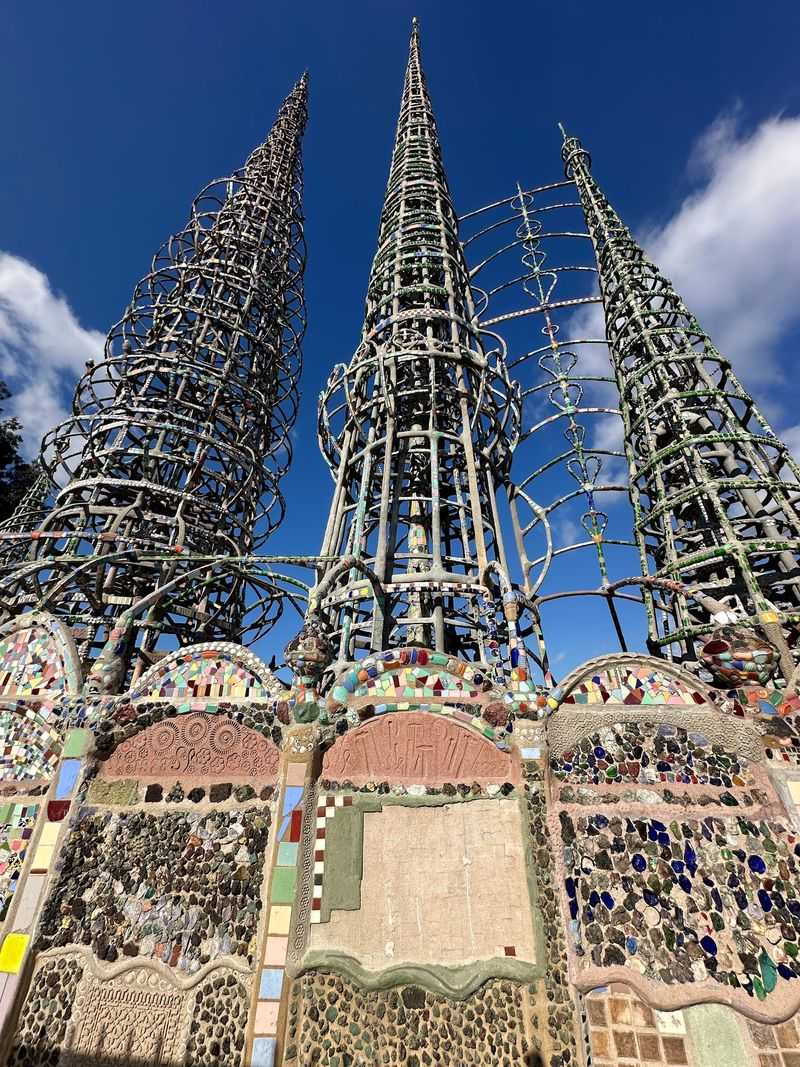
No scaffolding. Sabato “Simon” Rodia still managed to build a tower nearly 100 feet tall in his backyard.
The Italian immigrant worked on his project from 1921 to 1954. He called it Nuestro Pueblo, which means “our town,” and it includes 17 connected towers and structures.
Rodia used steel rebar, wire mesh, and his own concrete mix. He covered the surfaces with broken tile, glass, seashells, mirrors, and bottles.
Neighborhood children often brought him pieces of broken pottery. He also reused damaged items from Malibu Potteries, where he had once worked.
The tallest tower stands 99.5 feet on a foundation only 14 inches deep. Engineers still find that impressive.
After Rodia moved away in 1955, the city planned to tear the towers down. Local citizens fought back and won.
The site is now a National Historic Landmark.
Plan ahead, since the only way inside the fence is a guided tour of about 30 minutes run by the Watts Towers Arts Center. More than 40,000 people visit each year.
4. Gilgal Sculpture Garden, Salt Lake City, Utah
At 57, most people start thinking about slowing down. Thomas Battersby Child Jr., a masonry contractor and church bishop, picked up heavier rocks instead.
Starting in 1945, he spent nearly two decades turning his backyard into a private retreat. He hauled stones from all over Utah to build it.
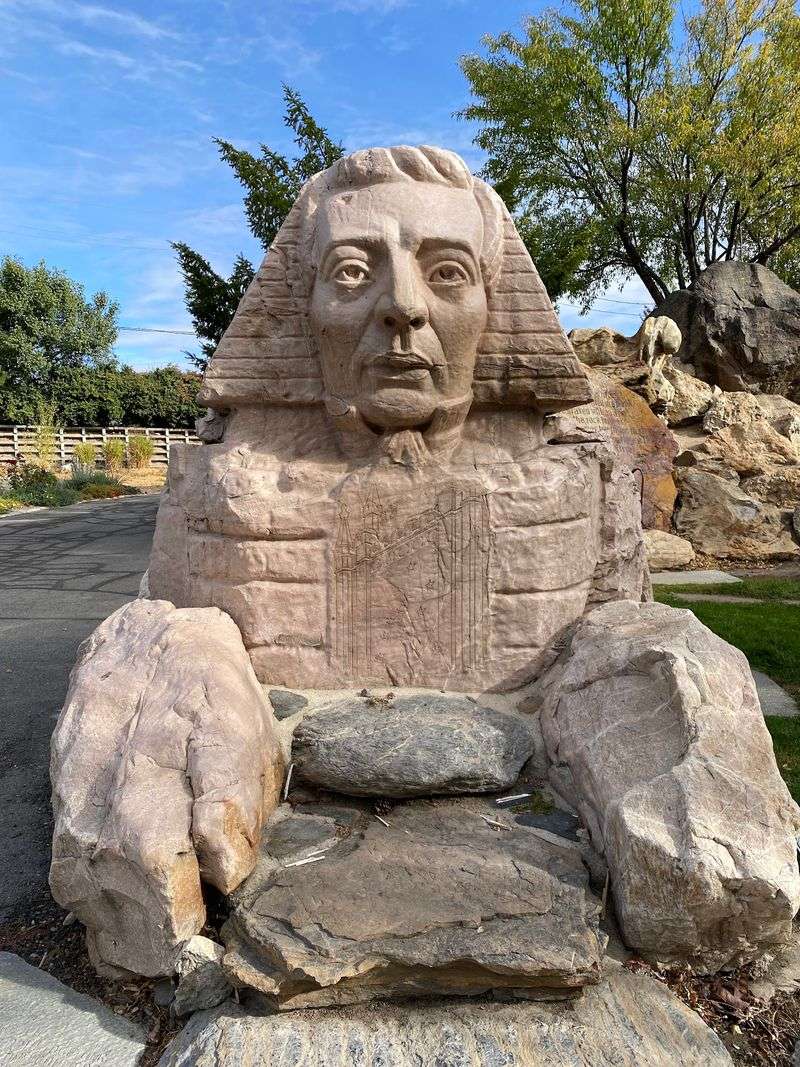
The garden holds twelve original sculptures and more than seventy stones carved with scriptures, poems, and quotes. The star of the show is an 8-foot sphinx wearing the face of Joseph Smith.
Child chose huge quartzite blocks for the body. Sculptor Maurice Brooks carved the face with a torch, a method that gave it unusual detail.
Keep an eye out for Child’s self-portrait, which shows him wearing pants made of brick. Yes, really.
After his passing, developers eyed the land. A group called Friends of Gilgal Garden stepped in, and the site reopened as a free city park in 2000.
It is open seven days a week. Set aside time to read the engraved stones, since that is where much of the meaning hides.
5. Garden of Eden, Lucas, Kansas
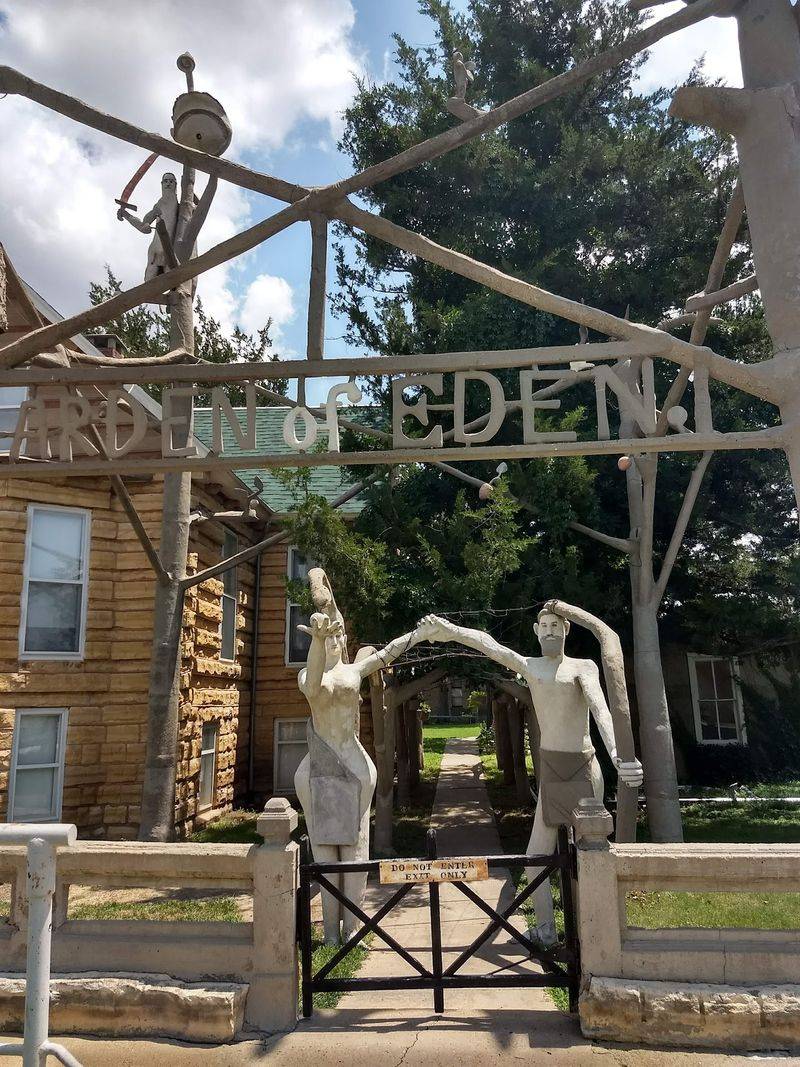
Retirement plans rarely include 113 tons of cement. Samuel Perry Dinsmoor, a former schoolteacher and Civil War veteran, began his at age 64 in 1907.
First came a house built to look like a log cabin, except the logs were cut from local limestone. Then came the sculptures.
Dinsmoor made more than 150 concrete figures, some reaching 40 feet high. They mix Bible stories like Cain and Abel with sharp political opinions from his era.
One scene shows a woman and a Black man asking the Goddess of Liberty for voting rights. That was a bold message for a small Kansas town in the early 1900s.
He even rigged electric bulbs into an “All-Seeing Eye” that winked at passing trains. Clearly, Dinsmoor knew how to get noticed.
His most famous final touch is a limestone mausoleum, where he still rests in a glass-lidded coffin as part of the tour.
The site joined the National Register of Historic Places in 1977. Guided tours run year-round, and over 10,000 people visit annually.
Lucas is tiny, so check hours before driving out.
6. Grandview, Hollandale, Wisconsin
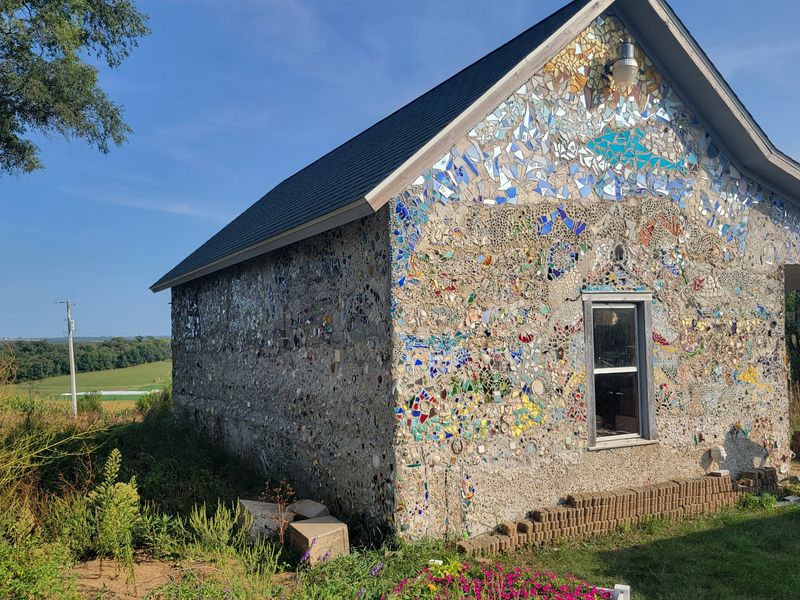
A sprained ankle sounds like a reason to sit still. For dairy farmer Nick Engelbert, it became the start of a fifteen-year art spree.
The Austrian immigrant visited the famous Dickeyville Grotto and came home inspired. In 1937, he began building an arched concrete porch on his Hollandale farmhouse.
Soon the whole outside of the house was covered in concrete studded with glass, china, beads, buttons, and seashells. Then the yard got its turn.
Engelbert made more than forty sculptures. Fan favorites include Paul Bunyan, Snow White and the Seven Dwarfs, and a Viking riding in a ship.
One scene shows Uncle Sam trying to plow with a stubborn donkey and elephant. It is a funny jab at political parties that still lands today.
His “Monkey Tree” includes figures of his own family members, adding a personal touch.
The Kohler Foundation restored the site starting in 1991. Today, the grounds are open daily from sunrise to sunset, and the house serves as a small museum with family items and copies of his later paintings.
7. Hartman Rock Garden, Springfield, Ohio
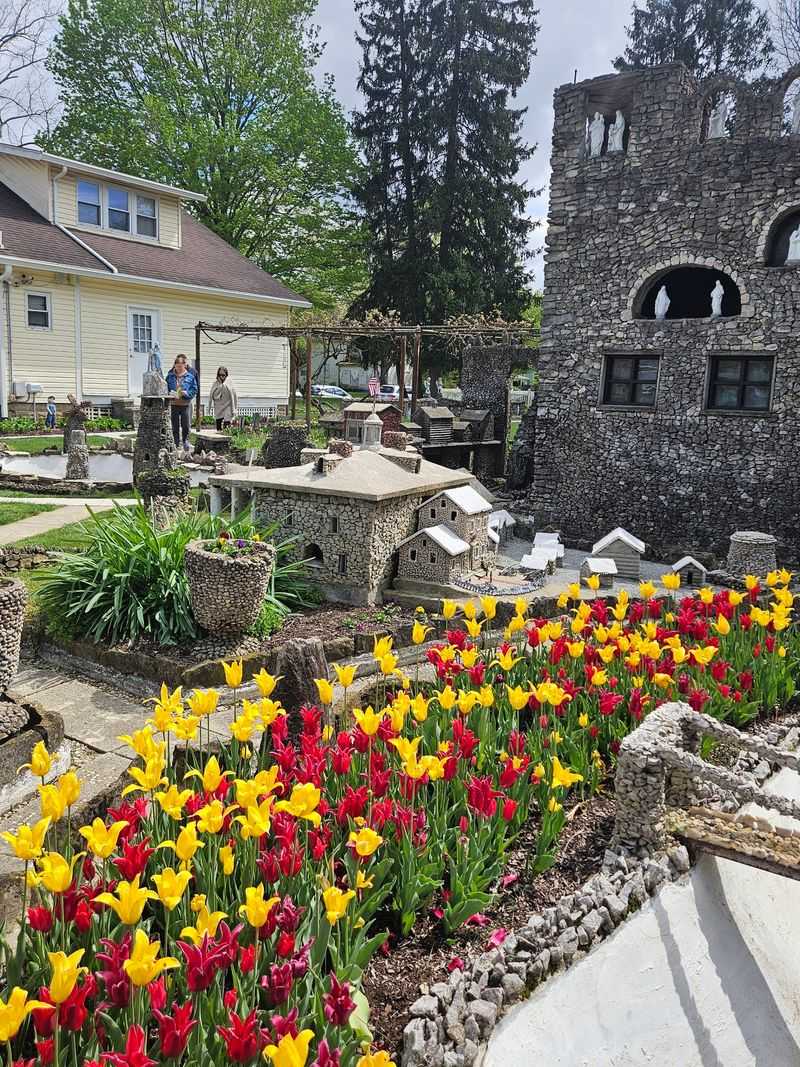
A pink slip in 1932 turned out to be the best thing that ever happened to one Springfield yard. Ben Hartman lost his foundry job during the Great Depression and started building a simple cement fishing pond.
He did not stop there. Over the next twelve years, Hartman packed his lot with more than fifty structures made from concrete, glass, metal, and thousands of small stones.
Look closely and you will spot tiny versions of Mount Vernon, the White House, and Independence Hall. Noah’s Ark sits nearby with fourteen pairs of animals.
The 7-foot Tree of Life alone holds about 20,000 stones.
Kids tend to love the nursery rhyme scenes, including the Old Woman Who Lived in a Shoe. Hartman built those with young visitors in mind.
His wife Mary cared for the garden for 53 years after he was gone. The Kohler Foundation later restored it, and it reopened in 2010.
Good news for budget travelers: self-guided visits are free every day from dawn to dusk. Bring a camera with a strong zoom for the tiny details.
8. Thunder Mountain Monument, Imlay, Nevada
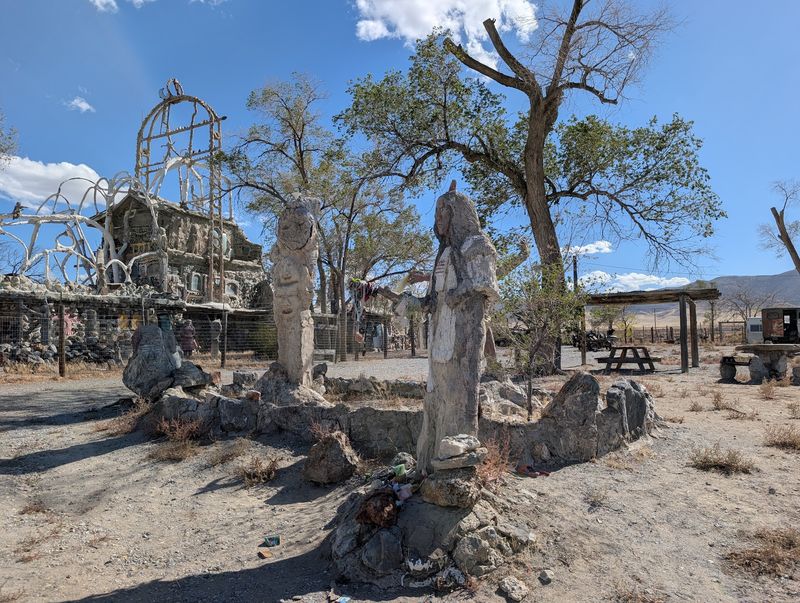
Car trouble usually means a tow truck. In 1969, a broken-down truck near Imlay, Nevada, led Frank Van Zant to build an entire monument instead.
Van Zant was a World War II veteran who later took the name Chief Rolling Mountain Thunder. He wanted to honor Native American people and their history.
Over the next twenty years, he filled five acres with buildings and more than 200 concrete sculptures. He used whatever the desert and roadside offered.
That meant bottles, hubcaps, car parts, railroad ties, scrap metal, and even old typewriters. Some windows are actually antique windshields.
The site once doubled as a home for his family of eight children and a hostel for travelers in the 1970s. A fire in 1983 destroyed much of it, but Van Zant kept building.
Nevada named it a State Historic Site in 1992. His children help care for it today.
Visits are free and self-guided from sunrise to sunset. It sits right off Interstate 80, so it makes an easy and memorable road trip break.
Donations help keep it standing.
9. Dick and Jane’s Spot, Ellensburg, Washington
“One hearty laugh is worth ten trips to the doctor.” Artists Jane Orleman and Dick Elliott lived by that motto, and their house proves it.
In 1978, the couple started turning their run-down home at 101 North Pearl Street into a nonstop art project. It has been changing ever since.
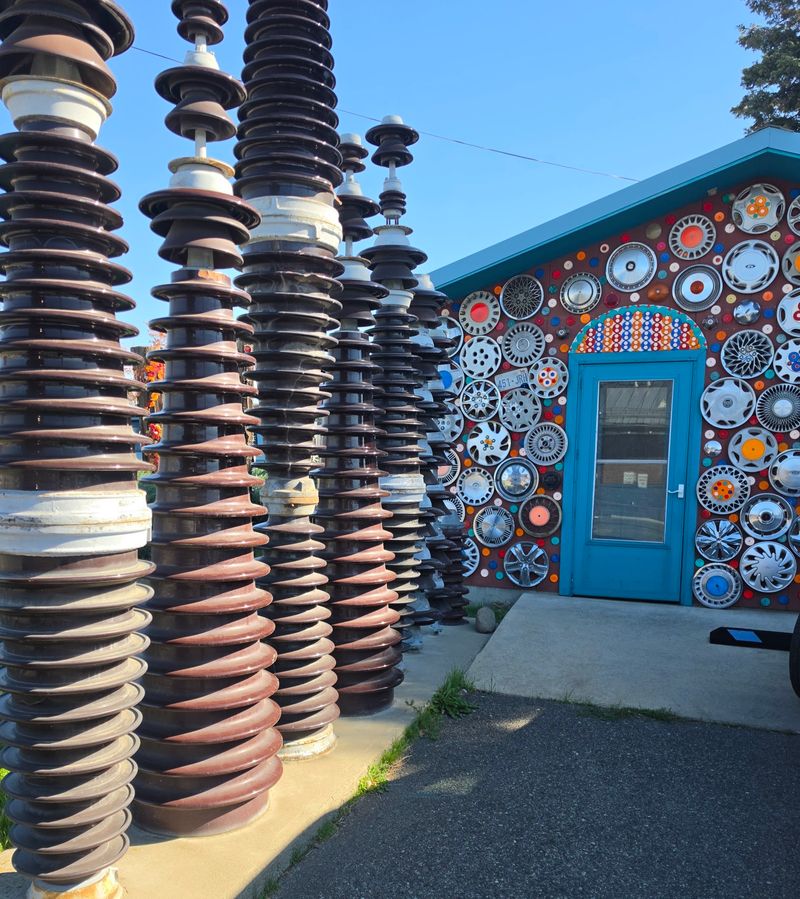
The yard and outside walls hold work by the pair and more than forty other Pacific Northwest artists. Materials include thousands of highway reflectors and over 10,000 bottle caps.
Elliott was known for his large reflector designs, which catch car headlights at night. Orleman added paintings and sculptures with personal meaning.
Bicycle wheels, hubcaps, and ceramic insulators also pop up across the property. Pieces get added, changed, or removed often, so repeat visits rarely look the same.
One rule matters here. This is a private home, so viewing happens from outside the fences, which are also decorated.
A public parking lot sits on the north side. Orleman, who still tends the space, plans to give it to the community someday.
10. James Tellen Woodland Sculpture Garden, Sheboygan, Wisconsin
Inspiration struck James Tellen in an unlikely place: a hospital recovery. While healing, the furniture factory painter noticed churchyard statues and decided to try sculpting himself.
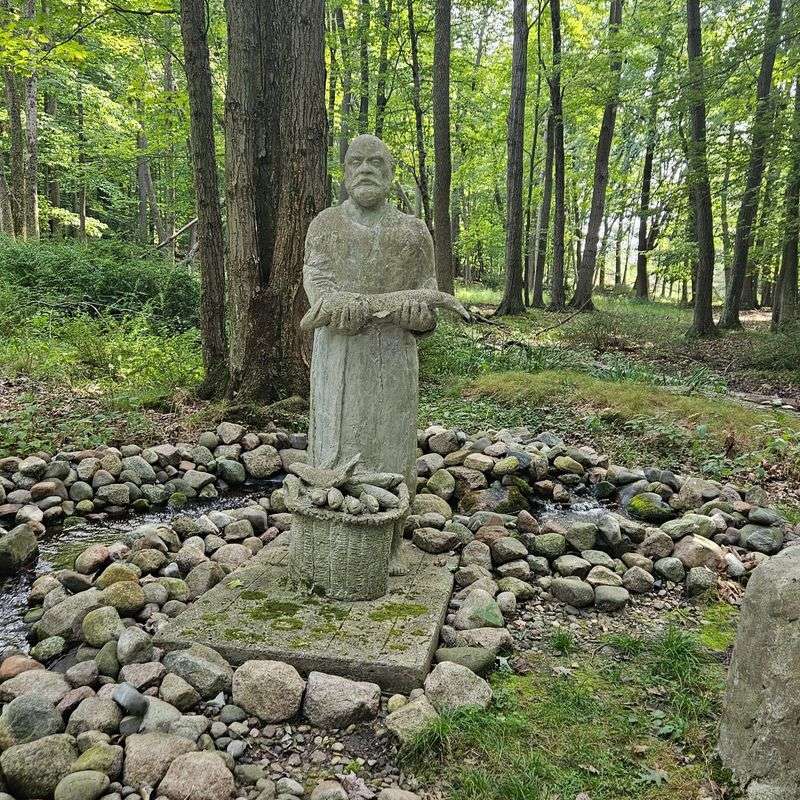
Around 1942, he began placing concrete figures in the woods near his family’s summer log cabin, just south of Sheboygan. He kept going until 1957.
More than thirty figures now stand along a forest path. They include frontiersmen, religious figures, patriotic characters, and Native Americans.
His early masterpiece, “Fallen Log,” stretches 65 feet. It shows concrete logs made to look like real wood, plus a bear, two cubs, and a family.
Tellen had a clever routine. He shaped heads in clay during winter, made plaster molds, and then built the bodies outdoors when the weather warmed up.
The Kohler Foundation saved the garden in 2000 and gave it to the John Michael Kohler Arts Center.
Entry is free every day during daylight hours. Wear sturdy shoes, because the trails are natural and uneven.
Half the fun is spotting figures hiding between the trees.
11. Paul and Matilda Wegner Grotto County Park, Sparta, Wisconsin
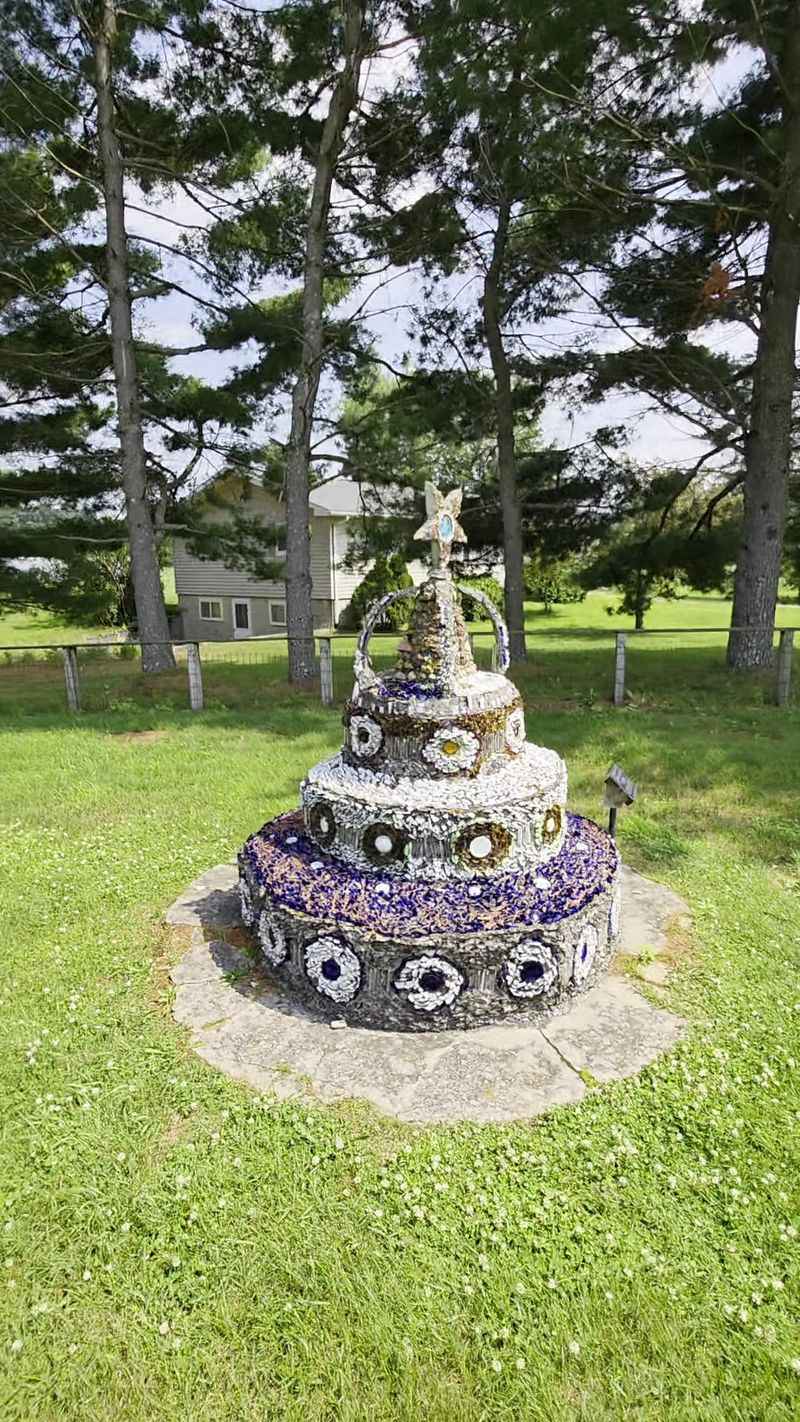
Picture a 50th wedding anniversary cake that never goes stale. Paul and Matilda Wegner built one out of concrete, and it still stands near Sparta.
The German immigrants started their retirement project in 1929 after visiting the grotto in Dickeyville. Neither had any art training.
That did not slow them down. They covered concrete forms with thousands of pieces of glass, broken dishes, and seashells.
The best-known piece is the little Glass Church, decorated with mosaics showing houses of worship from different faiths. Bottles set into its walls let light pass through.
Other highlights include a 12-foot model of the ocean liner Bremen and a fence spelling “HOME” in crushed black glass. Their work mixes faith and patriotism, reflecting pride in their new country.
The Kohler Foundation restored the grounds in 1986. Monroe County took over the next year and made it a park.
Timing matters for this one. The unstaffed site opens Memorial Day through Labor Day during daylight.
Admission is free, and group tours can be arranged through the county history museum.
12. Chauvin Sculpture Garden, Chauvin, Louisiana
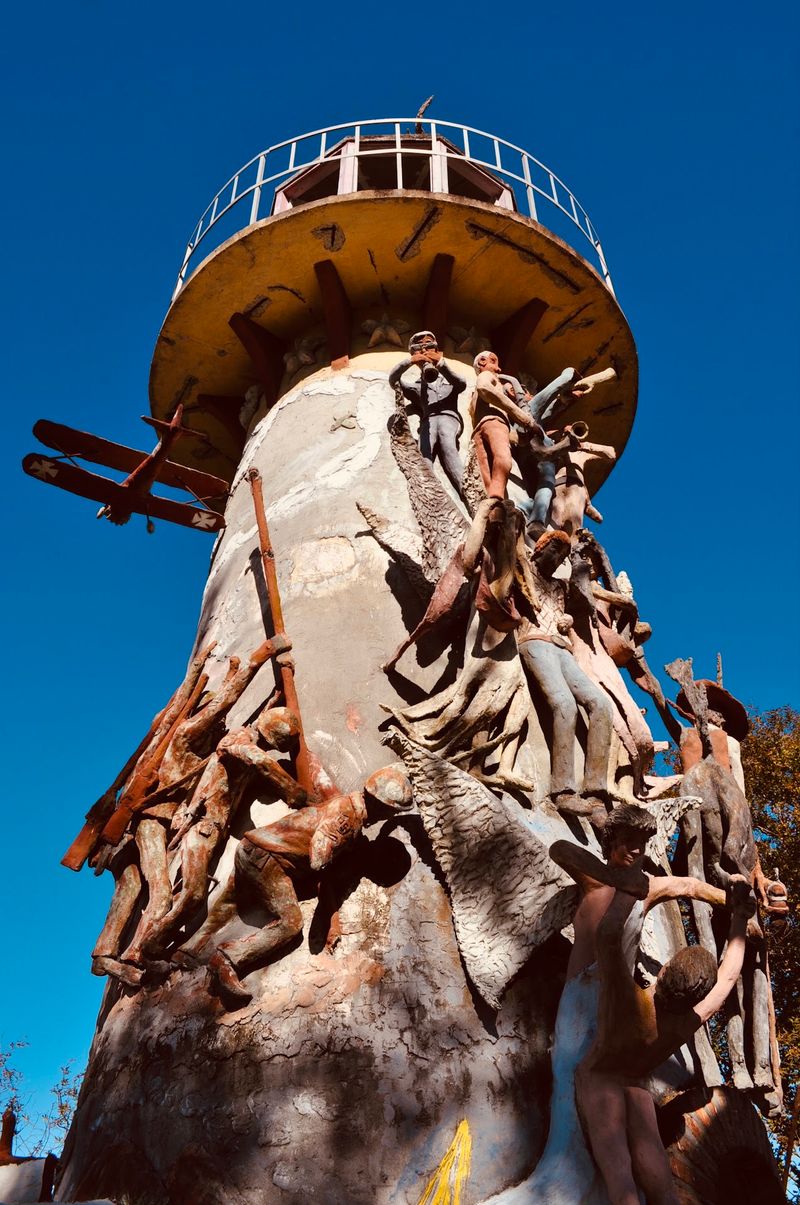
Around 7,000 bricks went into the tallest piece in this bayou garden. Bricklayer Kenny Hill stacked them into a 45-foot lighthouse.
Hill worked on his backyard along Bayou Petit Caillou from 1990 to 2000. In that decade, he made more than 100 concrete sculptures.
His work blends Bible stories, Cajun folklore, and his own life story. Angels appear everywhere, some blue-skinned and barefoot, others dressed in medieval clothes.
The lighthouse is crowded with life-size cowboys, soldiers, and angels. Look carefully and you will find several versions of Hill himself.
One self-portrait shows him as a bearded artist holding a seashell to his ear. Others are far more serious.
In 2000, Hill left the site suddenly, and plants began taking over. Dennis Sipiorski of Nicholls State University teamed up with the Kohler Foundation to rescue it.
The university has run the garden since 2002. It is free and open daily from 8 a.m. to 5 p.m.
Weekend visits come with a bonus, since volunteer guides are often on hand to share Hill’s story.
Share this story