Michigan has been building its state park system since 1919, and the result is one of the most accessible networks of outdoor spaces in the entire country. Whether you are planning a quick weekday lunch or a full Saturday outing with family, the state offers dozens of spots where picnic tables, restrooms, and convenient parking are already waiting for you.
What makes these places especially interesting is that many of them carry layers of history, from Civilian Conservation Corps construction projects of the 1930s to land donations by early automobile industry giants. The 12 locations covered here span the Lower and Upper Peninsula, touching Lake Michigan, Lake Huron, Lake Superior, inland lakes, and even the Detroit River, giving every corner of the state at least one excellent reason to pack a lunch and head outside.
1. Holland State Park, Holland, Michigan
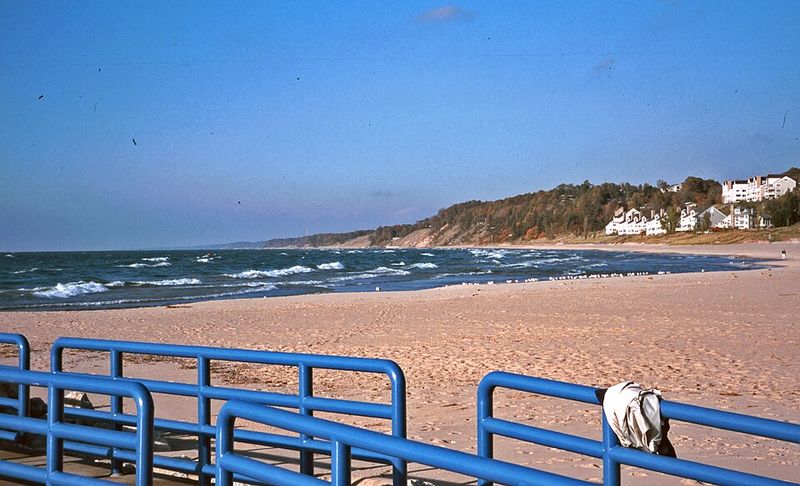
The red lighthouse at Holland Harbor, now one of the most photographed structures in Michigan, did not always wear that color. For decades after its construction in 1870, the wooden tower went through several transformations before being encased in steel and painted its now-familiar crimson in the 1950s.
The harbor itself was carved out by determined Dutch settlers in 1860 after years of failed attempts to establish a reliable channel between Lake Macatawa and Lake Michigan. Dr. Albertus C.
Van Raalte led those early colonists to the region in the mid-1840s, and their persistence in opening the harbor shaped the town’s economic future.
Holland State Park was officially designated in 1927, sitting within the historically significant Ottawa Beach District. Today, picnic areas on both the Lake Michigan and Lake Macatawa sides offer tables, grills, and restroom access, along with an accessible walkway to the water.
2. Petoskey State Park, Petoskey, Michigan
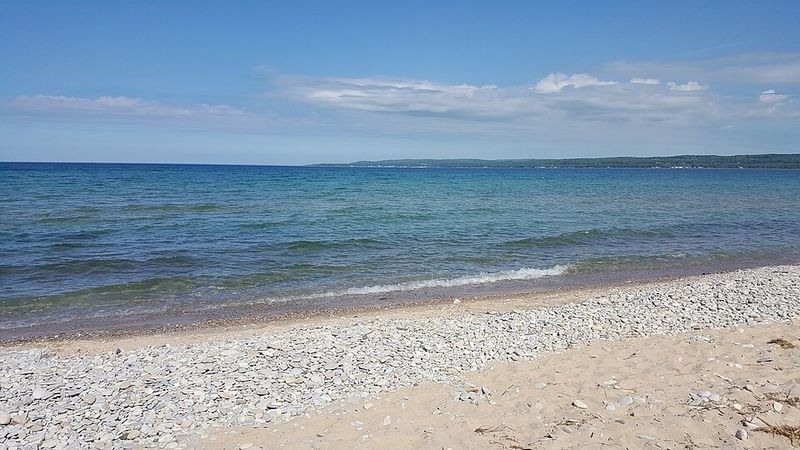
The town of Petoskey was renamed in 1873 to honor Chief Pe-to-se-gay, an Odawa leader and fur trader whose name translates to “Rays of the Rising Sun” in the Ottawa language. That poetic phrase took on new meaning when Victorian-era tourists began discovering fossilized coral along the Lake Michigan shore, each hexagonal cell resembling a small sunburst.
Those stones, scientifically called Hexagonaria percarinata, are remnants of a tropical reef that existed roughly 350 million years ago when Michigan sat near the equator beneath a warm shallow sea. Michigan officially designated the Petoskey stone as its state stone in 1965.
The site that became Petoskey State Park also housed a tannery from 1885 until 1952, processing over a thousand hides daily at its peak. The park was established between 1961 and 1962, and its day-use area now includes tables, grills, a pavilion, restrooms, and an accessible walkway toward the water.
3. Belle Isle Park, Detroit, Michigan
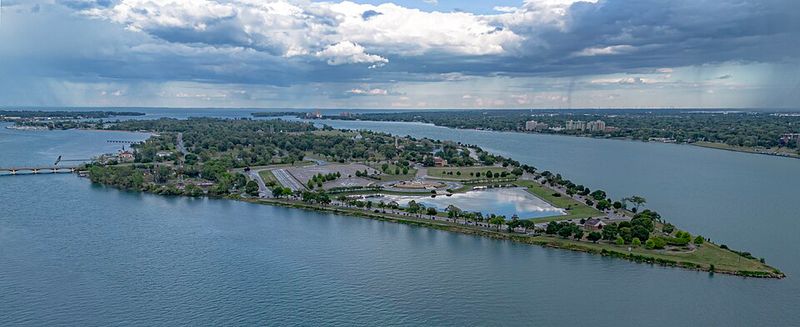
French settlers called it “Ile aux Cochons,” meaning Hog Island, because it served as a practical grazing ground where pigs could roam safely away from wolves on the mainland. That utilitarian beginning gave little hint of the grand civic destination it would eventually become.
Detroit purchased the island in 1879 and commissioned Frederick Law Olmsted, the landscape architect behind New York’s Central Park, to design a public park. His 1881 plan emphasized pedestrian flow and a canal drainage system, though political shifts meant the final result diverged from his original vision.
The park opened to the public in 1889.
Architect Albert Kahn designed both the Belle Isle Aquarium and the Anna Scripps Whitcomb Conservatory, both opening in 1904. Michigan took over management through a 30-year lease in 2013.
Today, accessible parking, pavilions with tables, grills, and seasonal restrooms make it a well-equipped Detroit picnic destination.
4. Ludington State Park, Ludington, Michigan
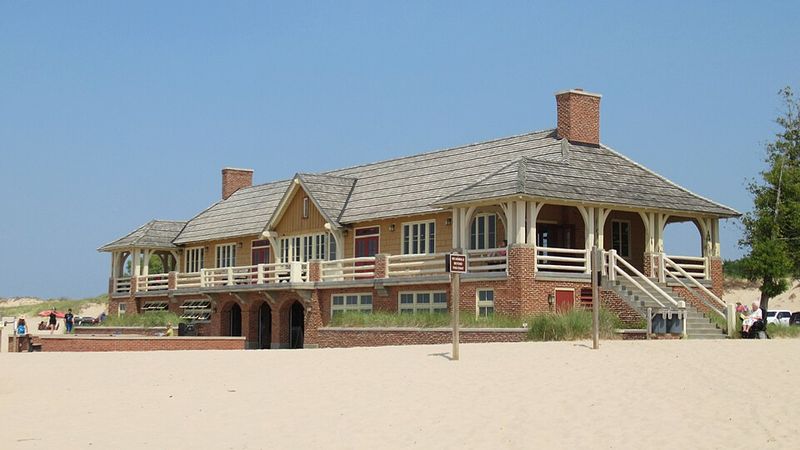
A logging village called Hamlin sprang up near the mouth of the Big Sable River around 1852, built around a dam that controlled the flow of timber down to a sawmill. The dam also created Hamlin Lake, which remains one of the park’s defining features today.
The Big Sable Point Lighthouse, constructed in 1867 and rising 112 feet, guided vessels across Lake Michigan for over a century. Originally built of yellow cream brick, it was encased in steel plates and repainted in distinctive black and white around 1900 after weather damage became severe.
It holds the distinction of being the last Great Lakes lighthouse to be electrified, a change that did not come until 1949.
The Big Sable Point Lighthouse Keepers Association formed in 1987 to preserve the structure, securing its place on the National Register of Historic Places. Picnic tables and grills are available near Hamlin Lake and the Big Sable River, with beach house restrooms at both Lake Michigan and Hamlin Lake.
5. Tahquamenon Falls State Park, Paradise, Michigan
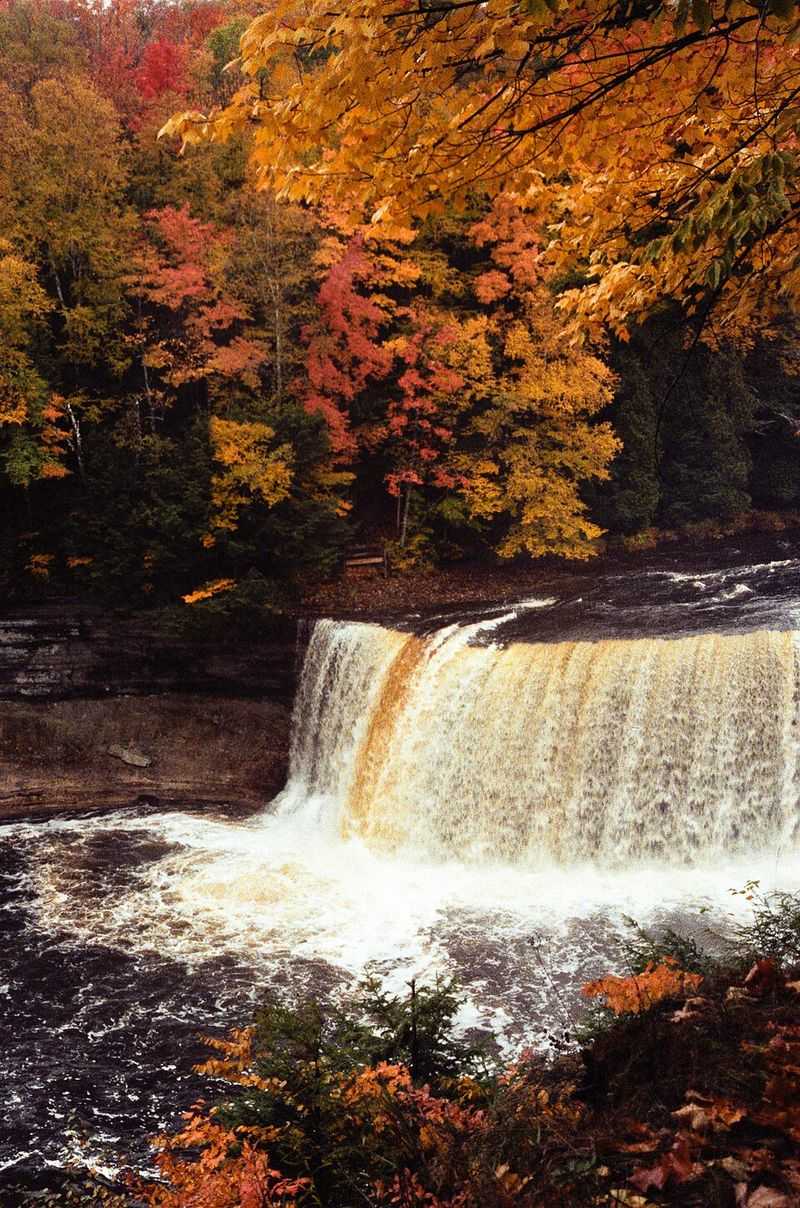
Henry Wadsworth Longfellow immortalized this river in his 1855 epic poem “The Song of Hiawatha,” writing that the hero crafted his canoe “by the rushing Tahquamenaw.” The poem brought national attention to a stretch of Michigan wilderness that the Ojibwa people had relied upon for fishing, hunting, and farming for generations.
The amber color of the Tahquamenon River comes from tannic acid leaching out of cedar and hemlock swamps along its banks, a natural process entirely unrelated to the romantic legends that grew around Longfellow’s verse. State geologist Douglass Houghton canoed up the river to the Upper Falls in 1840 and documented well-worn portage trails and signs of Native American activity.
Logger Jack Barrett donated much of the surrounding land to Michigan in the early 1900s with specific conditions to prevent overdevelopment, including a requirement that the road stop three-quarters of a mile from the falls. Accessible picnic areas with tables and grills are available at both the Upper and Lower Falls day-use areas.
6. Bay City State Park, Bay City, Michigan
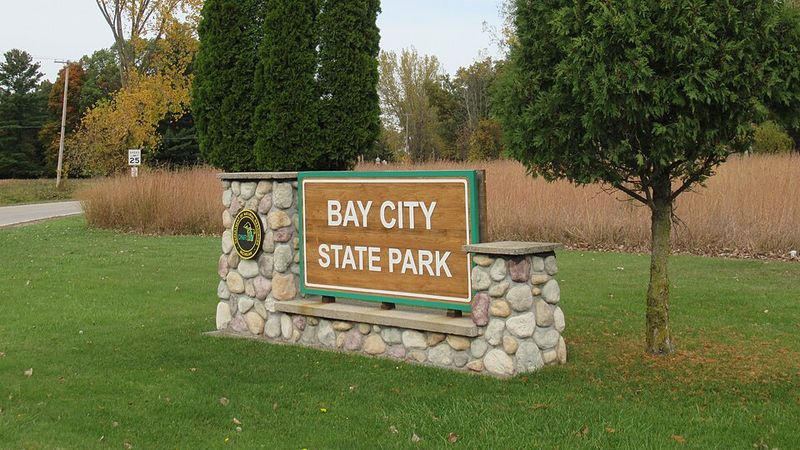
When Bay City State Park opened in 1923 after the Michigan Conservation Commission accepted a land donation from the city, few could have predicted it would become the most visited state park in Michigan within a decade. During the 1930s, it drew a remarkable 1.5 million visitors annually, making it a regional phenomenon during a period of limited travel options.
The park’s sandy beach eventually gave way to algae and organic material due to shallow bay conditions and nutrient runoff from nearby farmland, and attendance dropped sharply. A major renovation in the early 1990s reversed that decline by adding approximately 1,900 acres of Tobico Marsh in 1994, one of the largest remaining freshwater coastal wetlands on the Great Lakes.
The Saginaw Bay Visitor Center opened in 1995 as part of that transformation, offering interpretive exhibits on the wetland ecosystem. The park was temporarily renamed Bay City State Recreation Area in 1994 before reverting to its original name in 2017.
Its day-use area includes picnic tables, grills, and modern restroom facilities.
7. Albert E. Sleeper State Park, Caseville, Michigan
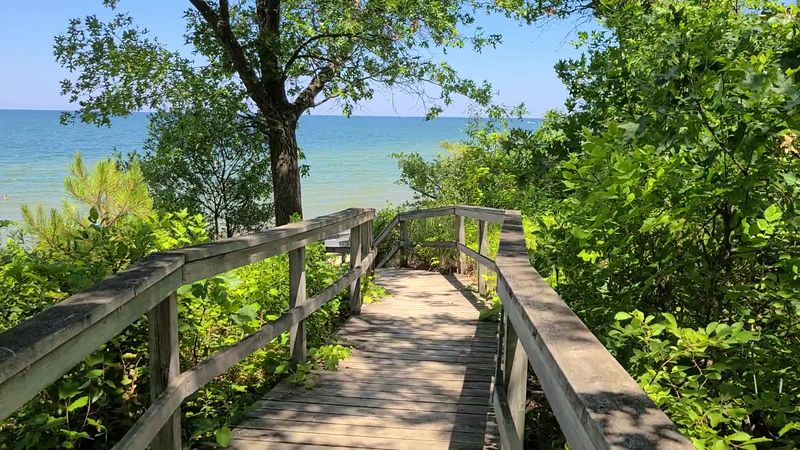
Governor Albert E. Sleeper signed the legislation that formally created Michigan’s state park system during his term from 1917 to 1920, making it fitting that this Thumb-region park carries his name.
Sleeper was also a prominent local businessman in the area, giving the tribute a geographic logic beyond politics.
The park opened in 1925 as a county park before the State of Michigan acquired it in 1927, initially calling it Huron State Park. The name change to Sleeper State Park came in 1944, the same year many Michiganders were still processing the social and economic shifts brought on by World War II.
The Civilian Conservation Corps contributed to park development in the 1940s, including construction of the Outdoor Center.
As the first state park established in the Thumb, Sleeper has served visitors for over 95 years. Its day-use area features picnic tables, grills, a pavilion with modern restrooms, and a pedestrian overpass connecting the park across the road to half a mile of sandy Saginaw Bay shoreline.
8. F.J. McLain State Park, Hancock, Michigan
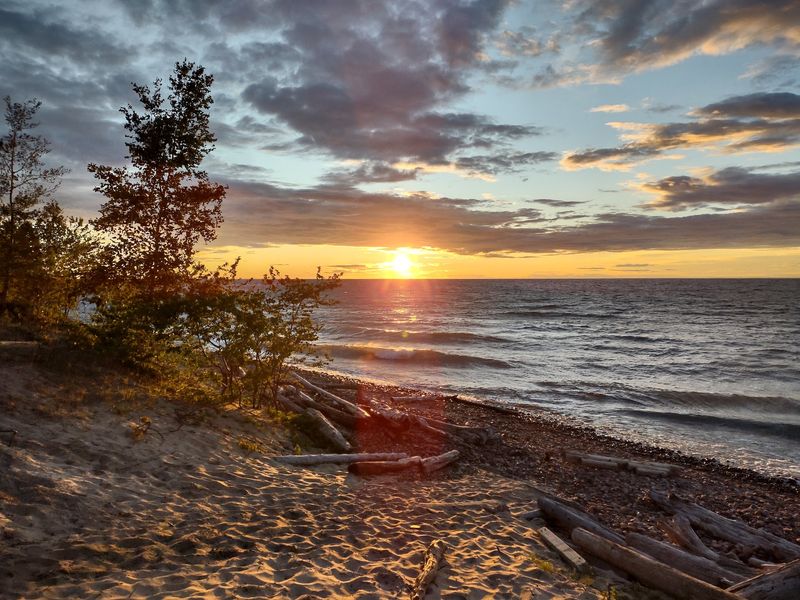
Copper mining on the Keweenaw Peninsula stretches back an astonishing 7,000 years, making it one of the oldest known mining regions in North America. The mid-19th century copper boom brought a surge of Finnish and Cornish immigrants whose cultural imprint on the Upper Peninsula remains visible in architecture, food traditions, and place names to this day.
The park is named after Frederick J. McLain, a Houghton County Commissioner who secured the land for the site during the 1930s.
Much of the park’s early infrastructure was built by laborers through the Work Projects Administration, a New Deal federal employment program that reshaped dozens of Michigan parks during the Great Depression.
The surrounding Keweenaw National Historical Park preserves shafthouses, tram cars, and waste rock piles from the mining era, offering context that extends well beyond the state park’s boundaries. The day-use area at F.J.
McLain includes picnic tables, grills, accessible tables near the swimming beach, and accessible pavilions with modern toilet facilities.
9. Orchard Beach State Park, Manistee, Michigan
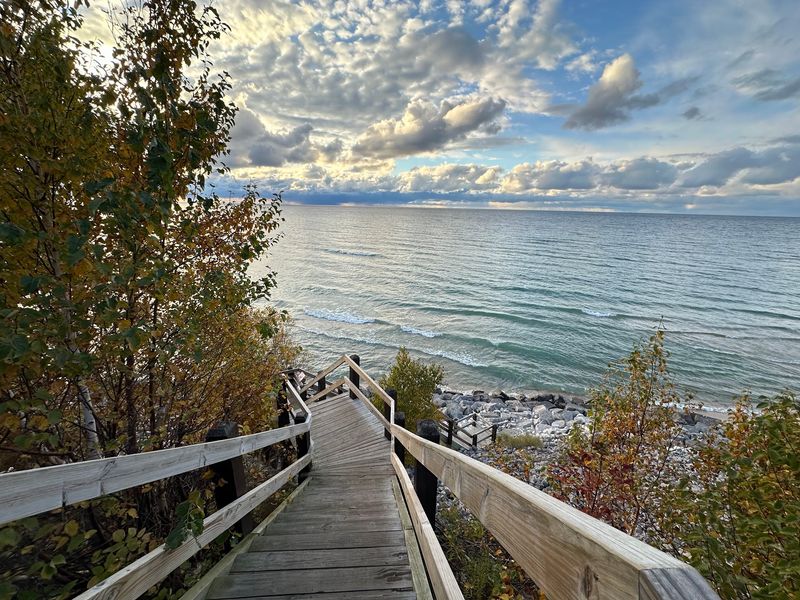
The land that became Orchard Beach State Park started as an apple orchard planted on a bluff above Lake Michigan by George Hart in the late 1880s. By 1892, the Manistee, Filer City and Eastlake Railway Company had transformed the site into an excursion park complete with trolley service, making it one of the earliest examples of transit-oriented recreation in western Michigan.
After automobile travel replaced trolleys following World War I, the Manistee Board of Commerce purchased the property and deeded it to the state in 1921. The Civilian Conservation Corps then left its most lasting mark during the 1930s, constructing the limestone pavilion, toilet building, line house, and pump house that still define the park’s character.
This collection of CCC-era structures earned Orchard Beach a spot on the National Register of Historic Places in 2009.
High Lake Michigan water levels in 2019 caused serious bluff erosion, prompting a dramatic 1,200-foot relocation of the pavilion in December 2020. The park’s historic picnic facility includes tables, stone fireplaces, grills, electrical service for reservations, and modern toilets.
10. Onaway State Park, Onaway, Michigan
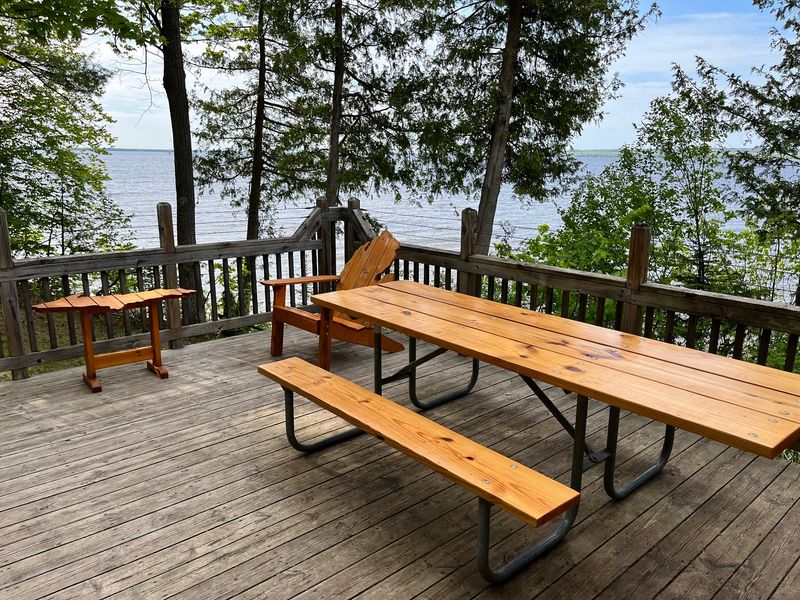
Established in 1921, Onaway State Park is among Michigan’s very first state parks, created just two years after the Michigan State Park Commission formed in 1919 to begin acquiring public land. Presque Isle County deeded 150 acres to the state in 1920, including a section historically known as “The Indian Orchard.”
Its cobblestone shoreline along Black Lake sets it apart from the sandy beaches common at most Michigan parks, and the rock outcroppings give the landscape a texture rarely found in the Lower Peninsula. A pavilion on the grounds dates to approximately 1917, predating the park itself, and the Civilian Conservation Corps renovated it in the 1930s, adding a stone fireplace and modifying its wraparound porch.
Onaway State Park was added to the National Register of Historic Places in 2009 for its CCC-era architecture. The nearby city of Onaway holds the title of “Sturgeon Capital of Michigan.” Picnic tables and grills are spread across both the east and west day-use areas, with the accessible Onaway Pavilion offering modern restrooms.
11. Maybury State Park, Northville, Michigan
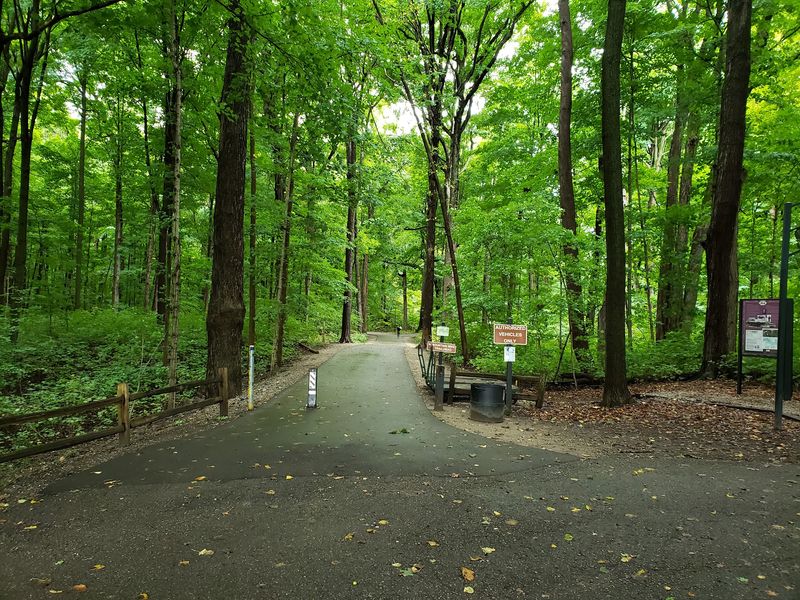
Few Michigan state parks carry as unexpected a backstory as Maybury, which was the site of the Detroit Municipal Tuberculosis Sanatorium from 1921 until its closure in 1969. The City of Detroit acquired eight farms totaling 850 acres in Northville specifically to build a self-contained healing community for tuberculosis patients at a time when the disease was one of the leading public health concerns in the country.
At its peak, the sanatorium operated more than 40 buildings, including patient dormitories, a school, staff housing, and Maybury Farm, which supplied fresh milk and produce on-site. Detroit earned recognition as a leading city in the global effort to address tuberculosis because of this facility.
The sanatorium was named after William H. Maybury, who was central to its planning and later died of tuberculosis in 1931.
Most buildings were demolished in 1972 and 1975 after the Michigan DNR acquired the land in 1971, and the park reopened in 1975. Interpretive signs along the History Trail guide visitors through the former sanatorium grounds.
Seasonal modern restrooms near the trailhead and year-round vault toilets elsewhere keep the logistics simple for a casual picnic.
12. Warren Dunes State Park, Sawyer, Michigan
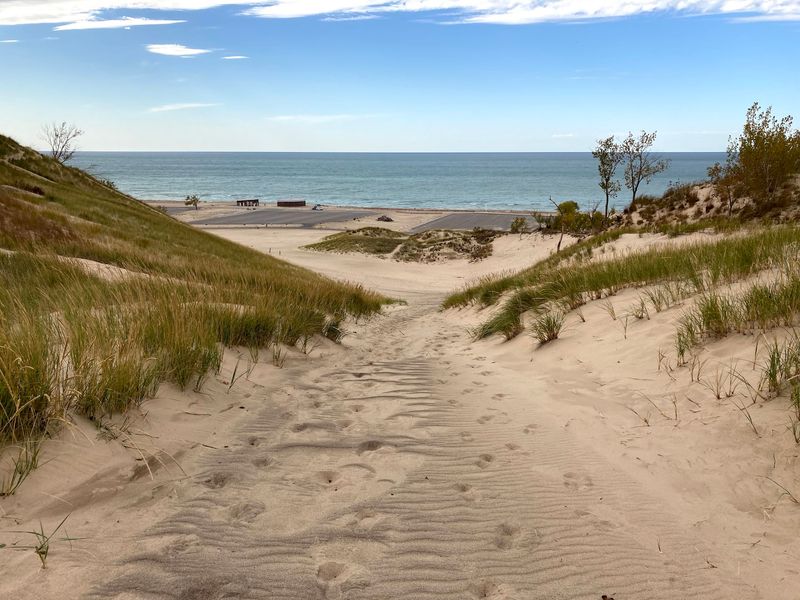
Tower Hill, the park’s most prominent dune, rises 240 to 260 feet above Lake Michigan, making it one of the tallest freshwater dunes on the planet. These formations are part of the largest freshwater dune system in the world, built over thousands of years as westerly winds deposited sand from the lake beach onto glacial deposits left behind roughly 12,000 years ago.
The Potawatomi people inhabited this stretch of southwestern Michigan shoreline long before Euro-American settlers arrived, integrating the dune landscape into their daily life and seasonal patterns. By the late 19th century, the dramatic terrain had begun attracting tourists from Chicago, drawn by the scale of the formations and the miles of Lake Michigan beach below them.
The Warren family owned the dune property before it transitioned to public ownership, and Warren Dunes State Park was officially established in 1930. Its three accessible bathroom buildings in the day-use beach area, along with pavilion picnic facilities featuring tables and grills, make it one of the best-equipped beach parks in the Michigan state system.
Share this story