Missouri is full of surprises, and one of the best ones is how much natural scenery you can pack into less than two miles of walking. The state stretches from ancient granite boulders in the southeast to wide-open tallgrass prairies in the west, with Ozark bluffs, limestone caves, and cypress swamps filling in the middle.
You do not need a full day or a pair of heavy-duty hiking boots to enjoy any of the trails on this list. Each one clocks in under two miles, making them ideal for families, casual explorers, and anyone who wants real scenery without a serious time commitment.
Read on to find your next favorite short walk in the Show-Me State.
1. Braille Trail at Elephant Rocks State Park, Belleview, Missouri
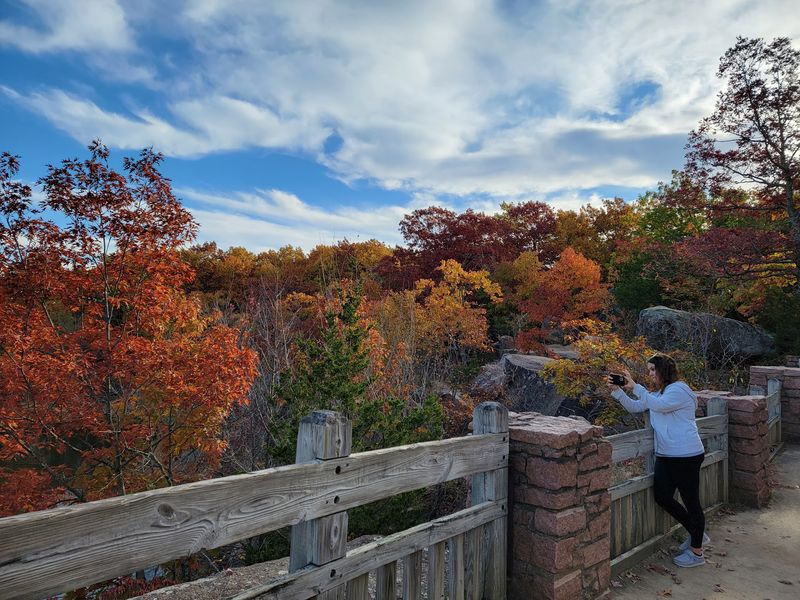
Granite boulders that formed 1.5 billion years ago and still manage to upstage everything around them make this trail genuinely hard to forget. The Braille Trail at Elephant Rocks State Park is a paved loop of roughly 0.9 to 1.2 miles, and it was the first trail of its kind in Missouri’s state park system when it opened in 1981, designed specifically for visitors with visual and physical disabilities.
Some of these pink granite giants stand over 20 feet tall and weigh hundreds of tons. They were rounded by water while still underground, a geological process that took millions of years to complete.
Side excursions along the route include a narrow passage called Fat Man’s Squeeze and an area known as The Maze. The trail also passes ruins of an old railroad engine house, left over from when Missouri Red granite was quarried here and shipped to cities across the country.
2. Devil’s Kitchen Trail at Roaring River State Park, Cassville, Missouri
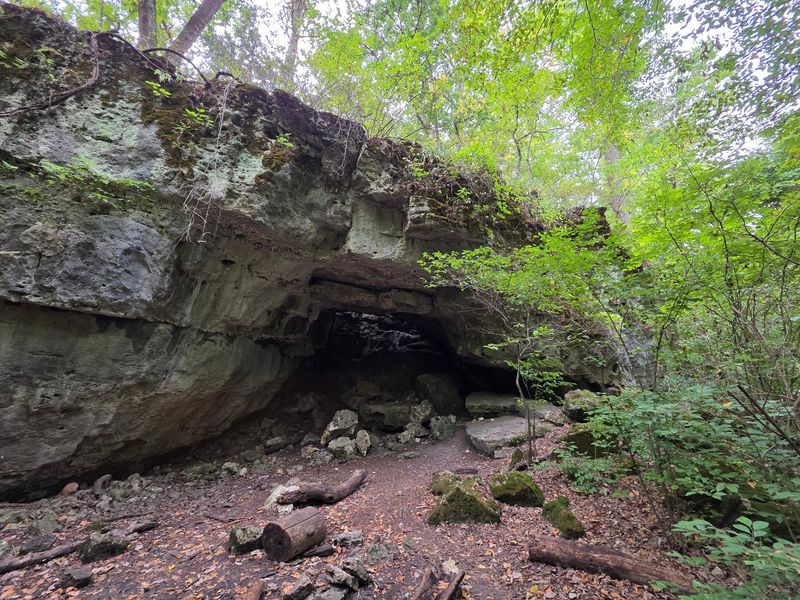
Local legend claims Civil War guerrillas once used the unusual rock outcrop at the end of this trail as a hideout, which gives the 1.5-mile Devil’s Kitchen Trail a backstory that most short hikes simply cannot match. The formation itself once created a room-like enclosure before eventually collapsing, leaving behind the jagged rock feature visitors see today.
The route at Roaring River State Park is rated moderately challenging, and that rating is earned. Hikers move through chert woodland, pass small caves, and climb toward limestone bluffs, all on natural surfaces that include dirt, gravel, roots, and sections of stone that can become slippery after rain.
Steep grades exceeding 10 percent appear in several spots, and some sections run close to bluff edges. Interpretive brochures available at the park office provide useful context for the geology and plant life encountered along the way, making sturdy footwear and a little preparation a smart combination here.
3. Spring Branch Trail at Mastodon State Historic Site, Imperial, Missouri
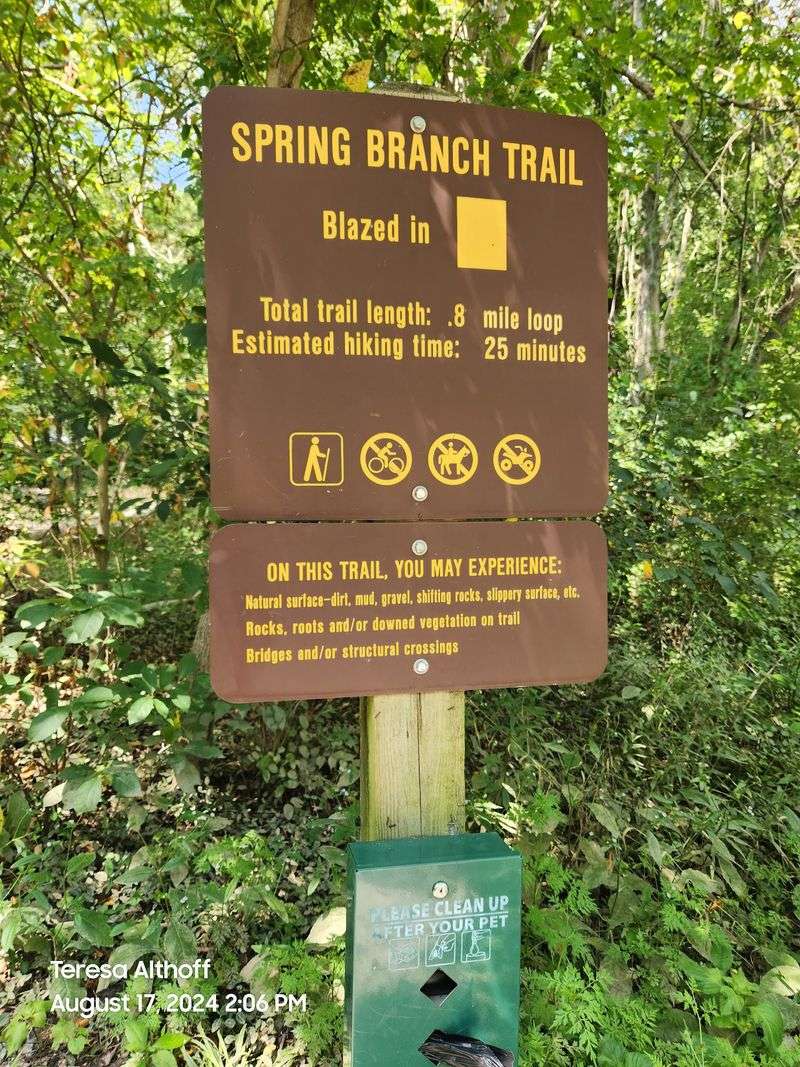
Not many 0.8-mile walks can connect you to events from 14,000 years ago, but the Spring Branch Trail at Mastodon State Historic Site manages it with ease. The flat, packed gravel loop is accommodating for wheelchairs and strollers, and it winds through young bottomland woods filled with hackberry, box elder, sycamore, and cottonwood trees alongside Rock Creek.
One of the more curious stops along the route is the remains of the Bollefer springhouse, built in 1937. The Bollefer family used the cool spring water to store milk, eggs, and other perishables before refrigeration was widely available, a practical solution that reads as almost ingenious by modern standards.
The surrounding site is best known for the Kimmswick Bone Bed, where scientists found the first solid evidence that Clovis culture hunters and mastodons coexisted in eastern North America. The park museum adds full-size mastodon replica exhibits and an interpretive video that put the short nature trail into a much larger timeline.
4. 1,000 Steps Trail at Washington State Park, De Soto, Missouri
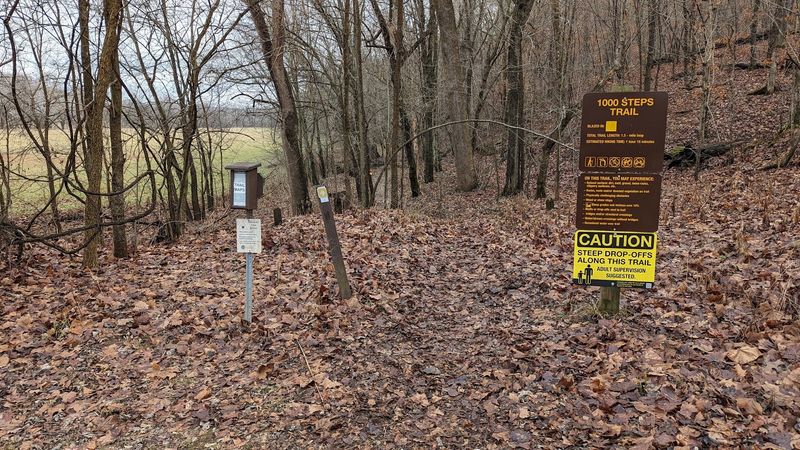
The name sounds like a fitness challenge, but the 1,000 Steps Trail at Washington State Park is actually a 1.5-mile loop with a very real historical story built right into the ground beneath your feet. Company 1743 of the Civilian Conservation Corps, an African-American CCC unit, hand-constructed the defining stone steps in 1936, and their craftsmanship has held up remarkably well across the decades.
The route climbs through oak and hickory hardwood forest, passing uneven stonework, steep grades, and natural surfaces that can include roots and slick stone sections. At the top, a CCC-built overlook shelter sits nestled into the hillside and frames expansive views across the Big River valley.
The trail also passes through the 68-acre Washington State Park Hardwood Natural Area and runs near a notable petroglyph site, adding layers of cultural and geological history to the hike. For a trail under two miles, it covers an impressive amount of ground in every sense.
5. Boardwalk Trail at Big Oak Tree State Park, East Prairie, Missouri
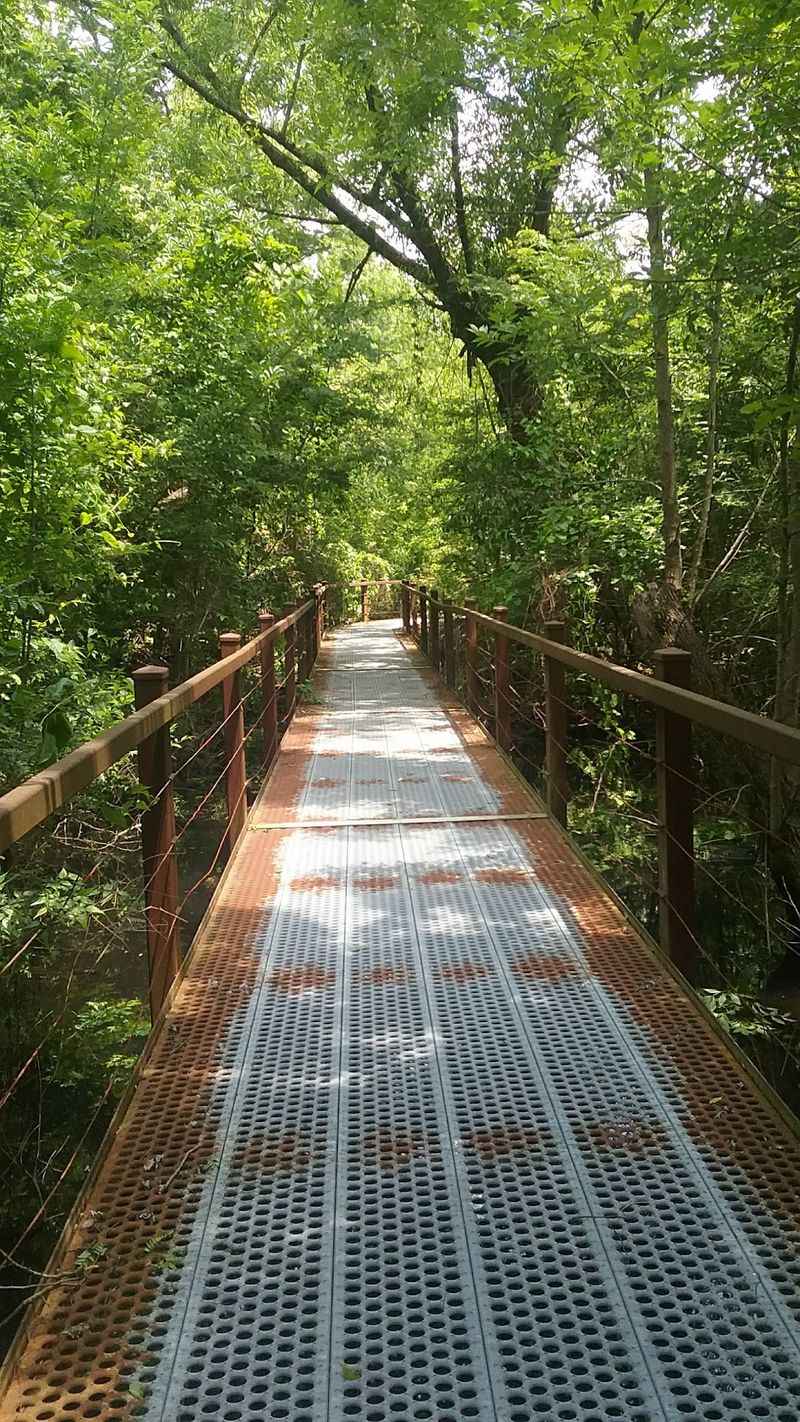
Missouri does not typically bring cypress swamps to mind, but Big Oak Tree State Park in southeastern Missouri holds the state park system’s only cypress swamp, and the 1.25-mile Boardwalk Trail runs right through it. The accessible, wheelchair-friendly route passes beneath a tree canopy that averages 120 feet in height, with some individual trees reaching past 140 feet.
Several state champion tree species grow within the park, a fact that puts the scale of the forest into sharp perspective. The protected bottomland ecosystem supports 12 rare plant and animal species, 25 mammalian species, 31 reptile species, 7 amphibian species, and over 150 recorded bird species, including bald eagles, prothonotary warblers, and fish crows.
The park’s existence traces back to a conservation campaign in the 1930s, when local citizens pushed to save the ancient trees after most of the region’s vast bottomland forest had already been cleared for agriculture. That effort turned out to be one of Missouri’s better decisions.
6. Nature Center Trail at Prairie State Park, Mindenmines, Missouri
A trail that measures just 0.4 miles might seem like a warm-up, but the Nature Center Trail at Prairie State Park drops visitors into one of Missouri’s rarest landscapes the moment they leave the parking area. The park protects the state’s largest remaining tallgrass prairie, an ecosystem that once covered more than a third of Missouri before agriculture reshaped the land.
Open horizons and rotating wildflower displays replace the wooded hills typical of much of the state, giving the trail a completely different visual character from most Missouri nature walks. The park is also home to a reintroduced bison herd that grazes freely across the nearly 4,000-acre property, creating grazed patches, trails, and wallows that shape the landscape in the same way bison have for centuries.
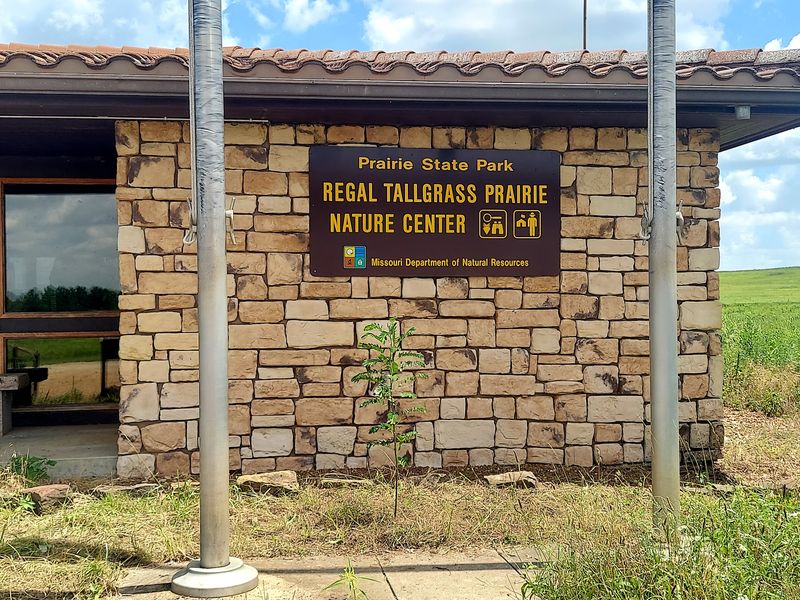
The Regal Tallgrass Prairie Nature Center near the trailhead features a bison exhibit and a diorama showing the prairie’s seasonal changes. More than 25 rare and endangered plant and animal species have been recorded here, some found nowhere else in Missouri.
7. Montauk Lake Trail at Montauk State Park, Salem, Missouri
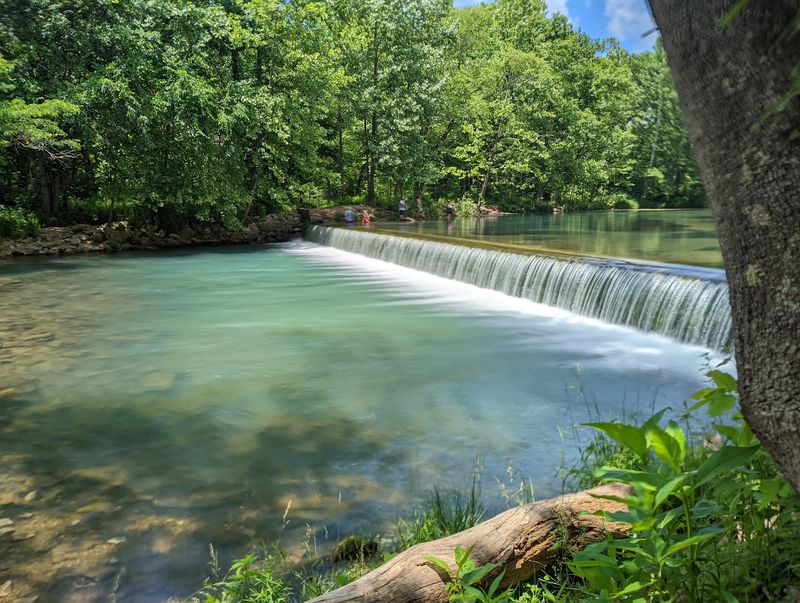
Montauk State Park is famous for its trout fishing, but the 0.8-mile Montauk Lake Trail gives visitors a reason to put down the fishing rod for about 25 minutes and simply walk. The easy loop is rated straightforward by official park information, making it one of the more relaxed options on this list without sacrificing the classic Ozark scenery the park is known for.
The park sits at the spring-fed headwaters of the Current River, which keeps the water unusually clear and cool year-round. An on-site trout hatchery, operating since 1932, raises and stocks approximately 200,000 rainbow and brown trout into the waterway annually, and visitors can take tours to watch the process.
A historic gristmill built in 1896 also stands within the park, adding a tangible piece of regional history to what is otherwise a nature-focused destination. The Montauk Lake Trail works perfectly as a complement to a fishing day or as a standalone short outing in the Ozarks.
8. 1000th Mile Trail at Harry S Truman State Park, Warsaw, Missouri
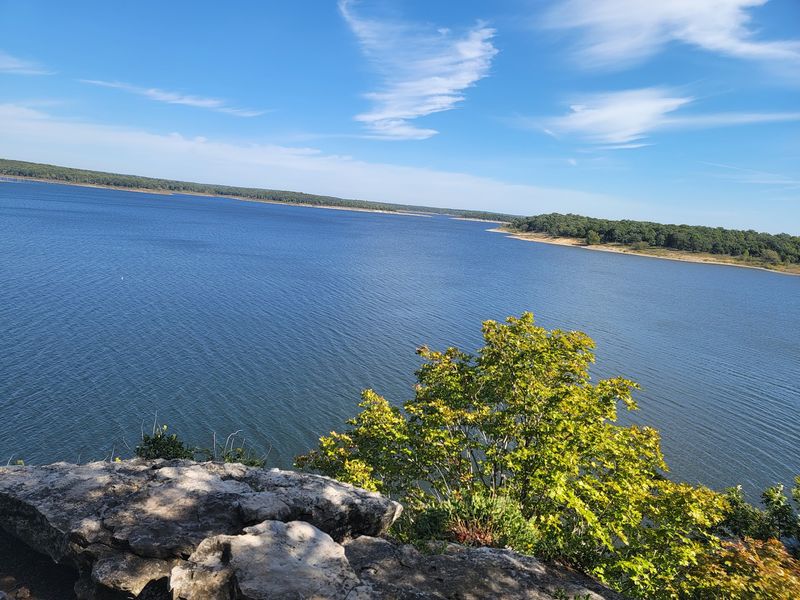
There is a specific kind of satisfaction in walking a trail that carries a milestone title, and the 1000th Mile Trail at Harry S Truman State Park earns its name honestly. This one-mile loop marked the 1,000th mile of trail installed within Missouri’s entire state park system, a distinction that makes it quietly significant without being flashy about it.
The moderately challenging route moves through three distinct environments in a single mile. Hikers cross an open glade, climb a bluff through shaded woodland, and then loop back to the trailhead, covering more ecological variety than the short distance might suggest.
The bluff section delivers the trail’s most memorable moment: a broad, sweeping view toward Truman Lake and the imposing Truman Dam below. The combination of glade, forest, and lakeside overlook makes the payoff feel disproportionately large for a one-mile hike.
Anyone who enjoys a short walk with a genuinely rewarding finish will find this trail worth the detour to Warsaw.
9. Jasper Lake Trail at Wakonda State Park, La Grange, Missouri
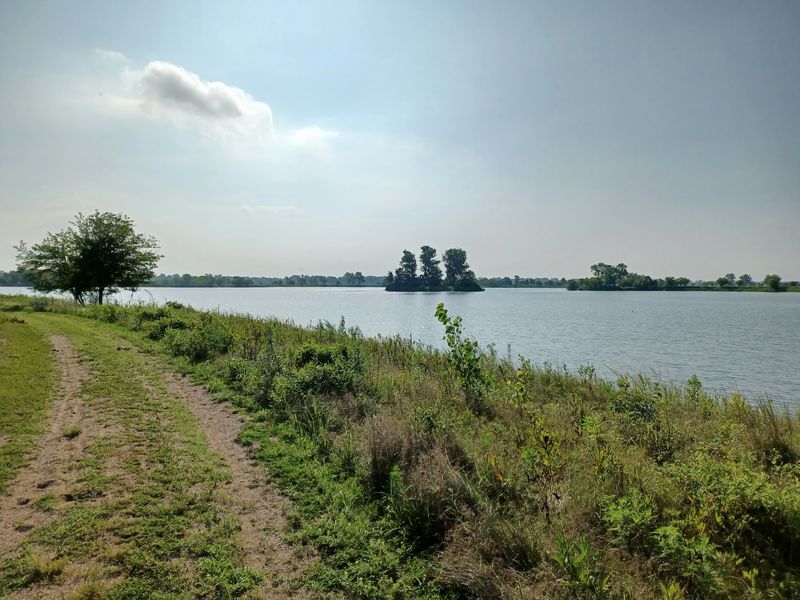
At 1.9 miles, the Jasper Lake Trail at Wakonda State Park comes about as close to the two-mile limit as a trail can without crossing it, which means hikers get nearly the maximum amount of scenery this list allows. The natural-surface loop circles the Jasper Lake area, one of six lakes within the park, and is rated moderate rather than easy.
Birdwatchers tend to find this trail particularly rewarding. Canada geese, snow geese, mallards, great blue herons, and bald eagles all use the surrounding habitat, with thousands of migratory waterfowl passing through the park each year during migration season.
One of the more unusual features of the park is a rare sand prairie, formed from sand deposited during early mining activity in the area. This distinctive habitat supports sand-loving plants like sandgrass and prairie sunflower that would look out of place almost anywhere else in northeastern Missouri.
The combination of lake views, birds, and rare flora makes this trail a genuinely well-rounded short outing.
10. Spring and Devil’s Icebox Trails at Rock Bridge Memorial State Park, Columbia, Missouri
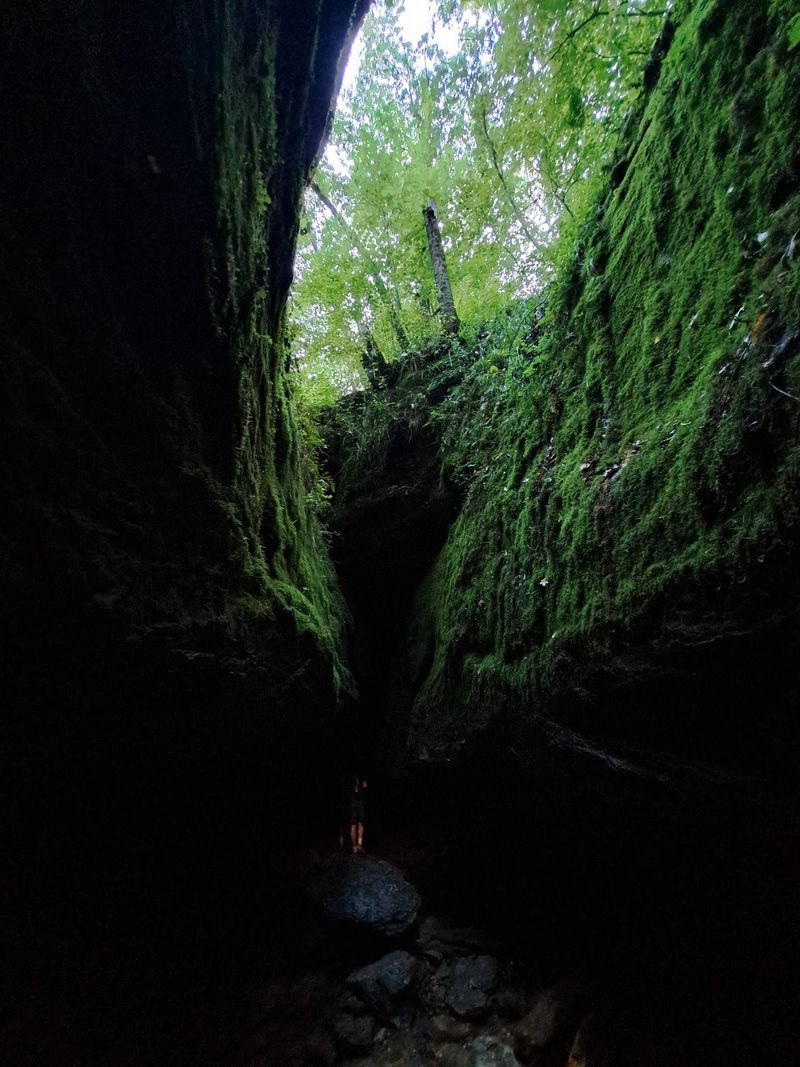
A natural arch standing 63 feet tall, formed by a collapsed cave roof, is not something most people expect to find just outside a mid-sized Missouri city. The roughly 1.75-mile combined route using portions of the Sinkhole and Devil’s Icebox trails at Rock Bridge Memorial State Park leads directly to that arch, along with sinkholes, boardwalk steps, and the entrance area of the Devil’s Icebox double sinkhole.
The Devil’s Icebox releases notably cool air from an underground stream below, a characteristic that inspired its name long before the park was officially established. The cave upstream is closed to protect an endangered colony of gray bats and a rare pink planarian flatworm, while Connor’s Cave downstream remains open for self-guided exploration.
The park’s history adds an unexpected layer of context. In the 1800s, the underground stream powered a gristmill, and the site hosted the first paper mill west of the Mississippi River in 1834.
Moderate terrain and muddy conditions after rain are worth planning around.
11. Forest Bridge Trail at Bennett Spring State Park, Lebanon, Missouri
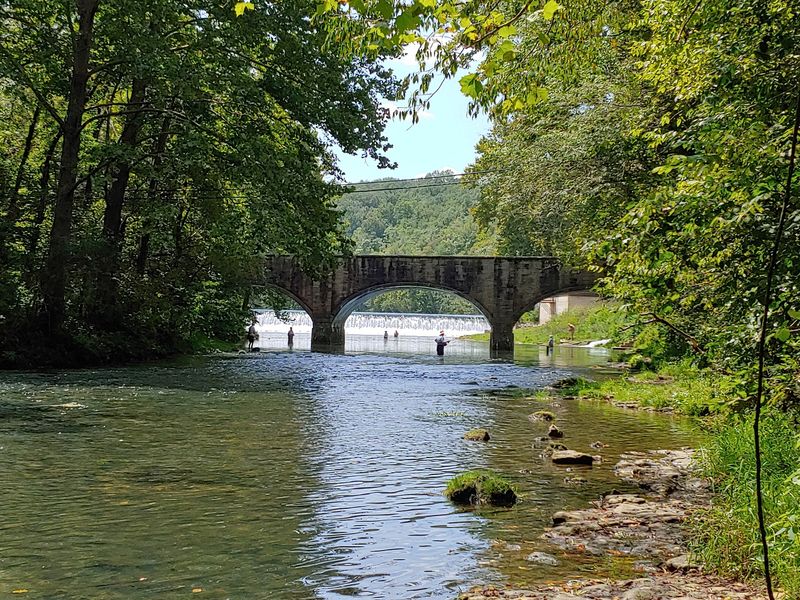
A CCC-built stone bridge with three sideways letter C’s embedded in its design is the kind of detail that rewards visitors who pay close attention on the Forest Bridge Trail at Bennett Spring State Park. The three-quarter-mile route is compact even by the standards of this list, but the setting it passes through is anything but ordinary.
Bennett Spring’s central feature is a remarkable spring that discharges an average of 100 million gallons of water daily into the Niangua River. That constant, high-volume flow keeps the water cool year-round and makes the park a top destination for trout anglers, supported by a CCC-built dam and fish hatchery that have been operational for decades.
Hardwood forest, exposed bluffs, and varied Ozark vegetation surround the trail on all sides. In spring, redbuds, dogwoods, serviceberries, and wildflowers add seasonal color throughout the park, making even a brief walk feel like it covers considerably more than three-quarters of a mile.
12. Nature Trail at Trail of Tears State Park, Jackson, Missouri
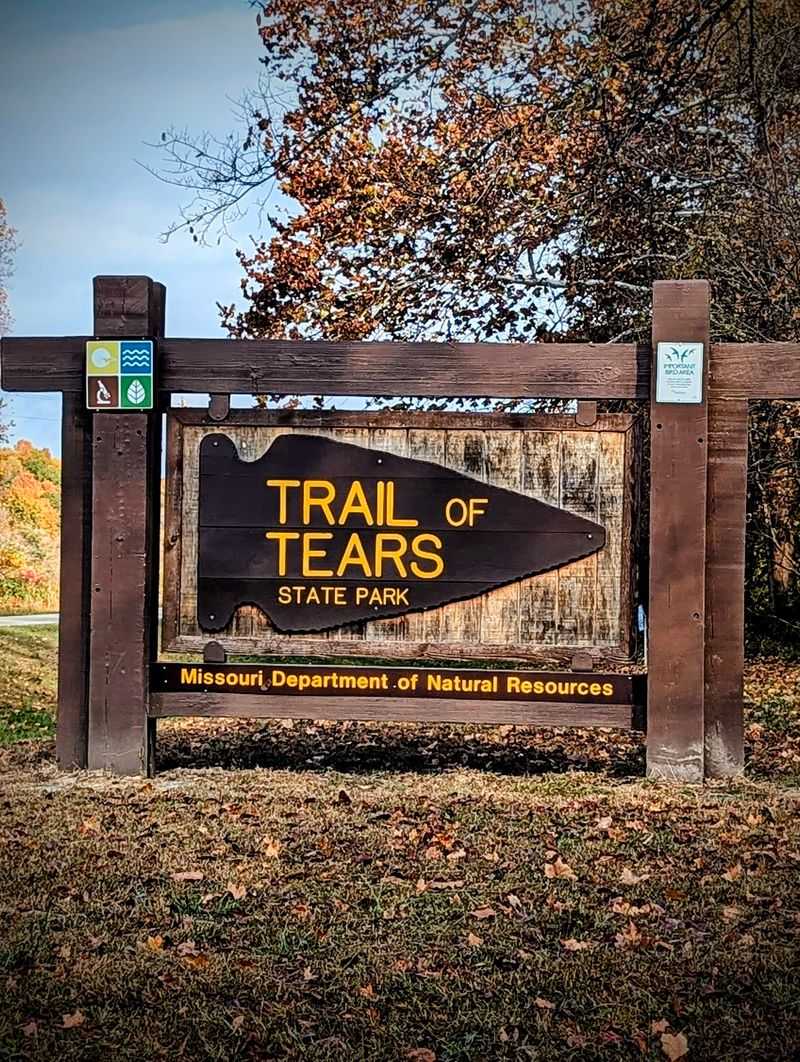
Half a mile of quiet woodland trail sits within one of Missouri’s most historically significant parks, and the contrast between the peaceful forest and the serious history interpreted nearby gives the Nature Trail at Trail of Tears State Park a weight that longer trails rarely carry. The route begins near the visitor center and climbs toward a ridge through trees that include pawpaw and tulip poplar, with spring wildflowers lining the forest floor during the right season.
Trail of Tears State Park is a certified site on the Trail of Tears National Historic Trail. Nine of the thirteen Cherokee detachments crossed the Mississippi River at this location during their forced relocation to Oklahoma in the brutal winter of 1838 to 1839.
The visitor center holds exhibits detailing those events, and the Bushyhead Memorial within the park stands as a dedicated tribute to those who did not survive the journey. The short Nature Trail provides a calm, accessible entry point into a park that carries a great deal of American history within its boundaries.
Share this story