Pennsylvania gets a lot of attention for its big-name destinations, but the state holds a much stranger and more surprising collection of places than most people realize. There is a boulder field where the rocks literally ring like bells when you tap them with a hammer.
There is a 19,000-square-foot mansion built without blueprints that hides secret passageways and an entire collection of self-playing musical instruments. And there is a preserved 19th-century mining village sitting quietly in the mountains, looking very much like the people just stepped out for a moment.
The 12 attractions below are all currently operating, open to the public, and genuinely worth your time. Some are well-documented but rarely crowded.
Others are the kind of places where you find yourself wondering how you never heard of them before. Either way, each one offers something you are unlikely to find anywhere else, and that is exactly why they deserve a spot on your Pennsylvania road trip list.
1. Ringing Rocks County Park, Upper Black Eddy, Pennsylvania
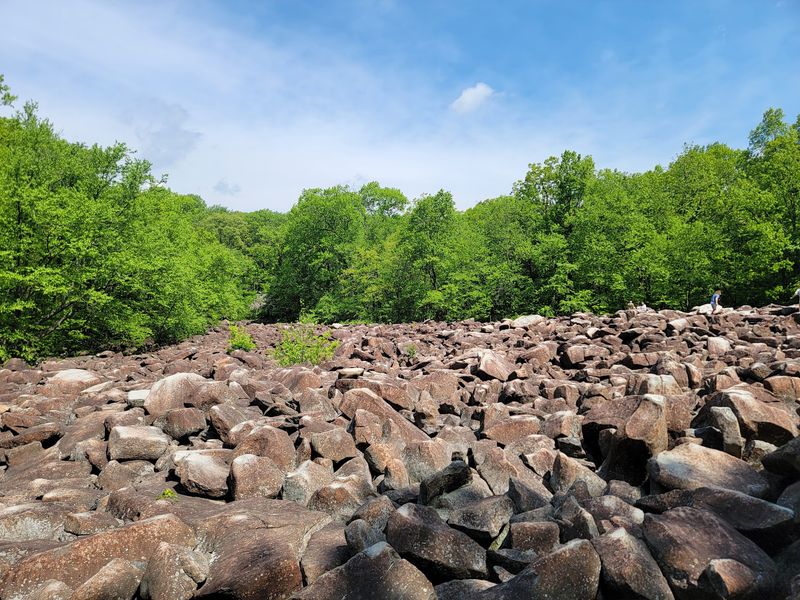
Rocks that ring like bells sounds like something out of a fairy tale, but Ringing Rocks County Park in Bucks County makes it completely real. The boulder field here is filled with diabase, a dense volcanic rock that took over 175 million years to form, and many of them produce clear, bell-like tones when struck.
Bring a hammer, and the field becomes a kind of natural instrument spread across several acres. Different rocks produce noticeably different pitches, and visitors tend to wander around testing them one by one.
The park covers 128 acres and is open from sunrise to sunset year-round. Beyond the boulder field, a short walk leads to High Falls, Bucks County’s largest waterfall.
Hiking trails and picnic areas round out the visit nicely. The boulder field itself is uneven and can be slippery, so sturdy shoes are a must before you start your impromptu percussion concert.
2. Bayernhof Museum, Pittsburgh, Pennsylvania
Built without a single blueprint between 1976 and 1982, the Bayernhof Museum is the personal creation of entrepreneur Charles B. Brown III, and it shows in the best possible way.
The 19,000-square-foot Bavarian-style mansion was constructed entirely from Brown’s imagination, resulting in a home that includes 11 fireplaces, hidden doors, secret passageways, indoor caves with animatronic bats, and a heated indoor swimming pool with a 10-foot waterfall.
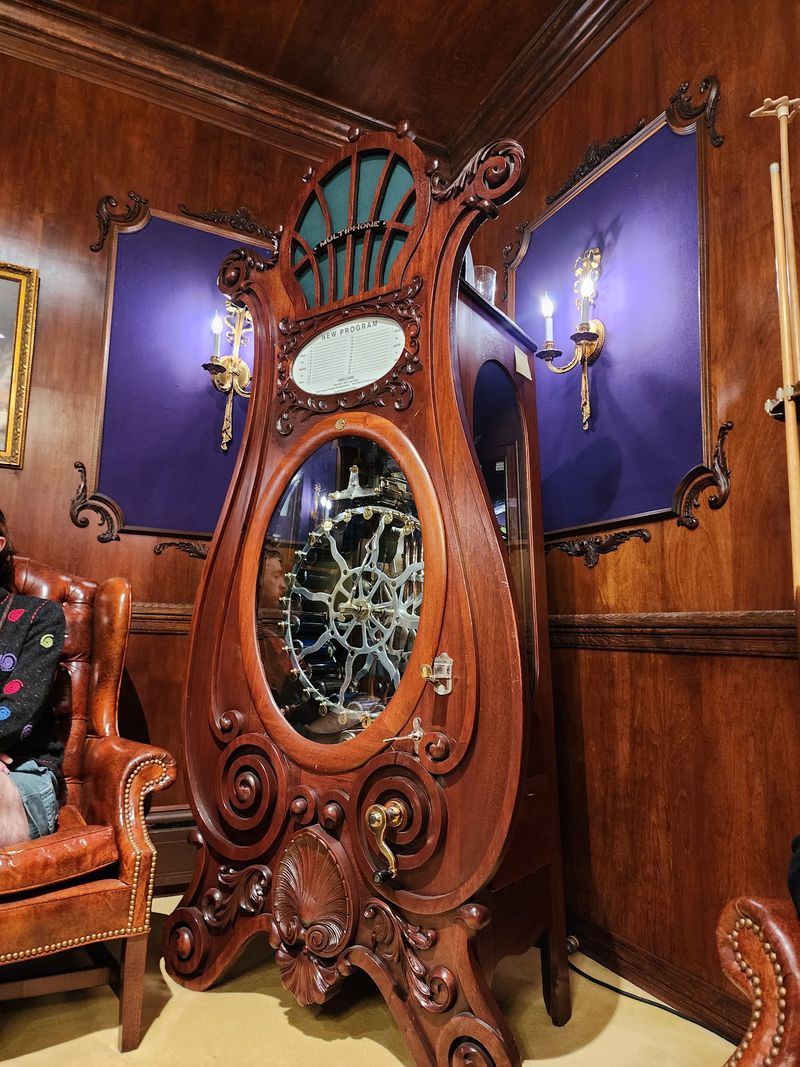
The main attraction is Brown’s extraordinary collection of antique automatic music machines, considered among the finest and rarest in the world. Many pieces are over 100 years old, including a Wurlitzer carousel organ and an Encore Automatic Banjo.
Visits are by prearranged guided tour only, typically offered at 10 am and 2 pm daily, lasting around 2.5 hours. Admission is $10 per person, cash only, and all guests must be at least 12 years of age.
Nearly every room on the tour includes a working music machine, making the experience genuinely one-of-a-kind.
3. Eckley Miners’ Village, Weatherly, Pennsylvania
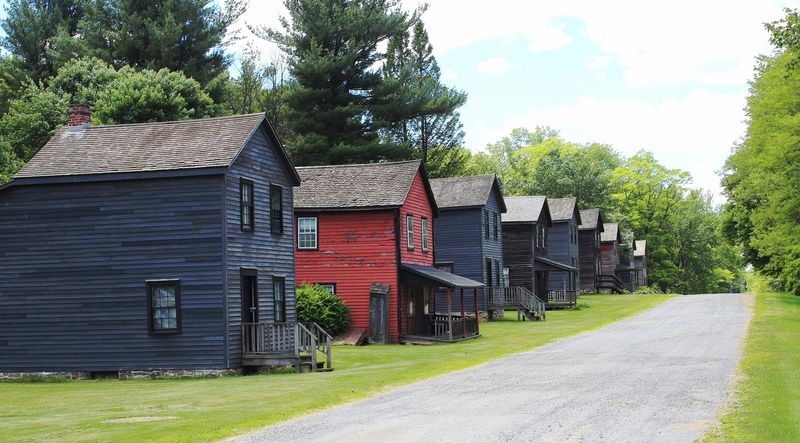
Founded in 1854, Eckley Miners’ Village is one of those places that makes history feel less like a textbook and more like a place you can actually walk through. The anthracite coal patch town in northeastern Pennsylvania preserves historic homes, churches, a company store, a doctor’s office, and other original structures that reflect life in the Coal Region from the 1850s through the 1970s.
The village gained additional recognition when it served as a filming location for the 1970 movie “The Molly Maguires,” which prompted the restoration of several buildings to their 1870s appearance. That production history adds an interesting layer to an already compelling site.
Visitors can join guided tours or explore on their own, walking the long main street and taking in the physical layout of a community built entirely around coal. Seeing the actual scale of how tightly these families lived and worked together is far more affecting than any museum display case could manage.
4. Chanticleer, a pleasure garden, Wayne, Pennsylvania
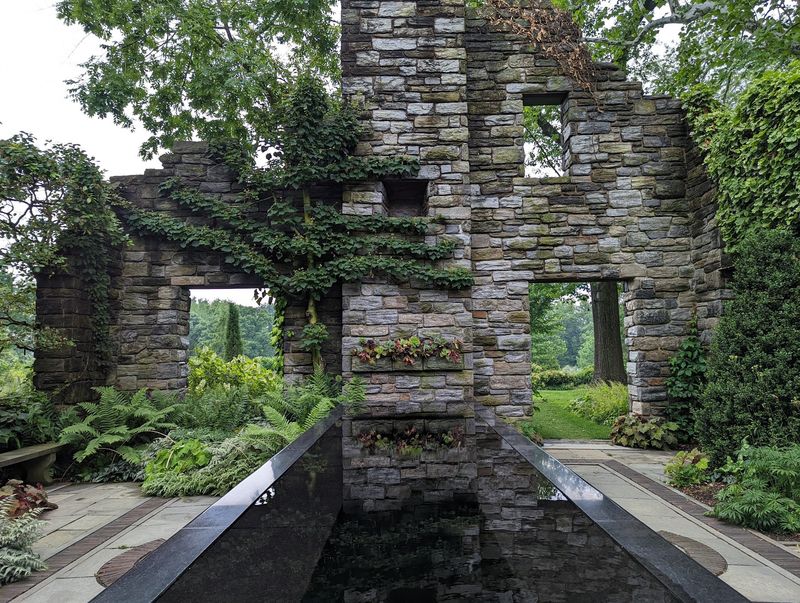
Chanticleer started as the private estate of the Rosengarten family and opened to the public in 1993, but it has never felt like a typical public garden. The 35-acre property in Wayne is designed by a team of horticulturists who treat the space more like an ongoing art project than a conventional landscape.
The property is divided into distinct areas, each with its own personality. The Ruin Garden occupies the footprint of a former family home.
The Pond Garden, Gravel Garden, orchards, and wildflower meadows each offer something different, and the plantings change noticeably season by season.
Chanticleer also leads in sustainable practices, using solar power, rainwater recycling, composting, and organic turf care throughout the property. The garden is open from late March into early November, Wednesday through Sunday.
Parking reservations are required on Fridays, Saturdays, and Sundays until 3 pm. Just 30 minutes outside Philadelphia, it consistently surprises visitors who expect something far more ordinary.
5. Simeone Foundation Automotive Museum, Philadelphia, Pennsylvania
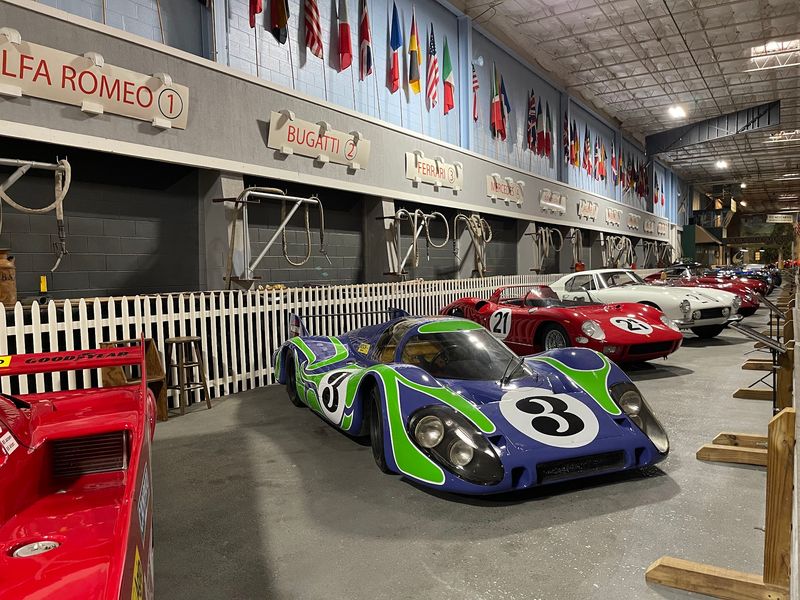
Neurosurgeon Dr. Frederick Simeone spent more than 50 years building one of the most respected collections of racing sports cars on the planet, and in 2019, The Classic Car Trust ranked it the number one classic car collection in the world. The Simeone Foundation Automotive Museum holds over 70 historically significant automobiles, with marques including Ferrari, Bugatti, Mercedes, Jaguar, Bentley, Porsche, Alfa Romeo, and Aston Martin.
The museum’s organizing theme, “The Spirit of Competition,” traces how racing directly shaped automotive design and engineering across several decades. The displays are informative without being overwhelming, making the collection accessible to visitors who are not car enthusiasts.
Regular “Demo Days” take the cars out for actual exercise in a three-acre backlot, which is something most museums would never attempt with vehicles of this rarity and value. The museum also holds one of the world’s most comprehensive automotive reference libraries.
For a Philadelphia museum that somehow stays off most tourist itineraries, this one is a serious oversight.
6. Columbus Chapel & Boal Mansion Museum, Boalsburg, Pennsylvania
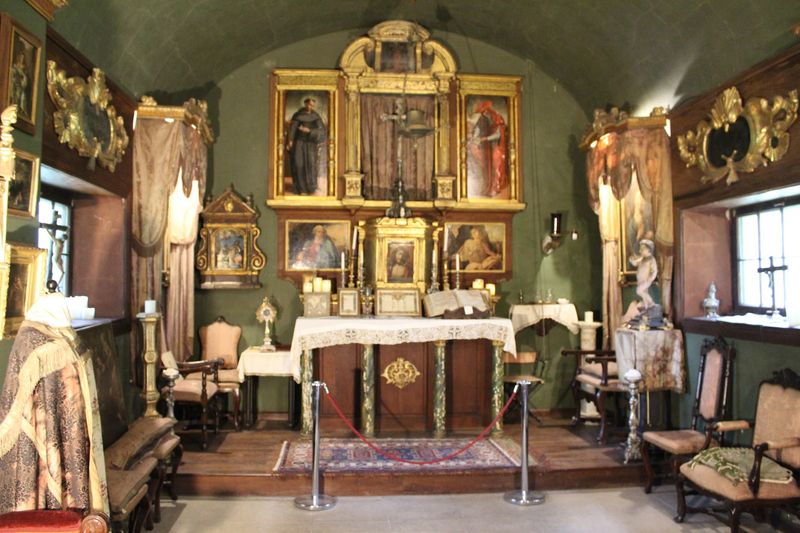
Most museums in Central Pennsylvania do not contain a 16th-century Spanish chapel transported piece by piece across the Atlantic Ocean, but the Boal Mansion is not most museums. In 1909, Mathilde de Lagarde Boal inherited the Columbus family chapel from her aunt, who had married a descendant of Christopher Columbus, and had it reconstructed on the family estate in Boalsburg.
The chapel holds the most significant collection of Christopher Columbus artifacts in North America, including 15th- to 18th-century European paintings, original clergy vestments, and two pieces described as fragments of the True Cross, given to the Columbus family by the Bishop of Leon in 1817.
The mansion itself spans eight to nine generations of Boal family history, with furnishings, portraits, weapons, a piano that spent over 90 years in the White House, and the first telephone used in Boalsburg. A climate-controlled vault protects approximately 150,000 pages of Columbus family manuscripts dating from 1450 to 1905.
The layers here just keep going.
7. Drake Well Museum & Park, Titusville, Pennsylvania
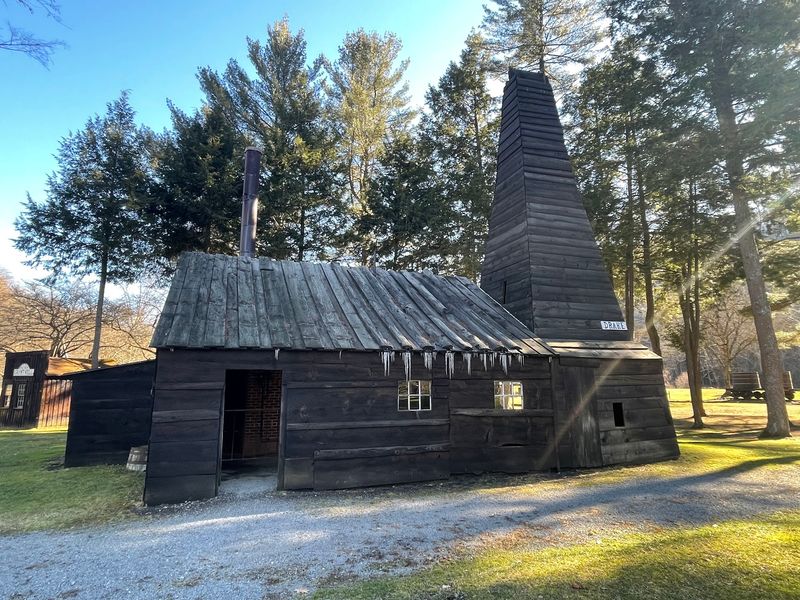
On August 27, 1859, Edwin Drake successfully drilled what became recognized as the world’s first commercial oil well near Titusville, Pennsylvania, and in doing so, helped launch an industry that reshaped modern civilization. The Drake Well Museum & Park sits directly on that historic site along scenic Oil Creek.
Visitors can see a fully working replica of Drake’s original engine house, which demonstrates the drilling techniques of the 1850s. Indoor exhibits cover the broader history of the oil industry, the people behind it, and its lasting effects on everyday life.
Operating oil-field equipment is displayed across the grounds, giving the site a hands-on, open-air quality that keeps it from feeling like a traditional indoor museum.
Trails for hiking and biking wind through the surrounding property, and picnic areas make it easy to spend a full day. The combination of major historical significance with an accessible outdoor setting is rare, and it makes Drake Well a genuinely underappreciated stop in western Pennsylvania.
8. National Museum of Industrial History, Bethlehem, Pennsylvania
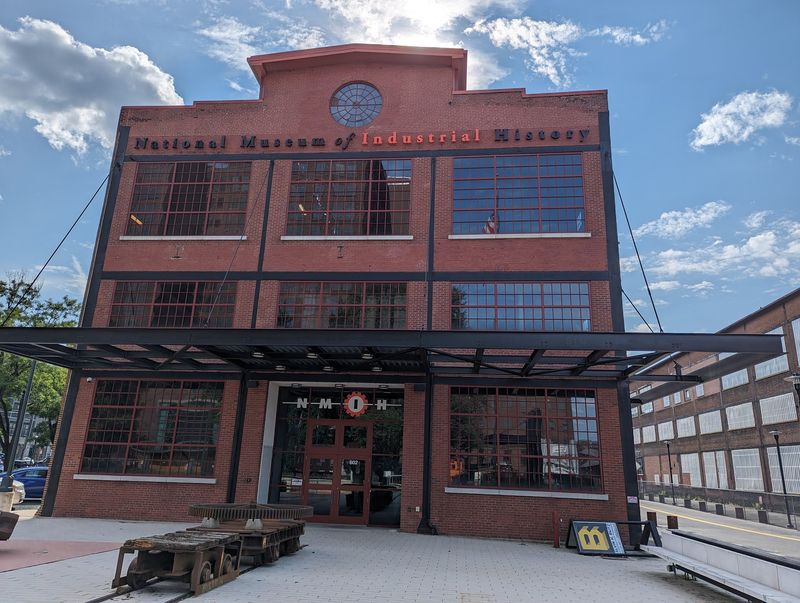
The National Museum of Industrial History opened in August 2016 inside the former Electrical Repair Shop of the Bethlehem Steel plant, and the location alone tells a significant part of the story. Bethlehem Steel was once the second-largest steel manufacturer in the United States, and the physical scale of what remains on the grounds is hard to ignore.
As a Smithsonian Affiliate, the museum displays more than 200 artifacts, some on loan directly from the Smithsonian’s National Museum of American History. Coverage spans iron and steel production, the textile industry, and exhibits connected to the 1876 Centennial Exposition.
The centerpiece of Machinery Hall is a 115-ton Corliss steam engine, recognized as the most powerful operating waterworks steam engine in North America, run quarterly for visitors. Outside, the towering blast furnaces of the former steel plant provide a backdrop that no indoor exhibit could replicate.
The museum’s goal of connecting industrial history to present-day innovation gives the whole experience a forward-looking perspective that feels genuinely relevant.
9. Old Economy Village Visitor Center, Ambridge, Pennsylvania
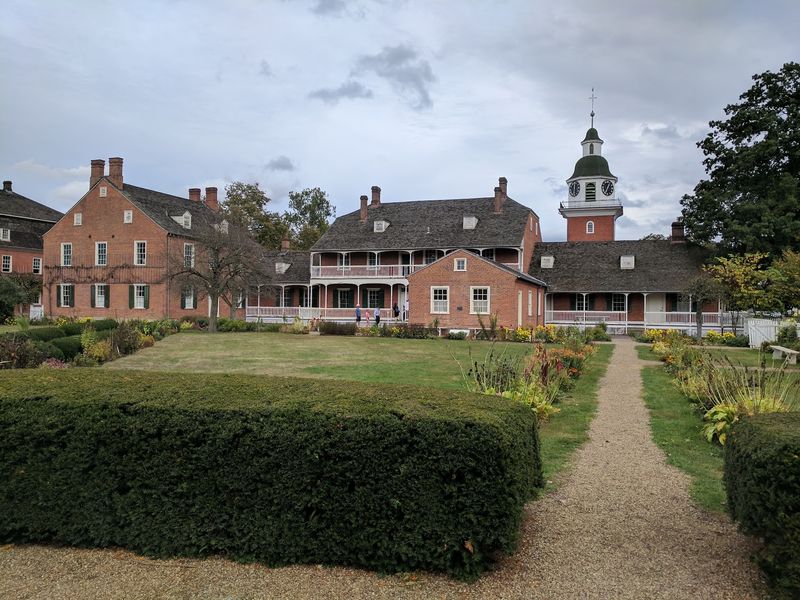
In 1824, a group of German Pietists known as the Harmony Society established their final communal settlement in what is now Ambridge, Pennsylvania. Old Economy Village preserves that settlement today as a National Historic Landmark, and it is one of the most intact examples of 19th-century communal living anywhere in the country.
Seventeen historic buildings are open to visitors, including the Great House, the Feast Hall, and various workshops. Thousands of original artifacts, furnishings, and archival materials document how the Harmonists organized their industries, practiced their faith, and structured everyday routines across more than 80 years of communal life.
Cobblestone paths connect the buildings, and the preserved interiors give the site an atmosphere that feels genuinely removed from the modern town surrounding it. This is the kind of place where the story is almost entirely unfamiliar to most visitors, which makes the experience of discovering it that much more interesting.
Pennsylvania history textbooks rarely give the Harmony Society the attention this site clearly deserves.
10. Pennsylvania Trolley Museum, Washington, Pennsylvania
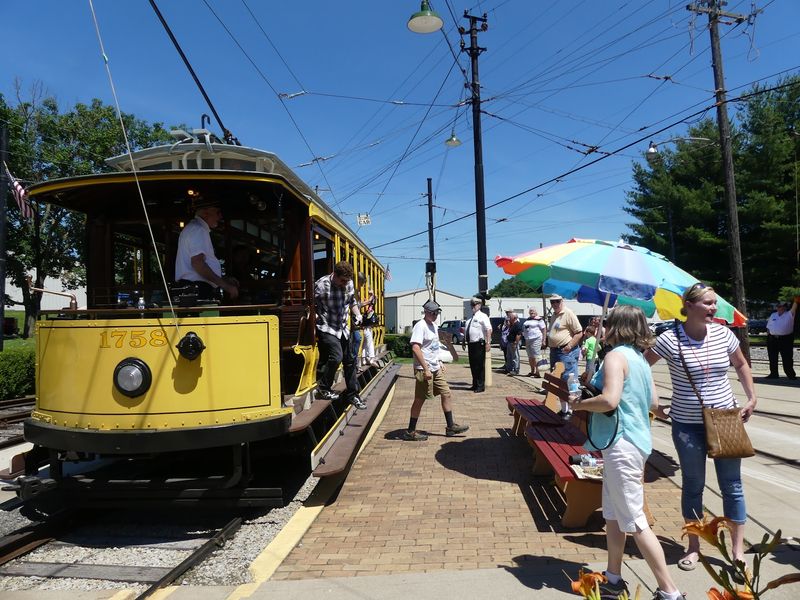
Most transportation museums ask you to look at the vehicles. The Pennsylvania Trolley Museum actually lets you ride one.
Admission includes a four-mile round trip aboard a historic trolley, complete with the clang of the bell and the weight of steel wheels on actual tracks, which is a very different experience from reading an exhibit panel.
The museum traces its roots to 1949 and became the first trolley museum in Pennsylvania in 1954. Today it cares for a collection of 54 streetcars, sourced from Pennsylvania, Ohio, New Orleans, and even Brazil, many of which remain fully operational.
A new Welcome and Education Center opened in November 2023, adding interactive exhibits that explore the broader history of trolley transportation in America. Display buildings house additional streetcars, and the overhead wires and restored track infrastructure give the whole site an authenticity that is increasingly hard to find.
For families and history enthusiasts alike, this one punches well above its name recognition.
11. American Treasure Tour Museum, Oaks, Pennsylvania
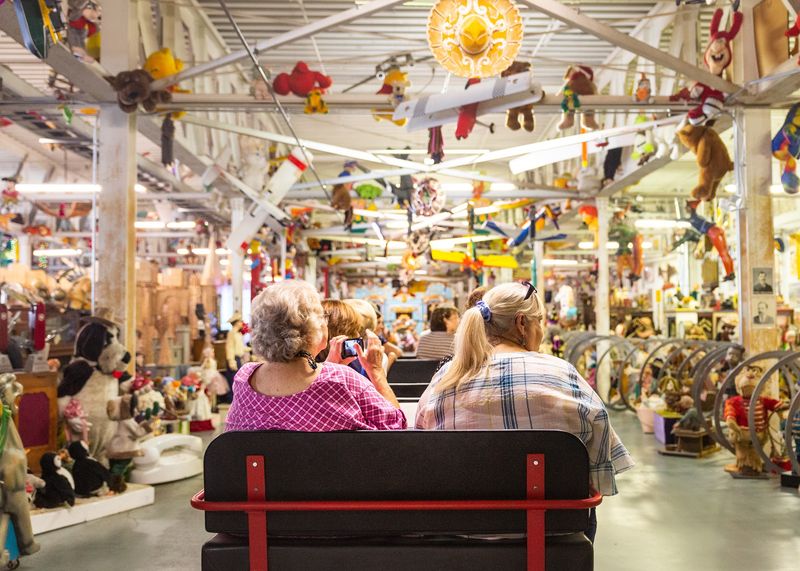
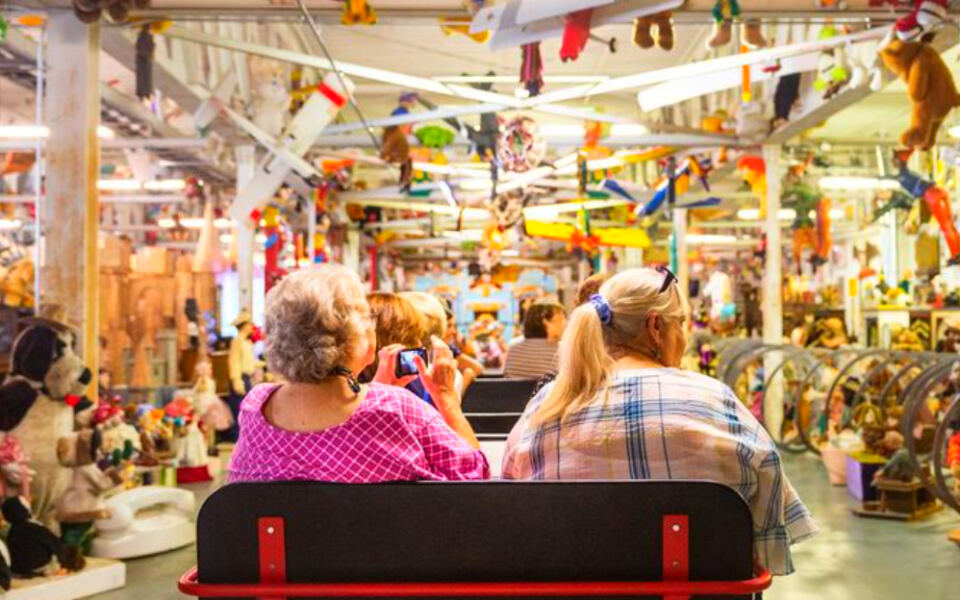
Somewhere in Oaks, Pennsylvania, inside a former B.F. Goodrich tire factory, an anonymous collector known only as “The Collector” spent 60 years assembling one of the most bewildering private collections in the United States.
The American Treasure Tour Museum fills roughly 100,000 square feet with the results, and it takes a while for your eyes to adjust to the sheer volume of it.
The music machine collection alone is extraordinary, featuring nickelodeons, calliopes, band organs, and three of only 11 surviving Wurlitzer model 165 band organs in existence. Beyond the music room, the collection includes 1,400 Raggedy Ann and Andy dolls, 378 telephones, vintage cars, circus art, movie memorabilia, neon signs, a 20-foot Gumby, a castle built from 400,000 Popsicle sticks, and a life-sized replica of the Ark of the Covenant.
Visitors take a guided tram tour through the “Toy Box” section and a self-guided walk through the music and classic car exhibits. Calling it eclectic barely scratches the surface of what is actually inside.
12. Allegheny Portage Railroad National Historic Site, Gallitzin, Pennsylvania
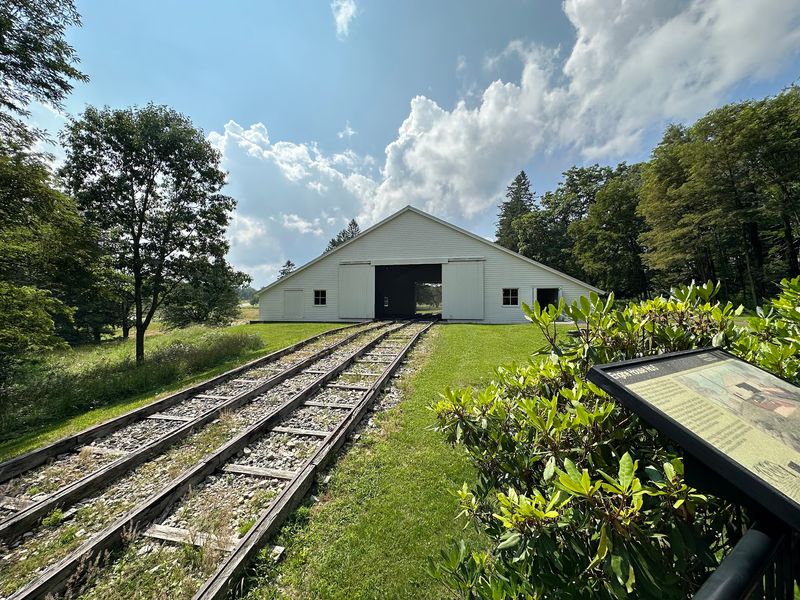
Before continuous rail lines existed across Pennsylvania, engineers in 1834 came up with a creative solution to the Allegheny Mountains: a system of inclined planes powered by stationary steam engines that literally lifted rail cars and canal boats up and over the mountain barrier. The Allegheny Portage Railroad was the first railroad to cross the Alleghenies, and it played a direct role in connecting the eastern and western halves of the state.
Today, the National Historic Site preserves the Lemon House, a historic tavern that once served travelers along the route, and the Engine House No. 6 exhibit, which explains how the inclined plane system actually worked. Walking trails follow portions of the original railroad grade, making the engineering challenge feel concrete and real.
A short distance from the main visitor center, the Staple Bend Tunnel is recognized by the National Park Service as the first railroad tunnel built in America. For a site of that historical significance, the crowds here are surprisingly manageable, which makes the visit all the more enjoyable.
Share this story