Pennsylvania is home to some of the most jaw-dropping church buildings in the entire United States. From Philadelphia’s colonial-era hidden chapels to Pittsburgh’s soaring Gothic spires, the state has a remarkable collection of religious architecture that spans centuries and styles. These buildings are not just places of worship. They are living history books built in stone, glass, and marble, each one telling a story about the communities that created them.
Some took decades to complete. Others survived riots, financial crashes, and world wars. A few were designed by the same architects who shaped iconic landmarks across the country. Whether you appreciate history, craftsmanship, or simply love a building that makes you stop and stare, this list has something for everyone.
Get ready to discover twelve Pennsylvania churches that prove architecture can be just as powerful as any work of art.
1. Cathedral Basilica of Saints Peter and Paul, Philadelphia, Pennsylvania
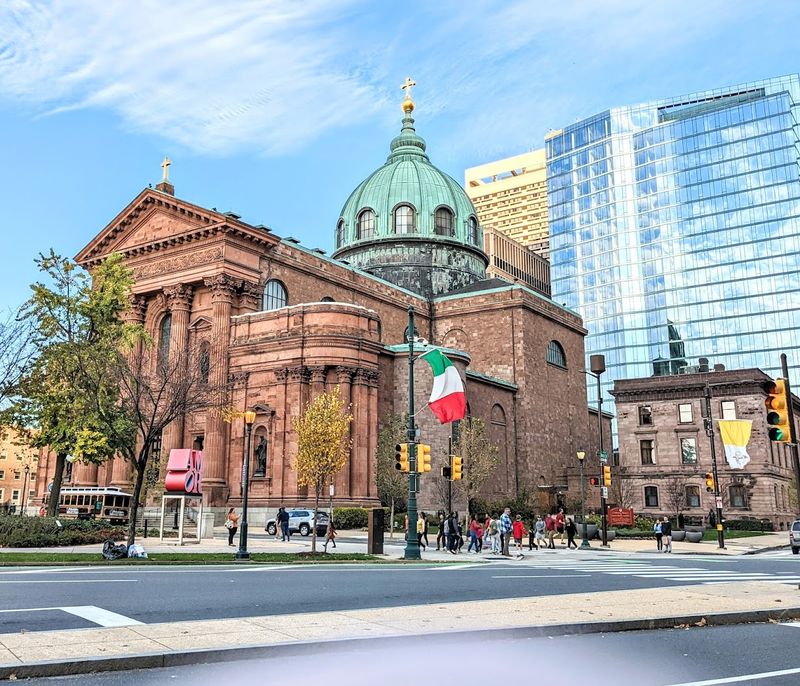
Philadelphia’s largest Catholic church almost looks like it belongs on the streets of Rome, and that was entirely intentional. Architect Napoleon LeBrun drew direct inspiration from the Basilica of Sant’Ambrogio et Carlo al Corso when designing this monumental structure between 1846 and 1864.
The exterior is the largest brownstone structure in Philadelphia, featuring a Palladian facade adorned with four bronze statues of Mary, Jesus, Peter, and Paul. Inside, the sanctuary holds up to 2,000 worshippers across a space decorated by Constantino Brumidi, the same artist responsible for paintings inside the U.S. Capitol.
The interior is richly decorated with extensive mosaics created by the Mosaic Studio of St. Peter’s Basilica in Rome. Eight side chapels, a Renaissance-style baldachin above the main altar, and a Crypt of the Bishops round out an interior that rewards every careful look.
2. Heinz Memorial Chapel, Pittsburgh, Pennsylvania
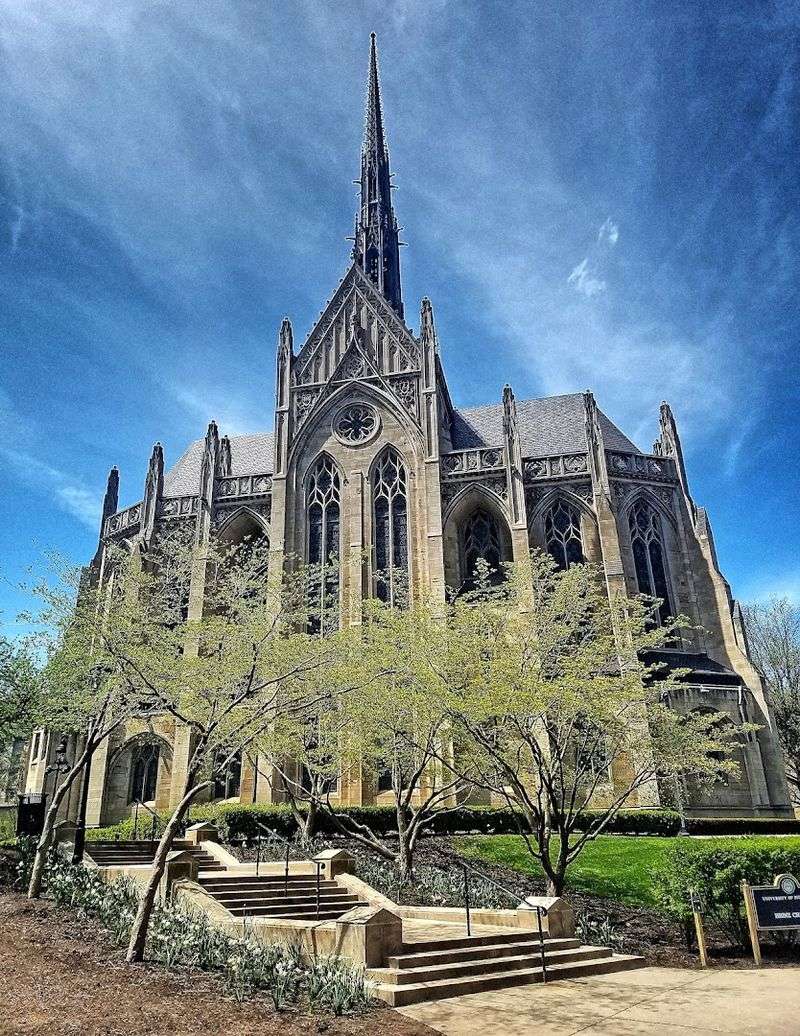
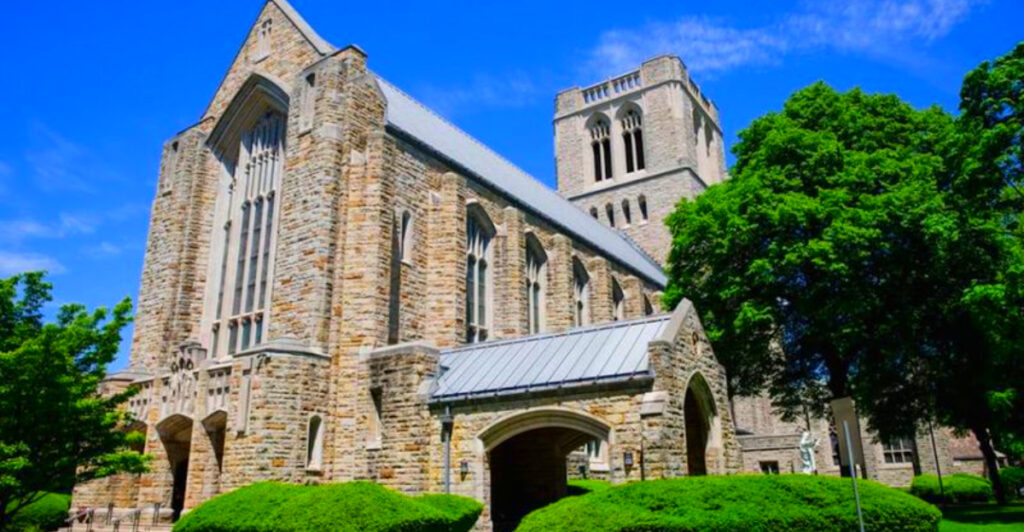
Few buildings on a college campus anywhere in America can match the sheer ambition of Heinz Memorial Chapel. Designed by Charles Klauder and modeled after the 13th-century Sainte-Chapelle in Paris, construction ran from 1933 to 1938, right through the Great Depression.
The chapel’s fleche spire rises 256 feet above ground, clad in lead-coated copper and decorated with grotesques, finials, and tracery that would look perfectly at home in medieval France. Inside, 23 stained glass windows designed by Charles Connick contain nearly 250,000 individual pieces of glass and feature 391 identifiable figures, including George Washington, Beethoven, and Clara Barton.
All wrought ironwork, including lanterns and the altar cross, was crafted by master ironworker Samuel Yellin of Philadelphia. The 800-pound entrance doors are solid oak, setting the tone before visitors even step inside.
3. National Shrine of St. John Neumann, Philadelphia, Pennsylvania
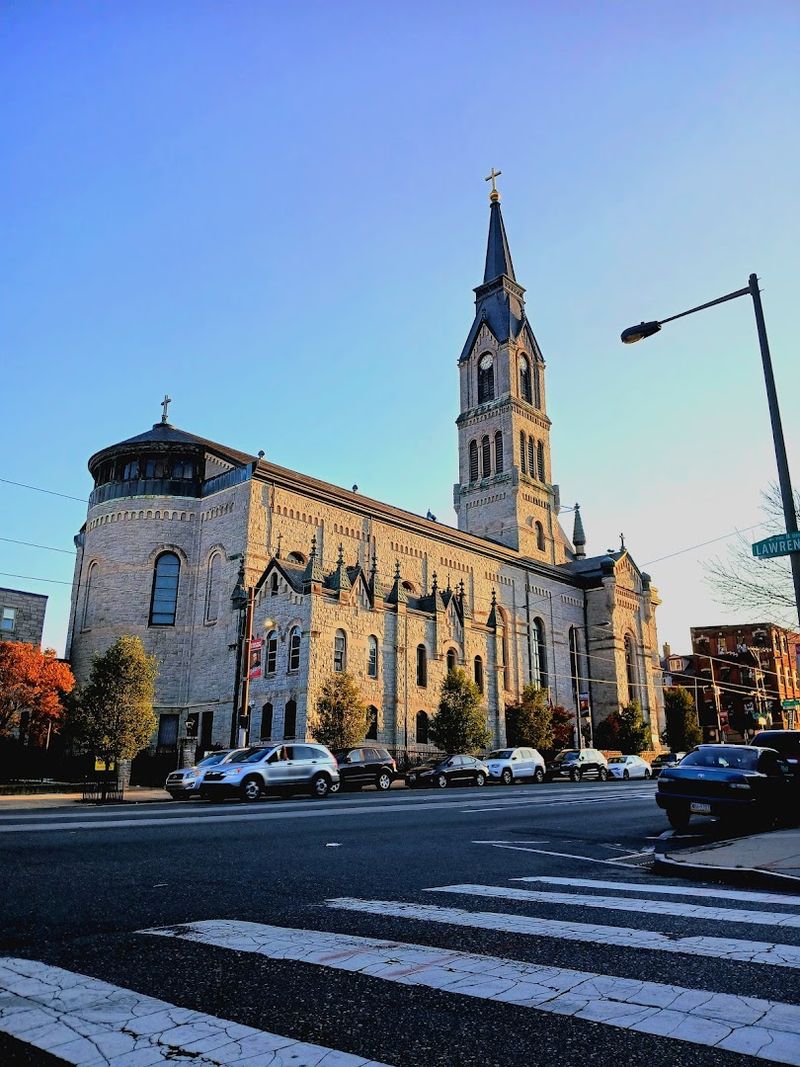
Not every architectural treasure announces itself loudly. The church housing the National Shrine of St. John Neumann presents a deliberately original design that its architect described as a Romanesque-Byzantine fusion, aiming for something distinctively American rather than a copy of any European model.
Construction on St. Peter the Apostle Church began in 1843, with the building completed by 1847 and later rebuilt in 1897. The exterior, crafted from Port Deposit granite, features heroic-sized figures of saints, finely sculpted tympana, and archways that frame the entrance with remarkable detail. A single spire climbs 230 feet above street level.
The lower church holds the central attraction: the glass reliquary beneath the main altar containing the body of St. John Neumann, the first American male saint to be canonized. A small museum adjoining the lower church traces his life and legacy. The combination of architectural ambition and historical significance makes this one of Philadelphia’s most layered destinations.
4. Old St. Joseph’s Church, Philadelphia, Pennsylvania
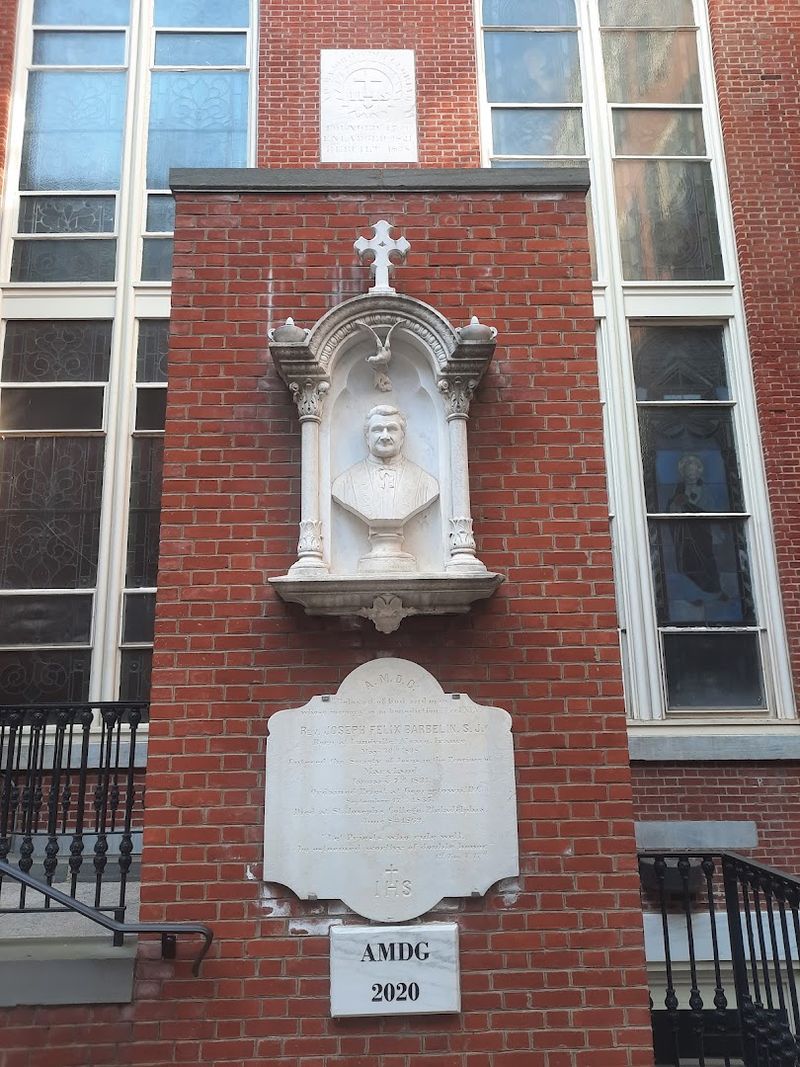
You could walk right past Old St. Joseph’s Church without realizing it is there. The entrance hides behind an iron gate off Willings Alley, opening into a quiet courtyard before revealing a church that dates back to 1733 and holds a genuinely remarkable place in American history.
It was one of the earliest places where Catholics could publicly worship in colonial Pennsylvania under William Penn’s unusually tolerant policies. The current building, dedicated in 1839, features doubled Ionic columns, a graceful curving balcony, and a ceiling mural titled “The Angelic Exaltation of St. Joseph into Heaven,” painted in 1886 by Filippo Costaggini.
Costaggini also contributed work to the U.S. Capitol Rotunda and the Cathedral Basilica nearby, which gives Old St. Joseph’s an unexpected connection to national landmarks. The altar ensemble, largely intact for over 168 years, remains one of the most distinctive interior features of any colonial-era church in the country.
5. St. Peter’s Cathedral, Scranton, Pennsylvania
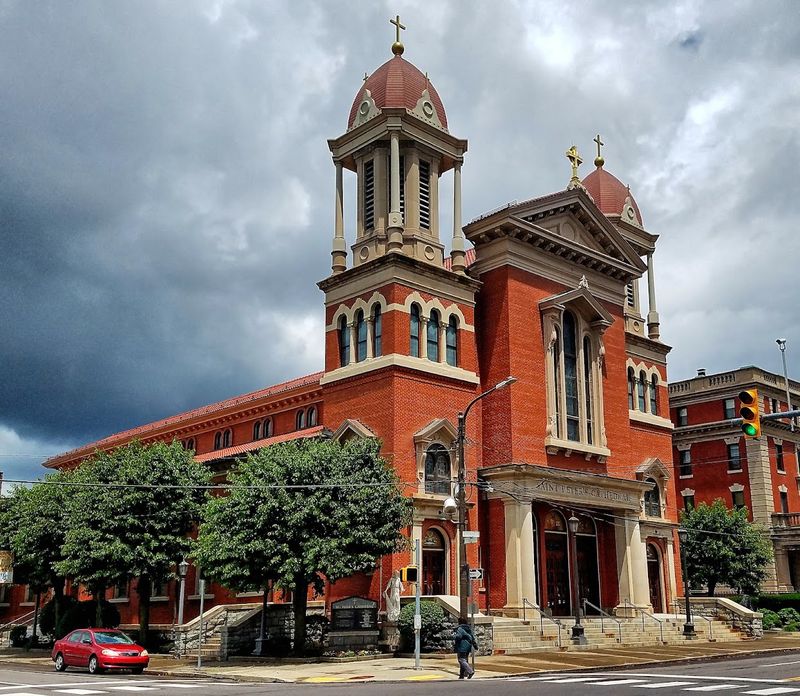
Twin towers rising above a red brick facade have made St. Peter’s Cathedral one of Scranton’s most recognizable skyline features for well over a century. The building began its life in 1867 as a Romanesque-style parish church before being remodeled and elevated to cathedral status in 1884.
The interior measures 150 feet by 68 feet and is supported by muted cast iron columns with Corinthian capitals, creating a spacious nave with a striking vaulted ceiling. Fifteen large side wall windows depict scenes from the lives of Christ and the Virgin Mary, dating from the 1883 alterations and representing some of the cathedral’s finest decorative elements.
The sanctuary is constructed entirely of Carrara marble, with a white marble altar table and a marble canopy covering the tabernacle. Eight large ceiling panels painted by Gonippo Raggi in 1934 represent the Seven Sacraments, adding another layer of artistry above the congregation. The complex was listed on the National Register of Historic Places in 1976.
6. Cathedral of the Blessed Sacrament, Altoona, Pennsylvania
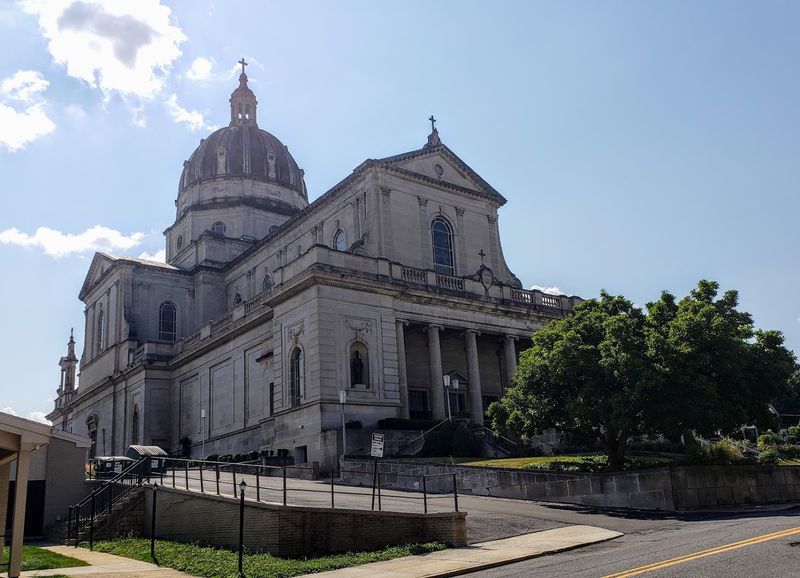
Forty-eight stone steps lead up to a cathedral that took over three decades to complete, interrupted by a stock market crash and a world war before its doors finally opened in 1960. Designed by George I. Lovatt Sr. in the Renaissance Revival style, the Cathedral of the Blessed Sacrament draws visual inspiration from St. Peter’s Basilica and the Florence Cathedral.
Its dome rises 198 feet and contains 24 windows of varying shapes, including round, dormer, eyebrow, and a skylight at the very top. The main facade features six Ionic columns and a pediment similar to Santa Maria Novella in Florence, while a Latin phrase carved into the staircase wall translates to “Behold the dwelling place of God with men.”
Inside, the nave ceiling is decorated with images of holy figures connected to the Blessed Sacrament, and the altar stretches 12 feet long beneath a golden tester. A historic pipe organ built in 1931 by G.F. Steinmeyer and Company adds 62 stops and 83 ranks of pipes to the cathedral’s considerable presence.
7. Sacred Heart Church, Pittsburgh, Pennsylvania
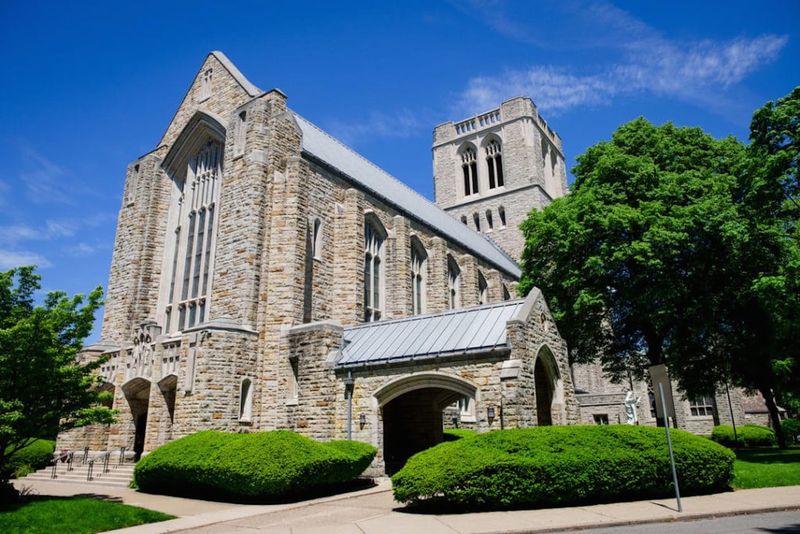
Architect Carlton Strong reportedly had a free hand designing Sacred Heart Church in Pittsburgh’s Shadyside neighborhood, and he used that freedom to create what many consider the finest Gothic church in the city. Construction began in 1924 and stretched nearly 30 years, with Strong’s successor firm completing the project after his passing in 1931.
The stained glass program alone is staggering in scope. The 1,200-square-foot facade window, dedicated in 1931, consists of 54 panels illustrating the history of the Catholic Church in America. Designers George and Alice Sotter spent eight years researching the concept and made four trips to Europe before a single piece of glass was cut.
The main church, Blessed Sacrament Chapel, and Lady Chapel together contain over 4,000 square feet of stained glass produced at Hunt Stained Glass Studios in Pittsburgh. Stone carvings, woodcarvings, and murals fill the remaining surfaces, creating what architectural critics have called an inventive and richly eclectic interior. The church was listed on the Pittsburgh History and Landmarks register in 1970.
8. Christ Church, Philadelphia, Pennsylvania
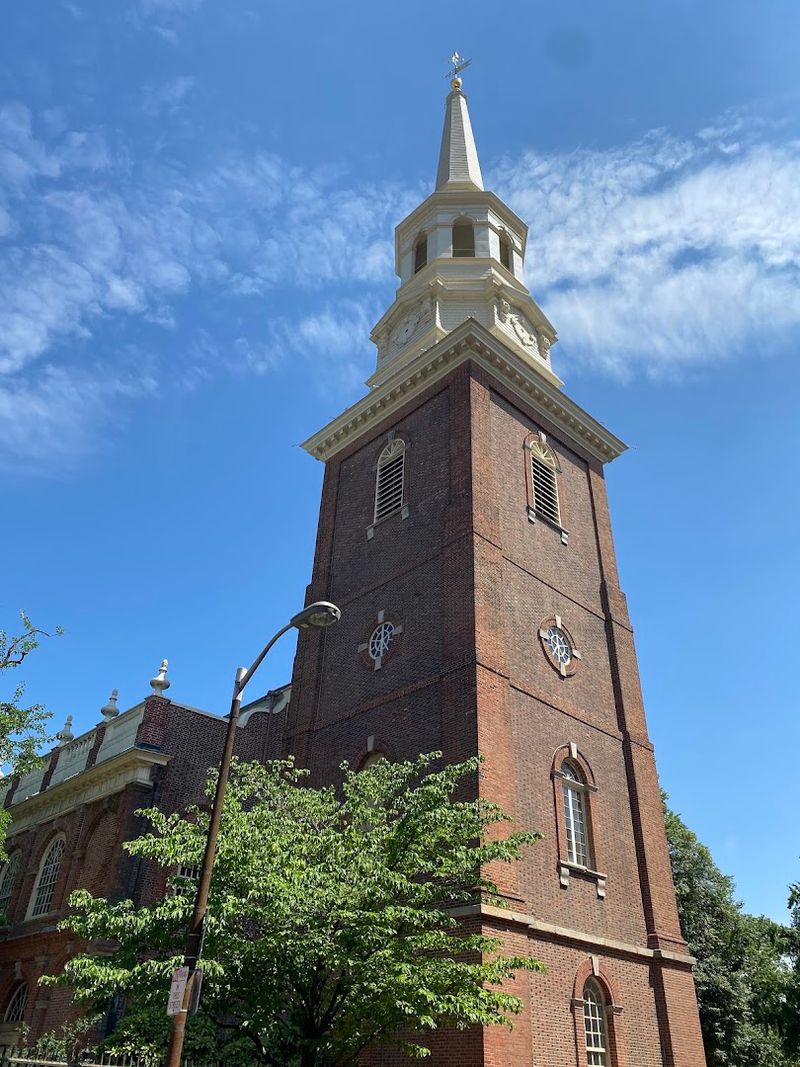
Benjamin Franklin organized a lottery to pay for the steeple, which tells you something about how seriously Philadelphia took this building. Christ Church, founded in 1695, is the birthplace of the American Episcopal Church and one of the most historically loaded structures in the entire country.
The current building, constructed between 1727 and 1744, is considered one of the most ornate 18th-century structures in the United States. Its 196-foot steeple made Christ Church the tallest building in North America for 56 years after its completion in 1754. The exterior features two-story brick walls laid in Flemish bond with glazed headers and a massive three-light Palladian window facing Second Street.
Inside, a chandelier installed in 1740 still hangs in its original position. The baptismal font, sent from London in 1697, is the same one in which William Penn was baptized. George Washington, John Adams, Benjamin Franklin, and Betsy Ross all worshipped here, making the pew list arguably more impressive than most museums.
9. St. Patrick Church, Erie, Pennsylvania
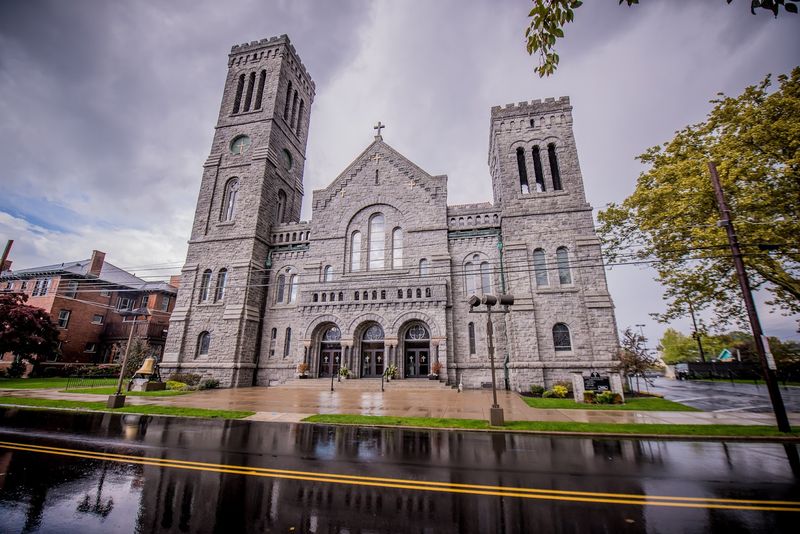
This Erie landmark was literally designed around a set of hand-carved wooden Stations of the Cross purchased in Munich, Germany, in 1890. Father Peter Cauley acquired them first, and the architect William Ginther then built the entire church to accommodate them, which is not exactly a typical design process.
The result is a Gothic Revival structure with a unique castle-like exterior that intentionally evokes the architecture of Ireland, reminding early Irish immigrant parishioners of the homeland they left behind. The building features no traditional steeple, making it immediately distinctive among Pennsylvania’s major churches. Inside, the floor slopes forward to ensure every worshipper has an unobstructed view of the Stations and other artworks.
The column-free interior creates an unusually wide and open space, capped by a magnificent dome that provides remarkable acoustics. Massive hand-painted stained glass windows and Irish-themed shrines add further visual interest throughout the nave. A 2012 renovation restored the plaster, decorative painting, gilding, and marble flooring, bringing the 1906 interior back to its original vibrancy.
10. Basilica of the Sacred Heart of Jesus, Conewago Township, Pennsylvania
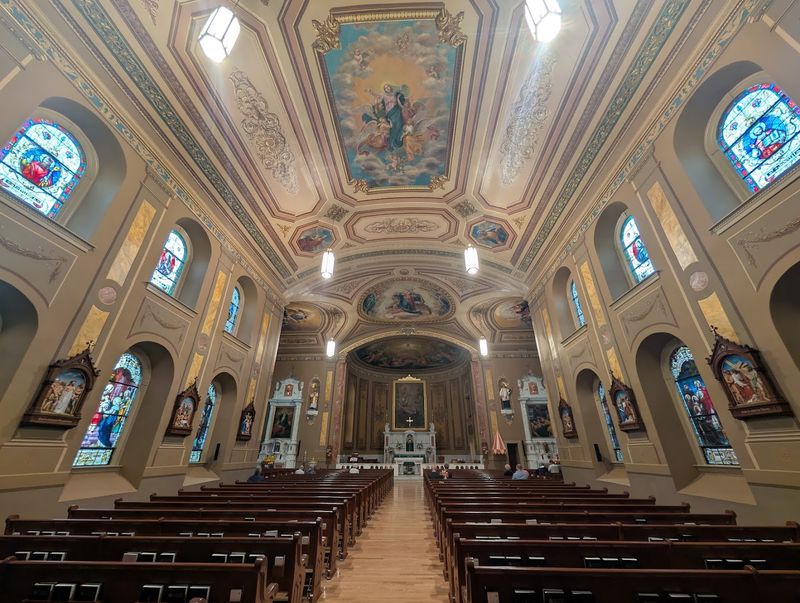
Hidden in the rural landscape of Conewago Township, this basilica holds a record that surprises most first-time visitors. The stone church, built between 1785 and 1787 by Jesuits, is the oldest Catholic church constructed of stone in the entire United States, and it was dedicated to the Sacred Heart of Jesus on August 15, 1787, making it the first parish in the Western Hemisphere to carry that title.
The exterior follows the restrained Federal style, built from brownstone with walls three feet thick and an 80-foot spire added in 1873. Inside, the atmosphere shifts dramatically. A full Baroque-revival decorative scheme, designed by Italian artist Lorenzo C. Scattaglia in 1887, fills the walls with trompe l’oeil architectural paintings, faux marble pilasters, and arched stained glass windows.
A painting behind the main altar titled “Vision of the Sacred Heart” was commissioned from Roman artist Filippo Costaggini for the 1887 centennial. Restorations completed in 2022 and 2023 uncovered much of the original 19th-century artwork, revealing layers of history that had been hidden for generations.
11. St. Stanislaus Kostka Church, Pittsburgh, Pennsylvania
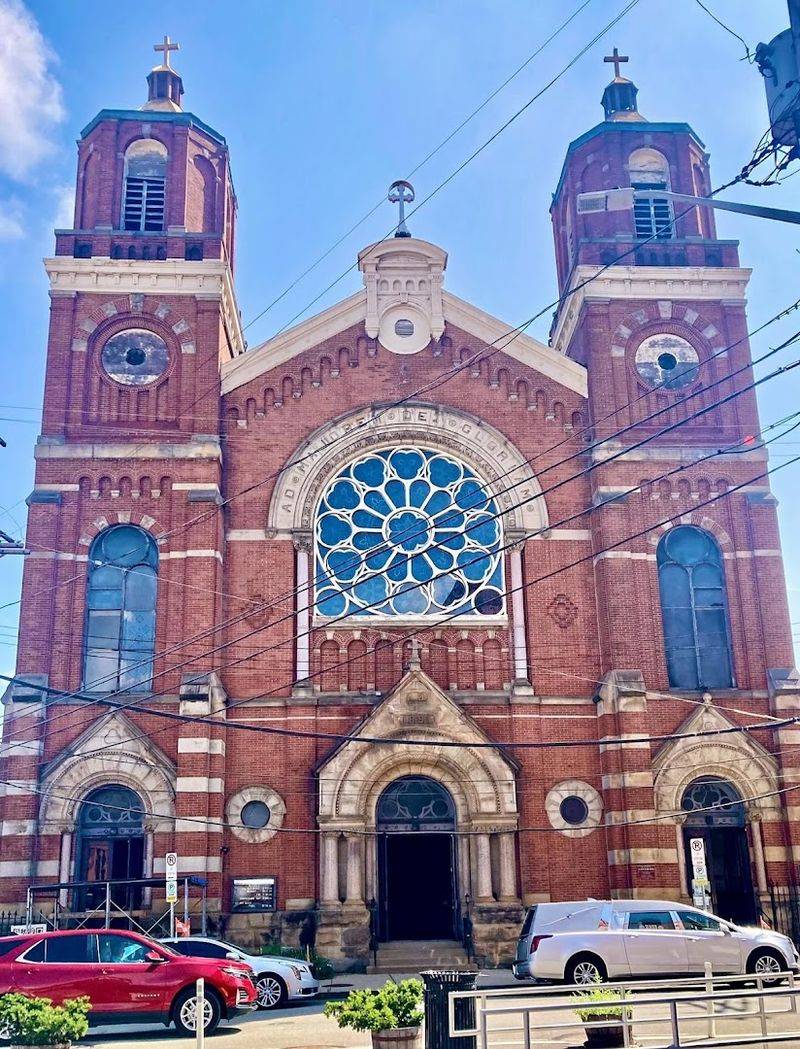
Pittsburgh’s Strip District is better known today for its food markets and weekend crowds, but St. Stanislaus Kostka Church has been anchoring the neighborhood since 1892. The congregation, founded in 1873, was the first ethnic Polish parish in the Diocese of Pittsburgh, and the building they commissioned reflects the full ambition of that immigrant community.
Designed by German-American architect Frederick C. Sauer, the church blends Romanesque and Baroque styles with Byzantine influences across a brick structure covering 8,337 square feet. Its twin towers house seven bells, and the walls run between 17 and 21 inches thick. The stained glass windows, produced at the Royal Bavarian Art Institute in Munich, are considered among the finest examples of Munich-style glass in the United States.
The interior ceiling carries murals depicting Polish King Jan Sobieski’s victory at Vienna alongside symbols of the four Evangelists, painted for the parish’s Golden Jubilee in 1925. In 2019, the church became one of five Shrine churches in the Diocese of Pittsburgh, cementing its status as a place of lasting religious and cultural significance.
12. Bryn Athyn Cathedral, Bryn Athyn, Pennsylvania
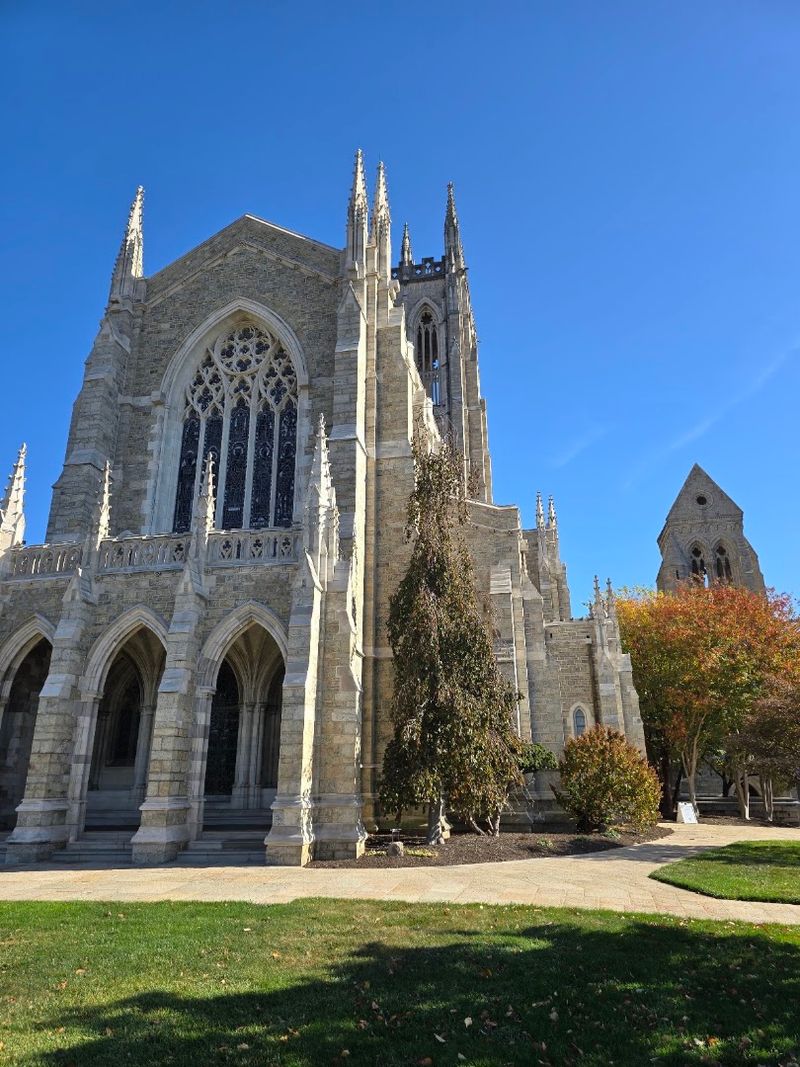
Bryn Athyn Cathedral may be the most deliberately handcrafted building in Pennsylvania. When industrialist John Pitcairn commissioned it in 1913, he and his son Raymond rejected modern industrial construction methods entirely, establishing on-site workshops for stone carving, woodworking, metalwork, and stained glass so that skilled craftsmen from Europe could collaborate directly on every detail.
The architectural style blends English Perpendicular Gothic for the main tower with early Romanesque and French Norman elements in adjoining structures. Deep pink and soft green granite was quarried locally, and oak trees from the property itself provided the ceiling timbers. The hand-blown stained glass windows were created using revived medieval techniques for making pot metal glass, replicating the vibrant colors of genuine medieval examples.
One of the cathedral’s most unusual features is its use of architectural refinements, subtle intentional departures from perfectly straight lines, curves built into the walls and elevations to create a sense of organic life and movement. The complex was designated a National Historic Landmark in 2008, and the surrounding gardens were designed by the Olmstead Brothers.
Share this story