The Pennsylvania Railroad once ran more track than most countries had roads, and it did so with a confidence that still shows in stone, brick, and steel across the Commonwealth today. Known as the “Standard Railroad of the World,” the Pennsy connected cities, crossed mountains, and left behind a collection of landmarks that range from towering urban stations to a curve in the Allegheny Mountains that engineers still marvel at.
Some of these sites are quiet and contemplative, while others are packed with commuters and freight trains, making the history feel very much alive. A bronze angel inside a Philadelphia train hall, a stone bridge so long it seems to have no end, a Victorian depot that now serves lunch alongside Amtrak arrivals: these are the kinds of surprises waiting on this list.
History fans, architecture lovers, and curious travelers will all find something worth the trip at the 12 landmarks ahead.
1. William H. Gray III 30th Street Station, Philadelphia, Pennsylvania
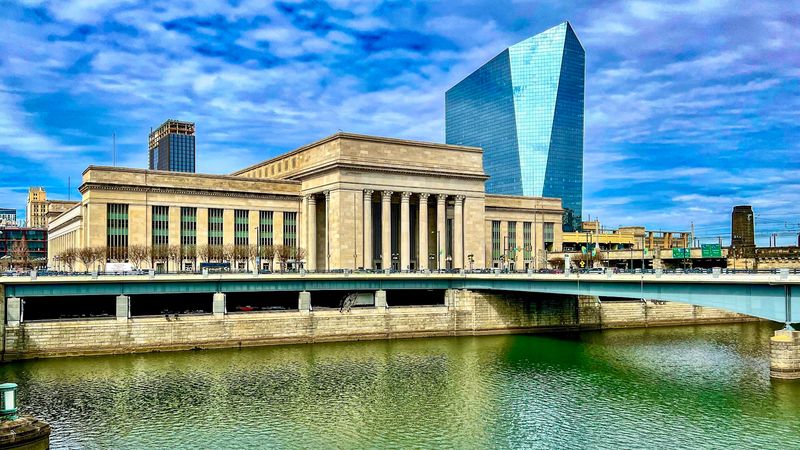
One of the busiest train stations in the United States also happens to be one of its most architecturally impressive, and it has been that way since 1933. The Pennsylvania Railroad built 30th Street Station to replace an older, overcrowded facility, and the result was a Neoclassical landmark designed by Alfred Shaw of Graham, Anderson, Probst and White.
Towering Corinthian columns carved from Alabama limestone frame the entrances on both sides of the building.
Inside, the Main Concourse stretches 290 feet long with a coffered ceiling rising 95 feet overhead. Tennessee marble lines the floor beneath Art Deco chandeliers, and the overall effect is closer to a government palace than a transit stop.
The station was added to the National Register of Historic Places in 1978 and is currently undergoing a major renovation expected to finish in 2027. Amtrak, SEPTA, and NJ Transit all operate here, keeping the landmark as busy today as it was in the Pennsy’s peak years.
2. Railroad Museum of Pennsylvania, Strasburg, Pennsylvania
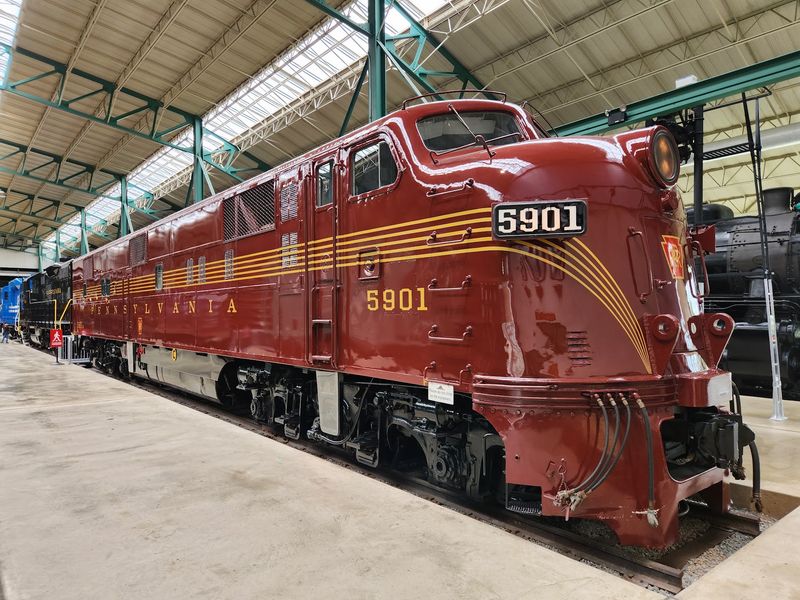
More than 100 historic locomotives and railroad cars are gathered under one roof in Strasburg, and the sheer physical scale of the collection makes a stronger argument for the Pennsylvania Railroad’s ambition than any textbook could. The Railroad Museum of Pennsylvania holds one of the most significant railroad collections in the country, with numerous pieces connected directly to the Pennsy’s preserved historic fleet.
Visitors can walk alongside massive steam locomotives and examine passenger cars up close.
Among the highlights is a split-flip Solari arrivals and departures board that once served Philadelphia’s 30th Street Station, now temporarily housed here for visitors to examine. The museum provides context through exhibits that trace the railroad’s technological evolution from its earliest days through the diesel era.
For anyone who wants to understand how the Pennsylvania Railroad actually operated at its peak, this collection in Lancaster County delivers a concrete, hands-on experience that photographs and documents alone simply cannot replicate.
3. Railroaders Memorial Museum, Altoona, Pennsylvania
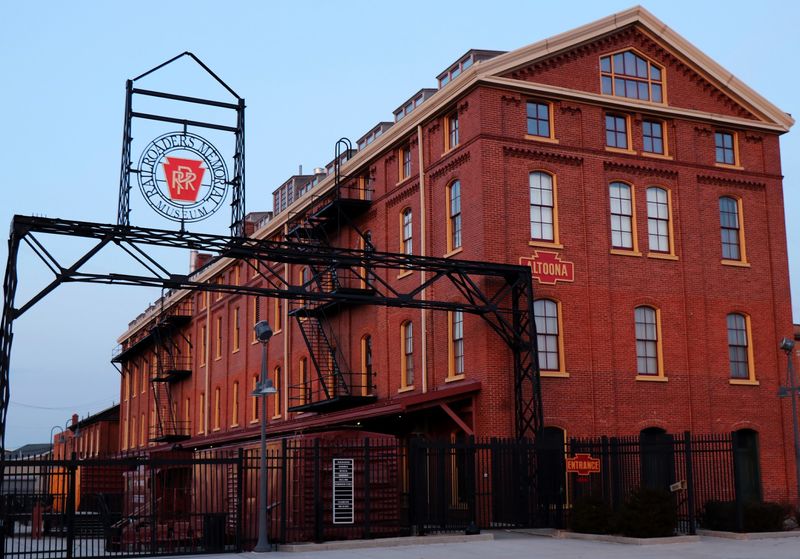
Altoona was not just a railroad town; it was essentially a company town built around the Pennsylvania Railroad’s massive Altoona Works complex, and the Railroaders Memorial Museum tells that story from the ground up. The museum occupies the former Pennsylvania Railroad Master Mechanics Building, completed in 1882 as part of the sprawling industrial campus.
Rather than focusing on the machines themselves, the exhibits center on the people who designed, built, and maintained them.
Families, job skills, daily routines, and community life all get serious attention here, turning industrial history into something personal and relatable. Visitors learn how generations of Altoona residents built careers around the railroad, how the company shaped the city’s layout, and what it meant to live in a place where almost everyone’s livelihood connected back to the Pennsy.
The museum presents railroad history not as a series of mechanical achievements but as a record of working lives, which makes it one of the more distinctive railroad institutions in Pennsylvania.
4. Horseshoe Curve National Historic Landmark, Altoona, Pennsylvania
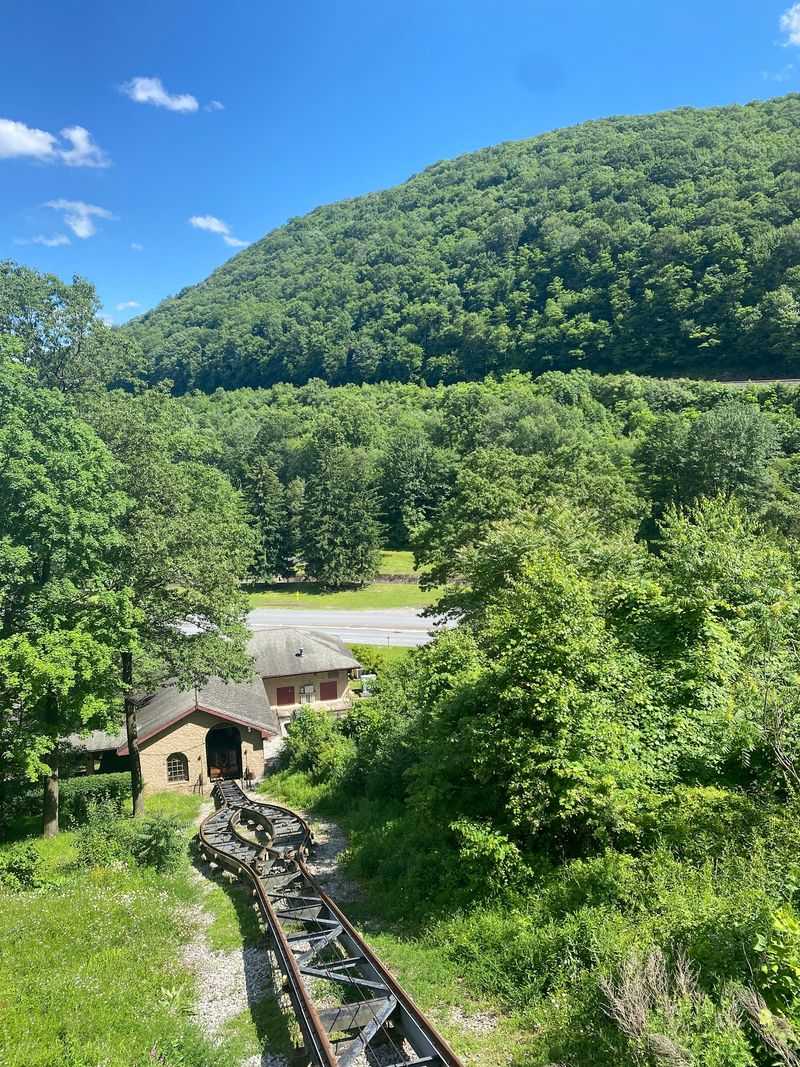
In 1854, completing a curved stretch of track around the Allegheny Mountains was considered one of the greatest engineering achievements in American railroad history, and trains are still using that same curve today. Horseshoe Curve was designed by J.
Edgar Thomson and built by roughly 450 workers, mostly Irish immigrants, using hand tools and determination over four years of difficult mountain construction. The curve reduced the grade enough to allow trains to cross the Allegheny Front without switching or cable assistance.
The site sits more than 1,500 feet above sea level and was so strategically important during World War II that it was placed under armed guard. It was designated a National Historic Civil Engineering Landmark in 2004.
Visitors today can reach the observation area by a 288-foot funicular or 194 steps, and Norfolk Southern freight trains still round the curve on a regular basis. Watching a working landmark perform the exact job it was engineered for nearly 170 years ago is a genuinely unusual experience.
5. Harrisburg Transportation Center, Harrisburg, Pennsylvania
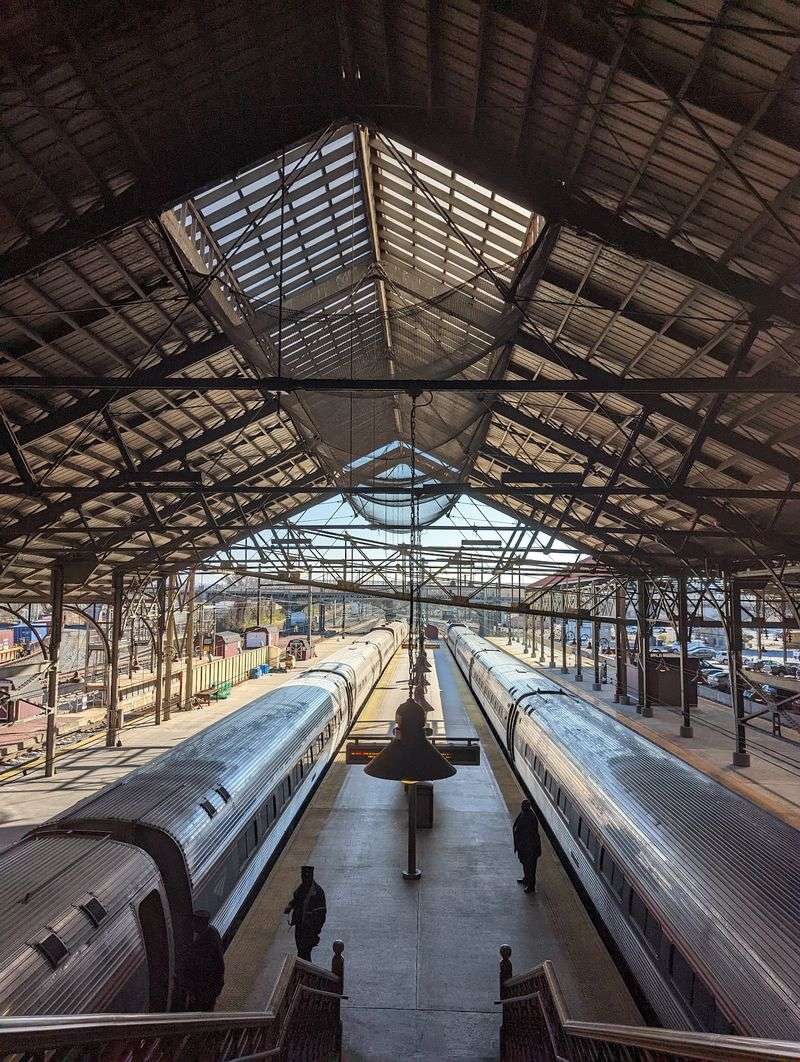
Completed between 1885 and 1887, the Harrisburg Transportation Center is the third Pennsylvania Railroad station to occupy its site, and it remains one of the rare American stations that still has its original train shed standing over the tracks. The Queen Anne building features a distinctive mansard roof that was rebuilt in 1905 following a serious fire, constructed using Fink trusses in a configuration that was among the largest of its kind when first built.
Wrought iron quatrefoils and cast iron newel posts on the interior staircases survive from the original construction.
By 1922, the station was handling more than 100 trains daily, and it even has a historical connection to President Lincoln’s funeral train, which passed through a predecessor station on the same site in 1865. Listed on the National Register of Historic Places, the center continues active service today as a hub for Amtrak, Capital Area Transit, Greyhound, and other carriers, making it one of the most historically layered working stations in the state.
6. Rockville Bridge, Harrisburg, Pennsylvania
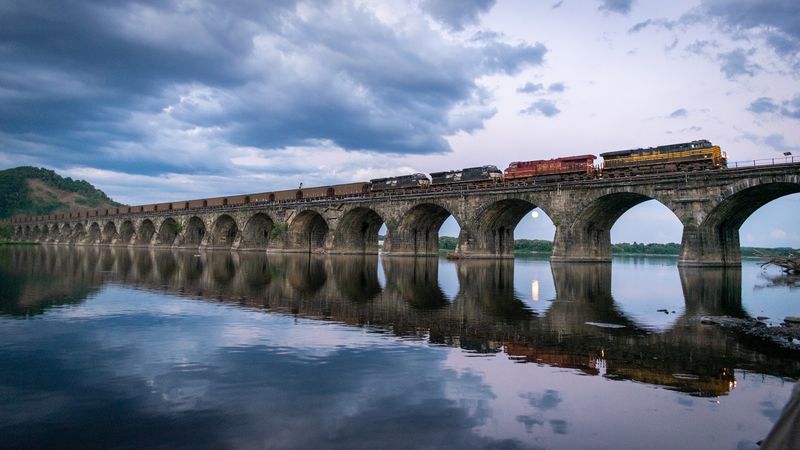
At 3,820 feet long and supported by 48 stone arches, the Rockville Bridge holds the record as the longest stone masonry arch railroad bridge ever constructed, and it has been carrying trains across the Susquehanna River since 1902. PRR Chief Engineer William Henry Brown oversaw the project, which required 220,000 tons of stone and 600,000 barrels of cement, assembled by nearly 300 stone masons over two years.
Brown chose stone over iron deliberately, believing masonry would outlast metal on one of the railroad’s busiest corridors.
That calculation proved correct. The bridge survived two major floods and served as a critical military asset during both World Wars, guarded by armed personnel to prevent any disruption to the supply chain.
Listed on the National Register of Historic Places in 1975 and designated a National Historic Civil Engineering Landmark in 1979, the bridge still carries Norfolk Southern freight trains and Amtrak’s Pennsylvanian service on three active tracks. Few railroad structures anywhere combine this level of historical significance with continuous daily use.
7. Pittsburgh Union Station, Pittsburgh, Pennsylvania
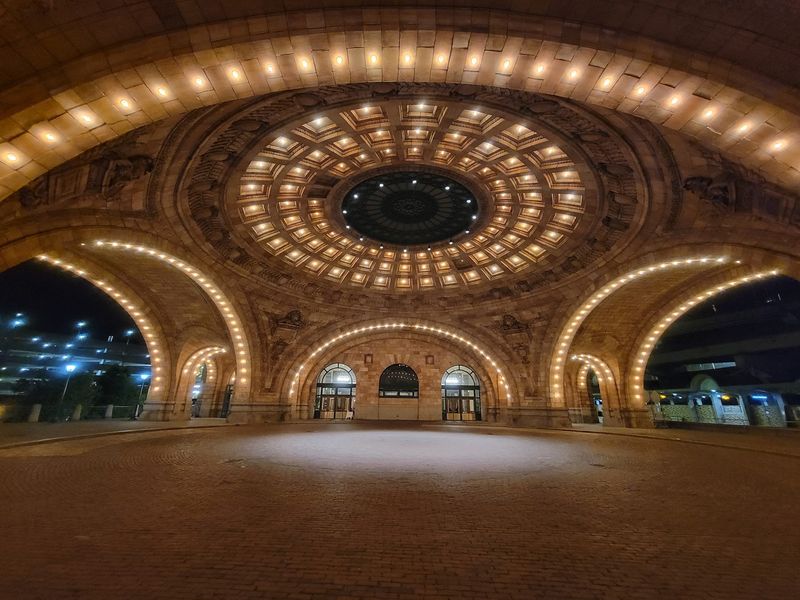
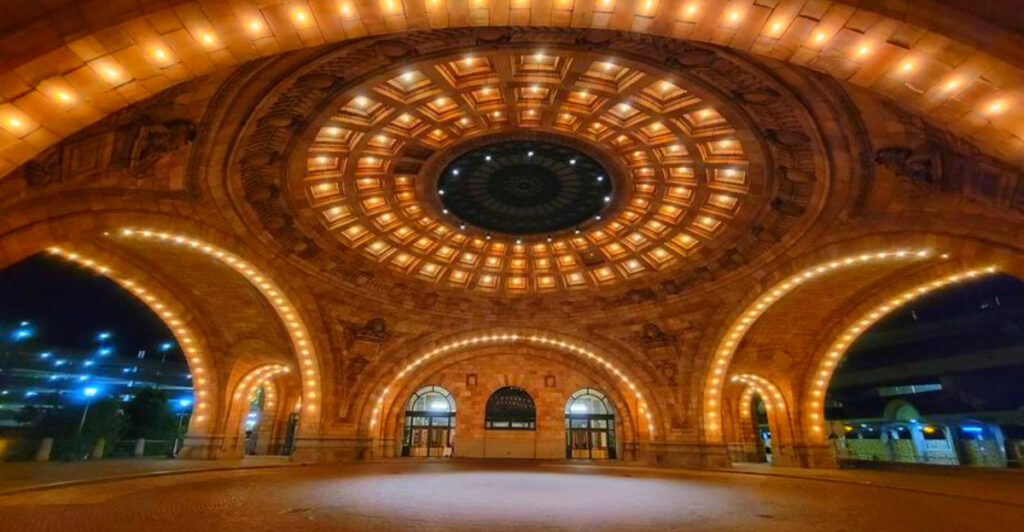
Daniel Burnham designed Pittsburgh Union Station at the height of his career, and the result was a building that announced the Steel City’s importance to every traveler who arrived by rail. Completed in the early 1900s, the station’s entrance rotunda became its defining feature, a soaring circular hall with classical detailing that set the tone before passengers even reached the platforms.
The Pennsy used this gateway to connect Pittsburgh to its broader network reaching from New York to Chicago.
The main historic building has since been converted to residential use, a practical adaptation that preserved the architecture while giving the structure a new purpose. Amtrak continues to operate from an adjoining station area, maintaining an active passenger rail presence on a site that has served travelers for well over a century.
Visiting today means encountering a building that has genuinely evolved rather than simply survived, with Burnham’s rotunda standing as the most tangible reminder of the Pennsylvania Railroad’s once-dominant presence in western Pennsylvania’s largest city.
8. Lancaster Station, Lancaster, Pennsylvania
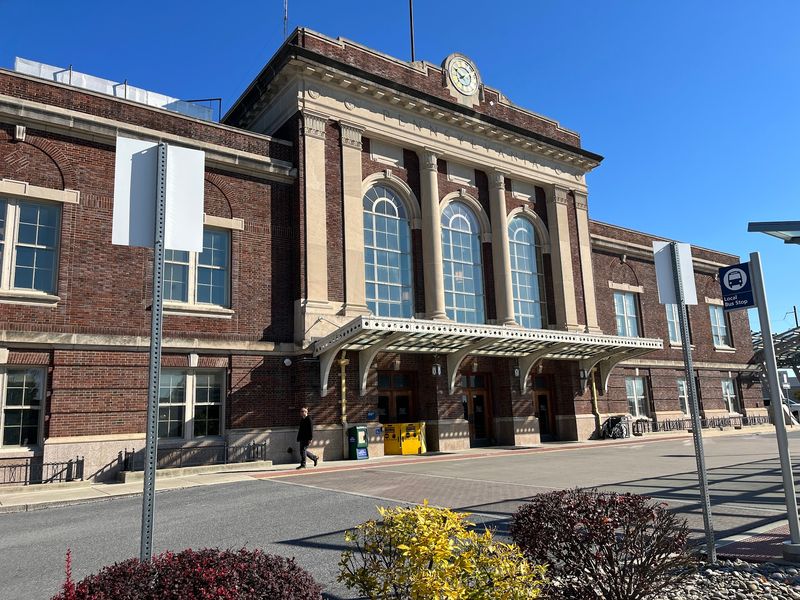
Lancaster’s 1929 station replaced older facilities as part of a Pennsylvania Railroad project that rerouted the rail line north of the city, and the resulting Classical Revival building still carries the self-assured confidence of the late Pennsy era. The exterior features a prominent center block flanked by recessed wings, with three tall rounded arch windows on the second level framed by concrete columns and a parapet clock above the main entrance.
A glass and metal marquee shelters the main door below.
Inside, the main waiting room retains wooden benches worn smooth by decades of travelers, Art Deco light fixtures, and a skylight that keeps the space from feeling heavy or dated. The station is a contributing resource to the Lancaster City National Register Historic District.
Today it ranks as Amtrak’s second-busiest station in Pennsylvania, serving the Keystone Service and the Pennsylvanian routes. Platform reconstructions completed in 2024 and 2025 improved accessibility without altering the character of the historic building above.
9. Greensburg Train Station, Greensburg, Pennsylvania
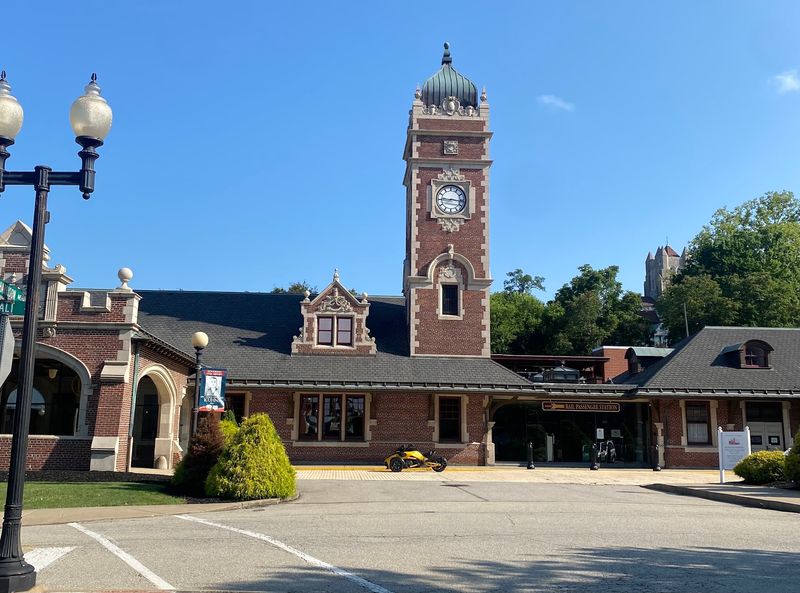
A copper dome and a clock tower rising above the tracks make Greensburg’s Pennsylvania Railroad station impossible to overlook, even from a passing car. Built around 1912 as part of a project to elevate the railroad’s right-of-way through town, the Jacobean Revival building was designed by William Holmes Cookman and features Flemish bond red brick accented with stone quoins and trim.
The tower is capped by an ogee dome with ornamented parapets, cartouches, and corner finials that together give the structure a richness that modern transit facilities rarely attempt.
The station was listed on the National Register of Historic Places in 1977, recognizing its architectural merit and historical connection to the Pennsylvania Railroad’s western Pennsylvania network. The main building now operates as a restaurant, allowing the interior details to be appreciated in a new context.
Amtrak’s Pennsylvanian still makes a daily stop nearby, connecting the site to the active rail corridor that gave this elaborate building its original reason for existing.
10. Latrobe Station, Latrobe, Pennsylvania
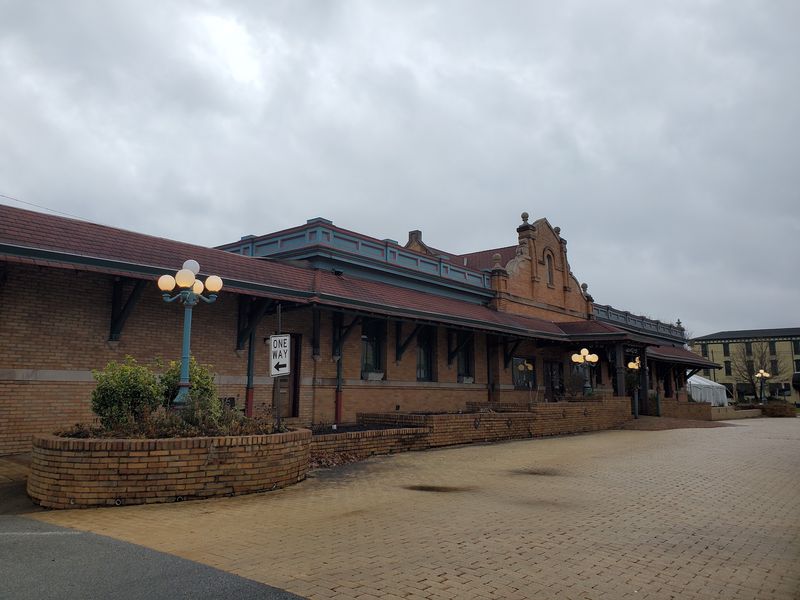
Built in 1903 as part of a track elevation project through town, Latrobe’s former Pennsylvania Railroad depot is a compact Late Victorian brick building that packs more architectural detail into its modest footprint than most travelers would expect. Designed by architect William H.
Brown, the one-story structure features limestone trim, terracotta detailing, and a central cross gable with a stone panel pediment that marks the main entrance. Eight bays wide and five bays deep, the building was constructed with the careful proportions typical of PRR station work in the era.
After the depot was abandoned in 1970 and faced potential loss in 1983, preservation efforts succeeded in securing its listing on the National Register of Historic Places in 1986. The DiSalvo family purchased and restored the building in 1989, converting it into a restaurant that has kept the structure active and publicly accessible.
Amtrak’s Pennsylvanian makes flag stops nearby, so the old depot retains a visual connection to the railroad corridor that originally brought it to life.
11. Lewistown Station, Lewistown, Pennsylvania
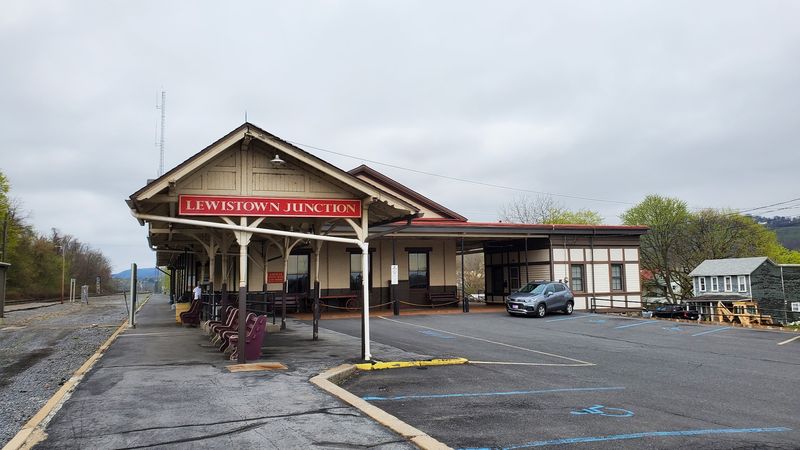
Dating to 1848 and 1849, the station building in Lewistown holds a distinction that no other surviving structure connected to the Pennsylvania Railroad can claim: it is the oldest building the railroad ever constructed that is still standing. Originally built as a freight facility rather than a passenger depot, the structure reflects the Pennsy’s earliest years, when the company was still establishing its network across the Commonwealth.
Its age alone makes it a remarkable artifact, but the building also benefits from a careful restoration focused on its mid-20th-century appearance.
That restoration effort gives visitors a layered experience, connecting both the railroad’s founding era and the decades when the Pennsy was at its operational peak. The station sits alongside an active rail corridor where Amtrak passenger trains continue to operate, placing this very old building in direct visual relationship with the working railroad that grew from those humble 1840s origins.
For a quiet, unshowy encounter with the deepest roots of Pennsylvania Railroad history, Lewistown is hard to beat.
12. Wayne Station, Wayne, Pennsylvania
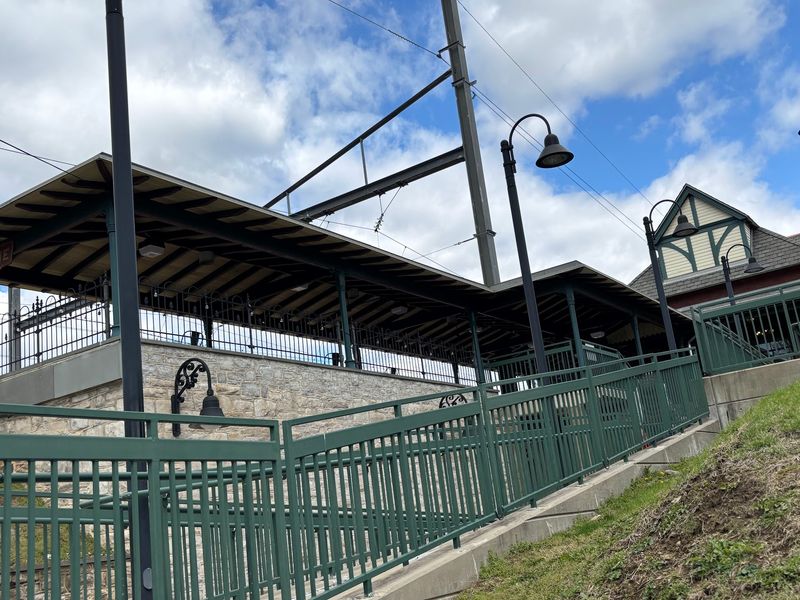
Built between 1882 and 1884 for the Pennsylvania Railroad by architect Washington Bleddyn Powell, Wayne Station consists of two Victorian buildings positioned on either side of the tracks and connected by an underground tunnel, a layout that remains intact today. The architectural style, classified as Stick/Eastlake or Queen Anne, gives the complex a distinctive character through its elaborate gables, decorative brickwork, and carefully proportioned rooflines that stand out sharply against the surrounding suburban landscape.
A restoration project carried out between 1998 and 2010 preserved the ornamental details that define the station’s appeal, supported by strong local community investment and dedicated funding. The entire complex was added to the National Register of Historic Places in 1999, recognizing its significance as a well-preserved example of late 19th-century railroad architecture on the PRR’s Main Line.
SEPTA’s Regional Rail Paoli/Thorndale Line still stops here daily, meaning the station functions as both a commuter hub and a living piece of Pennsylvania Railroad heritage that travelers can actually use.
Share this story