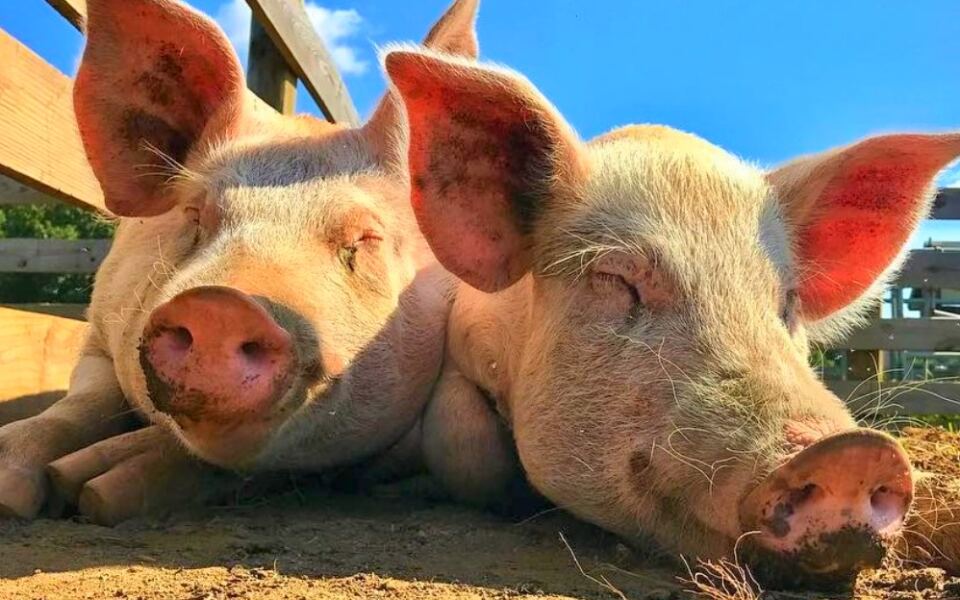
Most pigs in America never get a birthday party, a wading pool, or a name. A small group of sanctuaries is changing that, one snout at a time.
Across the country, rescued pigs now spend their days rooting in pastures, napping in straw beds, and making friends with goats, cows, and even llamas. Some of these pigs escaped the food industry.
Others were sold as tiny pets and then grew to over 100 pounds, which surprised their owners more than anyone. These places are not petting zoos or working farms.
They are permanent homes where every pig gets care, food, and space for life. Many of them also welcome visitors for tours, pumpkin parties, and special events.
Keep reading to find 12 spots where you can meet these clever animals, learn their rescue stories, and plan a visit that is anything but boring. You might leave with a new favorite animal.
1. Ironwood Pig Sanctuary, Marana, Arizona
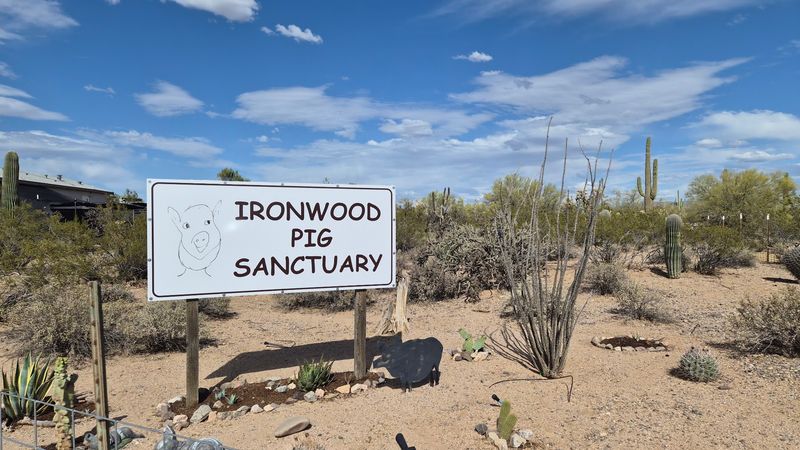
More than 680 potbellied pigs call a patch of Sonoran Desert home, which makes this one of the largest pig sanctuaries in the country.
Founders Ben Watkins and Mary Schanz started Ironwood in 2000, and the first two pigs arrived in June 2001. Many residents came from owners who did not expect their small piglet to grow so large.
The property spreads across 30 fields and pens. Pigs here can weigh up to 250 pounds, and they cool off in wading pools and mud baths during hot days.
Daily meals include grain and hay. The care team also handles special diets for overweight pigs and treats problems like arthritis.
Guided walking tours run on Saturdays from October through April and last about 1.5 to 2 hours. You must register online ahead of time, and no food is allowed for the animals.
Bring water, sunscreen, a hat, and comfy shoes. Fans of art can try the Painting with Pigs event.
Want to help from home? The sanctuary welcomes creamy peanut butter, clean blankets, and sheets.
2. Pigs Peace Sanctuary, Stanwood, Washington
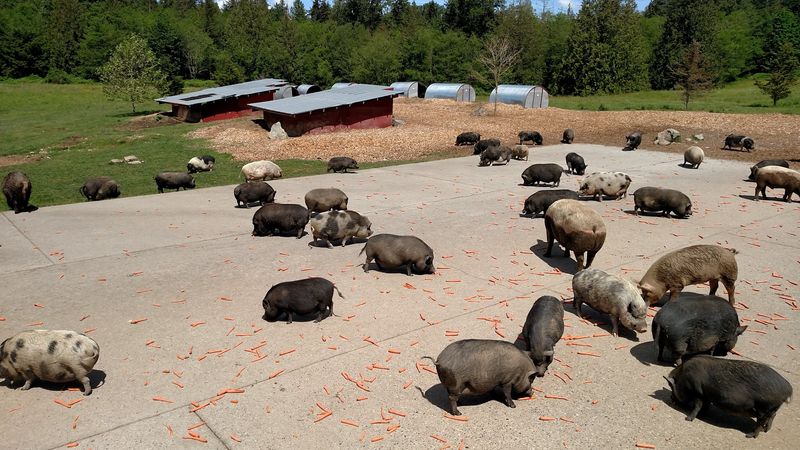
Pigs at this Pacific Northwest refuge set their own schedules, and most of them seem to choose naps.
About an hour north of Seattle, Pigs Peace covers 39 acres of meadow and forest with ponds and trails. Judy Woods founded the nonprofit in 1994 to give unwanted and mistreated animals a safe home.
Over 60 pigs live here, along with ponies, horses, llamas, sheep, turkeys, dogs, and cats. Many of the pigs are potbellied pigs from the pet craze, when buyers were not ready for the work involved.
Sleeping spots range from a big barn to small sheds, huts, and cozy suites tucked under trees. Each one is stocked with soft hay.
Over time, the pigs form close friendships and social groups. Visitors often spend their time watching who hangs out with whom.
Judy prefers to teach through direct experience rather than lectures. Visits happen by appointment from May through October, and the animals always come first, so plan ahead and stay flexible.
3. Arthur’s Acres Animal Sanctuary, Parksville, New York
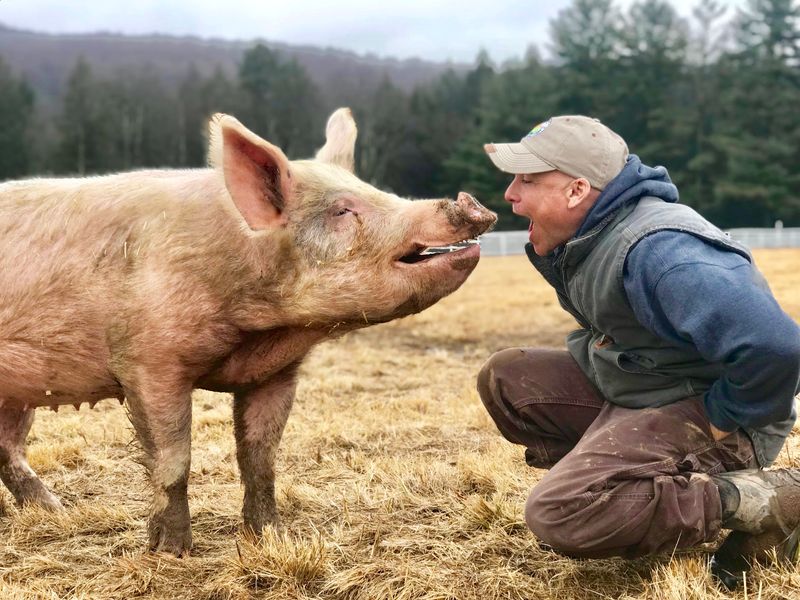
So-called teacup pigs have a habit of outgrowing their teacups, and the staff at this Catskills sanctuary can show you the proof.
Arthur’s Acres focuses mainly on pigs, especially those needing ongoing medical help. Some residents need regular checkups, special diets, or extra attention as they age.
The pigs here arrived from very different places. Some came from food production, others from breeding operations, and a few from medical research labs.
Private tours lead guests through the barns and pastures. Along the way, you will hear each pig’s personal rescue story, which tends to stick with people long after the visit.
Guides also explain how smart and social pigs really are. They recognize friends, solve problems, and keep track of their routines.
A big part of the mission is clearing up a common myth. Pigs sold as tiny pets usually grow far larger than buyers expect.
Thinking about getting a pig? A stop here might be the most useful research you ever do.
4. Oinking Acres Farm & Rescue Sanctuary, Brownsburg, Indiana
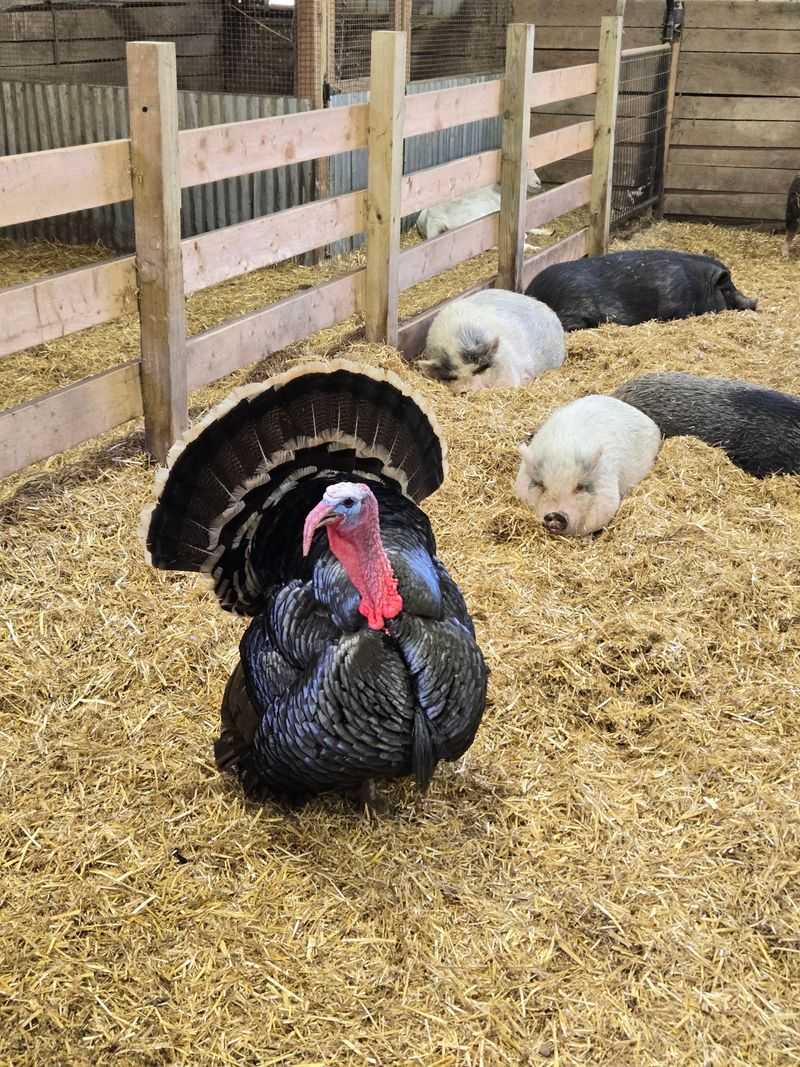
Over 2,000 animals have been rescued by this Hendricks County farm since Olivia Head founded it in 2017.
At any time, between 200 and 300 residents live at Oinking Acres. Pot-bellied pigs share space with chickens, ducks, goats, sheep, horses, cows, and even peacocks.
Many pigs arrive after owners realized their pet could top 100 pounds. Some get adopted into new homes, while those who cannot be placed stay for life.
Self-guided tours run Saturdays and Sundays from 11:00 AM to 2:30 PM. In October, Friday evening hours are added from 5:00 to 7:00 PM.
Tickets cost $10 online or $12 at the door, and every dollar helps the animals. Volunteers stand along the route to answer questions.
Most paths are paved and wheelchair friendly, but strollers and wagons stay home since they can startle animals. Kids over eight can visit the Kitty Cuddle Cottage for a $5 donation.
Mark your calendar for Pumpkin Palooza in October and Bring a Pig a Present in December.
5. Farm Sanctuary, Watkins Glen, New York
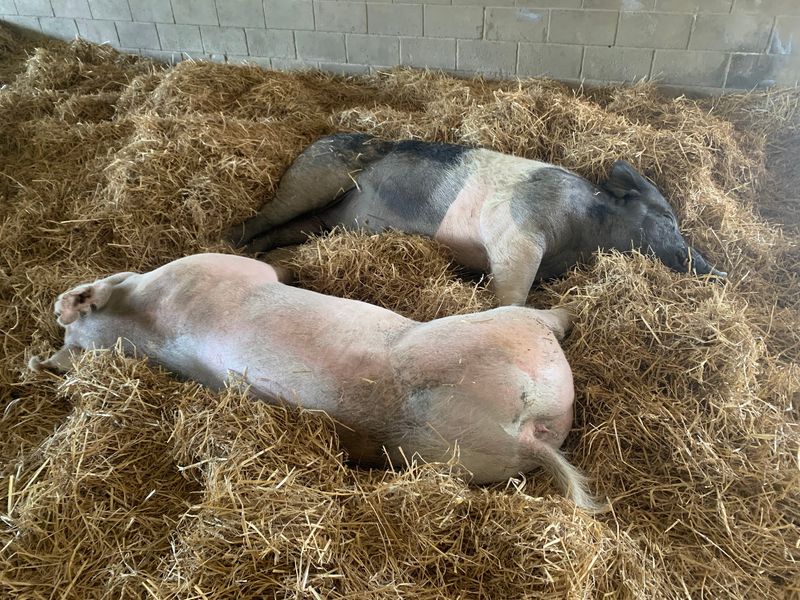
Back in 1986, a small group started what would become the largest farm animal rescue organization in the United States.
Farm Sanctuary’s Watkins Glen home covers 275 acres in the Finger Lakes, with views of Sugar Hill State Forest. Hundreds of rescued pigs, cows, chickens, turkeys, goats, and sheep live here.
The staff calls these animals ambassadors. Their stories help visitors understand what farm animals often face.
One big rescue in 2008 saved 69 pigs from Midwest floods. That effort shows the scale this group can handle.
Guided tours last about an hour and run spring through fall, with the busiest schedule in summer. Regular public tours are paused for winter and set to return in spring 2027, so check dates first.
Closed-toe shoes are required, and paths include gravel and uneven ground. Strollers, walkers, and wheelchairs are not allowed in animal areas.
Want more time with the residents? Book a cabin or tiny house, which includes a vegan breakfast and a private morning tour.
6. Woodstock Farm Sanctuary, High Falls, New York
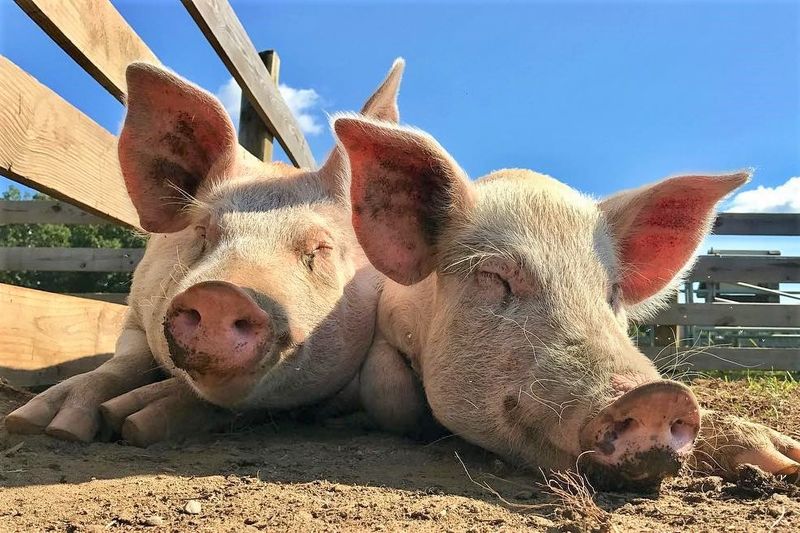
Halloween at this Hudson Valley sanctuary means one thing for the pigs: pumpkins, and plenty of them.
The yearly Pumpkins and Pigs event usually lands on October 31st. Guests get to feed pumpkins to the rescued pigs, and costumes are welcome for humans of all ages.
Woodstock Farm Sanctuary covers 135 acres and cares for nearly 300 rescued animals. Pigs live here alongside cows, turkeys, goats, and rabbits.
The group’s mission is simple. It aims to build kindness toward every living being.
Guided tours run most Saturdays through November 14th. Families can join a special 10:00 AM tour, and private tours are available on weekends and weekdays.
Other fall events include the Harvest Picnic on October 3rd, 2026, and Celebrate Turkeys on November 22nd, 2026. A local vendor called Cheeky Eats sometimes brings baked goods to events.
Need a place to sleep? The Gray Barn is an inn right on the sanctuary grounds, so your morning commute to the pigs is a short walk.
7. Iowa Farm Sanctuary, Oxford, Iowa
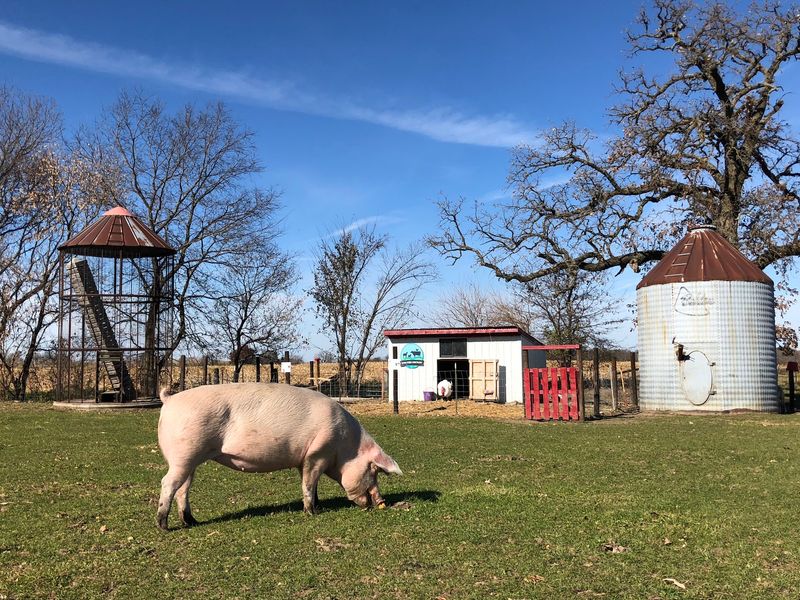
Iowa raises more hogs than any other state, so a pig sanctuary here makes a bold statement.
Jered and Shawn Camp founded Iowa Farm Sanctuary on 40 acres near Oxford. Pigs live here with cows, goats, chickens, sheep, turkeys, and miniature horses.
About half of the animals came from owner surrenders. Others were brought by farmers after injuries or health problems at birth.
Some residents have famous backstories. Henry is a one-eyed turkey who survived a tornado, and Little Larry is a lamb who lost a leg.
The sanctuary also works with state agencies during emergencies. Staff help rescue farm animals after highway accidents, floods, and storms.
Sanctuary Strolls happen Sunday afternoons in summer. Guests follow an unpaved trail around the farm and meet residents in their pastures.
Pack a vegan picnic, since guests are invited to eat on the grounds. Fall visitors can join Carl’s 5K on October 17, 2026, or the Spooktacular on October 31, 2026.
8. Ross Mill Farm, Jamison, Pennsylvania
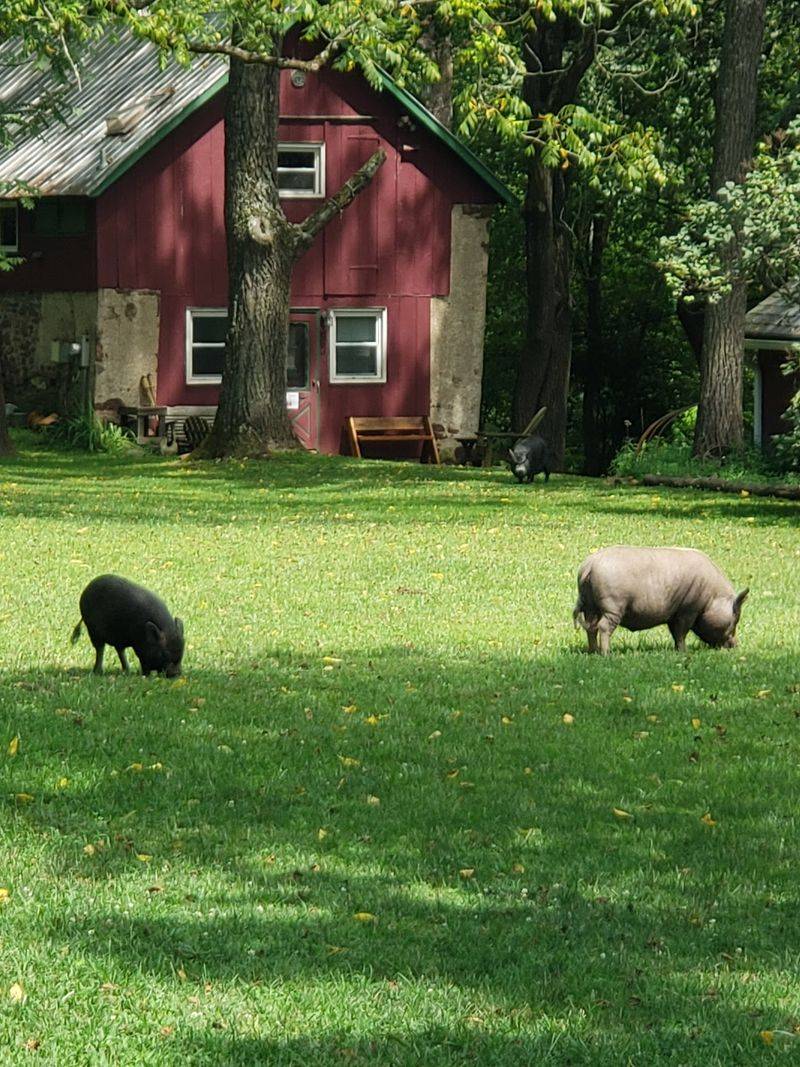
Some pigs live in barns, but these lucky ones live in a barn built back in the 1730s.
Ross Mill Farm sits on a historic Bucks County property dating to 1740. It has focused on potbellied pigs as companion animals since 1990.
The farm is the largest foster home for the Pig Placement Network, a charity co-founded in 1998. More than 100 pigs here wait for adoptive families.
Tours move through separate pig villages called The Village, North, East, South, and Creekside. The Lodge, built in 2005, has 38 pens for boarding, elder care, and special needs pigs.
There is even a nursery where piglets learn social skills. Licensed vets look after every foster pig.
Hour-long tours are by appointment, with a minimum $50 donation for up to six people. Each extra guest adds $10.
The gift shop sells pig food, harnesses, cookies, and books. Look out for Piggy Palooza and Hallowswine in October, and donate clean blankets or towels, just skip anything with feathers.
9. Piggins and Banks: Pig and Animal Sanctuary, Cross Junction, Virginia
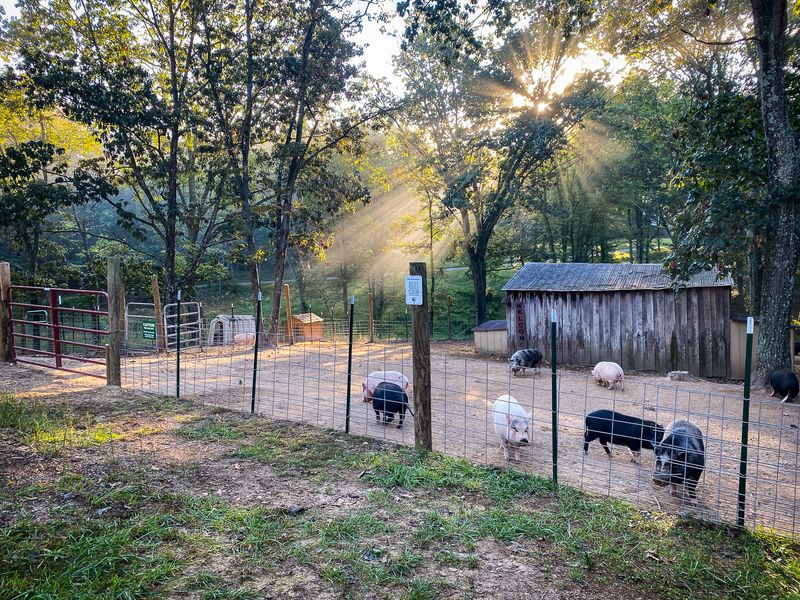
A piggy pool might be the most popular hangout at this mountain refuge in northern Virginia.
Piggins and Banks spreads across 34 wooded acres near Cross Junction. Every part of the property is planned around what pigs need at different stages of life.
Older residents have their own elder pig barn. Senior pigs often move slower and need softer bedding, so this space makes daily life easier for them.
Roomy outdoor enclosures give younger pigs space to roam and root. There is also a special area for pigs who love human company.
That social zone is where many visitors end up spending the most time. Some pigs here enjoy belly rubs and will happily flop over for one.
Guided tours introduce guests to residents and share how each one arrived. These stories help explain why pigs need lifelong homes.
Autumn brings a fun way to help. The sanctuary accepts pumpkin donations, which the pigs treat as an annual snack holiday.
10. Farm Sanctuary, Acton, California
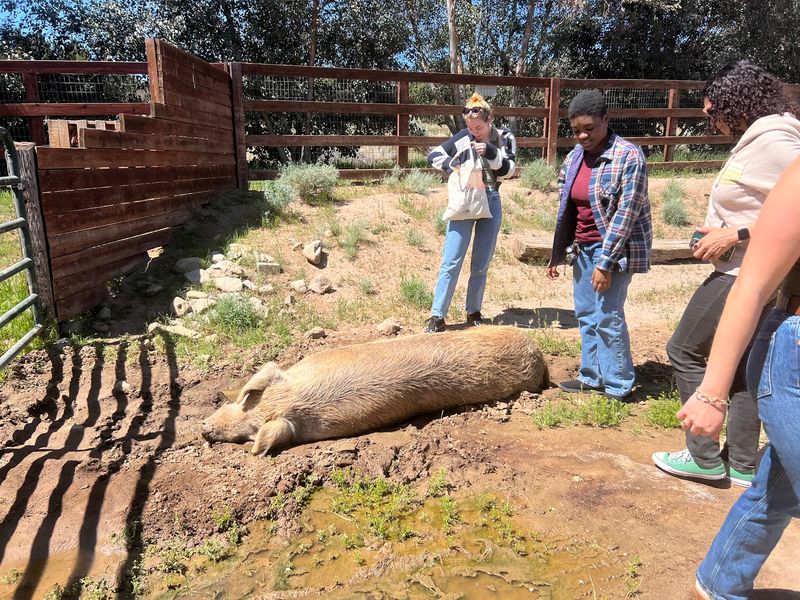
Hollywood sits less than an hour away, but the real stars at this Acton ranch have curly tails.
Farm Sanctuary’s Southern California location runs on a hacienda-style ranch. Rescued pigs live here alongside cows, chickens, turkeys, and other farm animals.
This is the West Coast branch of the same group that runs the Watkins Glen site in New York. Both share the goal of giving farm animals permanent homes.
Guided tours are the main way to visit. Guides introduce animals who survived neglect and other tough situations before arriving.
Each resident has a personality of their own. Some pigs greet tour groups right away, while others prefer to watch from a distance.
Seasonal events add extra fun to the calendar. During the 2026 Thanksgiving celebration, the pigs get a pumpkin smash party.
Watching a large pig take on a pumpkin is great entertainment. It also gives the animals healthy enrichment.
Book tours ahead, since spots fill up and schedules change by season.
11. Poplar Spring Animal Sanctuary, Poolesville, Maryland
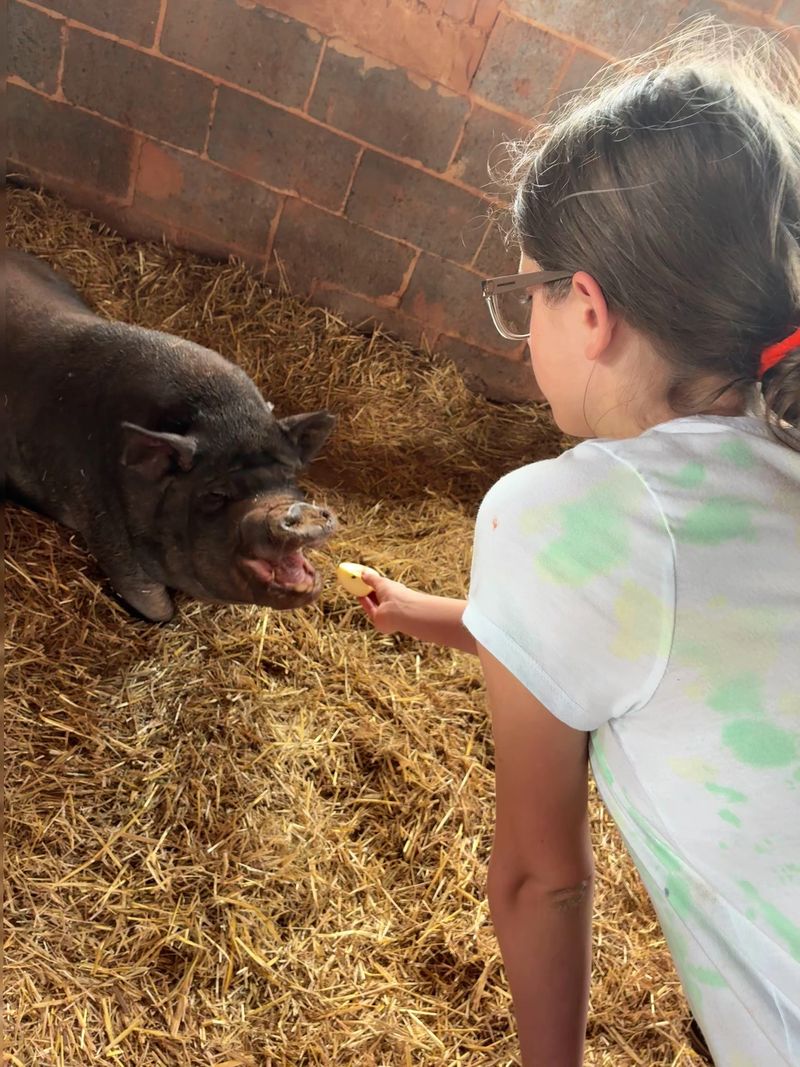
Petunia the pig holds a special title at this Maryland sanctuary as its very first rescue.
Poplar Spring opened in 1996 in the countryside near the Potomac River. Its offices sit inside a restored colonial-era farmhouse.
The land was gifted to the sanctuary, which protects it from development forever. It includes about 200 acres of woods and 230 acres of pasture.
More than 200 animals live here, including pigs, goats, sheep, cows, horses, chickens, and turkeys. Wild animals also benefit, since the property protects local habitat.
Many residents arrive scared of people after rough pasts. Staff and volunteers work patiently to help them trust again.
The sanctuary runs on donations alone. Over 100 volunteers and seven paid staff keep everything going.
Visits happen by appointment or during open houses. Spring brings the 5K Run for the Animals, and fall features a vegan Thanksgiving potluck.
Bring a pumpkin in autumn, since guests can offer them to the pigs as a seasonal treat.
12. Little Bear Sanctuary, Punta Gorda, Florida
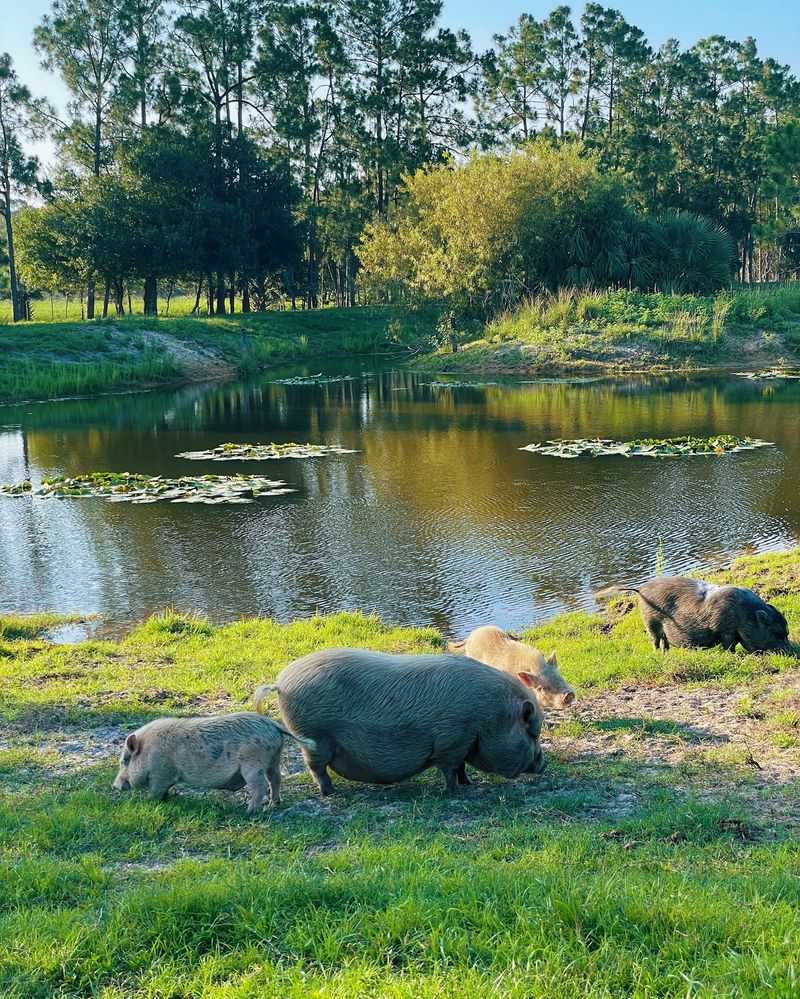
Palm trees and pigs might seem like an odd pair, yet this southwest Florida rescue makes them work together nicely.
Little Bear Sanctuary gives rescued farm animals a forever home near Punta Gorda. Pigs make up a large part of the group.
They share the property with cows, sheep, goats, and chickens. The mix creates a busy community where many species live side by side.
Education is a top goal here. Staff teach visitors how to care for animals responsibly.
Pigs get extra attention in those lessons. Many people buy piglets thinking they will stay small and easy, which rarely turns out to be true.
The team explains how smart pigs are and how much care they really need. Space, diet, and companionship all matter for a happy pig.
Plan before you go, since this is a working rescue and not a walk-in attraction. Contacting the sanctuary ahead of time keeps the animals’ needs first and makes your visit smoother for everyone.
Share this story