Most people climb stairs without giving them a second thought. You look down at your feet, count a few steps, and arrive at the next floor.
Some American buildings refuse to let that happen. Tucked behind plain front doors and busy lobbies are staircases that spin without a center pole, rise past carved marble figures, or stop at a ceiling for no clear reason.
A few were rebuilt by hand from old photographs. One is technically not a staircase at all, and it still made the list because it changed how people move through a museum.
The stories behind these steps involve rich families, stubborn builders, clever architects, and at least one local legend that refuses to quit. You will learn which ones you can climb, which ones are strictly for looking, and which tours get you closest to the good parts.
You will also pick up a few facts that make great trivia at your next family dinner. So take the next step and keep scrolling, because the first stop on this list has puzzled visitors for nearly 150 years.
Loretto Chapel, Santa Fe, New Mexico
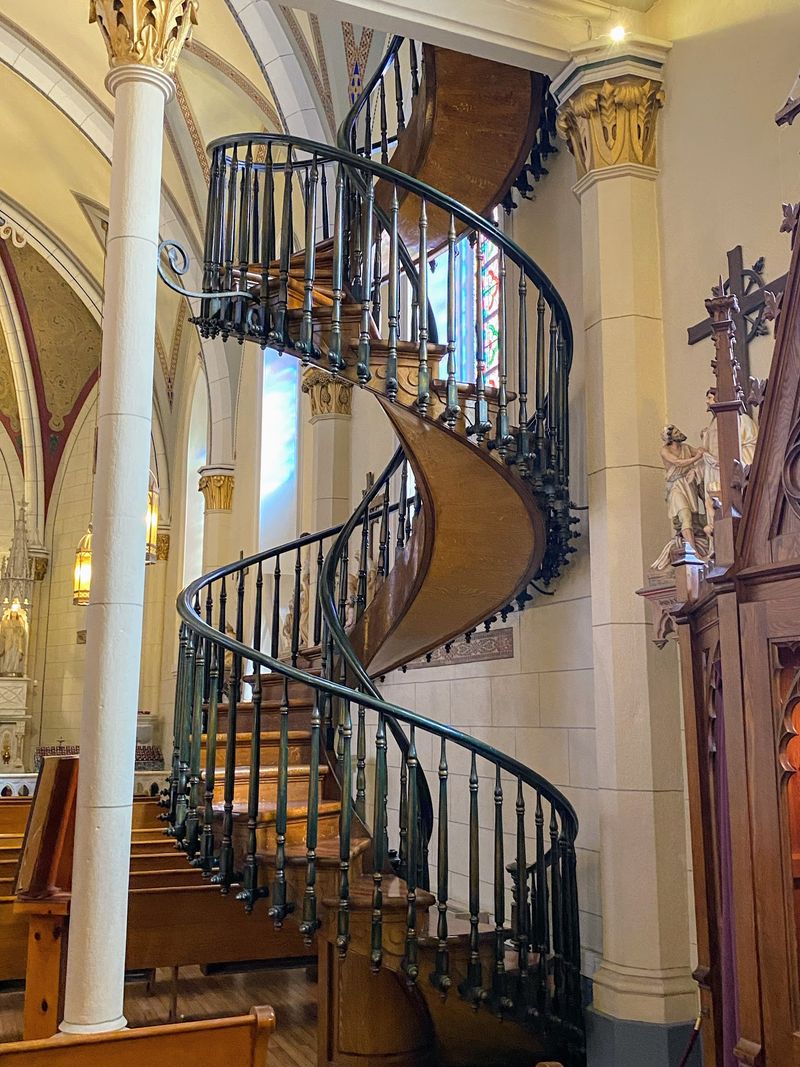
Two complete turns, zero center pole, and one very stubborn mystery. That is the quick summary of the wooden staircase inside Loretto Chapel.
Builders finished the spiral in the late 1870s to reach the choir loft of this small Gothic Revival chapel. Without a central post, the stairs seem to rise on their own, which still makes visitors tilt their heads in disbelief.
For decades, nobody could say for sure who built it. A local legend grew around a mysterious carpenter who showed up, finished the job, and left without asking for payment.
Historians have since pointed to a French craftsman named François-Jean Rochas as the likely builder. The legend, of course, is still more popular at the gift shop.
Visitors can view the staircase during regular chapel hours for a small admission fee. Climbing is not allowed, so plan on admiring it from the floor.
Bring a camera and some patience. The chapel is small, and crowds tend to gather right where the best photos happen.
The Rookery Building, Chicago, Illinois
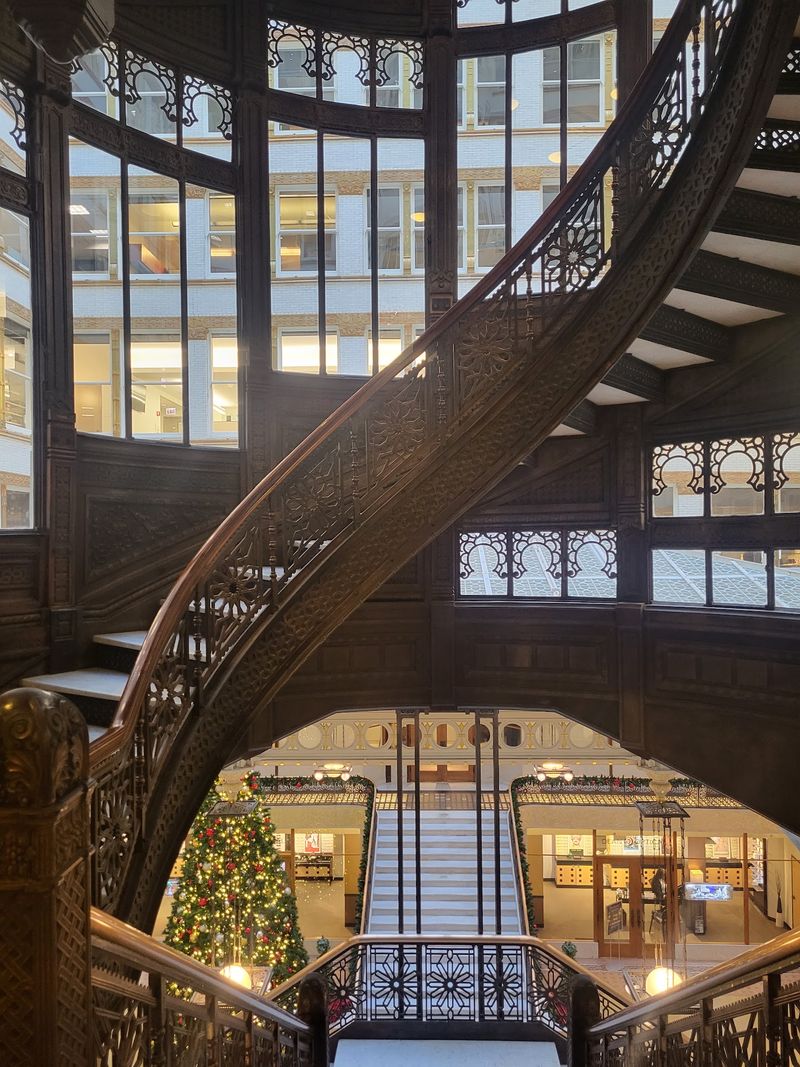
Office buildings are not supposed to be this pretty. Somebody forgot to tell the people who built The Rookery.
Daniel Burnham and John Root designed the building, and it opened in 1888 in Chicago’s Loop. From the sidewalk, it looks like a sturdy old office block with a heavy stone face.
Inside is a different story. A bright central court rises under a glass ceiling, and a staircase curves upward through it with ornamental ironwork and geometric patterns.
Frank Lloyd Wright remodeled the lobby in 1905. He covered much of the iron in white marble with gold details, giving the space a cleaner look that still holds up today.
The building is still full of working offices, so treat it with the same manners you would use at a library. Quiet voices and quick photos go a long way.
Guided tours from the Frank Lloyd Wright Trust explain how the space changed over time. They also take you to areas casual visitors usually miss.
Iowa State Law Library, Des Moines, Iowa
Law books are rarely the reason anyone grabs a phone to take pictures. The Iowa State Law Library is the big exception.
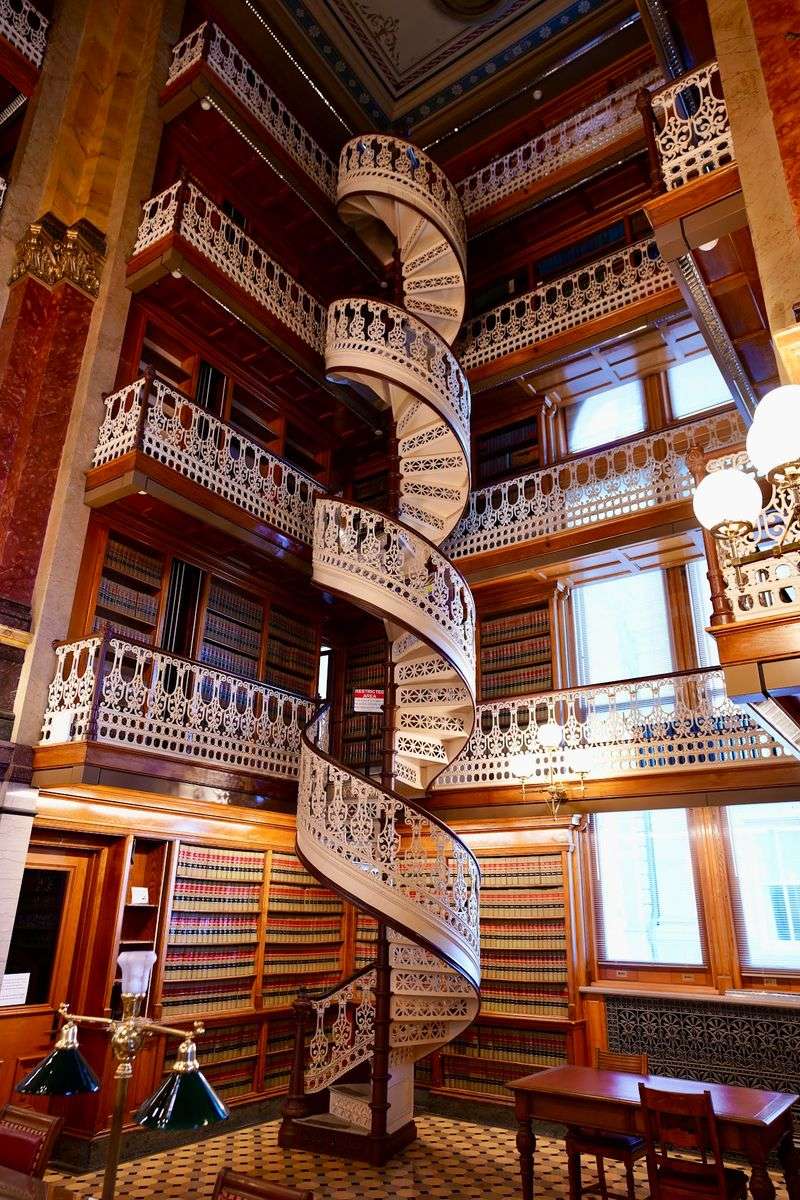
Tucked inside the Iowa State Capitol in Des Moines, this room looks like it belongs in an old European palace. Ornate cast-iron spiral staircases twist up through the space, linking several floors of shelves.
Decorative railings wrap around four balconies that look down on the reading area. Every level is lined with books, and the collection holds roughly 100,000 volumes.
Here is the fun part. This is not a roped-off museum display, but a working public library where real research still happens every day.
Visitors are welcome to come in and look around during open hours. Keep your voice low, since lawyers, students, and staff may be working nearby.
Pair your visit with a free Capitol tour. The building’s gold dome and grand halls make the whole trip worth the drive, even for people who have never opened a law book.
Biltmore House, Asheville, North Carolina
George Vanderbilt did not build a house so much as a small kingdom. His staircase was clearly designed for someone who expected to be watched while walking.
Biltmore House opened in 1895 near Asheville, North Carolina. It is still the largest privately owned home in the United States, with 250 rooms.
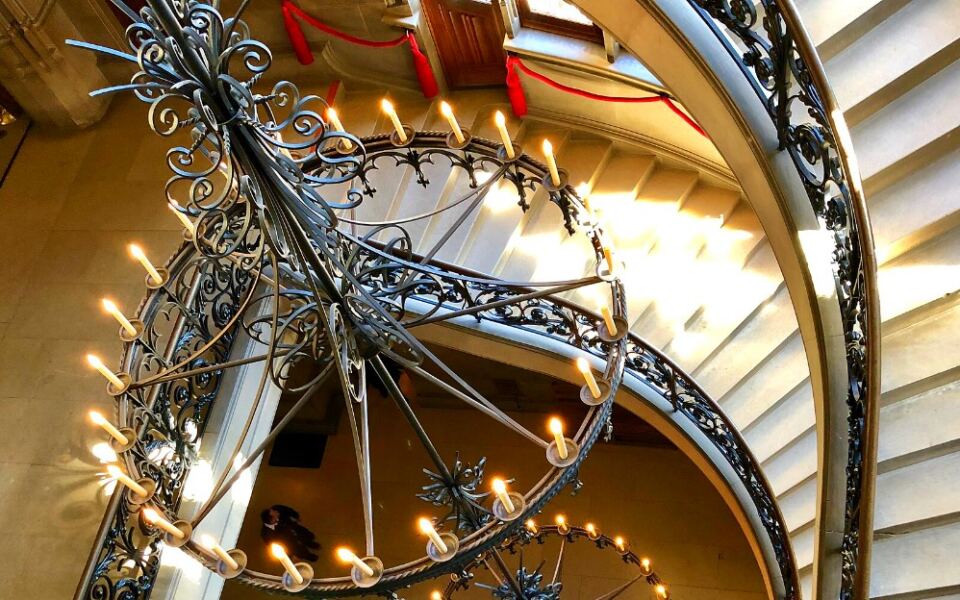
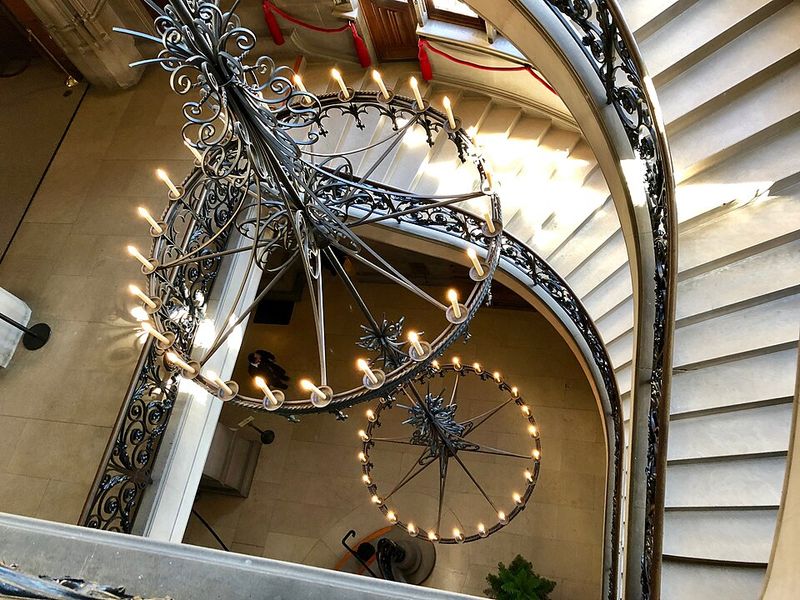
The Grand Staircase is a stone spiral that wraps around an open center. A massive iron chandelier hangs down through the middle, held in place from the top floor.
The design was inspired by a famous staircase at a French chateau. That fits, since the whole mansion follows the French Renaissance style.
Visitors walk up these steps during the standard house tour. Upstairs, you will find guest bedrooms, family suites, and some of the most detailed rooms in the house.
Tickets are not cheap, so plan for a full day. The gardens, winery grounds, and village area can easily fill an afternoon after the house tour wraps up.
Library of Congress, Washington, D.C.
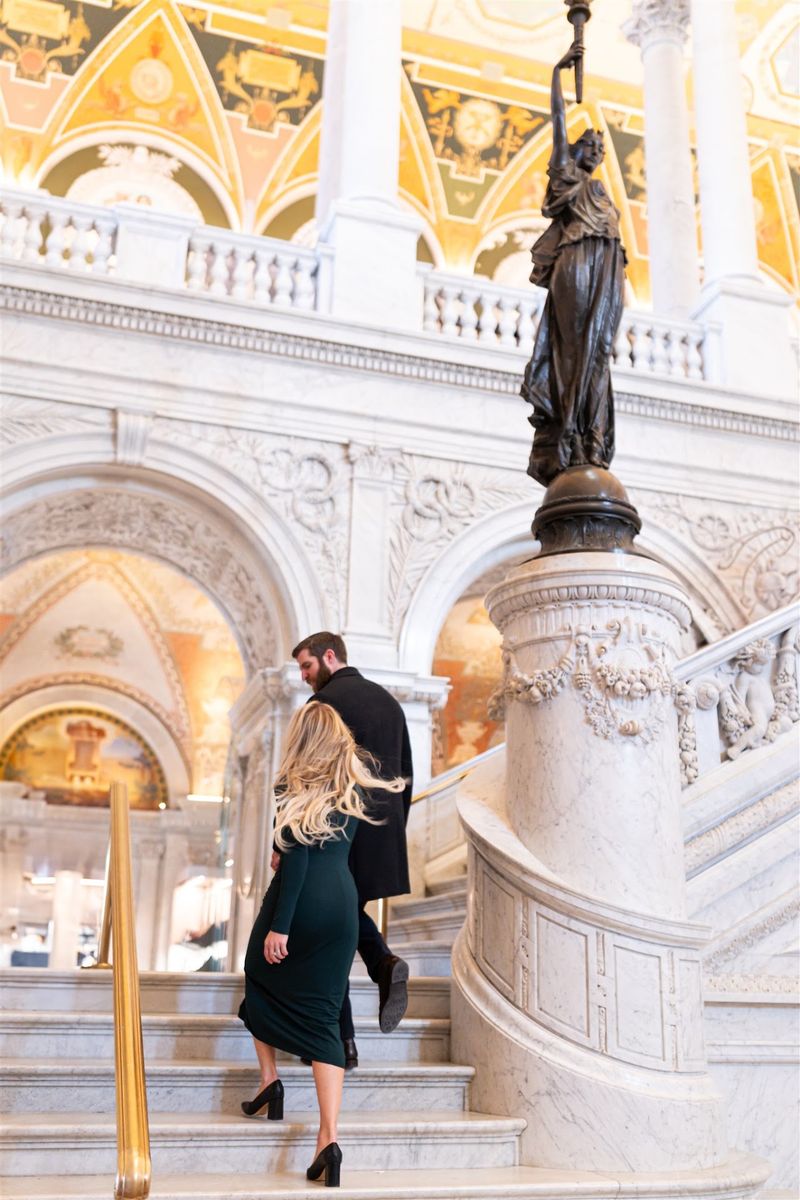
Look closely at the railings, and you will spot a tiny farmer. Keep looking, and a small printer and an inventor show up too.
These little carved figures decorate the grand marble staircases in the Great Hall of the Thomas Jefferson Building. Each one represents a job or field of knowledge, from music to science.
The building opened in 1897, during a time when Americans wanted public buildings to impress everyone who walked in. The designers clearly took that goal seriously.
Every surface seems to carry something to study. There are painted ceilings, carved columns, and inscriptions honoring great thinkers.
The good news is that admission is free. You will need a timed-entry ticket, which you can reserve online ahead of your visit.
Give yourself extra time on the stairs themselves. Most people race up to see the Main Reading Room overlook, but the carvings along the way are the real treat for patient visitors.
New York Public Library, New York, New York
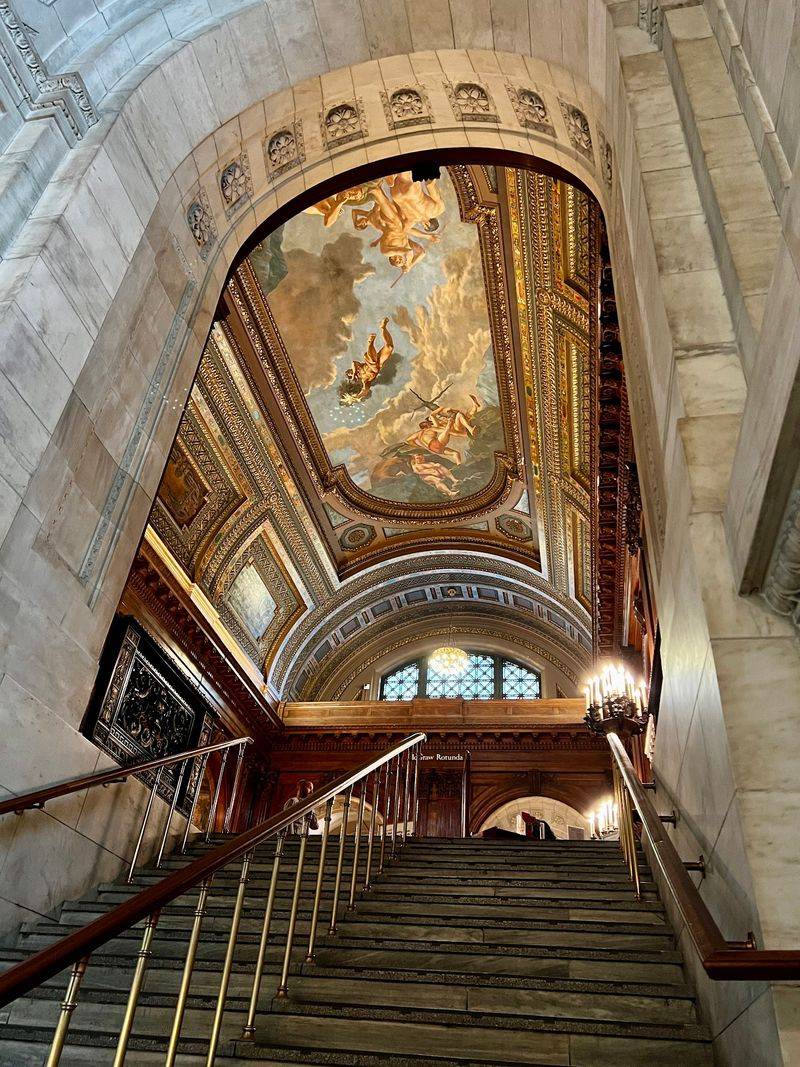
Everyone takes a photo with the stone lions out front. Fewer people realize the best views are waiting just inside the doors.
The Stephen A. Schwarzman Building on Fifth Avenue opened in 1911.
Its entrance hall, called Astor Hall, is built from white marble with tall arches overhead.
From there, matching staircases climb toward the upper floors. Carved stone, classical columns, and wide landings make the walk feel slow and important, even if you are just looking for a restroom.
At the top waits the famous Rose Main Reading Room. It stretches nearly two city blocks and has a painted ceiling that most visitors photograph from every angle.
Entry is free, and the library offers free guided tours on many days. Check the schedule online before you go.
A quick tip from regulars is to visit on a weekday morning. Crowds are smaller, and you can enjoy the stairs without dodging a dozen tour groups along the way.
Winchester Mystery House, San Jose, California
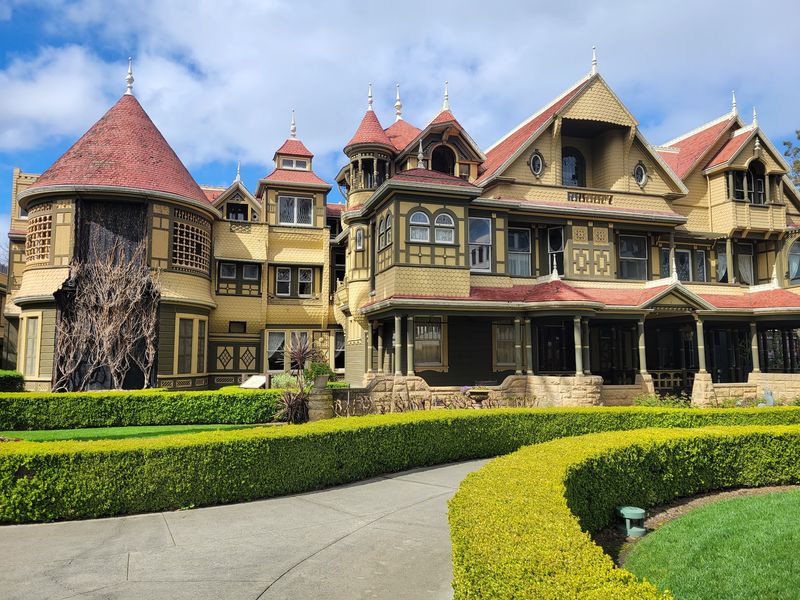
Some stairs go up, some go down, and a few go absolutely nowhere. Welcome to the strangest home on this list.
Sarah Winchester kept building her Victorian mansion in San Jose for decades. Construction went on almost nonstop, adding room after room without a clear master plan.
The result includes 47 staircases. One famous flight climbs right into a ceiling, which makes visitors laugh and then check twice to see if they missed a trapdoor.
Other oddities include doors that open onto walls and tiny steps that rise only a couple of inches each. Some say these switchback stairs were made easier for Sarah to climb as she grew older.
Guided tours lead visitors through the maze. Which rooms you see depends on the tour you choose, so read the options carefully before booking.
Wear comfortable shoes and stay close to your guide. The house has around 160 rooms, and getting turned around inside is part of the experience.
Hearst Castle, San Simeon, California
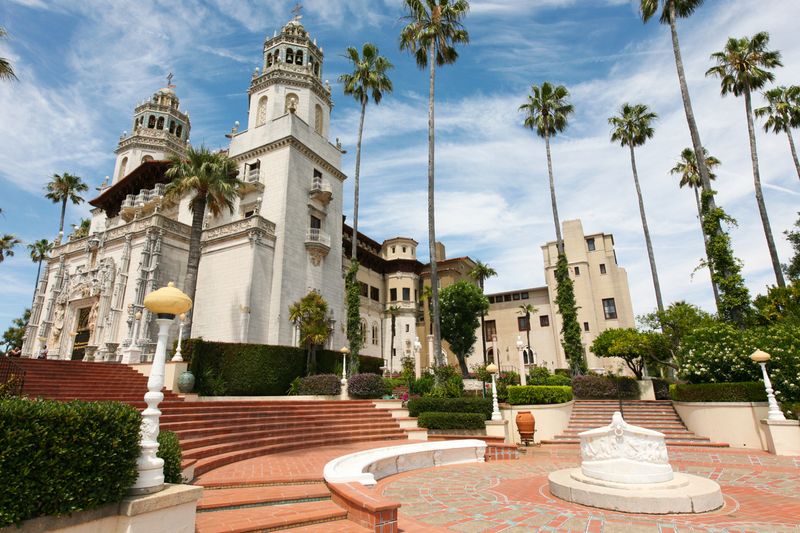
Newspaper owner William Randolph Hearst liked big rooms, big views, and very small staircases. That last part surprises most visitors.
Hearst Castle sits on a hilltop above California’s Central Coast. The main building, Casa Grande, looks like a Spanish cathedral and holds dozens of rooms filled with art and antiques.
Inside, narrow spiral stairs wind upward toward the private Gothic Suite, where Hearst ran his business. More stairs continue toward the Celestial Suite, tucked high in the twin towers.
These steps are tight and twisting, so they feel very different from the grand entrance halls below. It is a fun reminder that even mansions have back routes.
To see these upper areas, book the Upstairs Suites Tour. The Grand Rooms Tour is better for first-timers who want the main highlights.
Reserve tickets early, especially in summer. A bus takes guests up the hill from the visitor center, and the ride itself offers great ocean views.
California State Capitol, Sacramento, California
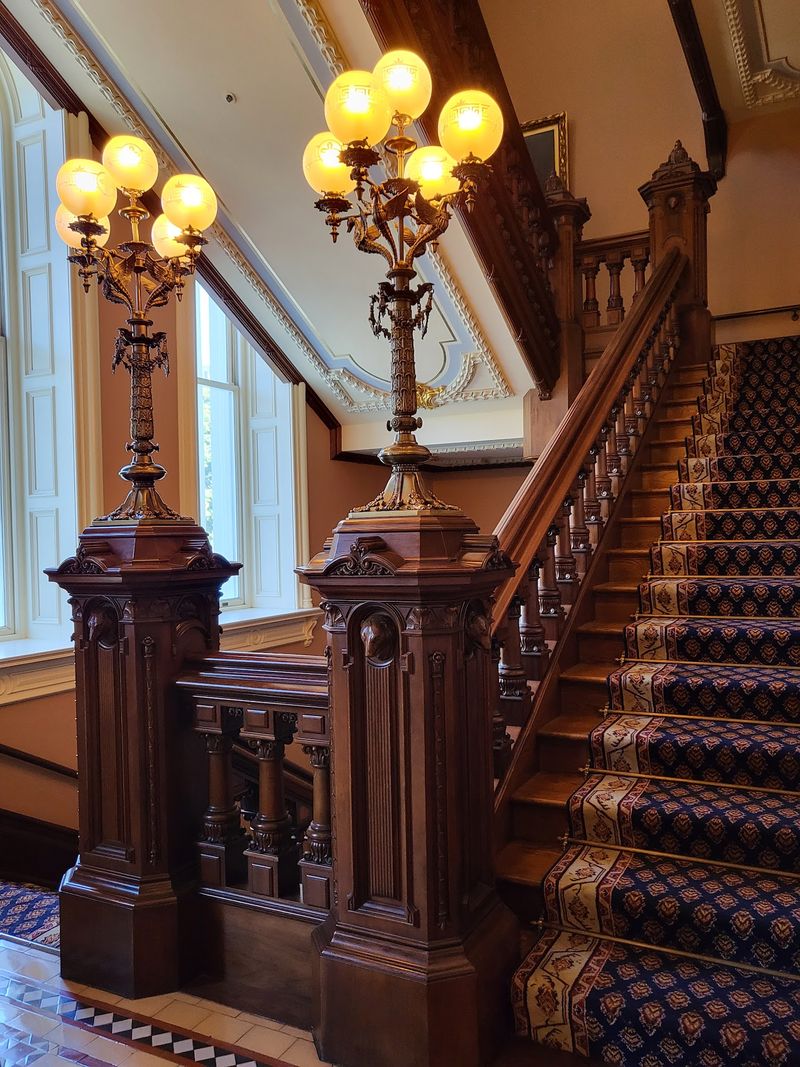
Here is a staircase that got a second chance. Workers removed the original grand stairs during a 1906 remodel, and many people assumed they were gone for good.
Decades later, during a major restoration of the California State Capitol, craftspeople decided to bring them back. They studied old photographs and one surviving original post to get every detail right.
The rebuilt stairs use walnut, mahogany, and redwood. Look for carved leaves, small bear heads, and fancy light fixtures modeled after the original gas lamps.
The bears are a nice touch, since the grizzly appears on the state flag. Kids usually spot them first.
Admission to the Capitol is free, and the building is still where state lawmakers work. You may see officials hurrying past while you take pictures.
Free tours run throughout the day. Join one to hear more about how the restoration crew matched the old woodwork piece by piece.
The Breakers, Newport, Rhode Island
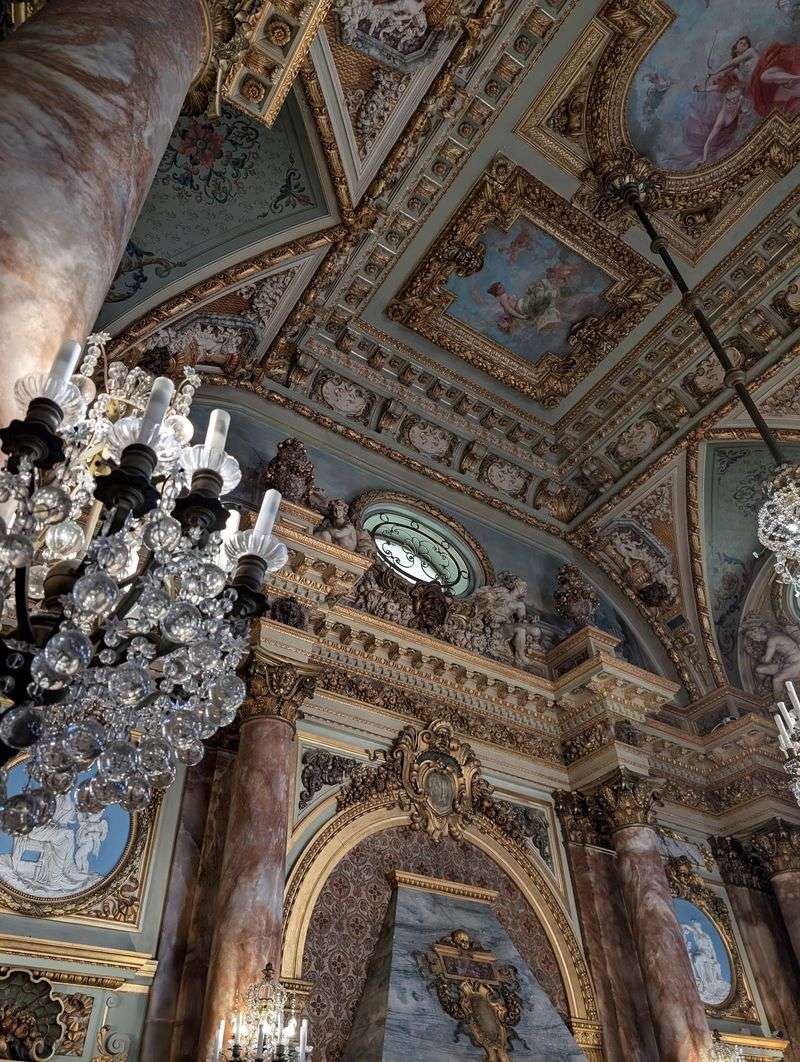
Calling The Breakers a summer cottage is like calling a whale a fish snack. The Vanderbilts used that word anyway.
Cornelius Vanderbilt II built this Newport mansion in 1895. It has 70 rooms and was meant for just a few months of use each year.
The grand staircase rises from the Great Hall, which stands about 45 feet tall. Polished stone, carved details, and wide steps make it the kind of stairway built for grand entrances at parties.
The design follows Italian Renaissance palaces. Architect Richard Morris Hunt brought in craftspeople and materials from Europe to finish the interior.
The Preservation Society of Newport County runs tours today. An audio guide lets you move at your own pace and hear stories from family members and staff.
Plan to walk the Cliff Walk afterward. It runs right behind the property and gives you a great outside view of the mansion and ocean.
MASS MoCA, North Adams, Massachusetts
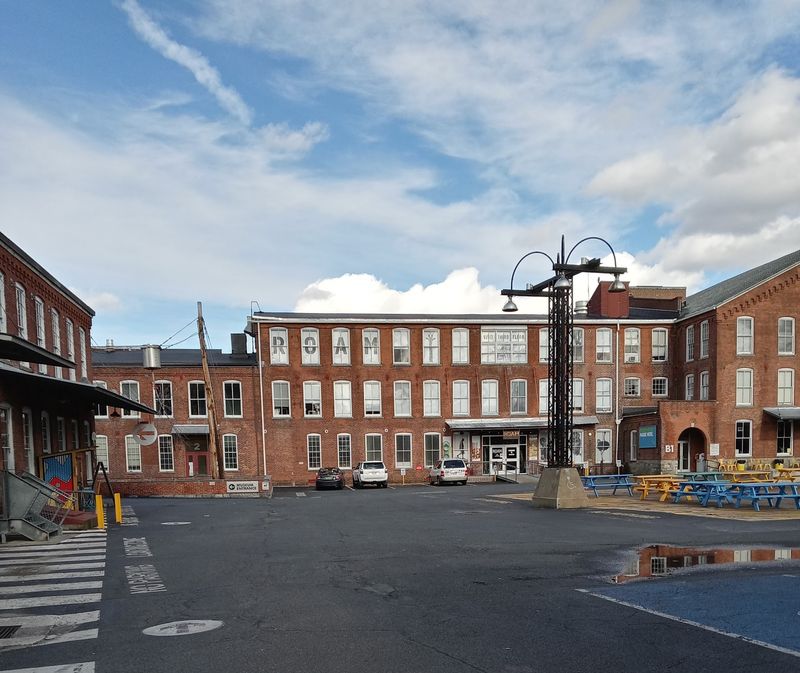
An old factory in the Berkshires is not where most people go looking for fancy stairs. MASS MoCA proves that surprises love unlikely places.
The Massachusetts Museum of Contemporary Art sits inside a huge former industrial complex in North Adams. Its brick buildings once housed textile and electronics work.
Inside Building 7, modern stairways and walkways connect three floors filled with wall drawings by artist Sol LeWitt. The art covers the walls in bold shapes, lines, and bright colors.
Moving between floors becomes part of the show. Every landing gives you a new view of the patterns, so the trip up is just as fun as the galleries themselves.
The installation includes 105 wall drawings. It is planned to stay on view through 2043, so there is no need to rush.
The museum campus is huge. Wear comfy shoes, grab a map at the entrance, and give yourself at least three hours to see everything.
Solomon R. Guggenheim Museum, New York, New York
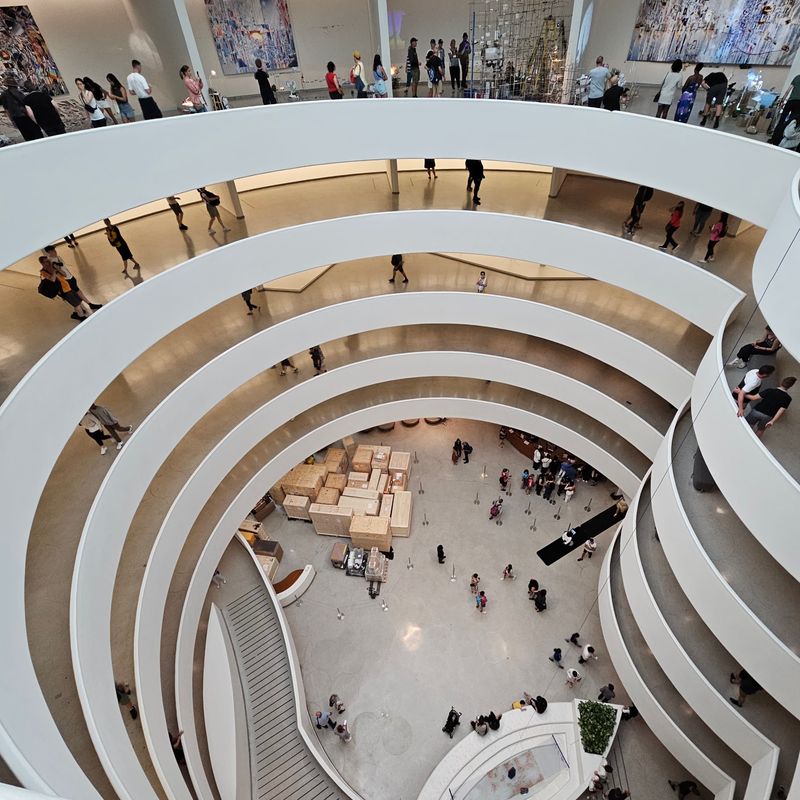
Technically, this one breaks the rules. The Guggenheim has no grand staircase at its heart, just one long curving ramp.
Frank Lloyd Wright designed the museum, and it opened on Fifth Avenue in 1959. He wanted visitors to move through art in one smooth path instead of hopping between separate rooms.
The ramp spirals around a tall open atrium under a large skylight. From almost any spot, you can look across the space and see people on other levels.
Many visitors take the elevator to the top and stroll down. Gravity does half the work, which is a pretty smart plan.
Critics argued about the design when it opened, since some felt the building competed with the art. Today, it ranks among the most recognizable buildings in New York.
Check the website for pay-what-you-wish hours. They can save you money, though lines tend to be longer during those times.
California State Capitol Museum’s Historic Stair Halls, Sacramento, California
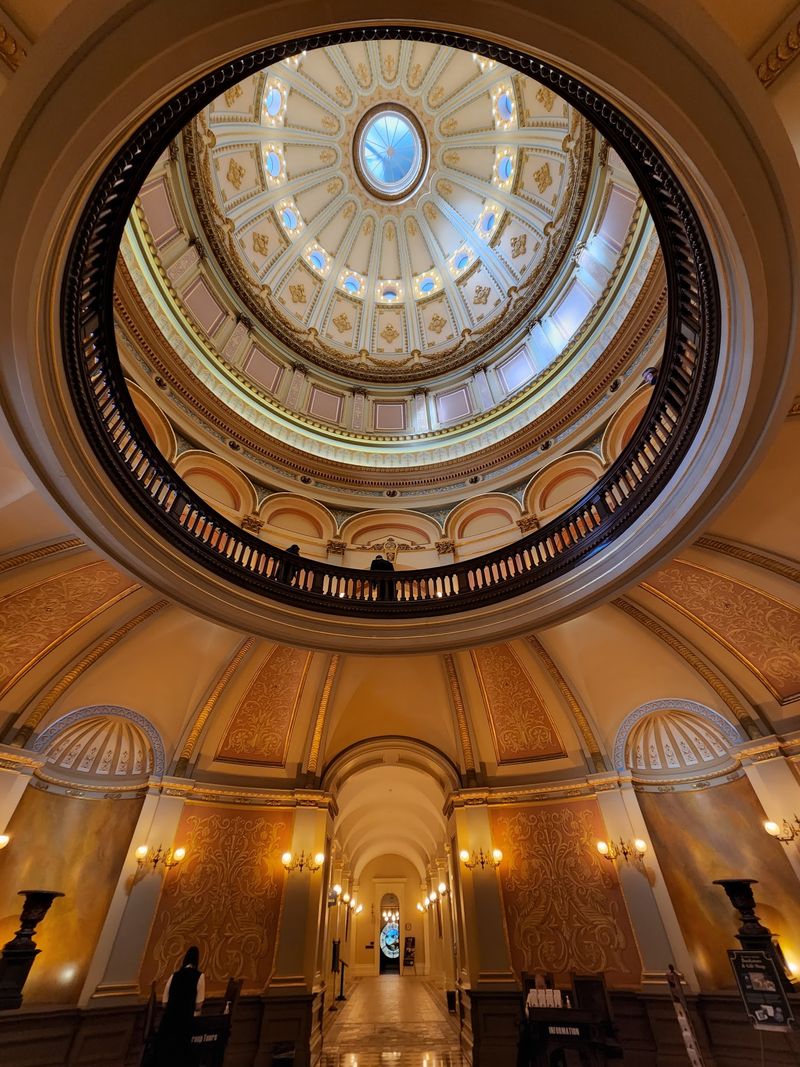
Great stairs need great surroundings. Back at the California State Capitol, the stair halls around those famous steps tell their own story of patience and skill.
Restoration teams studied old records and photos to rebuild the halls as they looked before 20th-century changes. They reproduced woodwork, posts, and trim with careful attention to detail.
One heartwarming fact stands out. Descendants of the original staircase builders took part in the restoration, connecting the project directly to the families who worked on it first.
Look closely at the decorative posts as you walk through. They are good examples of how much handwork went into the building.
The Capitol Museum offers exhibits that explain the restoration in more depth. These displays help make sense of what changed and why it was brought back.
Since you are already visiting the main staircase, save time for these halls. Ask a tour guide to point out the reproduced pieces, because they are hard to spot without help.
Share this story