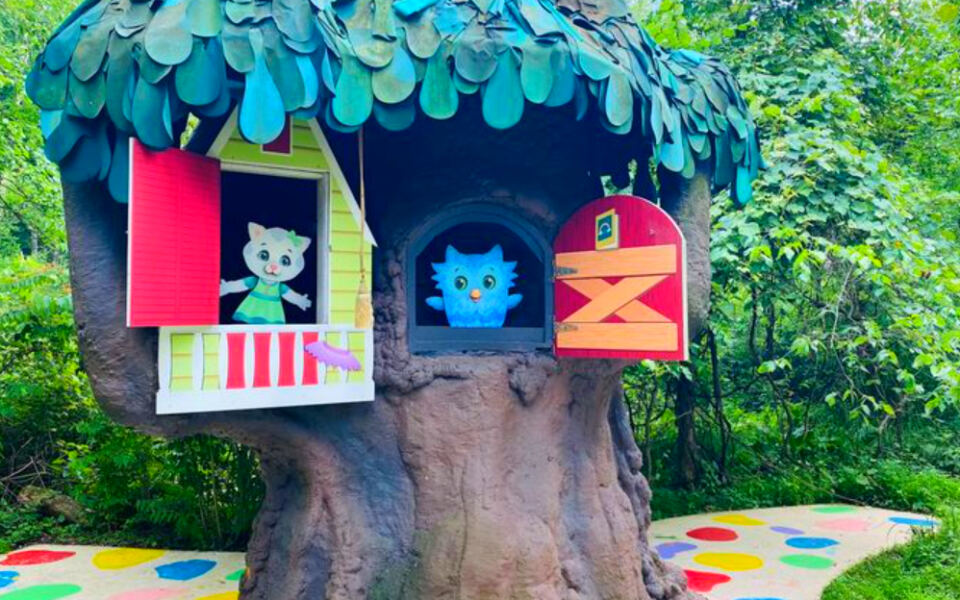
Pittsburgh is a great city, but even great cities can feel a little too familiar after a while. Western Pennsylvania has a surprising number of destinations packed within a short drive, and most people have no idea how close they really are.
This list covers 13 places that are all reachable in under two hours from Pittsburgh, covering everything from ancient history to family-friendly animal parks. Some of these spots are well-known, others fly completely under the radar, but all of them are worth the drive.
Pack a snack, top off the tank, and get ready to see a side of Pennsylvania that most people only discover by accident.
1. Ohiopyle State Park, Ohiopyle, Pennsylvania
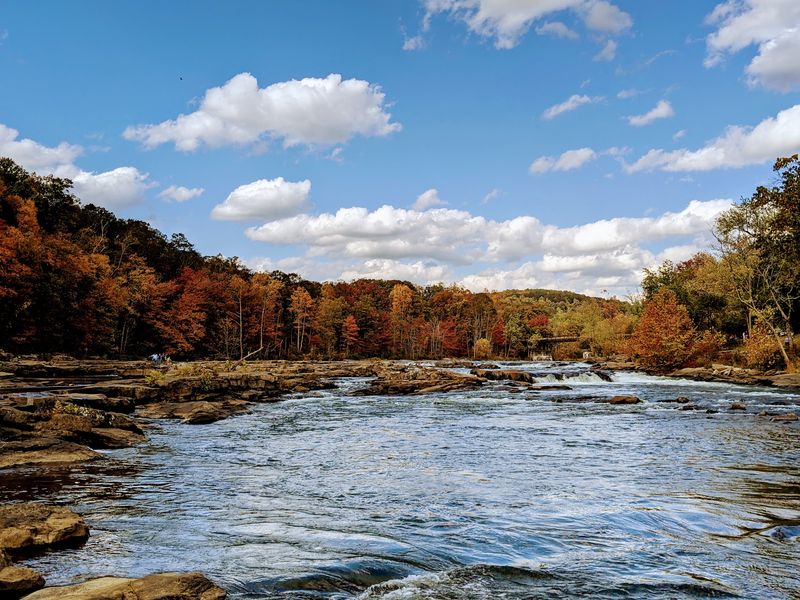
The Youghiogheny River carved out one of the most dramatic natural settings in Pennsylvania right here, and the result is a park that genuinely earns its reputation. Ohiopyle State Park covers 20,500 acres in the Laurel Highlands, with the river running through Pennsylvania’s deepest gorge at its center.
Ohiopyle Falls drops 20 feet and anchors the heart of the park, while Cucumber Falls offers a 30-foot bridal veil drop just a mile from the Great Allegheny Passage trail. Hikers have over 79 miles of trails to choose from, including a section of the 73-mile Laurel Highlands Hiking Trail.
The 100-acre Ferncliff Peninsula is a National Natural Landmark packed with plant diversity, and Meadow Run has natural water slides popular on warm days. The park name itself comes from a Native American phrase meaning “white, frothy water,” which turns out to be a pretty accurate description.
2. Fallingwater, Mill Run, Pennsylvania
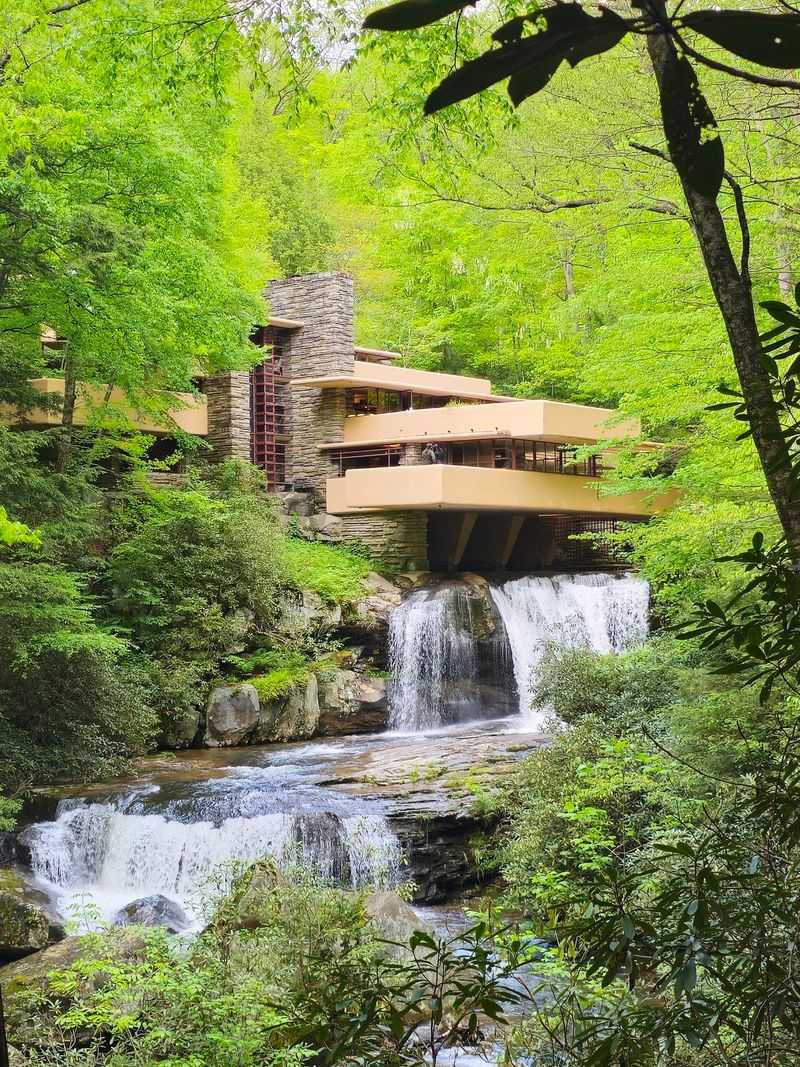
Frank Lloyd Wright designed Fallingwater in 1935 for Pittsburgh department store owner Edgar Kaufmann Sr., and his approach was bold: build the house directly over the waterfall rather than beside it. Wright wanted the family to live with the water as part of daily life, not simply admire it from a distance.
The structure uses cantilevered concrete terraces that extend outward without support at their far ends, creating the visual impression that the house floats above Bear Run below. Locally quarried sandstone piers tie the building back to the natural rock ledges of the surrounding landscape.
Fallingwater became a public museum in 1964 and is now both a National Historic Landmark and a UNESCO World Heritage Site. Several tour options are available, including an accessibility tour for visitors with mobility limitations.
Comfortable closed-toe shoes are recommended, as the interior includes more than 100 steps across multiple levels.
3. Fort Ligonier, Ligonier, Pennsylvania
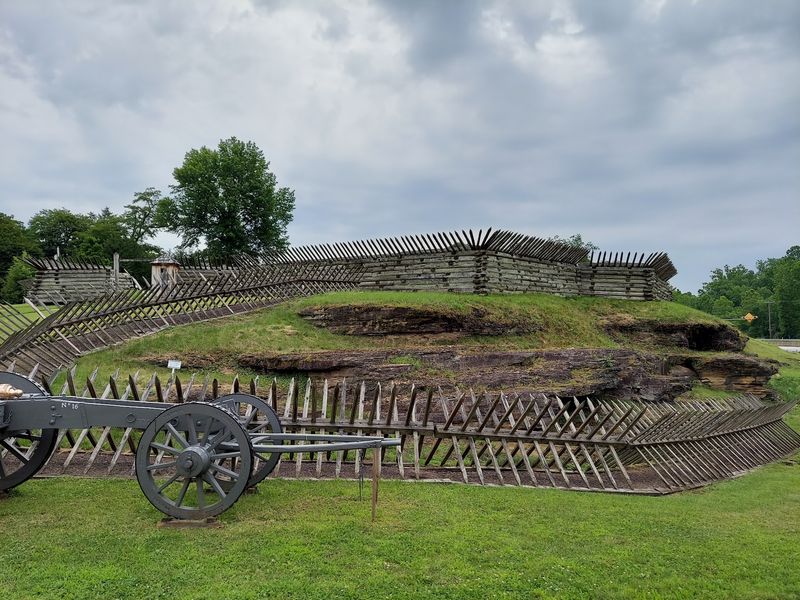
Built in 1758 as a staging ground for the Forbes Expedition during the French and Indian War, Fort Ligonier has the distinction of never having been captured by enemy forces during its eight years as an active garrison. That is a record worth bragging about.
The reconstructed inner fort measures 200 feet square with four corner bastions, and visitors can walk through an officer’s mess, barracks, quartermaster store, and an underground powder magazine, the only original 18th-century feature still on site. The outer entrenchment stretches 1,600 feet around the perimeter.
The adjacent museum holds over 200 original 18th-century objects, including a dedicated George Washington Gallery featuring his handwritten memoirs and saddle pistols. A November 1758 friendly fire incident near the fort, where Washington famously rode between firing lines to stop the conflict, is documented with artifacts unearthed through recent archaeological excavations.
Free parking is available on site.
4. Idlewild & SoakZone, Ligonier, Pennsylvania
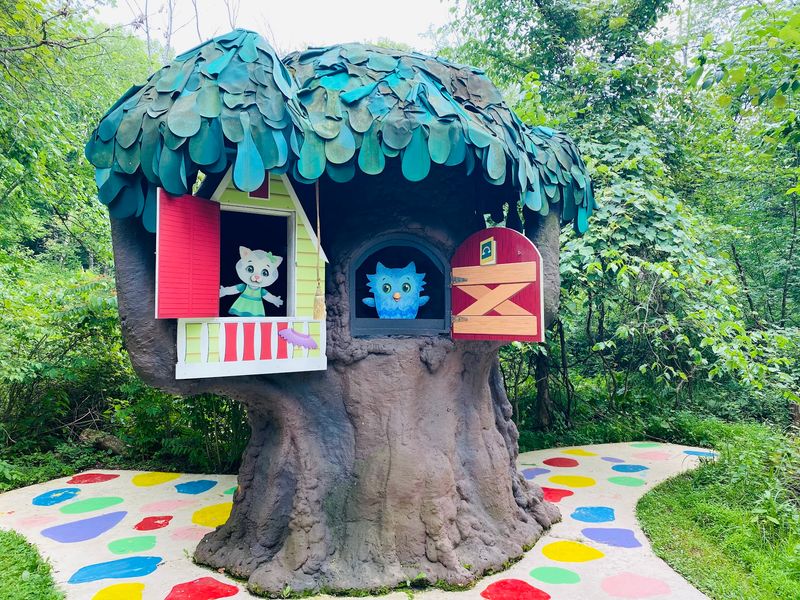
Pennsylvania’s oldest amusement park has been running since 1878, which means it has been entertaining families longer than most grandparents have been alive. Idlewild started as a simple picnic ground along the Ligonier Valley Railroad and grew into something far more interesting over the decades.
Story Book Forest, opened in 1956, lets kids walk directly into classic nursery rhyme and fairy tale settings, and the area was famously described as built not on motion but on emotion. Daniel Tiger’s Neighborhood adds a trolley ride and interactive castle visit for the youngest guests.
The Rollo Coaster, a wooden junior coaster from 1938, uses the natural typography of the land to build its layout, which is a clever design trick that holds up well. The SoakZone waterpark adds a wave pool, water slides, and a lazy river for warmer months.
The park runs seasonally from late May through October, with Hallowboo events in fall.
5. Laurel Caverns, Farmington, Pennsylvania
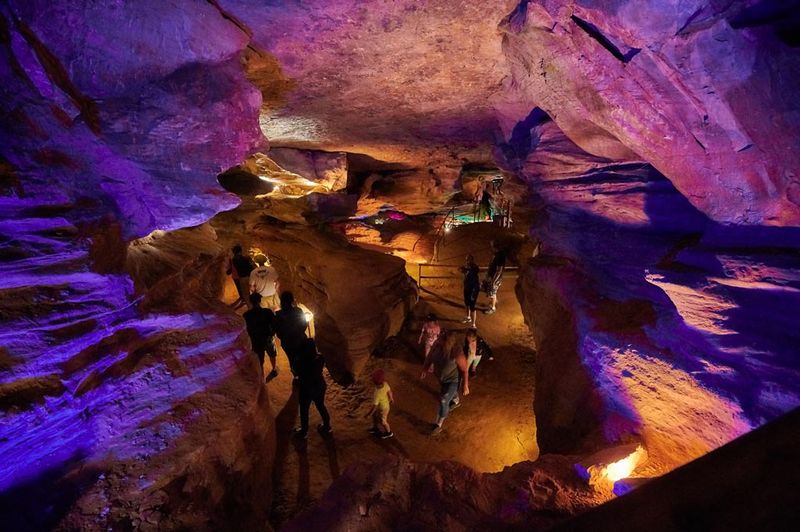
Pennsylvania’s largest cave system sits beneath Chestnut Ridge in Farmington and recently became the state’s first underground state park, which is a distinction that takes a moment to fully appreciate. The cave has been open to visitors since 1964 and maintains a constant 52 degrees Fahrenheit year-round.
Unlike many limestone caves, Laurel Caverns is made of calcareous sandstone, which means fewer stalactites and stalagmites and more of a smooth, expansive passage feel. The cave stretches over four miles of mapped passages, with some chambers reaching 50 feet high and averaging over 12 feet wide.
Tour options range from a 35-minute Maze Tour with a light show to a full one-hour tour covering 143 steps through larger and steeper sections. Adventure-oriented visitors can book crawl programs with hard hats and handheld lights.
The cave closes each winter to protect its role as the largest bat hibernation site in the northeastern United States.
6. McConnells Mill State Park, Portersville, Pennsylvania
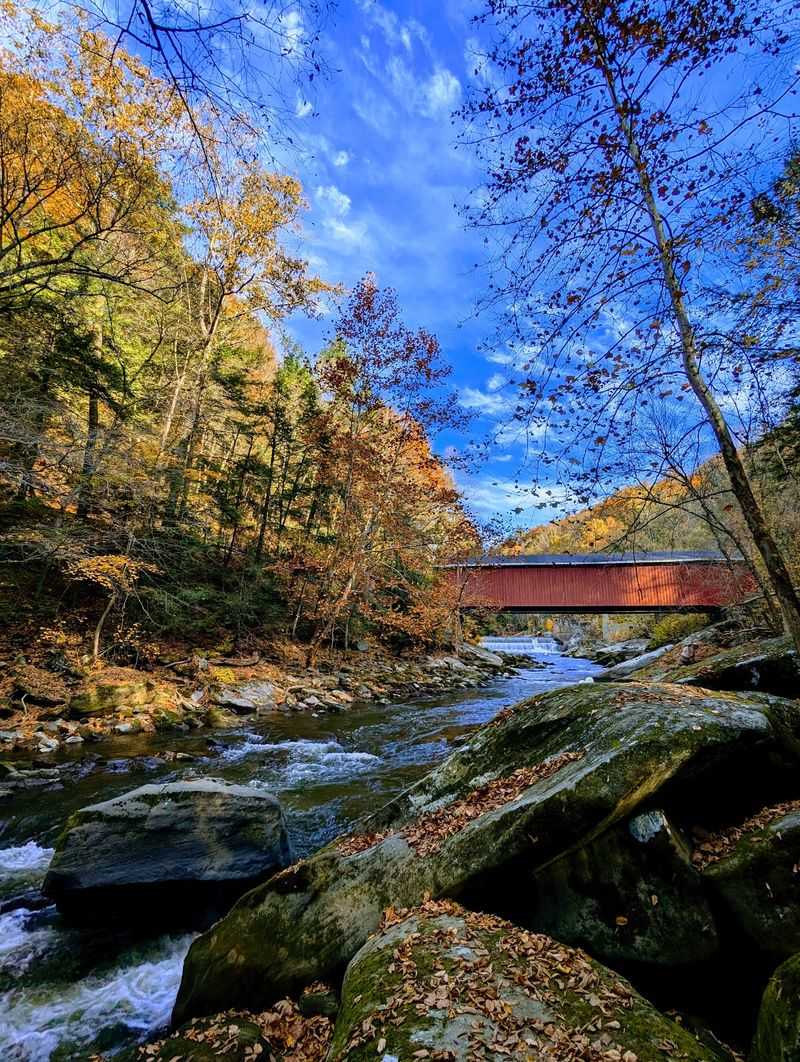
Slippery Rock Creek carved out a gorge here so impressive that the U.S. Department of the Interior designated it a National Natural Landmark in 1974.
The landscape features enormous boulders, old-growth forest, steep rock walls, and multiple waterfalls packed into 2,546 acres.
The McConnells Mill Covered Bridge, built in 1874 using a Howe Truss design, is a registered National Historic Landmark that spans the creek just upstream from the historic gristmill. Thomas McConnell modernized the mill in 1875 by replacing the waterwheel with water turbines and adding cylindrical roller mills, making it one of the country’s earliest rolling mills.
It operated until 1928 and is open for interpretive tours from Memorial Day through late September.
Hiking trails cover 9 to 11 miles through the gorge, leading to waterfalls including Hell’s Hollow Falls, Alpha Falls, and Kildoo Falls. Entry to the park is free, and it stays open year-round from sunrise to sunset.
7. Moraine State Park, Portersville, Pennsylvania
What is now one of western Pennsylvania’s most popular outdoor destinations was, not long ago, a heavily industrialized landscape scarred by strip mining, drilling, and pollution. The transformation into Moraine State Park, dedicated in 1970, is one of the region’s better environmental turnaround stories.
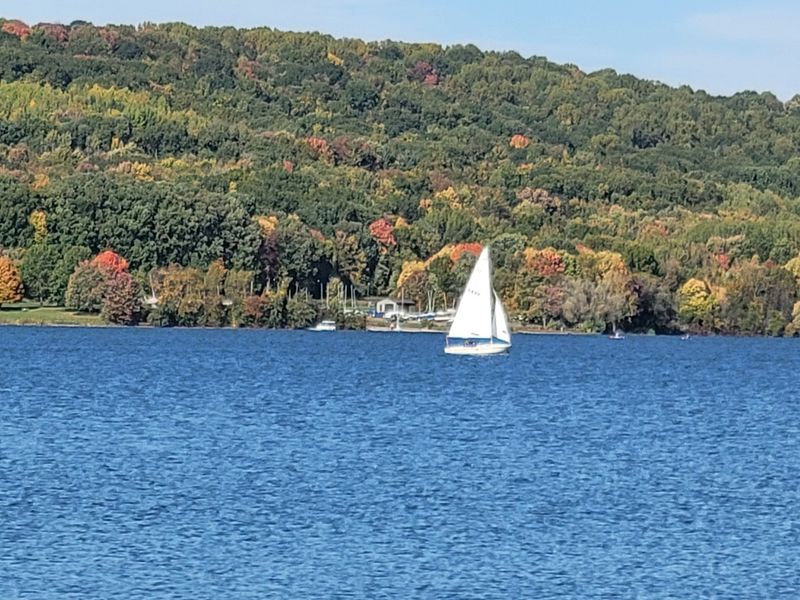
The centerpiece is Lake Arthur, a man-made 3,225-acre lake with 42 miles of shoreline created by damming Muddy Creek in 1968. Nine public boat launches serve the lake, and rentals for kayaks, canoes, sailboats, and pontoon boats are available through Crescent Bay Marine.
Two designated swimming beaches open from Memorial Day weekend through Labor Day.
On land, 29.2 miles of hiking trails wind through forests, wetlands, and along the lake edge, including sections of the North Country National Scenic Trail. A seven-mile paved bike path follows the North Shore, and an 18-hole disc golf course adds another option.
Bald eagles and osprey have been successfully reintroduced to the area.
8. Raccoon Creek State Park, Hookstown, Pennsylvania
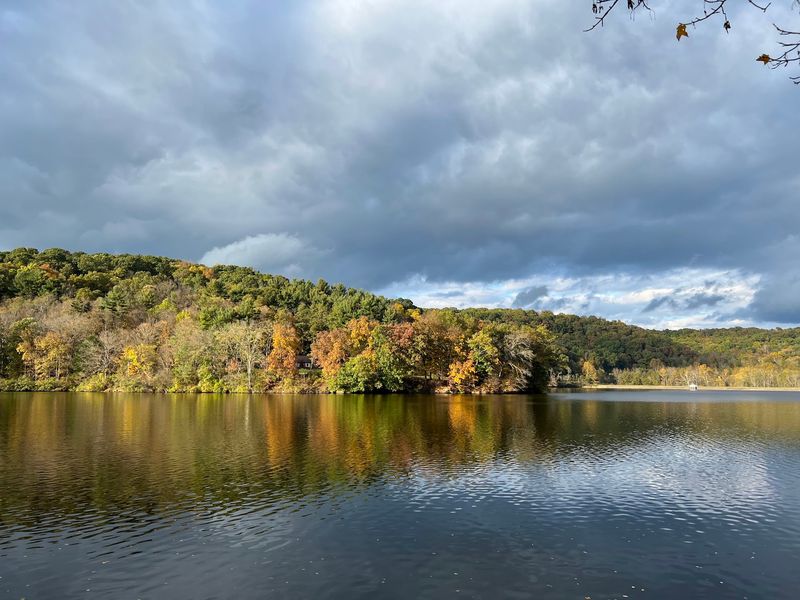
Just 30 miles west of Pittsburgh sits one of Pennsylvania’s largest and most underappreciated state parks, covering 7,572 acres of forest, meadow, and lakeside terrain. Raccoon Creek got its start in the 1930s as a Civilian Conservation Corps project, reclaiming overused farmland and restoring it to a functioning natural area.
The 314-acre Wildflower Reserve is the park’s most distinctive feature, with over 700 documented plant species spread across oak-hickory forest, pine plantations, meadows, and riparian zones. Spring blooms typically peak in the last two weeks of April, with trout lily, bluebells, phlox, and trillium among the highlights.
Pets are not allowed in the reserve to protect the ecosystem.
Beyond the reserve, more than 40 miles of trails serve hikers, mountain bikers, and equestrians. The 101-acre Raccoon Lake allows fishing and non-motorized boating, with a swim beach open in summer.
Camping is available at 172 tent and trailer sites, plus ten cabins for overnight stays.
9. Bushy Run Battlefield, Jeannette, Pennsylvania
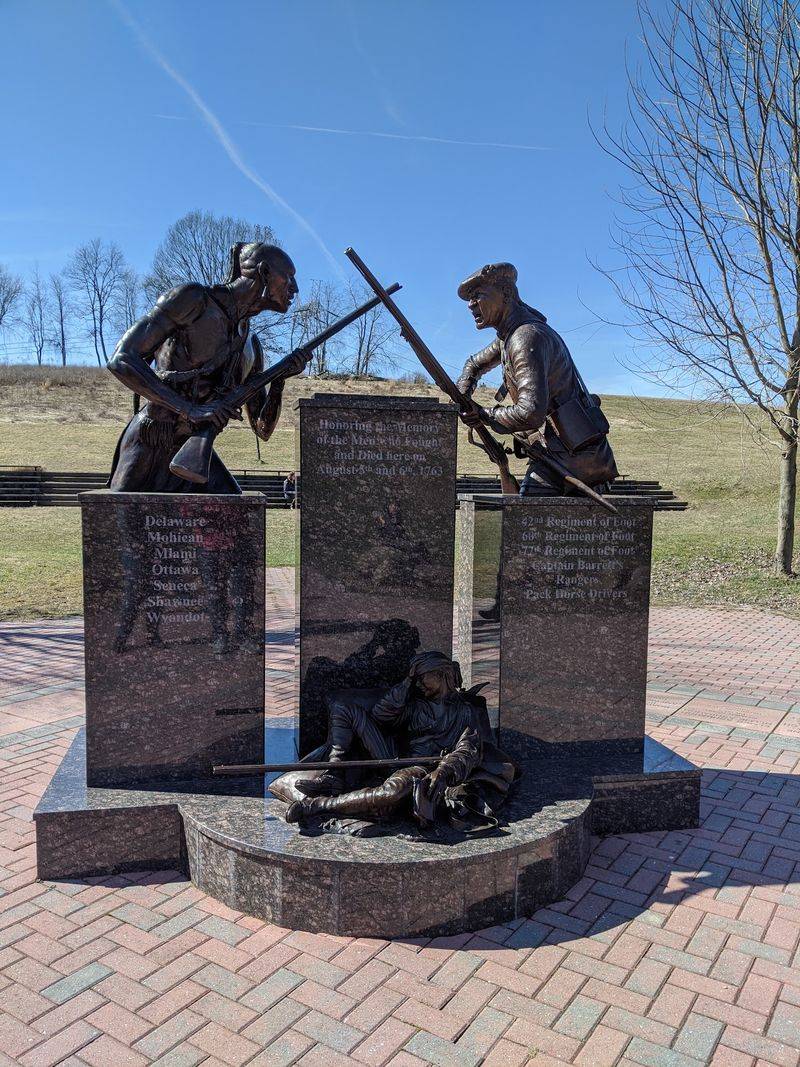
Most people driving through Westmoreland County have no idea they are passing one of the most strategically significant battlefields in early American history. Bushy Run Battlefield is Pennsylvania’s only recognized Native American battlefield, and it is dedicated entirely to interpreting Pontiac’s War of 1763 and 1764.
The battle on August 5 and 6, 1763, pitted a British relief column under Colonel Henry Bouquet against Delaware, Shawnee, Mingo, and Huron warriors. Bouquet’s second-day tactic of feigning a retreat to lure opposing forces into an ambush, using flour bags to construct a field fortification, turned the tide and prevented Fort Pitt from being captured.
The 213-acre park preserves the battlefield landscape with trails through forested and open areas, allowing visitors to trace the positions of both sides during the two-day engagement. Guided cart tours are sometimes available, and the visitor center museum holds archaeological finds, artwork, and exhibits covering the broader context of Pontiac’s War.
The visitor center is ADA accessible.
10. The Westmoreland Museum of American Art, Greensburg, Pennsylvania
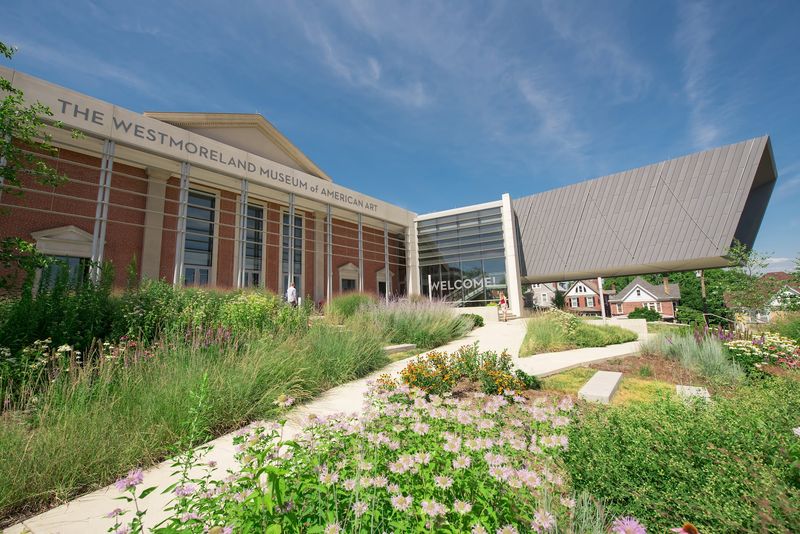
A rainy Saturday in Greensburg does not have to feel like a wasted day, and the Westmoreland Museum of American Art is a big reason why. Founded through a bequest from art lover Mary Marchand Woods and opened in 1959, the museum focuses specifically on American art with a strong emphasis on southwestern Pennsylvania artists and subjects.
The permanent collection holds over 3,400 objects spanning four centuries, with works by Mary Cassatt, John Singer Sargent, and Winslow Homer among the highlights. Galleries like the McKenna Gallery focus on regional landscapes and industrial scenes, connecting art directly to the history of local coal and steel communities.
The building itself blends a renovated neo-Georgian structure with a modern 2015 addition clad in zinc and glass. Free public tours run most Saturdays, and the museum participates in Museums for All and Blue Star Museums programs to broaden access.
Free on-site parking makes the logistics easy.
11. Meadowcroft Rockshelter and Historic Village, Avella, Pennsylvania
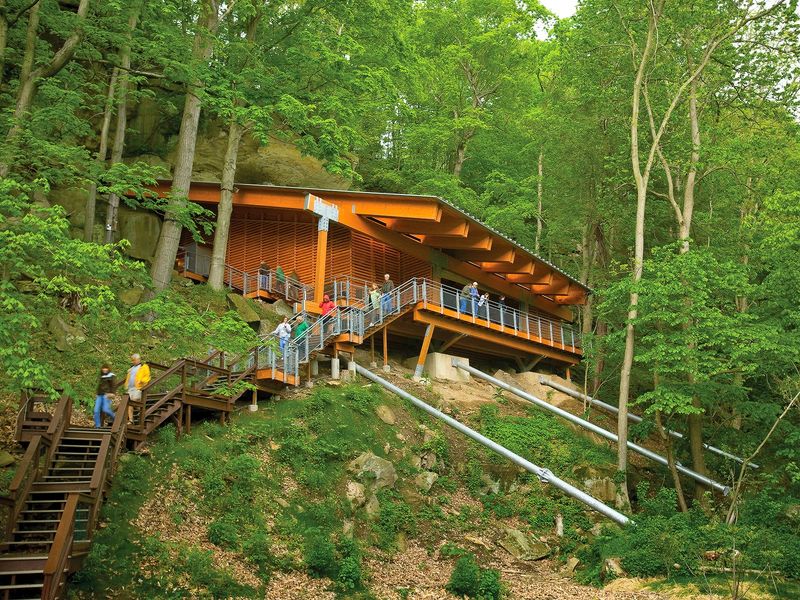
In 1955, a farmer named Albert Miller noticed prehistoric tools falling out of a groundhog hole on his property near Avella. That accidental find led to archaeological excavations beginning in 1973 that ultimately changed how scientists understand the timeline of human arrival in North America.
The Meadowcroft Rockshelter holds evidence of continuous human habitation dating back at least 16,000 years, and possibly up to 19,000 years, making it the oldest known such site on the continent. Nearly two million artifacts were recovered from eleven natural strata, including stone tools, pottery, basketry fragments, and evidence of ancient fire pits.
Beyond the rockshelter, the site includes recreated historical villages covering 500 years of regional life: a 16th-century Eastern Woodland Indian Village, an 18th-century log cabin and trading post, and a 19th-century rural settlement with a schoolhouse, blacksmith shop, and church. Visitors typically spend around three hours here.
Meadowcroft is affiliated with the Senator John Heinz History Center.
12. Living Treasures “Wild” Animal Park, New Castle, Pennsylvania
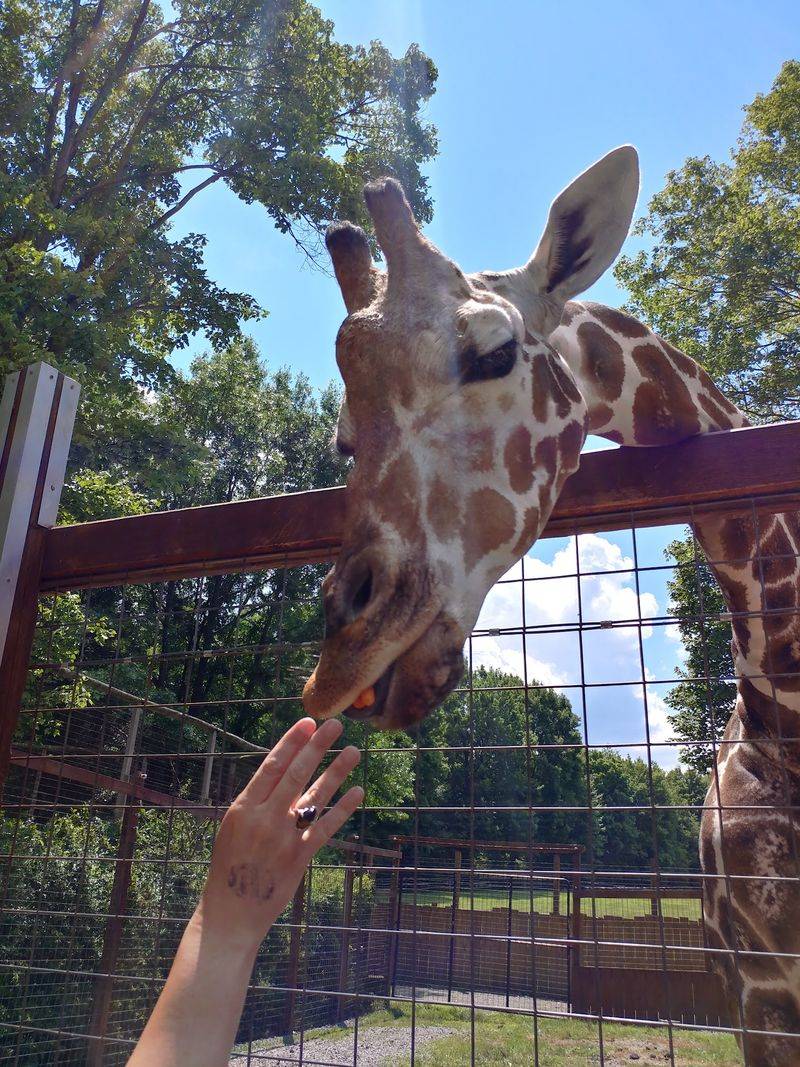
Handing a carrot to a camel is not something most people get to do on a Tuesday afternoon, but at Living Treasures Wild Animal Park, that is just a normal part of the visit. The park opened in 1992 and now houses over 500 animals representing more than 70 species from around the world.
Feed cups and carrots are available for purchase, allowing guests to interact directly with camels, goats, fallow deer, and kangaroos. A walk-through aviary lets visitors feed birds by hand, and private guided encounters with sloths and otters are bookable for a more personal experience.
An animal encounter photo booth offers keepsake photos with ambassador animals including a wallaby and a kangaroo joey.
The park runs seasonally from April through November, with a Night at the Zoo event in October featuring torch-lit pathways and after-dark animal viewing. Most of the grounds are stroller and wheelchair accessible.
The location just minutes from I-79 makes it a straightforward drive from Pittsburgh.
13. Flight 93 National Memorial, Stoystown, Pennsylvania
About 78 miles southeast of Pittsburgh, in a quiet field in Somerset County, stands one of the most significant memorials in the United States. The Flight 93 National Memorial honors the 40 passengers and crew members who fought back against hijackers on September 11, 2001, preventing a planned attack on the U.S.
Capitol or White House.
The Visitor Center, opened in 2015 on a hill overlooking the crash site, holds a permanent exhibition with artifacts, multimedia displays, and a chronological account of the events aboard the flight. A black granite walkway leads through tall Portal Walls aligned with the flight path toward an overlook of the impact area, marked by a 17-ton sandstone boulder.
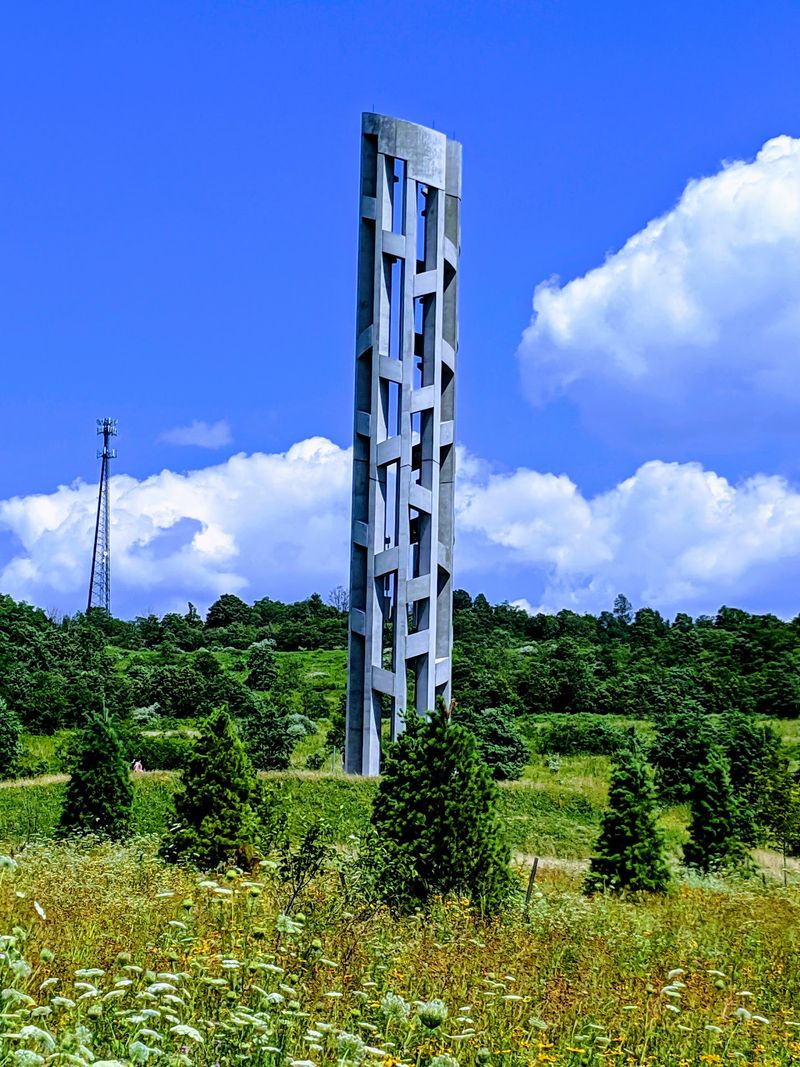
The Wall of Names consists of 40 polished white marble panels, each bearing the name of one passenger or crew member. The 93-foot Tower of Voices near the entrance holds 40 wind chimes, each tuned to a unique pitch.
The National Park Service estimates the drive from Pittsburgh at roughly an hour and a half.
Share this story