Most people book a flight when they want cobblestone streets, Gothic cathedrals, or medieval castles. Turns out, Pennsylvania has been quietly holding onto a remarkable collection of places that could make you question whether your passport is actually necessary. From a Bavarian-inspired village built in the late 1990s to a concrete castle packed with hand-painted tiles, the state has corners that genuinely feel transplanted from another continent. Some of these spots are well-known landmarks, while others are the kind of discoveries that make you say, “Wait, this is in Pennsylvania?” Each place on this list has a specific architectural style, cultural history, or landscape character that connects it directly to Europe, not just in a vague, poetic way, but in real, observable, documented detail.
Whether you are planning a road trip or just looking for something new to explore close to home, these 13 destinations are worth every mile.
1. Stoudtburg Village, Adamstown, Pennsylvania
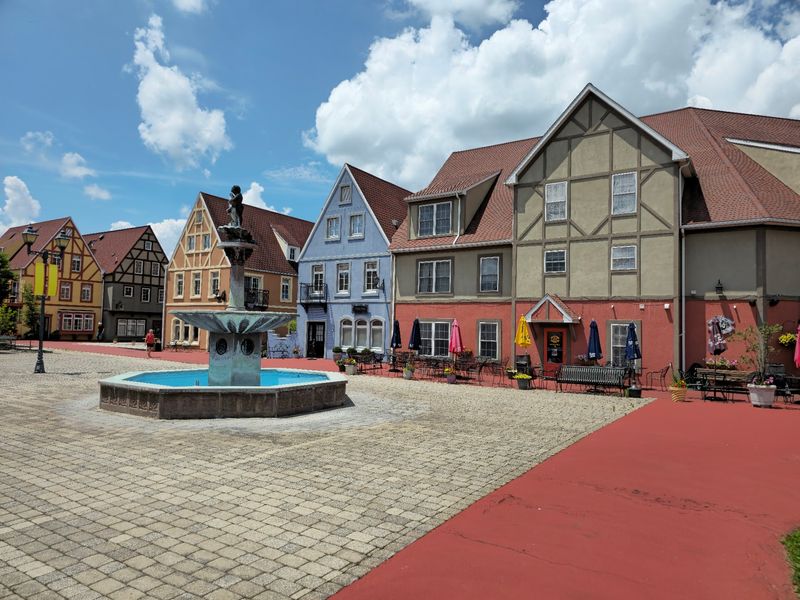
Ed and Carol Stoudt did not just build a neighborhood in 1999; they recreated a Bavarian town from scratch, modeling it directly after Rothenburg ob der Tauber in northern Bavaria, Germany.
The village contains 98 properties, most of them stucco-finished, many with shops operating on the ground floor. A central plaza with a fountain anchors the layout, and red-pebbled walkways connect the colorful facades.
Around 12 specialty shops are currently open, including a German-themed store selling pretzels, chocolates, cheeses, and sausages. There is also a toy robot museum housing over 8,000 pieces, which is perhaps the most unexpected thing you will find in a Bavarian-themed village in rural Pennsylvania.
Shops are open Friday through Sunday, 10 AM to 4 PM, with some staying open until 6 PM on Saturdays. Airbnb accommodations are available for overnight visits.
2. Lititz, Lititz, Pennsylvania
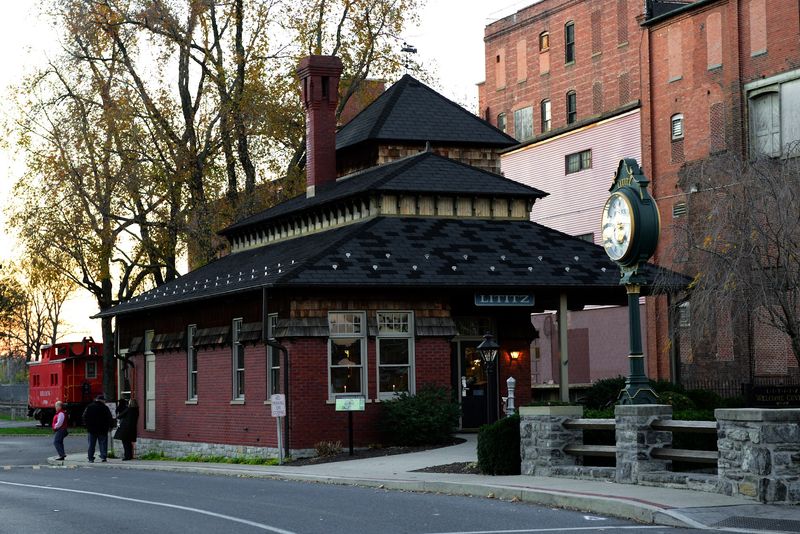
Founded in 1749 by Moravian settlers, Lititz was named after a Bohemian castle that once sheltered persecuted Moravians, and the town has carried that Central European identity ever since.
For nearly a century, only church members could own property here, which is why the historic core feels so cohesive and intentional. The Lititz Moravian Historic District earned its spot on the National Register of Historic Places in 1986.
Downtown anchors itself around Lititz Springs Park and Church Square, where the 1787 Moravian Church still stands alongside the Single Sisters’ House and the Single Brothers’ House, both built between 1758 and 1759.
Practical highlights include the Julius Sturgis Pretzel Bakery, established in 1784 as America’s oldest pretzel bakery, and the Wilbur Chocolate Company, a downtown fixture since 1930. Guided tours of Church Square are available for visitors.
3. Bethlehem Historic District, Bethlehem, Pennsylvania
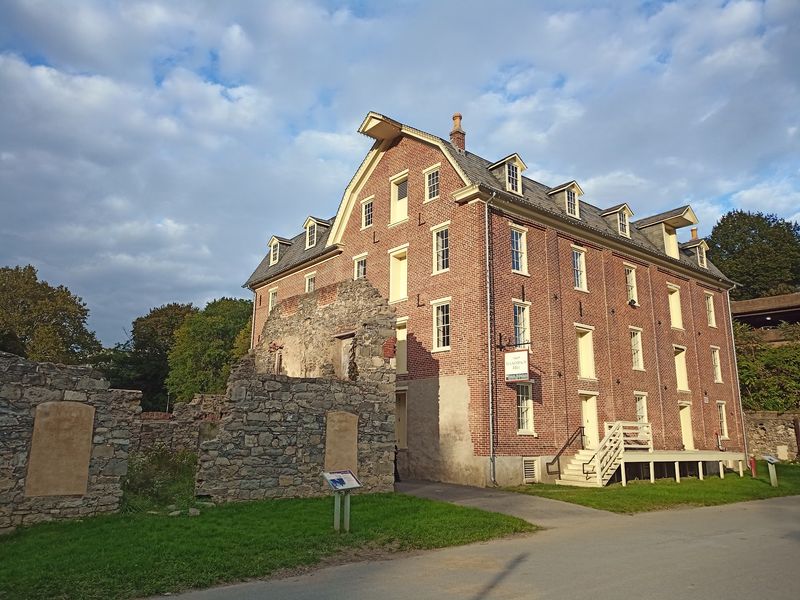
In 2024, Bethlehem’s Historic Moravian District joined the UNESCO World Heritage list, making it one of the very few places in the entire United States to hold that designation.
Moravian settlers founded the community in 1741, and the architectural record they left behind is extraordinary. Buildings include the 1741 Gemeinhaus, one of the largest log structures in colonial America, and the 1803 Central Moravian Church, designed in the Federal Style to hold 1,500 people without a single interior column.
The Colonial Industrial Quarter, God’s Acre burial ground, and the 1758 Moravian Sun Inn, which hosted notable figures during the American Revolution, are all part of the UNESCO site.
Construction materials were sourced locally, and details like flared eaves and shallow eyebrow arches give the district a visual consistency that is rare in American towns. The resemblance to a preserved Central European settlement is unmistakable.
4. Jim Thorpe, Jim Thorpe, Pennsylvania
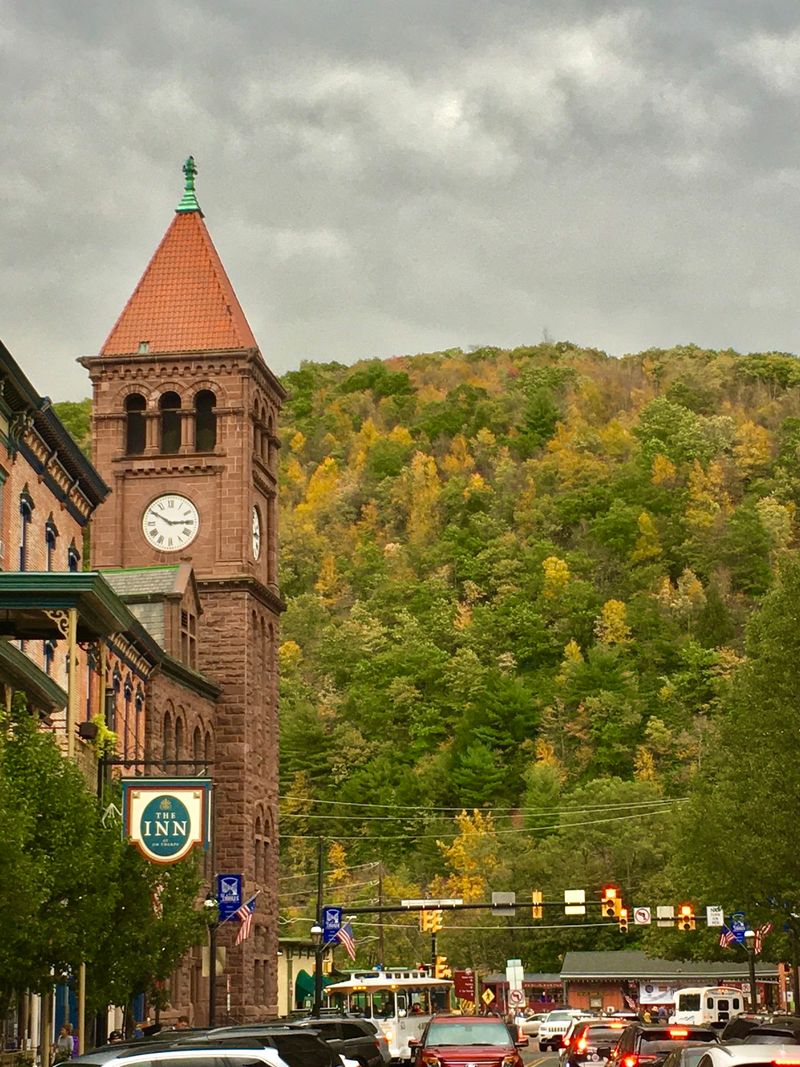
Before it was renamed Jim Thorpe in 1953 to honor the Olympic athlete, this town was called Mauch Chunk, a name meaning “Bear Place” in the Lenape language.
During the Victorian era, Mauch Chunk ranked as one of America’s top tourist destinations, second only to Niagara Falls. The nickname “Switzerland of America” was not invented by a local tourism board; it reflects the genuine alpine character of a town built into the steep walls of the Lehigh River Gorge.
Victorian mansions like the Harry Packer Mansion and the Asa Packer Mansion line the hillsides, and the Lehigh Gorge Scenic Railway offers narrated round trips along the river below.
Outdoor options include hiking and mountain biking in Lehigh Gorge State Park. The town also hosts annual “Olde Time Christmas” events that lean fully into its historic, European-feeling character.
5. Harmony Museum Historic District, Harmony, Pennsylvania
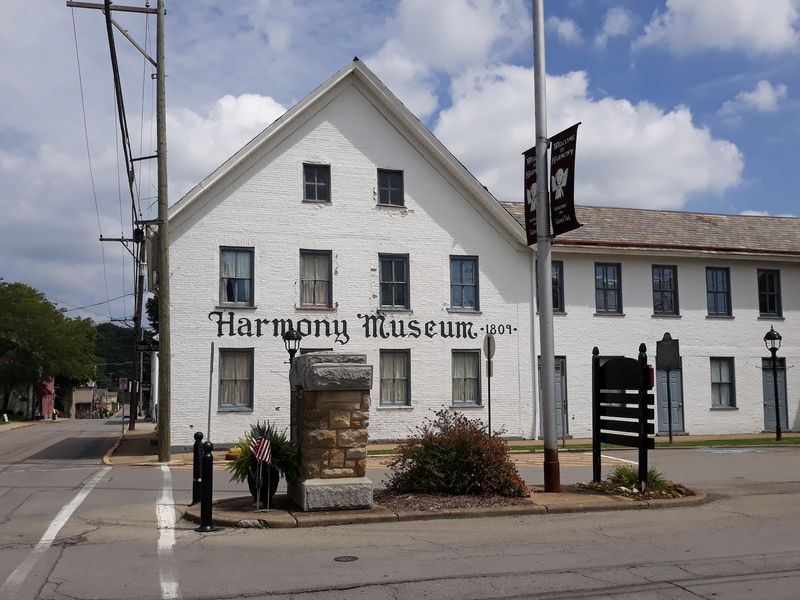
Western Pennsylvania’s first National Historic Landmark District was not founded by colonists or industrialists; it was established in 1804 by a group of German Lutheran Separatists seeking religious freedom, known as the Harmony Society.
The district preserves more than 50 buildings, including the 1809 Harmony Society warehouse, now the main museum building, complete with a well-preserved wine cellar. The 1812 Wagner Haus features back-to-back stone fireplaces and original cooking hearths, and three log cabins furnished with period items add to the authenticity.
The Harmony Society Cemetery is notable for a giant stone revolving door, which is exactly as dramatic as it sounds. A restored Mennonite Meetinghouse and Cemetery are also individually listed on the National Register of Historic Places.
Guided tours cover local history topics including the Harmony Society and the Mennonites. The overall layout closely mirrors an old German village, which was entirely intentional from the start.
6. Old City, Philadelphia, Pennsylvania
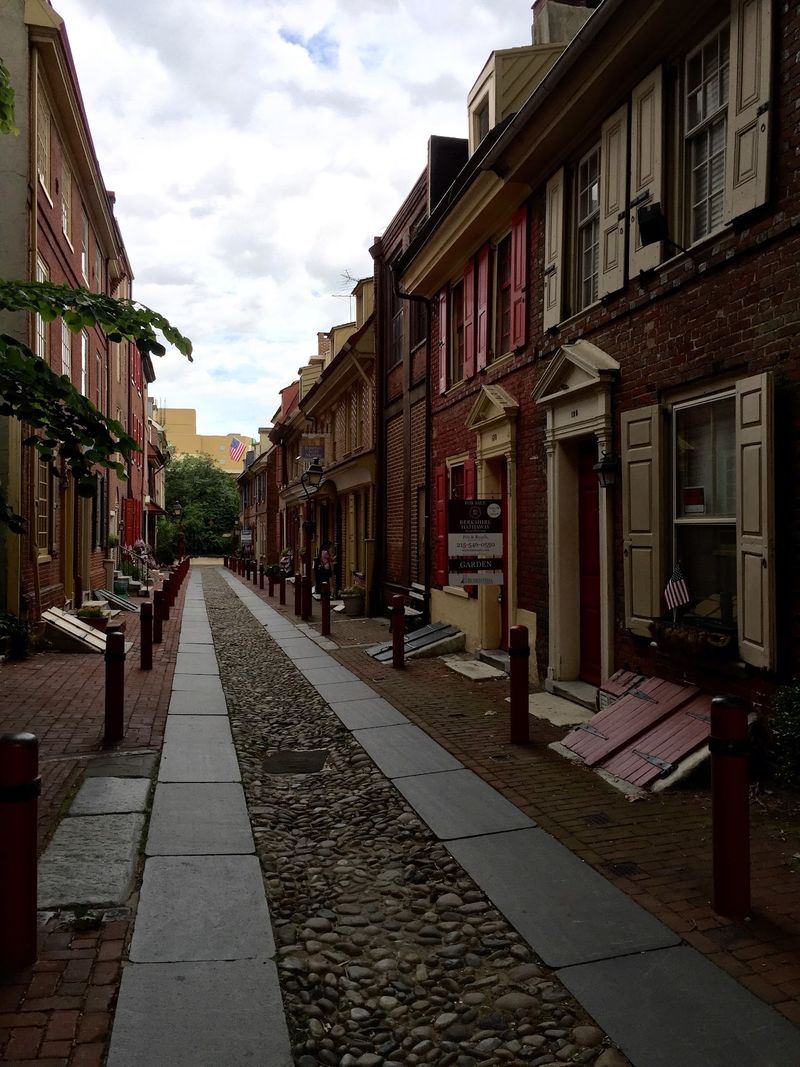
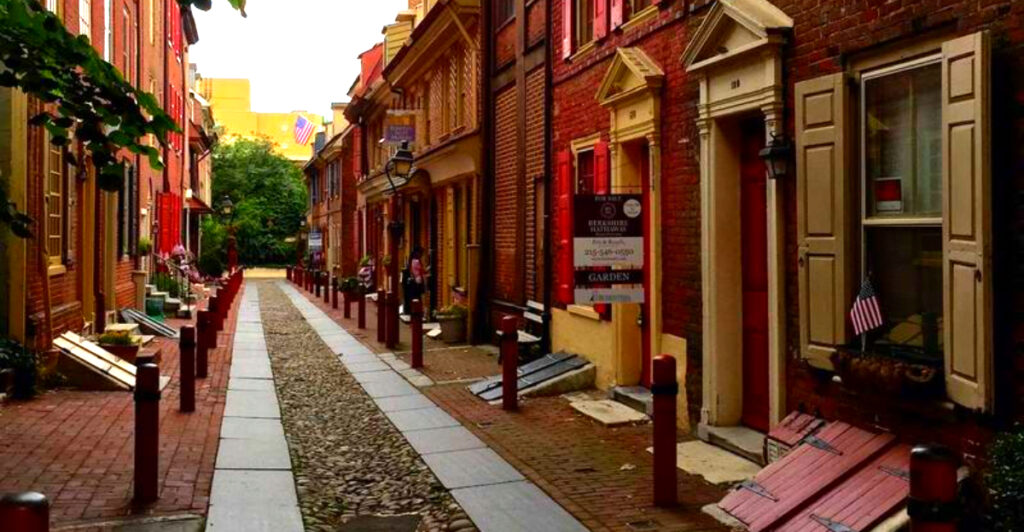
Only seven streets in Old City still retain their original cobblestone paving techniques, a detail that quietly separates this neighborhood from nearly every other urban district in the country.
Those cobblestones first appeared in the late 17th century, laid to support colonial transportation and commerce. Today, they share the neighborhood with gas lamps that still provide evening illumination, brick row houses, and Georgian facades characterized by symmetrical layouts and decorative doorways.
Elfreth’s Alley, established in 1703, is recognized as America’s oldest continuously inhabited residential street. Federal and Georgian homes line its length, alongside examples of Philadelphia’s distinctive Trinity Houses, a compact three-story rowhouse format unique to the city.
Exploring on foot is the most rewarding approach, since many of the most interesting corners are tucked into narrow alleys rather than main thoroughfares. The district also supports a range of restaurants and shops for visitors.
7. Longwood Gardens, Kennett Square, Pennsylvania
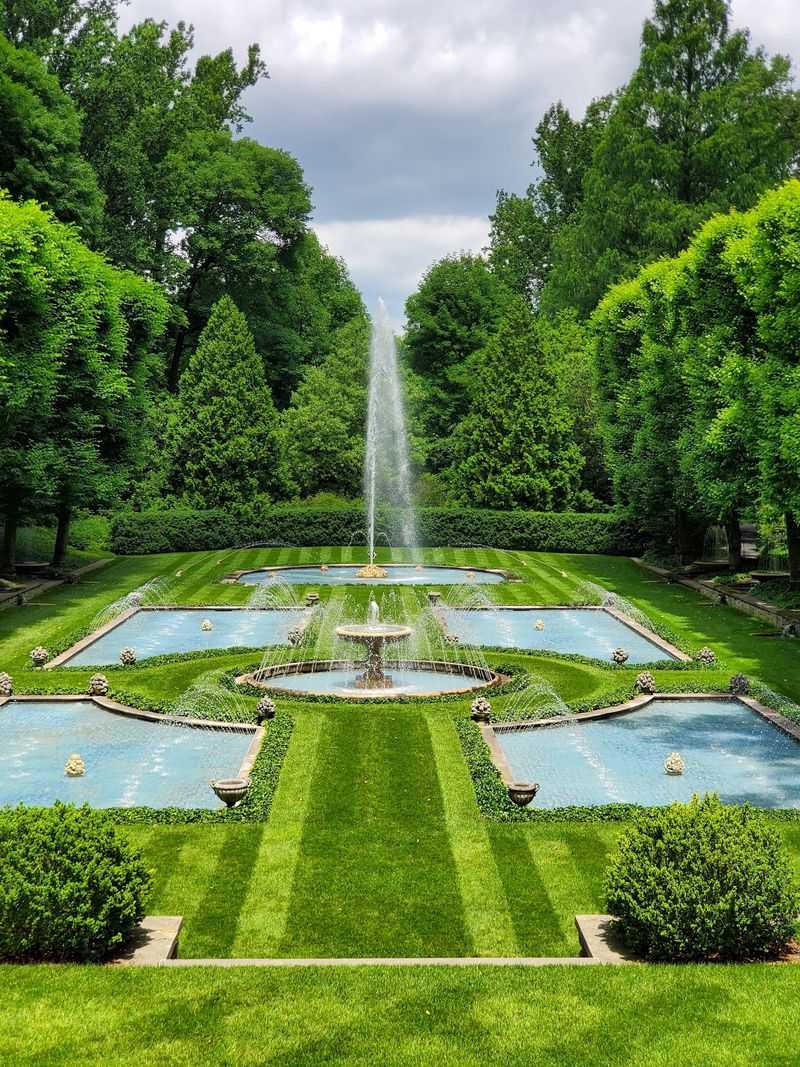
Longwood Gardens does not just borrow from European landscape tradition; it applies the formal principles of French and Italian estate design across more than 1,000 acres in Chester County.
Formal parterres, symmetrical fountains, grand conservatories, and long tree-lined allees define the layout. These are the same design elements found at Versailles or the Villa d’Este, adapted and maintained at a remarkably high standard in southeastern Pennsylvania.
Each season brings a completely different set of displays, which is why many visitors return three or four times per year. The conservatory complex alone covers 4.5 acres of indoor growing space, making it one of the largest in the country.
Timed entry tickets are required, so advance planning is recommended. The gardens are located in Kennett Square, about an hour’s drive from Philadelphia, and parking on site is straightforward. Children and adults alike find something to engage with at every visit.
8. Glencairn Museum, Bryn Athyn, Pennsylvania
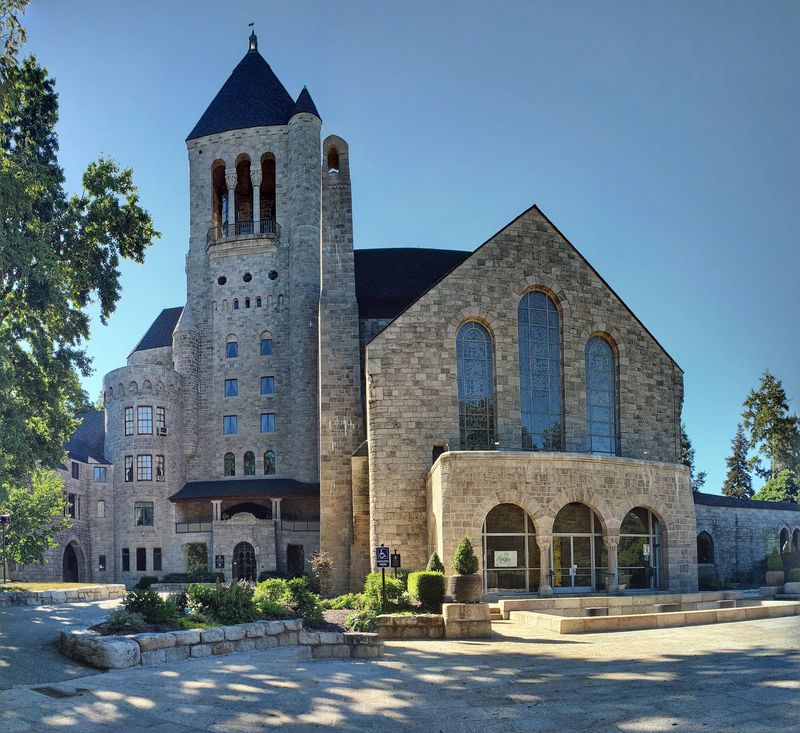
Raymond Pitcairn built Glencairn between 1928 and 1939 without hiring a traditional architect, a decision that turned out to be one of the most interesting architectural choices in Pennsylvania history.
Instead, he worked directly with onsite stonemasons, blacksmiths, woodworkers, and stained glass artists, collaborating through the construction process rather than following a fixed blueprint. The result is a 90-room, 10-story Romanesque structure that reads unmistakably as a medieval European castle.
The collection inside is equally serious. Religious art and artifacts from Egyptian, Roman, and Native American cultures fill the rooms, with some pieces dating back to the third millennium BCE. Highlights include Spanish ivories, architectural sculptures from southern France, and a stained glass panel from the Abbey Church of Saint-Denis.
Guided tours last approximately 90 minutes and include the Great Hall, Upper Hall, and a view from the top of the tower. The museum opened to the public in 1982.
9. Bryn Athyn Cathedral, Bryn Athyn, Pennsylvania
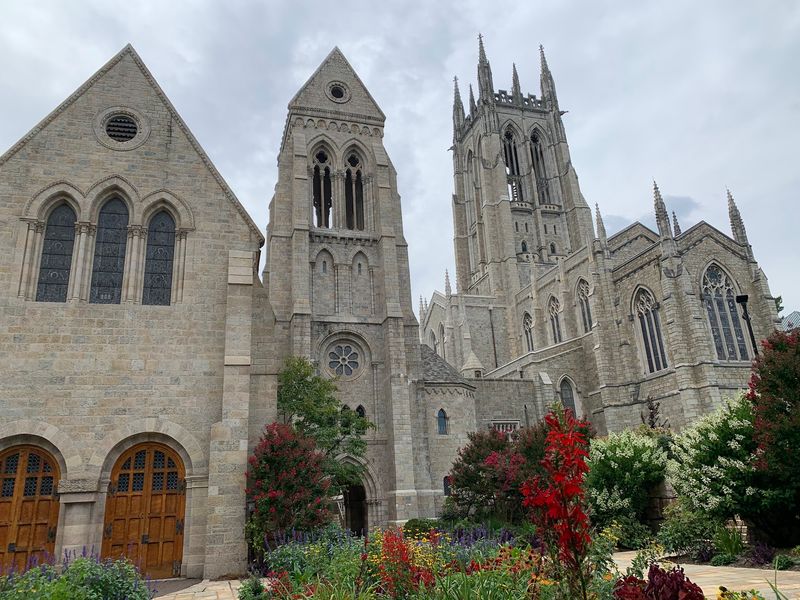
Over 300 local artisans contributed to Bryn Athyn Cathedral, and they did so using methods that had largely disappeared from American construction by the early 20th century.
Main construction ran from 1913 to 1928, funded by industrialist John Pitcairn and overseen by his son Raymond. The design blends Gothic and Romanesque styles, with the main building following English Perpendicular Gothic and the flanking structures built in early Romanesque. Deep pink and soft green granite quarried locally gives the exterior a distinctive color that shifts with different light conditions.
Onsite workshops produced the stained glass using hand-blown pot metal glass, reviving a medieval French technique that had been largely lost for centuries. The interior woodwork was also carved on site by craftsmen brought from Europe.
The cathedral sits on a hill with views of the Pennypack Creek Valley, and the grounds are open from sunrise to sunset, free of charge, every day of the year.
10. The National Shrine of Our Lady of Czestochowa, Doylestown, Pennsylvania
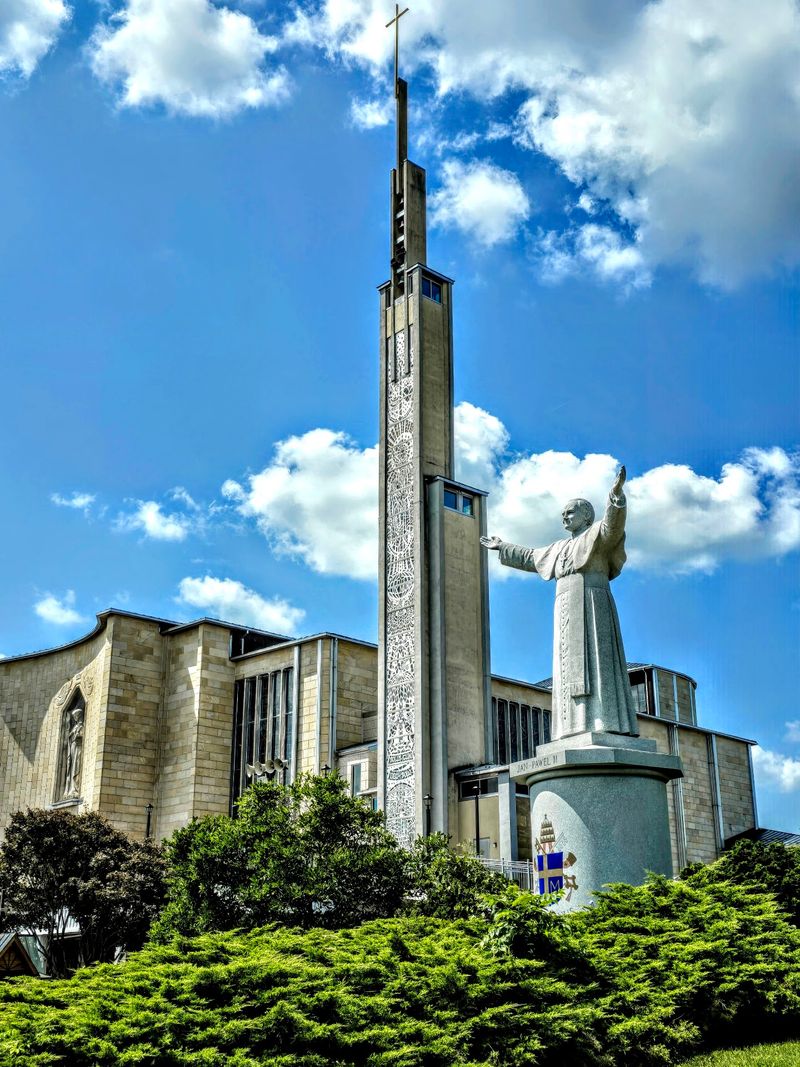
Father Michael Zembrzuski, a Polish Pauline monk, founded this shrine in 1953 with the straightforward goal of creating a spiritual and cultural home for Polish-Americans on the East Coast.
The first chapel opened in a converted barn in 1955. A full basilica followed, completed in 1966 to coincide with the Polish Millennium, the one-thousandth anniversary of Poland’s Christianization. President Lyndon B. Johnson attended the dedication ceremony on October 16, 1966.
Polish-American architect George Szeptycki designed the basilica to hold 2,000 people. Interior stained glass windows, created by Polish immigrant artist Jerzy T. Bialecki, depict narratives from both American and Polish history. A 28-by-65-foot fiberglass sculpture forms a cross shape above the altar.
The complex preserves the heart of Ignacy Jan Paderewski, Poland’s third prime minister, and maintains an extensive cemetery with sections honoring distinguished Polish-Americans and veterans. Cultural festivals are held throughout the year.
11. Phipps Conservatory and Botanical Gardens, Pittsburgh, Pennsylvania
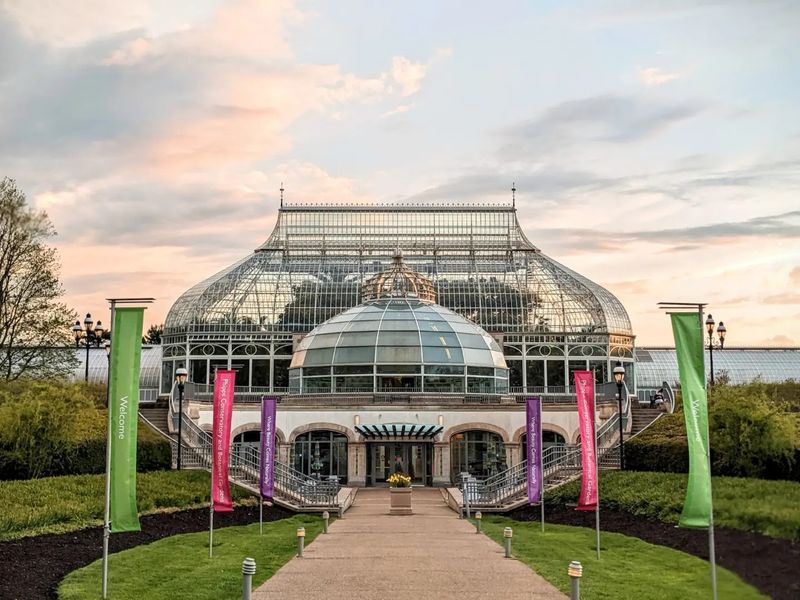
Henry Phipps Jr. gifted Phipps Conservatory to the City of Pittsburgh in 1893, and the New York firm Lord and Burnham designed the structure for $100,000, a significant investment at the time.
The initial plant collections were acquired directly from the World’s Columbian Exposition in Chicago that same year. The architecture follows the tradition of grand Victorian botanical glasshouses found across Britain and Europe, with the Victoria Room’s large central pond reflecting the dome above it in a way that makes the space feel considerably larger than its footprint.
The grounds cover 15 acres and include a 14-room glasshouse and 23 distinct outdoor gardens. Indoor environments range from the Palm Court and Orchid Room to the Tropical Forest Conservatory and Desert Room. Outdoor spaces include a Japanese Courtyard Garden and a Children’s Discovery Garden.
Phipps holds LEED Platinum certification for its greenhouse production facility, making it one of the most environmentally advanced cultural institutions in the country.
12. Mercer Museum, Doylestown, Pennsylvania
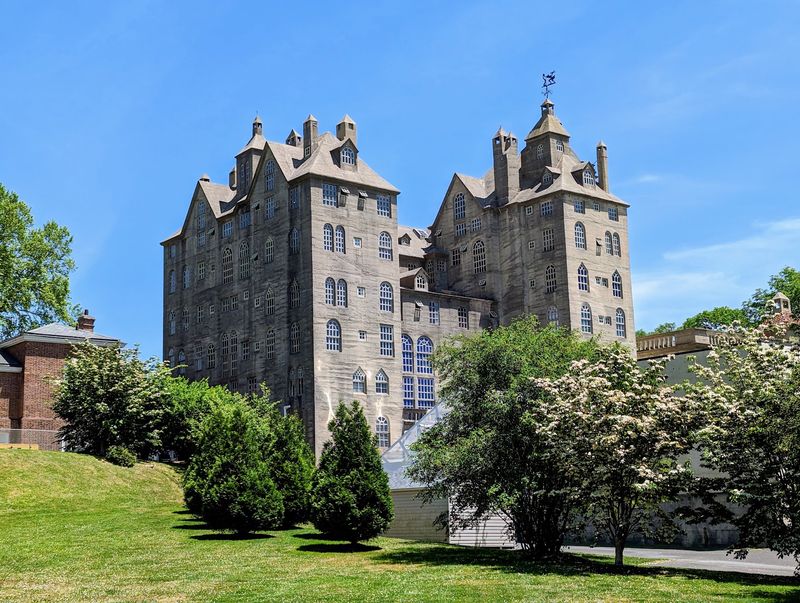
Henry Chapman Mercer completed this six-story concrete structure in 1916, and he did it as a self-taught architect working without formal training, which makes the result even more impressive.
The building resembles a medieval castle, with thick concrete walls, imposing towers, and dramatic interior spaces that create a fortress-like presence in the middle of Doylestown. Mercer used poured reinforced concrete throughout, which was an unusual choice for an American building of that era.
The collection inside spans over 17,000 pre-Industrial tools representing sixty different crafts and trades. Among the oldest artifacts are a 2,000-year-old whale oil lamp and Native American implements dating back 6,000 to 8,000 years.
The research library holds more than 20,000 books and a significant archive of historical documents. Visitors should note that the historic portion of the museum features narrow passageways and is not climate-controlled, so temperatures can vary depending on the season.
13. Fonthill Castle, Doylestown, Pennsylvania
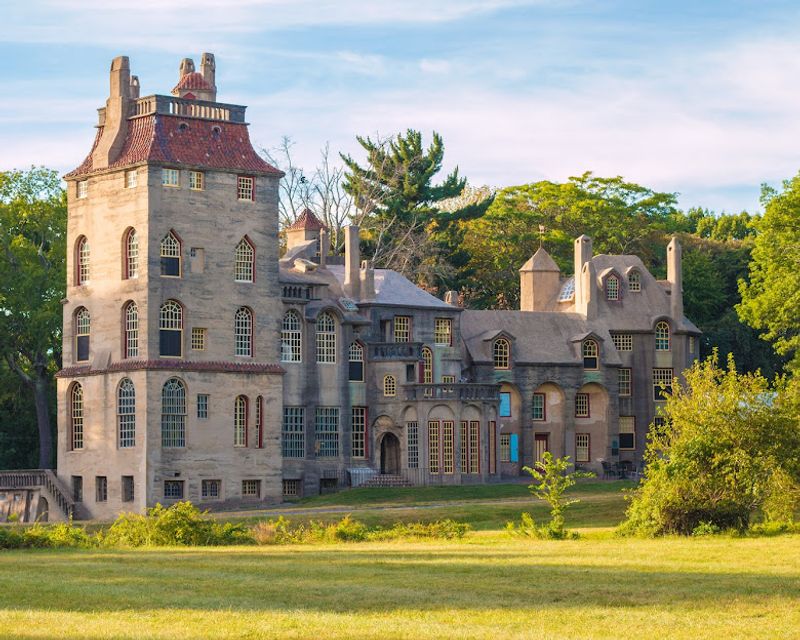
Henry Chapman Mercer built Fonthill Castle between 1908 and 1912 as his personal residence, and he made nearly every architectural decision himself, deliberately rejecting mathematical symmetry throughout the design.
The result is a 44-room structure with 18 fireplaces, over 200 windows of varying sizes, and a fusion of Gothic, Medieval, Romanesque, and Byzantine influences. Mercer used poured reinforced concrete, making it one of the early examples of that technique in American residential construction.
The interior walls and ceilings are covered with handcrafted ceramic tiles produced at Mercer’s own Moravian Pottery and Tile Works, alongside tiles he collected from Europe, Asia, North Africa, and the Middle East. Ceramic letters are integrated into many tile arrangements, explaining their origin or depicted scenes.
Guided one-hour tours are available, though visitors with mobility challenges should be aware that the castle has steep stairs, narrow corridors, and uneven surfaces throughout. The castle opened as a museum in 1975.
Share this story