Ohio has a quiet talent for hiding its darkest stories behind overgrown trees, crumbling walls, and rusted iron gates. From abandoned asylums to ghost-town tunnels, the state is packed with places that history tried to forget but never quite could.
Each location on this list carries a past that is equal parts fascinating and unsettling, the kind that makes you look over your shoulder while reading about it from the safety of your couch. Whether you are a history enthusiast, an urban explorer, or just someone who enjoys a good spooky story, these 15 forgotten Ohio ruins are worth knowing about.
Get ready for a tour through collapsed furnaces, haunted reformatories, and canal locks swallowed by nature, because Ohio’s creepy side is far more interesting than most people realize.
1. Hope Furnace – Lake Hope State Park (Vinton County)
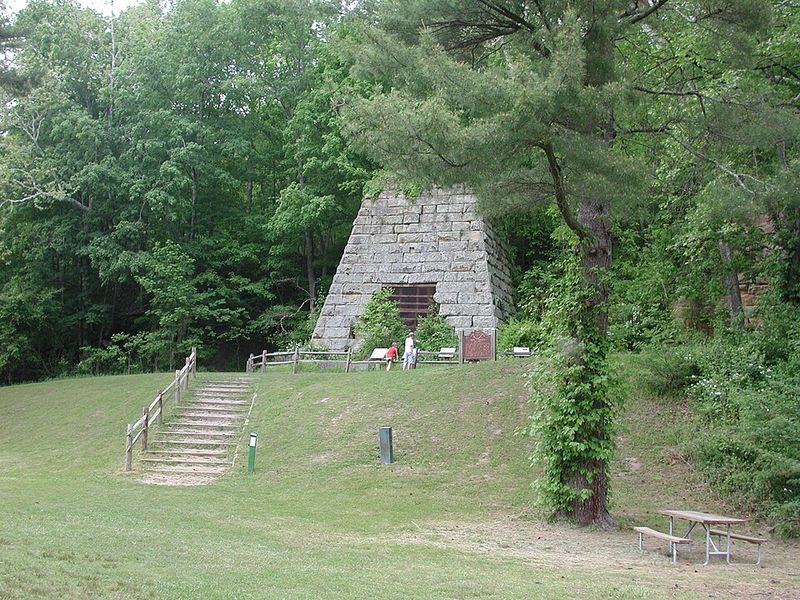
Built in 1854, Hope Furnace once roared with industrial fire as one of Ohio’s many charcoal iron furnaces that fueled the Civil War effort. Today, the massive stone stack stands quietly inside Lake Hope State Park, looking like something a giant set down and forgot to pick up.
The furnace produced pig iron until 1874, when cheaper methods made it obsolete almost overnight. Workers and their families who had built their lives around it were left with very little as the operation shut down.
What remains is a well-preserved stone structure that towers over visitors and offers a striking reminder of how quickly industry can rise and vanish. Hiking trails wind past the ruins, making this an accessible stop for families and history fans alike.
The surrounding forest has slowly reclaimed much of the old ironworks village, adding to the eerie atmosphere.
2. Moonville Tunnel – McArthur (Vinton County)
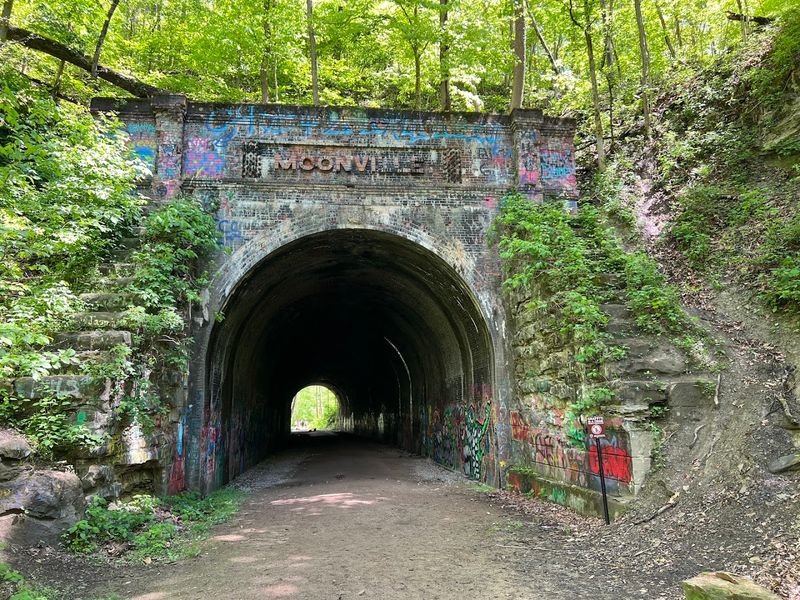
At one point, Moonville was a real town with real people. By the early 1900s, nearly everyone had left, and the only thing still standing was a single railroad tunnel carved through a hillside in Vinton County.
The tunnel was built in the 1850s as part of the Marietta and Cincinnati Railroad, and local legends claim it is haunted by the ghost of a brakeman who lost his life on the tracks. Whether or not you believe in ghosts, the tunnel is genuinely striking, a dark stone arch framing a long, shadowy passage through solid rock.
Today, the tunnel sits along a hiking trail and draws curious visitors year-round. Moonville itself has vanished almost entirely, with only a few scattered grave markers hinting that a community once thrived here.
It is one of Ohio’s most photogenic and talked-about historic remnants.
3. Peters Cartridge Company – Kings Mills
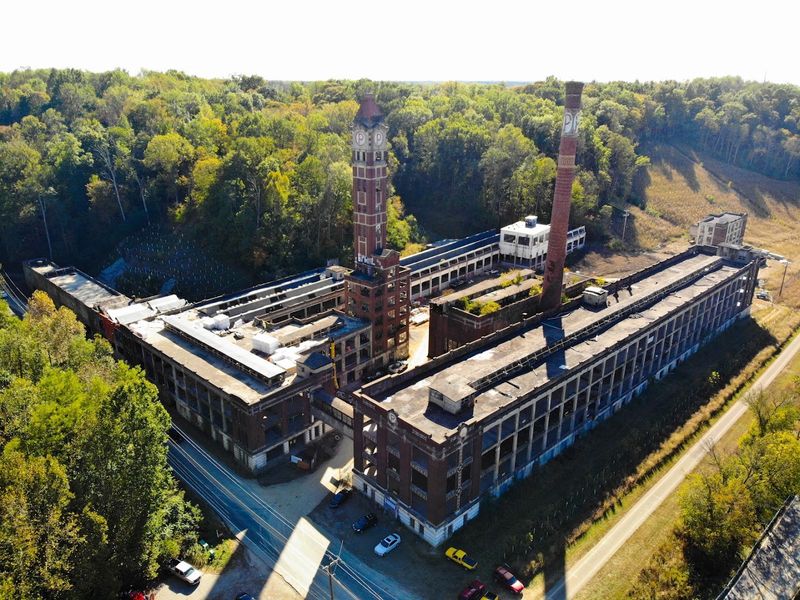
Peters Cartridge Company was one of the largest ammunition manufacturers in American history, producing millions of rounds for both World Wars from its sprawling Kings Mills facility. The factory complex was enormous, covering hundreds of acres along the Little Miami River.
After World War II, production slowed and the facility was eventually sold off in pieces. Many of the original brick buildings were left standing but unused, slowly deteriorating over the following decades.
Some sections were later repurposed, but the older structures remained largely abandoned.
Urban explorers and history enthusiasts have long been drawn to the site’s massive industrial architecture and its undeniable connection to American military history. The buildings carry a weight that goes beyond their crumbling brickwork.
Kings Mills is better known today as the home of Kings Island amusement park, but the ammunition factory ruins tell a far older and more complicated story about the town’s past.
4. Jaite Paper Mill Ruins – Jaite (Cuyahoga Valley National Park)
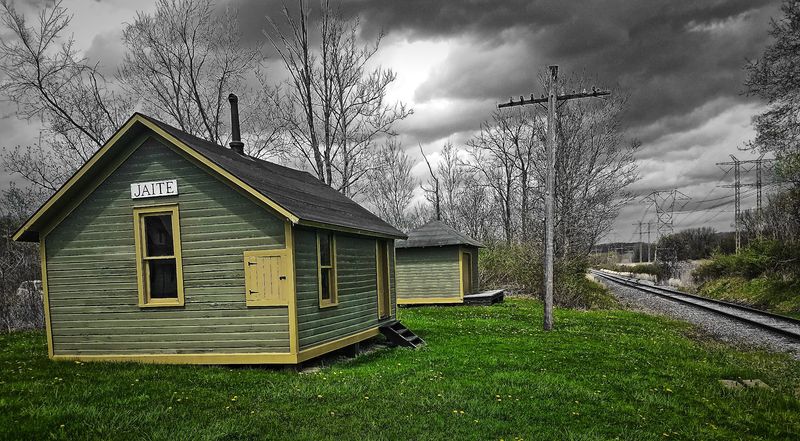
Hidden inside Cuyahoga Valley National Park, the Jaite Paper Mill ruins are easy to miss if you are not specifically looking for them. The mill operated from 1905 until the 1930s, producing paper along the Cuyahoga River before the Great Depression put an end to the operation.
The village of Jaite itself was a company town, meaning the paper mill essentially owned everything, including the homes workers lived in. When the mill closed, the community dissolved rapidly, leaving behind a ghost town absorbed by the national park.
Several original structures have been preserved or stabilized by the National Park Service, and the area is accessible via the park’s trail system. The remaining buildings provide a rare look at what an early 20th-century industrial village actually looked like.
Visiting Jaite feels less like a hike and more like a quiet walk through a chapter of history that most Ohioans have never read.
5. Ohio & Erie Canal Lock Ruins (Deep Lock, Red Lock, etc.) – Cuyahoga Valley National Park
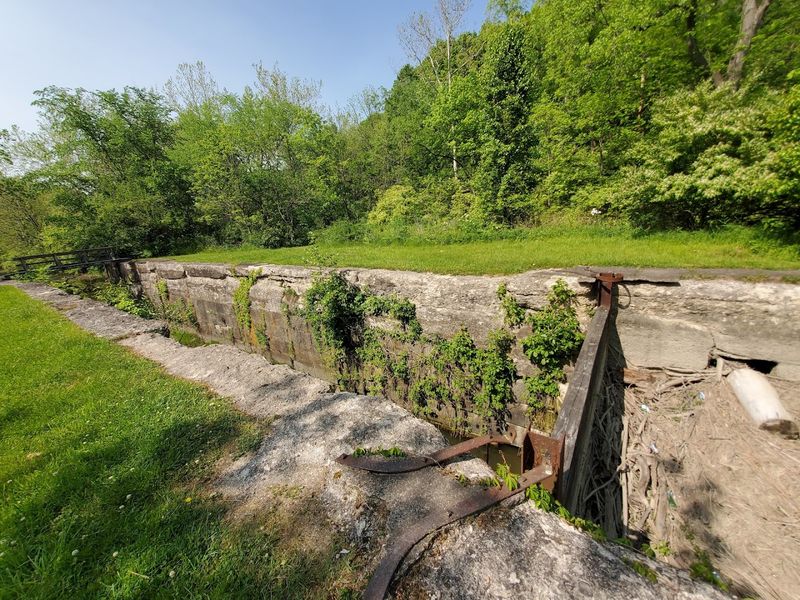
The Ohio and Erie Canal was an engineering marvel of the 1800s, stretching over 300 miles and transforming Ohio into a commercial powerhouse practically overnight. The canal locks scattered throughout Cuyahoga Valley National Park are among the best-preserved remnants of that era.
Deep Lock, the deepest lock on the entire canal system at 17 feet, is a particular highlight. Its massive stone walls still stand with impressive integrity, and the surrounding landscape has not changed dramatically since mule-drawn boats navigated these waters in the 1830s and 1840s.
Red Lock and other nearby structures round out a network of ruins that hikers and cyclists encounter along the towpath trail. Each lock has its own story, its own quirks, and its own quiet dignity.
The canal system was made obsolete by the railroads within just a few decades, making these stone locks a monument to an era that came and went with remarkable speed.
6. Sidaway Bridge – Cleveland
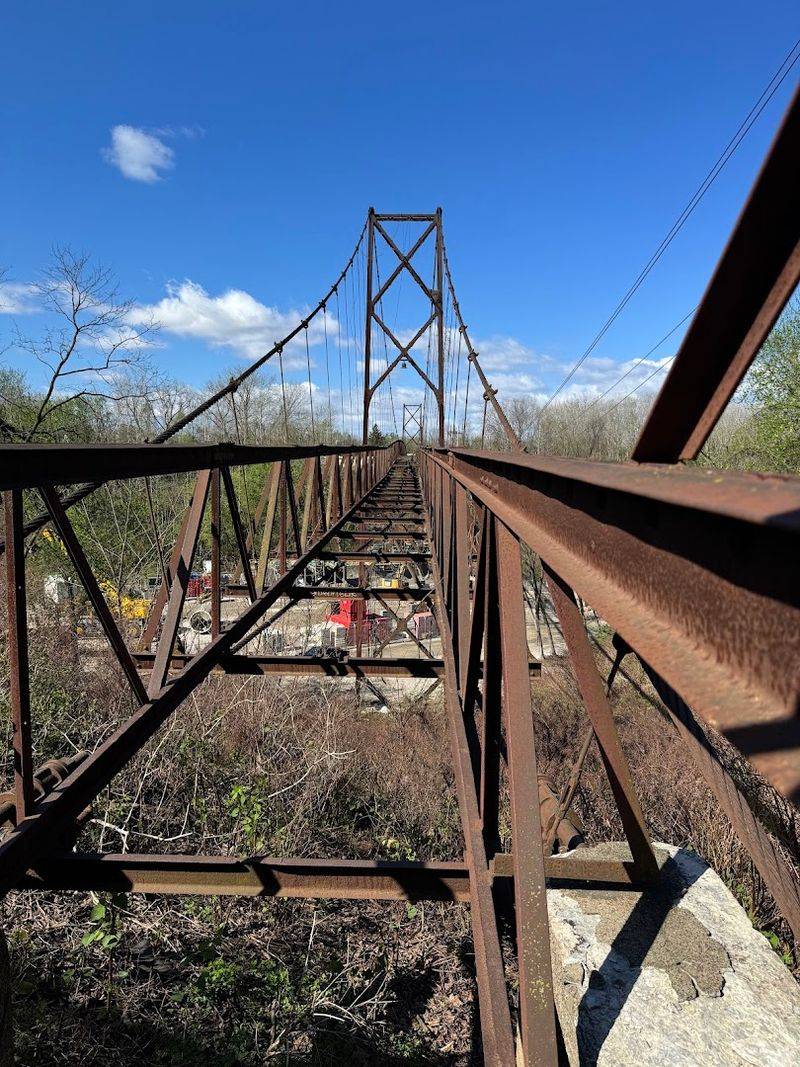
Tucked away in Cleveland’s industrial corridor, Sidaway Bridge is the kind of structure that most people drive past without a second glance. Built in the early 20th century, the bridge spans a section of the old industrial waterway network that once made Cleveland one of the most productive manufacturing cities in the country.
Over the decades, the bridge fell out of regular use as the surrounding industrial landscape shifted. Nature moved in quickly, draping the stone and ironwork with vegetation and giving the structure a distinctly forgotten quality.
Graffiti artists have since added their own layer of history to the mix.
Urban explorers have documented the bridge extensively, and it has developed a small but dedicated following among those who appreciate overlooked infrastructure. Its location in a transitional neighborhood means access is relatively straightforward, though the site is best visited during daylight hours when visibility is clear and the surroundings are easier to navigate.
7. Porter Creek Bridge Ruins – Bay Village
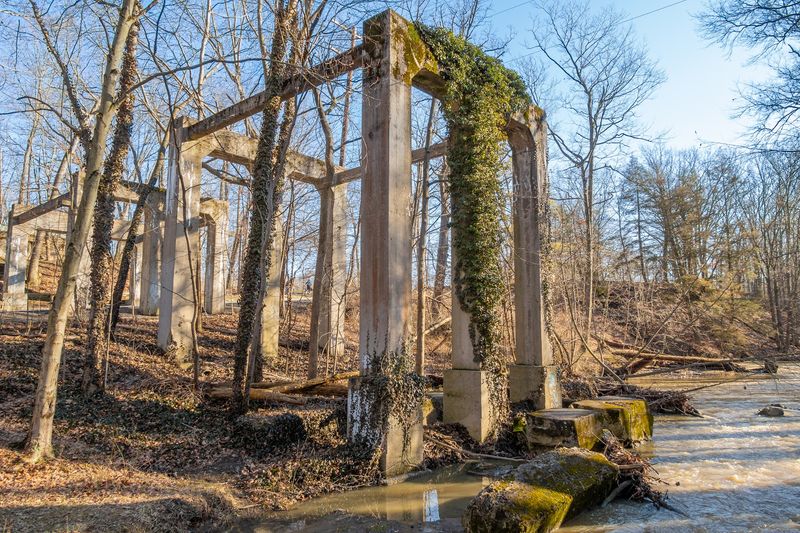
Bay Village is known for its quiet suburban neighborhoods and Lake Erie shoreline, so finding crumbling stone bridge ruins tucked along Porter Creek feels genuinely surprising. The ruins date back to the late 1800s and are the remnants of an old road bridge that served the local community long before modern infrastructure replaced it.
The stone construction is characteristic of the era, featuring hand-cut blocks fitted together without the benefit of modern machinery. Over time, the creek has undercut portions of the structure, and sections have collapsed into the water in a picturesque, if slightly precarious, way.
Local residents often stumble upon the ruins while walking along the creek trail, and reactions tend to range from mild curiosity to genuine fascination. The site is not heavily promoted or marked, which gives it a pleasantly off-the-beaten-path quality.
For a small suburban community, Bay Village is sitting on a surprisingly compelling piece of 19th-century history.
8. Chippewa Lake Park – Chippewa Lake
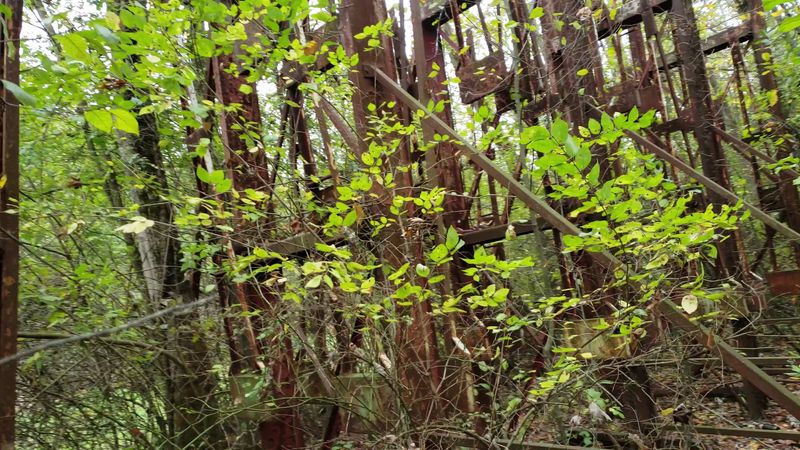
Chippewa Lake Park opened in 1878 and spent over a century entertaining Ohioans with rides, dancing, and lakeside fun. When it finally closed in 1978, the owners simply walked away, leaving every ride, building, and structure exactly where it stood.
For decades, the park sat completely untouched, and the results were extraordinary in a thoroughly eerie way. Roller coaster tracks disappeared under vines.
The old ballroom roof caved in. Carousel horses sat in the dark, waiting for riders who would never come back.
Photographs of the site circulated widely online and turned Chippewa Lake into one of the most talked-about abandoned places in the United States.
Unfortunately, most of the structures were demolished between 2015 and 2019 as development plans moved forward. Some remnants and foundations still exist on the property, and the lake itself remains.
But the golden era of Chippewa Lake Park exists now only in photographs and the memories of those who were there.
9. Molly Stark Sanatorium – Louisville
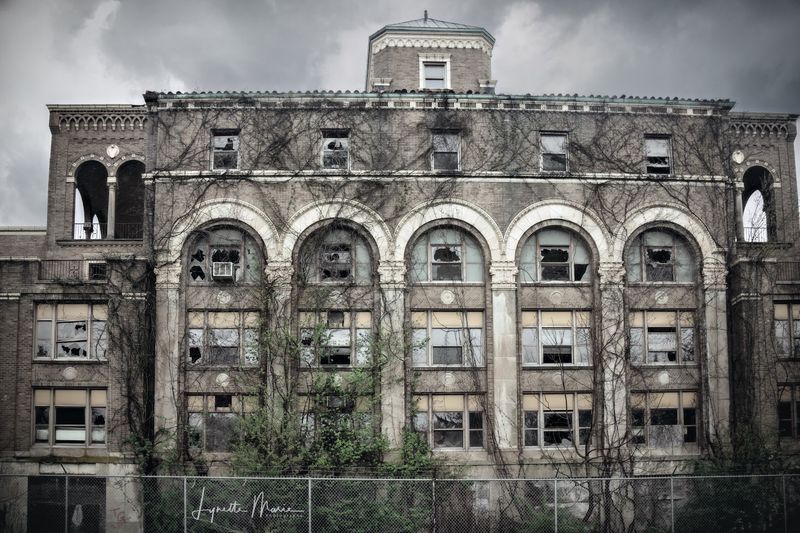
Built in 1916 as a tuberculosis sanatorium, the Molly Stark facility in Louisville, Ohio, treated thousands of patients over the decades before medical advances made sanatoriums largely unnecessary. The main building is a large, imposing brick structure that looks exactly like what it is: an institution built for serious medical purposes in a serious era.
The sanatorium closed in the 1970s and sat vacant for years, developing the kind of reputation that vacant medical facilities tend to attract. Local legends about the site have circulated for generations, and the building’s sheer size makes it an unforgettable presence on the landscape.
Various redevelopment proposals have been floated over the years, though the building’s future has remained uncertain for a long time. The architecture itself is worth noting, a blend of early 20th-century institutional design that was meant to promote healing through fresh air and open space.
Today, it mostly promotes goosebumps.
10. The Ridges (Former Athens Lunatic Asylum) – Athens
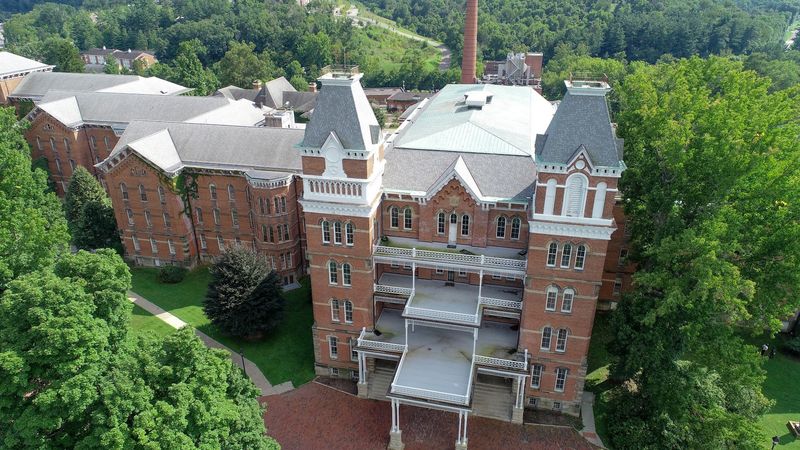
The Ridges opened in 1874 under the name Athens Lunatic Asylum, and even by the standards of its time, the facility had a complicated history. The Kirkbride-style building, designed with long radiating wings intended to promote mental wellness through architecture, is one of the most striking examples of 19th-century institutional design in the entire country.
Ohio University acquired much of the property in the 1990s after the asylum closed, and several of the buildings have been renovated for university use. However, significant portions of the original complex remain in various states of disrepair, and the grounds carry a weight that visitors consistently comment on.
The most widely known story connected to The Ridges involves a patient whose outline was reportedly found imprinted on a floor years after her disappearance. Whether or not the story holds up to scrutiny, it has kept The Ridges firmly planted in Ohio’s collective imagination for decades.
11. Iron Soup (Youngstown Sheet & Tube Ruins) – Campbell
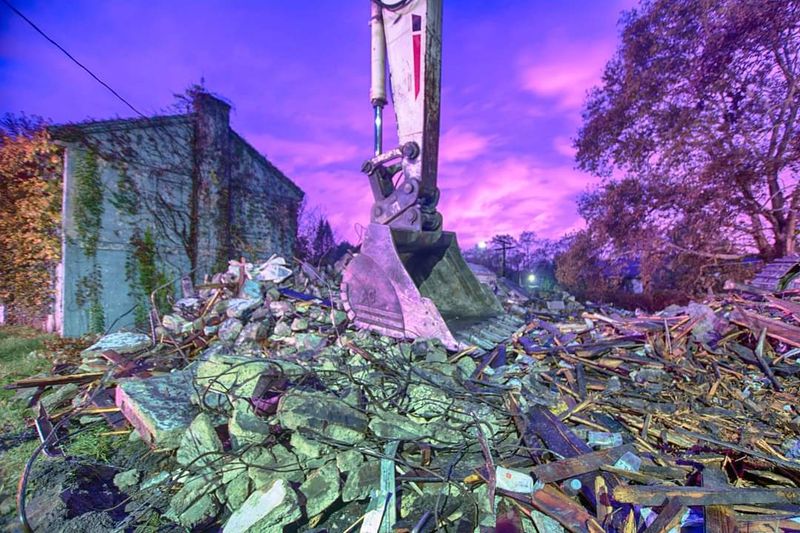
Youngstown Sheet and Tube was once one of the most powerful steel companies in the world, and its Campbell, Ohio, complex was a monument to American industrial ambition. At its peak, the facility employed tens of thousands of workers and produced steel that built bridges, buildings, and machines across the country.
The collapse of the American steel industry in the late 1970s and early 1980s hit the Youngstown area with particular force. Entire communities built around the mills fell apart almost simultaneously, a period locals still refer to as Black Monday and its aftermath.
What remains of the Youngstown Sheet and Tube complex is a collection of rusting, massive structures that dwarf everything around them. The scale is genuinely hard to process in person.
Artists, photographers, and urban historians have used the site as both a subject and a backdrop for work exploring industrial decline. The nickname “Iron Soup” speaks to the site’s raw, unfiltered character.
12. Warner & Swasey Observatory – East Cleveland
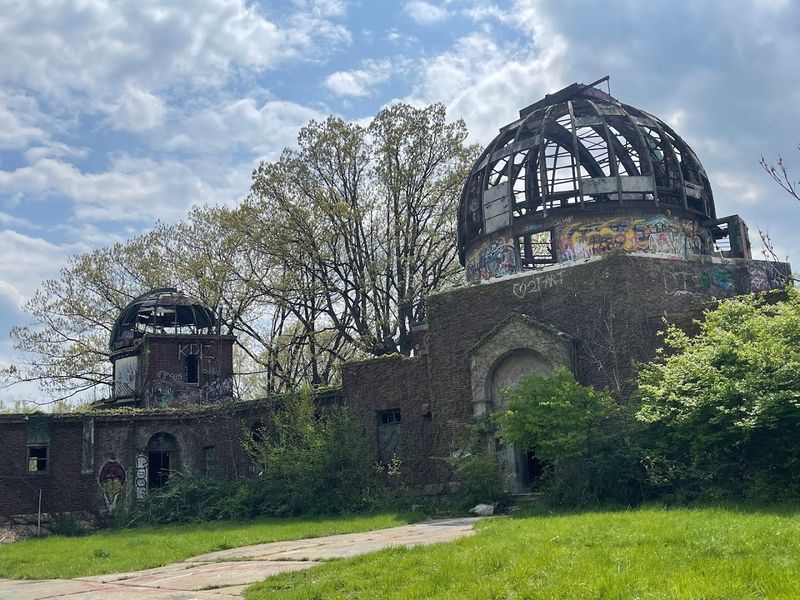
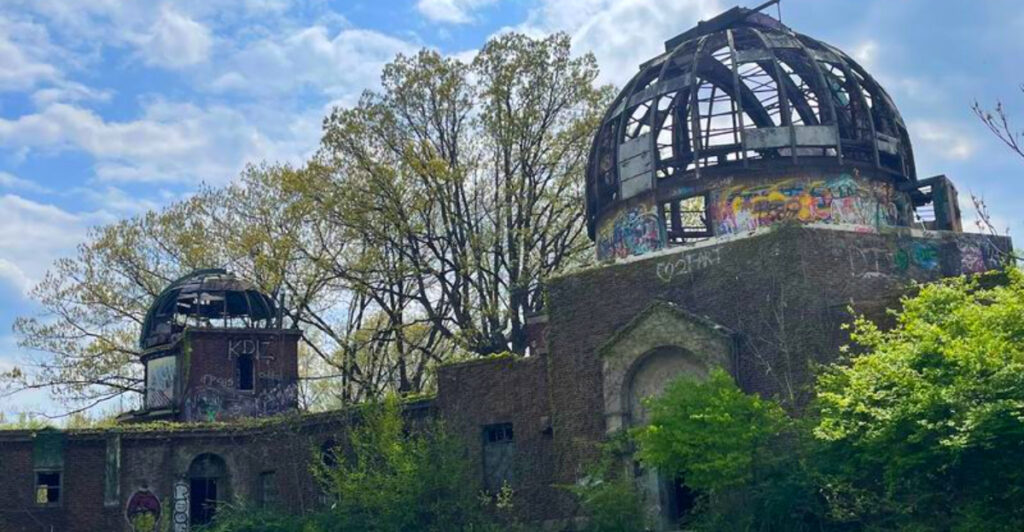
Warner and Swasey Observatory was built in 1919 for Case School of Applied Science, now Case Western Reserve University, and for decades it served as a legitimate research facility and public education center. The telescope inside was one of the finest available at the time of its installation.
As East Cleveland’s surrounding neighborhood changed and light pollution made urban astronomy increasingly difficult, the observatory’s research value declined. The facility was eventually closed and the equipment relocated, leaving the distinctive domed brick building sitting quietly in a neighborhood that has seen significant economic hardship.
The building itself is architecturally interesting, a compact but purposeful structure that still carries the dignity of its original scientific mission. Preservation advocates have pushed to save and repurpose it over the years with varying degrees of success.
For a building devoted to looking at the stars, it has spent an unfortunate amount of time being overlooked right here on earth.
13. Helltown Historic Ruins – Boston Township (Cuyahoga Valley National Park)
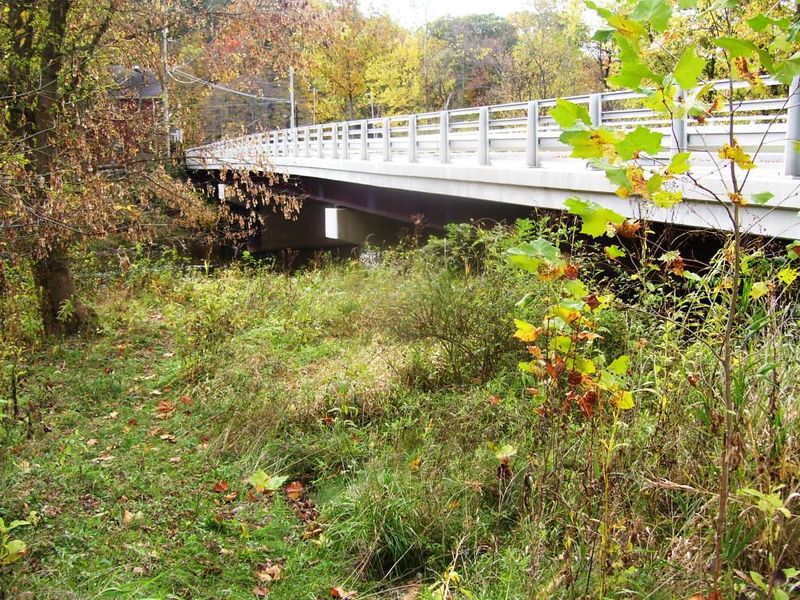
Few place names in Ohio carry as much folklore baggage as Helltown, which is actually the nickname for Boston Township in Cuyahoga Valley National Park. In the 1970s, the federal government bought up the land to expand the national park, and residents were required to leave their homes behind.
The abandoned houses, a church, and other structures sat empty for years as the government decided what to do with them. During that time, the area became a magnet for ghost stories, urban legends, and increasingly wild rumors that spread through surrounding communities and eventually across the internet.
Most of the structures have since been demolished or removed, but some foundations and a well-known church building remain accessible to hikers. The legends attached to Helltown are far more dramatic than the reality, which is simply a story of government land acquisition and community displacement.
Still, walking through the area with those stories in mind makes for a memorable afternoon.
14. Ohio State Reformatory – Mansfield
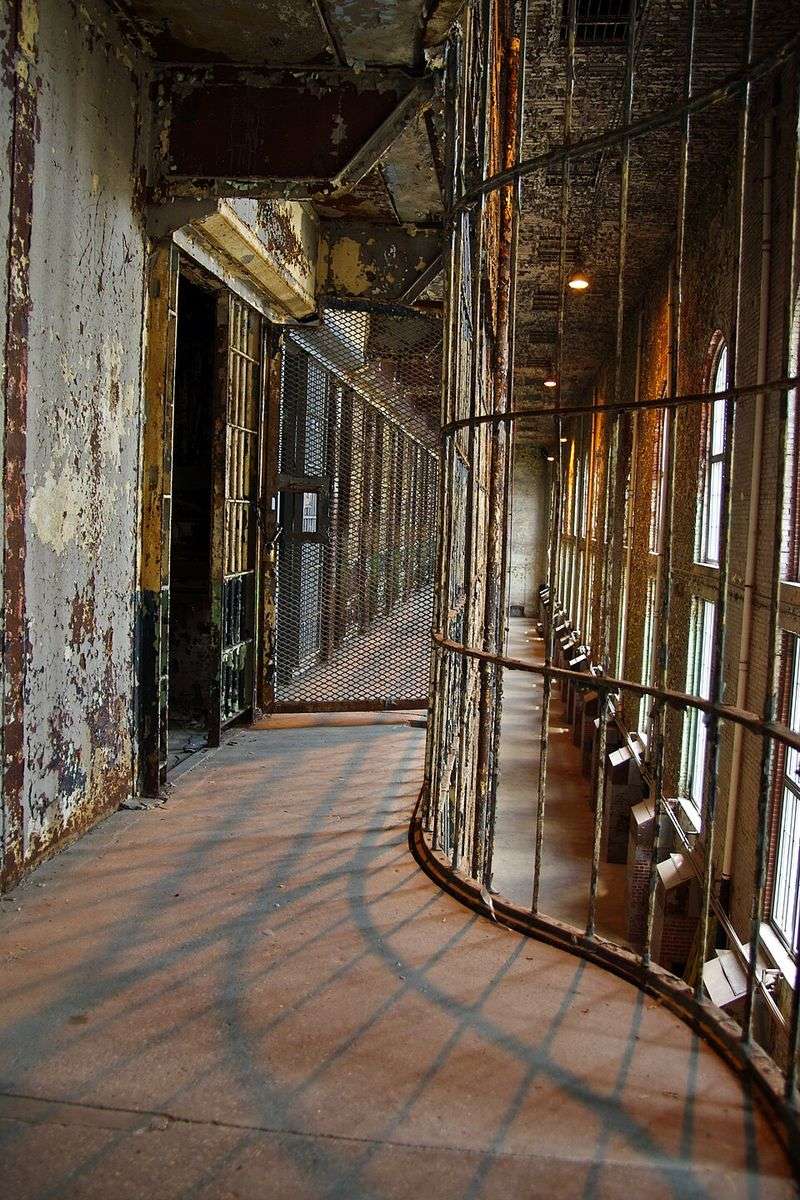
Ohio State Reformatory opened in 1896 and operated as a prison for nearly a century before closing in 1990. The building is an absolute architectural spectacle, a Victorian Gothic structure with towering turrets and stone facades that looks more like a medieval castle than a correctional facility.
The reformatory is best known internationally as the filming location for The Shawshank Redemption, the 1994 film that consistently ranks among the most beloved movies ever made. Fans travel from around the world specifically to tour the building and stand in spots they recognize from the film.
Beyond its Hollywood fame, the reformatory has a genuinely complex history tied to prison reform movements of the late 19th century. The facility was designed with the intention of rehabilitating young offenders through education and structure.
Today, it operates as a museum and event venue, with regular tours, ghost hunts, and special programming that keep the historic building active and well-maintained year-round.
Share this story