Pennsylvania’s coal mines, steel mills, oil wells, and railroads played a major role in shaping modern America. Today, visitors can explore the places where these industries thrived, from underground coal mines and towering blast furnaces to historic railroad routes and early oil drilling sites.
These 14 Pennsylvania industrial landmarks offer a fascinating look at the state’s hardworking past. With preserved machinery, historic workshops, massive steel complexes, and hands-on experiences, each destination brings an important chapter of American history to life.
1. National Museum of Industrial History, Bethlehem, Pennsylvania
Steel from Bethlehem helped hold up the Golden Gate Bridge and the Chrysler Building. That is quite a resume for a town in the Lehigh Valley.
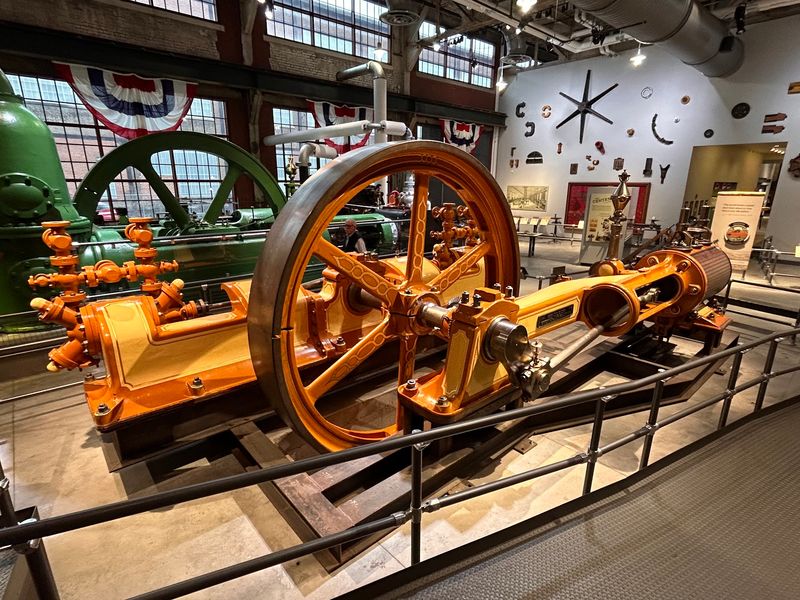
The museum sits inside an old Bethlehem Steel building, so the setting is part of the lesson. More than 200 artifacts cover steel, iron, textiles, and machines that changed how people lived and worked.
Big engines share space with smaller tools, and signs explain how each one fit into a factory day. The museum is a Smithsonian affiliate, which means some displays come with serious national credentials.
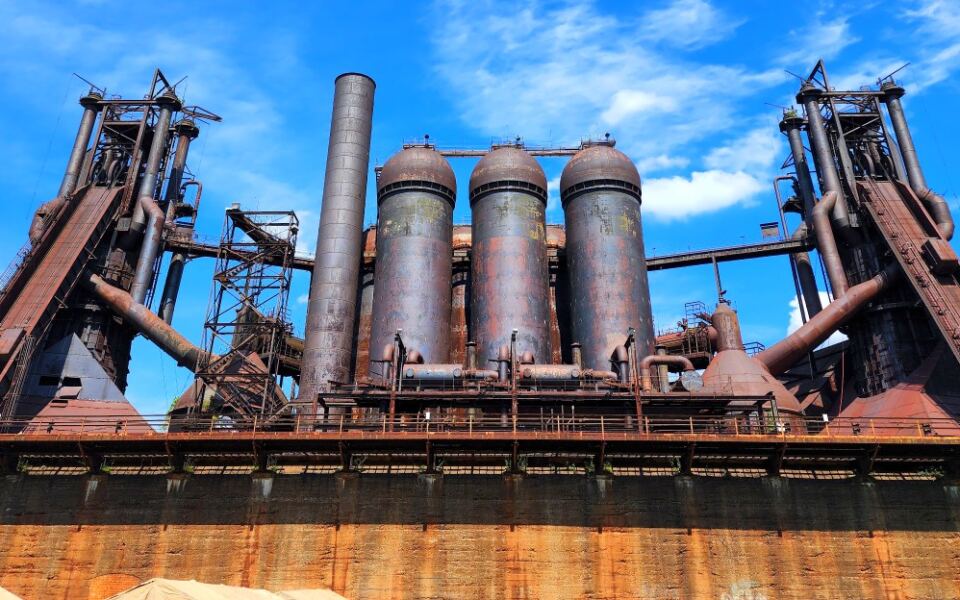
Outside, the old blast furnaces of Bethlehem Steel loom over the neighborhood. They are part of the SteelStacks campus, where free concerts and events often pop up in warmer months.
Plan about two hours for the museum. Then take a walk along the Hoover Mason Trestle, a raised path that gives you a close look at the furnaces.
2. Steamtown National Historic Site, Scranton, Pennsylvania
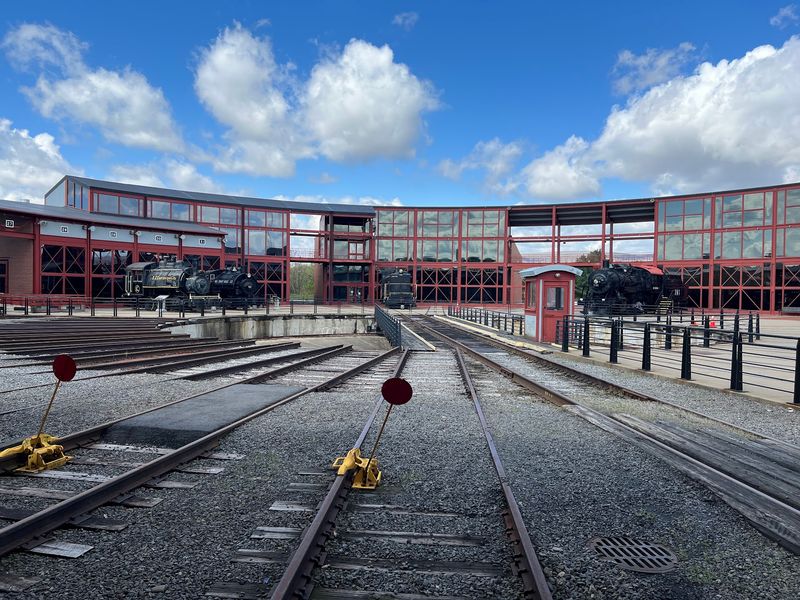
Full steam ahead is not just a saying in Scranton. It is pretty much the mission statement of this National Park Service site.
Steamtown sits on the old Delaware, Lackawanna and Western Railroad yard. The star attraction is a working roundhouse, where crews still repair big engines in front of visitors.
A giant turntable in the middle spins locomotives so they can head into the right stall. Kids and adults both tend to stop and stare when it moves.
Inside the museum buildings, exhibits explain how railroads changed jobs, travel, and even time zones. Yes, trains are the reason America adopted standard time in 1883.
Seasonal excursion rides are offered on select dates, so book early if you want to ride. Admission to the park grounds is free, which makes this one of the best deals on the list.
Leave time for the technology museum next to the roundhouse.
3. Eckley Miners’ Village, Weatherly, Pennsylvania
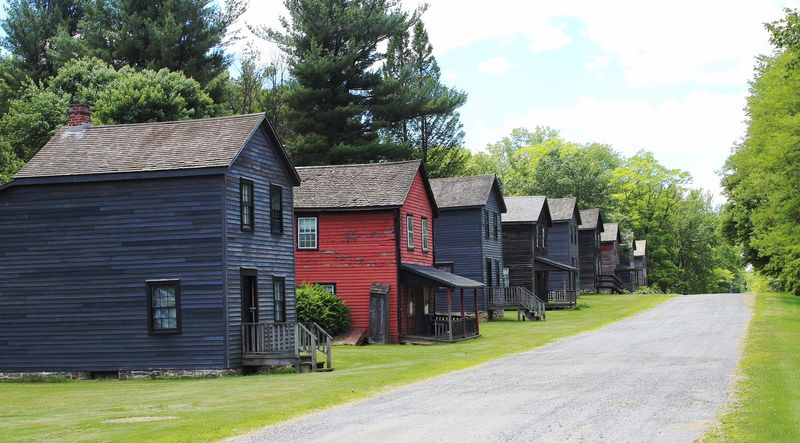
Hollywood picked this tiny town as a filming spot for the 1970 movie The Molly Maguires. Producers wanted a real coal patch town, and Eckley fit the role perfectly.
Founded in 1854, the village was built by a mining company for its workers and their families. The company owned the houses, the store, and much of daily life.
Today, visitors can walk the main street and see how homes changed by job rank. Miners lived in small double houses, while bosses had bigger homes with more space.
Two churches, a company store, and a visitor center help tell the full story. Exhibits explain wages, family life, and how kids sometimes worked at the mines too.
Some residents still live in the village, so please respect private homes. Spring through fall is the best time to visit, when guided tours and special events are most common.
4. Lackawanna Coal Mine Tour, Scranton, Pennsylvania
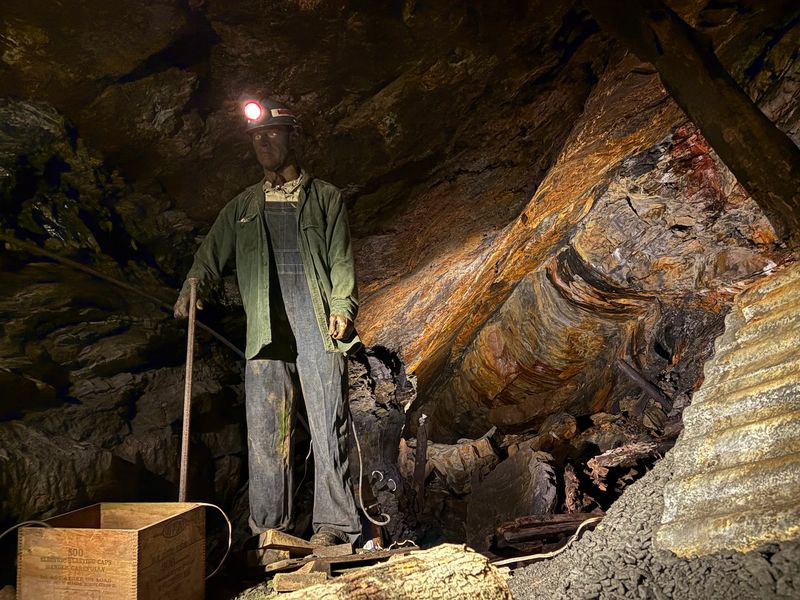
Bring a jacket, even in July. The mine stays around 53 degrees all year long.
Visitors ride a mine car about 300 feet down into a real anthracite mine under McDade Park. The trip down is steep, and it gets everyone’s attention fast.
Guides walk you through tunnels and work areas while explaining how coal was dug, blasted, and hauled out. Many guides have family ties to mining, so the stories often come straight from their own history.
You will learn about the jobs young boys did, the role of mules, and how miners checked for danger underground. The tour lasts about an hour, which is just right for most families.
Above ground, the park has a museum on anthracite heritage nearby. Pairing both stops makes for a full day.
Tours run seasonally, usually from spring into fall, so check dates before you drive.
5. Drake Well Museum & Park, Titusville, Pennsylvania
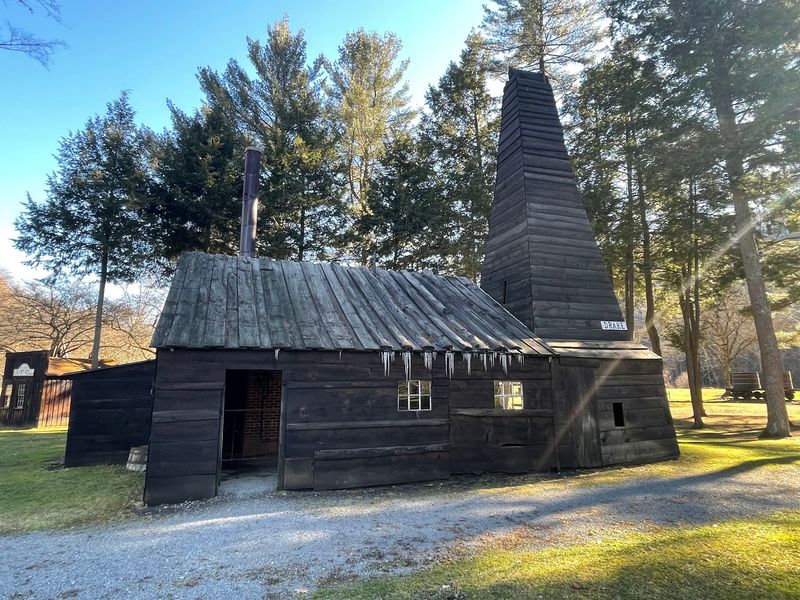
August 27, 1859, changed the world, and it happened in a quiet valley near Titusville. That was the day Edwin Drake’s well struck oil at about 69 feet deep.
His idea was simple but new. He drove an iron pipe into the ground to keep the hole from caving in, a method drillers still use today.
The museum explains how this one well started a rush of people, money, and new towns. Indoor exhibits cover the early oil boom, while outside you can see working oil-field machines.
A replica engine house and derrick mark the spot of the first well. It looks small, which surprises many visitors given its huge impact.
Nearby, the Oil Creek and Titusville Railroad runs scenic train rides through the old oil region. Combining the two makes a fun history day.
Bring walking shoes for the park trails.
6. Hopewell Furnace National Historic Site, Elverson, Pennsylvania
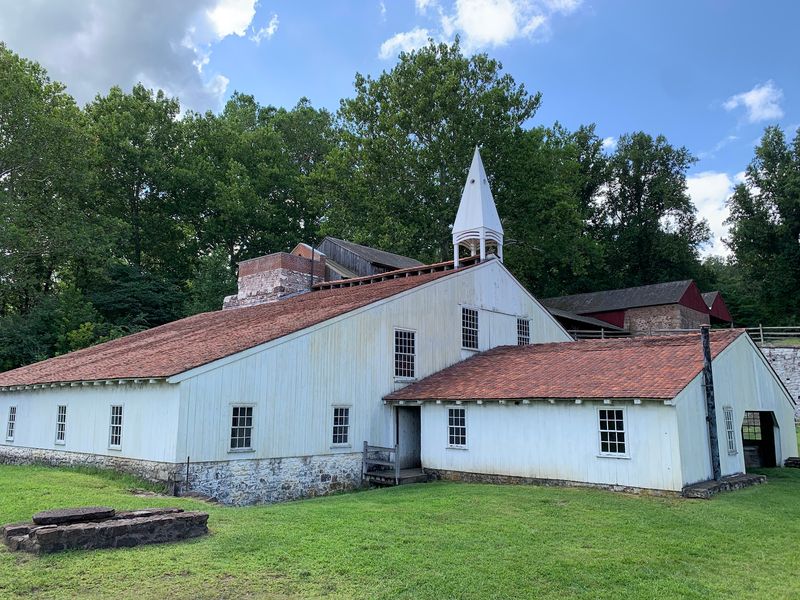
Cannons for the American Revolution may have come from this quiet corner of Berks County. Hopewell Furnace started making iron in 1771, years before Pittsburgh steel was a thing.
The site was an iron plantation, a self-run village built around one furnace. Workers made charcoal, mined ore, cast iron, and farmed the land nearby.
Today you can tour the furnace, the water wheel, the blacksmith shop, and the ironmaster’s big house. Workers’ homes and a company store show how families lived and shopped.
In warmer months, rangers often lead demonstrations about molding and casting. Hopewell is known for its stoves, which were sold to homes across the region.
Apple orchards on the grounds even let visitors pick fruit in early fall. The park sits next to French Creek State Park, so hikers can easily add trails to the trip.
Admission is free.
7. Rivers of Steel: Carrie Blast Furnaces National Historic Landmark, Pittsburgh, Pennsylvania
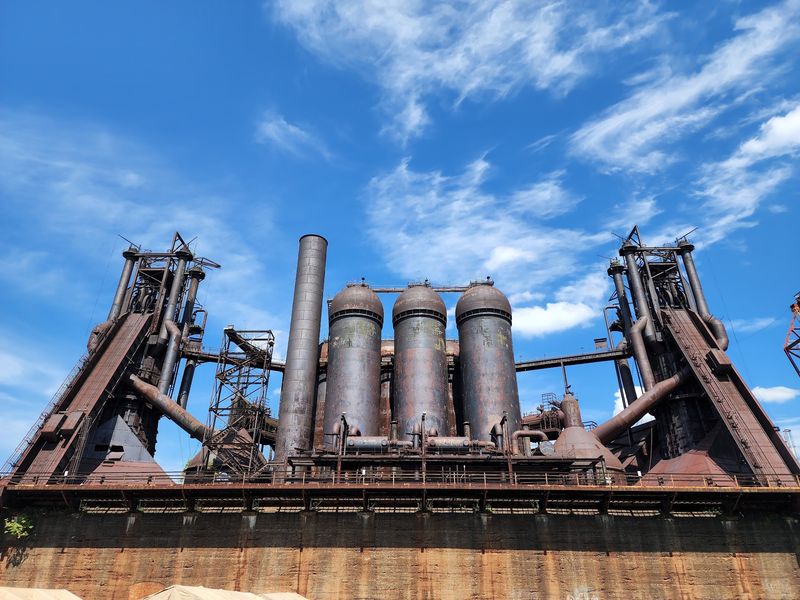
Ninety-two feet of iron and brick still rise above the Monongahela River, and they are not shy about it. Furnaces Number 6 and 7 are the rare survivors of the giant Homestead Steel Works.
From 1907 to 1982, these furnaces made iron that became steel for bridges, buildings, and skyscrapers. Most furnaces like them were torn down long ago, so seeing a pair this complete is a big deal.
Guided tours take you past ore bins, hot stoves, and the cast house, where workers once handled liquid iron. Guides explain each step in plain words, so you do not need an engineering degree to follow along.
The site also hosts art projects, including a giant deer head sculpture made from scrap metal. Tours run seasonally, so check the Rivers of Steel website before you go.
Wear closed-toe shoes, because the ground is a real working-era surface, not a polished museum floor.
8. Cornwall Iron Furnace, Cornwall, Pennsylvania
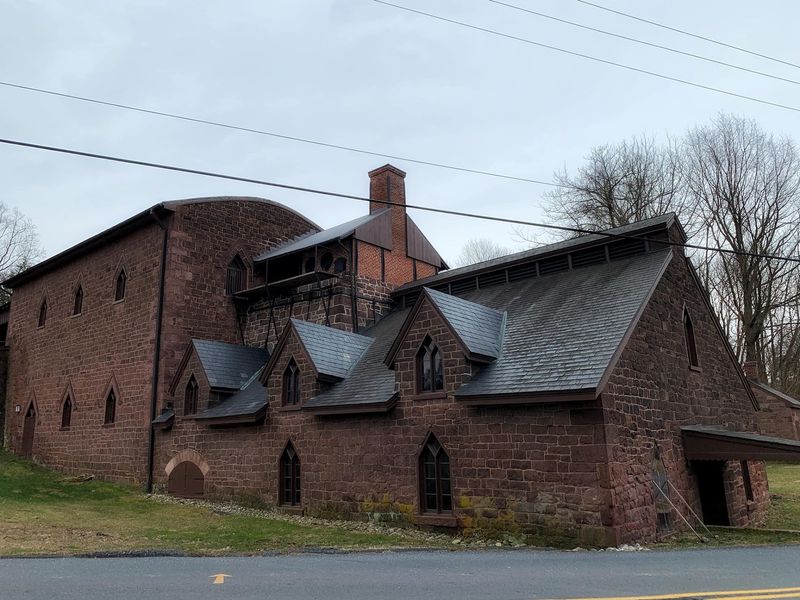
Peter Grubb picked a smart spot in 1742. The ground under Cornwall held one of the richest iron ore deposits in eastern America.
That ore fed this furnace for about 140 years. During the Revolution, it supplied iron for the Continental Army.
The state calls Cornwall the most complete charcoal-fueled iron-making complex in the country. Inside, you can still see the original steam engine, the giant blowing tubs, and the furnace itself.
The buildings have a fancy Gothic Revival look added in the 1850s. Factory buildings were rarely built to look this stylish.
Guided tours explain how charcoal, ore, and limestone went into the top and came out as iron. The site is small, so plan about an hour.
Afterward, drive past the nearby miners’ village, where many stone homes from the iron days still stand.
9. Railroad Museum of Pennsylvania, Strasburg, Pennsylvania
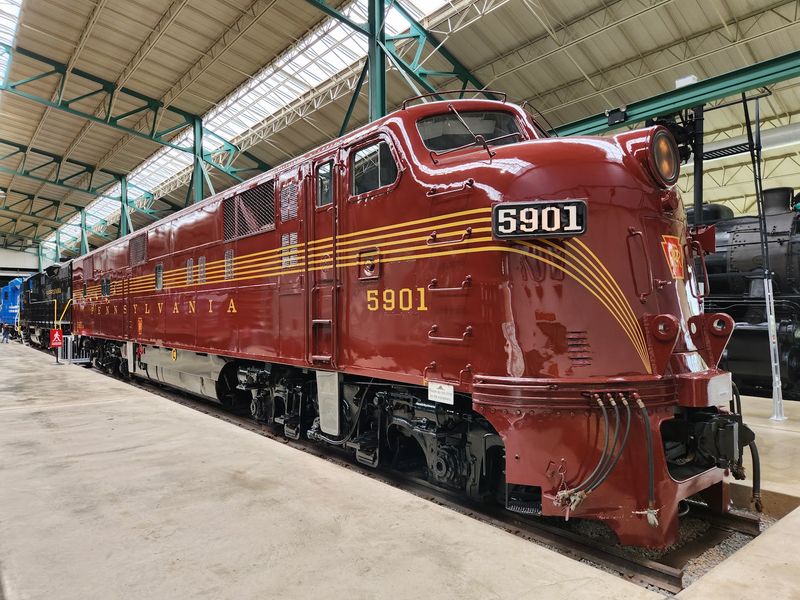
More than 100 locomotives and railcars live here, which makes parking them a pretty big job. The main hall holds dozens of them indoors, lined up side by side.
The collection covers everything from early steam engines to electric locomotives from the Pennsylvania Railroad. Many come from Altoona, once home to the biggest railroad shops in the world.
Some cars are open so you can peek inside and see where passengers once sat. Kids love the hands-on areas, including a spot where they can try railroad jobs.
An outdoor yard holds even more equipment, and a restoration shop shows how crews repair old engines. Watching that work gives a sense of just how complex these machines were.
Across the street, the Strasburg Rail Road runs steam train rides through Amish farm country. Doing both in one trip is a classic Lancaster County plan.
10. Allegheny Portage Railroad National Historic Site, Gallitzin, Pennsylvania
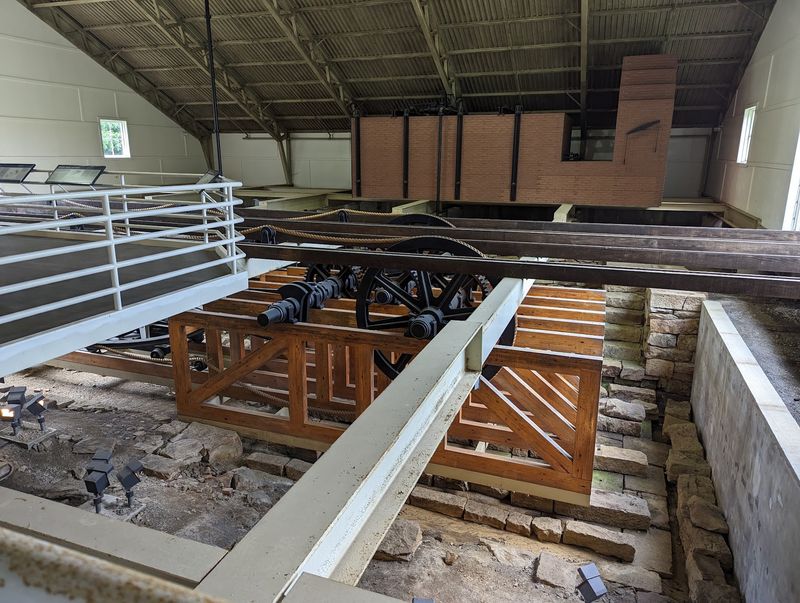
Canal boats once climbed mountains here. That sounds like a joke, but it really happened starting in 1834.
Canals could not cross the Allegheny Mountains, so planners built a railroad with ten inclined planes. Stationary steam engines pulled cars up and lowered them down the steep slopes with heavy rope.
Some boats were built in sections so they could ride on rail cars over the ridge. The trip from Philadelphia to Pittsburgh dropped from weeks to about four days.
Today the park has a reconstructed engine house and the historic Lemon House, an old tavern stop for travelers. The visitor center shows models that make the whole system easy to picture.
Trails follow parts of the old railroad bed. The Staple Bend Tunnel, the first railroad tunnel in the United States, sits a short drive away and is worth the extra stop.
11. Scranton Iron Furnaces, Scranton, Pennsylvania
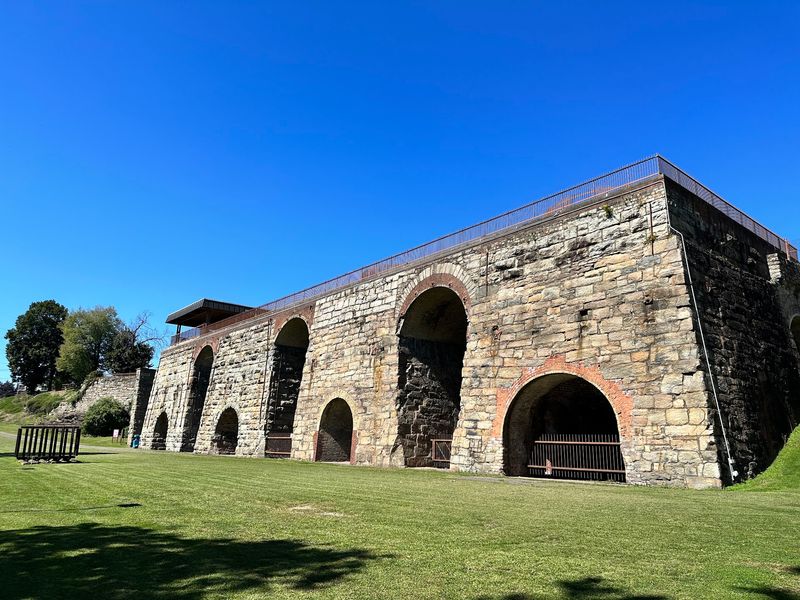
Scranton is famous for an office sitcom now, but iron put it on the map first. By 1865, the Lackawanna Iron and Coal Company had more iron-making capacity than anyone else in the country.
Four huge stone furnaces still stand from that operation. They were built between 1848 and 1857 with local stone.
The company made iron rails that helped railroads spread across America. In fact, the city grew up around this mill, and the Scranton family name stuck to the town.
The site is managed by the state and is free to visit. Signs around the grounds explain how the furnaces worked and why the company later moved to Buffalo, New York.
It is a quick stop, so plan around 30 to 45 minutes. Steamtown and the coal mine tour are both close by, so you can easily build a full Scranton history day.
12. Horseshoe Curve National Historic Landmark, Altoona, Pennsylvania
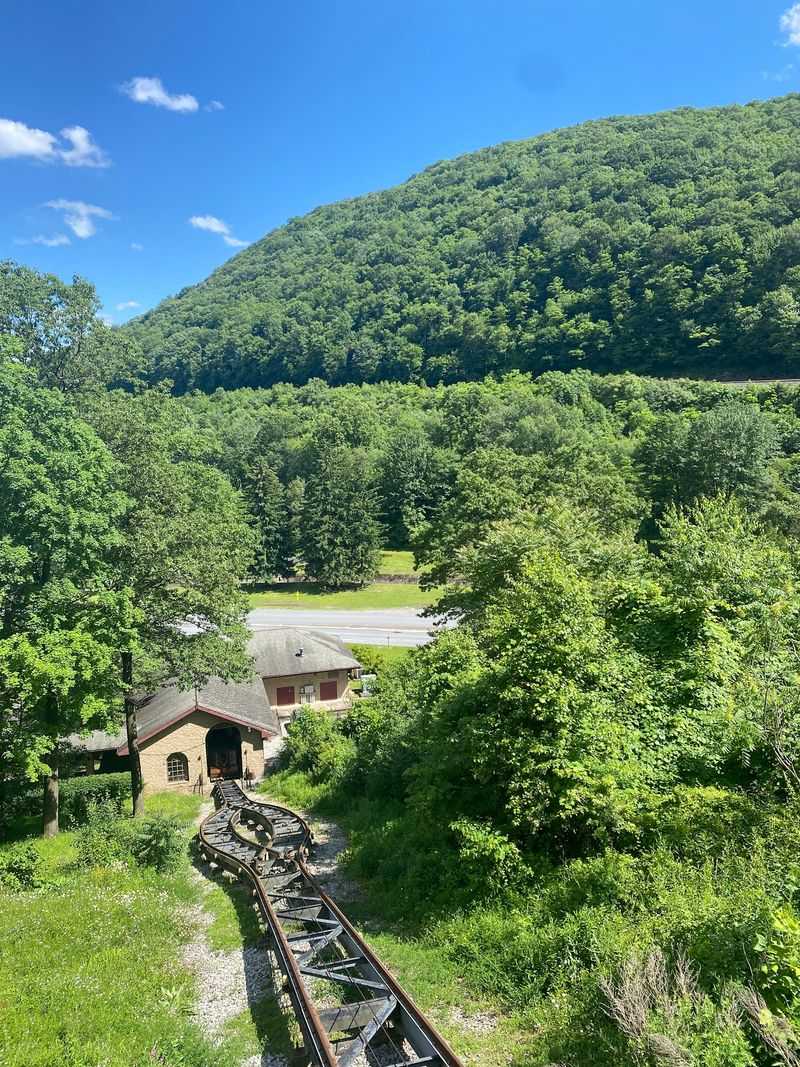
Engineers in the 1850s faced a steep mountain and no bulldozers. Their answer was a huge curved track that bends around a valley instead of climbing straight up.
The Pennsylvania Railroad opened Horseshoe Curve in 1854. Workers cut and filled the land mostly by hand, with help from horses and simple tools.
The curve is about 2,375 feet long and helps trains gain height at a gentle grade. It was so important that enemy agents reportedly targeted it during World War II.
Visitors ride a funicular, a small incline car, or climb about 194 steps to the viewing park. Trains still pass often, so railfans gather here with cameras ready.
A visitor center explains how the curve was built and why it mattered. Pair it with the Altoona Railroaders Memorial Museum downtown for the full story.
13. Pennsylvania Lumber Museum, Ulysses, Pennsylvania
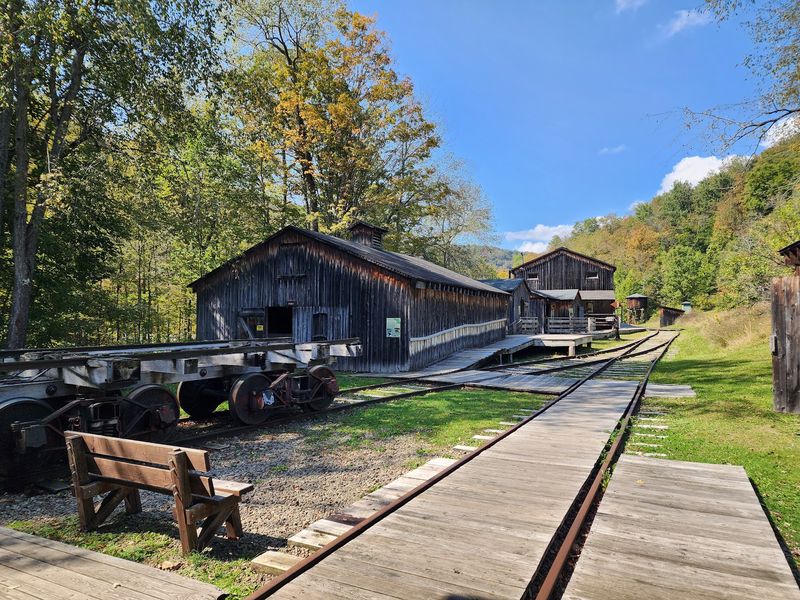
Around 1900, Pennsylvania was one of the top lumber producers in the nation. Huge stands of hemlock and white pine were cut across the northern part of the state.
This Potter County museum tells that story in a place still surrounded by forest. It sits along Route 6, between Coudersport and Galeton.
Outdoor exhibits recreate parts of a logging camp, with bunkhouse and sawmill displays. A Shay locomotive, built with gears to climb steep, rough tracks, is one of the big highlights.
Indoors, exhibits show crosscut saws, log marks, and how logs were floated down rivers. You will also learn how the forests were later replanted and protected.
The museum hosts a popular Bark Peelers’ Festival each July with woodworking and logging demos. Combine your trip with nearby Cherry Springs State Park, famous for its dark night skies.
14. W.A. Young & Sons Foundry and Machine Shop, Rices Landing, Pennsylvania
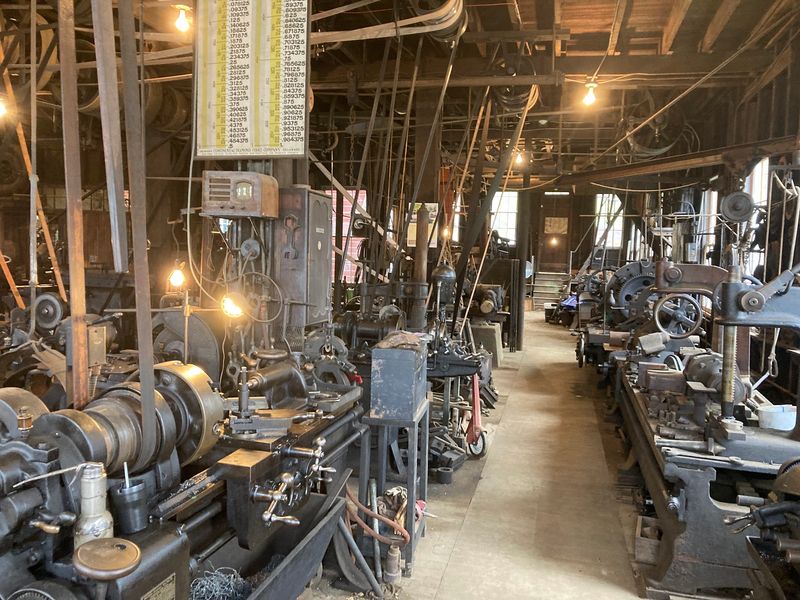
Smaller can be mighty. This little shop in Greene County might be the most surprising stop on the whole list.
Built in the early 1900s, the foundry and machine shop ran until 1965. When it closed, almost everything was left in place.
Visitors see belt-driven machines, lathes, drills, and a foundry area with molds and patterns. A single engine once powered many tools through overhead shafts and belts.
Workers here fixed and built parts for river boats, coal mines, and local farms. Without shops like this, bigger industries along the Monongahela would have ground to a halt.
Guided tours run on select Sundays from spring through fall, and the guides sometimes run the old machines. Check Greene County tourism listings for current dates.
The shop is small, so it is a perfect closing stop for anyone who loves seeing how things really got made.
Share this story