West Virginia has a reputation for being passed over on road trip planners, and that is honestly a mistake most travelers only make once. The Mountain State packs ancient gorges, high-altitude wilderness, underground caverns, and Appalachian forests into a surprisingly compact landscape.
Other mountain states may boast taller peaks, but few can match the sheer variety of scenery crammed into West Virginia’s borders. A river older than the mountains it carved, a bog that belongs in Canada, a grist mill that looks like a painting, and a steam railroad climbing toward the clouds are all waiting here.
This list covers 14 places that make a strong case for putting West Virginia at the top of any mountain travel itinerary, and a few of them might genuinely surprise you.
1. New River Gorge National Park and Preserve, Glen Jean, West Virginia
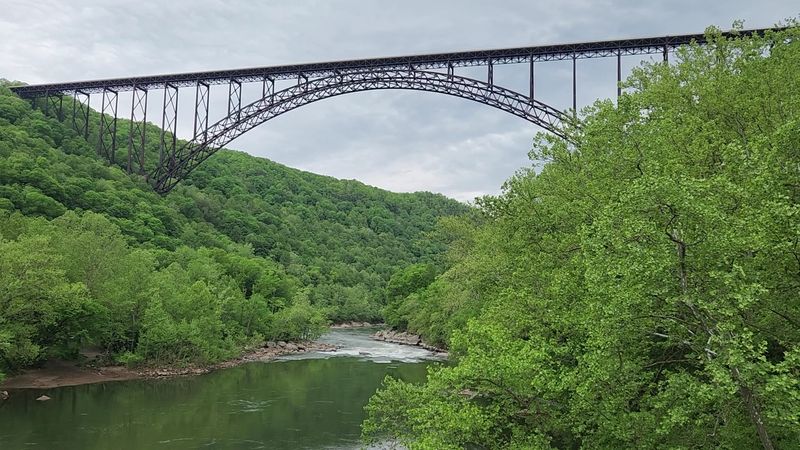
America’s 63rd national park became official in December 2020, but the New River itself has been carving this gorge for roughly 330 million years, making it one of the oldest rivers on the continent.
The park covers more than 70,000 acres, offering nearly 100 miles of hiking trails, world-class rock climbing on Nuttall sandstone cliffs, and whitewater rafting ranging from calm family floats to serious Class V rapids.
The New River Gorge Bridge, completed in 1977, stretches 3,030 feet across the chasm and rises 876 feet above the river. Every October, the annual Bridge Day event opens the span to pedestrians and BASE jumpers, turning an engineering marvel into one of Appalachia’s most unusual festivals.
2. Blackwater Falls State Park, Davis, West Virginia
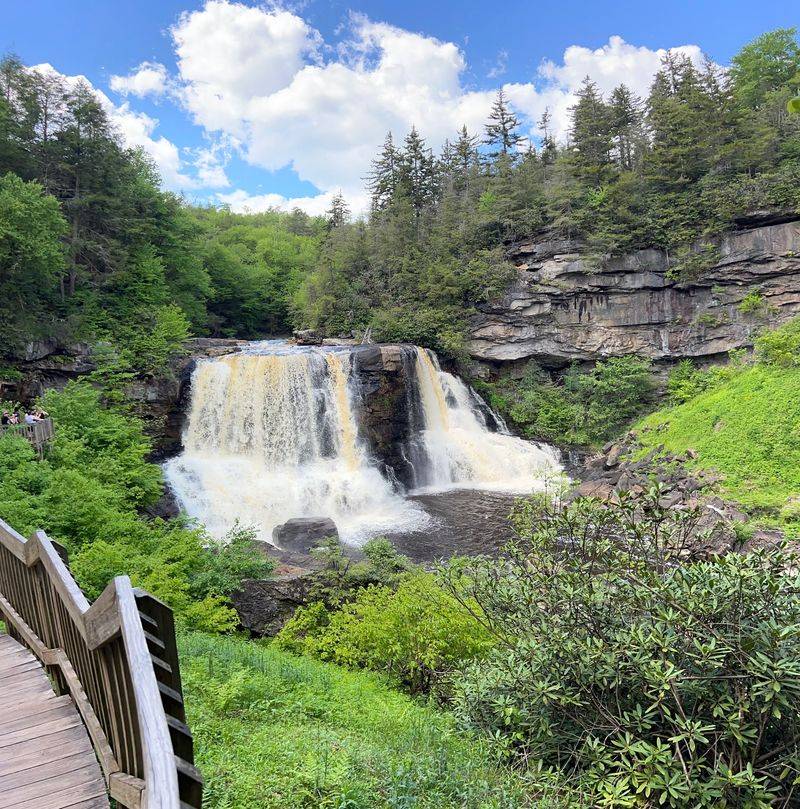
The water here runs the color of strong tea, and that is not a trick of the light. Tannins released by decaying hemlock and red spruce needles along the Blackwater River give the falls their distinctive amber hue, a natural chemistry experiment you can watch from the boardwalk.
The namesake cascade drops between 57 and 62 feet into a rugged canyon, and a series of overlooks including Lindy Point and Pendleton Point frame the gorge from multiple angles.
Beyond the main attraction, the park holds more than 20 miles of trails, an 11-acre lake for fishing, and what is reportedly the East Coast’s longest sled run once winter arrives. The canyon drops approximately 1,250 feet along its full length, making it far more than a single waterfall destination.
3. Seneca Rocks, Seneca Rocks, West Virginia
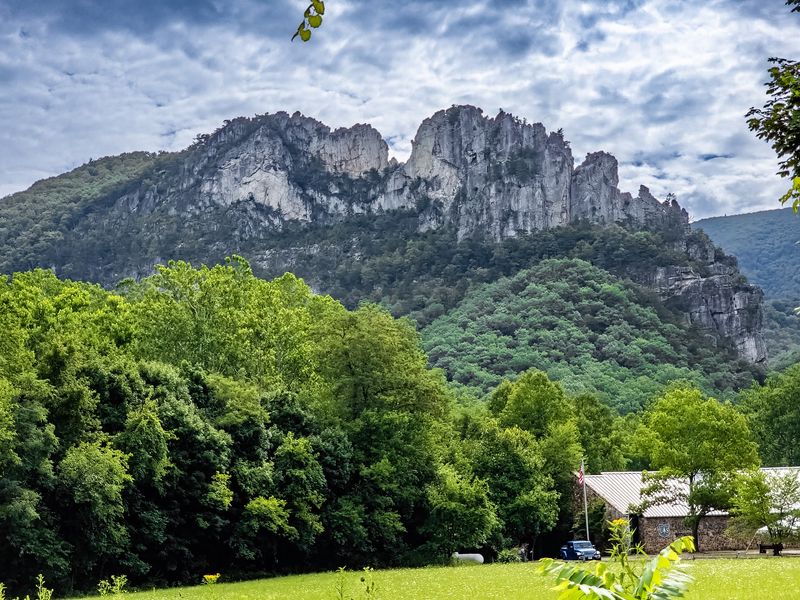
Few rock formations in the eastern United States announce themselves quite so boldly. Seneca Rocks rises nearly 900 feet above the North Fork River, its pale Tuscarora quartzite fins standing almost vertically after millions of years of folding and erosion shaped them into their current dramatic profile.
The South Peak holds a rare distinction: it is the only peak on the entire East Coast that requires technical climbing to reach the top. During World War II, the U.S.
Army’s 10th Mountain Division trained here on assault climbing techniques, which gives the cliffs an additional layer of historical weight.
Hikers who prefer a trail over ropes can follow the 1.3-mile path to an observation platform near the north peak, where the North Fork River valley spreads out in a panorama that rewards every step of the climb.
4. Dolly Sods Wilderness, Davis, West Virginia
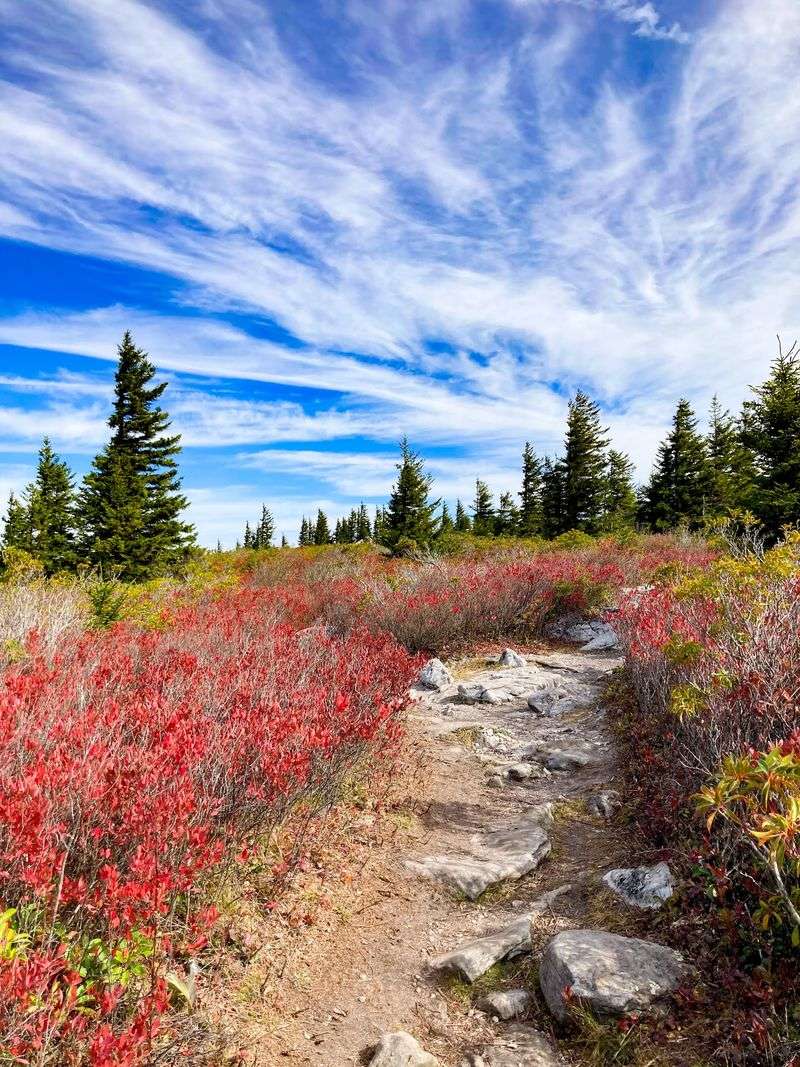
Most visitors arrive expecting standard Appalachian forest and leave wondering if they somehow crossed into northern Canada. Dolly Sods sits on a high plateau ranging from 2,600 to over 4,100 feet in elevation, and its windswept heath barrens, sphagnum bogs, and flagged red spruce trees bear almost no resemblance to the wooded hollows below.
The name itself is a quirky blend of history: the Dahle family homesteaded here in the 1700s, and “sods” is an old local term for open mountaintop meadows. More than 47 miles of trails cross this wilderness, with terrain that mixes rocky scrambles, boggy stretches, and broad ridgeline views.
Wildlife here includes snowshoe hares, bobcats, and Saw-whet owls, species more typical of boreal regions. Conditions change fast at these elevations, so packing layers is less a suggestion and more a survival strategy.
5. Coopers Rock State Forest, Bruceton Mills, West Virginia
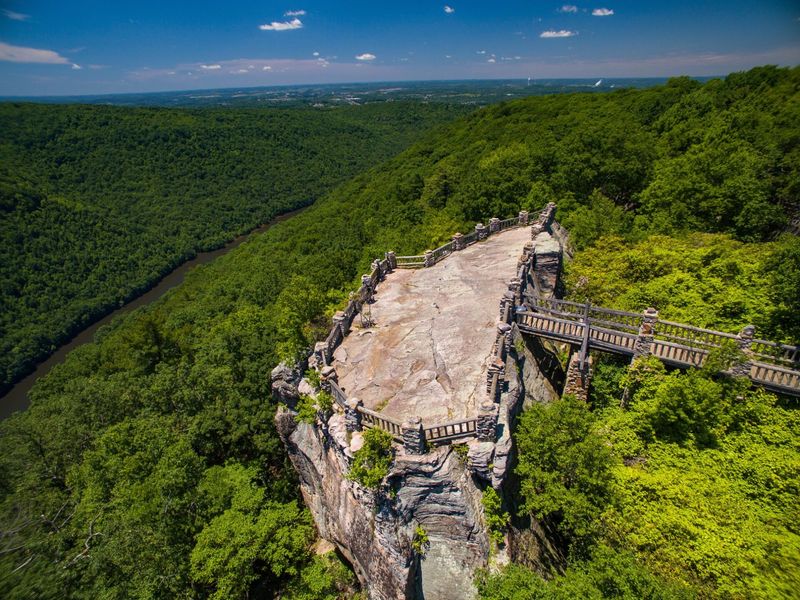
The legend behind the name is almost too good to be a coincidence: a fugitive barrel maker supposedly hid in a cliffside cave here in the 1700s, continuing his trade and selling barrels to nearby communities while evading the law. Whether the story is entirely true or not, it fits perfectly with the rugged character of this place.
Coopers Rock is West Virginia’s largest state forest at 12,747 acres, and its main overlook, built by the Civilian Conservation Corps in the 1930s and now on the National Register of Historic Places, frames the Cheat River Gorge with a view that stretches across folded, densely forested hills.
The Henry Clay Iron Furnace Trail leads to pyramid-shaped remains of an 1830s steam-powered blast furnace, while the Rock City Trail winds through unusual sandstone formations. Over 50 miles of trails cover the forest in total.
6. Babcock State Park, Clifftop, West Virginia
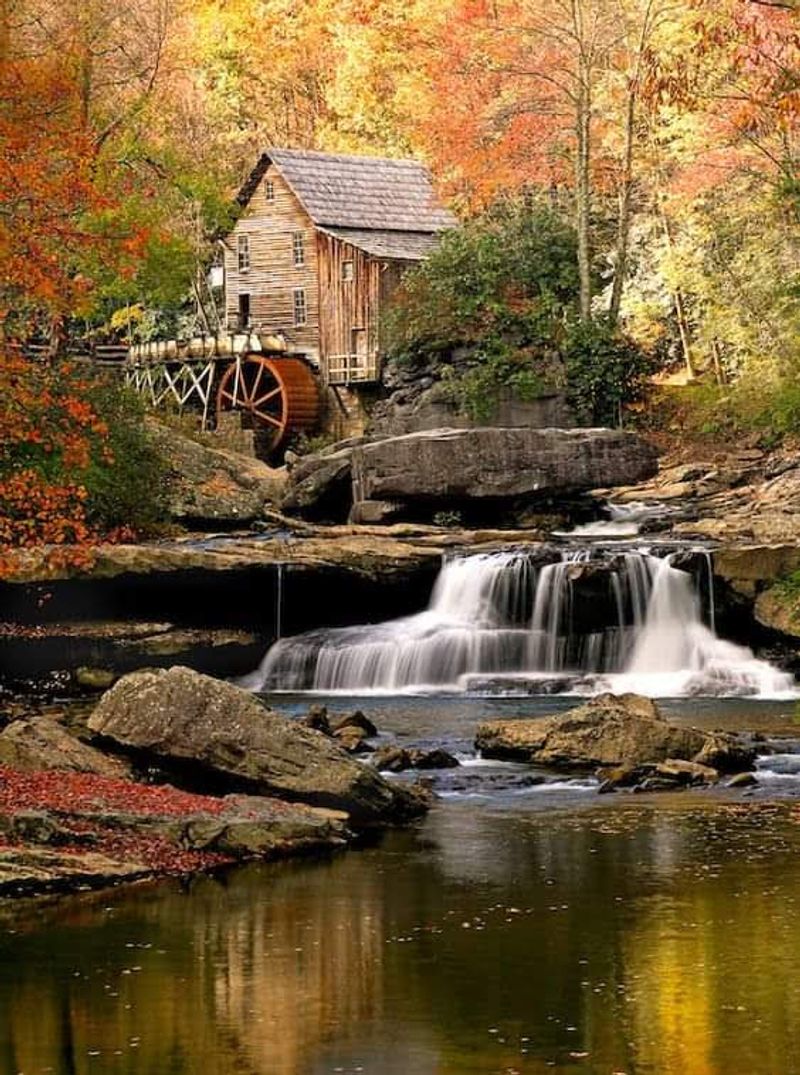
No photograph of West Virginia gets shared more reliably than the one of the Glade Creek Grist Mill, a working water-powered mill perched beside a rocky stream with autumn color blazing around it. The mill completed in 1976 is a careful reconstruction built from parts salvaged from three separate historic West Virginia mills.
It still grinds cornmeal and flour, which visitors can buy, making it a monument you can actually taste. The surrounding 4,127 acres of Appalachian terrain offer 20 miles of trails, from easy lakeside walks around Boley Lake to more demanding mountain routes connecting into the adjacent New River Gorge National Park.
The Civilian Conservation Corps built much of the park’s infrastructure in the 1930s, and 34 cabins allow overnight stays. Sitting just 20 miles from the New River Gorge Bridge, Babcock earns its place as far more than a quick photo opportunity.
7. Spruce Knob, Riverton, West Virginia
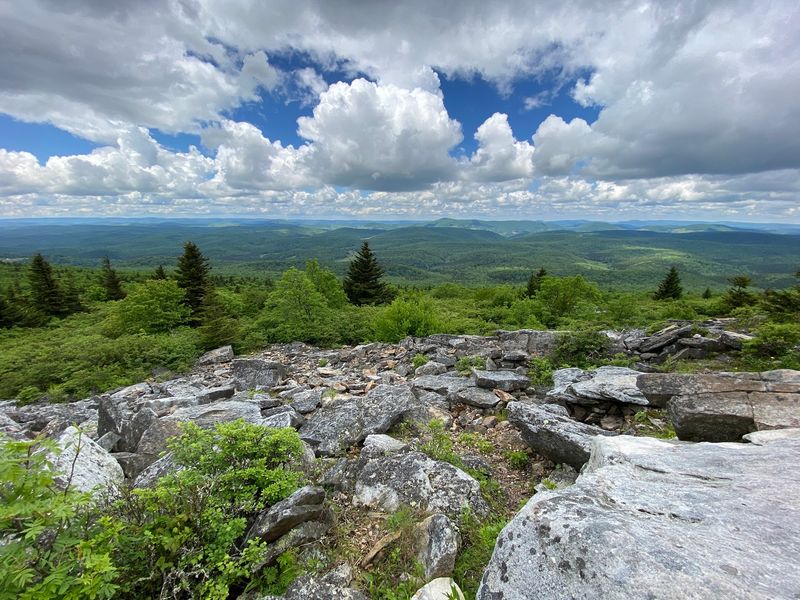
At 4,863 feet, Spruce Knob holds the title of West Virginia’s highest point and the loftiest summit in the entire Allegheny Mountain range. The views from the stone and steel observation tower, built in 1969, sweep 360 degrees across ridge after ridge of mountain terrain.
The red spruce trees near the summit have a story written into their shape: constant westerly winds have pushed their branches to grow almost entirely on the eastern side, creating what foresters call flagged trees. A half-mile graveled loop called the Whispering Spruce Trail circles the peak with interpretive signs explaining the geology, flora, and wildlife of this high-country environment.
Over 60 miles of backcountry trails extend the visit well beyond the summit itself, and the area’s exceptionally dark night skies make it a reliable destination for stargazing once the sun drops behind the western ridges.
8. Hawks Nest State Park, Ansted, West Virginia
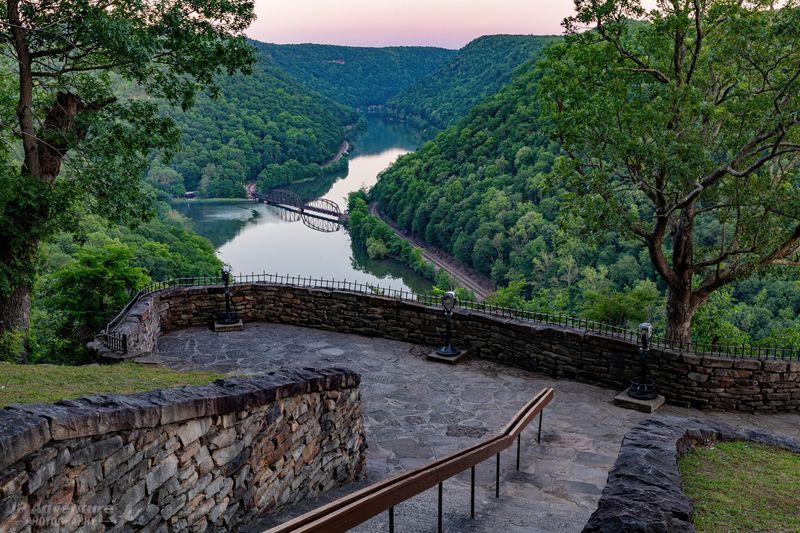
The park earned its name from the osprey, locally called fish hawks, that once nested on its cliffs above the New River. That bird’s-eye perspective is essentially what every visitor gets from the overlooks here, a dramatic view straight down into one of Appalachia’s most impressive gorges.
Hawks Nest sits just 10 to 13 miles north of the New River Gorge Bridge, making it a natural companion stop on any gorge itinerary. An aerial tramway, currently being replaced with an $8 million ADA-accessible upgrade expected in spring 2025, connects the lodge area to the marina at river level.
The Hawks Nest Rail Trail follows an old railway grade past waterfalls and remnants of coal mines, while jet boat tours offer a river-level perspective of the gorge walls. The 31-room lodge, recently renovated, provides accommodation with sweeping window views over the canyon.
9. Cranberry Glades Botanical Area, Hillsboro, West Virginia
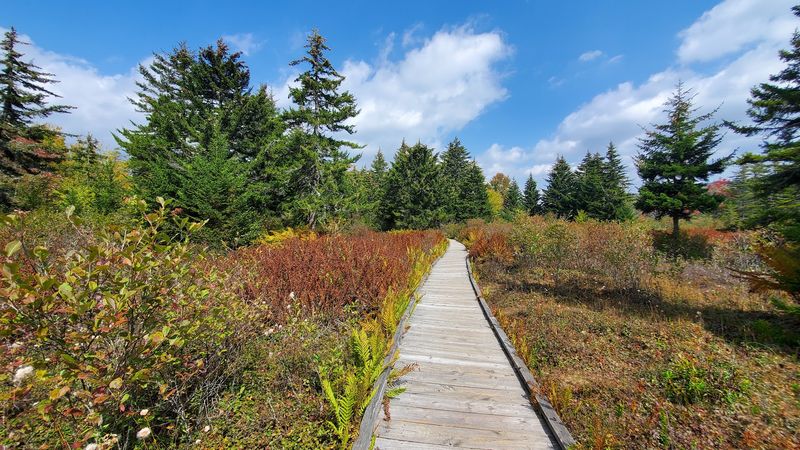
Somewhere in the Allegheny Mountains of Pocahontas County, a piece of the Canadian boreal zone decided to stay put after the last Ice Age. The Cranberry Glades protects 750 acres of high-elevation bogs where peat layers run 10 to 20 feet deep and plant species more typical of northern Canada have persisted for thousands of years.
A half-mile accessible boardwalk leads visitors through two of the bogs without disturbing the fragile vegetation beneath. Carnivorous plants including sundews and purple pitcher plants grow here, alongside rare orchids, bog rosemary, cranberries, and skunk cabbage, making this one of the most botanically unusual spots in the entire Appalachian range.
The Cranberry Mountain Nature Center nearby provides interpretive exhibits that put the glades in ecological context. Quieter and less dramatic than a waterfall or summit view, the glades reward visitors who take the time to look closely.
10. Cathedral State Park, Aurora, West Virginia
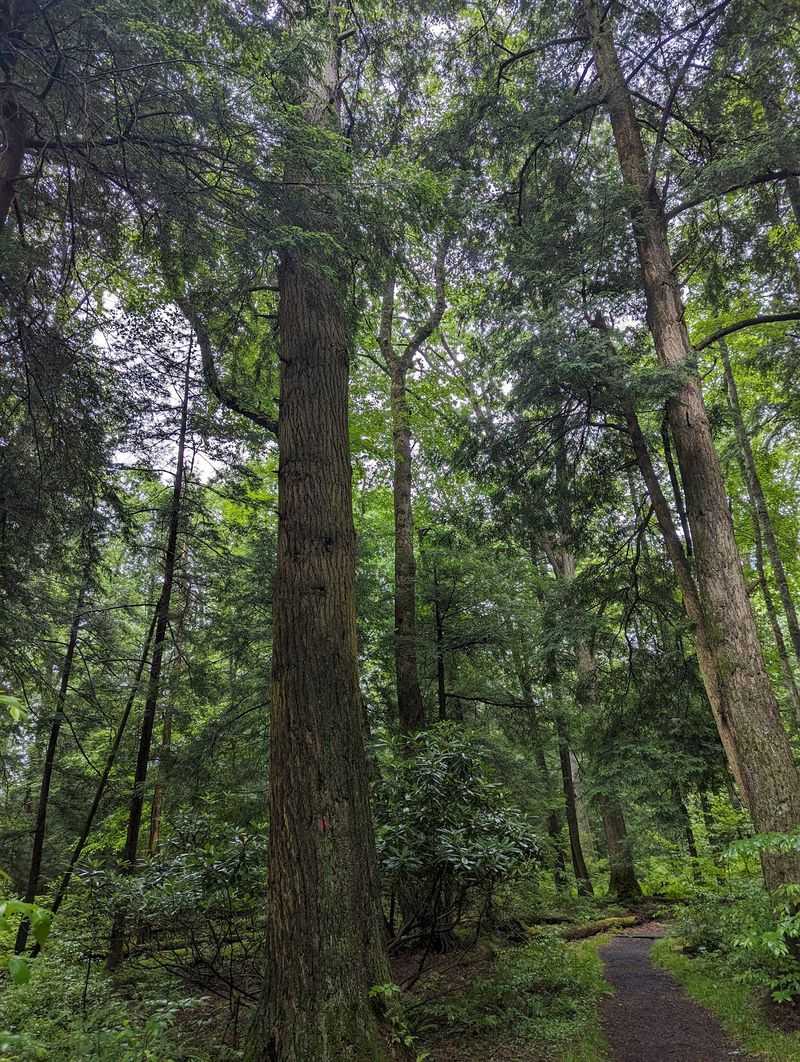
Some trees in this 132-acre park have been standing for more than 500 years, which means they were already old when the first European settlers arrived in North America. Cathedral State Park protects one of West Virginia’s last significant stands of old-growth forest, centered on eastern hemlocks that reach 90 to 123 feet tall with circumferences up to 21 feet.
The name fits the experience precisely. Walking among these massive, columnar trunks with their dense canopy overhead creates a quiet, layered atmosphere unlike anything found in younger second-growth forest.
The park’s preservation owes much to Branson Haas, who purchased the land in 1922 and later sold it to the state in 1942 with the firm condition that the forest remain uncut. Over 170 species of vascular plants, including 50 wildflower species and 9 fern types, grow within this small but extraordinary woodland.
11. Grandview, Beaver, West Virginia
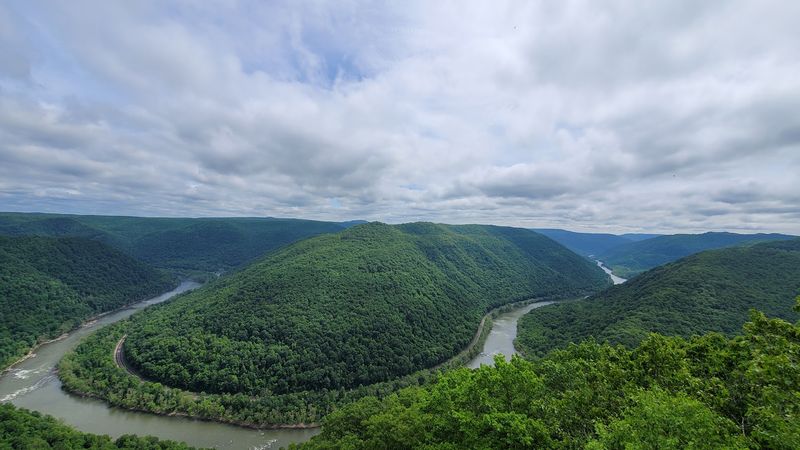
Railroad engineers noticed this bend in the 1870s, and anyone who has stood at the main overlook 1,400 feet above the New River can understand why it stopped them in their tracks. Grandview frames a sweeping panorama stretching more than 15 miles across the Allegheny Mountains, with seven miles of the river visible from a single vantage point.
The overlook is wheelchair accessible, and the view takes in not just the gorge but the historic town of Quinnimont below, where coal was first shipped out of the region in 1873. Spring brings a reliable spectacle of Catawba rhododendron blooms peaking around mid-May, followed by white great rhododendrons in July.
Five to six miles of trails extend beyond the overlook, including the Tunnel Trail, which guides hikers through a cave-like passage. The 1,200-seat Cliffside Amphitheater hosts outdoor drama performances from June through August.
12. Lost World Caverns, Lewisburg, West Virginia
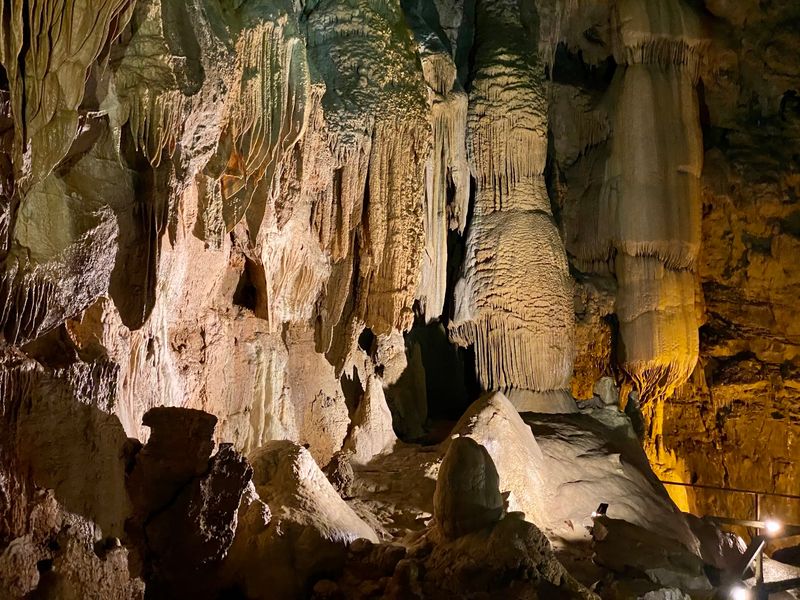
Not every remarkable landscape in West Virginia points upward. Lost World Caverns takes visitors underground into a single vast chamber measuring roughly 1,000 feet long, 300 feet wide, and 120 feet high, filled with formations that have been growing for an almost incomprehensible stretch of time.
The cave was discovered in 1942, registered as a National Natural Landmark in 1973, and holds some genuinely outsized attractions. The Snowy Chandelier, a compound stalactite weighing an estimated 30 tons, is considered one of the largest in the country.
A 28-foot stalagmite called the War Club gained unexpected fame in 1971 when a man sat on top of it for nearly 16 days, setting an unofficial world record.
A self-guided half-mile loop takes about 45 minutes, and a four-hour guided wild cave tour explores deeper sections. The cave stays at a constant 52 degrees Fahrenheit year-round, making it a practical cool-weather escape.
13. Cass Scenic Railroad State Park, Cass, West Virginia
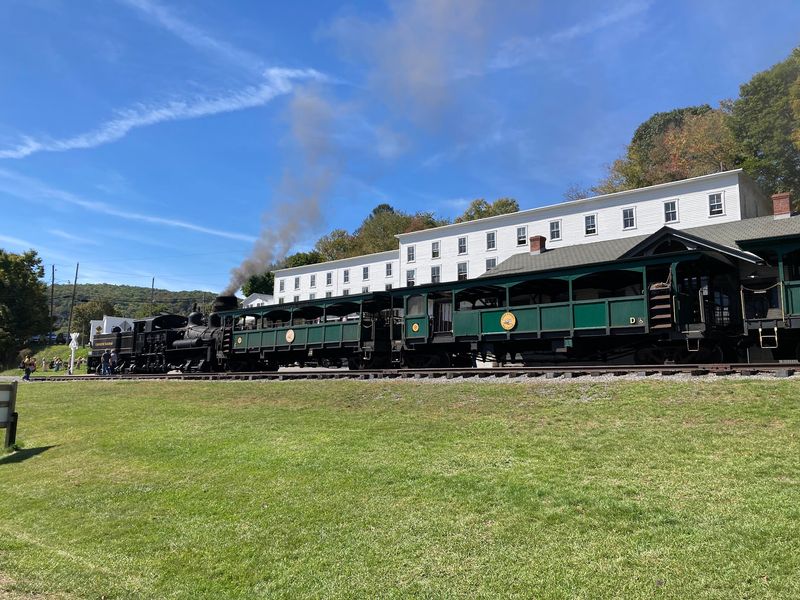
Built in 1901 to haul spruce and hemlock from the mountains to what was once the world’s largest double-band sawmill, the Cass railroad was nearly scrapped entirely when logging operations shut down in 1960. A determined group of railfans convinced the state to take it over, and the first tourist excursion ran in June 1963.
The park now holds the world’s largest collection of operating geared steam locomotives, mostly Shay engines designed for steep, uneven grades. Excursions run from a two-hour trip to Whittaker Station, a recreated logging camp, up to a five-hour climb to Bald Knob, West Virginia’s third-highest point.
The preserved company town adds a second layer of history, with restored houses available as vacation rentals and a Company Store housing a gift shop and restaurant. The park also connects directly to the 78-mile Greenbrier River Trail for hikers and cyclists.
14. Watoga State Park, Marlinton, West Virginia
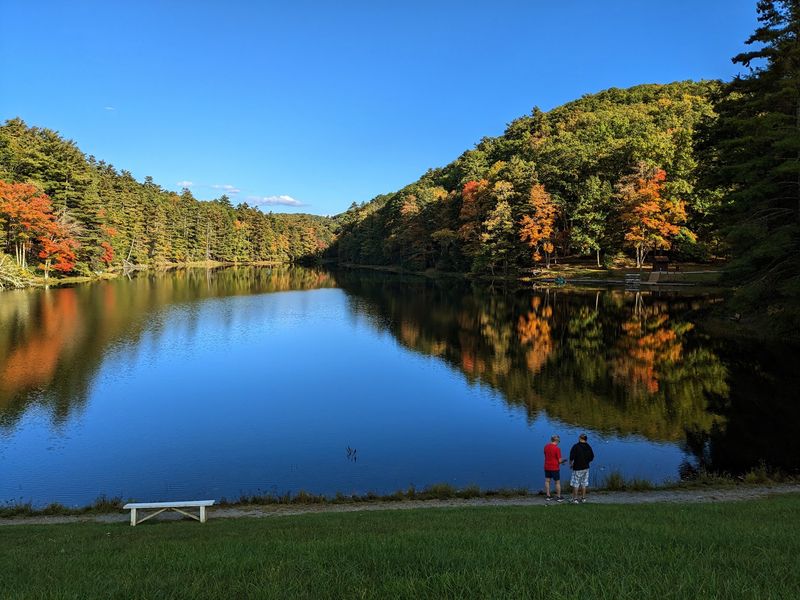
West Virginia’s largest state park takes its name from a Cherokee word meaning “starry waters,” and the name holds up well once evening settles over Pocahontas County and the cell signal quietly disappears. Watoga covers more than 10,000 acres of forest, with 37 to 40 miles of trails ranging from easy lakeside loops to ridge routes with long mountain views.
The Civilian Conservation Corps built much of the park’s infrastructure between 1933 and 1942, including cabins, roads, an 11-acre lake, and a swimming pool. Over 100 of those CCC-built resources are recognized on the National Register of Historic Places, and the park’s CCC Museum tells the story of that era in detail.
Thirty-four cabins offer accommodation options from modern heated units to historic log-style seasonal rentals. Direct access to the 78-mile Greenbrier River Trail makes Watoga a logical base for anyone exploring the quieter corners of Appalachia.
Share this story