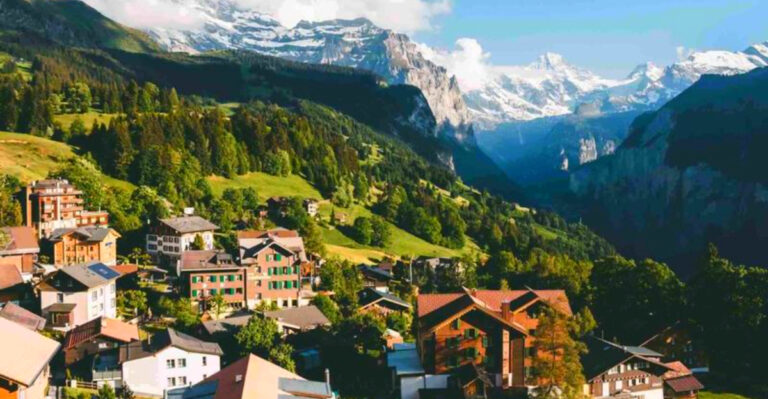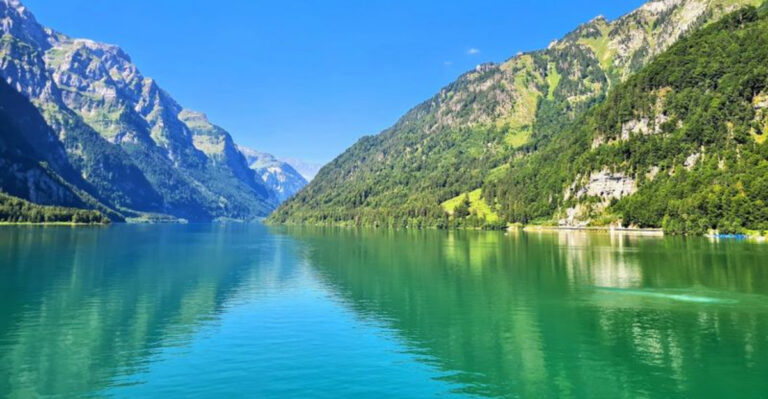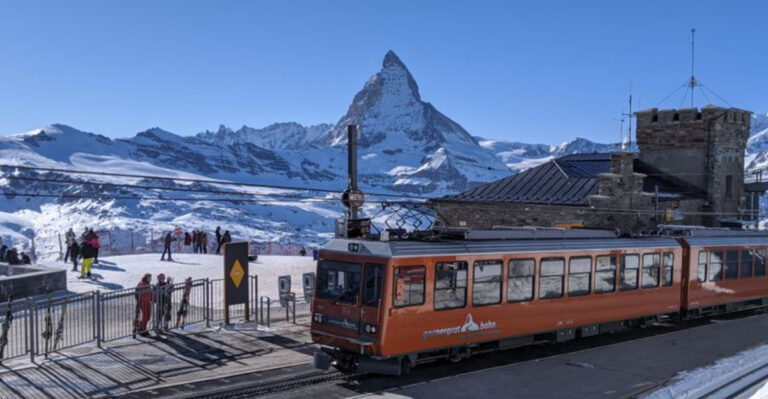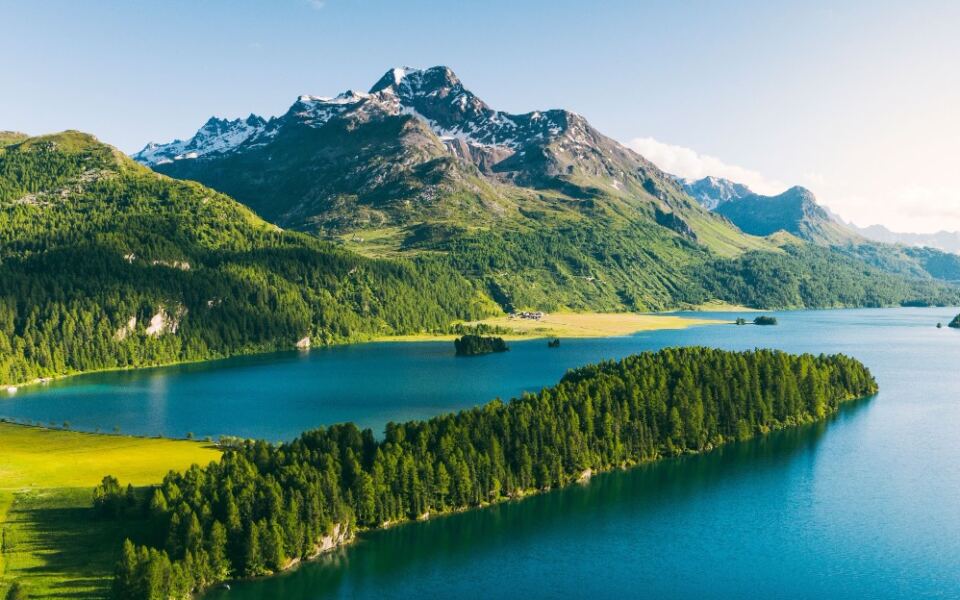
Switzerland is home to some of the most beautiful lakes in the world, and summer is the perfect time to see them. From turquoise Alpine pools tucked above the clouds to wide, sparkling stretches of water shared with neighboring countries, the variety here is genuinely impressive.
Whether you want to swim, sail, hike, cruise, or simply sit by the water with a good view, there is a Swiss lake that fits the plan. This list covers 17 lakes across different regions of Switzerland, each with its own character, scenery, and reasons to visit.
Some are easy to reach from major cities, while others reward travelers who are willing to put in a little extra effort to get there. Save this list before your summer trip starts.
Lake Geneva, Geneva and Vaud
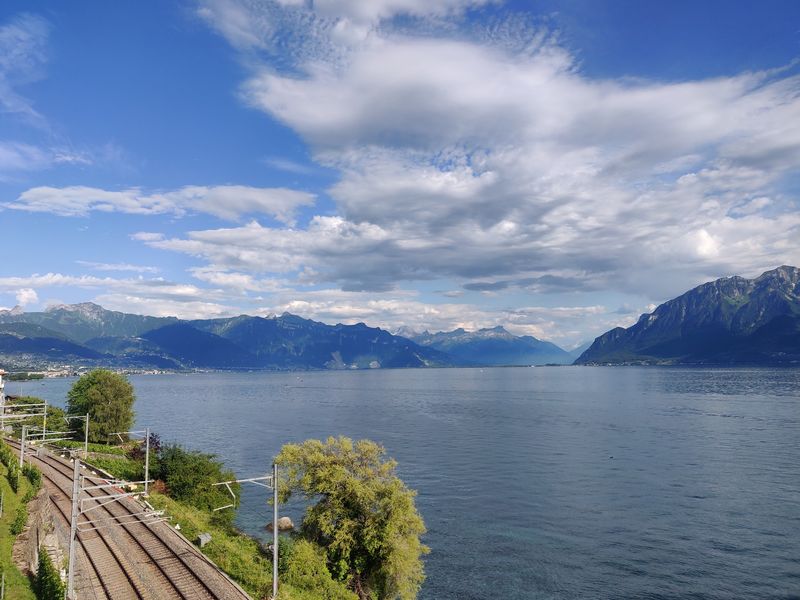
Stretching across southwestern Switzerland and into France, Lake Geneva is one of Europe’s largest lakes, and its Swiss shoreline alone could fill an entire vacation itinerary. Geneva, Lausanne, and Montreux each offer a different experience along the same body of water.
Summer visitors can board passenger cruises, rent sailboats, or simply walk the waterfront promenades that line the shore. The famous Jet d’Eau fountain in Geneva rises 140 meters above the lake surface and is one of the most recognizable sights in the country.
History lovers will want to make time for Chillon Castle near Montreux, one of Switzerland’s most visited medieval sites. The UNESCO-listed Lavaux vineyard terraces also run along the northern shore, offering a scenic backdrop unlike anything else in the region.
Because the lake is so large, planning at least two to three days here makes the most of everything it offers.
Lake Lucerne, Central Switzerland
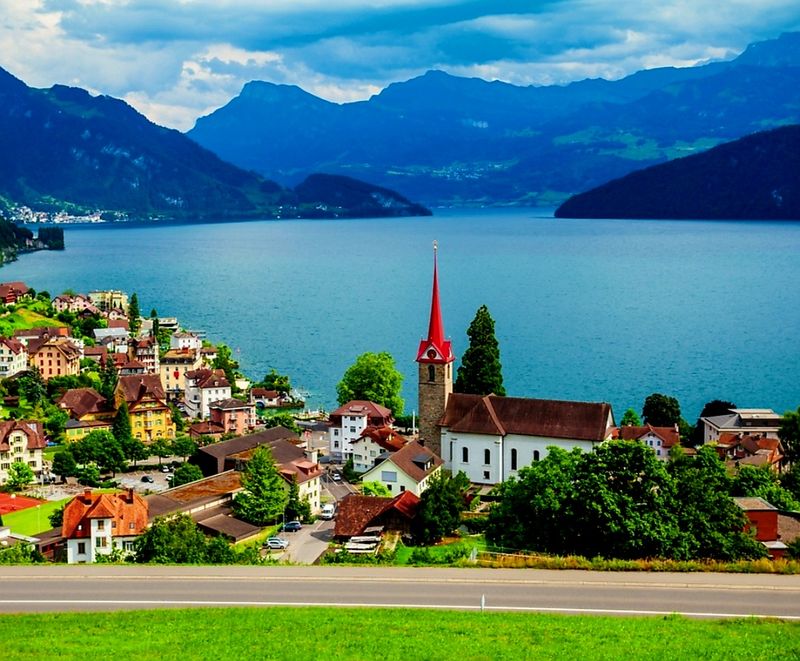
The shape of Lake Lucerne is unlike almost any other Swiss lake. Its irregular, winding outline means that different sections feel like entirely separate places, even though they are all connected.
Mount Pilatus and Rigi rise dramatically above the water, and the city of Lucerne sits right on the lake’s edge, giving visitors immediate access to both mountain excursions and waterfront sightseeing. Passenger boats travel to villages and landing points across the lake, making it easy to explore without relying on roads.
Summer is genuinely the best time to be here. You can move between boat cruises, mountain cable cars, hiking trails, and Lucerne’s old town all in a single day.
The famous Chapel Bridge, one of Europe’s oldest covered wooden bridges, is just steps from the waterfront. Switzerland Tourism consistently ranks boat excursions on Lake Lucerne among the country’s top warm-season experiences, and the reputation is well-earned.
Lake Brienz, Bernese Oberland
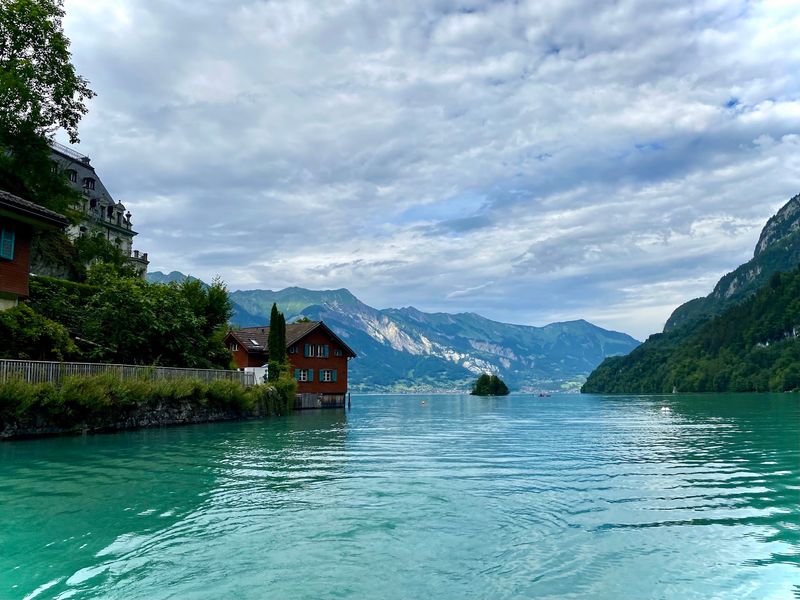
The water at Lake Brienz has a color that genuinely stops people in their tracks. Mineral-rich glacial meltwater flowing into the lake creates that striking turquoise tone, and on a clear summer day, the reflection off the surrounding cliffs makes it even more vivid.
Set east of Interlaken between steep mountain walls, the lake has a quieter, less crowded feel than many larger Swiss lakes. Brienz and Bönigen are the main lakeside villages, both easy to reach and worth a slow walk through.
One of the most popular summer excursions is taking a boat toward Giessbach Falls, where a series of cascades drop through the forest near the historic Grandhotel Giessbach. The Brienz Rothorn Railway, a steam-powered mountain train, also departs from the town of Brienz and offers panoramic views above the lake.
For travelers already based in Interlaken, adding Lake Brienz to the itinerary requires almost no extra effort.
Lake Thun, Bernese Oberland
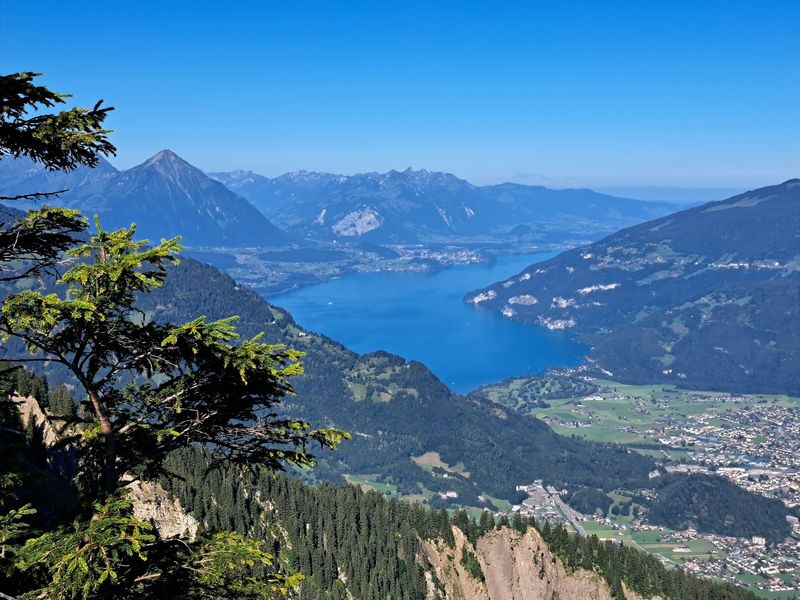
Sitting on the opposite side of Interlaken from Lake Brienz, Lake Thun has a broader, more open character. The water runs a deep, clear blue, and the surrounding Alpine peaks give the entire lake a postcard-worthy backdrop throughout summer.
Castles overlook the water from several points around the shoreline, giving Lake Thun a stronger historical dimension than many purely scenic Alpine lakes. Thunersee boat services run regularly during the summer season, connecting the city of Thun with villages and attractions around the shore.
The St. Beatus Caves, carved into the cliffs above the northern shoreline, are among the most unusual natural attractions in the Bernese Oberland. Mountain excursions to the Niederhorn and Niesen are also accessible from the lake area.
Travelers staying in Interlaken have the rare advantage of being able to visit both Lake Thun and Lake Brienz during the same trip, which makes this part of Switzerland exceptionally good value for time.
Lake Oeschinen, Kandersteg
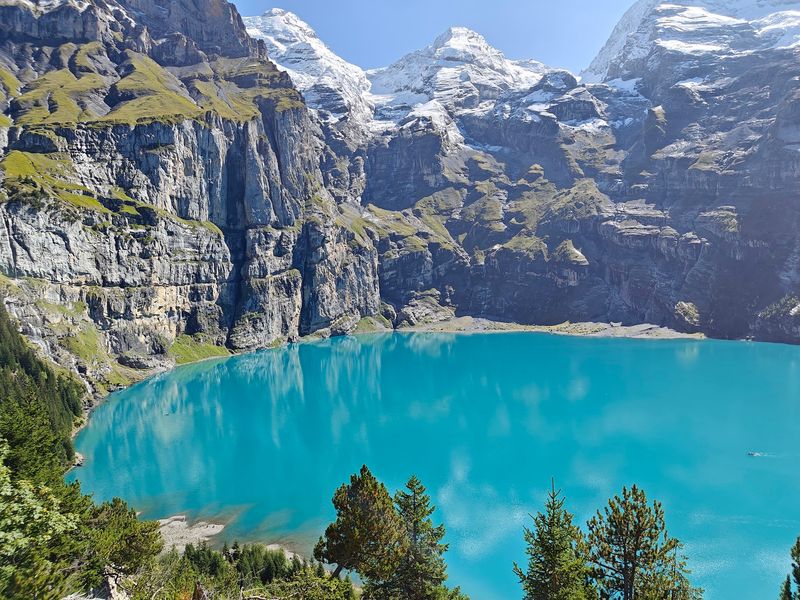
Perched high above Kandersteg beneath a wall of limestone cliffs, Lake Oeschinen is one of those places that looks almost too dramatic to be real. Its vivid turquoise water sits within the Swiss Alps Jungfrau-Aletsch UNESCO World Heritage landscape, which is worth knowing before you arrive.
A gondola from Kandersteg lifts visitors toward the upper area, though some walking is still required to reach the lakeshore itself. Once there, the options include hiking, picnicking, rowing, and swimming in the glacier-fed water, which is cold even during peak summer.
Several trails offer elevated views looking directly down onto the lake and the encircling peaks, and the visual contrast between the turquoise water and the grey rock above it is remarkable. Because conditions at this elevation can shift quickly, checking trail and gondola operating information before heading up is always a smart move.
Switzerland Tourism actively promotes Oeschinen as a key summer destination for outdoor recreation.
Lake Zurich, Zurich
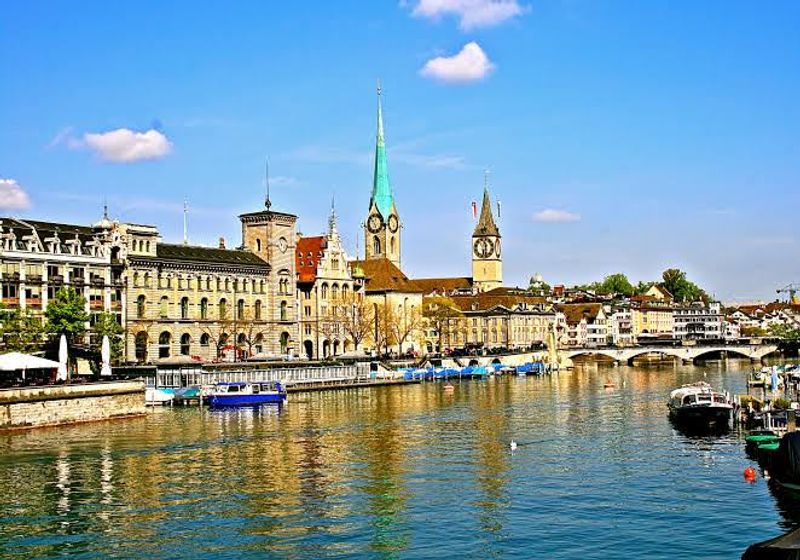
Not every lake visit requires a long drive into the mountains. Lake Zurich begins right beside central Zurich and stretches southeast for roughly 40 kilometers toward Rapperswil-Jona, making it one of the most accessible summer destinations in the entire country.
Swimming areas such as Mythenquai, Utoquai, and Tiefenbrunnen become genuinely busy gathering spots during warm months. Sailing, stand-up paddling, rowing, and pedal boats are all widely available along the shore.
Public transportation connects directly with many sections of the lake, which means spontaneous lake days are completely realistic for city visitors.
Travelers who prefer sightseeing over swimming can board a cruise from Zurich and travel to Rapperswil-Jona, known for its medieval castle and rose gardens, or continue to Ufenau Island, one of the few car-free islands in Switzerland. Lake Zurich rewards both the planner and the person who simply decides to walk toward the water and see what happens.
Lake Lugano, Ticino
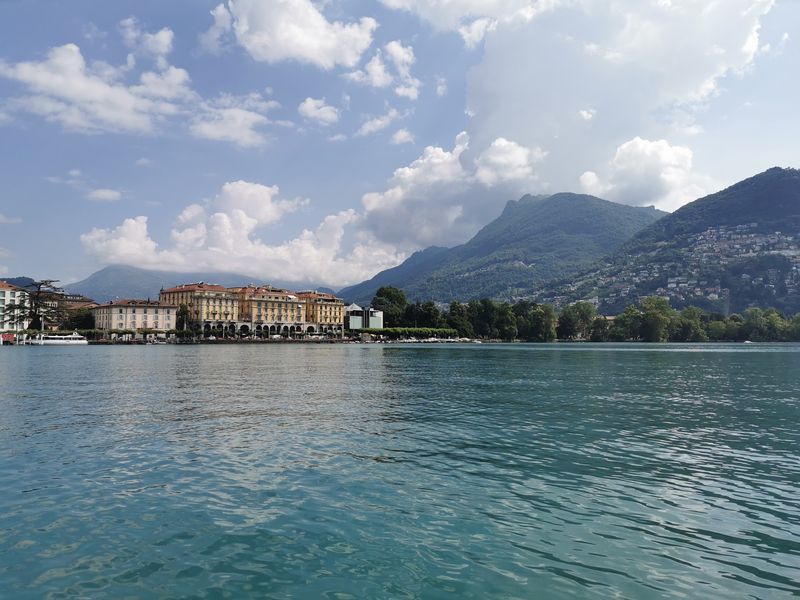
Cross into Ticino and the atmosphere shifts noticeably. Lake Lugano sits in Switzerland’s Italian-speaking canton, shared with Italy, and it has a distinctly southern European feel that sets it apart from the high Alpine lakes farther north.
The waterfront promenade in Lugano is one of the liveliest in the country during summer evenings, with outdoor restaurants, cafés, and boat landing stages creating a relaxed but energetic scene. The village of Gandria, accessible by boat, offers a quieter and more traditional lakeside experience just a short cruise from the city.
Monte Brè and Monte San Salvatore both provide elevated viewpoints above the lake, and both are reachable by funicular. Switzerland Tourism specifically highlights swimming near Gandria and summer water activities as key draws for the region.
Kayaking and boating are also popular on the lake’s sheltered, wooded bays. For travelers who want Mediterranean energy without leaving Switzerland, Lugano delivers that combination consistently.
Lake Maggiore, Ticino
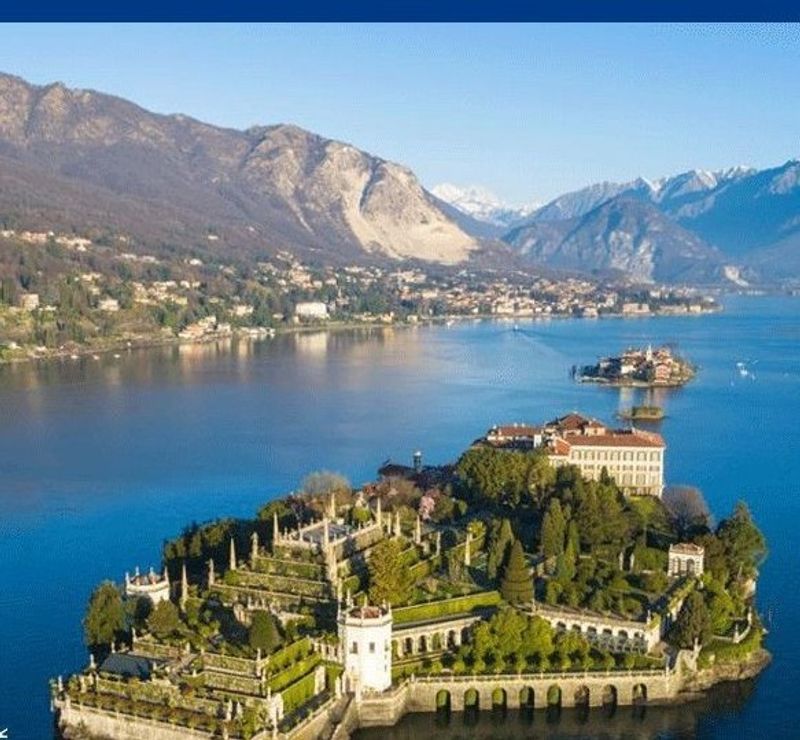
Lake Maggiore reaches from Switzerland down into northern Italy, and the Swiss end of the lake has developed a well-earned reputation as one of the most relaxed and sun-drenched destinations in the country. Locarno and Ascona sit beside the water, both with palm-lined promenades and a climate that feels genuinely mild by Swiss standards.
Boat trips from these towns reach the Brissago Islands, where botanical gardens display plants from warmer regions across the world. The gardens are operated by the Canton of Ticino and are open to visitors during the summer season.
Swimming and other water-based activities are popular throughout the warmer months.
The combination of subtropical vegetation, mountain scenery, historic old towns, and a lake large enough to feel expansive gives this corner of Switzerland a character that surprises many first-time visitors. Travelers who want their Swiss trip to feel less like a mountain expedition and more like a southern European holiday tend to find Lake Maggiore exactly what they were looking for.
Lake Constance, Eastern Switzerland
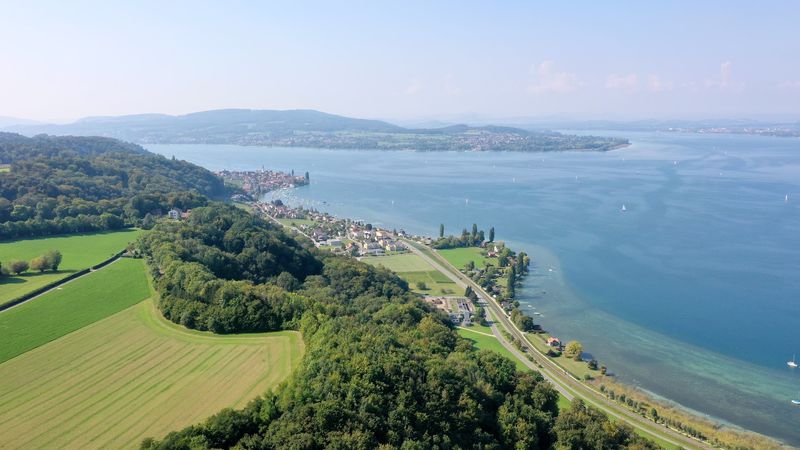
Lake Constance is one of Central Europe’s largest lakes, shared between Switzerland, Germany, and Austria. The Swiss shoreline runs through northeastern Switzerland, passing through towns such as Romanshorn and Arbon, and the scale of the lake creates an almost coastal atmosphere on calm summer days.
Sailing, stand-up paddling, canoeing, swimming, and boat cruises are the main warm-weather activities along the Swiss shore. Several lakeside lidos and campsites operate during summer, and cycling through the orchards and farmland of the Thurgau region is one of the most popular ways to explore the area at a slower pace.
Unlike the dramatic cliff-and-peak scenery of the Bernese Oberland lakes, Lake Constance offers a flatter, more open landscape. That difference is actually part of the appeal.
Visitors looking for a relaxed lake holiday without demanding terrain will find the eastern Swiss shoreline genuinely comfortable to explore. The lake rewards cyclists, casual paddlers, and anyone who simply wants to sit by very large, very calm water.
Lake Walen, Eastern Switzerland
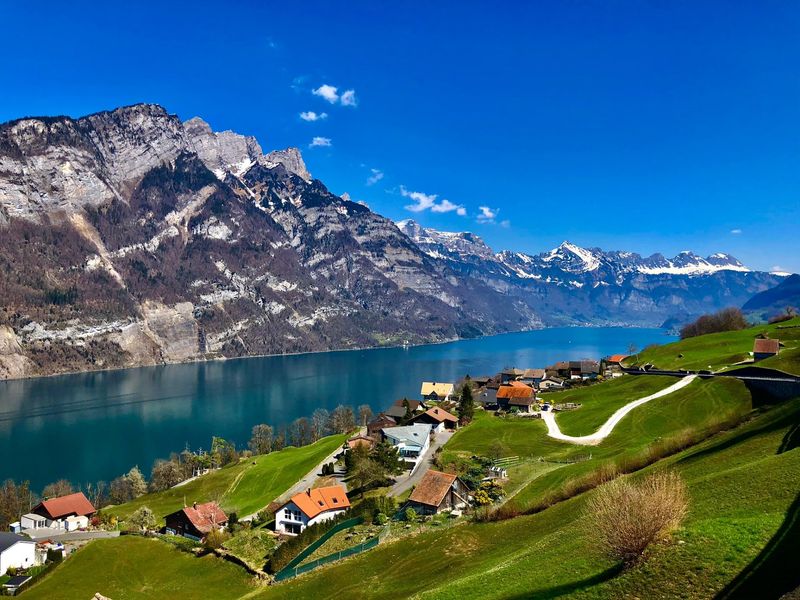
The Churfirsten mountain range rises so steeply above Lake Walen’s northern shore that the effect genuinely resembles a fjord. This is one of the most visually dramatic lake settings in all of Switzerland, and it sits close enough to Zurich that a day trip is completely manageable.
Summer visitors can take boat trips across the lake, hike sections of the shoreline trail, or make their way to Quinten, a car-free village accessible only by boat or on foot. The Seerenbach Falls, which drop from the cliffs above the eastern end of the lake, are among the tallest waterfalls in Switzerland.
Water sports are available on the lake, and the nearby Flumserberg area offers extensive hiking and cycling routes above the waterline. Because the cliffs rise so dramatically from the water, the scenery feels more rugged and remote than the lake’s relatively accessible location might suggest.
Switzerland Tourism promotes cruises, hiking, biking, and water sports here as solid summer activities.
Lake Cauma, Flims
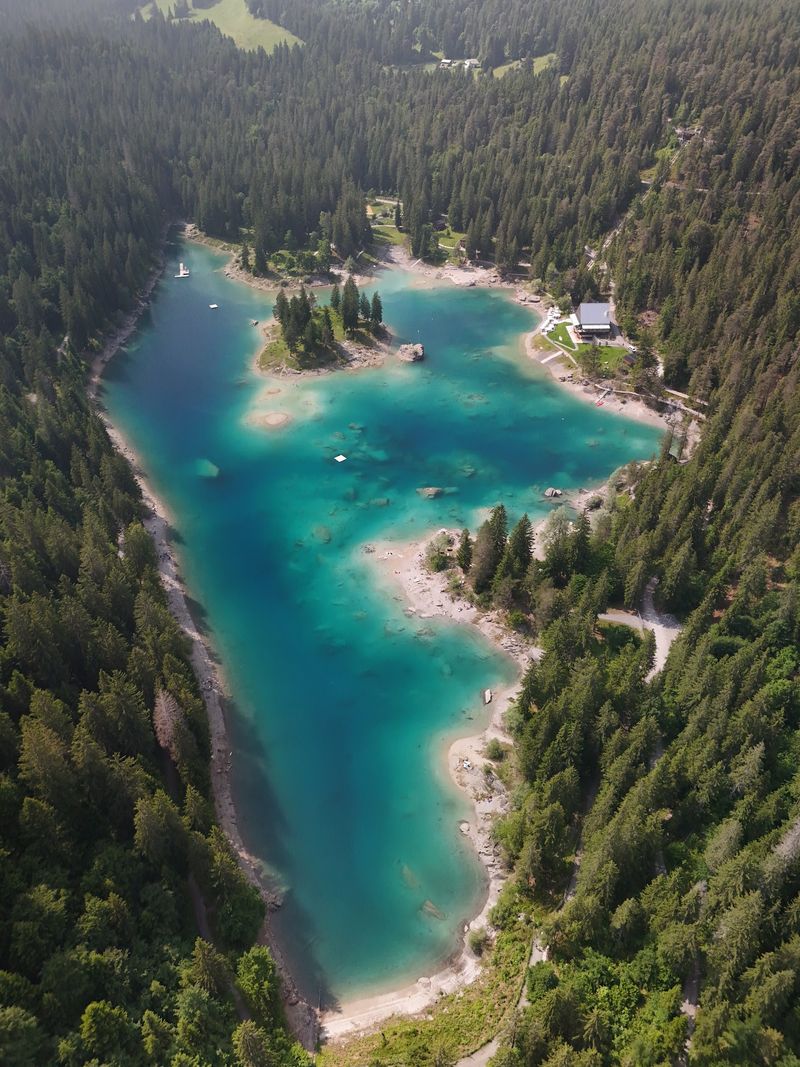
Tucked within the forest near Flims in the canton of Graubünden, Lake Cauma has a color that genuinely changes depending on the light and time of day. Underground springs feed the lake, and that same spring water keeps it surprisingly warm for an Alpine setting, sometimes reaching around 24 degrees Celsius during favorable summer conditions.
Visitors can swim, relax on the beach, use the bathing platform, or rent a rowboat during the summer season. The sheltered forest setting gives the lake a calm, almost hidden atmosphere that feels quite different from the open panoramas of the Engadin lakes.
A hike toward the Il Spir viewpoint above the Rhine Gorge can be combined with a visit to the lake, making for a full and varied day in the Flims area. Access to the lake area may involve an entrance fee during the bathing season, so checking current visitor information before heading out is a practical step worth taking.
Blausee, Bernese Oberland
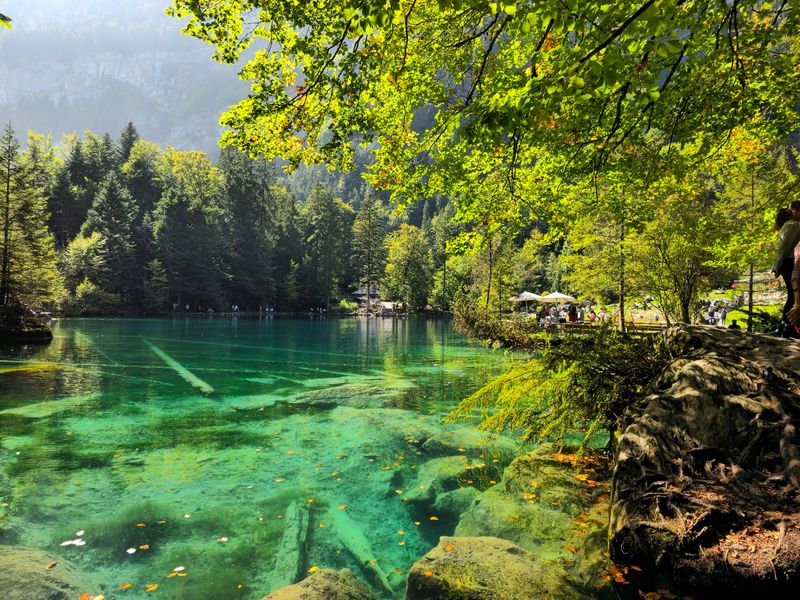
Blausee is small. There is no getting around that.
But the clarity and color of its water make it one of the most striking natural attractions in the Bernese Oberland, and its size actually works in its favor by making it easy to take in fully during a single relaxed visit.
The lake sits within a forested nature park in the Kandertal region near Kandersteg, and Alpine trout are visible swimming in the unusually transparent water. Walking trails, picnic areas, and fire pits surround the lake, creating a low-key nature excursion that does not require any serious hiking ability.
The surrounding nature park covers roughly 20 hectares, and the whole area is managed as an organized attraction with established facilities and admission arrangements rather than a remote wilderness spot. Its proximity to Kandersteg makes it easy to combine with Lake Oeschinen on a longer visit to the region, and the two lakes together make for a very full and scenic day in this part of Switzerland.
Lake Sils, Engadin
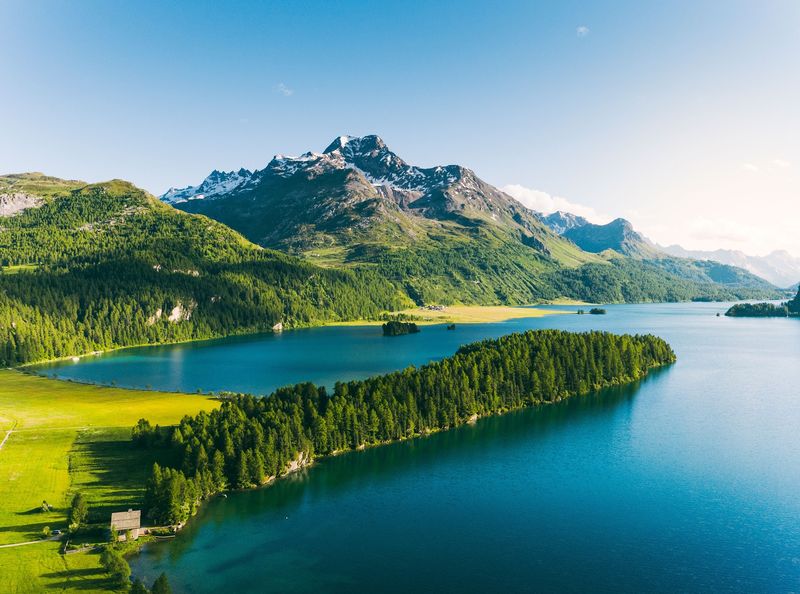
High in the Upper Engadin near the Maloja Pass, Lake Sils has a wide, unhurried quality that feels genuinely rare in a country full of spectacular scenery. The open Alpine landscape here is completely different from the forested or cliff-framed lakes of central Switzerland.
One of the lake’s most interesting features is its scheduled summer passenger boat service between Sils Maria and Maloja. Switzerland Tourism describes it as Europe’s highest scheduled passenger boat service, and it generally runs from late June into September or October, making summer the natural time to experience it.
Hiking and cycling routes also follow the lakeshore, and the broader Upper Engadin lake route connects Lake Sils with Silvaplana, Champfèr, and St. Moritz, allowing travelers to cover multiple lakes during a single stay in the region. For anyone who prefers broad, quiet mountain landscapes over crowded resort beaches, Lake Sils consistently delivers that kind of peaceful, open-sky experience.
Lake Silvaplana, Engadin
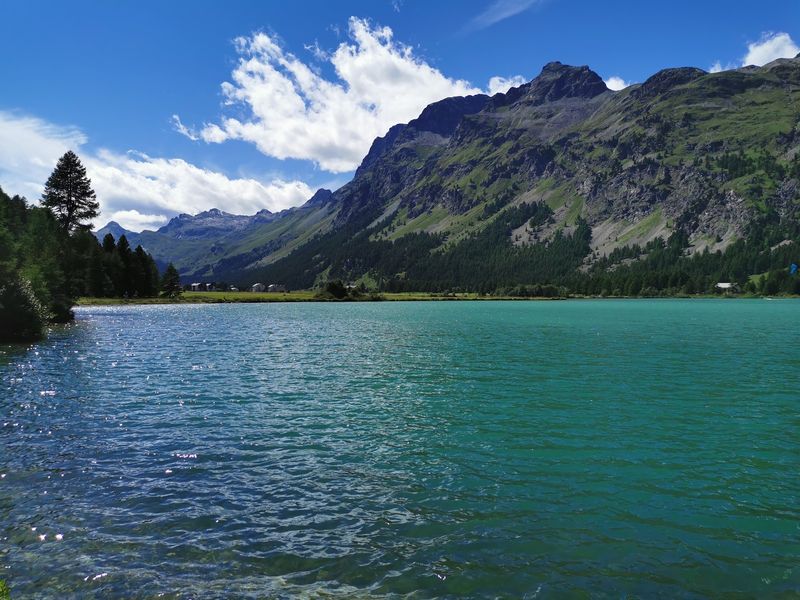
Lake Silvaplana has built an international reputation among wind sports enthusiasts, and the reason is the Maloja wind. This reliable afternoon wind sweeps through the Upper Engadin valley during summer, creating consistent conditions for kiteboarding and windsurfing that draw athletes from across Europe.
The lake sits beneath the Corvatsch massif, and its mountain backdrop is dramatic enough to make even a shoreline walk feel rewarding. Cycling and walking routes connect Silvaplana to the broader Engadin lake chain, so non-sporty visitors have plenty of options beyond watching the kiteboarders.
Lake Silvaplana forms part of a connected group of lakes that includes Sils, Champfèr, and St. Moritz, all within easy reach of each other. A single base in the Engadin region makes it practical to explore all of them.
The combination of reliable wind, mountain scenery, and well-developed infrastructure for outdoor activities makes Silvaplana one of the most dynamic lake destinations in the entire Swiss Alps during summer.
Lake St. Moritz, St. Moritz
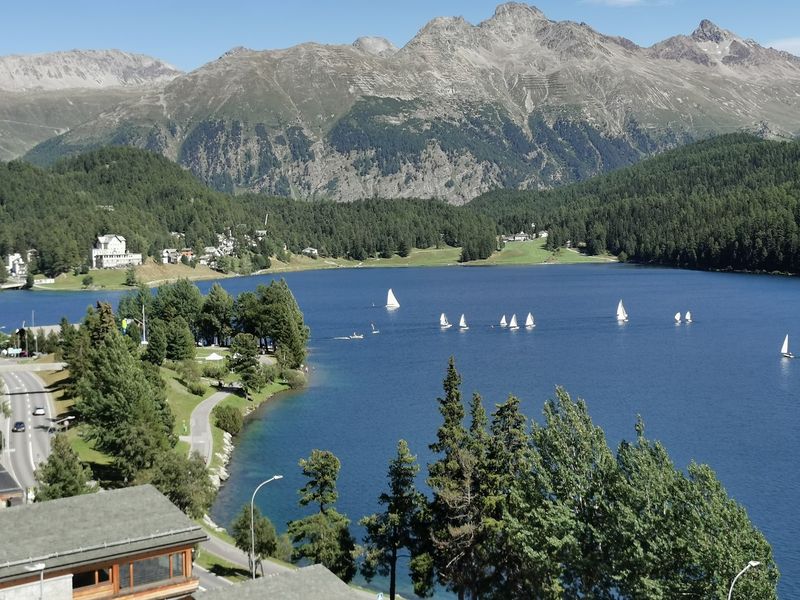
St. Moritz is known worldwide as a luxury mountain resort, but the lake sitting right beside it is genuinely accessible to any visitor who makes the trip. A walking path circles Lake St. Moritz and offers clear views across the water toward the town and the surrounding Engadin peaks.
The lake belongs to the Upper Engadin lake system alongside Silvaplana, Champfèr, and Sils, and summer visitors frequently incorporate it into longer cycling and walking routes through the valley. Switzerland Tourism specifically recommends the walk around Lake St. Moritz as part of the scenic Engadin route, and the path is suitable for most fitness levels.
Location is the lake’s strongest practical advantage. Travelers already staying in St. Moritz can reach the shoreline in minutes and combine a lake walk with the Engadin Museum, mountain railways, or the variety of restaurants and shops the resort offers.
It is the kind of lake that rewards a slow morning more than a rushed afternoon visit.
Lake Seeberg, Diemtigtal
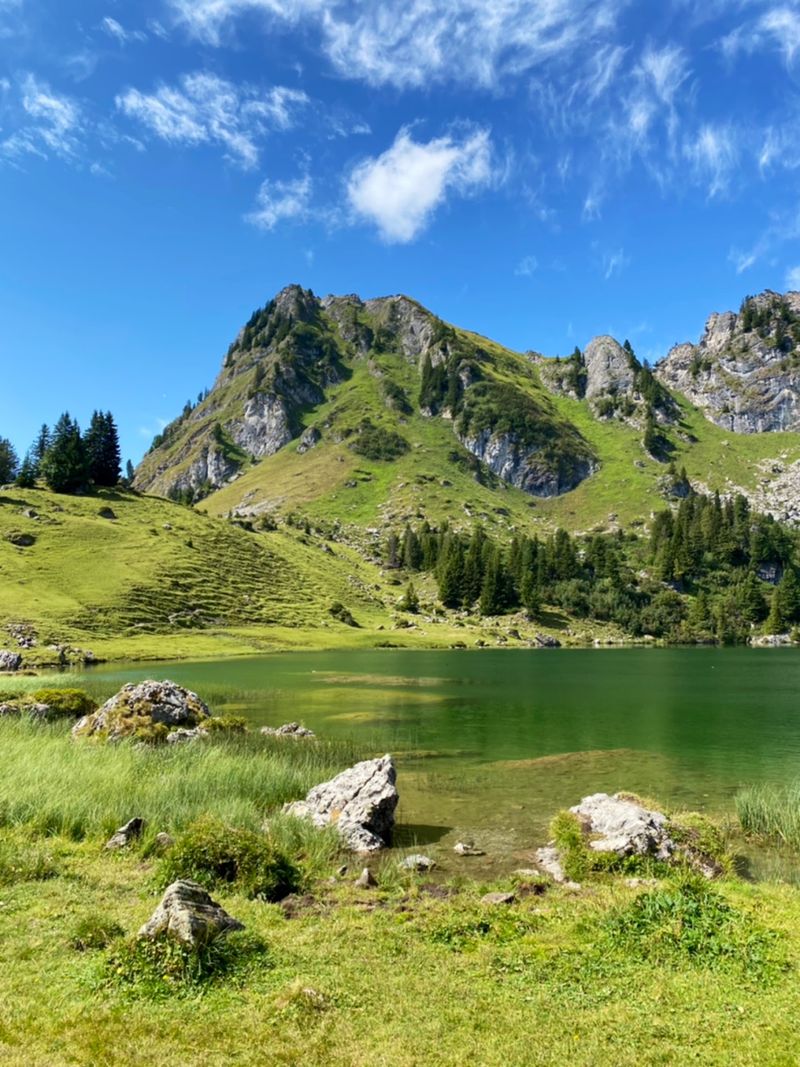
At roughly 1,831 meters above sea level, Lake Seeberg is not the kind of place you stumble across on a casual stroll. Sitting high above the Diemtigtal in the Bernese Oberland, it attracts hikers and mountain bikers rather than sightseeing crowds, and that quieter atmosphere is exactly the point.
The lake sits within a protected natural area fed by underground streams, and its water stays cold even during summer. A nearby mountain hut operates during the summer season, providing a place to rest after the approach hike.
The surrounding terrain is genuinely Alpine, with open meadows and rocky ridgelines above the waterline.
Getting to Lake Seeberg takes more effort than reaching urban lakes like Zurich or Geneva, but the reward is a mountain lake experience that feels largely undisturbed by mass tourism. For travelers who prioritize hiking, open scenery, and the kind of Swiss landscape that does not show up on every postcard, Seeberg is a strong and satisfying choice.
Lake Champex, Champex-Lac
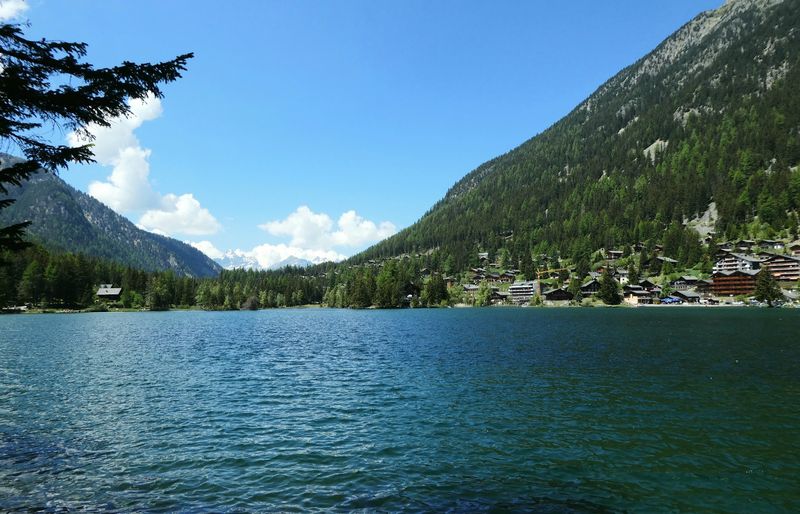
Champex-Lac sits at around 1,470 meters in the Valais, close to the Mont Blanc massif, and the combination of forested shoreline, mountain backdrop, and a small lakeside village gives it the kind of atmosphere that makes people want to slow down and stay longer than planned.
A path circles the lake and is easy enough for most visitors to complete in a relaxed hour. Waterfront cafés provide a reason to stop partway around.
The nearby Flore-Alpe botanical garden is a genuine highlight, containing thousands of plant species from Alpine and other mountain environments across the world.
More demanding hiking routes extend from Champex-Lac toward viewpoints such as La Breya and deeper into the Mont Blanc region, making the village a practical base for ambitious mountain days as well as quieter lake walks. For travelers who want a smaller, calmer lake with genuine village character rather than resort infrastructure, Champex-Lac makes a compelling and unhurried summer stop in western Switzerland.
Share this story