There was a time when a great afternoon required nothing more than a handful of quarters and a glowing screen. Arcades were loud, exciting places where Pac-Man, Donkey Kong, and Street Fighter ruled the room.
Most of those spots are long gone, but Illinois has held on tighter than most states. From world-record collections to pinball palaces, these nine spots are keeping the golden age of gaming very much alive.
Galloping Ghost Arcade – Brookfield
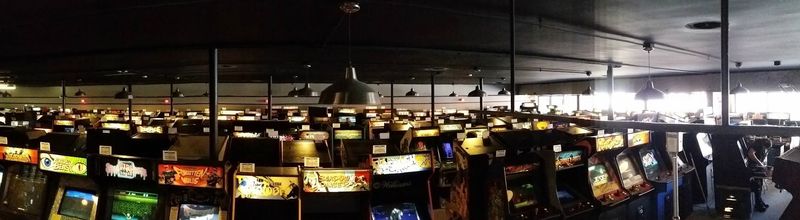
Over 1,000 arcade cabinets packed into one building sounds like something a kid in 1987 would have dreamed up during math class. Galloping Ghost Arcade in Brookfield opened in 2010 with 130 restored machines and simply refused to stop growing.
An arcade database counted 1,098 games as of July 2026, making this one of the largest collections on the planet.
Every cabinet here is actual arcade hardware, not a modern emulator pretending to be the real thing. That means original joysticks, original buttons, and genuine CRT screens displaying pixels exactly as they looked decades ago.
The difference is immediately noticeable once you sit down to play.
Admission runs $25, and after that, every game is set to free play. No digging through your pockets for quarters mid-session.
Titles span multiple decades, so whether your personal golden age was 1982 or 1995, something here will feel familiar. For serious retro gaming fans, Galloping Ghost is less a destination and more a pilgrimage.
Underground Retrocade – West Dundee
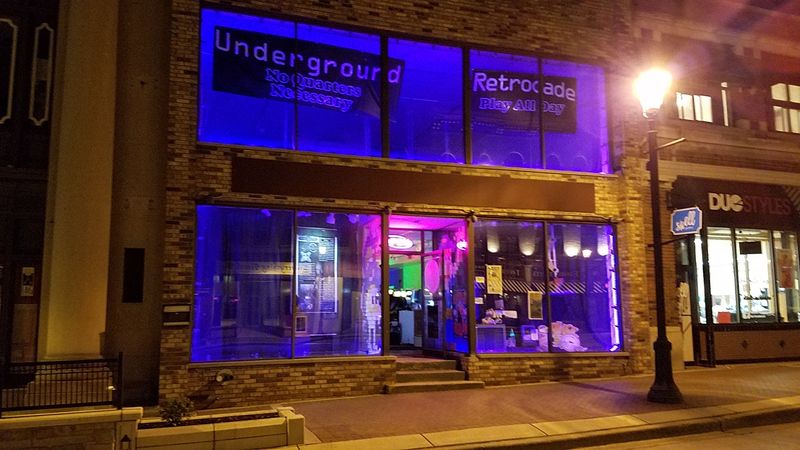
Walking into Underground Retrocade feels less like visiting a business and more like stepping through a time portal set to 1985. The West Dundee arcade opened in 2012 with one specific goal: bring back the sights, sounds, and feel of the golden age arcade scene without cutting corners.
That mission shapes every decision made here.
Rather than filling floor space with modern multicade machines, the owners sourced authentic cabinets with original controls and period-correct displays. Pinball machines, Skee-Ball, and air hockey fill out the room alongside more than 150 classic video game titles.
Even the music and decorations are chosen to match the era.
Admission is $15, with games set to free play afterward. That’s a sharp contrast to feeding quarters into machines one at a time, which is how most visitors originally experienced these games.
The atmosphere is friendly and unhurried, which makes Underground Retrocade a solid choice for families as well as solo visitors chasing a specific memory. Sometimes the most satisfying experiences are the ones that don’t try to modernize anything at all.
Arcadia: America’s Playable Arcade Museum – McLean
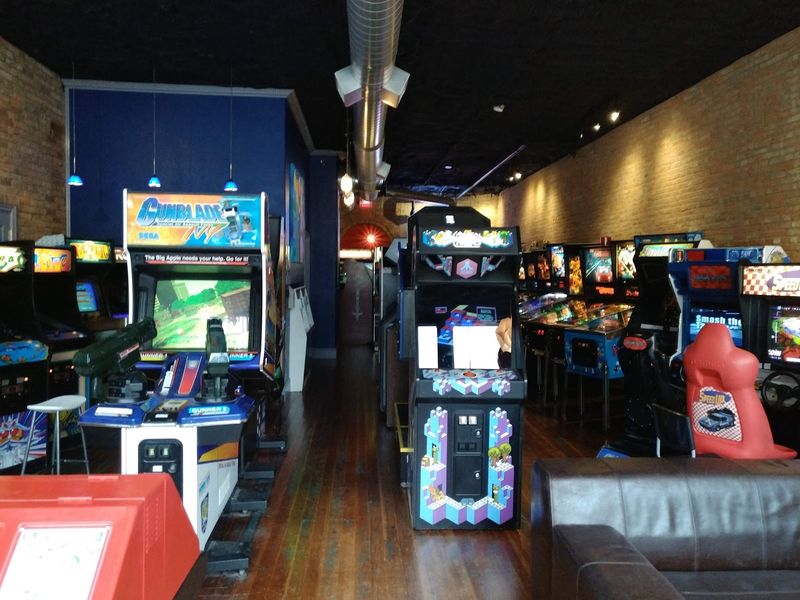
McLean, Illinois is a small town along Route 66 that happens to contain one of the most committed retro gaming experiences in the country. Arcadia calls itself a playable arcade museum, and that label is earned.
The operation spans multiple buildings stuffed with games from the 1970s through the 1990s, and it even offers arcade-themed lodging for visitors who want to fully commit to the experience.
The philosophy here is wonderfully stubborn. The traditional arcade section uses no wristbands, no cashless card systems, and no ticket dispensers.
Visitors get change from actual change machines and drop actual quarters into actual coin slots, exactly as intended when these games were built. It sounds simple, but that authenticity changes how the whole experience feels.
A separate section called Arcadia Unlimited charges $15 admission and offers roughly 200 free-play titles. Between the two areas, visitors can spend an entire day moving between eras of arcade history.
Few places in Illinois treat game preservation this seriously while still making everything completely playable. Arcadia is the kind of stop that turns a road trip into something genuinely memorable rather than just another tourist checkbox.
Star Worlds Arcade – DeKalb
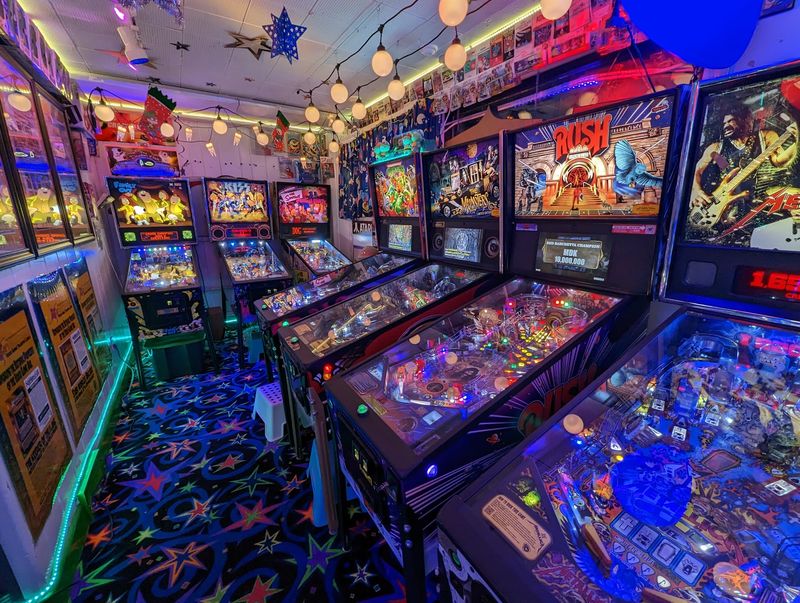
Some arcades are built to look old. Star Worlds Arcade in DeKalb actually is old, and that difference shows the moment you walk through the door.
The business traces its roots back to the 1980s and has been serving arcade fans in DeKalb ever since, surviving the wave of closures that wiped out most of its competition.
Twin Galaxies, the organization famous for tracking video game world records, inducted Star Worlds into its International Registry of Historic Video Game Arcades as one of the surviving Golden Age arcades from that era. That recognition isn’t handed out casually.
It reflects decades of operation during periods when staying open was genuinely difficult.
The interior is covered floor to ceiling with gaming collectibles, promotional posters, and limited-edition memorabilia collected over the years. Walking through feels like browsing a living museum where everything on display also happens to be playable.
The game mix includes both classic and newer titles, keeping the floor fresh for repeat visitors. For anyone who grew up with a small neighborhood arcade rather than a massive entertainment complex, Star Worlds is the closest thing Illinois has to that original experience still breathing.
Logan Arcade – Chicago
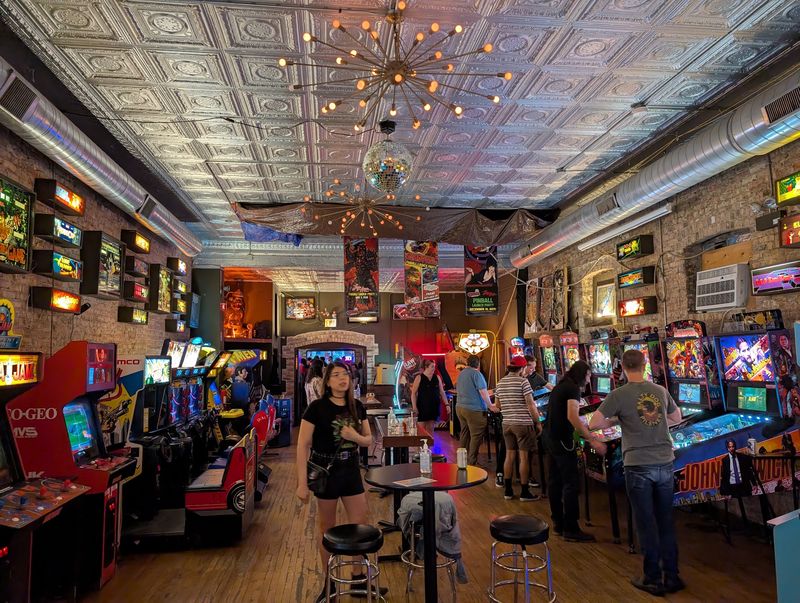
Not every retro gaming experience is designed for the whole family, and Logan Arcade in Chicago makes that perfectly clear. This is a 21-and-over arcade bar with more than 80 pinball machines and classic video game cabinets spread across the floor.
The combination of craft drinks and vintage games has made it a popular spot in the Logan Square neighborhood since it opened.
The game selection reads like a highlight reel of late-80s and 90s arcade history. Paperboy from 1985, Qbert, Robotron: 2084, The Simpsons, Teenage Mutant Ninja Turtles: Turtles in Time, Terminator 2: Judgment Day, Sunset Riders, Tekken 3, and Street Fighter III: Third Strike are all part of the current lineup.
That cross-section covers a huge range of genres and memories.
Unlike the admission-based spots elsewhere on this list, Logan charges per game or drink rather than a flat entry fee. The vibe leans more neighborhood bar than childhood arcade, which suits the crowd perfectly.
For adults who grew up pumping quarters into these exact machines, playing them again with a cold drink nearby feels like a genuinely satisfying upgrade to the original experience.
8 Bit Arcade Bar – Peoria
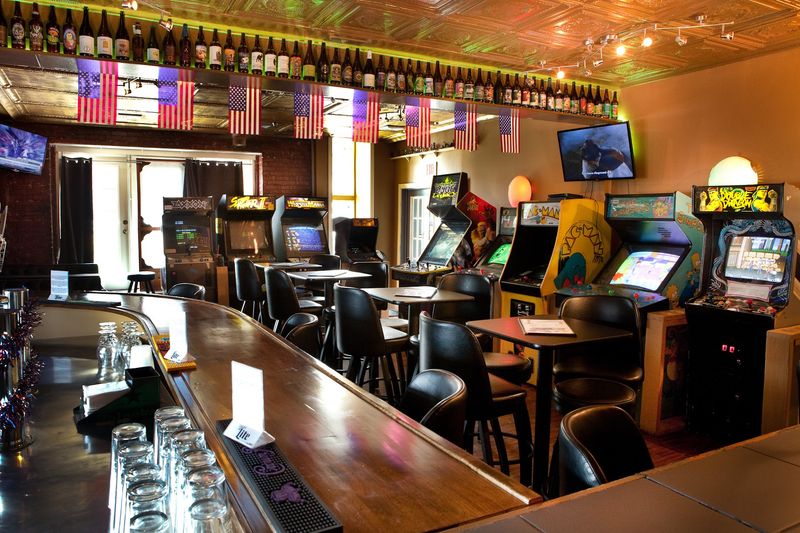
Peoria’s downtown scene got a serious upgrade when 8 Bit Arcade Bar opened its doors in 2015. Billed as the city’s first arcade bar, the spot combines classic arcade games and Skee-Ball with a craft beer selection that would have seemed wildly out of place in any arcade from your childhood.
That combination turns out to work surprisingly well.
The Illinois Office of Tourism highlights it as a central Illinois destination for retro gaming fans, and the bar has built a loyal following over nearly a decade of operation. Classic cabinets line the walls while Skee-Ball lanes offer a different kind of competition for groups who show up ready to settle some scores.
This is firmly an adults-only kind of evening, which means the nostalgia comes with a side of perspective. You’re old enough to order a drink now, but whether you’re any better at these games than you were at age twelve is a separate question entirely. 8 Bit Arcade Bar is a great option for groups looking to mix a night out with something more interactive than just sitting at a table.
Central Illinois has been glad to have it.
The Game Show – Lombard
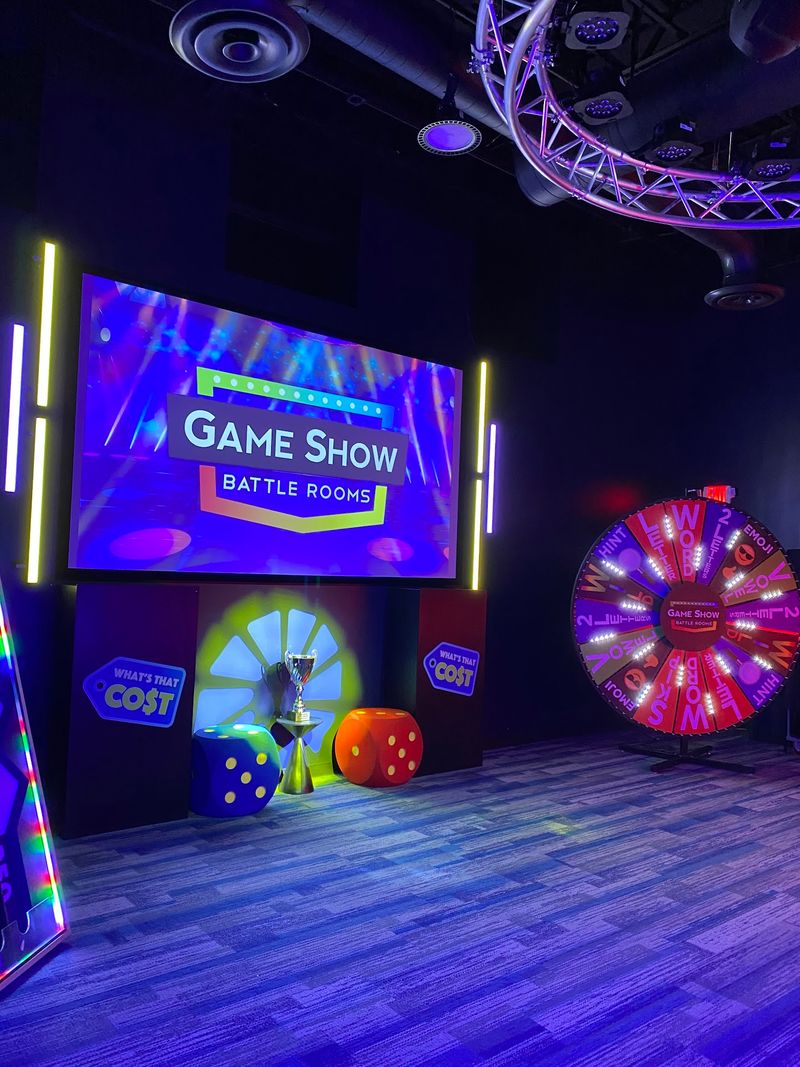
Malls and arcades were practically inseparable during the 1980s and 1990s, so finding a vintage arcade inside a suburban shopping center feels oddly perfect. The Game Show at Yorktown Center in Lombard is described by the mall as an all-ages vintage video and pinball arcade showcasing games from those two defining decades of gaming history.
Beyond the video cabinets and pinball machines, the floor includes air hockey, foosball, and Skee-Ball, giving visitors plenty of ways to compete. The admission model is the kind of thing that would have seemed like pure fantasy to a quarter-hoarding kid in 1988: pay once at the door and play without feeding additional coins into every machine.
The mall setting adds a layer of nostalgia that the games alone can’t quite deliver. For an entire generation, the ritual of wandering between stores, grabbing food court snacks, and disappearing into the arcade for an hour is a core childhood memory.
The Game Show recreates that specific combination in a way that feels less like a museum exhibit and more like a genuine time-loop. Bring the kids or bring the group that grew up here.
Either way, it works.
Atomic Pinball Arcade – Wood River
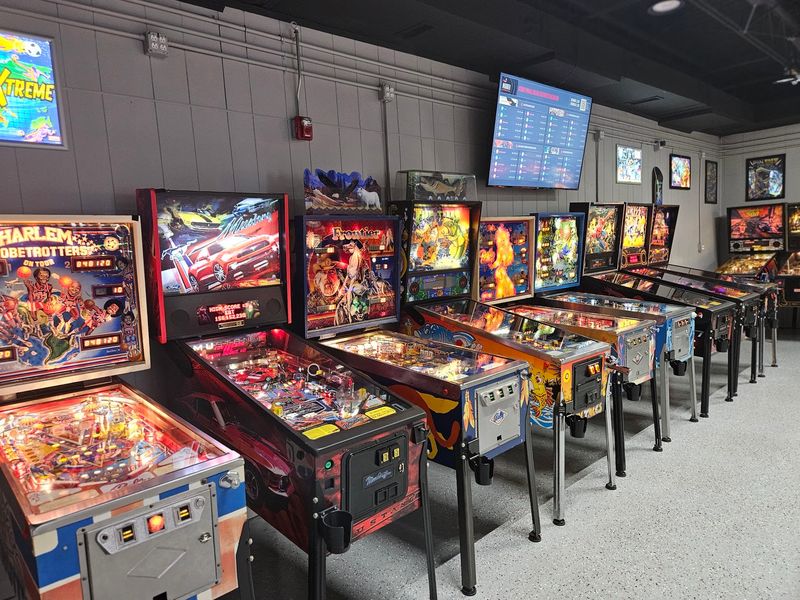
The sound of a pinball machine is unlike anything else in a gaming room. Steel balls ricocheting off bumpers, flippers snapping upward, and that distinct mechanical clatter are a sensory experience that no screen can fully replicate.
Atomic Pinball Arcade in Wood River has built its entire identity around that sound, with a collection that has grown to more than 125 games.
Owner Chuck Sanderson started as a collector and restorer before eventually opening the space to the public. That restoration background matters more than it might seem.
Vintage pinball machines are complicated mechanical and electronic systems that require constant maintenance to stay playable. A collection this size that actually works represents a serious ongoing commitment from the people running it.
Atomic hosts tournaments and pinball events throughout the year, turning the space into a community gathering point rather than just a passive collection. Classic arcade video games are also part of the lineup, so pinball skeptics won’t feel left out.
For Southern Illinois residents who have always felt a bit far from Chicago’s gaming scene, Atomic Pinball Arcade is a genuinely impressive local resource that punches well above its regional weight.
The Pinball Capital – Stone Park
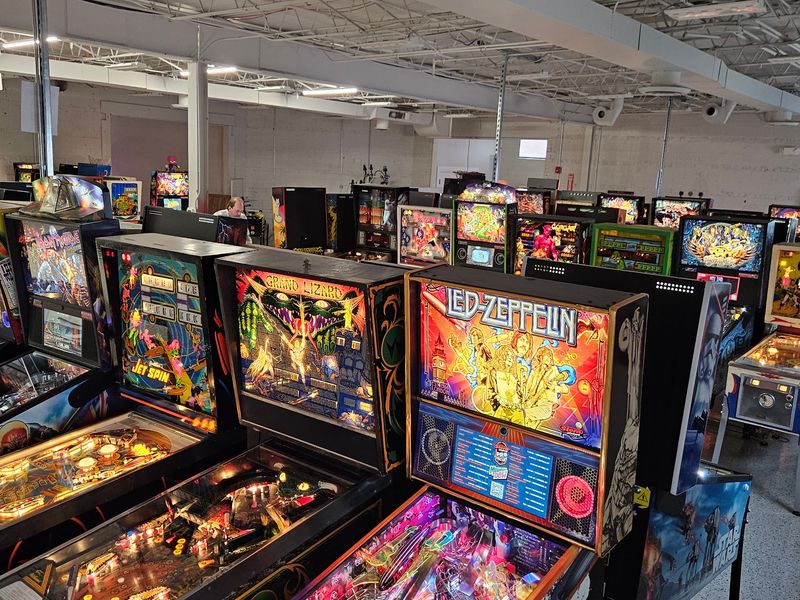
Pinball has a longer history than most people realize, and The Pinball Capital in Stone Park is one of the best places in Illinois to experience that full timeline in a single afternoon. The collection currently includes more than 130 pinball machines, ranging from mid-1960s electromechanical tables all the way through machines released in 2026.
That is a remarkable span of history to have under one roof.
Moving through the collection is genuinely educational in the best possible way. Older machines rely on physical mechanisms and simple scoring systems that feel surprisingly satisfying once you understand how they work.
Then the 1980s and 1990s tables arrive with their elaborate licensed themes, digital displays, and multi-ball chaos that defined pinball’s commercial peak.
Keep walking and you hit modern machines with video screens and complex rule sets that show just how far the format has traveled. Admission is $20 for all-day play, and the arcade runs leagues and tournaments alongside casual drop-in sessions.
Younger visitors might discover pinball here for the first time. Older visitors will likely rediscover how loud a room gets when you’re one shot away from a high score and absolutely cannot afford to miss it.
Share this story