Somewhere in central Massachusetts, a dirt road cuts through the woods and leads to something most people drive right past without ever knowing it exists. Hidden behind trees and overgrown fields are the crumbling remains of a place that once housed inmates who spent their days farming the land, tending dairy cows, and growing potatoes.
The story behind these ruins is more layered than you might expect, and the trail that takes you there is one of the more unusual walks you can take in the state. From solitary confinement cells covered in graffiti to old root cellars still standing after nearly a century, this forgotten corner of Rutland rewards anyone curious enough to explore it.
The Story Behind The Farm That Prisoners Built
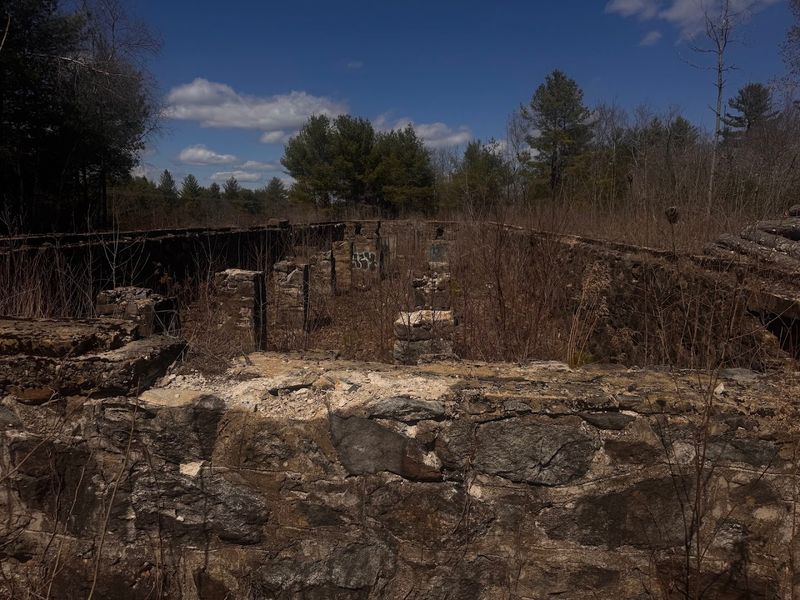
In 1903, the Massachusetts General Court made an unusual decision. Rather than simply locking people away, officials established an industrial camp where prisoners could work the land and reclaim what was described as wasted acreage.
The Commonwealth purchased 914 acres in Rutland for that purpose.
The inmates sent here were not violent offenders. Most were serving sentences for minor offenses including drunkenness.
The idea was that productive labor in a rural setting could serve as both punishment and rehabilitation, a philosophy that was gaining traction in the early twentieth century.
Prisoners cleared fields, built structures, and turned raw land into a functioning agricultural operation. The camp eventually included dormitories, staff housing, animal coops, barns, silos, and a water tower.
It was a self-contained community of sorts, carved out of the Massachusetts countryside by the hands of men who had very little say in the matter.
A Farm That Actually Turned A Profit
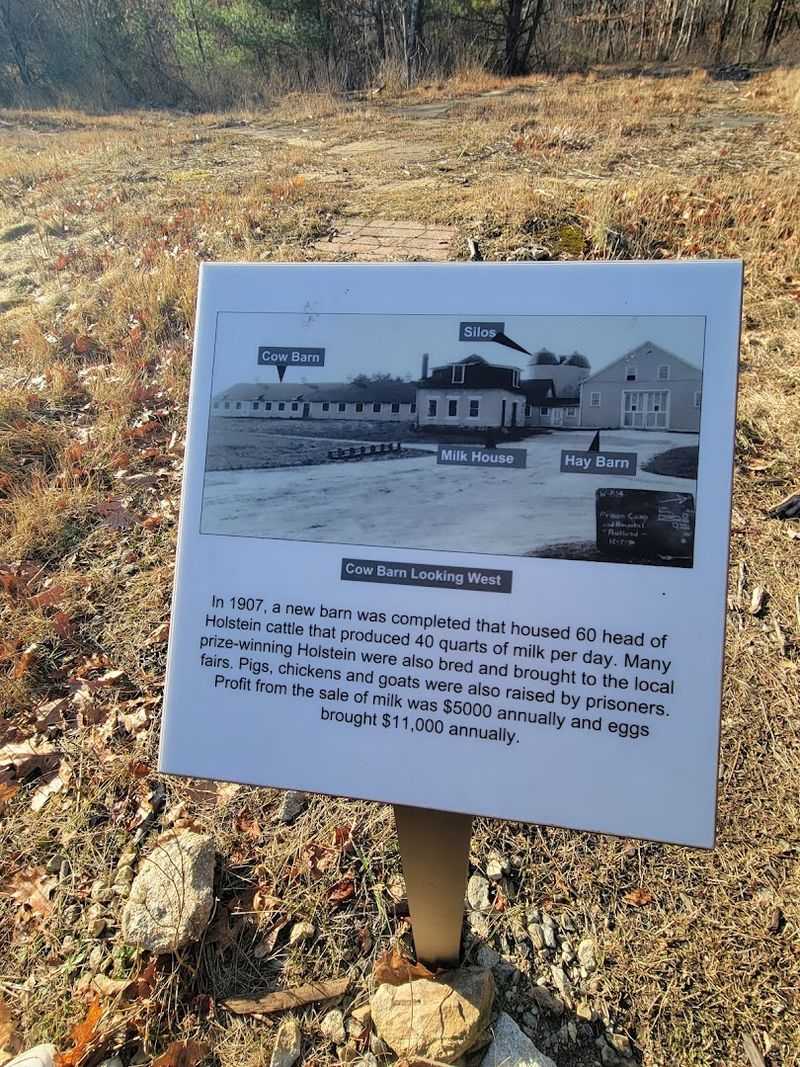
What the prisoners built at Rutland was not just symbolic labor. The farm became genuinely productive, generating real income for the Commonwealth of Massachusetts within just a few years of opening.
The dairy operation alone was impressive. The barn housed 60 purebred Holstein cows, and milk production was significant enough to ship surplus to Worcester.
Potatoes grown on the farm were sent to the state prison. Eggs from the poultry operation brought in roughly eleven thousand dollars annually, while the farm overall generated around five thousand dollars in yearly profit.
At its peak, prisoners were cultivating approximately 150 acres of working farmland. For an operation staffed by men serving time for minor offenses, those numbers were striking.
The camp demonstrated that a prison farm could sustain itself financially while keeping inmates occupied with meaningful work. That balance between punishment and productivity defined the camp’s identity throughout its operational years.
The Tuberculosis Hospital Hidden On The Grounds
One of the more sobering chapters in the camp’s history involves a hospital that was constructed right on the property. By 1907, a thirty-bed facility had been built specifically for prisoners suffering from tuberculosis, a disease that spread quickly in crowded conditions and had no reliable cure at the time.
Having a dedicated hospital on site was not common for prison operations of that era. It reflected both the scale of the Rutland camp and the practical reality that inmates needed medical care, whether officials wanted to acknowledge that or not.
The hospital served patients from the prison population throughout the early decades of the twentieth century.
The presence of a tuberculosis ward on the grounds also contributed to the eventual decision to close the camp. Because the property sat within the drainage area of a public water supply, health concerns about contamination became impossible to ignore, and that concern ultimately sealed the camp’s fate.
Why The Camp Closed And What Happened Next
The Rutland Prison Camp did not close because of scandal or overcrowding. It closed because of water.
The property sat within the drainage area of a public water supply, and by the early 1930s, officials could no longer justify keeping an active prison operation so close to a watershed that served Massachusetts communities.
On November 30, 1934, the camp was officially abandoned. The land and its remaining buildings were sold to the Metropolitan District Water Supply Commission, which folded the acreage into the larger watershed protection area surrounding the Quabbin and Wachusett reservoirs.
That transfer of ownership is part of why the site looks the way it does today. Because the land became watershed property, it was not developed or repurposed.
Buildings were left to deteriorate naturally, which is an unusual outcome that accidentally preserved the ruins as a kind of open-air historical record. The neglect, in a strange way, became the preservation.
The Solitary Confinement Cells That Still Stand
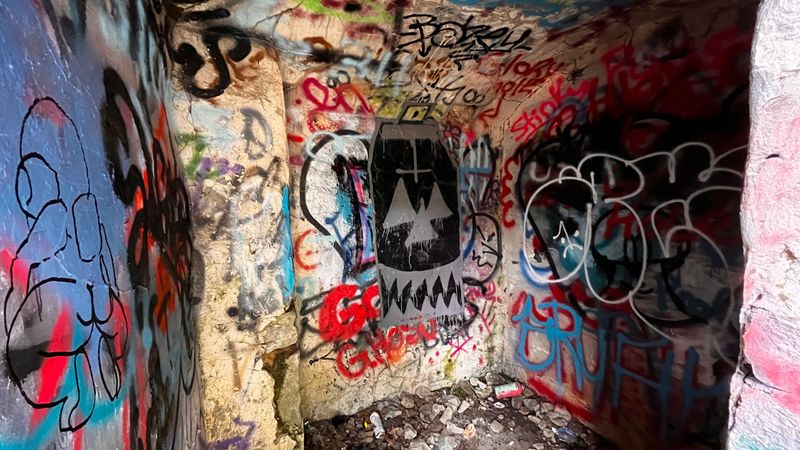
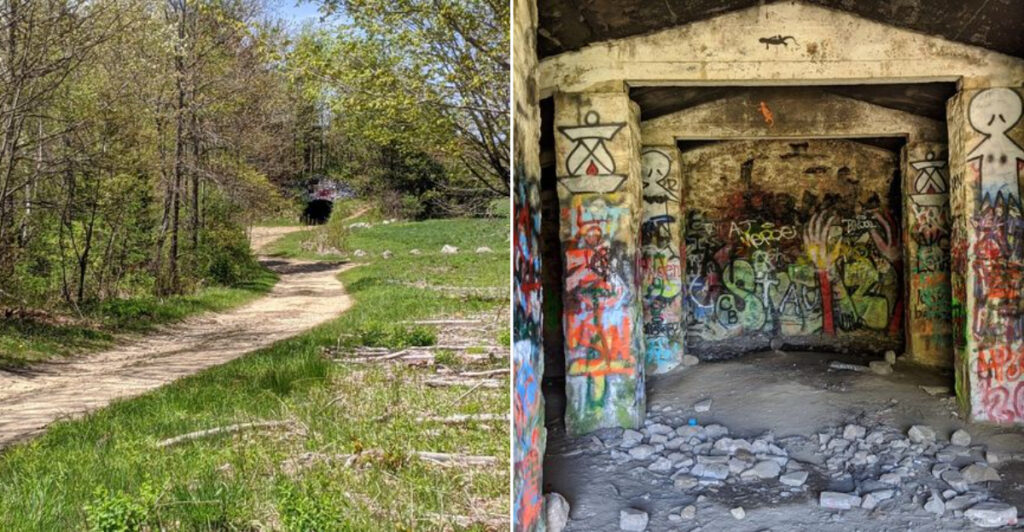
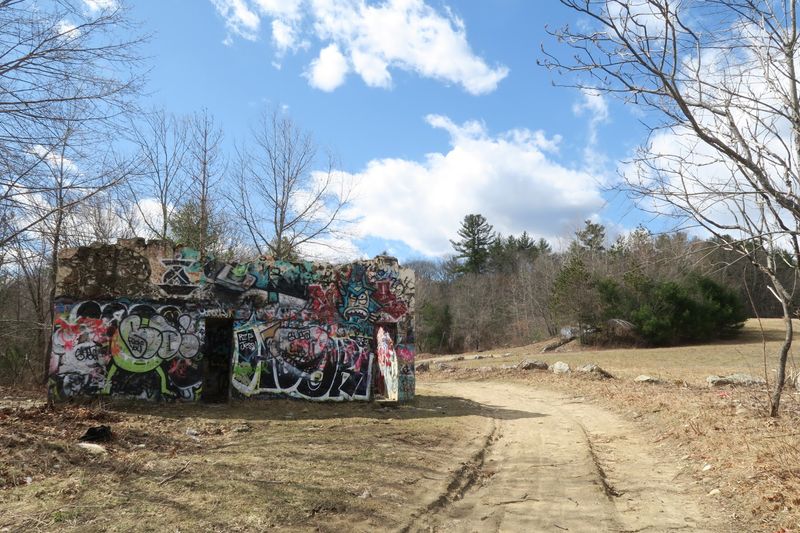
Right near the beginning of the main path into the site, visitors encounter one of the most striking surviving structures: the solitary confinement cells. These small stone enclosures are compact and dark, and standing inside one gives you an immediate sense of how confined and isolated the experience must have been for anyone held there.
The cells are covered in graffiti left by decades of visitors, which creates an odd visual contrast between the grim original purpose of the space and the colorful layers of modern expression painted over the stone. Some visitors find the graffiti jarring.
Others feel it adds a kind of street-art energy to ruins that might otherwise feel purely grim.
Historical placards near the structures help explain what you are looking at, which makes a real difference. Without context, it would be easy to walk past these cells without understanding their original function.
With the signage, the space becomes something worth pausing over.
The Root Cellar That Survived Nearly A Century
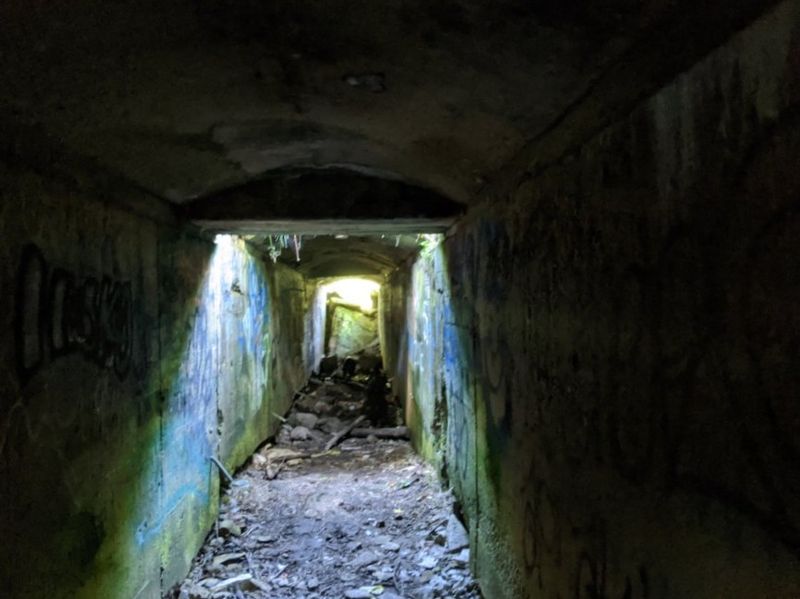
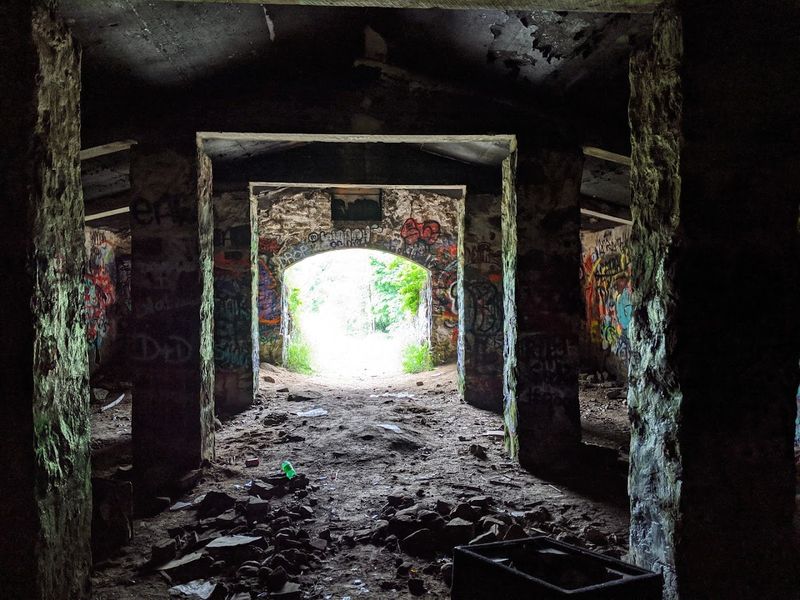
Beyond the solitary confinement area, the other major surviving structure on the property is the root cellar, sometimes described by visitors as feeling like a tunnel. The space is partially underground, built from stone, and was used to store vegetables harvested from the prison farm during its operational years.
Walking into it feels noticeably different from the rest of the site. The temperature drops, the light changes, and the stone walls carry the kind of quiet that old underground spaces tend to hold.
It is not dramatic in a theatrical way, but it is genuinely atmospheric in a way that photographs do not fully capture.
The root cellar is one of the main reasons visitors say the site is worth the trip even though relatively little remains standing. It offers something tangible to explore rather than just open fields and interpretive signs.
For anyone drawn to abandoned spaces and forgotten infrastructure, this cellar is the highlight of the grounds.
What The Trail Experience Actually Feels Like
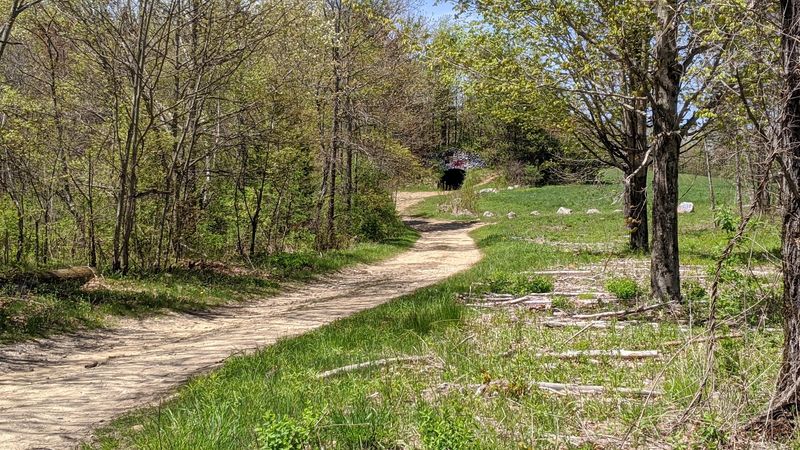
Getting to the ruins requires a bit of planning, but not much. The main access road is a dirt path that can be driven in dry conditions, though gates control which sections are open on any given day.
When only one gate is open, the drivable area is limited, and exploring the full site means covering ground on foot.
The walk itself is pleasant in a low-key way. The surrounding land is wooded and relatively quiet, with the kind of atmosphere you get from a place that has been left alone for a long time.
Mosquitoes can be heavy in warmer months, so bug spray is worth packing. During hunting season, the area sees active use, and wearing bright or orange clothing is strongly recommended for safety.
Dogs are welcome, and many visitors bring them along. The terrain is manageable for most fitness levels, and the whole site can be explored in an hour or two depending on how long you linger at each structure.
The Graffiti Question That Visitors Keep Debating
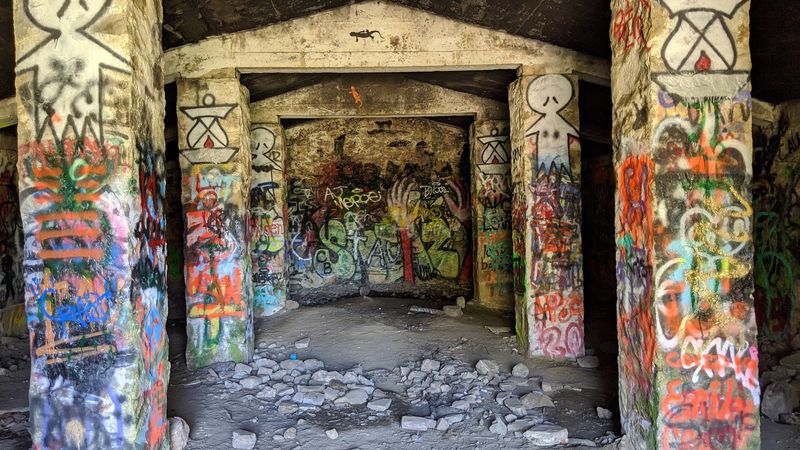
Few things about the Rutland Prison Camp generate more mixed reactions than the graffiti. Nearly every surviving surface has been painted over, some of it elaborate and visually interesting, some of it crude and hard to look at.
Visitors tend to land in one of two camps on the subject, and the debate is genuinely interesting.
Those who dislike the graffiti argue that it obscures the historical character of the site and makes it harder to appreciate what the original structures looked like. That is a fair point, especially given how little of the original camp remains.
On the other side, some visitors feel the layers of paint give the ruins a kind of second life, turning abandoned stone into an evolving canvas. Historical placards at the site do show photographs of what the buildings originally looked like, which helps bridge the gap between then and now.
Whether you find the graffiti distracting or fascinating probably depends on what you came looking for.
The Fight To Keep This Place From Disappearing
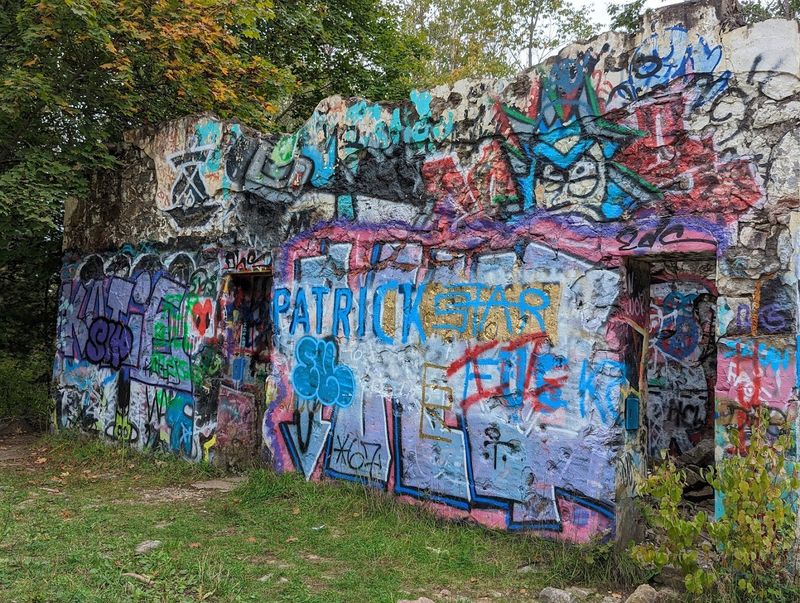
The future of the Rutland Prison Camp has not always been certain. At various points, the Metropolitan District Commission expressed interest in demolishing the remaining structures, which prompted pushback from local residents and history enthusiasts who felt the site deserved protection.
The town of Rutland took an active role in advocating for the site’s preservation, arguing that the ruins represent a meaningful and irreplaceable piece of local and state history. That tension between institutional convenience and community memory is one that plays out at historic sites across the country, and Rutland is no exception.
As of recent visits, the site remains accessible and the surviving structures are still standing, though their condition continues to change with time and weather. The historical placards that explain what each area once looked like are a direct result of preservation efforts.
Without those markers, the site would lose much of its interpretive value and become just another stretch of overgrown land.
Practical Tips Before You Make The Trip
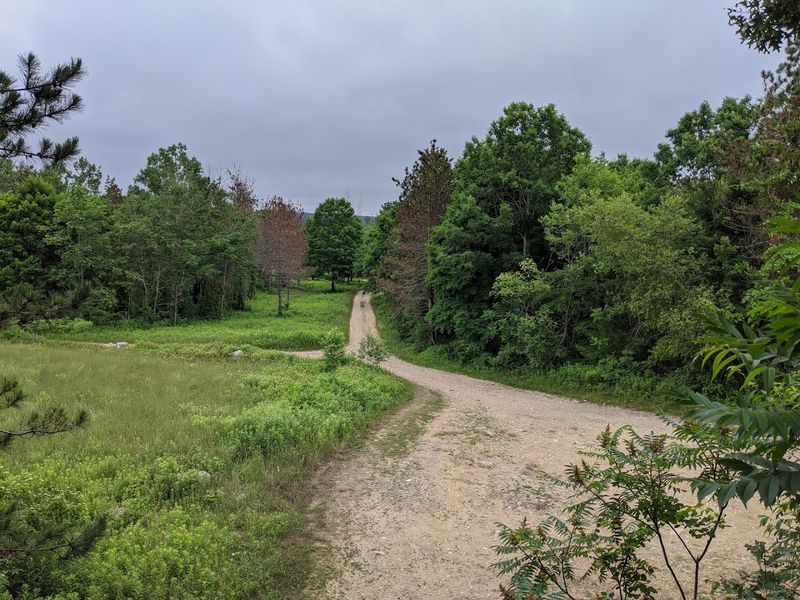
A few things are worth knowing before you head out to the Rutland Prison Camp. The site opens at noon each day, so an early morning arrival will leave you waiting at a locked gate.
Hours run until late evening, giving you a reasonable window for an afternoon visit without rushing.
The access roads are unpaved and can get muddy after rain. A vehicle with decent clearance handles the terrain more comfortably than a low-profile car, though many visitors report driving in without issue during dry stretches.
If you prefer to walk the whole way, the trail from near Rutland State Park is a manageable option.
There is no admission fee, no restroom facility on site, and no food or water available, so bring what you need. Cell service can be spotty in the area, so downloading a map ahead of time is a smart move.
The site rewards visitors who come prepared and take their time.
What This Place Actually Is And Where To Find It
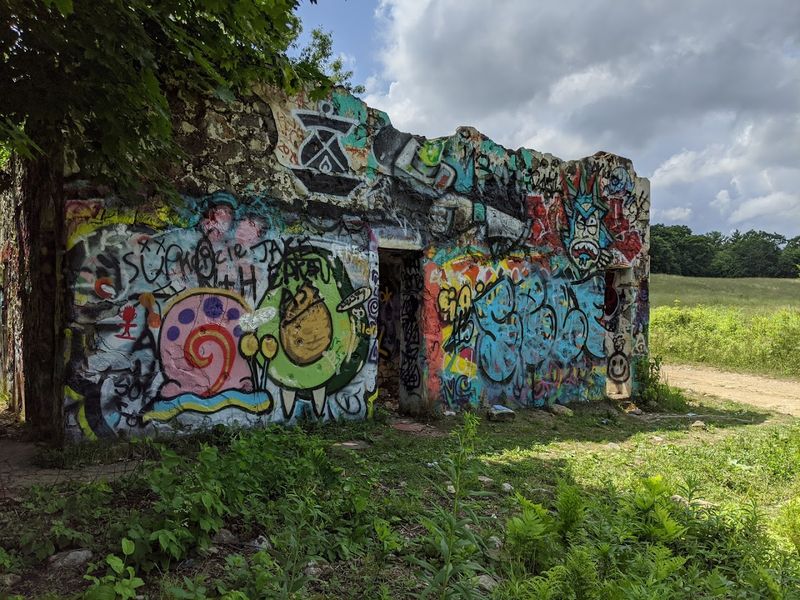
Most people have never heard of the Rutland Prison Camp, and that is exactly what makes finding it feel like such a discovery. Located at 299 Intervale Rd, Rutland, MA 01543, this historical landmark sits within a forested stretch of central Massachusetts that most travelers pass without a second glance.
The site is managed as part of the watershed lands in the area, and access is open to the public during posted hours, generally from noon until late evening each day of the week. You can reach it by car along a dirt road, though some sections require careful driving depending on the season.
Hikers also approach on foot from the trailhead near Rutland State Park, following Prison Camp Road past a bridge to reach the grounds. The site has earned a 4.3-star rating from over 130 visitors, which says a lot for a place with no admission fee and no gift shop.
Share this story