There is a stretch of the Oregon Coast that feels almost too wild and beautiful to be real. Tucked between Brookings and Gold Beach, this 12-mile corridor along U.S.
Highway 101 delivers rugged sea stacks, hidden cove beaches, and towering coastal cliffs at nearly every turn. You do not need a permit, a guide, or even much planning to enjoy it.
All you really need is a car, a good pair of shoes, and the willingness to pull over every few minutes because the views keep getting better.
Where the Corridor Begins: Location and Access
Samuel H. Boardman State Scenic Corridor runs along U.S. 101 in Brookings, OR 97415, stretching roughly 12 miles between the communities of Brookings and Gold Beach in southern Oregon.
The park is free to access, which is honestly one of the best surprises about the whole experience.
You can reach the corridor by car along Highway 101, and most of the pullouts have their own small parking areas. A few spots, like Secret Beach, only fit about eight cars, so arriving early on weekends is a smart move.
The park is managed by Oregon State Parks and can be reached by phone at 1-800-551-6949 or through the official website at oregonstateparks.org. There are no entrance fees, no reservations required, and no complicated logistics to figure out before you go.
The corridor is open year-round, which means you can visit during the quieter fall and winter months when the dramatic weather actually adds to the atmosphere rather than taking away from it. The Pacific fog rolling in over the cliffs is a sight worth planning a trip around all on its own.
The Story Behind the Name
Not every state park is named after someone worth knowing, but Samuel H. Boardman is an exception.
He served as the first superintendent of Oregon State Parks from 1929 to 1950, and during his tenure he worked tirelessly to protect the Oregon coastline for public use.
Boardman fought to preserve beach access at a time when private development was rapidly claiming coastal land across the country. His efforts helped establish Oregon’s public beach access laws, which remain some of the strongest in the nation to this day.
The corridor named in his honor stretches across one of the most scenic sections of the entire Oregon Coast, which feels like a fitting tribute. It is not just a beautiful drive; it is a reminder that the landscapes we enjoy today exist because someone fought to protect them decades ago.
Knowing that history while you stand on a cliff overlooking the Pacific adds a quiet layer of meaning to the whole experience. The rugged beauty around you was not an accident.
It was a deliberate act of preservation by a man who clearly understood what was worth saving.
Secret Beach: The Steep Reward
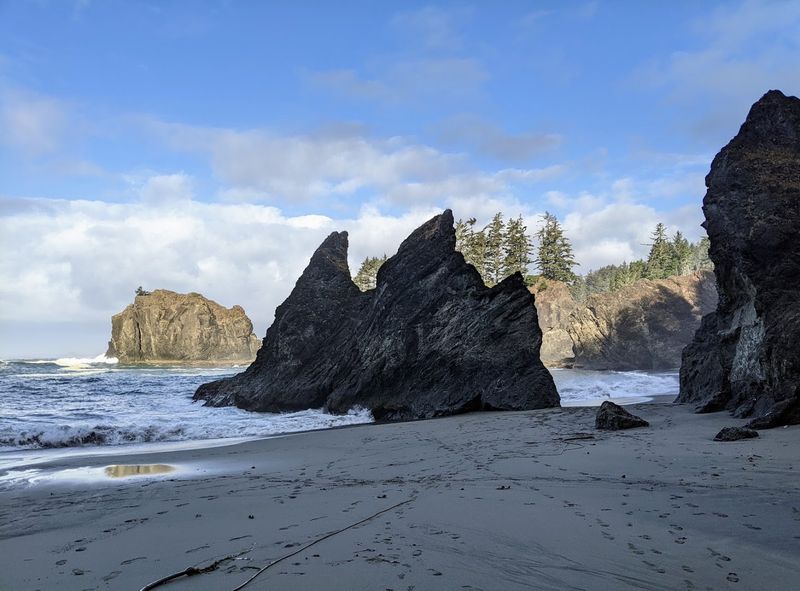
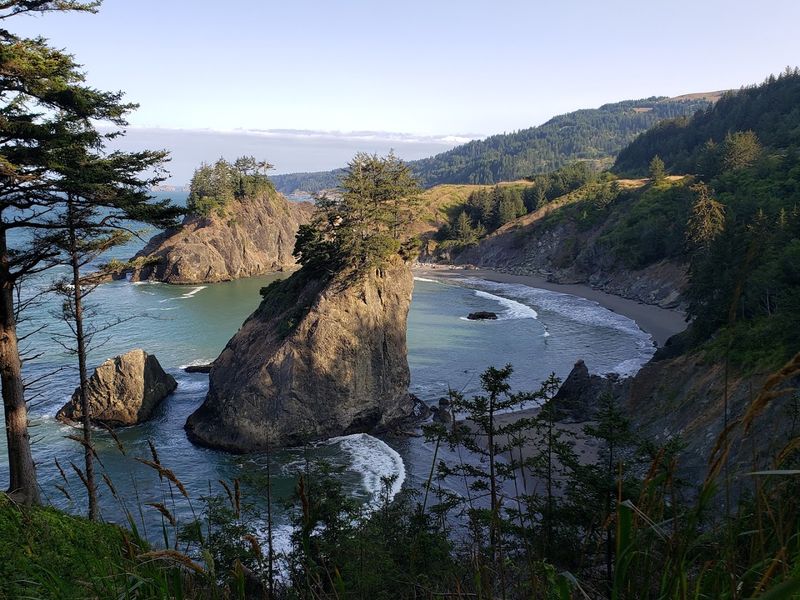
The name has leaked out, but the experience at Secret Beach still delivers something that feels genuinely private and extraordinary. A short but steep trail leads down through dense coastal forest before opening onto a small sandy cove framed by dramatic sea stacks.
The most jaw-dropping feature is a waterfall that spills directly onto the beach and flows into the ocean. There are very few places in the continental United States where you can watch a waterfall meet the Pacific, and this is one of them.
The trail down is manageable but not casual. Wearing proper footwear with grip is not optional here; the path is rooted and sometimes slick, and the incline on the way back up will remind your legs that they exist.
That said, the effort is completely worth every step.
Parking fills up fast during summer months, with cars sometimes lining Highway 101 when the small lot overflows. Getting there before 9 a.m. on a weekend gives you the best shot at both a parking spot and a few quiet minutes on the beach before the crowds arrive.
Sunset visits are equally stunning if you time the tides right.
Natural Bridges: An Arch You Have to See
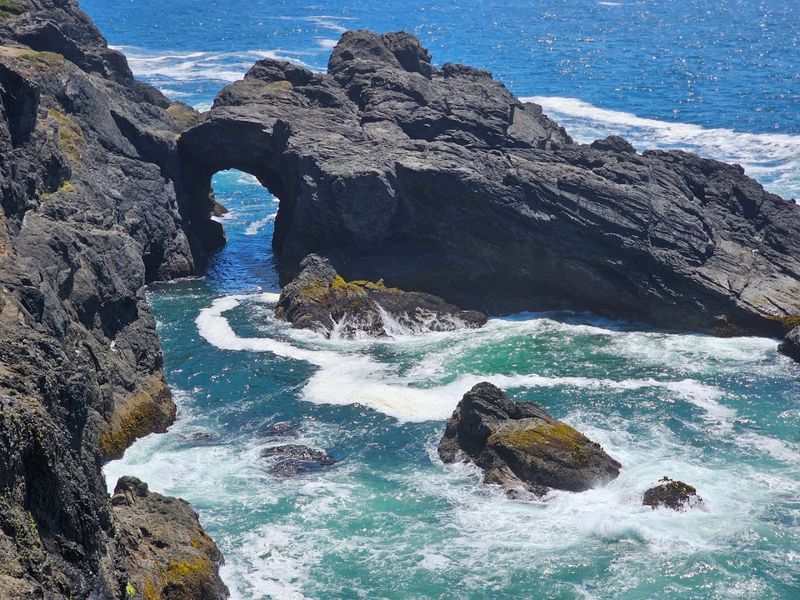
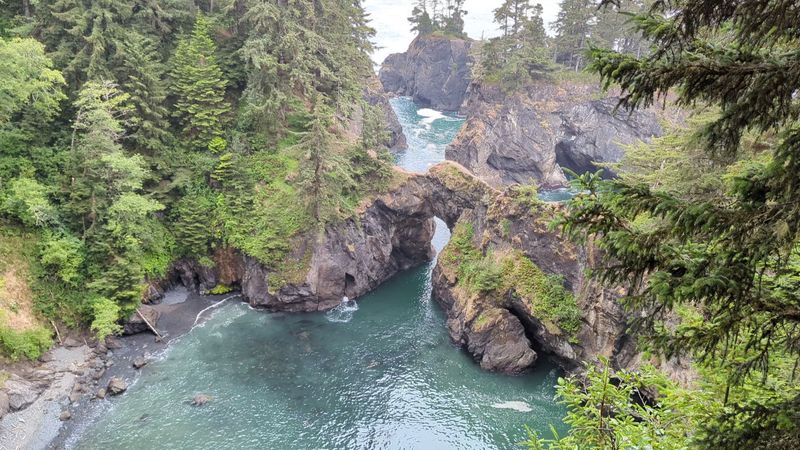
Natural Bridges is the kind of viewpoint that stops a conversation mid-sentence. From the overlook, you can see a series of sea arches carved into the rock by centuries of wave action, with the ocean churning through them in shades of deep teal and white foam.
The viewpoint itself is relatively easy to reach from the highway, making it one of the more accessible highlights along the corridor. A short path through the trees brings you to the edge of the cliff, where the full scale of the arches suddenly becomes clear.
What makes Natural Bridges especially photogenic is the way the light changes throughout the day. Morning light hits the arches from one angle, afternoon light from another, and on overcast days the muted tones give the whole scene a moody, cinematic quality that photographers tend to love.
The area around the viewpoint is also worth exploring slowly. The coastal forest is dense and fragrant, filled with Sitka spruce and red alder, and the sound of waves echoing through the arches below creates a low, rhythmic hum that is oddly calming.
It is one of those spots where you plan to spend five minutes and end up staying for an hour.
Arch Rock: Drama Right Off the Highway
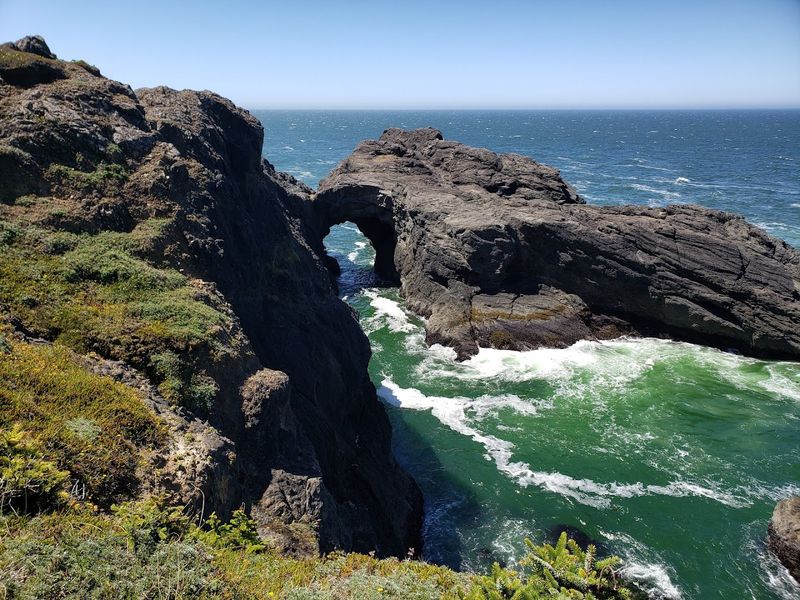
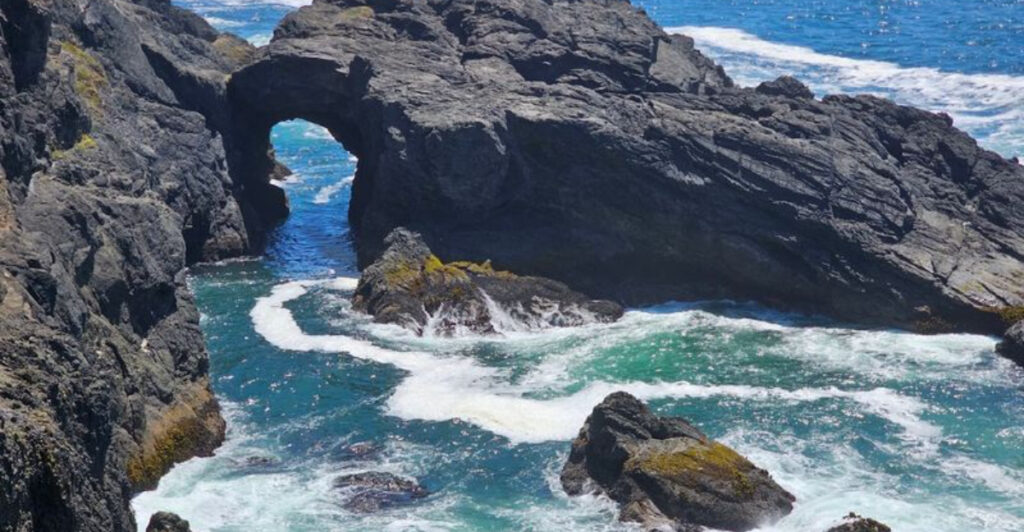
Arch Rock is one of the most recognizable landmarks along the entire corridor, and it earns that status with almost zero effort. The viewpoint sits just off Highway 101, and from the paved overlook you get an unobstructed view of a massive natural arch rising straight out of the Pacific.
The arch itself is a remnant of ancient volcanic rock that has been sculpted by wave action over thousands of years. At high tide, waves surge through and around it with real force, sending spray high into the air and creating the kind of dramatic coastal scene that ends up on Oregon tourism posters.
Because the overlook is paved and easy to access, Arch Rock tends to be one of the busier stops along the corridor. That said, even with a handful of other visitors around, the view commands enough attention that the place never feels crowded in any meaningful sense.
Early morning visits offer the added bonus of softer light and fewer cars in the parking area. The ocean tends to be calmer in the morning too, which changes the mood of the arch entirely and lets you appreciate the structure itself rather than just the spray and drama of the waves crashing around it.
Whaleshead Beach: Wide Open and Wild
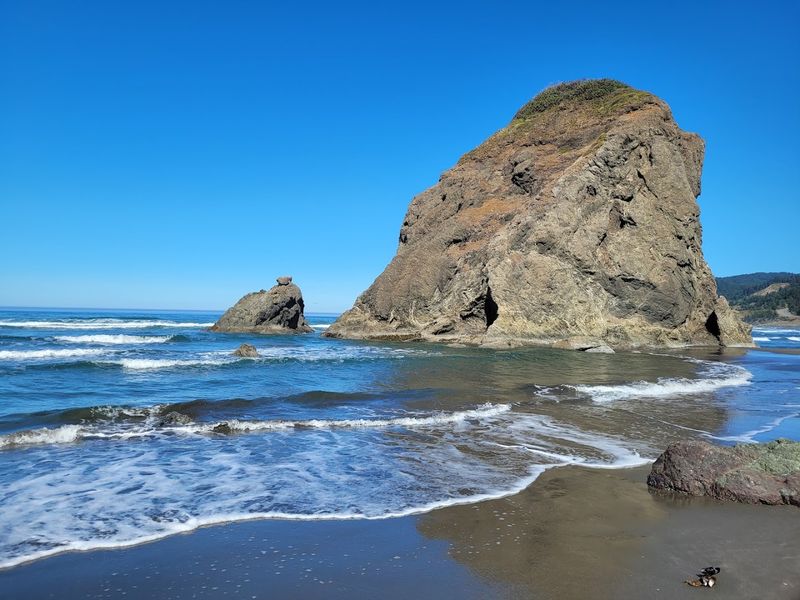
Whaleshead Beach gets its name from a large offshore rock formation that, from the right angle, bears a striking resemblance to the head of a whale breaching the surface. It is one of those geological coincidences that makes you wonder how anyone ever noticed it first.
The beach itself is wide, long, and genuinely dramatic in scale. Unlike some of the smaller cove beaches along the corridor, Whaleshead gives you room to walk, explore tide pools, and spread out without feeling like you are competing for space with other visitors.
Getting there requires navigating a road with some deep ruts, so vehicles with low clearance should approach carefully. The drive is short but a little rough, and it is worth knowing what you are getting into before you commit.
A high-clearance vehicle makes the access road much less of a concern.
Once you are on the beach, the rock formations scattered along the shoreline make for excellent exploration at low tide. The whale-shaped rock offshore looks different from every spot on the beach, and finding the angle where it most resembles its namesake becomes a fun little challenge that keeps you moving along the sand.
Lone Ranch Beach and Its Tide Pools
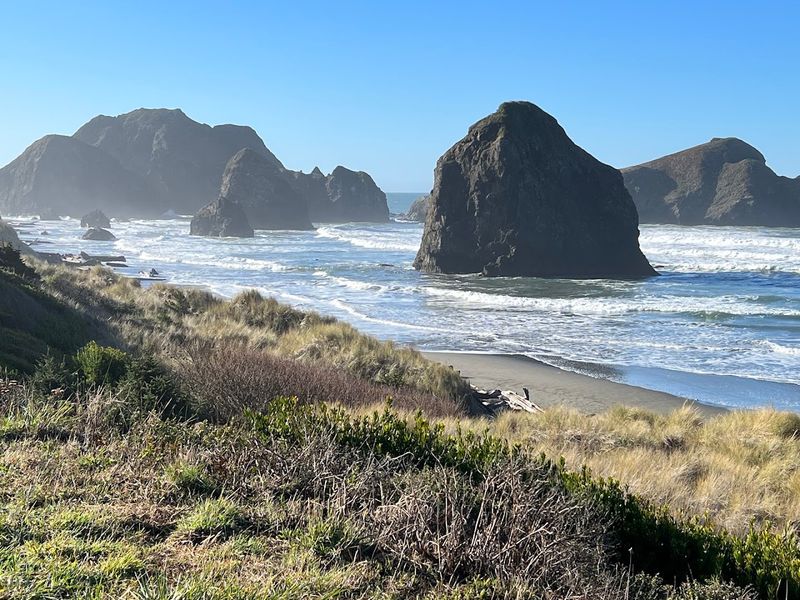
Lone Ranch Beach is one of the most accessible spots along the entire corridor, with a proper parking area, restroom facilities, and a relatively flat path down to the sand. It is a great option for families or anyone who wants beach access without a steep hike.
The real attraction here is the tide pools. At low tide, the rocky areas along the edges of the beach reveal a full ecosystem of sea anemones, hermit crabs, sea stars, and other intertidal creatures that are endlessly fascinating to observe up close.
Children and adults alike tend to get completely absorbed in poking around the pools.
Being mindful of the tides is genuinely important at Lone Ranch. The beach can change character quickly as the water rises, and getting caught off guard by incoming surf is a real possibility if you are focused on the tide pools and not watching the ocean behind you.
The panoramic views from the beach looking south along the coastline are among the best in the corridor. A large hill rises behind the beach with trails running through the hillside, offering elevated views over Lone Ranch and the surrounding cliffs that put the whole coastal landscape into satisfying perspective.
Cape Ferrelo: Sunset Views That Linger
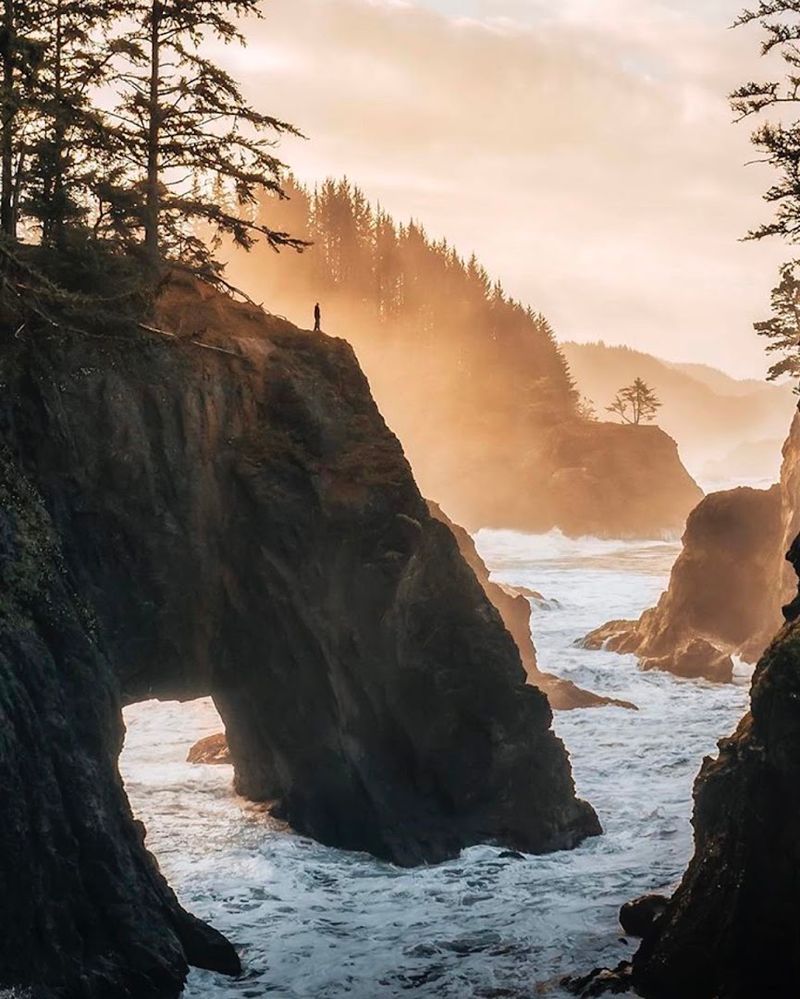
Cape Ferrelo sits near the southern end of the corridor and offers one of the most sweeping ocean panoramas of any viewpoint along the route. The headland juts out into the Pacific, giving you a wide, unobstructed view in multiple directions at once.
Sunset at Cape Ferrelo is the kind of experience that earns its reputation. The light drops behind the horizon in layers of orange and pink, reflecting off the water in a way that makes the whole ocean look like it is glowing from the inside.
It is not hyperbole to say that people plan their entire itinerary around catching the right evening here.
The viewpoint has a small parking area and a short walk to the overlook, making it accessible even for visitors who are not up for a longer hike. Benches along the path give you a place to sit and take it all in without having to stand at the edge of the cliff.
Sunrise at Cape Ferrelo is also worth setting an alarm for. The eastern light catches the cliffs in a warm glow while the ocean below is still calm and dark, and the contrast between the lit headland and the shadowed water creates a striking visual that photographers return to again and again.
Hiking the Corridor Trail
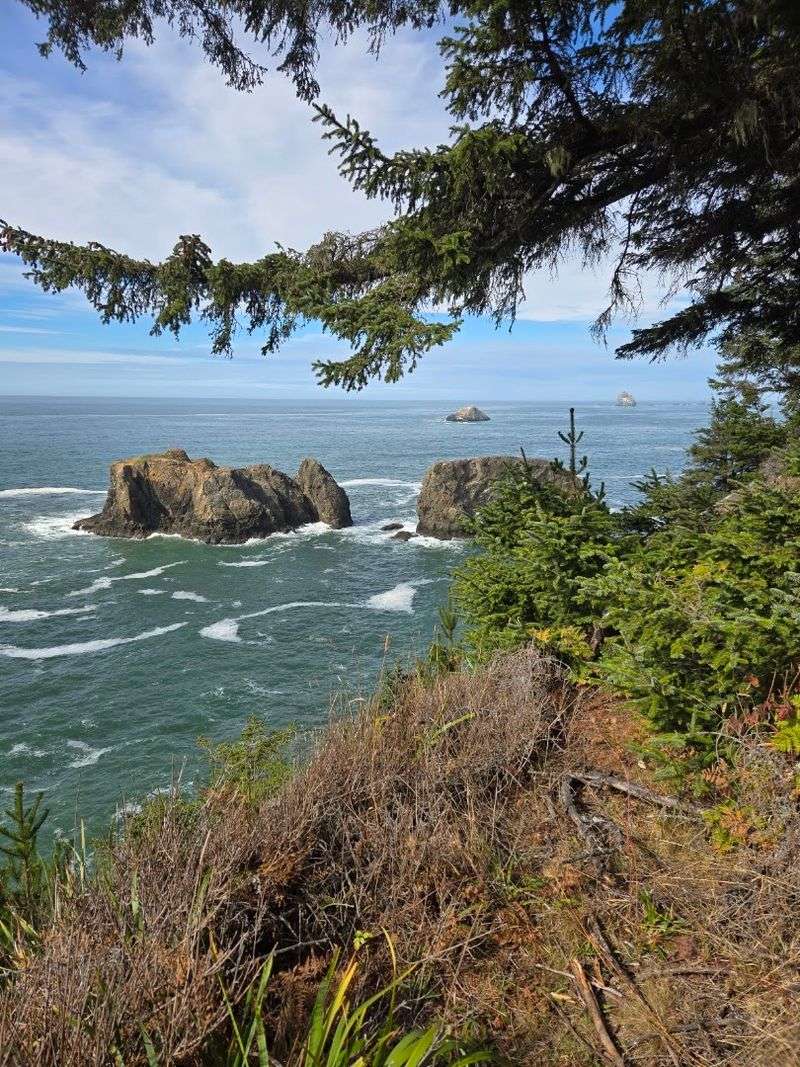
The corridor is not just a scenic drive. A trail system runs through much of the 12-mile stretch, connecting viewpoints, beaches, and forested sections in a way that rewards anyone willing to put in a bit of walking time.
Some sections of the trail are easy and well-maintained, while others involve noticeable elevation changes and root-covered paths that require attention and solid footwear.
The most popular hiking option is the loop trail near the Natural Bridges and Secret Beach areas, which many visitors describe as the best hike in the region. The loop takes roughly an hour to two hours depending on pace, and nearly every section of it delivers a new and distinct view of the coastline.
Poison ivy grows in parts of the corridor, particularly near certain trailheads, so staying on marked paths and knowing how to identify the plant before you go is genuinely useful information. Signs are posted in affected areas, but a little advance awareness goes a long way.
The trails are open year-round, and hiking during the off-season has real advantages. Crowds thin out considerably after Labor Day, and the coastal forest takes on a moody, atmospheric quality in fall and winter that feels completely different from the bright summer version of the same path.
Tips for Making the Most of Your Visit
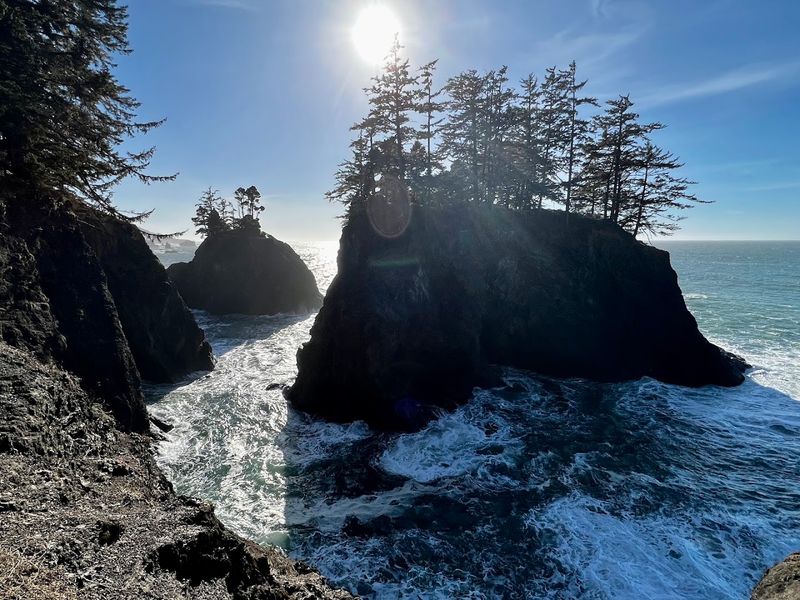
The single most important piece of advice for visiting the corridor is to wear shoes with real grip. Multiple viewpoints and beach access trails involve steep or uneven terrain, and sandals or flat-soled shoes turn manageable paths into genuinely risky ones.
Good hiking shoes or trail runners are the right call for most of what the corridor offers.
Layering your clothing is equally smart. The southern Oregon coast can be warm and sunny one hour and wrapped in cold marine fog the next.
Having a wind layer in your bag means you can stay comfortable regardless of what the weather decides to do while you are out on a cliff edge.
Tide charts are worth checking before any beach visit, especially at spots like Lone Ranch and Secret Beach where the surf can move in quickly. Free tide chart apps are easy to find and take about thirty seconds to consult before you head down to the water.
Finally, the corridor rewards slow travel more than any other approach. Stopping at every pullout, even the ones that look minor from the highway, consistently turns up something worth seeing.
The corridor has been described as a place where something new appears around every corner, and that description holds up completely the moment you start paying attention.
Share this story