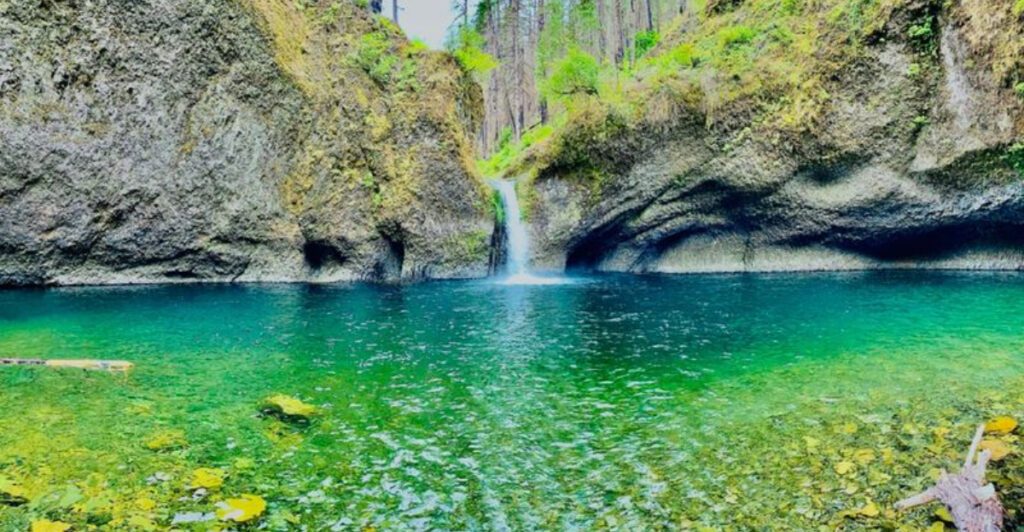
There is a swimming hole tucked inside the Columbia River Gorge that takes a little effort to reach, and that effort is exactly what makes it feel so rewarding. The trail winds through recovering forest, hugs canyon walls, and delivers you to a 35-foot waterfall that drops into a deep, circular pool carved by centuries of rushing water.
The cold water will absolutely take your breath away, and the scenery surrounding it will do the same. This is Punch Bowl Falls, one of Oregon’s most talked-about natural spots, and every muddy boot and careful step along the Eagle Creek Trail is worth it.
Where to Find Punch Bowl Falls
The trailhead for this adventure sits along Oregon 97014, inside the Columbia River Gorge National Scenic Area, roughly 40 miles east of Portland. Eagle Creek Trailhead is the official starting point, and you can find it by following the signs off the Historic Columbia River Highway near the town of Cascade Locks.
Parking costs five dollars and the kiosk accepts cards only, so leave the cash in your pocket. You can also purchase and print a pass online before you arrive, which saves time on busy weekends when the lot fills up fast.
Overflow parking is available nearby, but arriving early on a Saturday morning is still the smarter move.
The trailhead sits at the edge of the gorge, and even before you take your first step on the path, the canyon views are already pulling you forward. A large warning sign greets hikers at the start, noting that sections of the trail are narrow and pass close to canyon edges, so reading it carefully before heading out sets the right tone for the hike ahead.
The Eagle Creek Trail Experience
The path to Punch Bowl Falls follows the Eagle Creek Trail, a route that has been drawing hikers for over a hundred years and still manages to feel surprising at every turn. The trail stretches about two miles each way, making the full round trip roughly four miles of varied terrain.
Footing shifts from gravel to rock to packed dirt as you move deeper into the canyon. Some sections run right along the edge of the gorge with sheer drop-offs below, and a metal wire cable bolted into the cliff face serves as a handrail in the narrowest spots.
Holding onto that cable is not optional, it is genuinely useful.
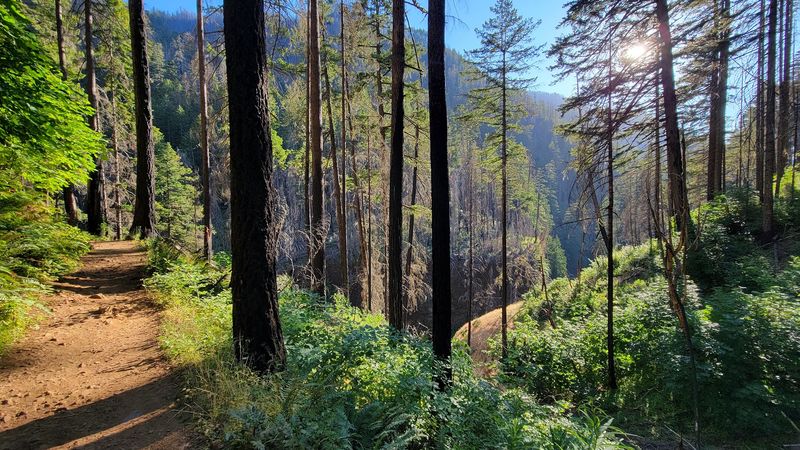
The forest along the route is in the process of recovering from a wildfire that swept through years ago, and watching how the plant life is reclaiming the hillsides adds an unexpected layer of interest to the walk. New growth pushes up through charred trunks, and the contrast between old burned wood and fresh green leaves creates a visual story you do not get on most trails.
The canyon views on the return leg hit differently, almost like seeing the whole place for the first time again.
The Lower Falls and Creek Area
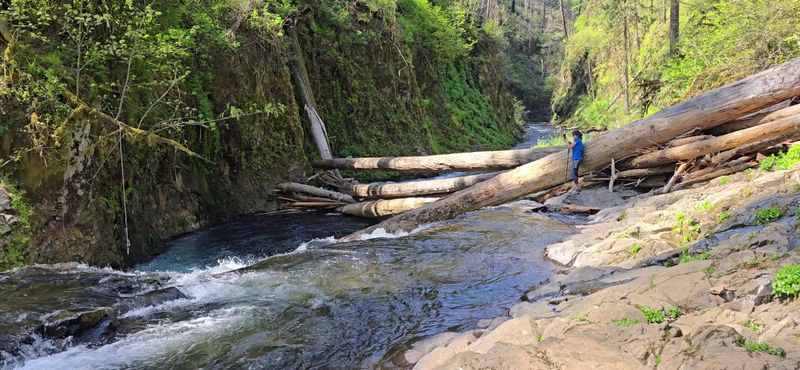
About 1.8 miles into the hike, a turnoff appears on the right side of the trail, and this is the one you absolutely do not want to miss. Missing it is more common than you might think, and hikers who blow past it have reportedly ended up much farther down the trail than intended.
The turnoff leads down to the lower creek area, where the water runs clear and cold over smooth stones. This lower section is genuinely beautiful on its own terms, and for families with younger children or anyone who prefers to keep their feet dry, it offers a satisfying destination without the scramble required to reach the main falls.
The creek pools here are calm and accessible, with flat rocks nearby that make decent spots to sit and eat lunch while listening to the water move. The surrounding forest closes in around the creek bed in a way that feels quiet and enclosed, even when the trail above is busy with other hikers.
Spending time at the lower area before attempting the upper scramble is a good strategy, since it gives you a chance to assess conditions and energy levels before committing to the rockier terrain ahead.
Reaching the Main Punch Bowl
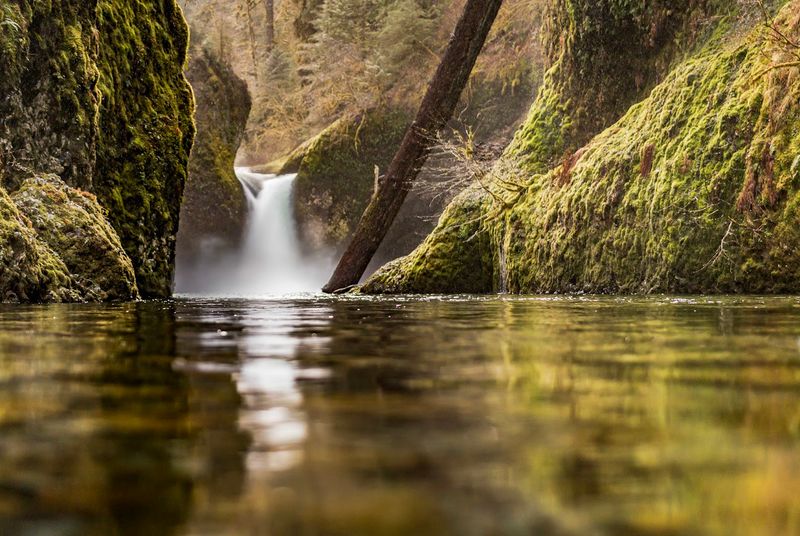
Getting to the main punchbowl requires a short but genuine scramble over large boulders and river-swept logs that have piled up at the base of the falls. A landslide blocks the direct path up the creek from the trail, so the route involves crossing the creek and continuing upstream for about a tenth of a mile before traversing the boulder field.
The effort is real, and wet rocks make it slippery, especially earlier in the season when snowmelt keeps the water levels high. Trekking poles help, and wearing shoes with solid grip makes a noticeable difference.
The scramble is not technical climbing, but it does require paying attention to every step.
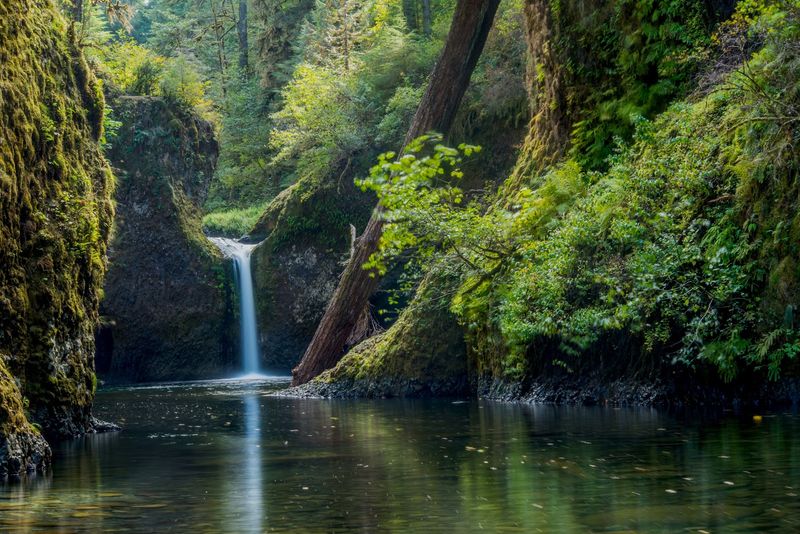
Once you clear the boulders and round the final corner, the punchbowl opens up in front of you. The waterfall drops 35 feet into a circular basin carved from basalt, and the walls of the bowl rise steeply on three sides, giving the whole space a dramatic, enclosed feeling.
The water inside the bowl is a deep, cold green, and the sound of the falls bouncing off the rock walls is loud enough to feel physical. It is one of those places that rewards the work it takes to get there.
Swimming in the Punchbowl
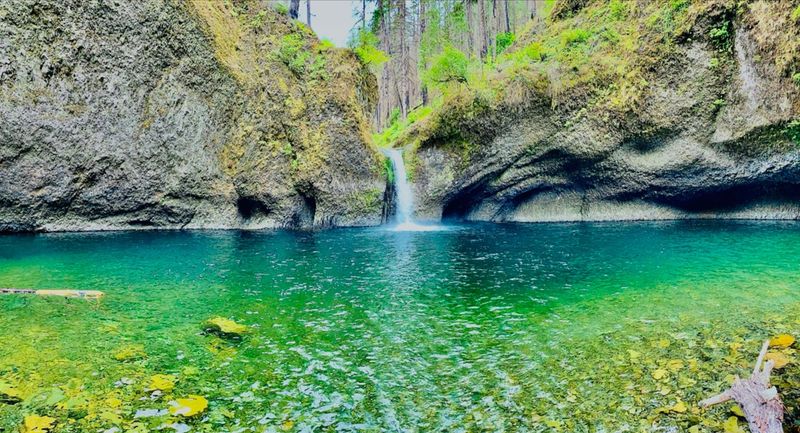
The water in the punchbowl is cold in a way that is hard to fully prepare for, even if someone warns you in advance. Fed by snowmelt from higher elevations, the pool sits at around 60 degrees Fahrenheit even on the warmest summer days, and the first second of submersion tends to produce sounds that echo off the rock walls.
That said, once the initial shock fades, the water feels refreshing rather than punishing, especially after a warm hike through the canyon. Floating in the middle of the bowl with the waterfall crashing down ahead of you is a genuinely memorable experience, and the circular shape of the pool means the current is manageable near the edges.
Bringing a buddy for safety is strongly recommended, not as a formality but as a real precaution given the cold temperatures and the remote feel of the location. A dry towel and a warm change of clothes waiting back at the trailhead make the return hike considerably more comfortable.
Wearing a swimsuit under your hiking clothes is the most practical approach, since changing on the boulders near the falls is awkward at best and there are no facilities of any kind at the swimming area.
Best Time of Year to Visit
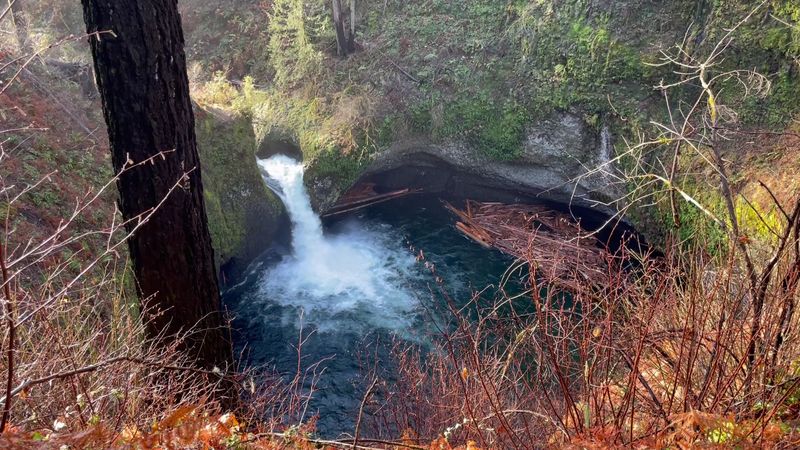
The waterfall is active year-round, but the experience changes significantly depending on when you show up. Late spring and early summer bring the highest water flow, driven by snowmelt, and the falls roar with full force during this window.
The pool is at its most dramatic then, though the water is also at its coldest.
Summer weekends draw the biggest crowds, with the parking lot filling up by mid-morning on Saturdays and Sundays. Visiting on a weekday during summer cuts the crowd significantly, and arriving before 9 a.m. on any day gives you a better shot at trailhead parking.
Fall is another strong option, with extra water flow returning after the dry summer months and the forest taking on warmer colors along the trail.
Winter visits are possible but require extra caution, since portions of the trail can become icy and the narrow canyon sections near the cliff edges are less forgiving in wet conditions. The trail has also been subject to periodic closures due to falling trees and rockfall, particularly after heavy wind and rain events, so checking current trail conditions through the Columbia River Gorge National Scenic Area or the US Forest Service website before heading out is a practical step regardless of the season.
Trail Hazards and Safety Tips
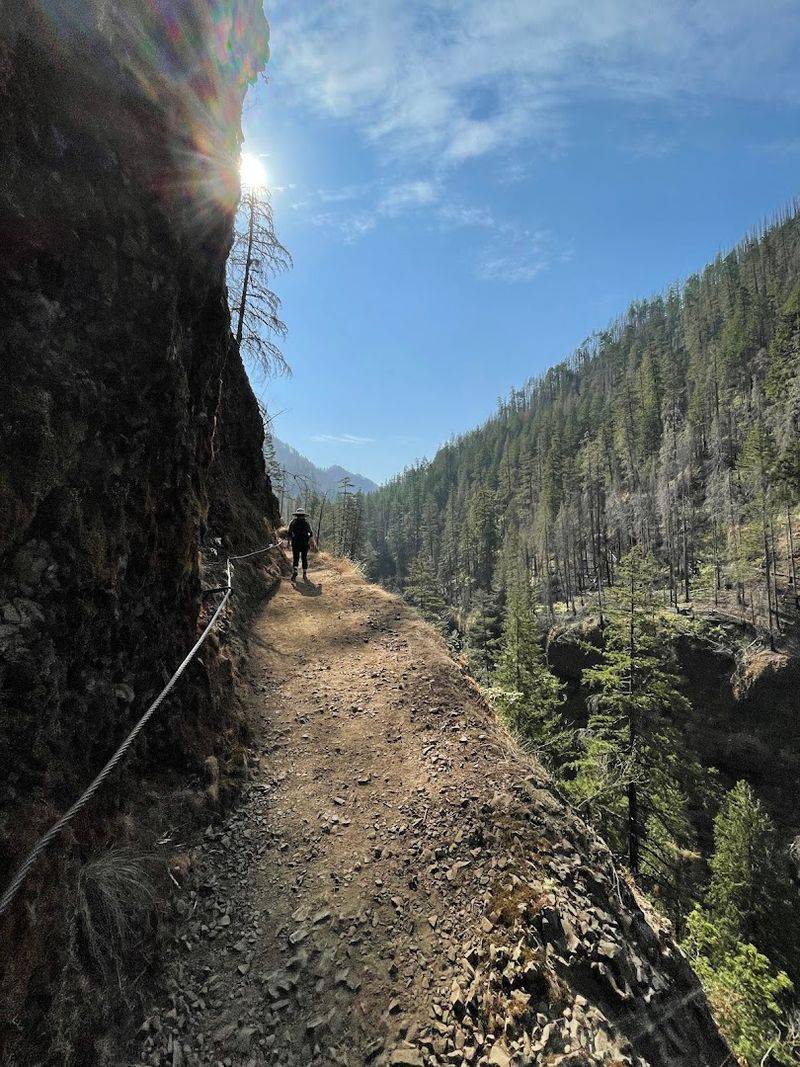
A large, official warning sign at the Eagle Creek Trailhead spells out the risks clearly, and it is worth reading every word rather than walking past it. The trail passes through sections designated as unstable terrain, with narrow ledges, canyon drop-offs, and the ongoing possibility of rockfall in certain areas.
Poison oak grows directly alongside the path in several spots, particularly in the lower portions of the trail where the vegetation is dense. Learning to identify it before you go is a reasonable precaution, and staying on the established path rather than bushwhacking through the undergrowth keeps contact risk low.
Long pants help in sections where the plants crowd the trail edges.
The wire cable handrail on the cliff-hugging sections of trail is there for good reason, and using it rather than treating it as optional makes a difference. Letting faster hikers pass and giving space to people moving more carefully, especially on the narrow ledge sections, keeps the flow of traffic safer for everyone.
Children can manage the hike with supervision, but the upper scramble to the main falls is not appropriate for young kids, and the trail’s posted warning sign reflects that assessment directly.
The Wildfire Recovery Story
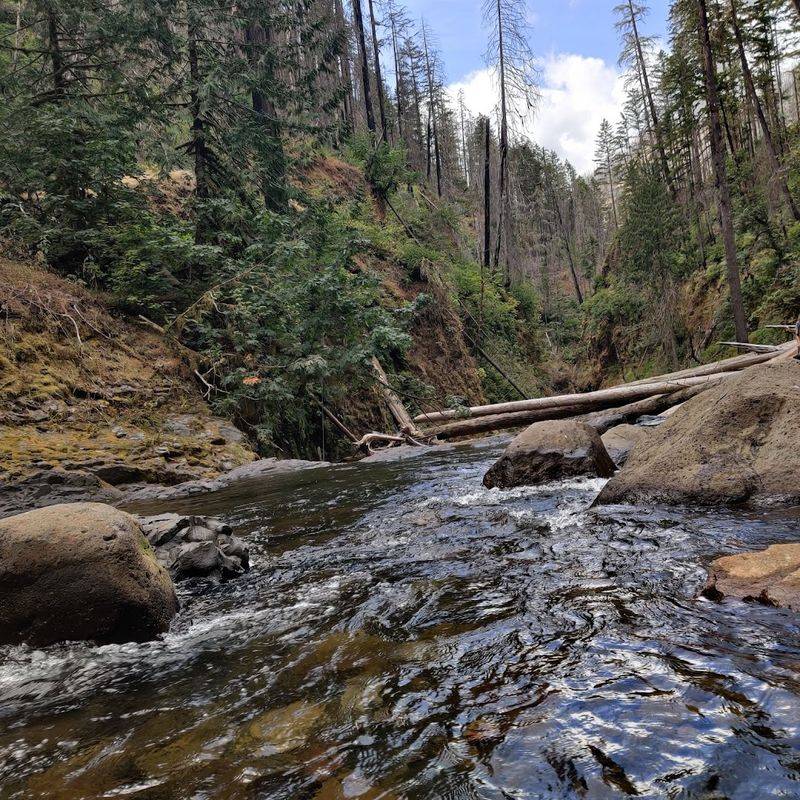
The Eagle Creek Fire of 2017 burned through a massive section of the Columbia River Gorge, and the Eagle Creek Trail corridor was directly in its path. The fire was one of the most destructive in the gorge’s modern history, and the trail remained closed for years as crews assessed damage and worked to stabilize the area.
Hiking through the recovering forest today tells that story without any narration needed. Charred trunks still stand in sections of the trail, blackened at the base but sometimes sprouting new growth from their crowns.
Ferns, wildflowers, and young shrubs have reclaimed the forest floor in patches, creating a mix of open, sunny sections and areas where the canopy is slowly closing back in.
The recovery is genuinely interesting to observe, and the contrast between the burned landscape and the lush, untouched sections of the gorge gives the hike an extra dimension that a purely pristine trail would not have. The land’s ability to rebuild after a major fire is visible at almost every step, and the trail itself serves as a kind of living record of what the gorge has been through and where it is heading.
That context makes the destination feel more meaningful than just a pretty waterfall at the end of a walk.
What to Pack for the Hike
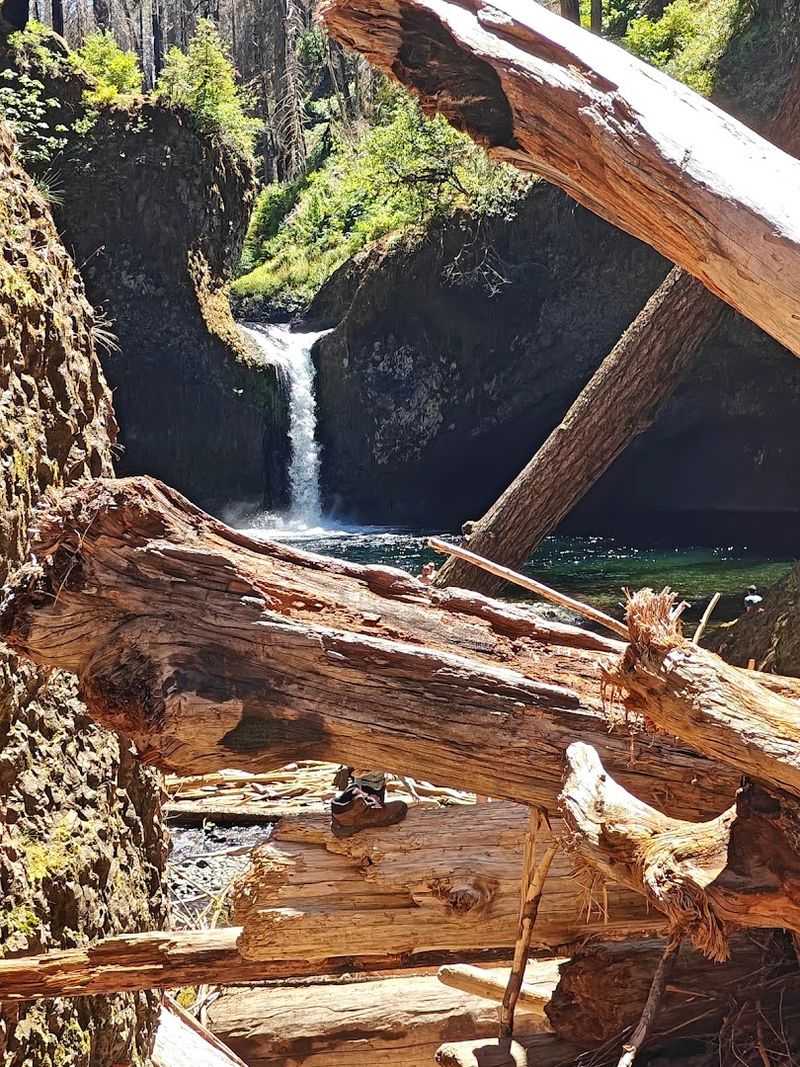
The two-mile trail to Punch Bowl Falls is not technically demanding, but packing thoughtfully makes a real difference in how the day feels. Solid hiking shoes or trail runners with good grip handle the rocky terrain better than casual sneakers, especially near the creek crossing and the boulder scramble at the top.
Water is essential since there are no facilities along the trail, and carrying more than you think you need is the right instinct on a warm day. Sunscreen matters even in the gorge, where the open sections of trail after the fire offer less shade than they once did.
A light rain jacket is worth tossing in the bag since the Pacific Northwest weather can shift without much notice.
For anyone planning to swim, a swimsuit worn under hiking clothes is the most practical setup, paired with a dry towel and a spare set of clothes left in the car for the drive home. Trekking poles earn their weight on the return trip when tired legs meet rocky footing.
Snacks matter more than people expect on a four-mile round trip, and the flat rocks near the lower creek area make a genuinely pleasant lunch spot about halfway through the adventure.
Making the Most of Your Visit
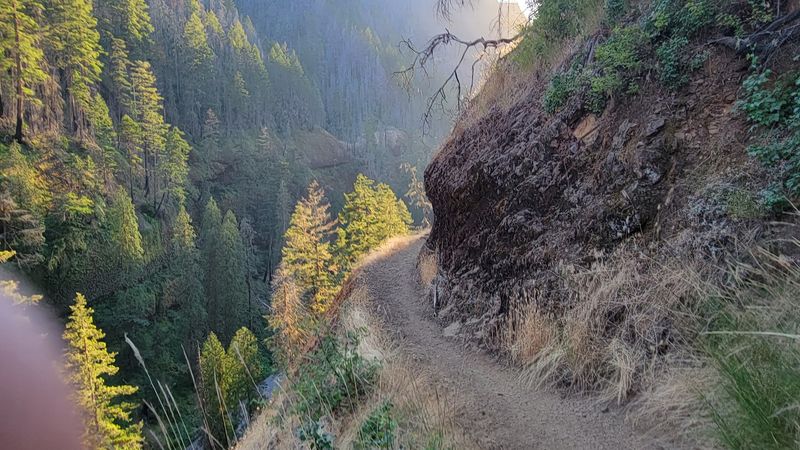
A few small decisions can shape the whole experience at Punch Bowl Falls. Arriving early on weekends sidesteps the worst of the parking crunch and means you will have the trail to yourself for at least part of the morning before the crowds build up.
Weekday visits are quieter across the board, and the trail has a different energy when it is not packed with groups.
Taking the turnoff down to the lower creek area before pushing on to the main falls gives you a chance to appreciate the setting at a slower pace and decide whether the boulder scramble suits your group. The lower area is genuinely worth time on its own, not just a consolation prize for those who skip the upper section.
Checking the current trail status before driving out is a habit worth forming, since the Eagle Creek corridor has a history of closures tied to weather events, fallen trees, and rockfall. The US Forest Service maintains updated trail information online, and a quick check the day before saves a long drive to a closed gate.
The hike rewards preparation, and the payoff at the top, that cold, circular pool under a 35-foot waterfall, is one of the more honest rewards Oregon’s outdoor spaces have to offer.
Share this story