Europe is home to some of the most awe-inspiring buildings ever constructed, and its cathedrals sit at the very top of that list. From towering Gothic spires to glittering Byzantine mosaics, these sacred structures took generations of skilled craftspeople to build.
They tell the story of entire civilizations through stone, glass, and art. Whether you are a history lover, an architecture fan, or simply someone who appreciates jaw-dropping beauty, these 15 cathedrals will leave you absolutely speechless.
Sagrada Familia – Barcelona, Spain
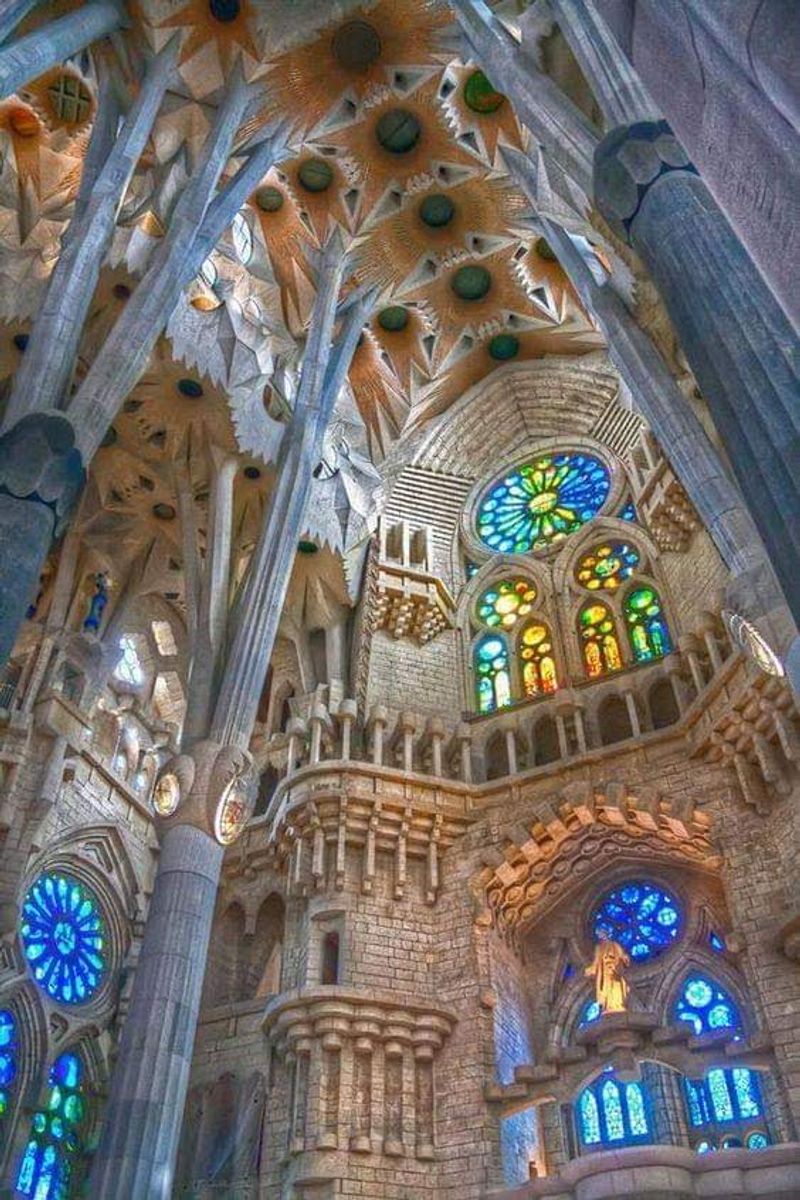
Nothing quite prepares you for the moment Sagrada Familia comes into view. Antoni Gaudi began designing this cathedral in 1883, and construction is still going on today, making it one of the longest-running building projects in history.
The whole thing looks like it grew straight out of the earth rather than being built by human hands.
Step inside and the stained-glass windows explode with color, casting greens, blues, and ambers across the stone columns like a living painting. Gaudi took inspiration from nature, so the columns branch like trees and the ceiling ripples like a forest canopy.
It is genuinely unlike anything else you will find in a church anywhere on the planet.
The cathedral is expected to be completed around 2026, marking the centenary of Gaudi’s death. Tickets sell out fast, so booking well in advance is strongly recommended.
Visiting at midday gives you the best light show inside, when the sun hits the windows from both sides simultaneously. Sagrada Familia is not just a cathedral; it is a once-in-a-lifetime experience that stays with you long after you leave Barcelona.
Notre-Dame Cathedral – Paris, France
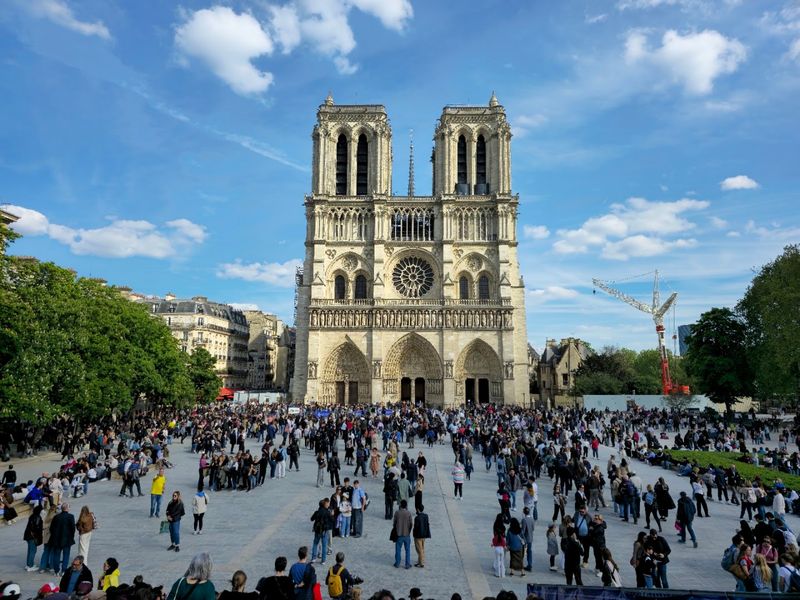
Few buildings in the world carry as much emotional weight as Notre-Dame. When fire tore through its roof in April 2019, millions of people around the globe watched with tears in their eyes.
The good news is that after an extraordinary restoration effort, Notre-Dame reopened its doors in December 2024, and it looks absolutely magnificent.
Built between 1163 and 1345, this Gothic giant sits on a small island in the middle of the Seine River. Its famous twin towers, three enormous rose windows, and spectacular flying buttresses have made it a symbol of Paris for centuries.
Victor Hugo’s novel The Hunchback of Notre-Dame helped cement its legendary status in popular culture.
The cathedral’s interior holds some genuinely breathtaking details. Look up at the vaulted ceilings, and you will understand why medieval builders were considered the engineering geniuses of their age.
The three rose windows alone contain thousands of individual pieces of stained glass. If you are visiting Paris for the first time or the tenth time, standing inside Notre-Dame still feels like a special privilege.
Plan to spend at least an hour exploring every corner.
St. Peter’s Basilica – Vatican City
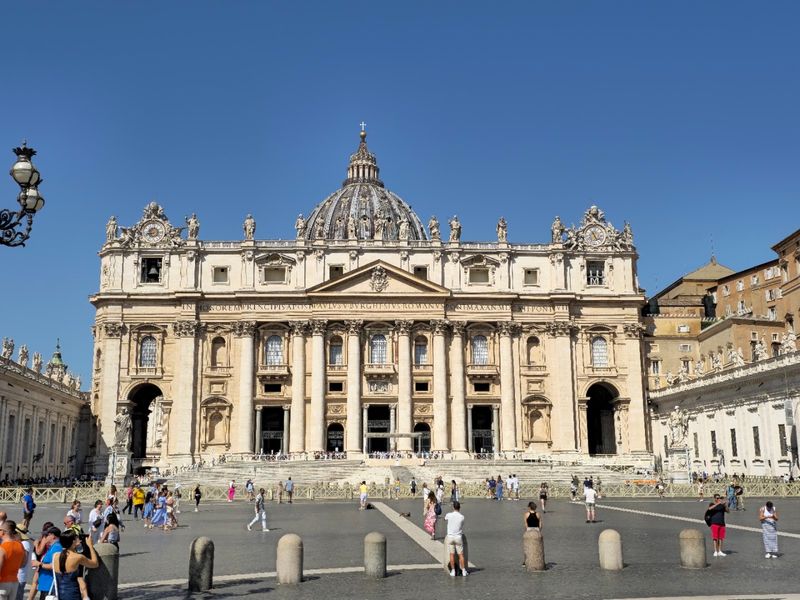
Stepping into St. Peter’s Square for the first time, your jaw will drop before you even reach the front door. The sheer scale of this place is almost impossible to comprehend until you are standing right in front of it.
Bernini’s sweeping colonnade wraps around the square like two giant welcoming arms, setting the tone for everything inside.
Michelangelo designed the enormous dome that crowns the basilica, and it remains one of the greatest achievements in architectural history. He was already in his seventies when he took on the project.
The interior is packed with masterpieces, including Michelangelo’s heartbreaking Pieta sculpture, which he carved when he was just 24 years old.
Climbing to the top of the dome is highly recommended for anyone with steady legs and a love of incredible views. The panorama over Vatican City and Rome stretching into the distance is genuinely unforgettable.
The basilica is free to enter, though you will need to dress modestly, with covered shoulders and knees. Arrive early in the morning to beat the crowds, which can be enormous by mid-morning.
St. Peter’s rewards slow, careful exploration rather than a quick walkthrough.
Cologne Cathedral – Cologne, Germany
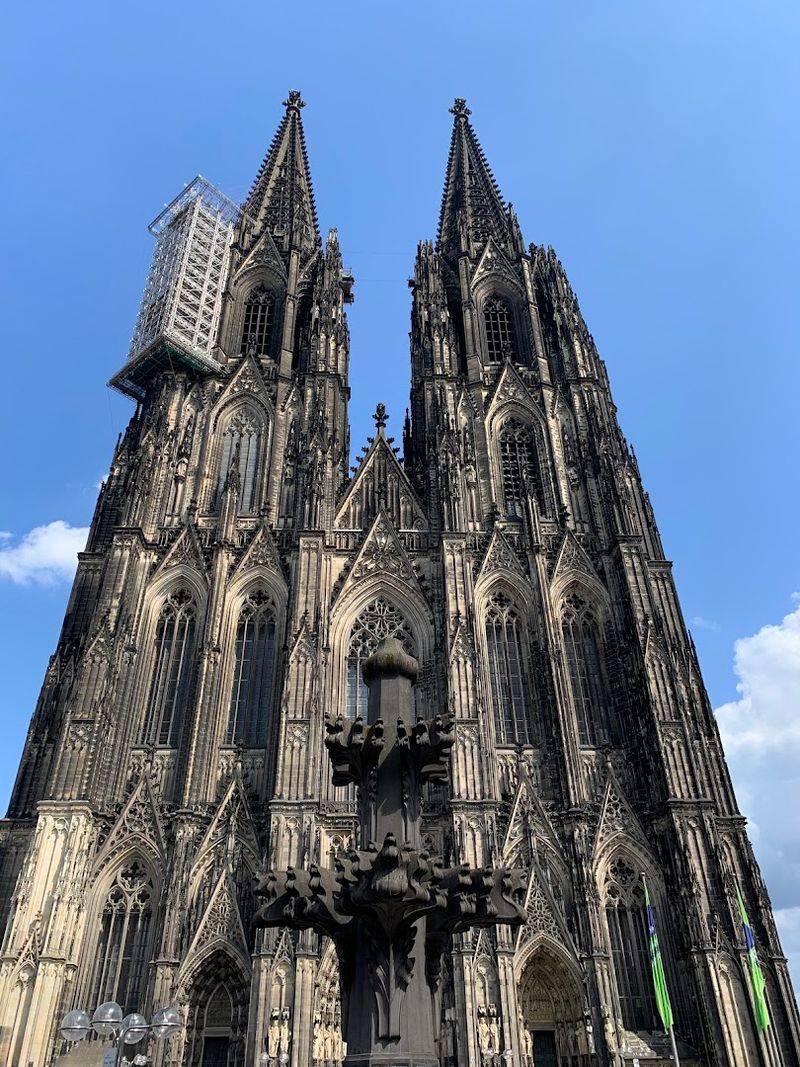
Construction on Cologne Cathedral started in 1248 and was not finished until 1880, a gap of more than 600 years. That is not a typo.
For centuries the unfinished building sat as an enormous medieval construction site before the project was finally completed in the 19th century. Today it stands as one of the most impressive Gothic structures ever built.
The twin spires reach 157 meters into the sky and were the tallest structures in the world when completed. Standing directly beneath them and craning your neck upward gives you a very small sense of what medieval worshippers must have felt.
The sheer ambition behind every carved stone is staggering.
Inside, the cathedral houses the Shrine of the Three Kings, a golden reliquary that medieval pilgrims traveled enormous distances to see. The treasury holds centuries of extraordinary religious art and artifacts.
Cologne Cathedral is a UNESCO World Heritage Site and receives around six million visitors each year. Climbing the 533 steps to the top of the south tower rewards you with sweeping views over Cologne and the Rhine River.
The cathedral survived World War II bombing raids largely intact, which feels like its own kind of miracle.
Milan Cathedral (Duomo di Milano) – Milan, Italy
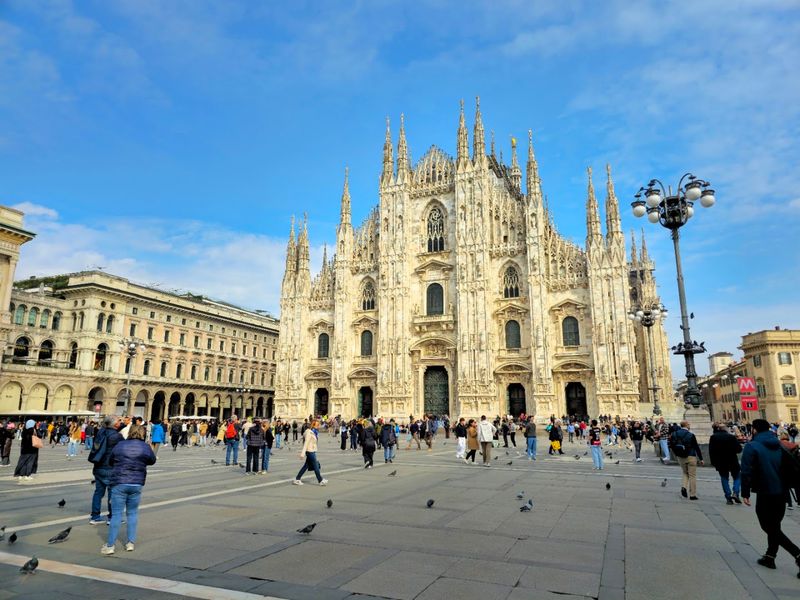
Milan’s Duomo looks like someone took a Gothic cathedral and turned the decoration dial all the way up to maximum. It is covered in 3,400 statues, 135 marble spires, and enough ornate detail to keep you staring for hours without running out of new things to notice.
The whole structure is made from a distinctive pinkish-white marble quarried from a lake near Milan.
Construction began in 1386 and the cathedral was not officially completed until 1965, meaning Napoleon Bonaparte attended its partial completion ceremony in 1805. That is the kind of timeline that makes your brain hurt in the best possible way.
The interior is equally spectacular, with soaring columns and some of the tallest stained-glass windows in the world.
The rooftop terrace is the real star attraction for many visitors. You can walk among the spires and statues at close range, getting a perspective that feels almost surreal.
On a clear day, the Alps are visible on the horizon. The terraces are accessible by stairs or elevator, so no one misses out.
Book your rooftop ticket separately from the cathedral entrance for the smoothest experience. Early morning visits offer the best light and the smallest crowds.
Seville Cathedral – Seville, Spain
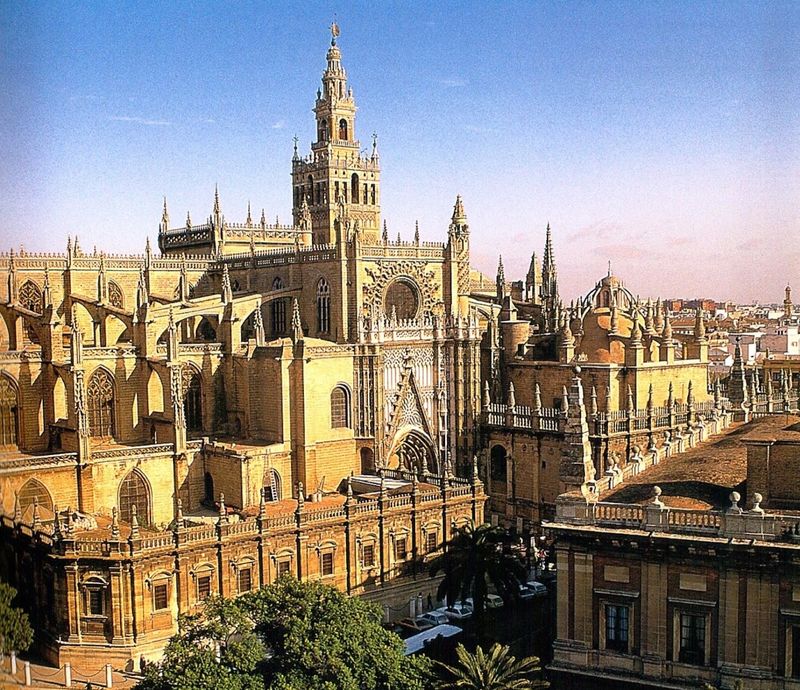
When the city leaders of Seville decided to build a new cathedral in 1401, they reportedly said they wanted to construct something so large that people who saw it would think they were mad. Mission accomplished.
Seville Cathedral holds the record as the largest Gothic cathedral in the world, and walking around its exterior feels like circling a small city block.
The building was constructed on the site of a grand mosque, and the famous Giralda tower was originally the mosque’s minaret. You can walk up the Giralda via a series of ramps rather than stairs, because it was designed for horses to carry the call to prayer to the top.
That quirky detail alone makes it worth the climb.
Inside, the cathedral holds one of the most spectacular altarpieces ever created, a golden wall of carved figures that covers the entire east end of the church. Christopher Columbus is also buried here, his tomb carried by four bronze royal figures.
The sheer scale of the interior is humbling. Seville Cathedral is best explored on a guided tour, which helps make sense of the enormous amount of history packed into every corner.
Arrive at opening time for the most peaceful experience.
St. Vitus Cathedral – Prague, Czech Republic
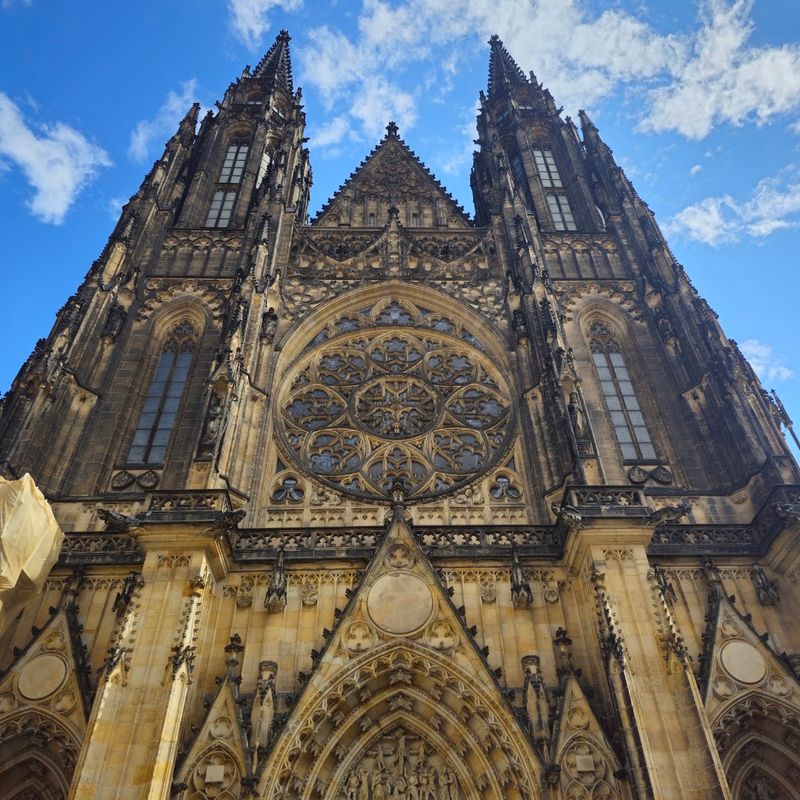
Tucked inside Prague Castle, St. Vitus Cathedral has a way of sneaking up on you. You walk through the castle gates, turn a corner, and suddenly this enormous Gothic structure fills your entire field of vision.
The effect is genuinely startling, even if you knew it was coming.
Construction began in 1344 and took nearly 600 years to complete, finishing only in 1929. The cathedral holds the crown jewels of Bohemia in a chamber secured by seven locks, each held by a different official.
That level of security for a set of medieval treasures feels wonderfully dramatic.
The stained-glass windows are extraordinary, including one designed by the great Czech artist Alphonse Mucha in his distinctive Art Nouveau style. The window glows with rich blues and reds and tells stories from early Czech Christianity.
The cathedral also contains the tombs of Bohemian kings, queens, and saints, making it central to Czech national identity. Climb the Great South Tower for panoramic views over Prague’s red rooftops and the Vltava River below.
St. Vitus is included in the Prague Castle entrance ticket, so factor in at least two hours to do justice to both the cathedral and the surrounding complex.
St. Stephen’s Cathedral – Vienna, Austria
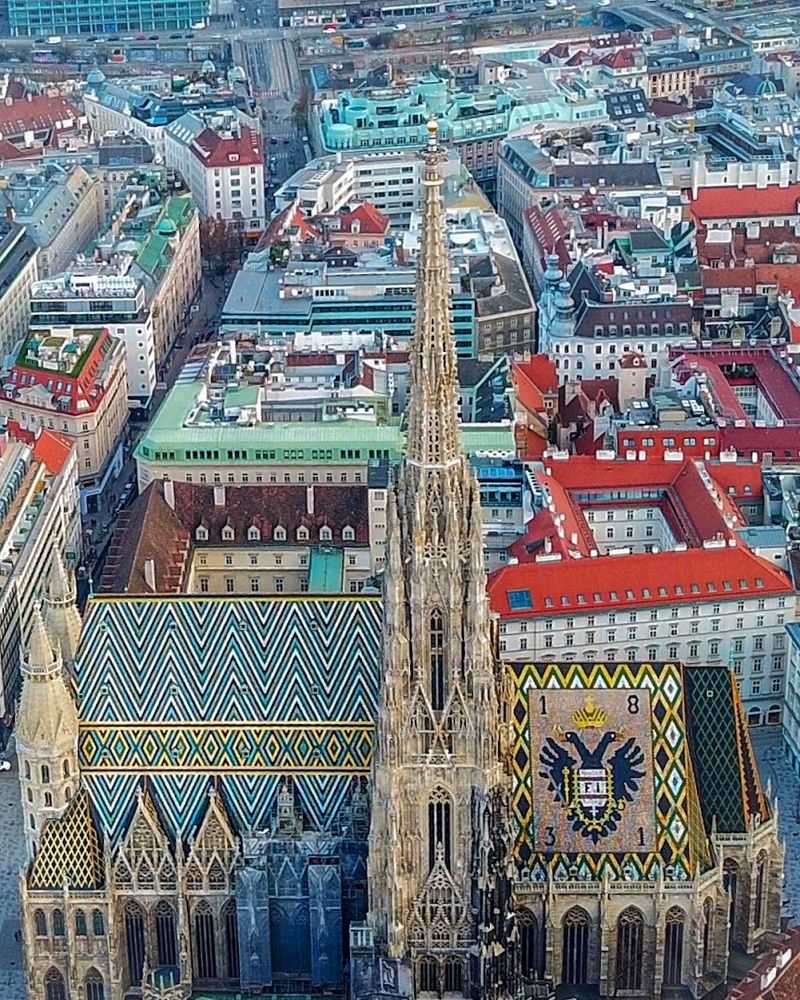
Look down at the roof of St. Stephen’s Cathedral and you will see something no other major cathedral in Europe can claim: a giant double-headed eagle mosaic made from 230,000 glazed tiles, stretching across the entire roof in vivid geometric patterns. It is the kind of detail that makes you wonder how anyone thought to do it in the first place.
Known locally as Steffl, the cathedral has been the heart of Vienna since the 12th century. The soaring South Tower reaches 136 meters and was the tallest structure in the world during the 15th century.
Climbing it gives you the classic view over Vienna’s compact historic center that appears on postcards and travel guides everywhere.
The cathedral sits right in the middle of Stephansplatz, Vienna’s busiest square, which makes it unusually easy to stumble upon. The catacombs beneath hold the remains of thousands of plague victims and Habsburg royalty, and guided tours run regularly.
The Pummerin, one of the largest bells in Europe, hangs in the North Tower and rings on New Year’s Eve to welcome the new year across Austria. St. Stephen’s is free to enter the main nave, though the towers and catacombs require separate tickets.
Santiago de Compostela Cathedral – Santiago de Compostela, Spain
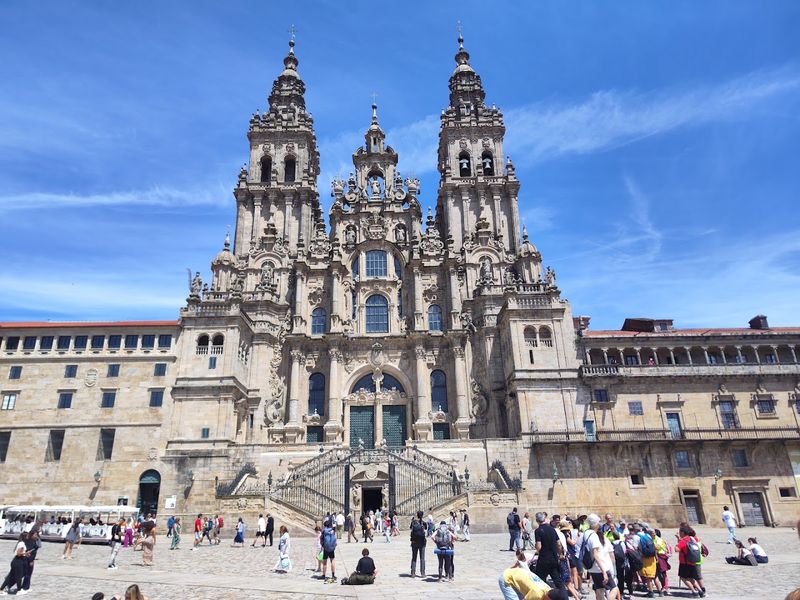
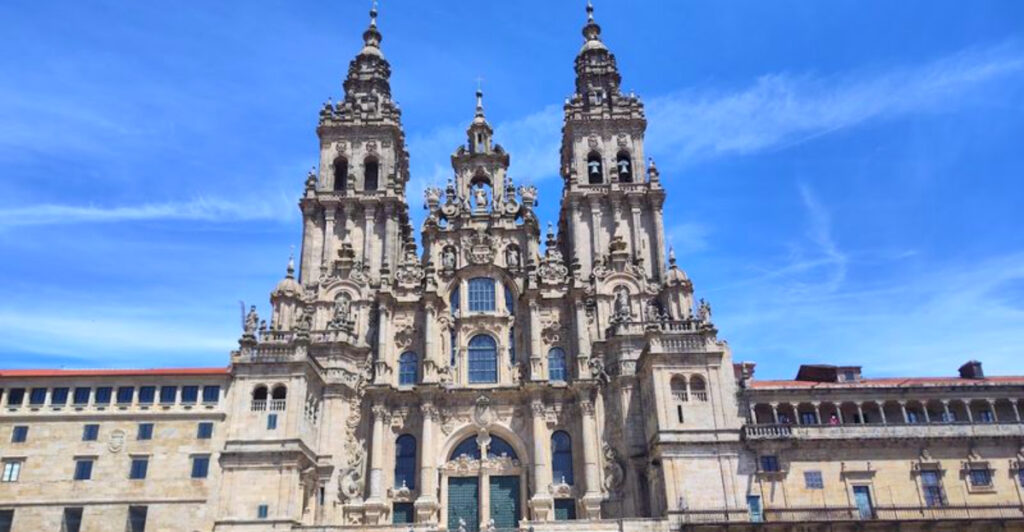
Every year, hundreds of thousands of pilgrims walk hundreds of miles across Spain, Portugal, and France with a single destination in mind: this cathedral. The moment exhausted walkers emerge from the narrow streets onto the grand Plaza del Obradoiro and see those Baroque towers for the first time, many of them burst into tears.
It is one of the most emotionally charged arrivals in all of travel.
The cathedral was built over the tomb of Saint James the Apostle, one of Christianity’s most important pilgrimage sites for nearly a thousand years. The current Baroque facade dates from the 18th century and is considered one of the finest examples of Spanish Baroque architecture anywhere.
Inside, the Romanesque structure dates back to the 11th and 12th centuries.
The cathedral’s most famous ritual is the Pilgrim Mass, held daily, where a giant silver censer called the Botafumeiro swings dramatically across the transept on a thick rope, filling the church with incense smoke. It weighs 53 kilograms and travels at speeds up to 68 kilometers per hour.
Even if you have not walked the Camino, attending this mass is a deeply moving experience. The museum beneath the cathedral contains fascinating art and artifacts from centuries of pilgrimage history.
Chartres Cathedral – Chartres, France
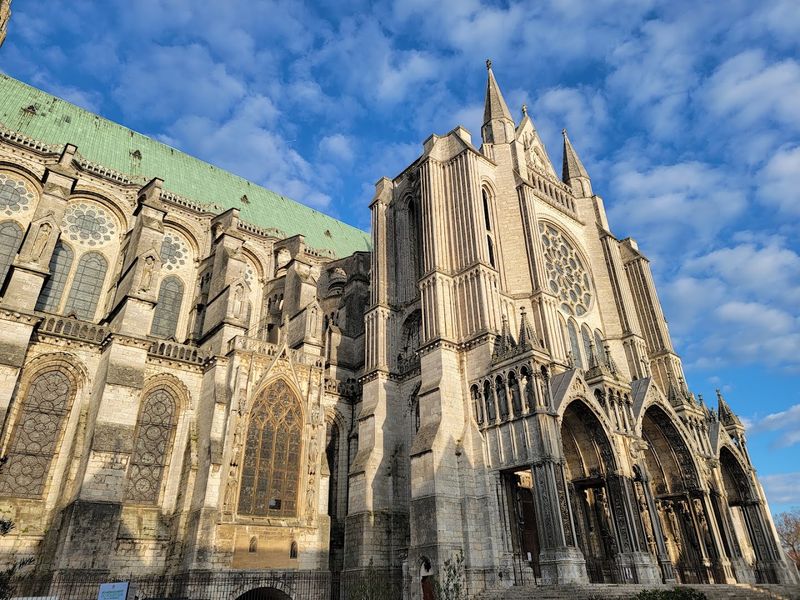
Chartres Cathedral has two towers that do not match each other, and somehow that makes it even more beautiful. One spire is plain Romanesque, built in the 12th century, and the other is an elaborate Gothic addition from the 16th century.
Rather than looking like a mistake, the contrast gives the cathedral a personality all its own.
What truly sets Chartres apart is its stained glass. Almost all of the original medieval windows survive intact, covering an area of over 2,600 square meters.
The famous Chartres Blue, a rich, luminous shade of blue used throughout the windows, has never been perfectly reproduced by modern glassmakers. Standing inside when sunlight passes through those windows is an experience that is hard to put into words.
The cathedral also contains a rare medieval labyrinth set into the floor of the nave, nearly 13 meters in diameter. Pilgrims once walked it on their knees as an act of devotion.
Chartres is a UNESCO World Heritage Site and is considered by many architectural historians to be the most perfectly preserved Gothic cathedral in existence. It sits just 90 kilometers southwest of Paris, making it an easy and very rewarding day trip.
Arrive on a sunny morning for the most spectacular light inside.
St. Patrick’s Cathedral – Dublin, Ireland
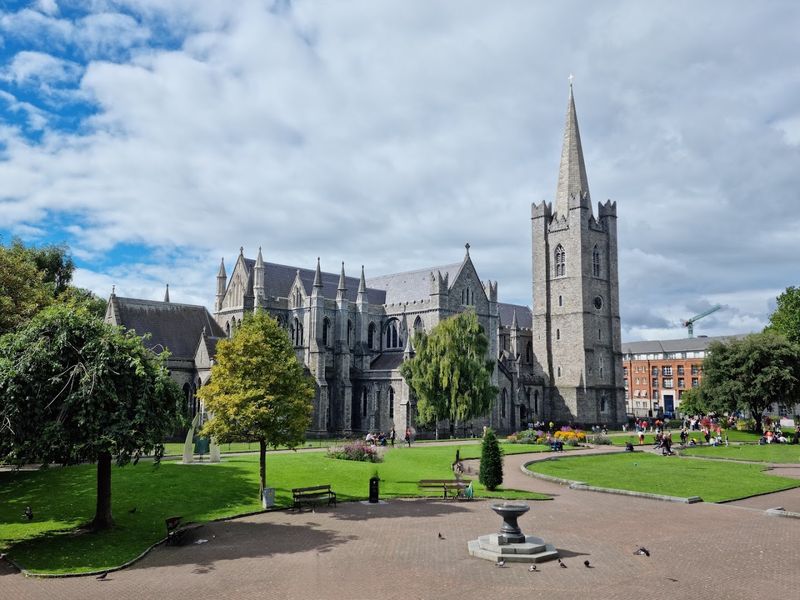
Jonathan Swift, the author of Gulliver’s Travels, spent 32 years as Dean of St. Patrick’s Cathedral. His grave is right there inside the building, marked with an epitaph he wrote himself, which translates roughly as: he has gone where savage indignation can no longer tear at his heart.
It is one of the most poignant inscriptions you will ever read in a church.
Ireland’s largest cathedral was founded in 1191 and has survived wars, floods, and the Reformation to remain one of Dublin’s most beloved landmarks. The building was heavily restored in the 19th century thanks to funding from the Guinness family, yes, that Guinness family.
Without their generosity, much of the medieval structure might have been lost.
The cathedral sits in a quiet park just south of Dublin’s city center, offering a surprisingly peaceful escape from the busy streets nearby. The interior is filled with historic flags, memorials to Irish soldiers, and magnificent medieval stonework.
The choir at St. Patrick’s is one of the finest in Ireland and has been performing here since the 13th century. Attending a choral evensong service is one of the most atmospheric ways to experience the cathedral.
Admission is charged but very reasonably priced.
York Minster – York, England
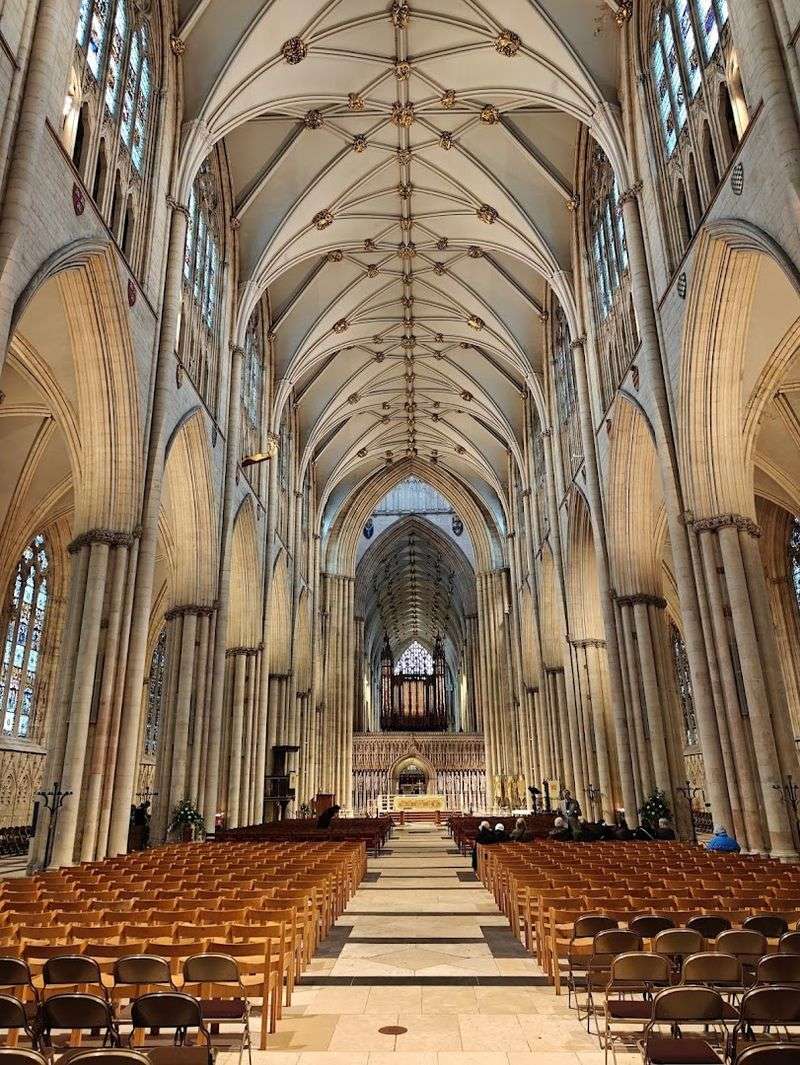
York Minster contains more than half of all the medieval stained glass that survives in England. That single statistic alone should be enough to get you on a train to York immediately.
The Great East Window is the largest expanse of medieval stained glass in the world, roughly the size of a tennis court, and it was completed in 1408.
The Minster sits at the heart of York’s remarkably well-preserved medieval city center, surrounded by ancient walls, narrow cobblestone streets called Snickelways, and centuries-old timber-framed buildings. The whole area feels like walking into a history book.
The Minster itself took 252 years to build, from 1220 to 1472.
Getting below the cathedral is just as fascinating as looking up at it. The Undercroft museum takes you through excavations that revealed Roman fortress walls, Viking remains, and Norman foundations directly beneath the building.
The central tower offers a breathtaking climb with spectacular views over the Vale of York on a clear day. York Minster was seriously damaged by fire in 1984 after lightning struck the south transept, but a remarkable restoration brought it back to its full glory.
Evening concerts and services in the nave are genuinely magical experiences worth planning your trip around.
Florence Cathedral (Santa Maria del Fiore) – Florence, Italy
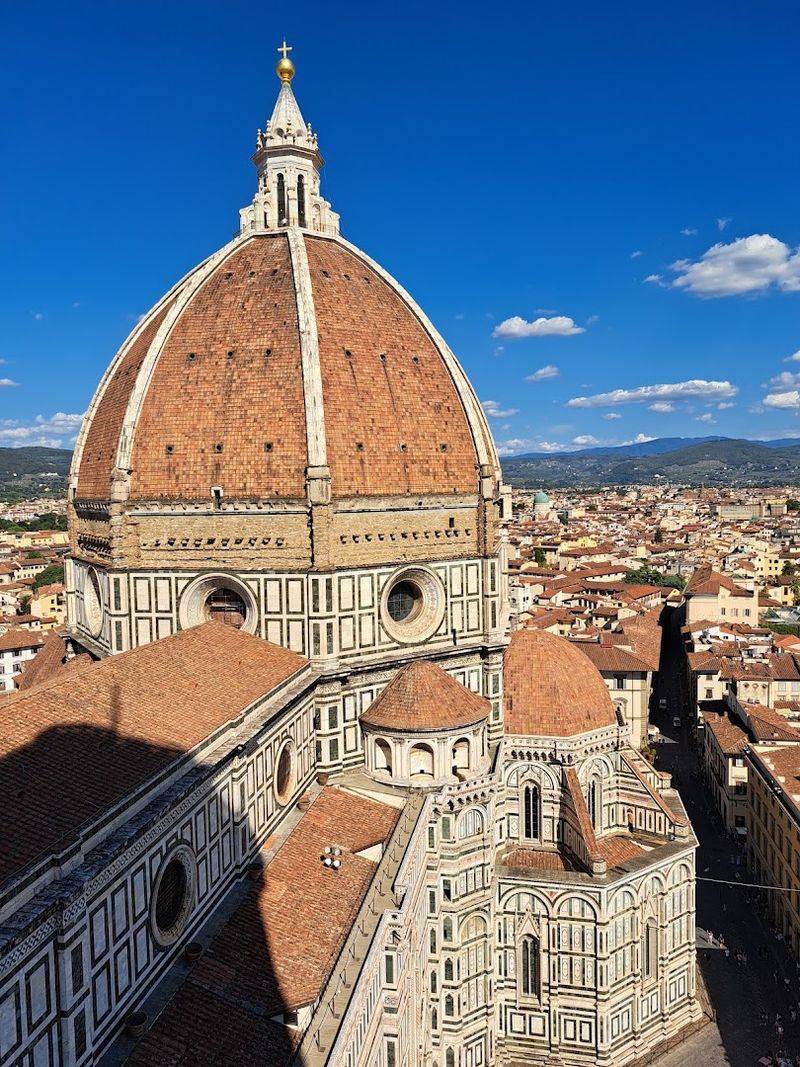
For 140 years, Florence Cathedral had a massive hole in its roof because nobody could figure out how to build the dome. Then along came Filippo Brunelleschi, a goldsmith with no formal training as an architect, who solved one of the greatest engineering puzzles of the Renaissance.
His dome, completed in 1436, remains the largest brick dome ever constructed and changed the course of architectural history forever.
The cathedral’s exterior is clad in green, white, and pink marble in geometric patterns that make it look almost impossibly decorative. It anchors the most beautiful piazza in Florence alongside Giotto’s slender Campanile and the ancient Baptistery.
The combination of the three buildings together is one of the most photographed sights in all of Italy.
Climbing inside Brunelleschi’s dome is an experience that combines history, architecture, and a surprisingly good workout. The narrow passage between the inner and outer shells of the dome lets you walk right through the structure itself, passing frescoes painted on the inner ceiling.
At the top, the views over Florence’s terracotta rooftops are extraordinary. Book your dome climb ticket well in advance since slots fill up quickly.
The climb involves 463 steps and no elevator, so wear comfortable shoes.
Saint Sophia Cathedral – Kyiv, Ukraine
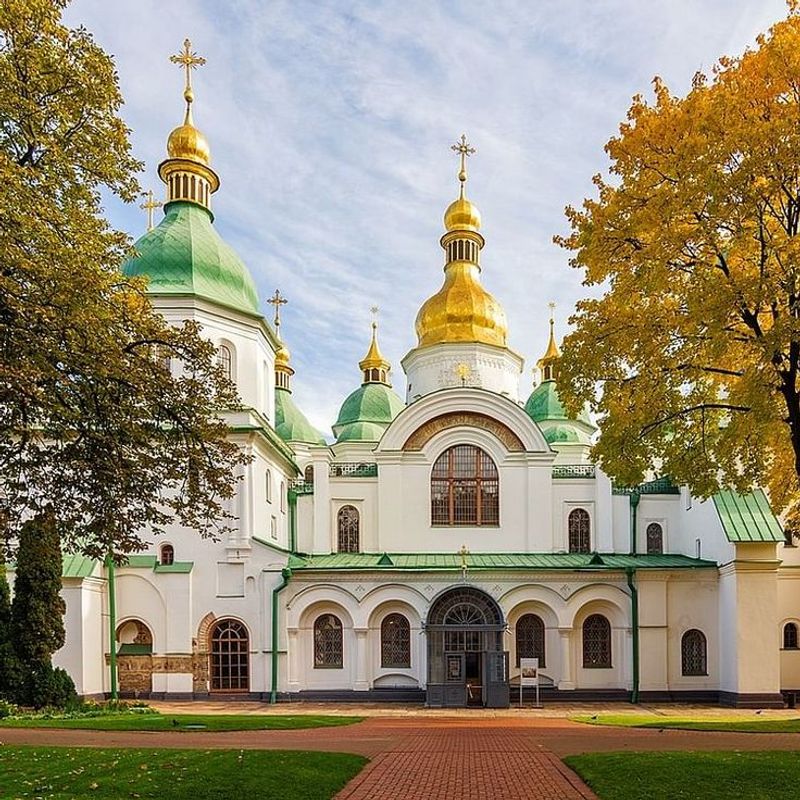
Built more than a thousand years ago, Saint Sophia Cathedral in Kyiv is one of the oldest surviving Christian buildings in Eastern Europe. Prince Yaroslav the Wise commissioned it in 1037 to rival the great Hagia Sophia in Constantinople, and he named it accordingly.
The ambition behind that decision tells you everything about how important Kyiv was in the medieval world.
Inside, the cathedral holds some of the most remarkable Byzantine mosaics and frescoes anywhere on earth. The golden mosaic of the Virgin Orant in the main apse has survived intact for nearly ten centuries, her arms raised in prayer above the altar.
The colors remain vivid and luminous, which feels almost miraculous given everything this building has been through.
Saint Sophia is a UNESCO World Heritage Site and holds enormous significance for Ukrainian national identity. The cathedral is currently a museum rather than an active place of worship, which actually means visitors can explore more of the interior than would otherwise be possible.
The bell tower offers wonderful views over Kyiv’s golden-domed skyline. Given the ongoing conflict in Ukraine, the cathedral’s survival feels particularly precious right now.
Visiting in person when it is safe to do so would be a deeply meaningful experience that goes beyond typical tourism.
St. John’s Co-Cathedral – Valletta, Malta
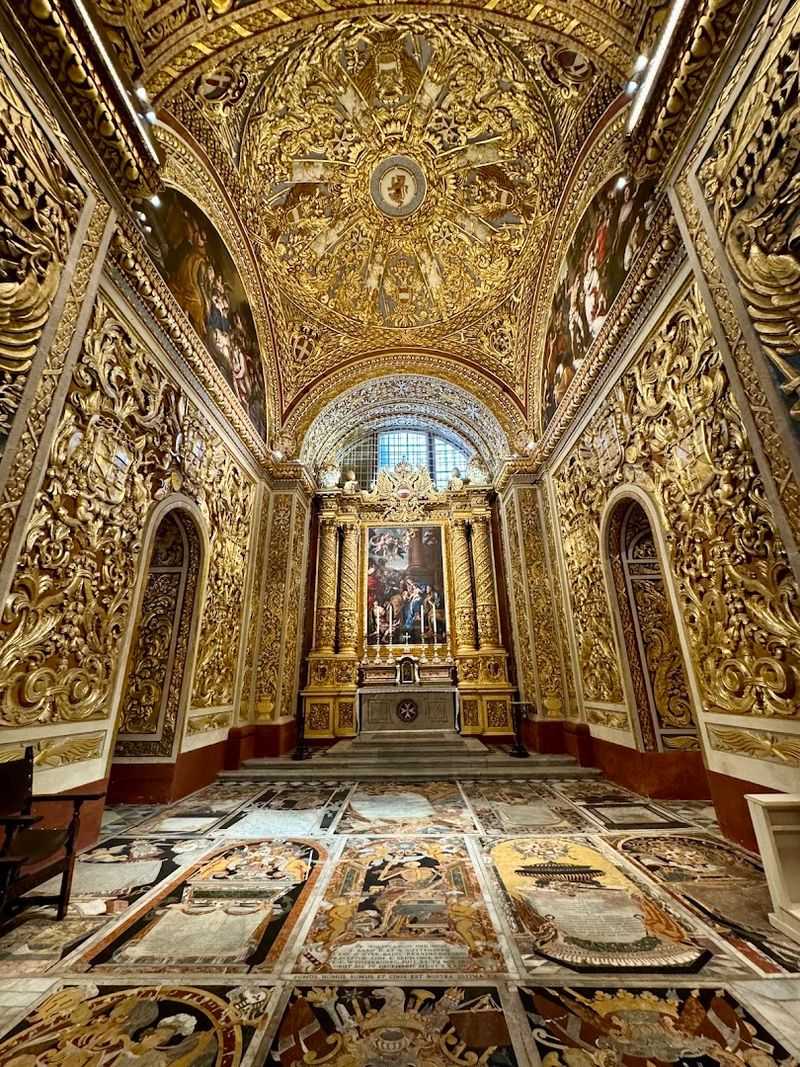
From the outside, St. John’s Co-Cathedral in Valletta looks almost plain, a solid limestone block sitting quietly on a narrow street. Walk through the doors, however, and the contrast hits you like a thunderclap.
Every surface inside is covered in gold leaf, intricate stone carving, and rich oil paintings, making it one of the most opulent interiors in all of Europe.
The cathedral was built by the Knights of St. John in the 1570s, and each of the eight national chapters of the Order decorated their own chapel in a fierce competition of one-upmanship. The result is a building where every corner tries to outdo the last.
The floor is made entirely from the marble tombstones of over 400 Knights, each one intricately carved and inlaid with colored stone.
The undisputed highlight is Caravaggio’s enormous painting The Beheading of Saint John the Baptist, the only work he ever signed, and he signed it in the blood of the saint. The painting is housed in the Oratory and is considered one of the greatest Baroque paintings in existence.
The co-cathedral also holds a second Caravaggio, Saint Jerome Writing. Malta is a small island, but this cathedral alone justifies the trip.
Arrive early to appreciate the art without crowds pressing around you.
Share this story